What Hāngī Does Te Pā Tū Serve?
The exact hāngī food Te Pā Tū serves in summer and winter, with prices, dietary options and how the seasonal feasts differ.
Te Pā Tū serves a seasonal hāngī-centred feast that changes with the calendar: the summer Tū Te Rā evening (October to April) pairs a hāngī lifting and spit roast viewing with forest canapés and a three-course seasonal feast in the wharekai, while the winter Tū Te Ihi evening (May to September) serves a Matariki-inspired Māori fusion feast family style with a traditional in-ground hāngī of lamb and vegetables. The operator owns both menus, and neither is a fixed year-round dish. What lands on your plate depends entirely on which season you visit in, which makes the timing of a booking the single biggest food decision on the page.
The operator, a Māori Cultural Experience owned and operated by Tauhara North No.2 Trust, splits its year into two named evenings rather than running one menu through all twelve months. Summer belongs to Tū Te Rā, the Summer Harvest Celebration, which the operator frames around the harvest and the concepts, rituals and stories of ancient Māori warfare and peace. Winter belongs to Tū Te Ihi, the Winter Matariki Celebration, which the operator sets in 1800s Aotearoa, between the 1840 Treaty of Waitangi and the 1886 Mt Tarawera eruption. That framing is the operator's own, and it shapes the food: a harvest dinner in the warm months, a hearty shared table in the cold ones.
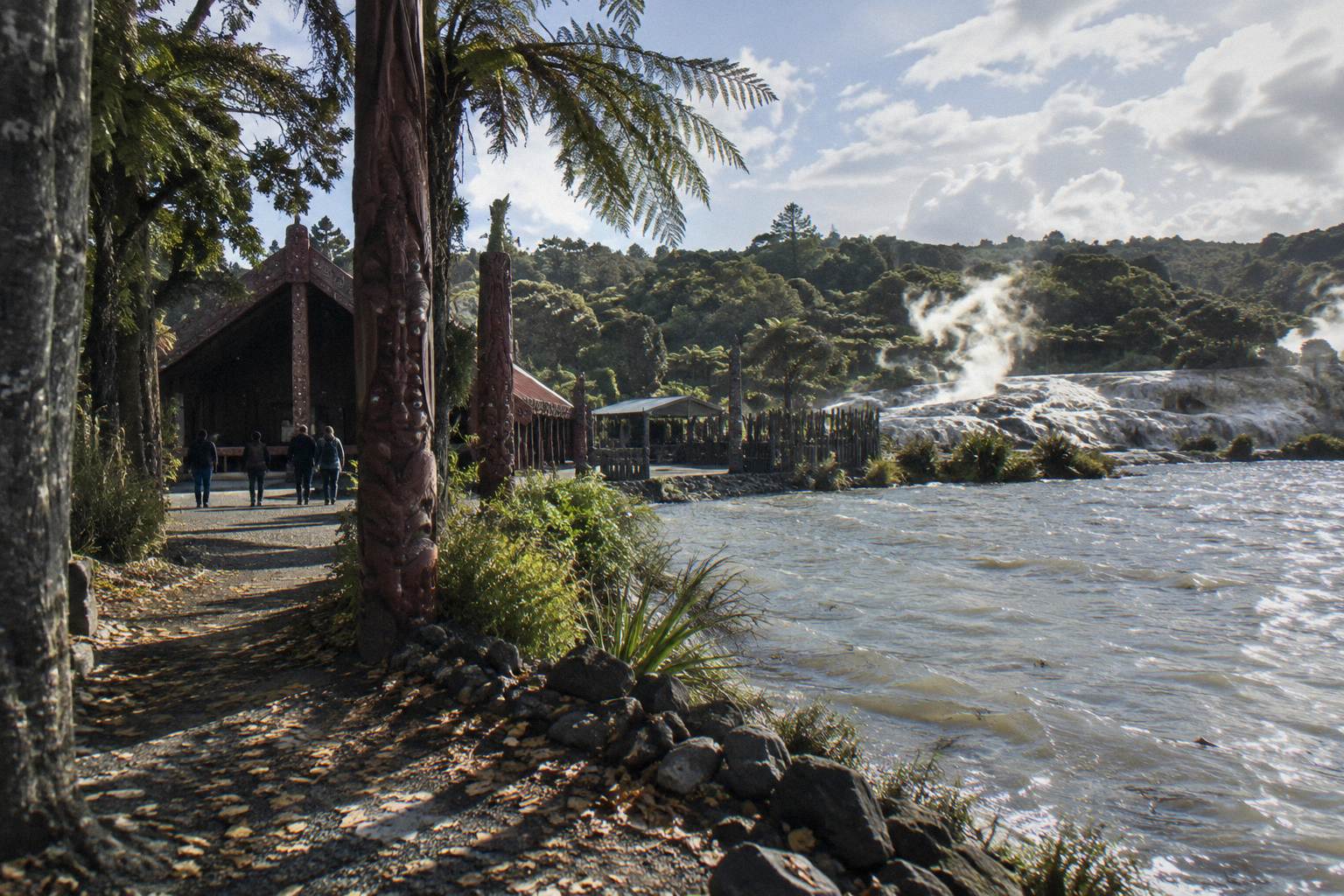
Both evenings run at the same forest pā, set in tawa forest a short coach ride south of central Rotorua, with return coach transport from central Rotorua included in the operator's price. The evening start time is not published, so the practical question for a food-focused visitor is not when dinner begins but which feast you are booking. If a reader wants the broader picture of which Māori village in Rotorua offers an evening meal, that comparison sits elsewhere; this page stays on the plate.
Because the food is seasonal by design, this article walks through both menus in the operator's own words, then the prices, the dietary options, and how the Te Pā Tū table compares with the hāngī served at Mitai Māori Village and Te Puia. The full evening, the Te Pā Tū Cultural Experience With Dinner, is rated 4.8 out of 5 on its booking page. Between the seasons, the formats and the feast styles, these three evenings cover nearly every way Rotorua serves dinner from the ground.
Once you have browsed the three cards, the next question is which of the two Te Pā Tū menus suits your travel dates, and that is where the seasons come in. You can also check availability once you know which season fits your trip.
The Summer Menu At Tū Te Rā: Hāngī Lifting, Spit Roast And A Three-Course Feast
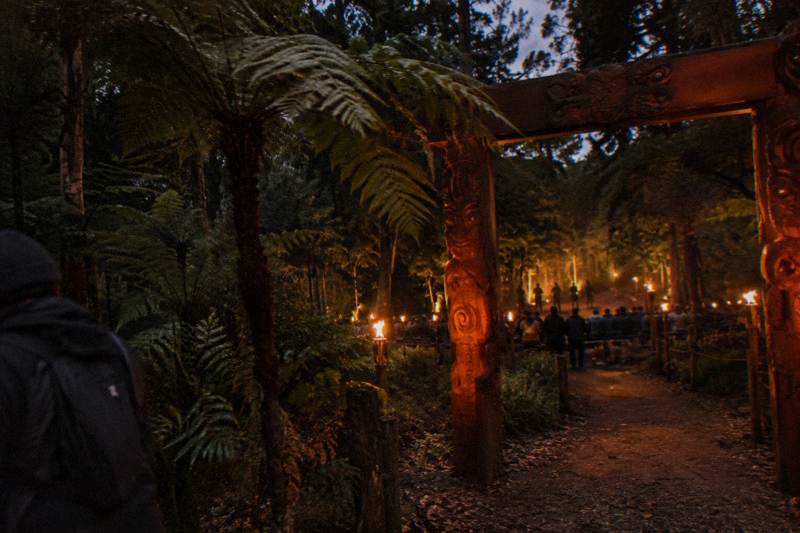
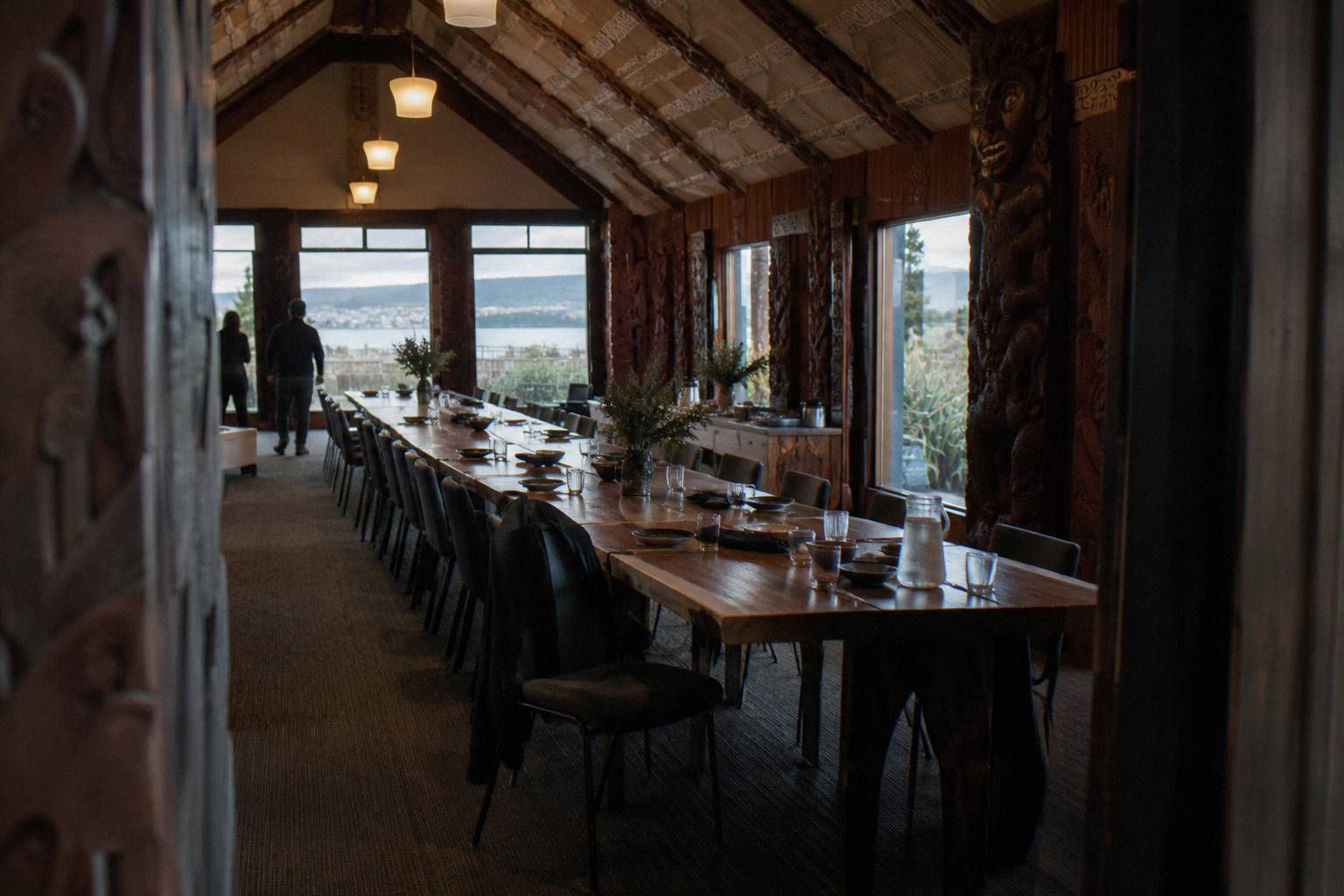
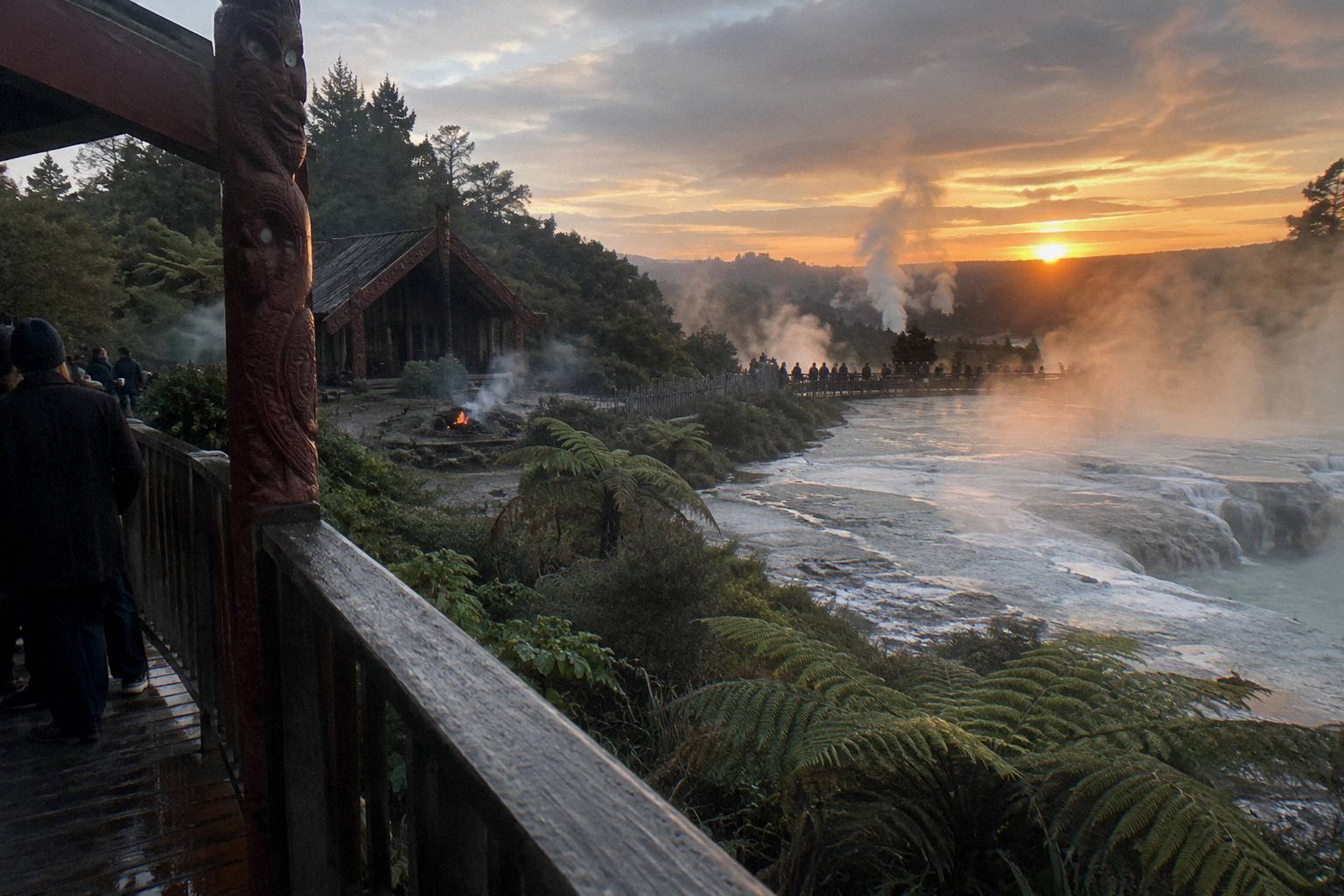
Summer diners at Te Pā Tū get an evening the operator structures as haka pōhiri welcome, kapahaka in the forest amphitheatre Tūāpapa, forest kai horotai canapés, a viewing of the hāngī lifting and the spit roast, and then a three-course seasonal feast in the wharekai, closed with a complimentary digestif of the chef's choice and rongoā herbal tea. The hāngī is present twice: once as spectacle, when the earth oven is opened, and once on the plate, inside a three-course menu that blends traditional and innovative dishes by Māori chefs. The evening runs about 3.5 hours, and return transport from central Rotorua is included.
The canapé course, which the operator calls kai horotai, is served in the forest and draws on native ingredients. The operator's summer page lists examples: pāua wonton, kawakawa leaf filled with prawn, a hāngī root-vegetable croquette, and a kūmara crisp with venison. Those four items are the operator's own illustrations of the style rather than a promised fixed list, and seasonal menus change at the operator's discretion, so treat them as a guide to the register of the food: native flavours, hāngī technique, and contemporary plating side by side.
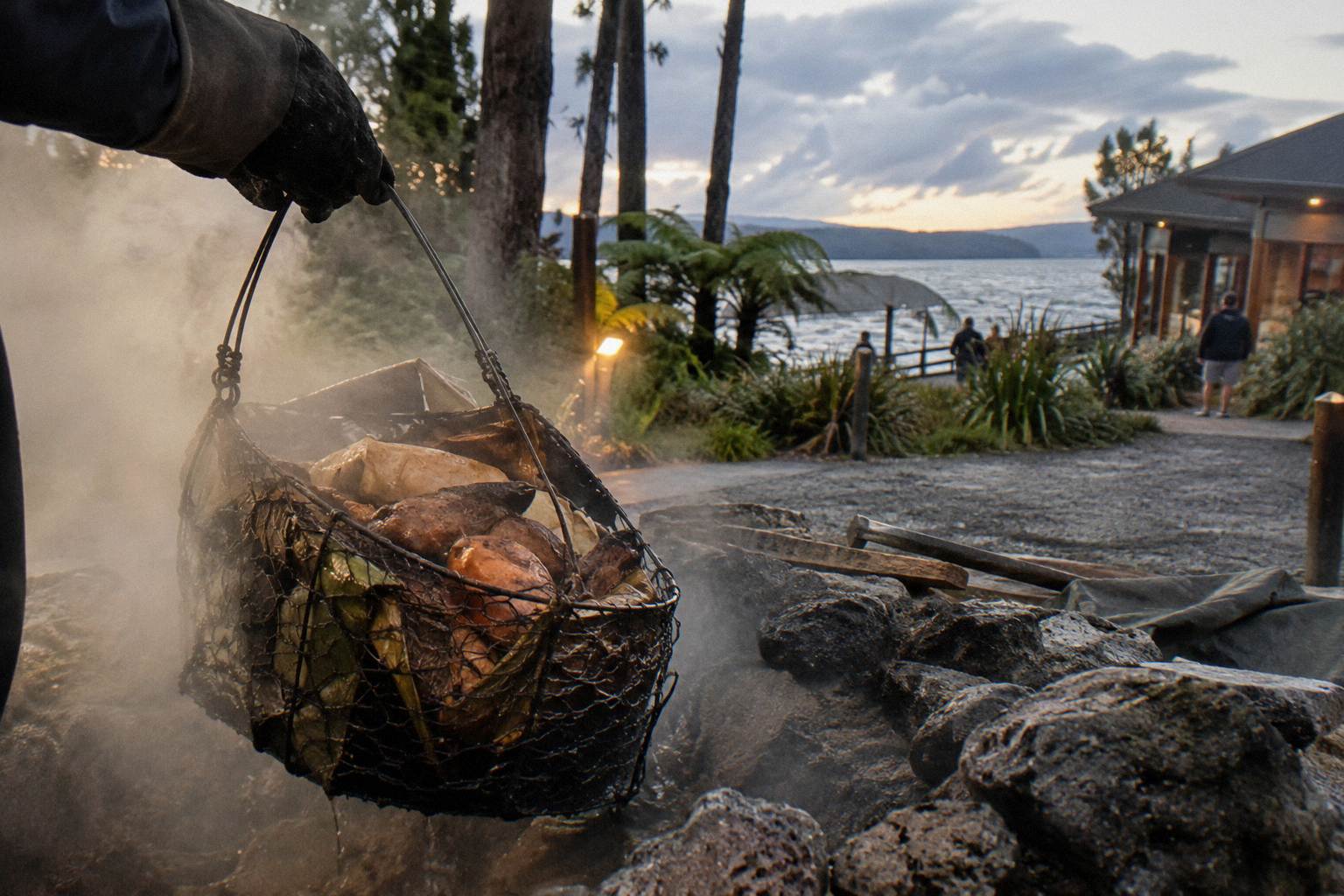
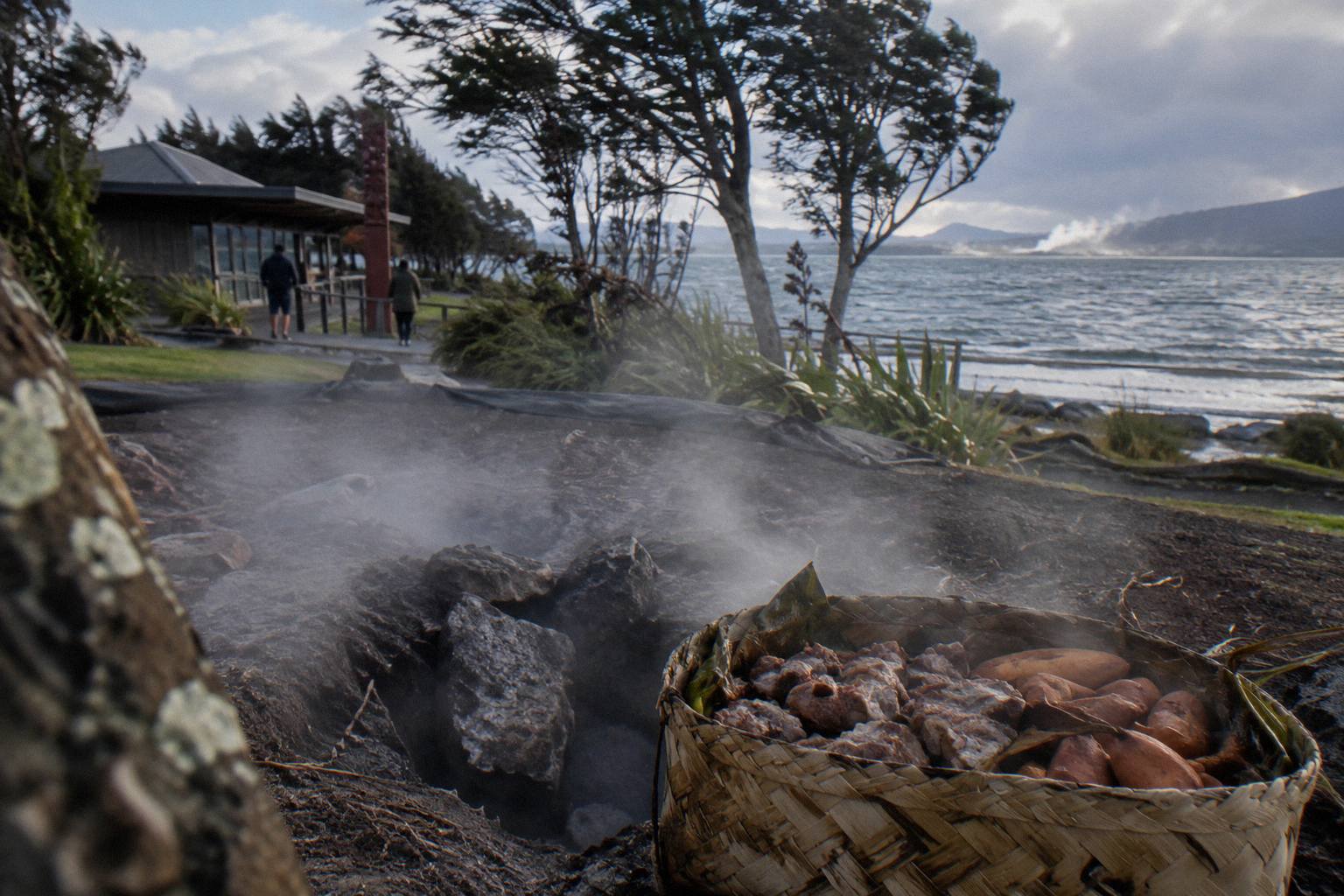
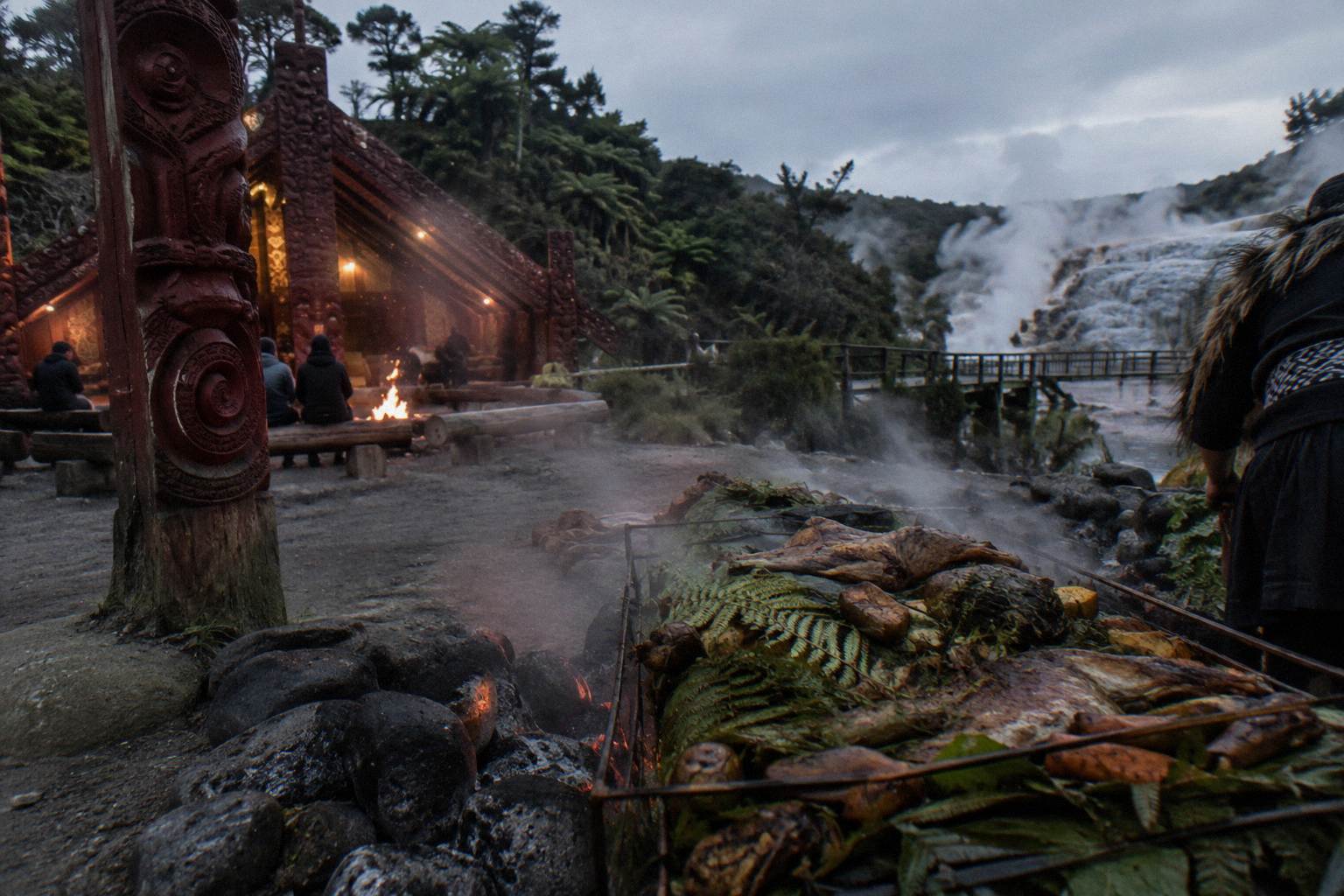
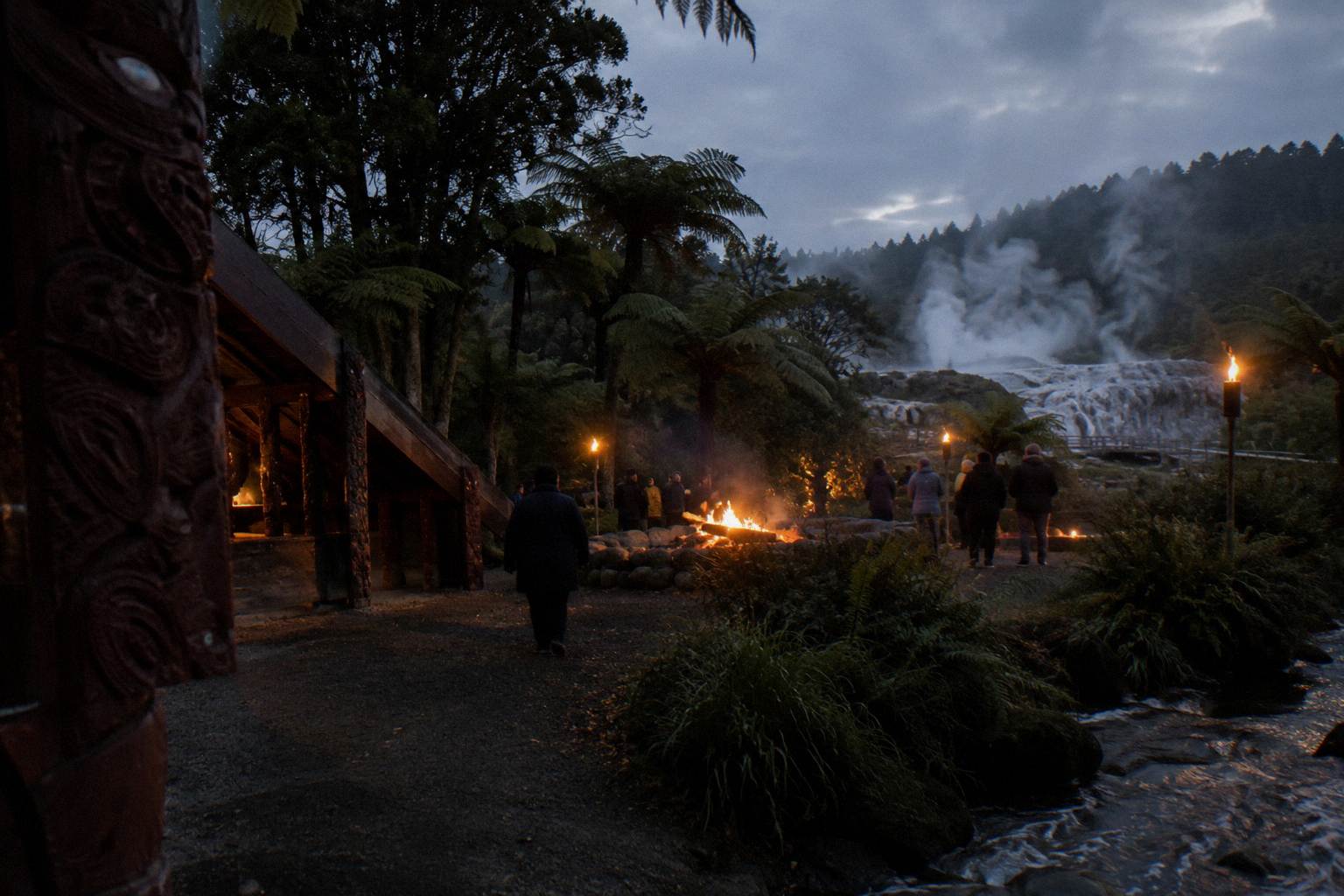
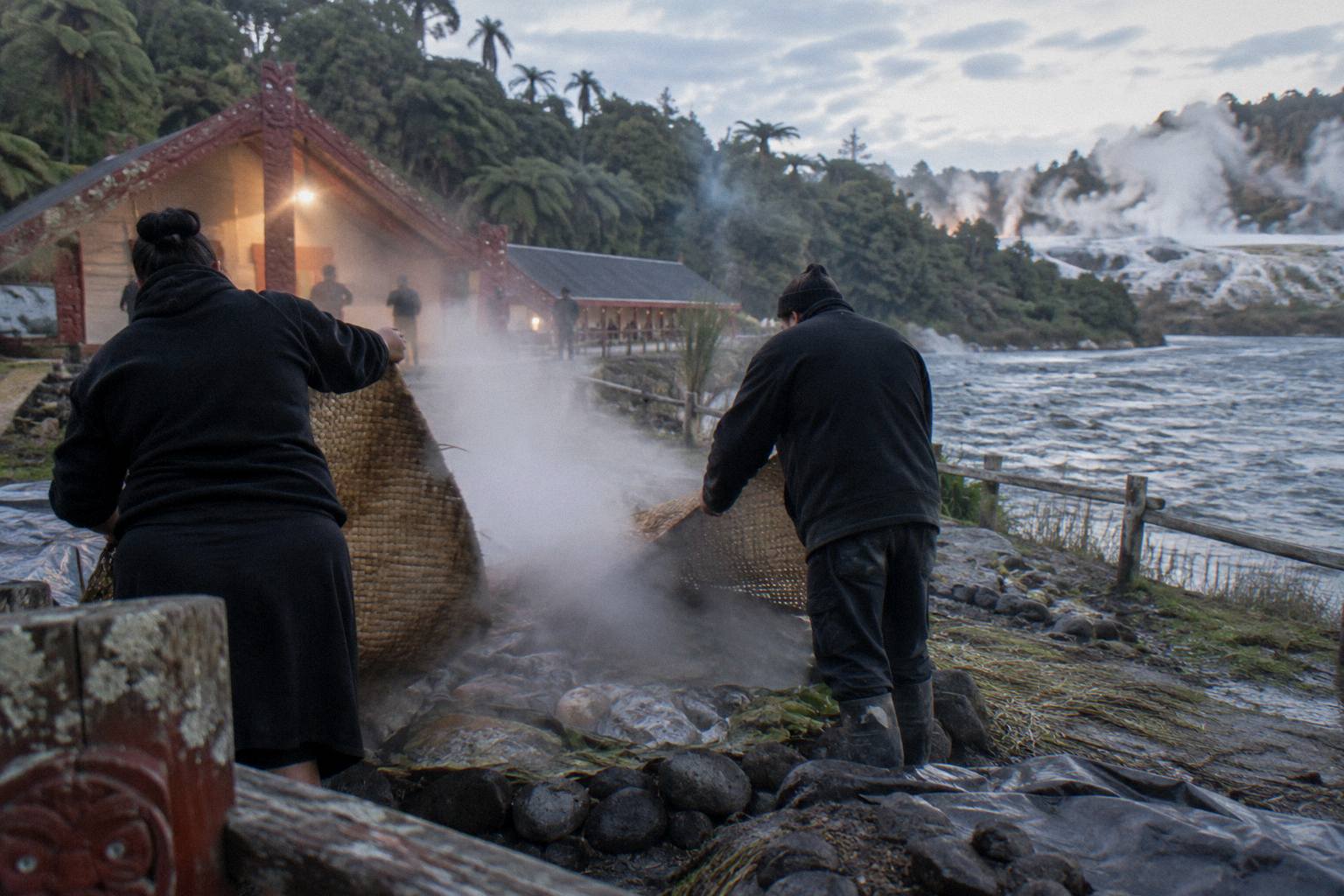
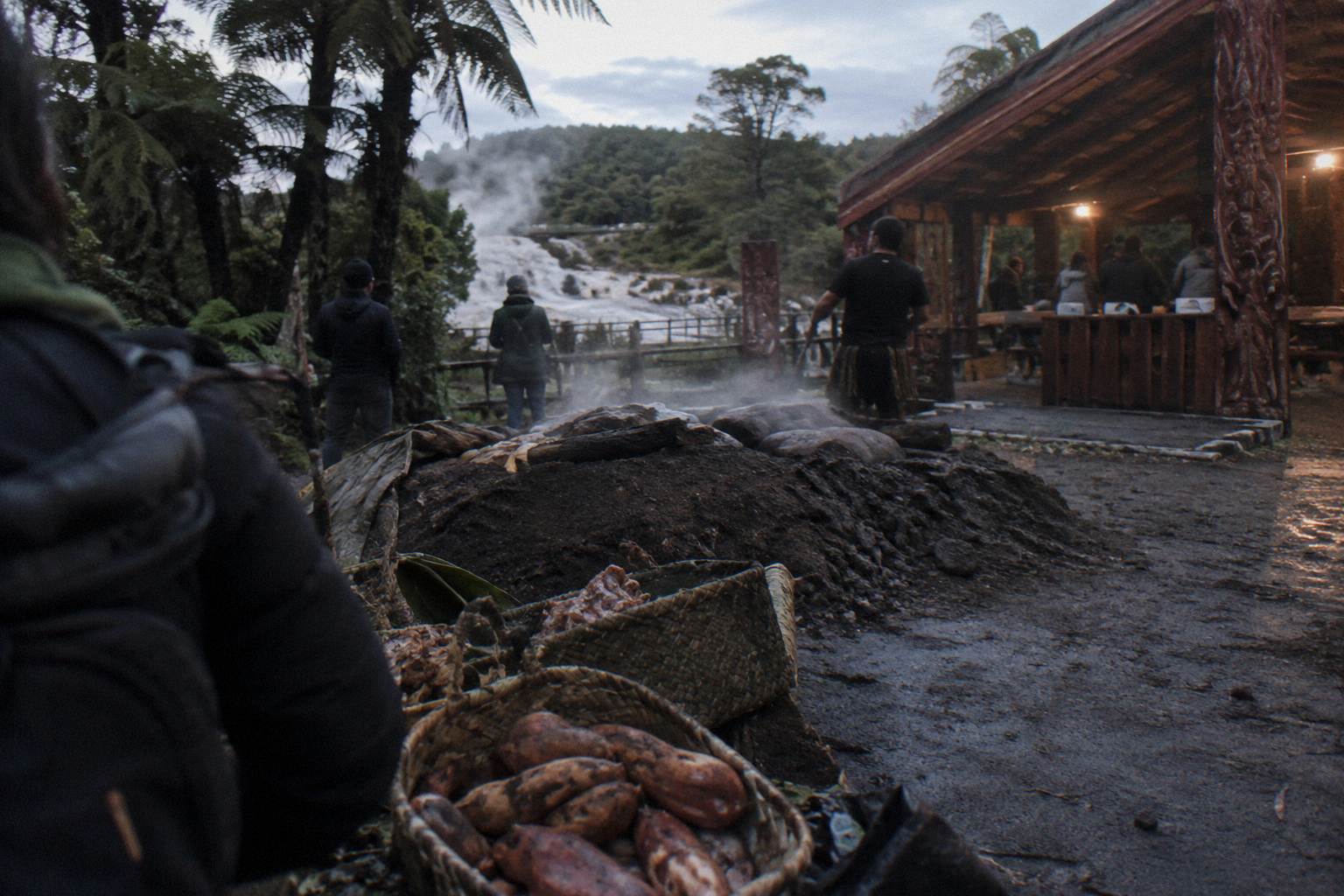
The centrepiece moment is the hāngī lifting. Guests view the hāngī, the earth oven, being opened, alongside a spit roast. Watching the basket come out of the ground is the traditional cooking method made visible before it reappears, reworked, in the feast that follows in the wharekai, the dining house. The torchlight walk to the feast and the closing digestif finish the evening; both are listed on the operator's summer harvest evening page, which is the source for every menu item above.
Summer pricing is NZD 290 adult and NZD 125 child for Tū Te Rā, the operator's price, and it can change. The child minimum age is not published; ask the operator at 0508 826 254 or bookings@maoriculture.co.nz.
The Winter Menu At Tū Te Ihi: A Matariki Feast With In-Ground Hāngī
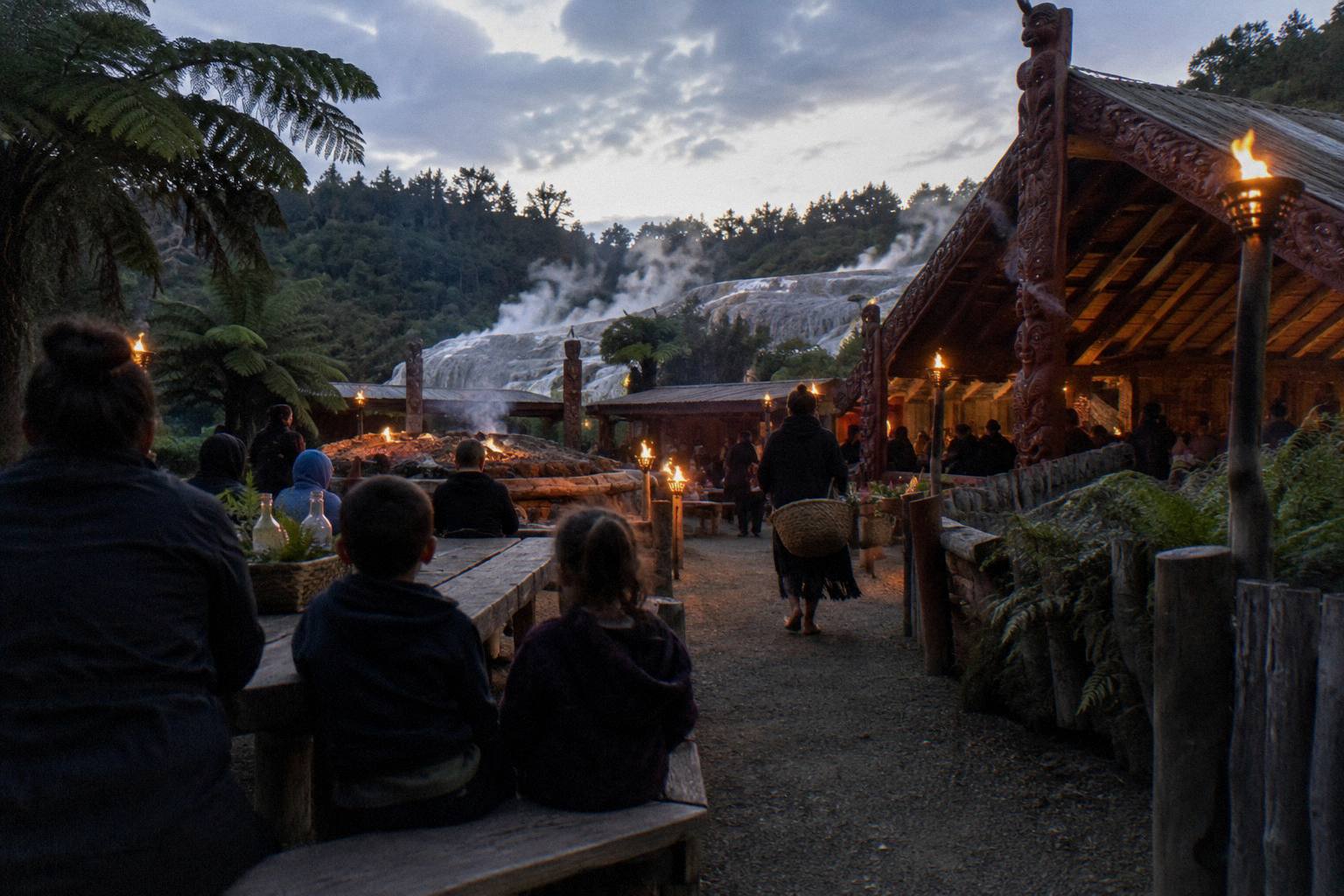
Winter diners get a different structure: an Ahi Tuku fire ceremony welcome, kai horotai, a hearty broth and steaming kawakawa tea, fireside wānanga (conversation, history, games, instruments and traditions), kapahaka, and a Matariki-inspired Māori fusion feast served family style with a traditional in-ground hāngī of lamb and vegetables, closed with a complimentary aperitif, rongoā tea and a poroporoaki farewell. The hāngī here is not a course within a three-course structure; it anchors a shared, family-style table. The evening runs about 3 hours.
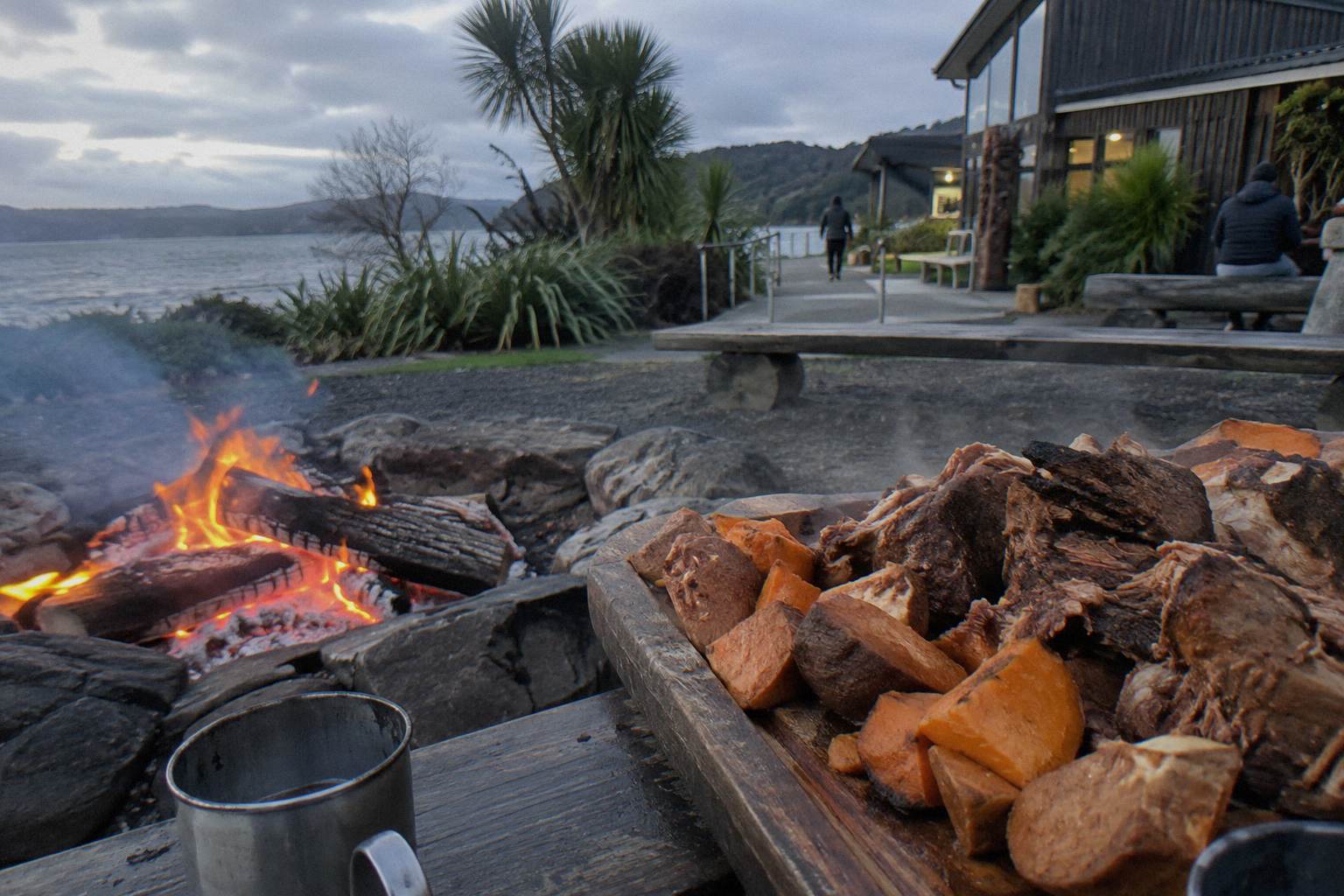
The operator names the protein plainly: lamb and vegetables, cooked in-ground, served family style. Around it sits a Matariki-inspired fusion menu, Matariki being the Māori new year period that falls in the winter months of the southern hemisphere, which is the operator's stated inspiration for the seasonal menu. The operator's own words put the evening in 1800s Aotearoa, and the fireside wānanga carries that framing through the middle of the night: conversation, history, games, instruments and traditions, per the operator's winter Matariki evening page.
Winter pricing is NZD 280 adult and NZD 115 child for Tū Te Ihi, ten dollars under the summer tariff at the operator's own price. Coach transfers from central Rotorua are complimentary and included in both seasons. It is November 2026, which places the calendar inside the summer season, Tū Te Rā, October to April; the winter season returns in May 2027.
Summer Versus Winter: The Two Te Pā Tū Feasts Compared
The two menus differ in structure, in the role of the hāngī, in duration and in price: summer is a 3.5-hour evening with canapés, a hāngī-and-spit-roast viewing and a three-course plated feast at NZD 290 adult, while winter is a 3-hour evening with broth, fireside wānanga and a family-style in-ground hāngī of lamb and vegetables at NZD 280 adult. Neither menu is a subset of the other. A visitor who wants the theatrical lifting of the earth oven and a structured three-course dinner books summer; a visitor who wants a shared table and a shorter, warmer evening books winter.
| Feature | Tū Te Rā (Summer, October To April) | Tū Te Ihi (Winter, May To September) |
|---|---|---|
| Duration | About 3.5 hours | About 3 hours |
| Adult price (operator's NZD price) | NZD 290 | NZD 280 |
| Child price | NZD 125 | NZD 115 |
| Hāngī role | Viewing of the hāngī lifting and spit roast, then hāngī elements within a three-course feast | Traditional in-ground hāngī of lamb and vegetables, served family style |
| Opening food | Forest kai horotai canapés (operator examples include pāua wonton and kūmara crisp with venison) | Kai horotai, hearty broth, steaming kawakawa tea |
| Closing | Complimentary digestif (chef's choice) and rongoā herbal tea | Complimentary aperitif, rongoā tea, poroporoaki farewell |
| Transfer | Return coach from central Rotorua included | Return coach from central Rotorua included |
One wrinkle worth knowing: the operator's homepage says "four hours of celebration and feasting", while the two product pages say 3.5 hours in summer and 3 in winter. The per-season figures are the ones to plan around, written as "about 3 to 3.5 hours" when the season is unknown. The seasons never cross over: summer prices and summer duration belong to Tū Te Rā alone, and winter figures to Tū Te Ihi alone.
The seasonal split also means a repeat visit is not a repeat dinner. Someone who ate at the summer feast and returns in July finds a different welcome (a fire ceremony rather than a haka pōhiri), a different table format (family style rather than three courses) and a different hāngī (lamb and vegetables in-ground). Readers deciding between the village options more broadly can start with the guide to Māori village evenings in Rotorua.
How Te Pā Tū's Hāngī Compares With Mitai And Te Puia
Mitai's hāngī is a buffet built around an earth oven cooked 3 to 4 hours in a hole 1 to 2 m deep with meat, chicken and kūmara, viewed at an unveiling; Te Puia's is a hāngī buffet in the Pātaka Kai Restaurant and Bar with valley views; Te Pā Tū's is the seasonal, chef-led version described above. Three operators, three formats, one shared technique of cooking in the ground. The differences that matter at the table are service style and setting.
| Evening | Hāngī format | Setting | Adult price (operator's NZD price) | Duration |
|---|---|---|---|---|
| Te Pā Tū (summer Tū Te Rā) | Hāngī lifting and spit roast viewing, then a three-course seasonal feast | Forest pā in tawa forest, wharekai dining house | NZD 290 | About 3.5 hours |
| Te Pā Tū (winter Tū Te Ihi) | Family-style Matariki feast with in-ground hāngī, lamb and vegetables | Forest pā, fireside | NZD 280 | About 3 hours |
| Mitai Māori Village dinner | Full buffet hāngī dinner, unveiling viewed, earth oven 1 to 2 m deep, cooked 3 to 4 hours | Village at 196 Fairy Springs Road | NZD 188.34 | About 3 hours |
| Te Puia Te Pō evening | Hāngī buffet dinner | Pātaka Kai Restaurant and Bar, valley views | NZD 203 | About 2.5 hours from 5:30pm |
Mitai's dinner, which its own operator page labels "Most Popular" in the operator's wording, is the most traditional in shape: the hāngī is cooked in an earth oven and uncovered in front of guests, and the buffet that follows also lists vegetables, salads and a dessert buffet in the operator's wording. Te Puia's version is the shortest and the most restaurant-like, a buffet inside a named restaurant after a 45-minute performance of song and dance in the carved meeting house Te Aronui a Rua, with hot chocolate on the geyser terrace. Te Pā Tū's is the most cheffed: canapés, a structured feast, pairings from a licensed bar including Māori wine pairing and non-alcoholic pairings.
Price alone does not rank them, because the formats differ so widely, from a buffet to a three-course seasonal menu. What price does tell you is the tier: Mitai at NZD 188.34 adult and Te Puia at NZD 203 sit below Te Pā Tū's NZD 280 to NZD 290, and the gap buys the seasonal menu, the forest pā setting and the included coach transfer. Mitai's transfer exists but is limited, complimentary from registered accommodation only, and must be booked; Te Puia states no hotel transfer and names the City Ride bus, Uber and taxi instead. The Mitai Māori Village Cultural Experience And Dinner Buffet is rated 4.7 on its booking page.
Dietary Needs, Children And Drinks At The Feast
Te Pā Tū's winter page lists vegetarian, pescatarian and gluten free options and states it cannot guarantee coeliac safety; vegan options are not stated; the licensed bar offers Māori wine pairing and non-alcoholic pairings; children are welcome at NZD 125 in summer and NZD 115 in winter, with no published minimum child age. The practical rule is simple: tell the operator at booking. Dietary requests are handled by the operator, not by the booking page, and the only way to lock one in is to state it when reserving and, if in doubt, to confirm by phone or email.
The dietary statement comes from the winter page specifically; the summer page's dietary wording is not stated, so ask the operator rather than assuming the winter list carries over. Coeliac diners should read the operator's own caution carefully: gluten free options exist, but the operator says it cannot guarantee coeliac safety, which is a meaningful distinction for anyone with a medical-level intolerance rather than a preference. Vegan diners have no stated option at Te Pā Tū, and Mitai states it is unable to cater to all dietary needs such as vegan, though some requests could be met; Te Puia's dietary options are not stated at all.
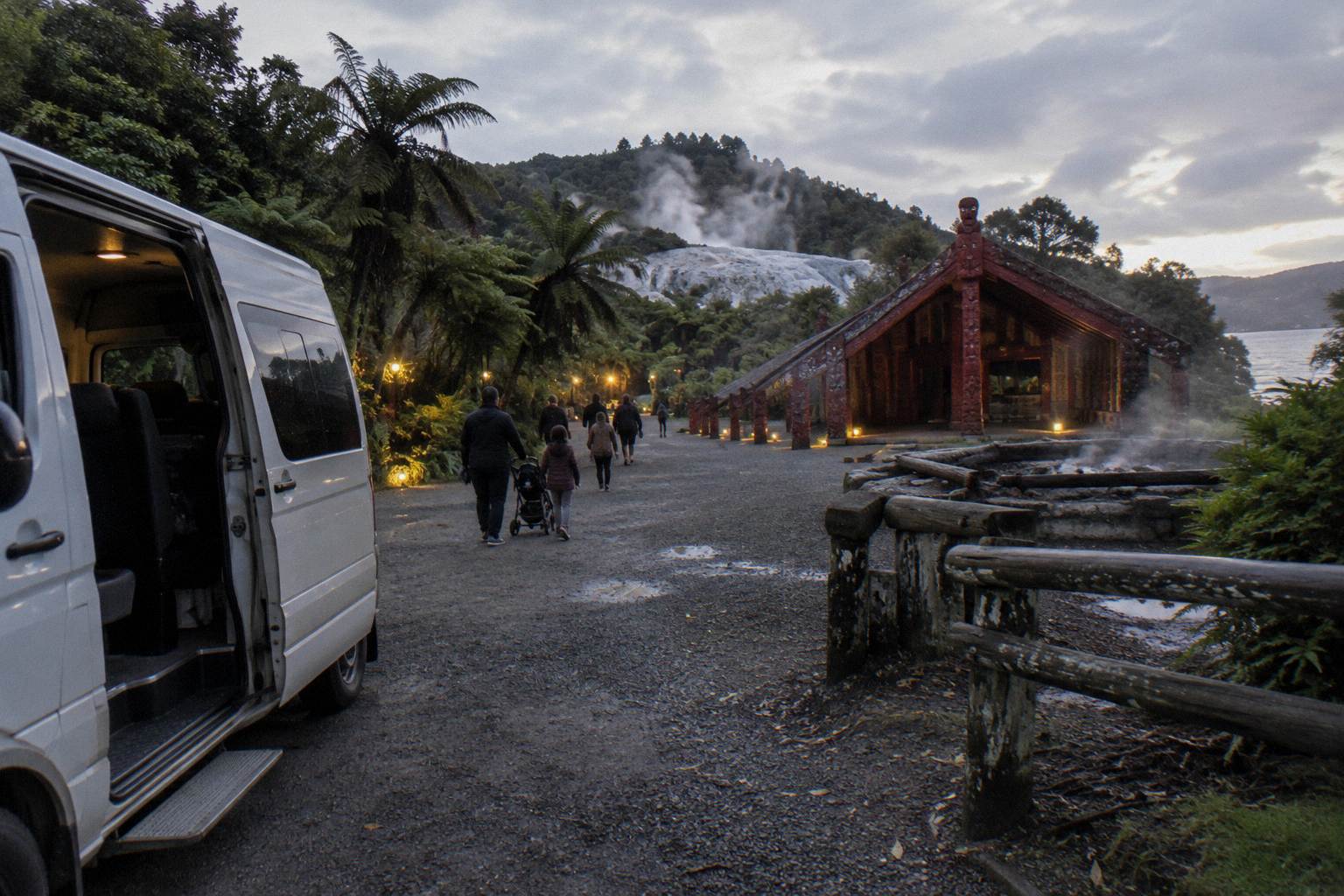
Children are welcome at both seasonal evenings. The child price covers a defined seat at the feast, and the winter page adds that the site is wheelchair and buggy accessible, the only accessibility statement the operator makes. For families weighing the evening against alternatives, the guide to a Māori cultural evening with kids covers the age pricing across operators in one place.
Drinks sit alongside the food rather than inside it. The licensed bar at Te Pā Tū offers a Māori wine pairing and non-alcoholic pairings, and each evening closes with a complimentary pour: a digestif of the chef's choice plus rongoā herbal tea in summer, an aperitif plus rongoā tea in winter. Neither the wine pairing nor any bar purchase is inside the ticket price; the complimentary items are.
What Trips People Up When Booking The Te Pā Tū Feast
The four things that catch diners out are booking the wrong season's menu, assuming a start time, mixing up the cancellation windows and confusing the venue's business address with the village itself, and each of the four is settled in a minute with the operator's own pages or a phone call rather than at the dinner table. None of this is hidden information. All four points sit on different pages of the operator's site, and a booking made on autopilot can miss every one of them, so it pays to check each before you pay.
Season first. A November booking is a summer Tū Te Rā booking: canapés, three courses, hāngī lifting. A July booking is Tū Te Ihi: broth, fireside wānanga, family-style lamb hāngī. Booking "the Te Pā Tū dinner" without checking which evening is running means booking a menu you may not have read, and the two menus share almost nothing on the plate.
Start time second. Neither the summer nor the winter page publishes an evening start time, and the "5.00pm show only" line on the operator's combo page belongs to a Taupō combo product, not to the standalone evening. The coach from central Rotorua is included, so the pickup time on your booking confirmation is the time that matters; treat any other hour you have read elsewhere with suspicion and confirm with the operator.
Cancellation third. The operator's own terms are precise: a 100% refund if cancelled two days before by 12.00pm, 50% if cancelled one day before by 12.00pm, and nothing on the day, with booking and bank fees excluded from any refund. If Te Pā Tū cancels, a full refund applies if no rebooking is made. The terms on the booking page you reserve through may differ from the operator's own terms, so read the terms at checkout before paying. The full wording is on the operator's terms page.
Address fourth. The 1220 Hinemaru Street address in the terms is a business office, not the village. The forest pā itself sits in tawa forest a short coach ride south of central Rotorua, and the operator does not publish its street address, so self-driving to "the venue" is not the plan the evening is built around: the included coach is. And if you arrive by an old habit, note that Tamaki Māori Village is the former name of this same experience, now Te Pā Tū, not a second village to compare it against.
A note on what the operators do not publish: the history of the hāngī and how the earth-oven method works sit outside their pages, and this article stays with what the operators themselves say about the food. The operator's own definition of manaakitanga, hospitality as a firmly held value centred on strengthening the bonds between host and visitors, is the closest thing to a menu philosophy the operator states.
Whakarewarewa The Living Māori Village, by contrast, serves steam-cooked food at lunch only, with no evening dinner; its daytime cultural performance is a separate thing entirely. For the full context on that dish elsewhere in the city, the guide to hāngī in Rotorua covers every operator serving it.
Booking in advance is the quiet fifth point. Seasonal menus and a single forest pā mean the evenings fill around peak travel dates, and the best time of year for a Māori hāngī evening is the page that matches the menu you want to the month you are travelling. Rotorua Cultural Dinner keeps the seasonal pages straight so you do not have to. Whichever of the three evenings below fits your dates and your budget, the seasonal question comes first.
Common Questions About The Hāngī At Te Pā Tū
What Hāngī Does Te Pā Tū Serve?
In summer (Tū Te Rā, October to April) Te Pā Tū serves forest canapés, a viewing of the hāngī lifting and spit roast, and a three-course seasonal feast in the wharekai. In winter (Tū Te Ihi, May to September) it serves a Matariki-inspired Māori fusion feast family style with a traditional in-ground hāngī of lamb and vegetables.
Does Te Pā Tū Have Vegetarian Or Gluten Free Options?
The winter page lists vegetarian, pescatarian and gluten free options and says it cannot guarantee coeliac safety. Vegan options are not stated. Tell the operator your needs at booking via 0508 826 254 or bookings@maoriculture.co.nz.
How Much Does The Te Pā Tū Dinner Cost?
The operator's price is NZD 290 adult and NZD 125 child in summer, and NZD 280 adult and NZD 115 child in winter. Prices can change; return coach transport from central Rotorua is included in both seasons.
What Is The Difference Between Tū Te Rā And Tū Te Ihi?
Tū Te Rā is the summer harvest evening, about 3.5 hours, with a haka pōhiri welcome, kapahaka in the forest amphitheatre and a three-course feast. Tū Te Ihi is the winter Matariki evening, about 3 hours, opening with an Ahi Tuku fire ceremony, with fireside wānanga and the family-style hāngī feast.
Is Te Pā Tū The Same As Tamaki Māori Village?
Yes. Tamaki Māori Village is the former name of the experience now called Te Pā Tū. It is one venue, owned and operated by Tauhara North No.2 Trust, not two villages.
Can You Cancel A Te Pā Tū Booking?
Under the operator's terms, a 100% refund applies if cancelled two days before by 12.00pm, 50% if cancelled one day before by 12.00pm, and none on the day. Booking and bank fees are not refunded, and the terms at checkout may differ, so read them before paying.