What Is The History Of The Rotorua Hāngī?
The hāngī story in Rotorua as the operators tell it: how each village cooks its earth-oven feast, what each evening serves, and which dinner fits your trip.
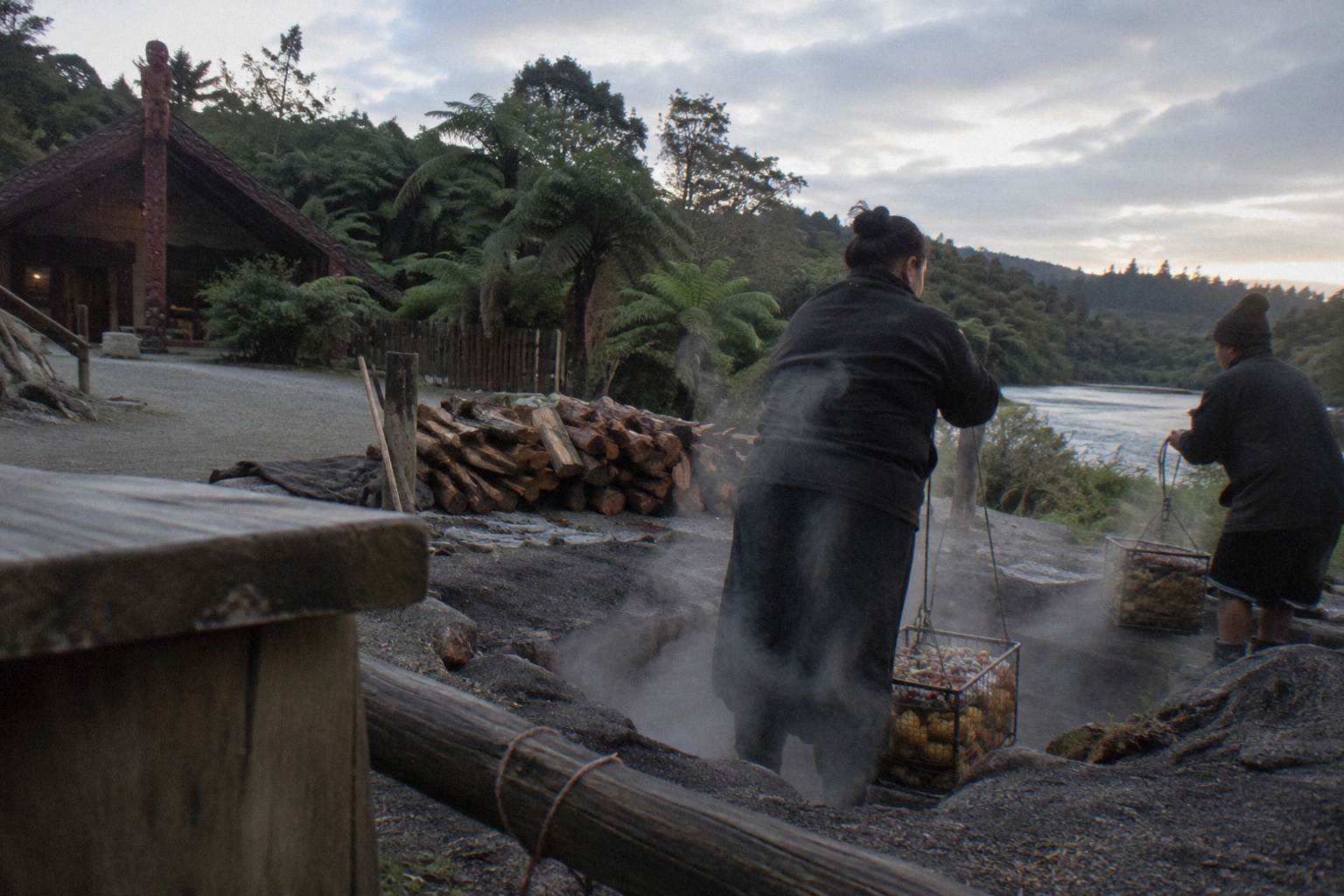
No Rotorua operator publishes a dated history of the hāngī, so this page does not invent one. What the operators do publish is rich enough: Te Pā Tū frames its winter evening in 1800s Aotearoa, between the 1840 Treaty of Waitangi and the 1886 Mt Tarawera eruption, and every dinner venue in the city still cooks or serves hāngī in the earth-oven tradition its own pages describe. The honest answer to the question lives in those descriptions.
The word hāngī, as the operators use it, refers to an earth oven: food cooked in the ground, over heat, for hours. Beyond that gloss, the meaning and origin of the word are not something the operators set out on their pages, and inventing a lineage here would be guesswork dressed as fact. What can be said plainly is that the method is old, that it is practised in Rotorua today by working kitchens at Mitai Māori Village, Te Pā Tū and Te Puia, and that each of those operators describes its own hāngī in concrete, checkable terms.
Te Pā Tū gives the clearest window into the past of any operator in the city. Its winter evening, Tū Te Ihi, is set by the operator in 1800s Aotearoa, framed between the 1840 Treaty of Waitangi and the 1886 Mt Tarawera eruption. That framing belongs to the operator, and it is the only historical dating any of the three dinner venues offers. Everything else the operators say about the hāngī is present tense: how deep the pit is, how long the food cooks, what goes in it, and what the feast around it looks like tonight.
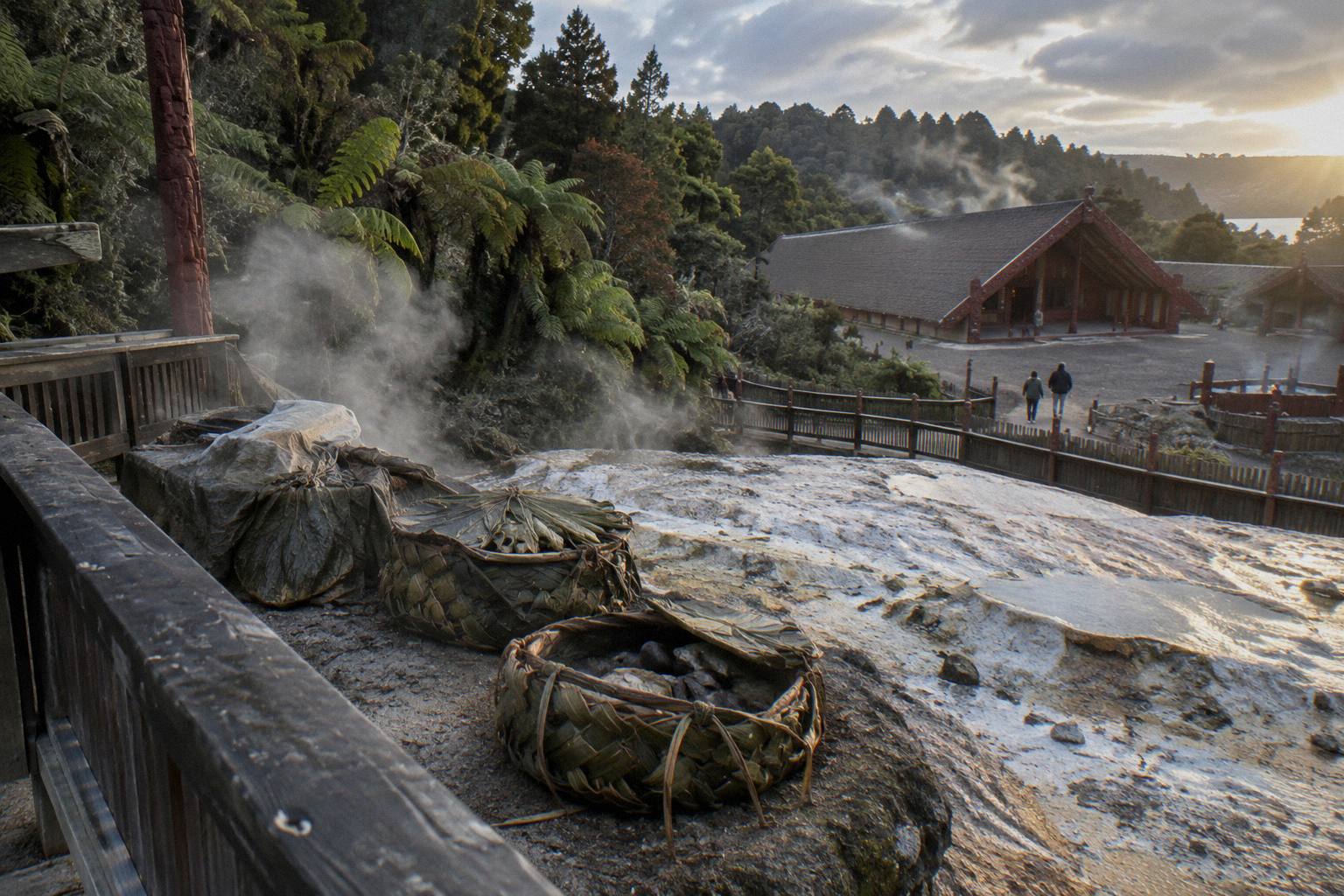
That present tense is where the real value sits for a traveller. The hāngī you can actually eat in Rotorua is not a museum piece behind glass. It is dinner, cooked in the ground that afternoon, served as the centrepiece of an evening that also carries welcome ceremonies, song, performance and story. Te Pā Tū speaks of mātauranga, knowledge handed through generations, and of kaitiakitanga, care of the natural environment, as living parts of what it does. The operator's own definition of manaakitanga is worth quoting at length: it is frequently referred to as hospitality, but it is a firmly held value and practice within iwi Māori, centred at a simple level on strengthening the bonds between a host and their visitors through benevolence and hospitality.
So the history question becomes a practical one. If no operator publishes a timeline, the best a visitor can do is eat at the places that still do the thing, and understand what each one says about its own practice.
The three bookable dinners below are the evenings in the city that serve hāngī as part of a full cultural night out. If you already know you want the earth-oven feast and simply need to pick a venue, they are the shortlist.
How The Operators Cook A Hāngī In Rotorua Today
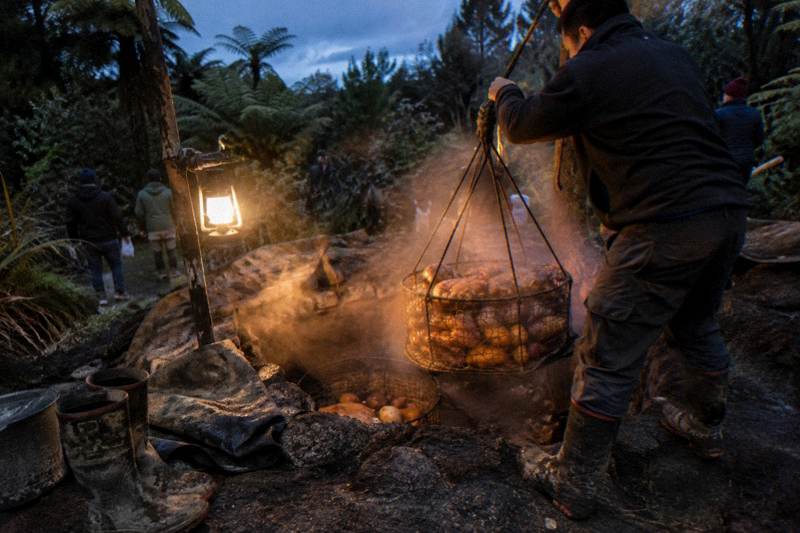
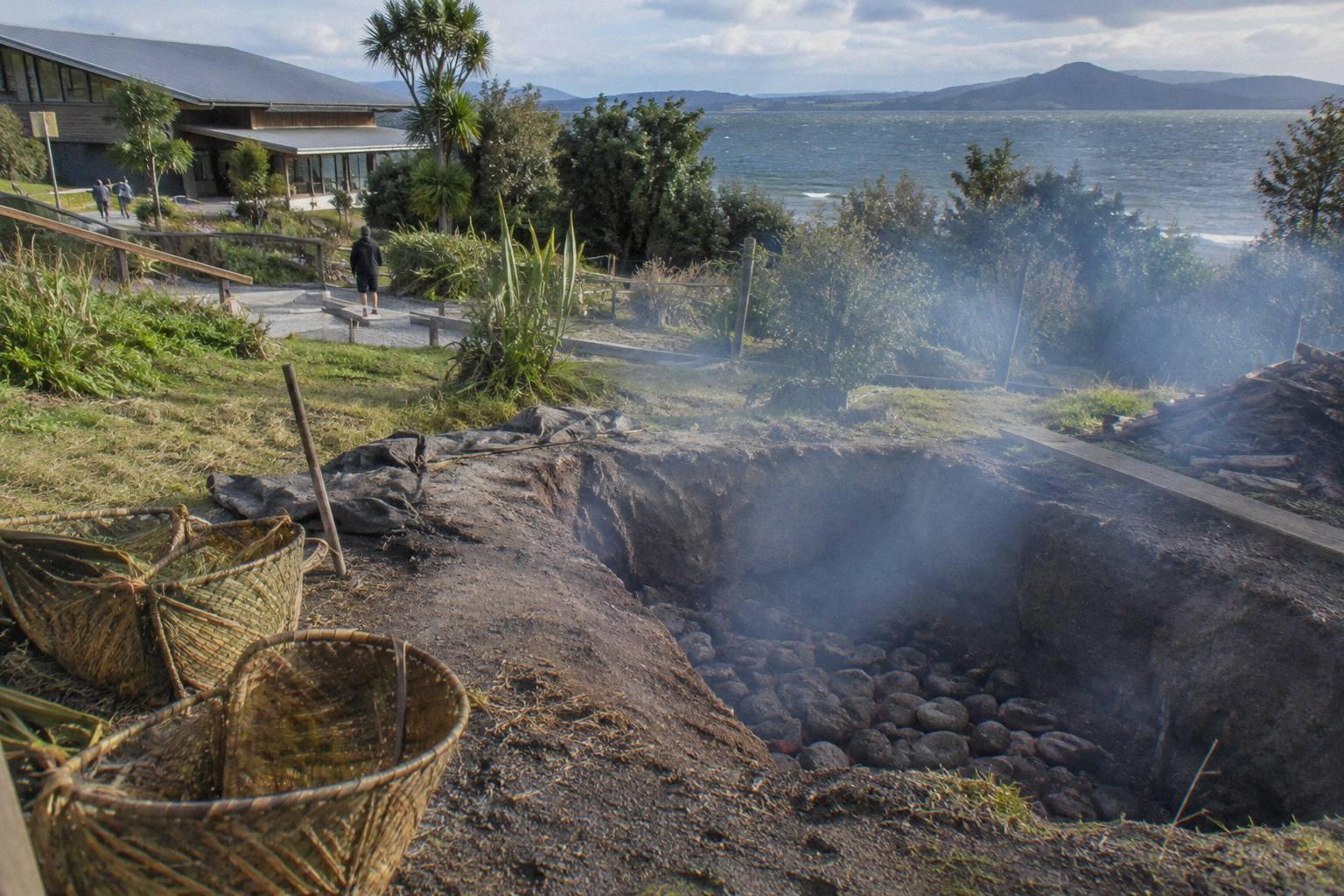
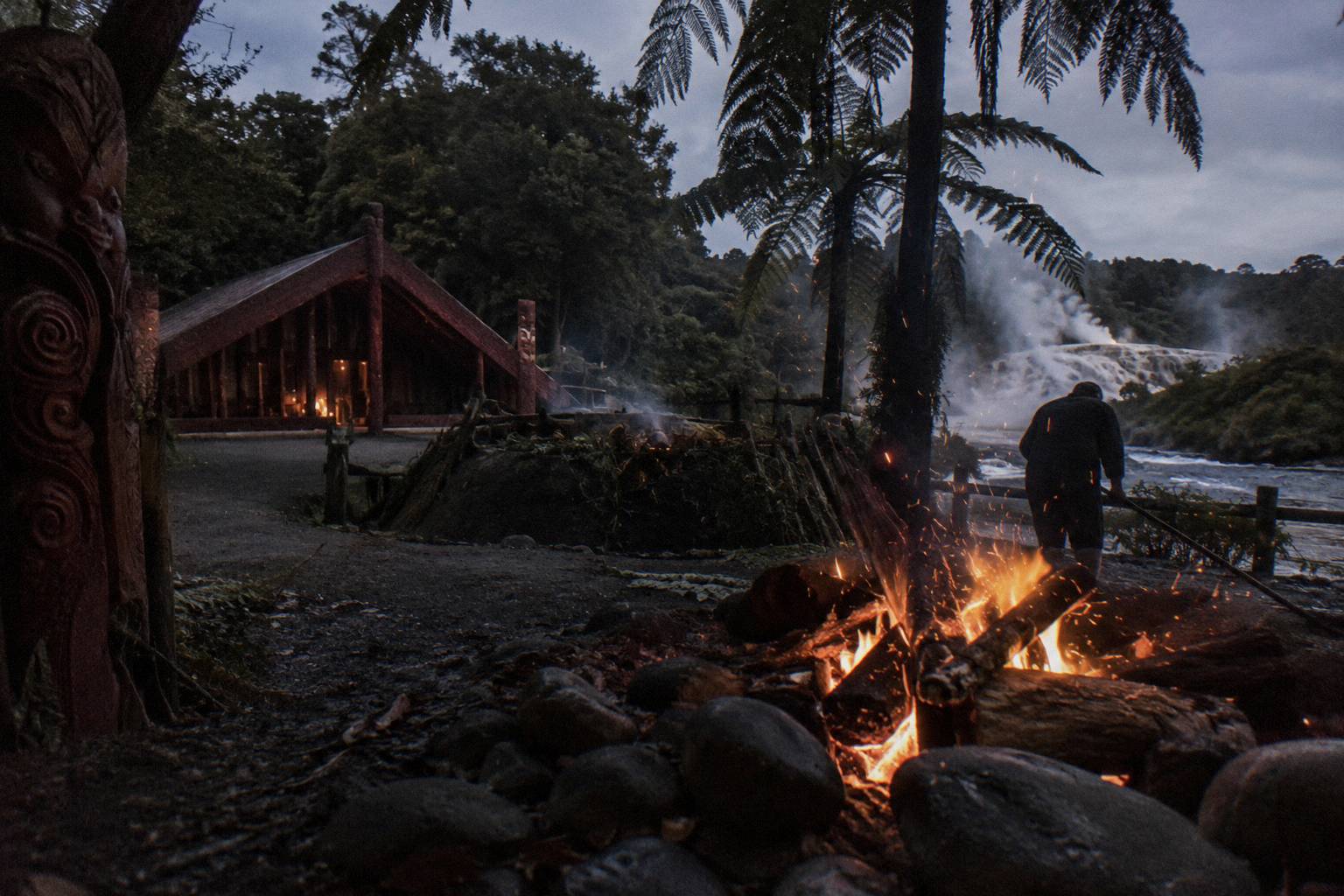
Rotorua's operators cook hāngī in varied ways today: Mitai cooks its hāngī of meat, chicken and kūmara in an earth oven hole 1 to 2 m deep for 3 to 4 hours, Te Pā Tū has guests view the hāngī lifting and a spit roast in summer while serving a traditional in-ground hāngī of lamb and vegetables in winter, and Te Puia serves a hāngī buffet dinner with valley views.
The Mitai method is the most fully described in the city. According to the operator's hāngī dinner page, the pit runs 1 to 2 m deep and the food cooks for 3 to 4 hours, which means the oven is working long before any guest arrives. The basket holds meat, chicken and kūmara, and the operator's wording for the meal itself also lists vegetables, salads and a dessert buffet around it. Guests see the hāngī unveiled as part of the evening rather than merely finding it on a plate, and the full experience runs about 3 hours, priced at NZD 188.34 adult and NZD 115.74 child aged 4 to 13, with the adult price applying from age 14. Those are the operator's prices, and they can change.
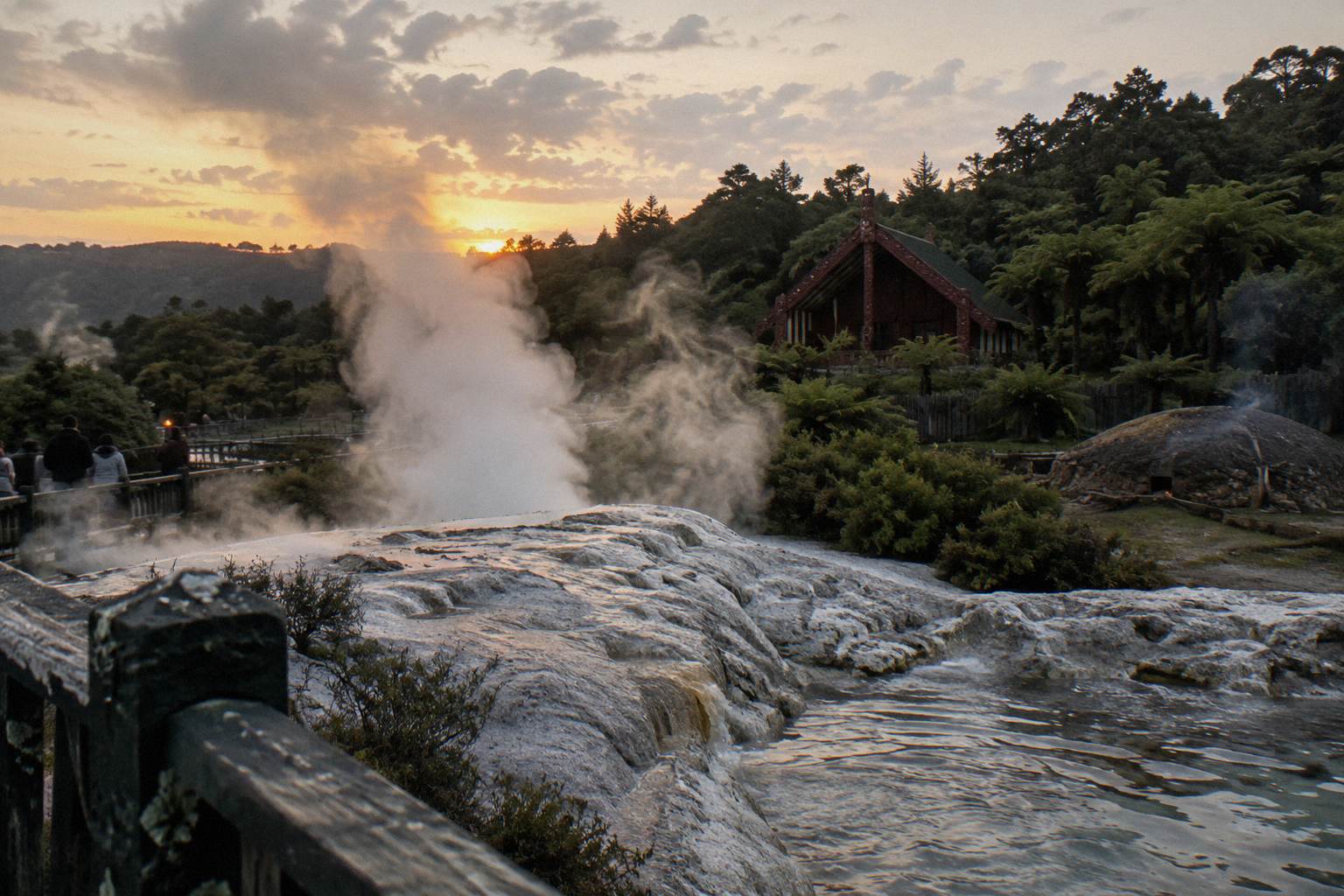
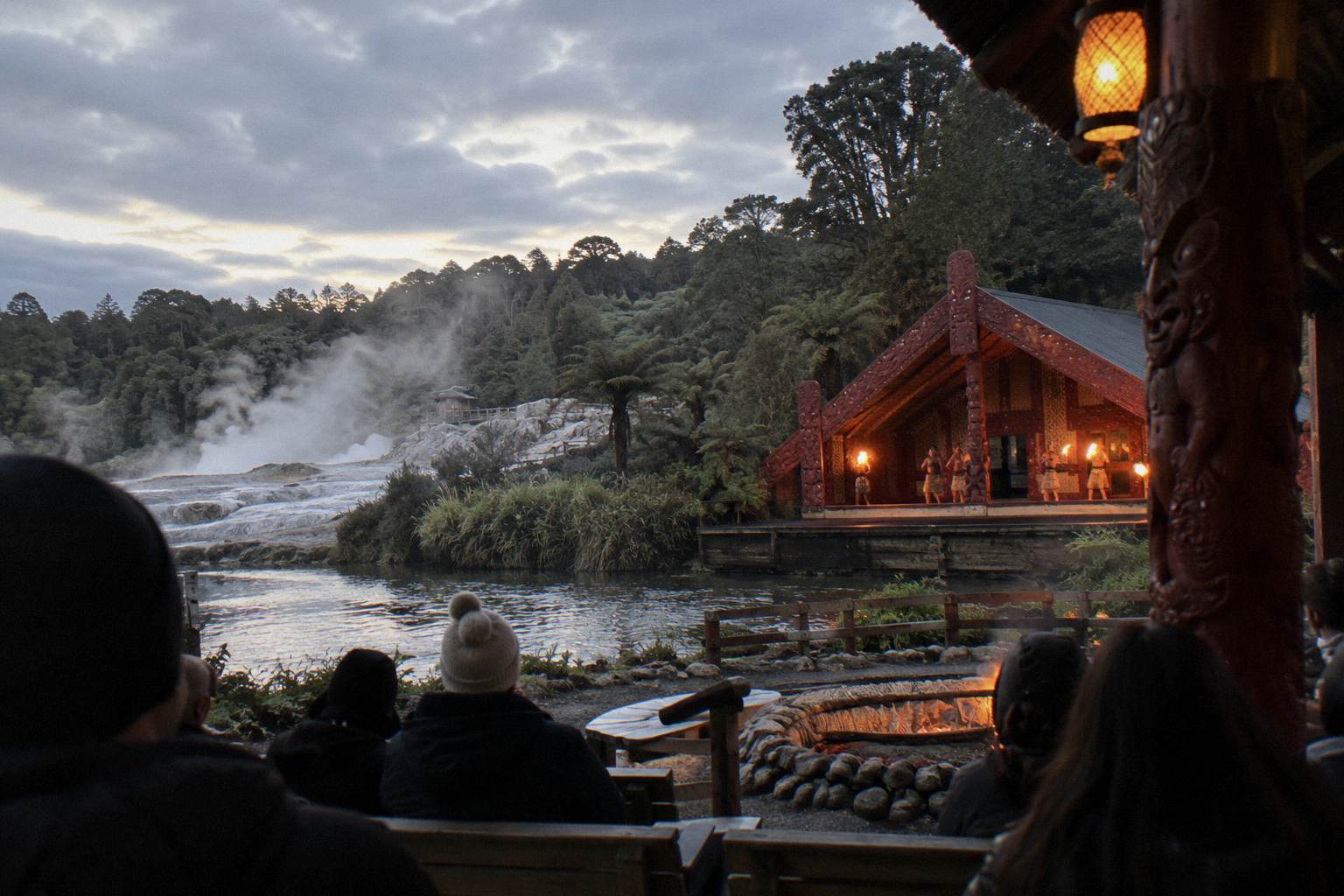
Te Pā Tū treats the hāngī as theatre as much as dinner. Its summer evening, Tū Te Rā, includes viewing the hāngī lifting and the spit roast before a three-course seasonal feast in the wharekai, the dining house, blending traditional and innovative dishes by Māori chefs. The winter evening, Tū Te Ihi, serves a Matariki-inspired Māori fusion feast family style, with a traditional in-ground hāngī of lamb and vegetables at its heart. The summer evening runs 3.5 hours and the winter evening 3 hours, per the operator's winter evening page and its summer counterpart, though the operator's homepage rounds the experience up as four hours of celebration and feasting.
Te Puia's approach puts the hāngī in a restaurant setting rather than a village clearing. The Te Pō evening includes a 45-minute performance of song and dance in the carved meeting house Te Aronui a Rua, hot chocolate on the geyser terrace, and a hāngī buffet dinner in the Pātaka Kai Restaurant and Bar, per Te Puia's night experiences page. The evening runs about 2.5 hours from 5:30pm, with dinner sittings at 5:30pm and 7:15pm, at the operator's price of NZD 203.
Whakarewarewa The Living Māori Village belongs in this conversation only as a caveat. It is a daytime village: guided tours run hourly from 9am to 3pm and its cultural performance is at 12.30pm. Its food is steam-cooked and lunch style, and there is no evening dinner there. The operator says Tūhourangi Ngāti Wāhiao have hosted visitors there over 300 years, a claim that belongs to the operator, and it is the closest thing to a long-run hosting history any Rotorua page offers. But it is not a dinner venue, and no evening meal should be read into it.
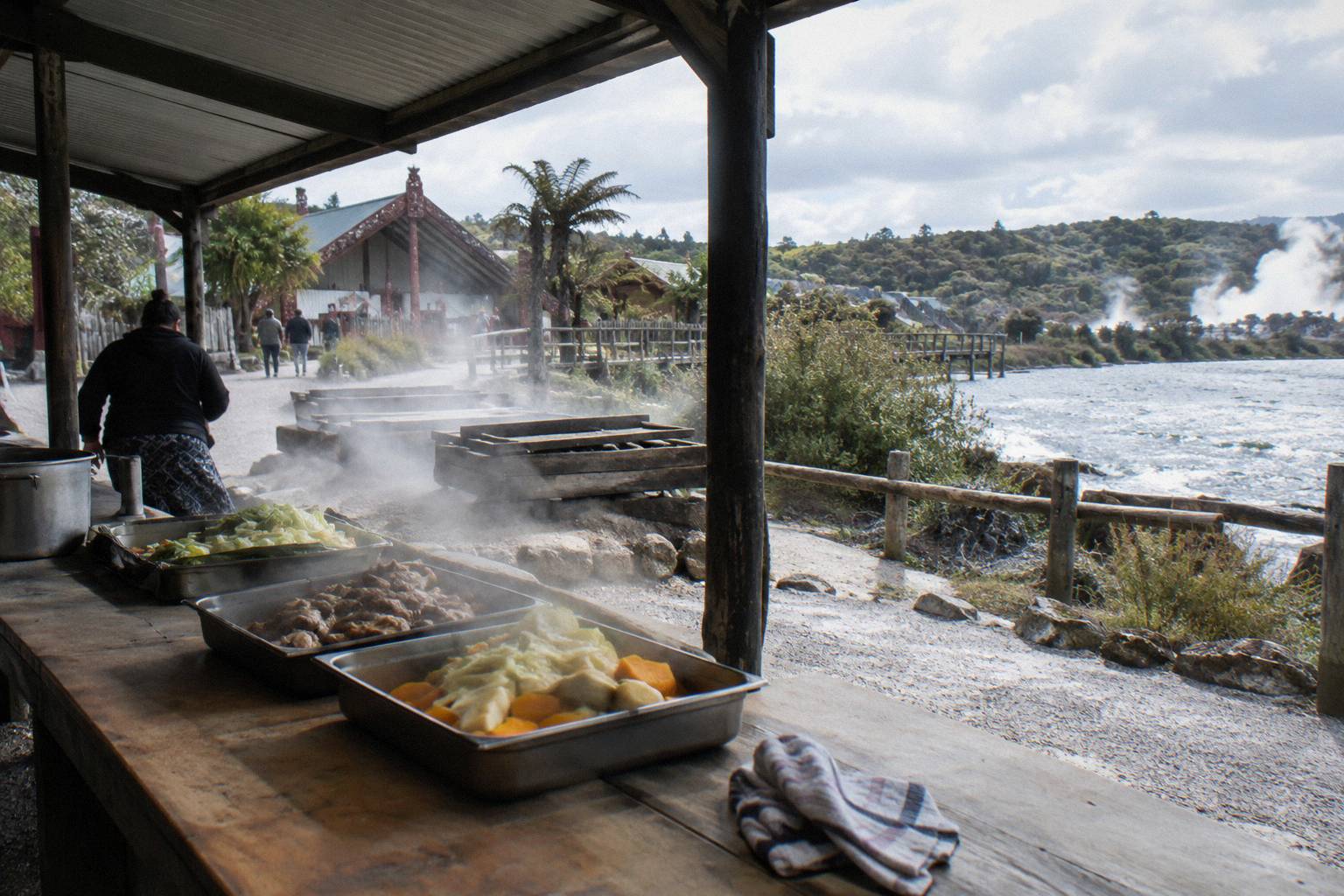
If the cooking method itself is what drew you here, two companion pages go deeper from the same operator-sourced facts: one on what a hāngī actually is and one on how a hāngī is cooked step by step. Between them they cover the vocabulary and the mechanics without drifting past what the operators state.
The Mitai evening is the one that leans hardest on the hāngī as the spine of the night: unveiling first, buffet after, question time alongside. If that is the version of the earth-oven dinner you want, it is worth checking dates early.
What Each Rotorua Evening Serves Around The Hāngī
Each night builds around hāngī differently: Te Pā Tū's summer menu offers forest canapés, a viewed hāngī lifting and a three-course feast, while its winter menu is a Matariki-inspired fusion feast with in-ground hāngī lamb and vegetables. Mitai serves a full buffet hāngī dinner with vegetables, salads and a dessert buffet, and Te Puia serves a hāngī buffet in a restaurant with geothermal valley views.
The canapés are where Te Pā Tū's summer evening shows its kitchen's range. The operator lists examples such as pāua wonton, kawakawa leaf filled with prawn, hāngī root-vegetable croquette and kūmara crisp with venison, served as kai horotai in the forest before the feast. That is degustation territory, not cafeteria territory, and it frames the hāngī as one course among several rather than the whole meal. A complimentary digestif of the chef's choice and rongoā herbal tea close the summer evening.
| Evening | Hāngī role | Other food | Operator's adult price |
|---|---|---|---|
| Te Pā Tū, summer Tū Te Rā | View the hāngī lifting and spit roast | Forest canapés, three-course seasonal feast, digestif and rongoā tea | NZD 290 |
| Te Pā Tū, winter Tū Te Ihi | Traditional in-ground hāngī, lamb and vegetables | Kai horotai, boil-up broth, kawakawa tea, Matariki-inspired fusion feast family style, aperitif | NZD 280 |
| Mitai Authentic Hāngi Dinner | Full buffet hāngī dinner, unveiled during the evening | Vegetables, salads, dessert buffet | NZD 188.34 |
| Te Puia Te Pō | Hāngī buffet dinner in Pātaka Kai Restaurant and Bar | Hot chocolate on the geyser terrace | NZD 203 |
Dietary needs matter here, and the operators are not equally flexible on paper. Te Pā Tū's winter page lists vegetarian, pescatarian and gluten free options and states it cannot guarantee coeliac safety; vegan options there are not stated. Mitai says it is unable to cater to all dietary needs, giving vegan as an example, though some requests could be met. Te Puia's dietary options are not stated, so ask the operator. In every case the right move is the same: tell the operator at booking, not on the night.
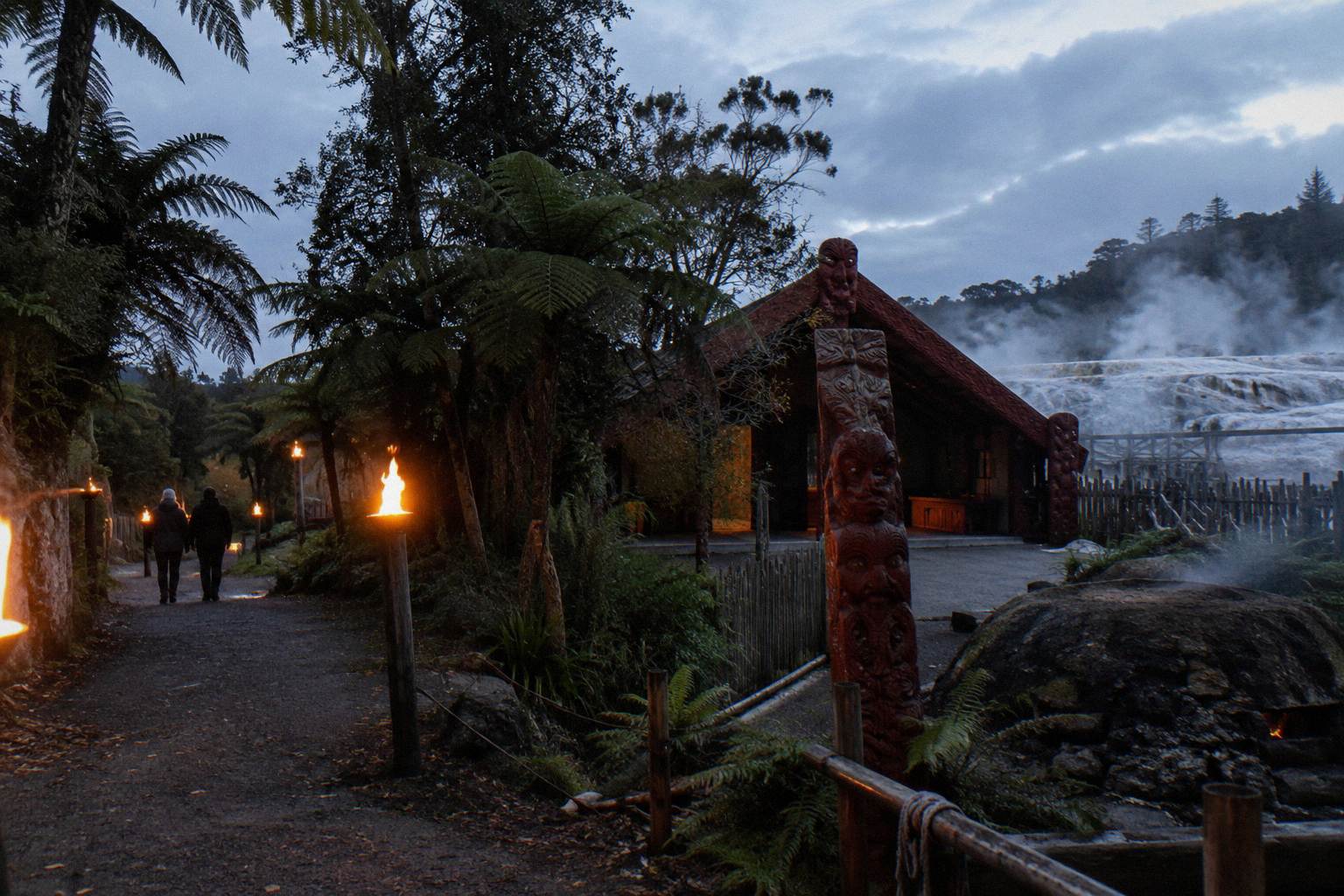
The seasons at Te Pā Tū also swap the whole shape of the evening, not just the menu. Summer brings the haka pōhiri welcome, kapahaka in the forest amphitheatre Tūāpapa and torchlight on the way to the feast. Winter opens with an Ahi Tuku fire ceremony, moves through fireside wānanga, conversation, history, games, instruments and traditions, and ends with a poroporoaki farewell. Same kitchen, same venue, two genuinely different nights, and the price moves with the season: NZD 290 adult in summer, NZD 280 in winter, with children at NZD 125 and NZD 115 respectively.
Te Puia's dinner is the shortest evening of the three at about 2.5 hours, and the only one with a stated start time, 5:30pm. It suits a traveller who wants performance, geothermal spectacle and an earth-oven dinner without committing a full half evening. Mitai's three hours add the waka on the Wai-o-Whiro Stream, an evening bush walk to the old fortified village site and the sacred spring Te Puna Tapu o Tūhoe, and glow worms. Te Pā Tū runs the longest and the deepest of the three, and it is the evening this site features for readers who want the hāngī inside the fullest cultural frame.
Which Hāngī Evening Fits Which Traveller
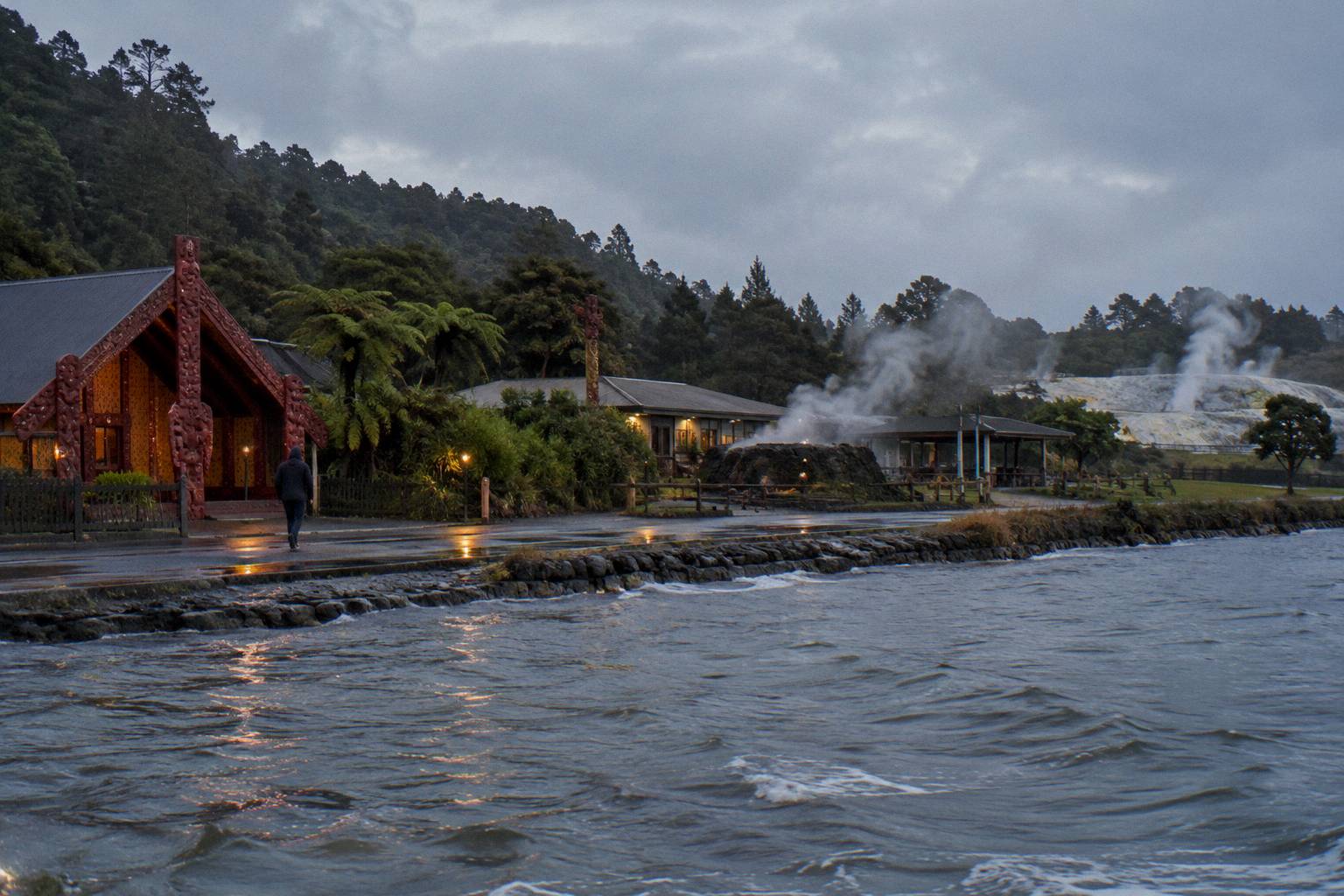
Choose Te Pā Tū for the fullest, longest evening, about 3 to 3.5 hours with coach transport from central Rotorua included, from NZD 280 adult. Choose Mitai for the classic buffet hāngī with the waka and bush walk, NZD 188.34 adult, about 3 hours. Choose Te Puia for the shortest, earliest evening with a fixed 5:30pm start and no transfer, NZD 203. Price, duration and logistics, more than food quality, decide this.
Budget first. The spread between the cheapest and the priciest adult seat is about NZD 100, and every one of these is the operator's own price, subject to change. Mitai sits lowest at NZD 188.34 for an adult, with children 4 to 13 at NZD 115.74. Te Puia's Te Pō is NZD 203. Te Pā Tū tops the table at NZD 290 in summer and NZD 280 in winter. For a family of four the gap compounds quickly, so the season you travel in genuinely matters at Te Pā Tū.
| What matters to you | Best fit | Why |
|---|---|---|
| Lowest adult price | Mitai | NZD 188.34 adult, full buffet hāngī dinner, about 3 hours |
| Shortest evening, earliest finish | Te Puia Te Pō | About 2.5 hours from 5:30pm, dinner sittings 5:30pm and 7:15pm |
| No car, staying central | Te Pā Tū | Return coach transport from central Rotorua included |
| No car, staying at a registered property | Mitai | Complimentary transfers from registered accommodation, limited numbers, must be booked |
| Formal dining-room setting | Te Puia | Hāngī buffet in the Pātaka Kai Restaurant and Bar with valley views |
| Longest cultural programme | Te Pā Tū | 3 to 3.5 hours spanning welcome, performance and feast |
Logistics separate the three as sharply as price. Te Pā Tū includes return coach transport from central Rotorua, and the village itself is a forest pā a short coach ride south of the centre; its address is deliberately not published, so you go with the coach or you do not go. Mitai sits at 196 Fairy Springs Road with free on-site parking, and offers complimentary transfers from registered accommodation in limited numbers that must be booked ahead; the transfer closes at capacity. Te Puia at 20 Hemo Road states no hotel transfer, and instead names the City Ride bus every 30 minutes until 6PM, plus Uber and taxi, with free parking on site.
Cancellation terms differ too, and they never cross over between operators. Te Pā Tū's own terms give a 100% refund if cancelled two days before by 12.00pm, 50% one day before by 12.00pm, and nothing on the day; booking and bank fees are not refunded. Te Puia requires amendment or cancellation at least 48 hours before, 72 for groups of 10 or more, and check-in 15 minutes early or the ticket is forfeited. Mitai's cancellation terms are not public, they are set in its booking widget, so read the terms at checkout wherever you book. The booking page used to reserve may differ from the operator's own terms at any of the three.
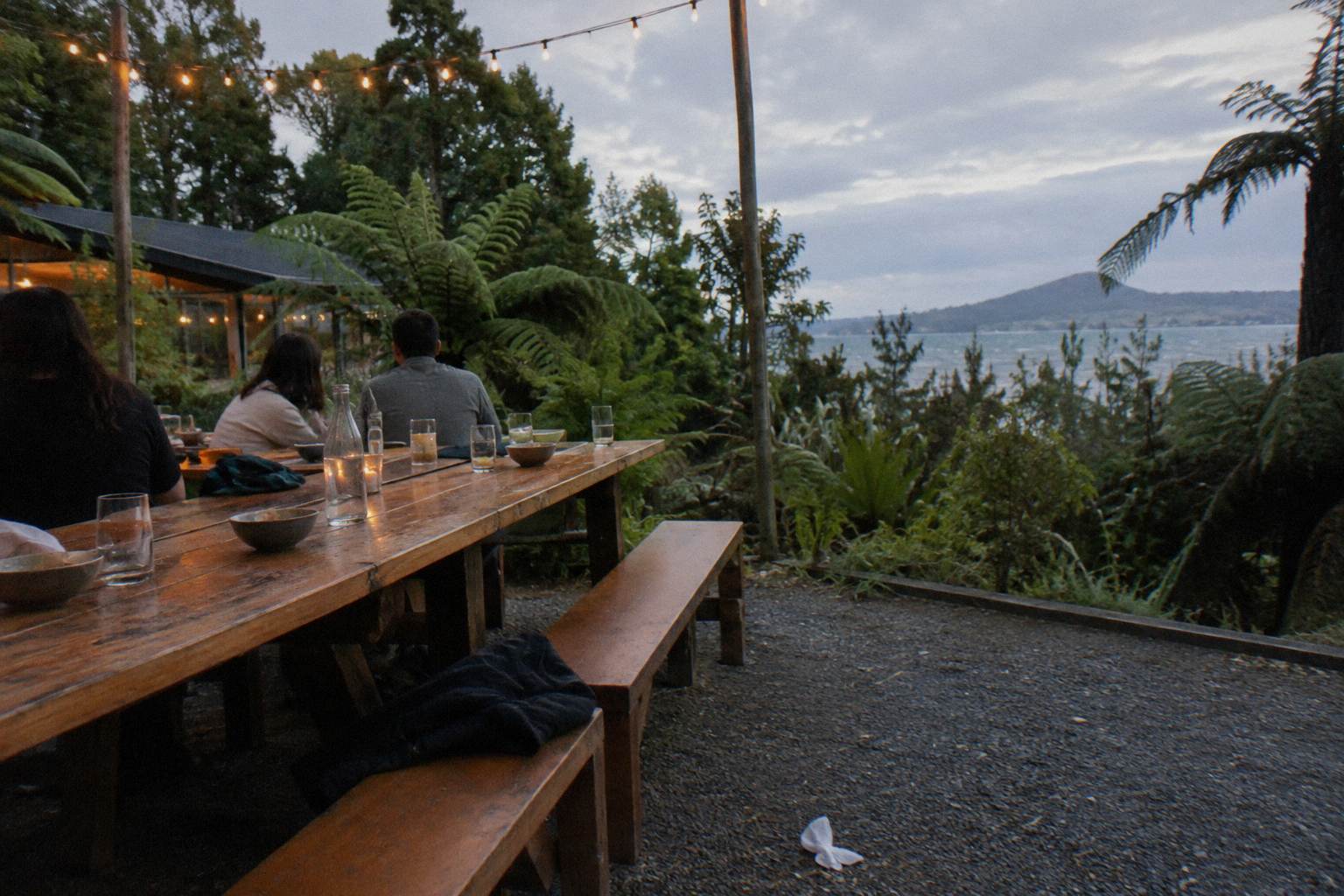
Children are welcome across all three, on different terms. Te Pā Tū welcomes children at NZD 125 summer and NZD 115 winter, with no minimum age published. Mitai's child price covers ages 4 to 13, the adult price applies from 14, infants 3 and under have no published price, and highchairs are limited. Te Puia's booking page says under 4 go free; a child price beyond that is not stated. If your group includes a wheelchair user, note that Te Pā Tū's winter page says the site is wheelchair and buggy accessible, Mitai notes some wheelchair limits on its forest walk, and Te Puia states free parking and a cashless site but no fuller accessibility detail.
For the reader whose interest in the hāngī's story points at the fullest evening, the Te Pā Tū cultural experience with dinner is the featured pick on this site: seasonal menus, a forest setting, and the operator's own framing of the feast inside 1800s Aotearoa. Check availability once your dates are firm, because the seasonal switch between Tū Te Rā and Tū Te Ihi changes both the menu and the price.
What Trips People Up When Booking A Hāngī Evening
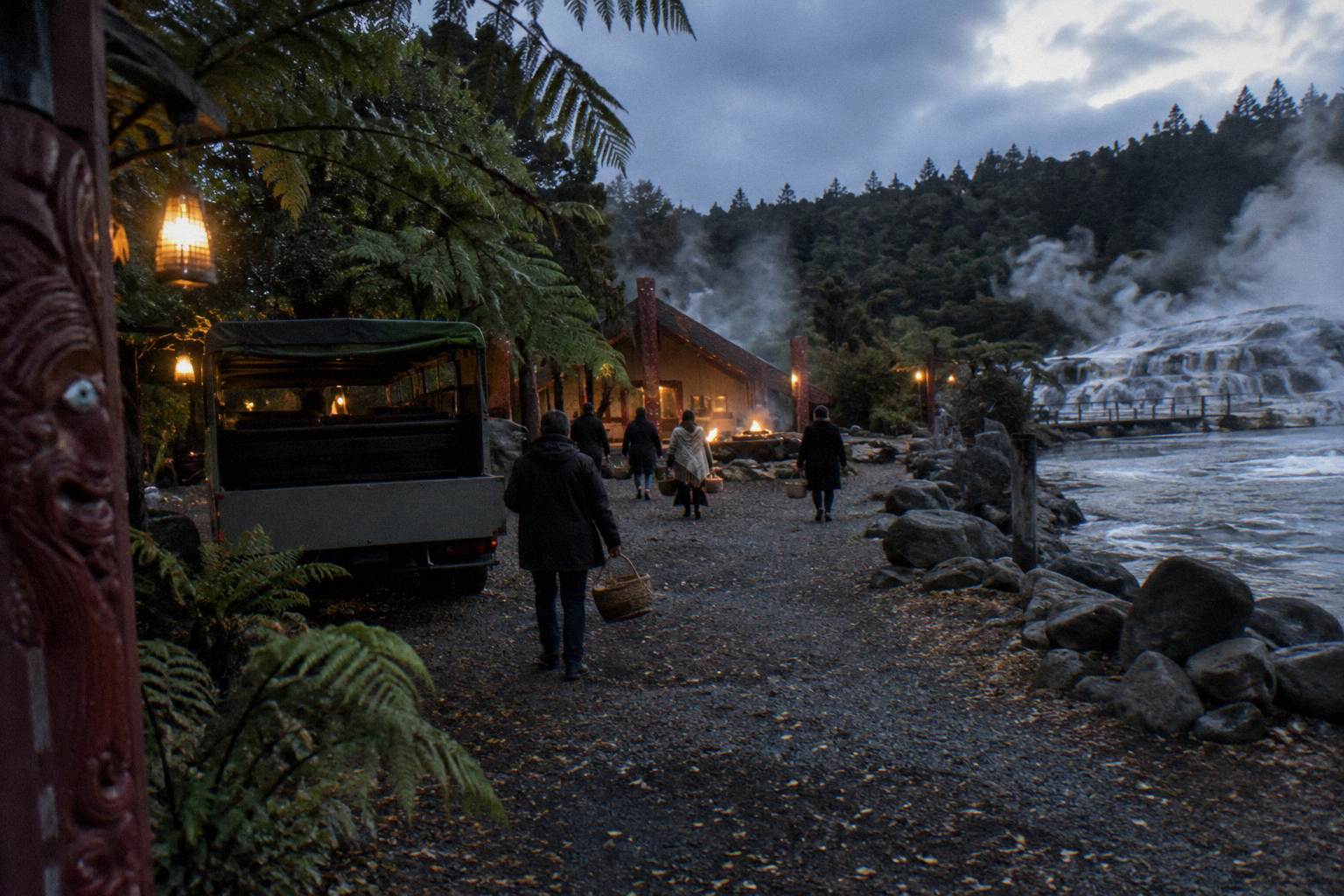
Four mistakes recur. Travellers assume vegan food is available everywhere, though Mitai says it cannot cater to vegan and Te Pā Tū does not state a vegan option. They assume every venue runs a shuttle, though only Te Pā Tū includes transport and Mitai's is capacity-limited. They book Te Pā Tū without realising the season changes the menu, duration and price. And they miss the cancellation windows, which are 48 hours or more at two of the three venues.
Start with diet. The only stated options anywhere are Te Pā Tū's winter-page list of vegetarian, pescatarian and gluten free, with a stated inability to guarantee coeliac safety. Mitai explicitly flags vegan as a need it may not meet. Te Puia publishes nothing on diet. A vegan traveller has no confirmed dinner at any of the three without an email first; the contacts are Te Pā Tū on 0508 826 254 or bookings@maoriculture.co.nz, Mitai on +64 7 343 9132 or reservation@mitai.co.nz, and Te Puia via its own site. Ask, then book.
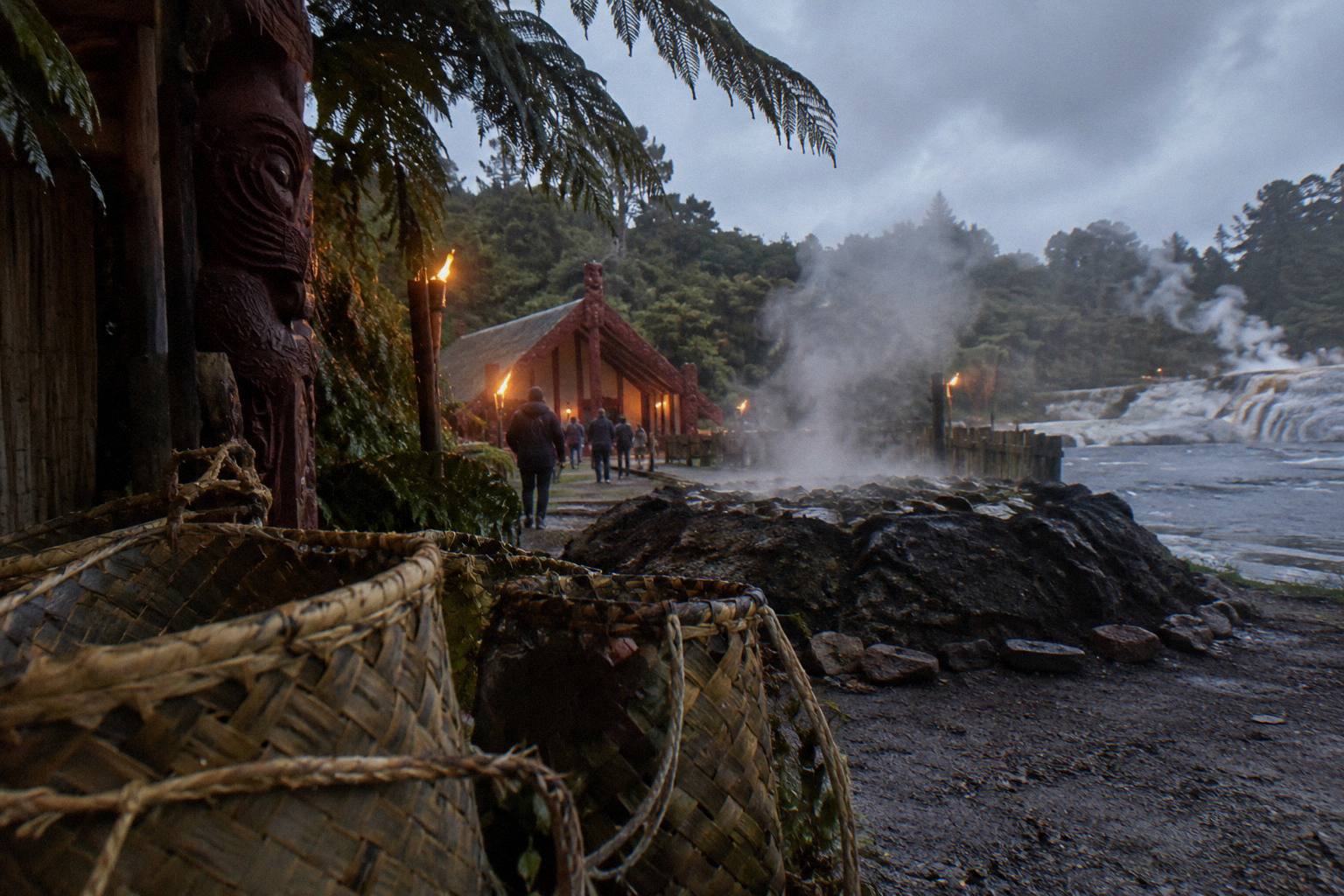
Transport is the second trap. Te Puia's Te Pō has no stated transfer, so a visitor without a car is on the City Ride bus, an Uber or a taxi, and the bus runs every 30 minutes until 6PM, which matters for the 7:15pm sitting. Mitai's shuttle exists only from registered accommodation, only with pre-booking, and it closes at capacity, so assuming a seat on the night is a genuine risk. Te Pā Tū's coach is included and departs central Rotorua, which makes it the only one of the three where transport is simply not a planning item.
The season switch at Te Pā Tū catches northern-hemisphere visitors out. Arrive in January and you get Tū Te Rā, 3.5 hours, canapés and a three-course feast at NZD 290 adult. Arrive in July and you get Tū Te Ihi, 3 hours, a fire ceremony and a family-style Matariki feast at NZD 280 adult. Neither is a discount version of the other; they are different evenings, and reading only one of the operator's two pages before booking is how expectations go wrong. It is also worth knowing that Te Pā Tū is the renamed Tamaki Māori Village experience, so an older search result under the Tamaki name points at the same venue, and a legacy lunch title still floating in search results does not confirm a current lunch offer.
Finally, the clocks. Te Puia wants you checked in 15 minutes early or the ticket is forfeited, and its refund window shuts 48 hours out, 72 for groups of 10 or more. Te Pā Tū's sliding scale rewards cancelling two days ahead by 12.00pm. Mitai's terms live in its booking widget rather than on a public page, so the honest instruction is to read them at checkout before paying. None of this is fine print worth gambling on; every one of these evenings is a substantial ticket.
Whichever of the three evenings fits, the same shortlist covers the city's full hāngī dinner range, and checking live dates and prices on the operator's booking page takes only a few minutes per card.
Common Questions About The Rotorua Hāngī
What Is The History Of The Rotorua Hāngī?
No Rotorua operator publishes a dated history of the hāngī. The clearest historical framing any operator gives is Te Pā Tū's winter evening, which it sets in 1800s Aotearoa between the 1840 Treaty of Waitangi and the 1886 Mt Tarawera eruption. Beyond that, the honest record is what the operators say today: Mitai cooks its hāngī in a pit 1 to 2 m deep for 3 to 4 hours, Te Pā Tū lifts its hāngī in summer and serves an in-ground hāngī of lamb and vegetables in winter, and Te Puia serves a hāngī buffet dinner in its Pātaka Kai Restaurant and Bar.
What Food Is In A Rotorua Hāngī?
Per the operators: Mitai's hāngī includes meat, chicken and kūmara, served as a full buffet with vegetables, salads and a dessert buffet. Te Pā Tū's winter hāngī is lamb and vegetables, served family style within a Matariki-inspired fusion feast. Te Puia serves a hāngī buffet dinner with valley views.
Which Rotorua Village Serves Hāngī At Dinner?
Three operators serve hāngī as part of an evening: Te Pā Tū, Mitai Māori Village and Te Puia's Te Pō evening. Whakarewarewa The Living Māori Village is daytime only, with tours from 9am to 3pm and a 12.30pm performance, and its food is steam-cooked and lunch style with no evening dinner.
How Much Does A Hāngī Dinner Evening Cost In Rotorua?
The operators' prices are NZD 290 adult for Te Pā Tū in summer and NZD 280 in winter, with children at NZD 125 and NZD 115. Mitai is NZD 188.34 adult and NZD 115.74 for children aged 4 to 13. Te Puia's Te Pō is NZD 203. All prices can change; check the operator's booking page.
Are Vegan Or Gluten Free Options Available At A Hāngī Dinner?
Te Pā Tū's winter page lists vegetarian, pescatarian and gluten free options and says it cannot guarantee coeliac safety; a vegan option there is not stated. Mitai says it is unable to cater to all dietary needs such as vegan, though some requests could be met. Te Puia's dietary options are not stated. Tell the operator at booking in every case.
Is The Hāngī The Same At Every Rotorua Village?
No. Mitai presents a traditional full buffet hāngī and shows guests the unveiling. Te Pā Tū builds the hāngī into a wider seasonal feast, with a viewed lifting and spit roast in summer and a family-style Matariki feast in winter. Te Puia serves its hāngī buffet in a restaurant and bar. Same earth-oven tradition, three different evenings.