How A Hāngī Is Cooked: Stones, Steam And Hours In The Ground
The operators who cook hāngī in Rotorua describe the process plainly: a hole in the earth, hours of cooking, and steam. Here is exactly what each one says, and where you can watch it happen.
Short answer
Mitai says its hāngī is cooked in an earth oven hole 1 to 2 m deep for 3 to 4 hours, with meat, chicken and kūmara. Te Pā Tū shows guests the hāngī lifting at its summer evening. Whakarewarewa steam-cooks food at lunch only, and Te Puia serves a hāngī buffet dinner indoors with valley views.
The word hāngī appears on nearly every cultural evening in Rotorua, but the operators describe the cooking in very different ways. Mitai Māori Village describes an earth oven dug into the ground and hours of slow cooking. Te Pā Tū builds its summer evening around the moment the hāngī is lifted. Whakarewarewa steam-cooks food using geothermal heat, and only at lunch. Te Puia serves a hāngī buffet dinner in a restaurant with views over the geothermal valley.
This page sticks to what those operators publish on their own pages, because the mechanics of a hāngī, how stones heat, how steam moves, why the method matters in Māori culture, are not in the material the operators provide. For the cultural background, why hāngī matters to Māori is covered separately. What follows is the cooking itself, venue by venue, and which evenings let you stand there when the earth oven opens.
What The Rotorua Operators Say About Cooking A Hāngī
The four Rotorua venues covered here describe hāngī cooking very differently: Mitai publishes the most detailed method, an earth oven 1 to 2 m deep cooking meat, chicken and kūmara for 3 to 4 hours, while Te Pā Tū presents the hāngī lifting as a moment guests view in summer alongside a spit roast, Whakarewarewa describes steam cooking at lunch only, and Te Puia lists a hāngī buffet dinner without publishing a method.
The differences matter because visitors often book expecting one thing and meet another. A hāngī dinner at Te Puia is a buffet in the Pātaka Kai Restaurant and Bar with valley views, per the operator's own description. A hāngī dinner at Mitai is an earth-oven meal you watch being unveiled before you eat it. Both are genuine operator-stated hāngī dinners, and both are described below with exactly what each operator says, nothing added.
What none of the operators publish is the underlying technique: how the stones are heated, in what order the food is layered, how it is wrapped, or what the word hāngī means beyond earth oven. Those details are simply not in the operators' material, so they do not appear here. Anyone curious enough to ask can raise it at Mitai's question time, which the operator lists as part of the evening.
The table below gathers the cooking descriptions side by side, exactly as each operator states them.
| Venue | What the operator says about cooking | When guests see it |
|---|---|---|
| Mitai Māori Village | Earth oven hole 1 to 2 m deep, cooked 3 to 4 hours, meat, chicken and kūmara | Hāngī unveiling before the buffet dinner |
| Te Pā Tū (summer, Tū Te Rā) | View the hāngī lifting and spit roast | During the 3.5-hour evening |
| Te Pā Tū (winter, Tū Te Ihi) | Traditional in-ground hāngī, lamb and vegetables, part of a family-style fusion feast | Served within the 3-hour evening |
| Te Puia | Hāngī buffet dinner in Pātaka Kai Restaurant and Bar | Dinner sittings 5:30pm and 7:15pm |
| Whakarewarewa | Steam-cooked food | Lunch only, daytime village |
The Earth Oven At Mitai Māori Village
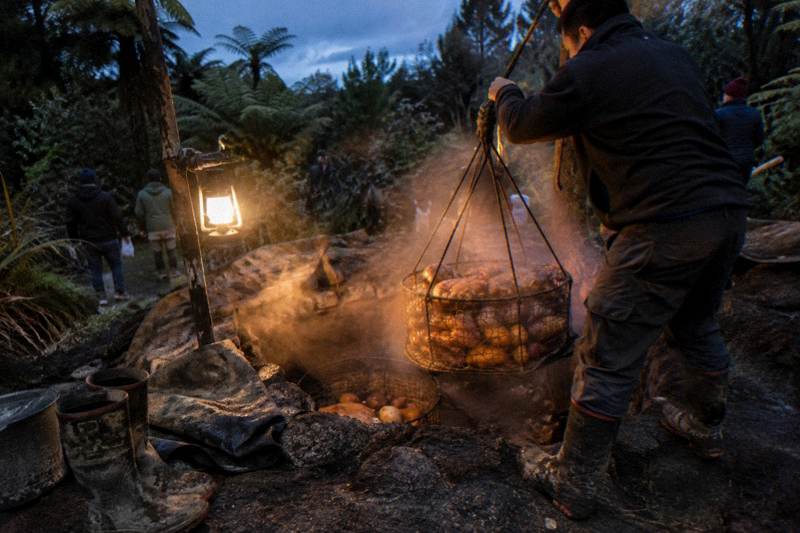
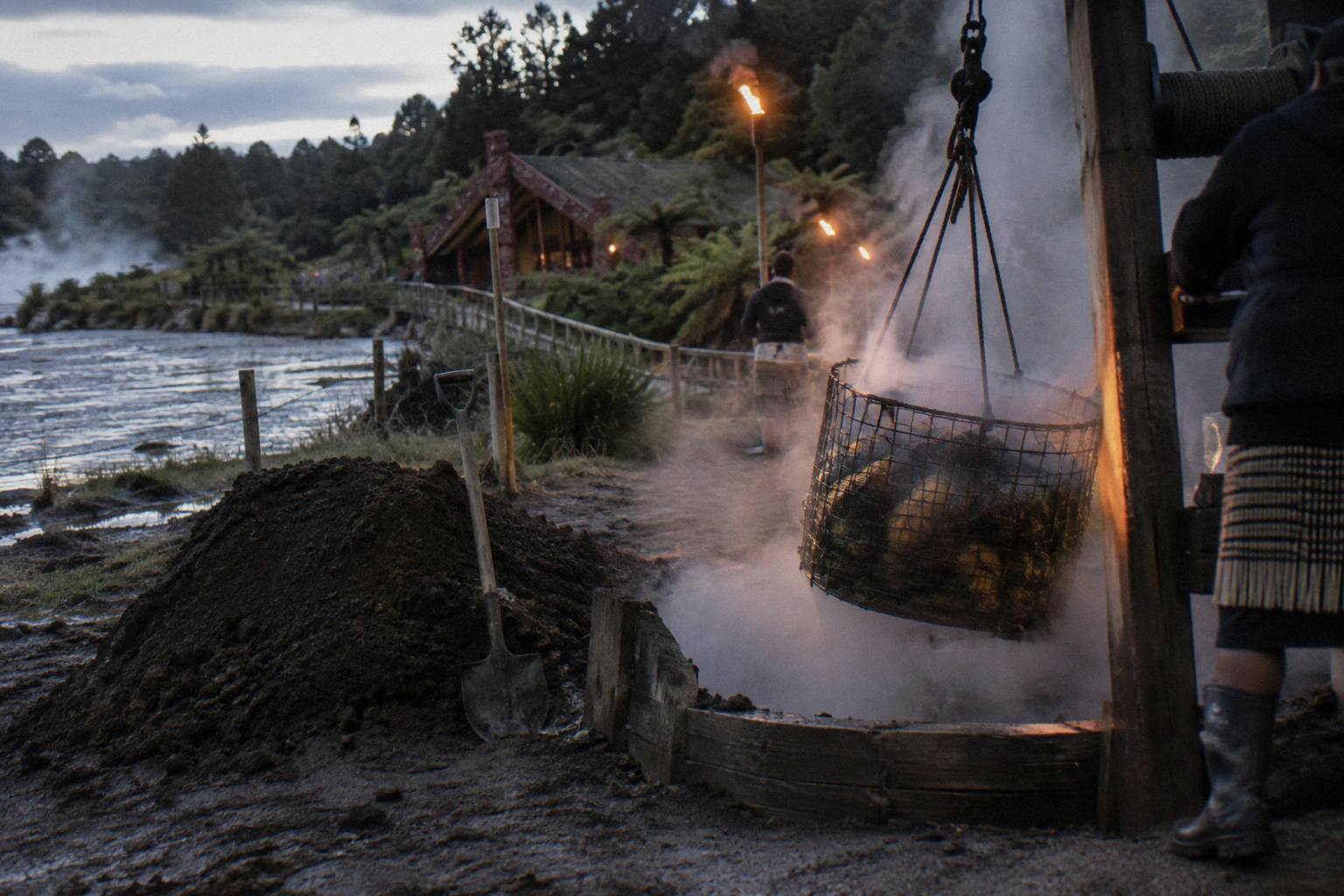
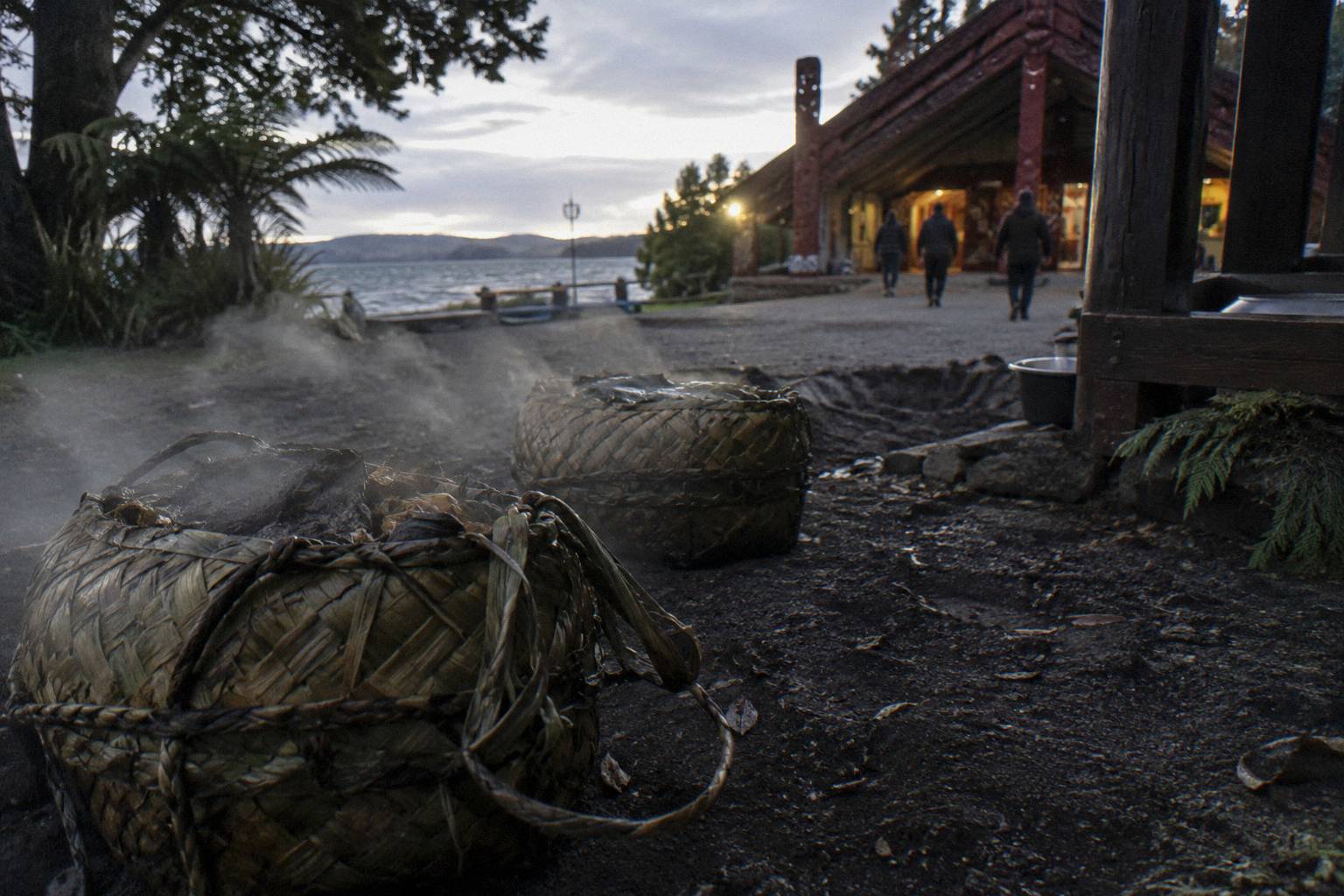
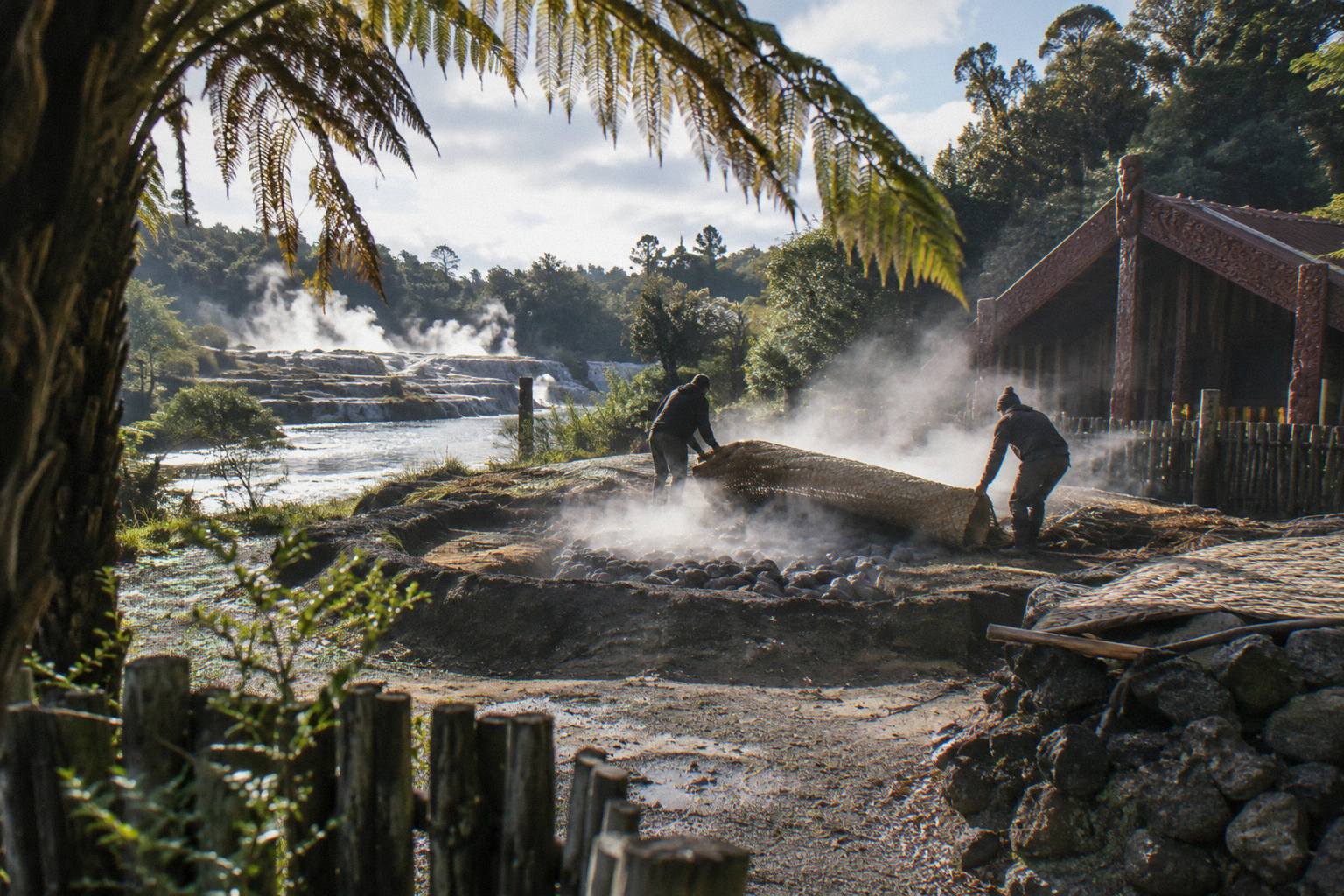
Mitai Māori Village cooks its hāngī in an earth oven hole 1 to 2 m deep, leaving the food underground for 3 to 4 hours, so cooking starts hours before guests arrive. The hāngī holds meat, chicken and kūmara, and after guests watch it unveiled they eat a full buffet dinner that the operator's wording also lists as including vegetables, salads and a dessert buffet.
The unveiling is the moment the operator places at the centre of the food side of the evening. After a welcoming ceremony, guests gather as the hāngī comes out of the ground, and the buffet follows. The operator's own page for the Authentic Hāngi Dinner Experience lists the full sequence: welcoming ceremony, hāngī unveiling, warriors paddling a waka down the Wai-o-Whiro Stream, a cultural performance the operator lists as Pōwhiri, Wero, Waiata, Mōteatea, Poi and Haka, the buffet dinner, question time, and an evening bush walk to the old fortified village site and the sacred spring Te Puna Tapu o Tūhoe, with glow worms along the way.
The whole evening runs about 3 hours, per the operator. The adult price, from age 14, is NZD 188.34 and the child price, ages 4 to 13, is NZD 115.74; the operator's price can change. The dinner start time is not on the operator's public pages, it is set in the booking widget, so confirm the time when reserving. The same applies to cancellation terms: they are set in the booking widget rather than published, so read the terms at checkout.
Practical details the operator does publish: free on-site parking at 196 Fairy Springs Road, a bar on site with no outside alcohol permitted, limited highchairs, limited umbrellas, and some wheelchair limits on the forest walk. Complimentary transfers from registered accommodation exist in limited numbers and must be booked, and the transfer closes at capacity. For the practical side of getting there, see getting to Mitai Māori Village.
If watching the hāngī come out of the ground is the part that appeals, Mitai is the evening on this site that says so most directly. You can read the full tour details on the Mitai dinner and buffet page, or check availability if you already know your dates.
Hāngī Lifting And Seasonal Feasts At Te Pā Tū
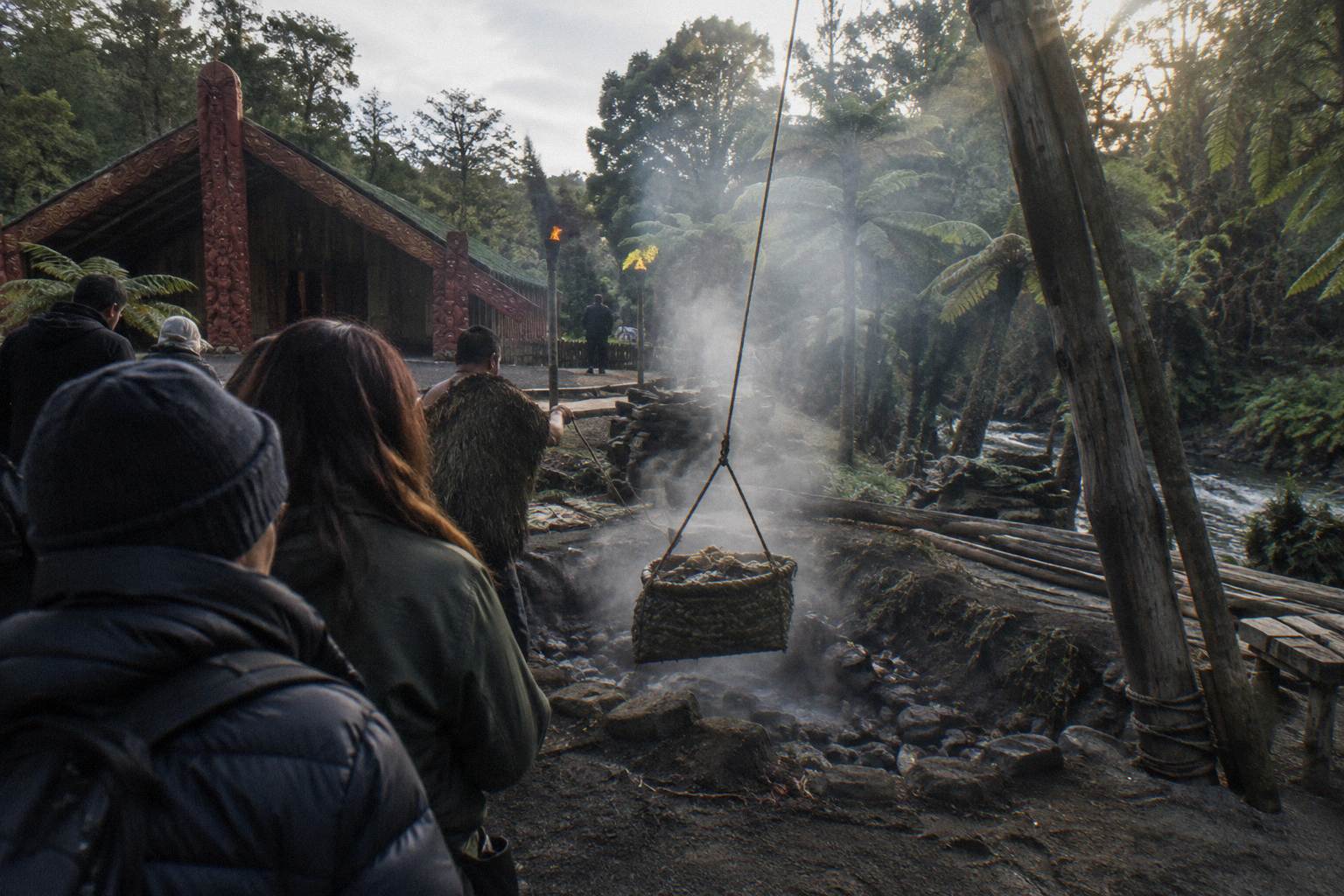
Te Pā Tū does not publish the depth of its pit or its cooking time; what the operator publishes is the guest-facing moment. In summer, the Tū Te Rā evening includes viewing the hāngī lifting and a spit roast. In winter, Tū Te Ihi serves a Matariki-inspired Māori fusion feast, family style, with a traditional in-ground hāngī of lamb and vegetables. The two seasons are different evenings with different menus and prices.
The summer evening, Tū Te Rā, runs October to April and lasts 3.5 hours. Alongside the hāngī lifting, the operator lists forest kai horotai, canapés it describes with examples such as pāua wonton, kawakawa leaf filled with prawn, hāngī root-vegetable croquette and kūmara crisp with venison, followed by a three-course seasonal feast in the wharekai blending traditional and innovative dishes by Māori chefs, a complimentary digestif of the chef's choice and rongoā herbal tea. The operator's summer evening page carries the full list and the seasonal prices: NZD 290 adult and NZD 125 child.
The winter evening, Tū Te Ihi, runs May to September and lasts 3 hours. It opens with an Ahi Tuku fire ceremony welcome, moves through kai horotai, a hearty broth and steaming kawakawa tea, fireside wānanga, kapahaka, and then the fusion feast with the in-ground hāngī. Winter prices are NZD 280 adult and NZD 115 child. The operator frames the winter evening in 1800s Aotearoa, between the 1840 Treaty of Waitangi and the 1886 Mt Tarawera eruption. That framing is the operator's own.
Return coach transport from central Rotorua is included in both seasons, and the village itself is a forest pā in tawa forest a short coach ride south of central Rotorua; its street address is not published, and the Hinemaru Street address on the operator's terms page is a business office only. The evening start time is also not published. Te Pā Tū is the renamed Tamaki Māori Village, so if you have heard the older name, it is the same experience. The operator's dietary page detail for winter lists vegetarian, pescatarian and gluten free options and says it cannot guarantee coeliac safety.
Steam Cooking At Whakarewarewa, Lunch Only
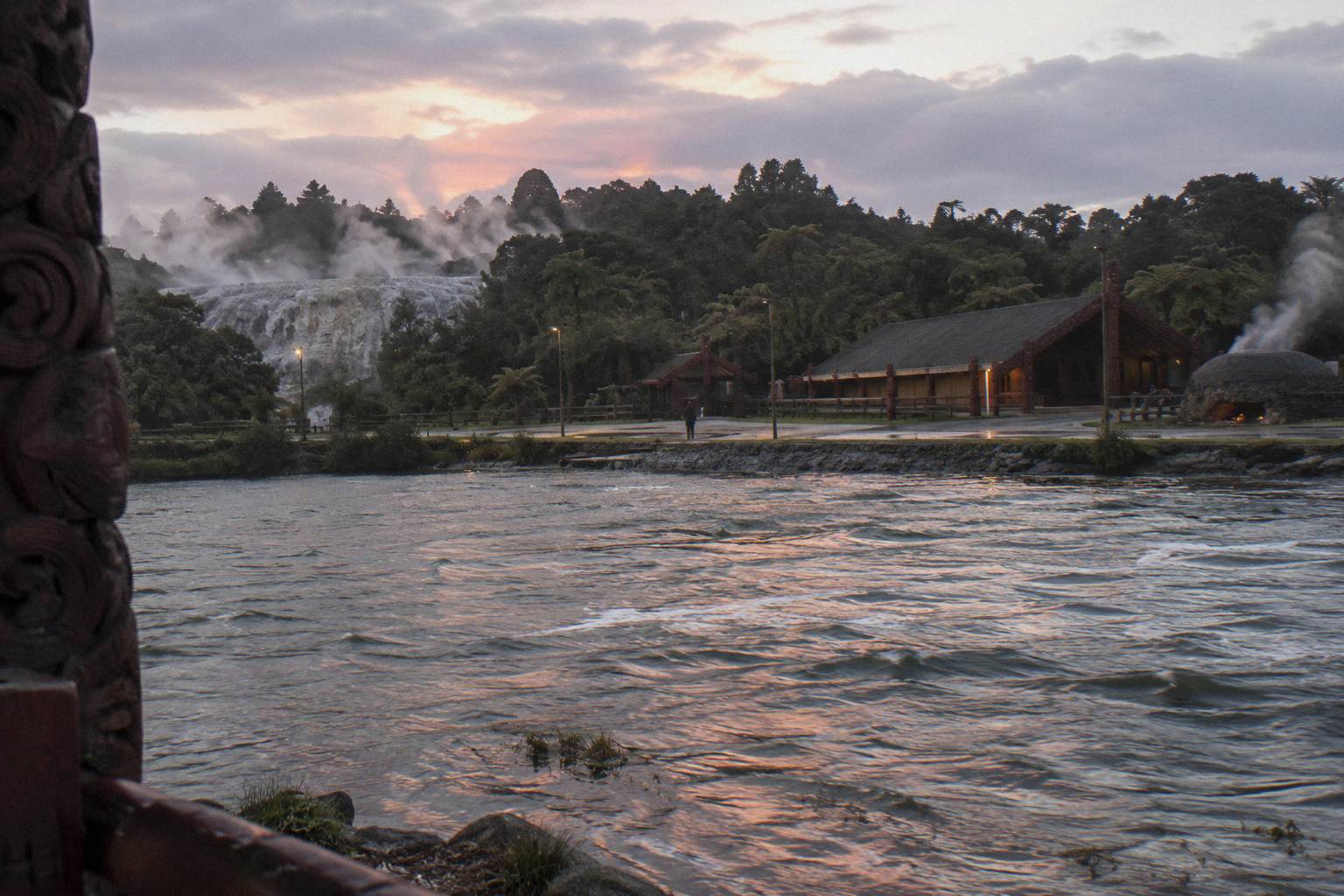
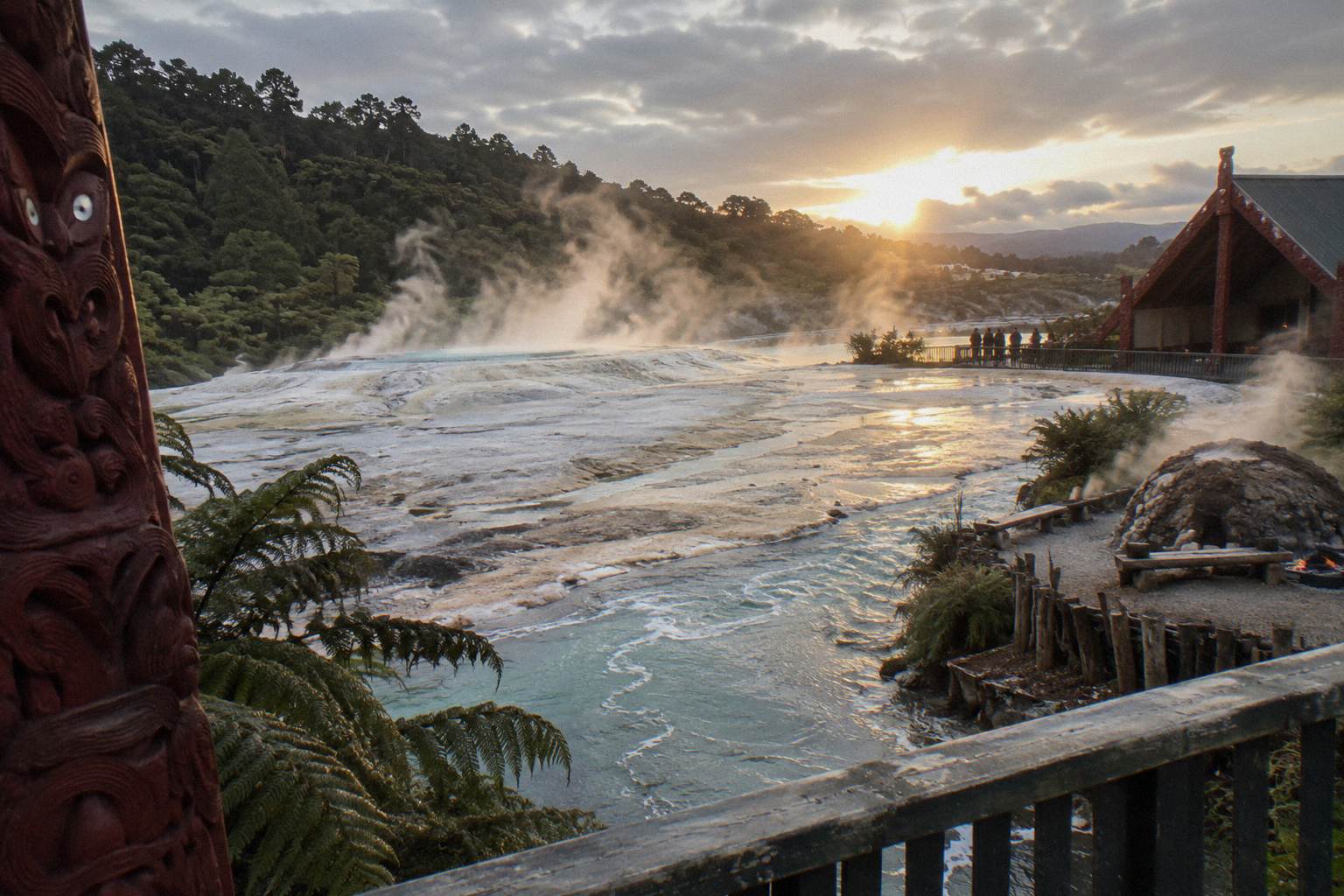
Yes, Whakarewarewa The Living Māori Village offers steam-cooked food, but only around lunch, because it cooks with steam rather than the earth-oven method and operates during the day. Guided tours run hourly from 9am to 3pm, the cultural performance is at 12.30pm daily, and no evening dinner or concert is held; the operator says Tūhourangi Ngāti Wāhiao have hosted visitors there for over 300 years.
The distinction is worth spelling out because the village sometimes gets folded into lists of Rotorua dinner evenings. It is not one. The hāngī at Whakarewarewa is steam-cooked and lunch style, per the operator's own description, and the cultural performance page confirms the daytime schedule. Daytime admission is NZD 37 adult, NZD 20 for children aged 5 to 15, NZD 102.60 for a family, and infants are free, for prices the operator states run 1 October 2026 to 30 September 2027.
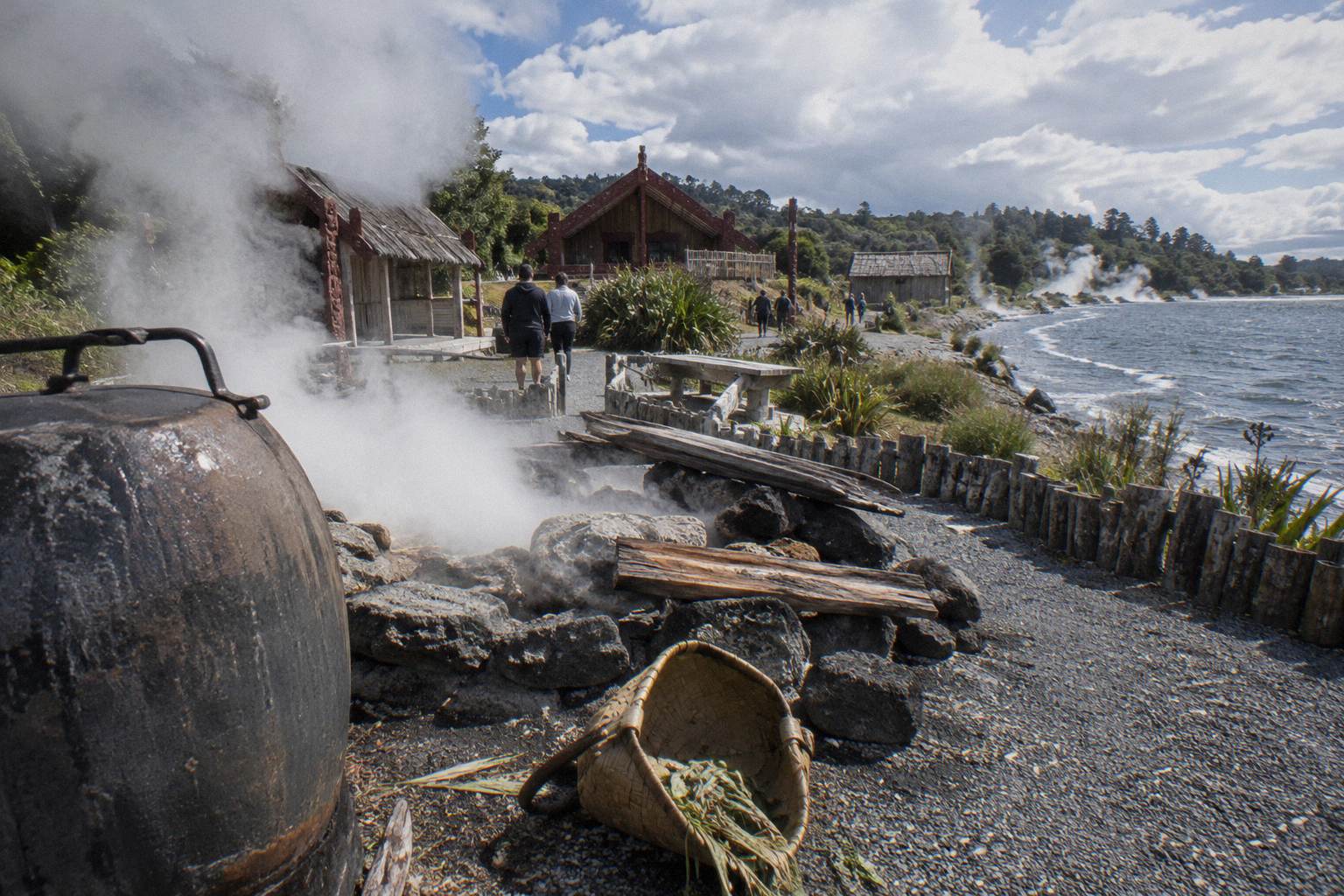
For a traveller whose main interest is how food is cooked with geothermal steam, Whakarewarewa pairs naturally with an evening elsewhere. A workable day is a morning or midday visit there, then a Te Puia or village evening for dinner, though travel between venues is your own arrangement since no operator here offers a combined day-and-evening product. For the evening half of that plan, Rotorua villages that offer an evening meal lists which ones actually do.
The Hāngī Buffet At Te Puia's Te Pō Evening
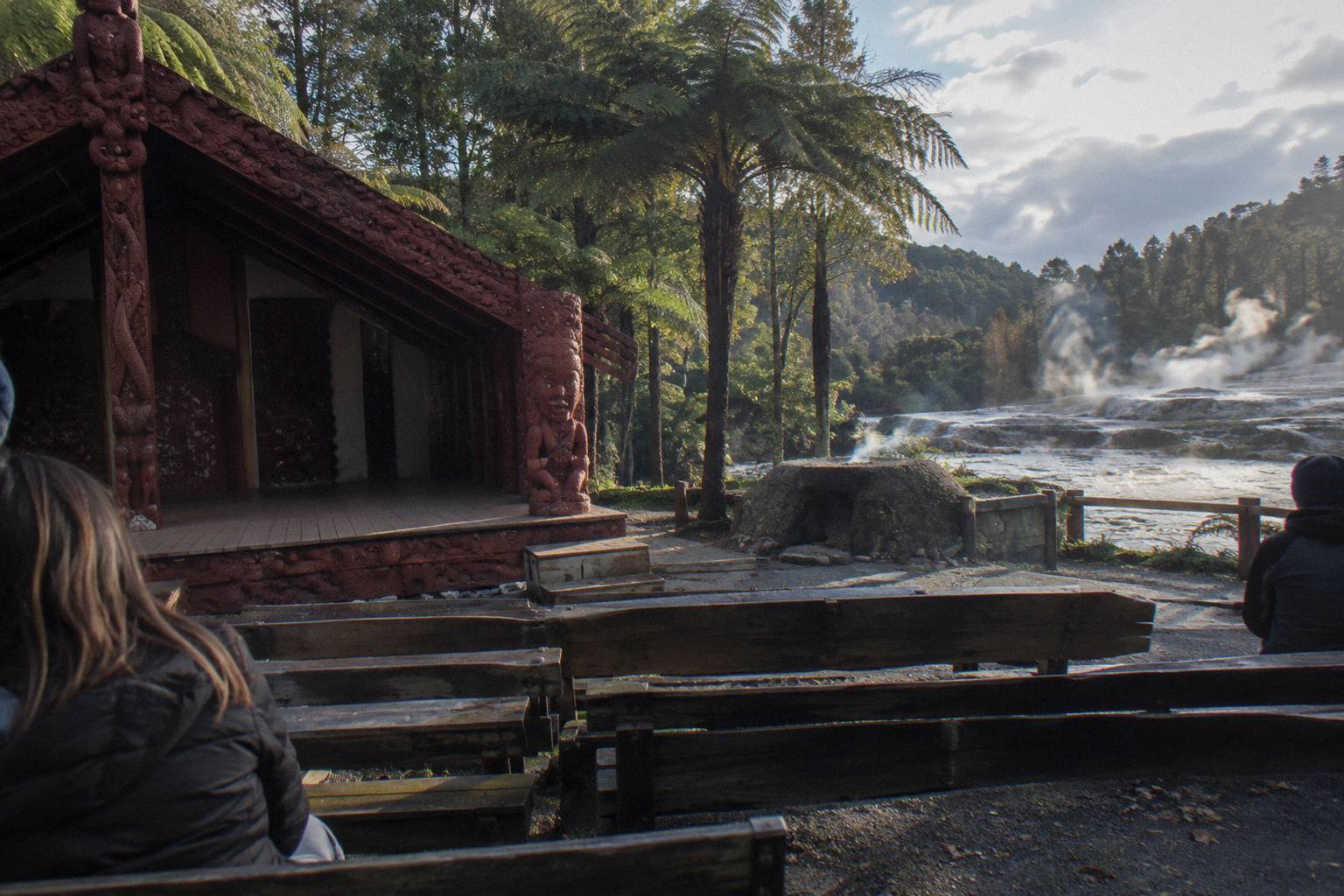
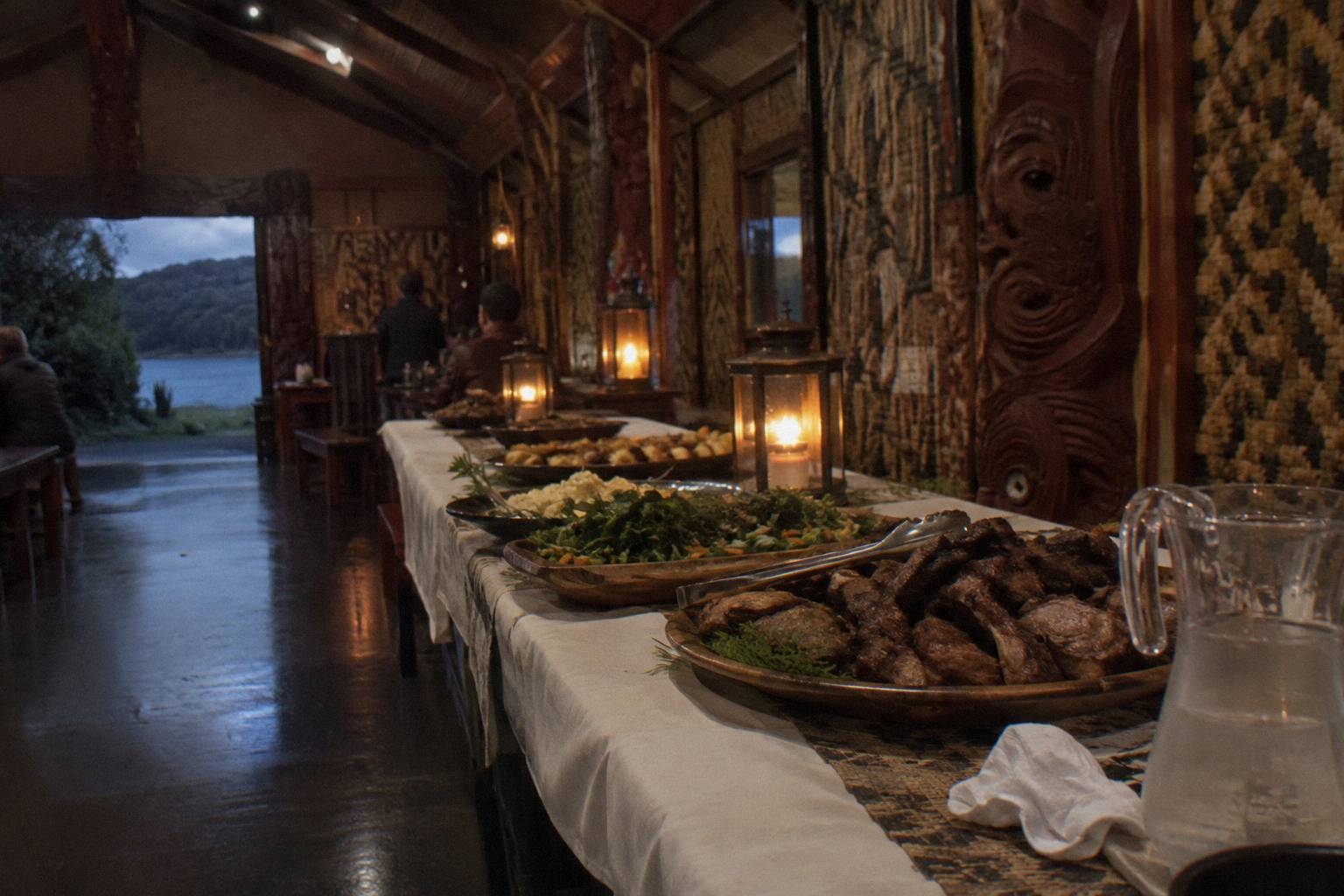
Yes, the Te Pō evening at Te Puia includes a hāngī buffet dinner served in the Pātaka Kai Restaurant and Bar, with views over the geothermal valley, per the operator. The experience runs about 2.5 hours from 5:30pm, with dinner sittings at 5:30pm and 7:15pm, and costs NZD 203. Book it for the food and setting, since the operator publishes no details on how the hāngī is cooked.
The rest of the evening, as the operator describes it on the Te Puia night experiences page, is a 45-minute Māori cultural performance of song and dance in the carved meeting house Te Aronui a Rua, hot chocolate on the geyser terrace, and then the buffet dinner. It is the shortest of the evening experiences covered here at about 2.5 hours, and the only one with a published start time of 5:30pm, which makes it the easiest to plan a night around.
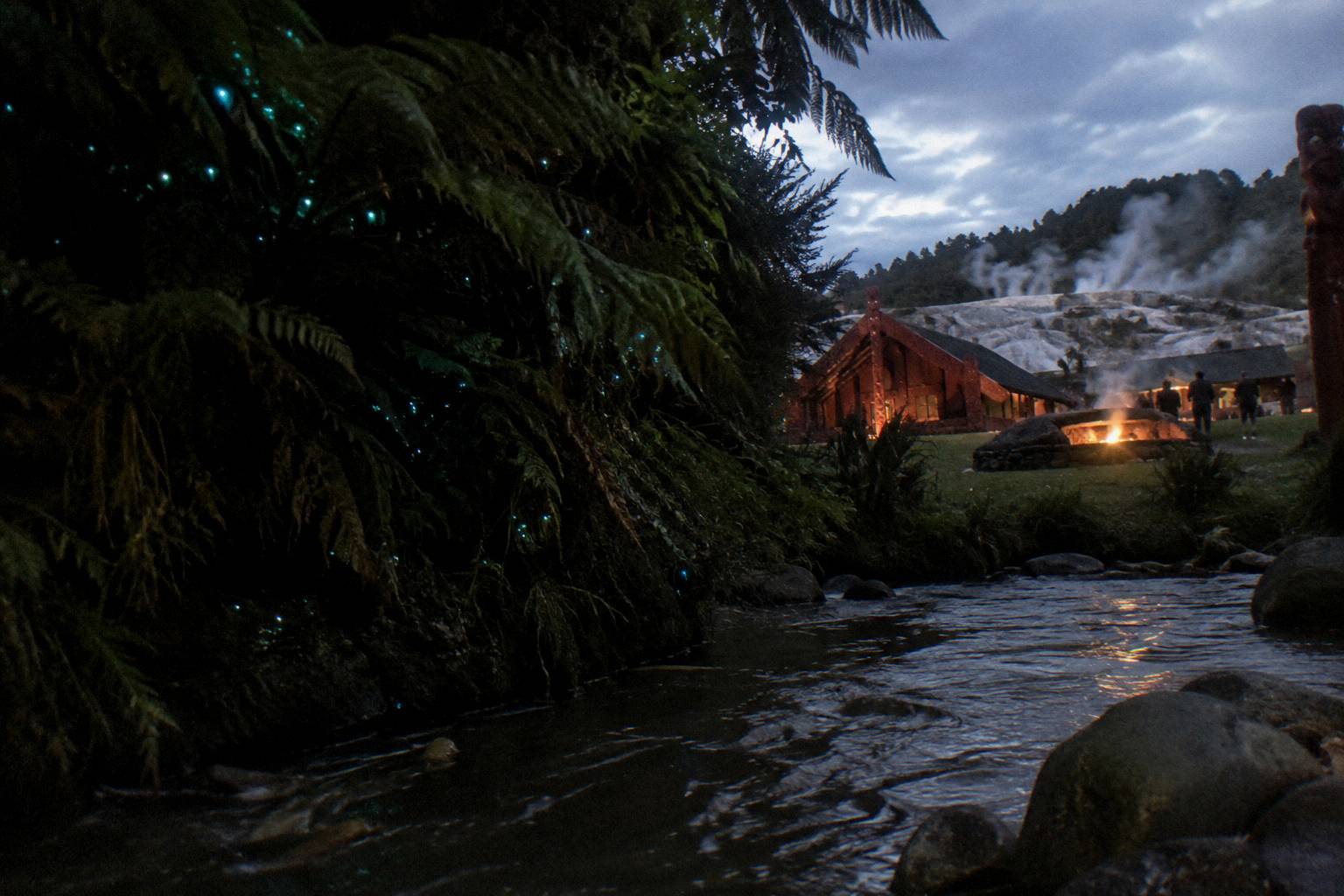
There is no hotel transfer stated for Te Pō. The operator names the City Ride bus every 30 minutes until 6PM, Uber and taxi as ways to arrive, and free parking on site. The site is cashless, and the operator says to check in 15 minutes early or the ticket is forfeited. Te Puia is iwi owned under the NZMACI Vesting Act 2020 and describes itself as kaitiaki, guardian, of the Whakarewarewa Geothermal Valley; it also hosts the New Zealand Māori Arts and Crafts Institute and a Kiwi Conservation Centre during the day. Everything else covered here is indexed on Rotorua Cultural Dinner.
A child price for Te Pō is not stated; ask the operator. The same goes for dietary options, which Te Puia does not publish for this dinner. If dietary needs shape your choice, the fuller picture is in vegetarian and dietary options at a hāngī dinner.
Which Evening Actually Shows You The Hāngī Being Cooked
Two of the four evenings show the cooking itself: Mitai includes the hāngī unveiling, when the cooked food comes out of the earth oven, and its operator publishes the method, while Te Pā Tū's summer evening features the hāngī lifting and a spit roast. Te Puia serves a hāngī buffet without a published demonstration, and Whakarewarewa's steam cooking happens at lunch, so pick by how much of the process you want to witness.
The comparison below pulls the decision factors together from what each operator states. Prices are the operators' own NZD figures and can change; each price carries its own basis, adult or child, and for Te Pā Tū its season.
| Evening | Cooking on show | Duration | Operator price (NZD) | Transfer |
|---|---|---|---|---|
| Mitai Authentic Hāngi Dinner | Hāngī unveiling, earth oven 1 to 2 m deep | About 3 hours | 188.34 adult, 115.74 child 4 to 13 | Limited, from registered accommodation, book ahead |
| Te Pā Tū Tū Te Rā (summer) | Hāngī lifting and spit roast | 3.5 hours | 290 adult, 125 child | Included from central Rotorua |
| Te Pā Tū Tū Te Ihi (winter) | In-ground hāngī served, not stated as a viewing | 3 hours | 280 adult, 115 child | Included from central Rotorua |
| Te Puia Te Pō | None stated; buffet dinner | About 2.5 hours from 5:30pm | 203 | Not stated; bus, Uber, taxi, free parking |
| Te Puia Te Pō Combo | None stated; tour then dinner and performance | About 4 to 4.5 hours from 4pm | 290 | Not stated |
A few patterns help the decision. If the physical process is the draw, Mitai states it most concretely and lets you watch the unveiling. If you want the process plus a longer structured feast, Te Pā Tū's summer evening pairs the hāngī lifting with a three-course meal. If you want the shortest evening with a fixed start time and geothermal views at dinner, Te Pō fits. Budget-wise, the adult figures run from NZD 188.34 at Mitai to NZD 290 for Te Pā Tū summer or the Te Pō Combo, and what a Māori cultural evening costs breaks the fuller picture down.
Booking Around The Cooking: Times, Seasons And Cancellation
Because hāngī cooking takes 3 to 4 hours, timing shapes every booking: Mitai's kitchen work starts in the afternoon, and Te Pā Tū lifts its summer hāngī within a 3.5-hour evening whose start time is not published. On cancellation, Te Pā Tū refunds in full only two days ahead by 12.00pm, Te Puia requires 48 hours, and Mitai's terms sit in the booking widget, so read them at checkout.
Te Pā Tū's own terms are the steepest of the three dinner operators: 100% refund if cancelled two days before by 12.00pm, 50% one day before by 12.00pm, and nothing on the day, with booking and bank fees excluded from any refund. If Te Pā Tū cancels, a full refund applies when no rebooking is made. Te Puia allows amendment or cancellation by phone or email at least 48 hours ahead, 72 hours for groups of 10 or more, with tickets non-refundable inside that window and check-in 15 minutes early or forfeited. Mitai's public pages carry no cancellation terms, so the terms shown in the booking widget at checkout are the ones that apply.
Seasonality matters at Te Pā Tū in a way it does not elsewhere. The summer and winter evenings are different products with different menus, durations and prices, so the date you pick decides which feast you get. In November the summer evening, Tū Te Rā, is the current season, running to April, with the winter Tū Te Ihi from May. If a specific dish matters to you, the in-ground hāngī of lamb and vegetables belongs to the winter feast, while the hāngī lifting and spit roast viewing belong to summer.
| Booking factor | Mitai | Te Pā Tū | Te Puia |
|---|---|---|---|
| Start time | Not stated, in booking widget | Not published | Te Pō 5:30pm, Combo 4pm |
| Child basis | 4 to 13, adult from 14 | Child price stated per season | Under 4 free per booking page; other child prices not stated |
| Cancellation | Set in booking widget | 100% two days before by 12.00pm, 50% one day, 0% on day | Refund 48 hours ahead, 72 for groups of 10 or more |
| Getting there | Limited transfer, must be booked; free parking | Coach included from central Rotorua | Bus, Uber, taxi; free parking |
For families, the same logic applies: the cooking is the spectacle, but the booking is the logistics. Mitai's highchairs are limited and its forest walk has some wheelchair limits, Te Pā Tū's winter page says the village is wheelchair and buggy accessible, and Te Puia is a cashless site. None of that is about food, yet each line decides whether the evening works for your group.
Common Mistakes When Choosing A Hāngī Evening
The biggest mistake is treating every hāngī dinner as the same product, so booking Te Puia for an earth-oven unveiling or Whakarewarewa for any dinner at all leaves you with an evening that cannot deliver it. Others include ignoring season at Te Pā Tū, where summer and winter differ, and assuming all dietary needs are met, since Mitai cannot cater to all needs such as vegan and Te Puia publishes no dietary options for Te Pō.
Whakarewarewa deserves the blunt version: it has no evening meal, full stop. Its steam-cooked food is a lunch affair in a daytime village, and folding it into an evening plan leaves you hungry at 7pm. The venue is a strong daytime visit, it just needs to be planned as one, with the 12.30pm performance as its fixed point.
Assuming a fixed start time is the next trap. Only Te Puia publishes one. Mitai's dinner time and Te Pā Tū's evening time are set at booking or in the booking widget, so confirming the time when you reserve, and again the day before, is the practical habit. The Te Pā Tū combo page with Waiotapu and Rapids Jet mentions a 5.00pm show for that combined product; that line belongs to the combo and is not the standalone evening's start time.
Dietary assumptions close the list. Tell the operator at booking, every time. Te Pā Tū's winter page lists vegetarian, pescatarian and gluten free options and states it cannot guarantee coeliac safety; vegan options at Te Pā Tū are not stated. Mitai says it is unable to cater to all dietary needs such as vegan, though some requests could be met. Te Puia's dietary options for the Te Pō dinner are not stated; ask the operator. And on price, remember the figures here are the operators' own NZD prices, which can change by date and season, so treat them as the basis for comparison rather than a quote.
Common Questions About How A Hāngī Is Cooked
How Deep Is A Hāngī Pit?
Mitai Māori Village, the only Rotorua operator publishing a figure, says its hāngī is cooked in an earth oven hole 1 to 2 m deep. The other operators do not state a depth for their hāngī; ask them directly if the detail matters to you.
How Long Does A Hāngī Take To Cook?
Mitai states 3 to 4 hours for its earth oven. That means the cooking starts hours before the evening begins, and guests arrive to see the unveiling of food already cooked. No other operator covered here publishes a cooking time.
What Food Goes Into A Hāngī?
Mitai lists meat, chicken and kūmara, with its buffet wording also covering vegetables, salads and a dessert buffet. Te Pā Tū's winter hāngī is lamb and vegetables, served within a family-style Matariki-inspired fusion feast.
Can You Watch A Hāngī Being Cooked In Rotorua?
Yes, at two evenings. Mitai's Authentic Hāngi Dinner includes the hāngī unveiling, and Te Pā Tū's summer evening, Tū Te Rā, includes viewing the hāngī lifting and spit roast. Te Puia's Te Pō serves a hāngī buffet without a stated demonstration.
Is Steam-Cooked Food The Same As A Hāngī?
Whakarewarewa describes its food as steam-cooked, using geothermal steam, and serves it at lunch. Mitai describes an earth oven dug into the ground. The methods differ, and each venue describes only its own; both are worth experiencing for what they are.
Which Rotorua Hāngī Evening Is The Cheapest?
By the operators' own adult prices, Mitai is the lowest at NZD 188.34, followed by Te Puia Te Pō at NZD 203, then Te Pā Tū winter at NZD 280, Te Pā Tū summer at NZD 290 and the Te Pō Combo at NZD 290. All prices are the operators' and can change.