What Is The Mitai Māori Village Dinner Like?
A plain, fact-based walkthrough of the Mitai Māori Village hāngī dinner: what the operator says the evening includes, what the buffet serves, prices in NZD, transfers, and how it compares with other Rotorua cultural evenings.
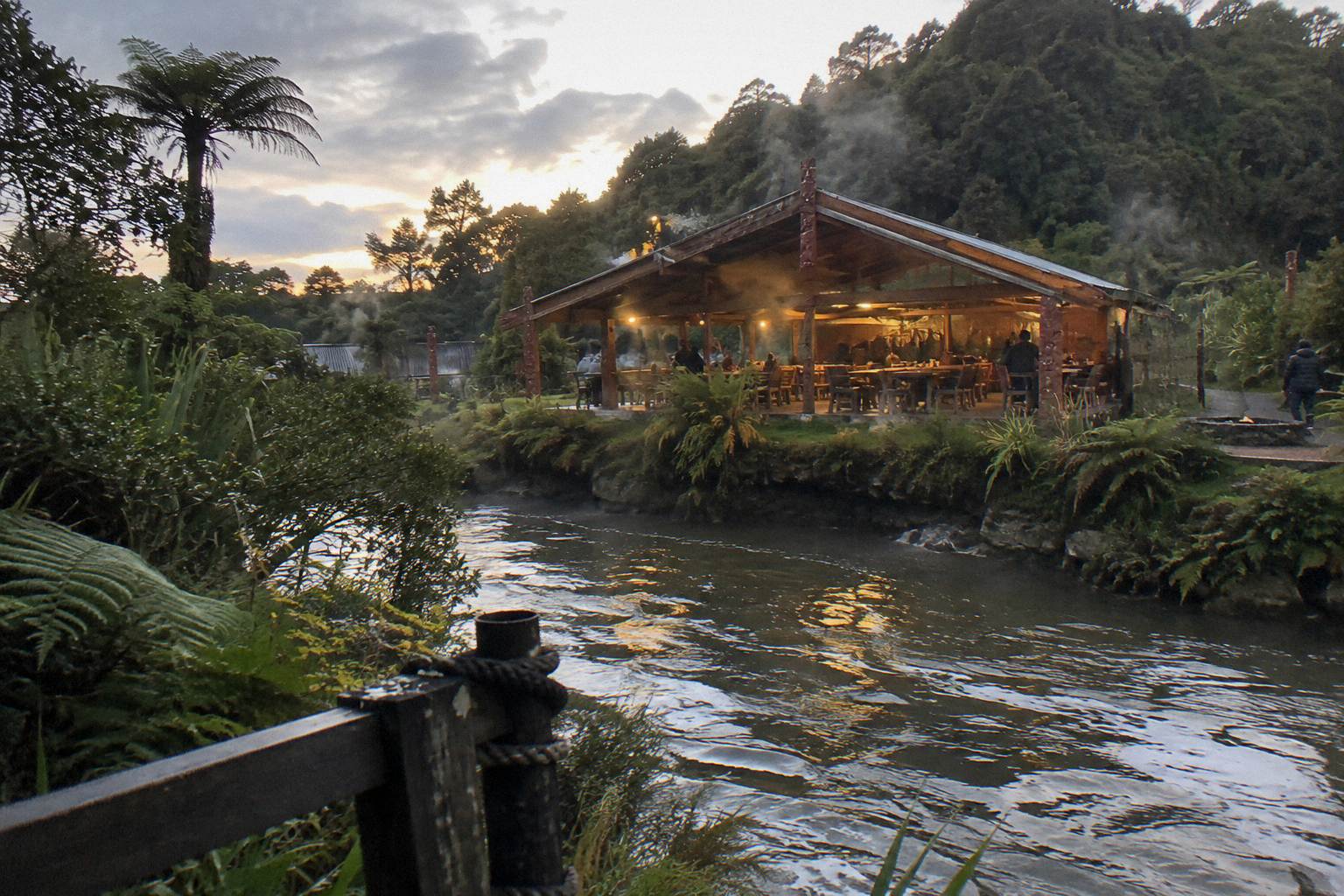
The Mitai Māori Village Authentic Hāngi Dinner Experience is, per the operator's own page, a sequence of eight listed elements: a welcoming ceremony, a hāngī unveiling, warriors paddling a waka down the Wai-o-Whiro Stream, a cultural performance, a full buffet hāngī dinner, question time, an evening bush walk, and glow worms. The whole evening runs about three hours. The operator, a family owned and operated business that speaks of "our Te Arawa people", does not publish a start time; that is set when you book.
The Mitai Māori Village dinner is a roughly three-hour evening at 196 Fairy Springs Road in Rotorua, built around a genuine hāngī buffet and a cultural performance. The hāngī is cooked in an earth oven 1 to 2 m deep for 3 to 4 hours before guests eat, and the night also includes a bush walk and glow worms, which most other cultural dinners in Rotorua do not offer.
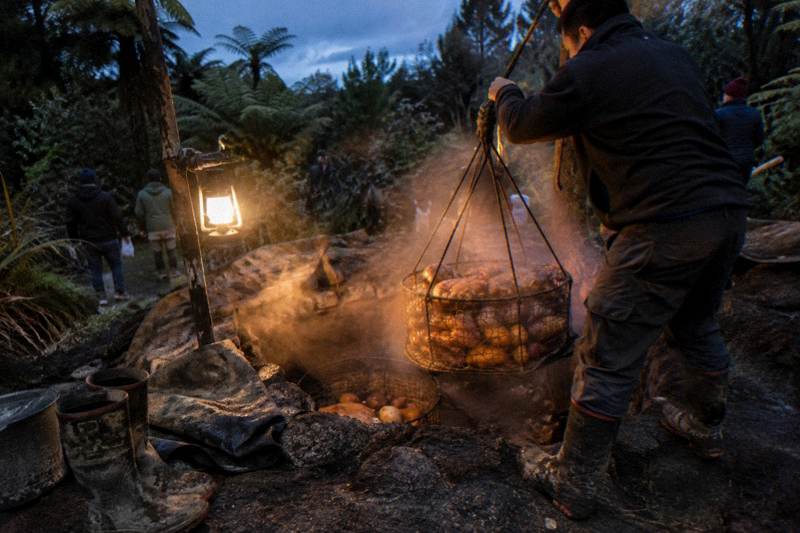
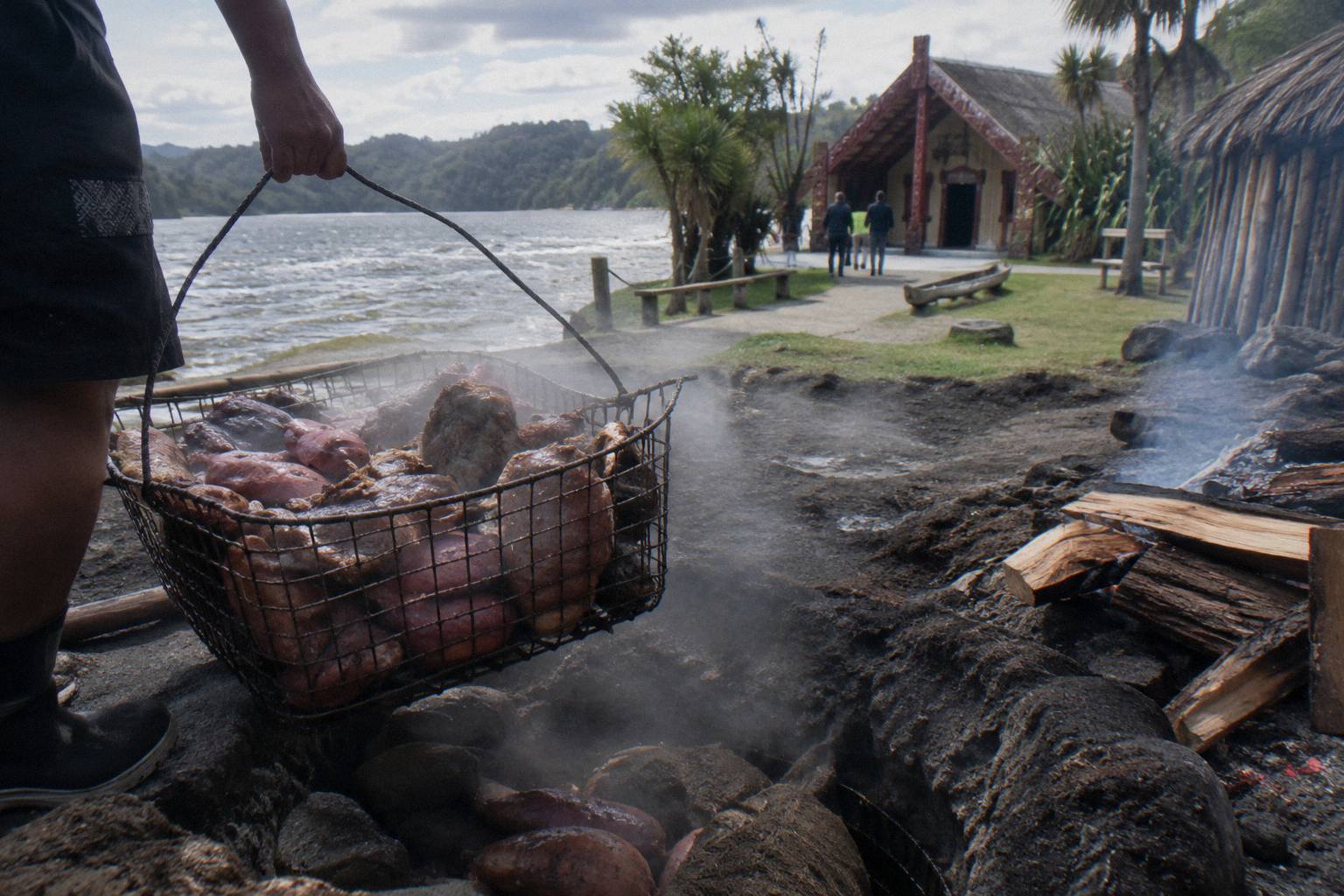
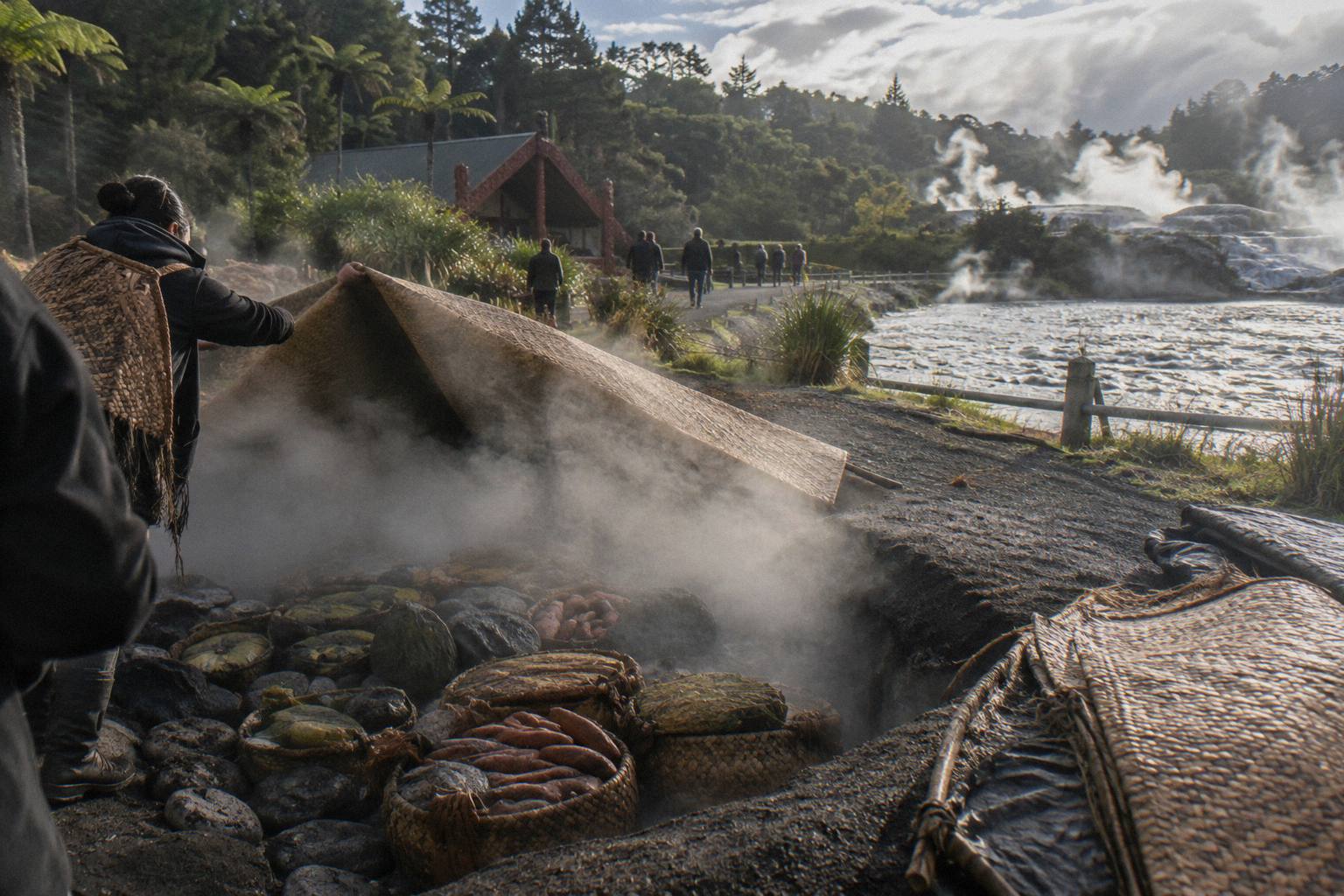
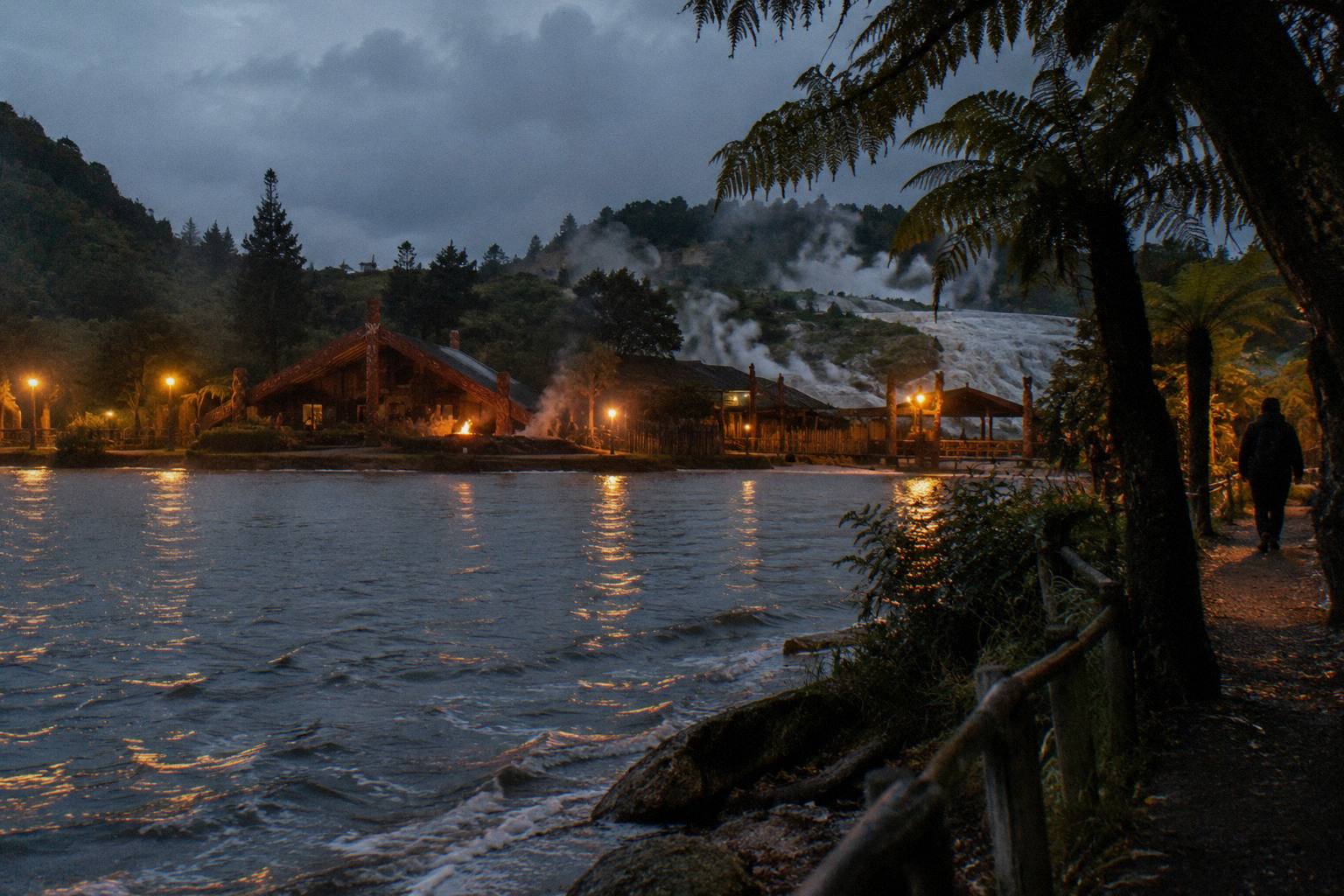
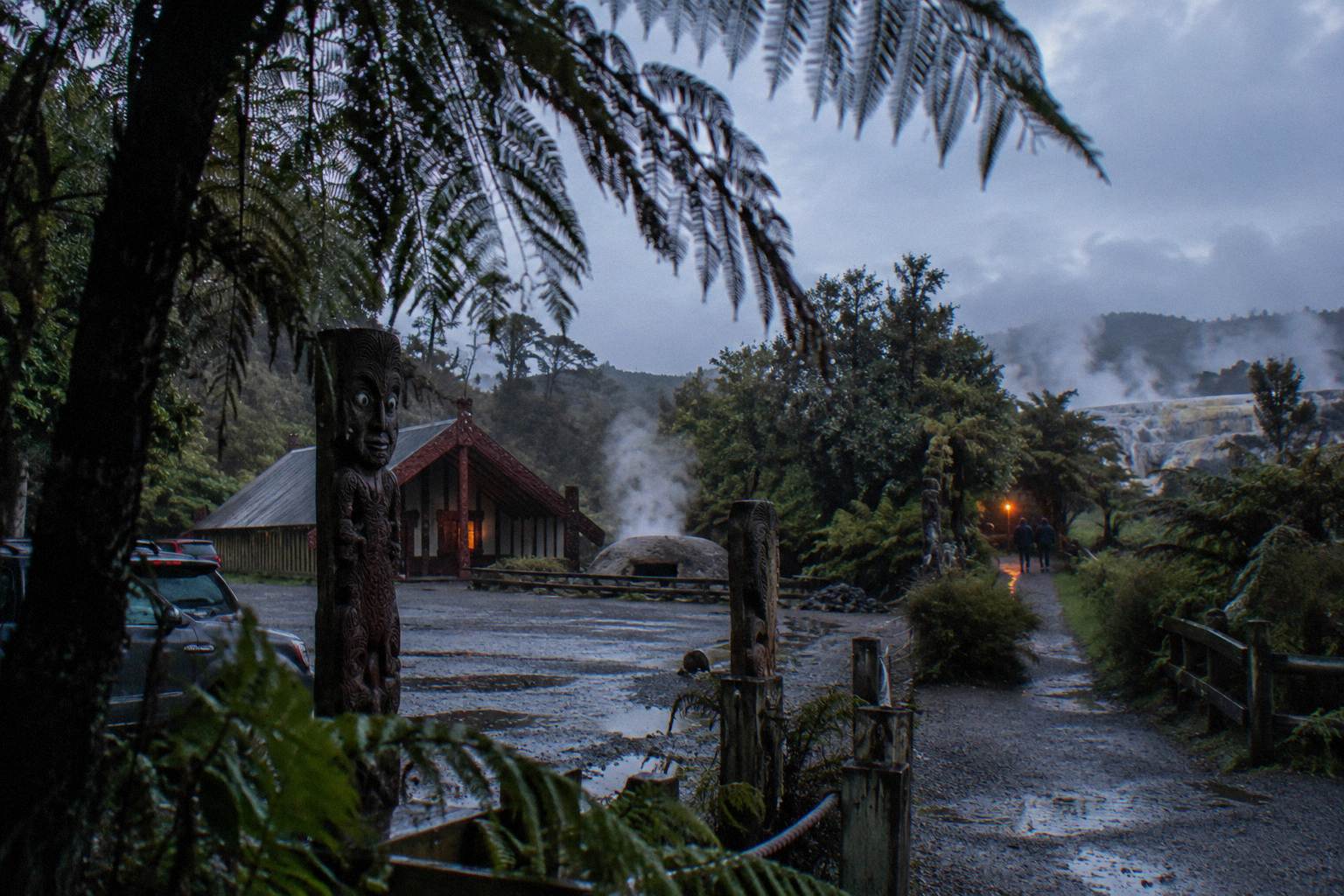
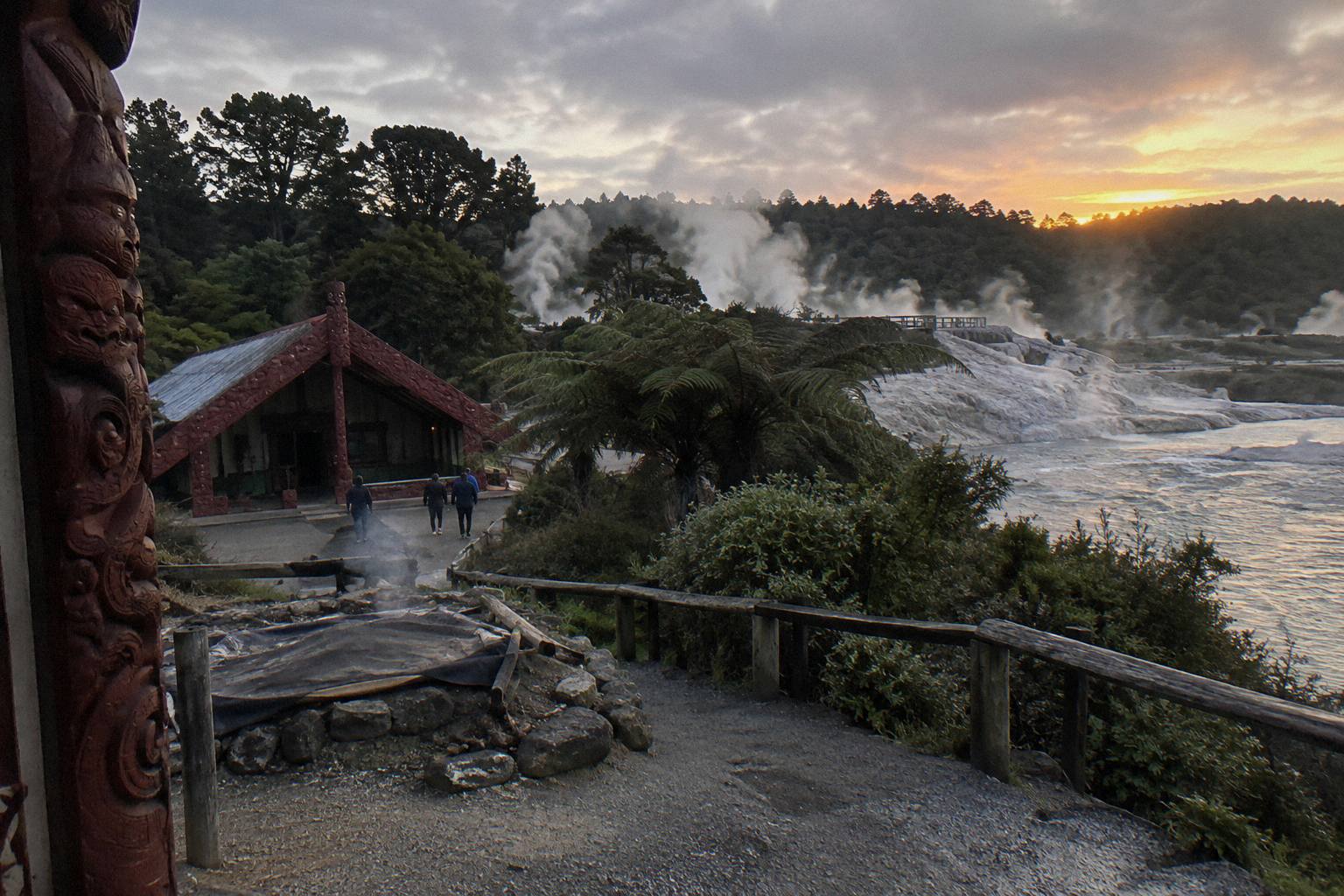
The operator's page lists the evening's components in a fixed order, and it is worth reading that list carefully before booking, because it defines exactly what you are paying for. You arrive at the village on Fairy Springs Road, where there is free on-site parking and a bar on site (outside alcohol is not permitted). The evening then moves through the welcoming ceremony and the hāngī unveiling, where the food comes out of the earth oven, before the performance and the meal.
The performance itself is listed by the operator as six named items: Pōwhiri, Wero, Waiata, Mōteatea, Poi and Haka. The operator calls its haka "the fiery Haka Māori war dance", which is the operator's own wording. After the buffet dinner there is question time, which the operator lists as a distinct part of the evening rather than an informal extra. If you want a fuller picture of the village itself before deciding, the guide to Mitai Māori Village covers the venue and its daytime options in detail.
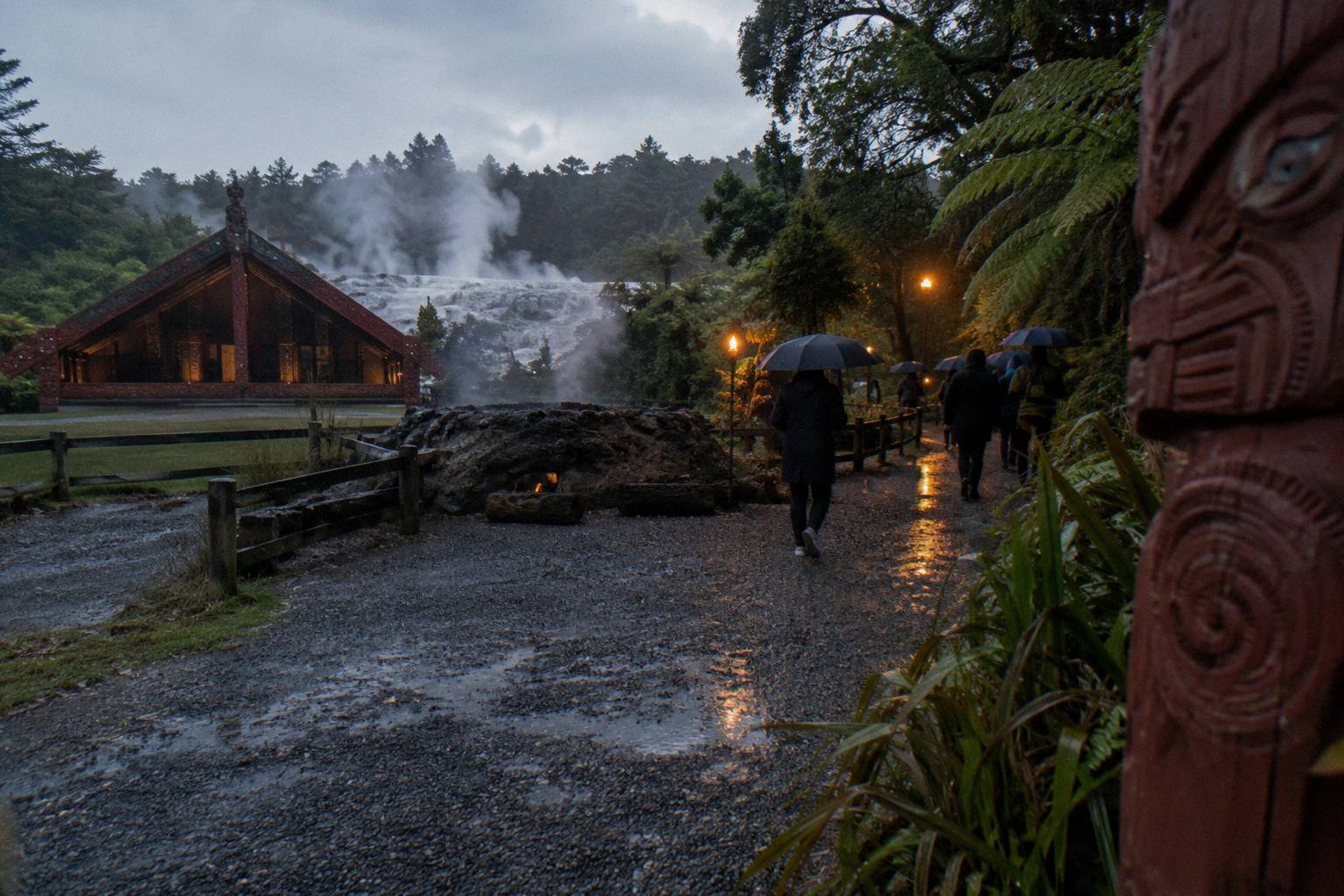
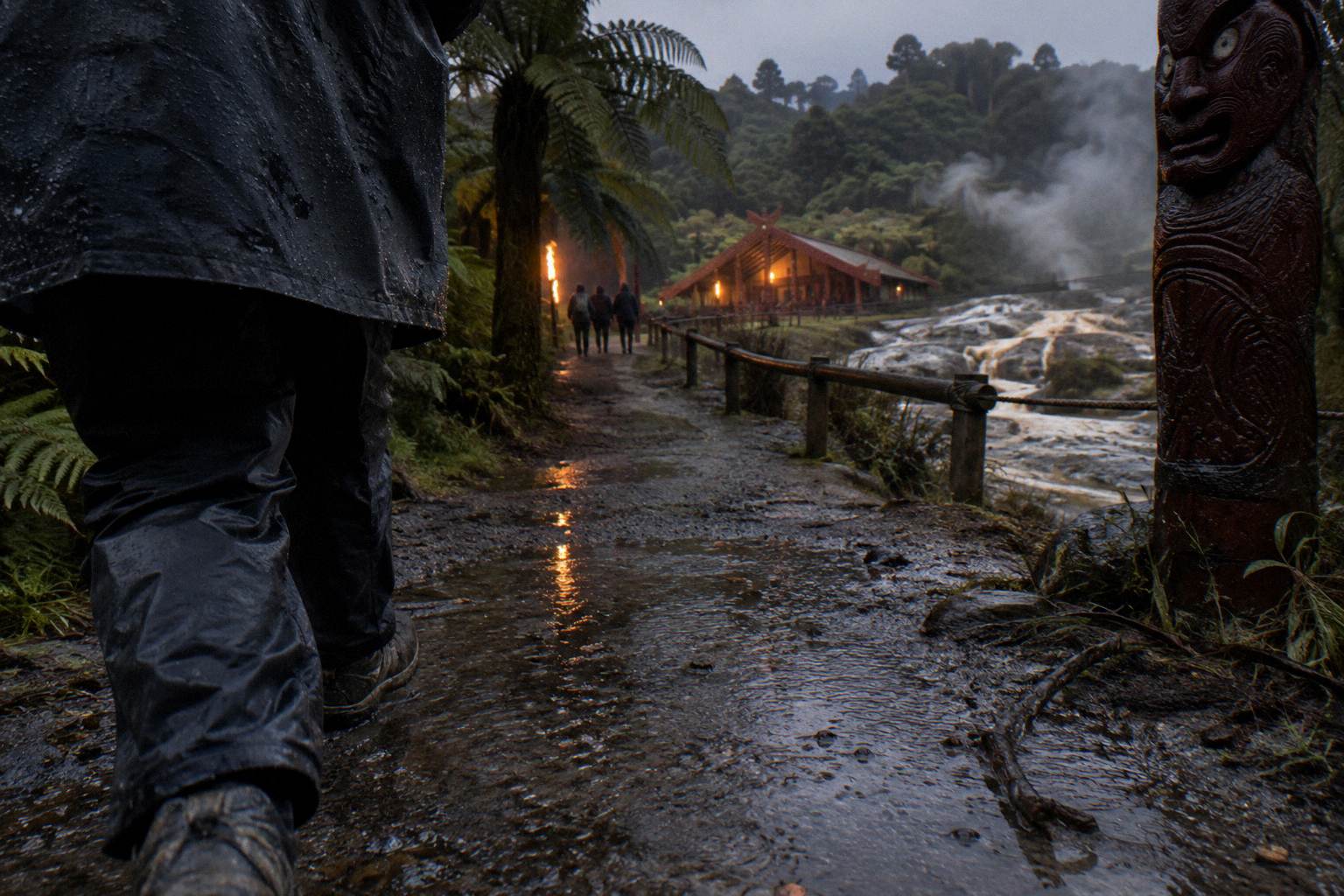
One practical note worth flagging early: the evening involves a bush walk to the old fortified village site and the sacred spring Te Puna Tapu o Tūhoe, so it is not a seated-only event. The operator advises comfortable clothing and walking shoes, warm clothing in winter, a hat in summer, and a jacket when it is raining. Photography is welcomed in designated areas, and umbrellas are limited on site.
If you are comparing evenings before reading further, these are the three cultural dinners this site covers:
What The Evening Includes, Step By Step
The evening runs through eight stated stages: a welcoming ceremony, the hāngī unveiling, warriors paddling a waka along the Wai-o-Whiro Stream, a cultural performance of six named items, a full buffet hāngī dinner, question time, an evening bush walk to the old fortified village site and the sacred spring Te Puna Tapu o Tūhoe, and glow worms to close. The operator confirms nothing further, so this is the complete scope.
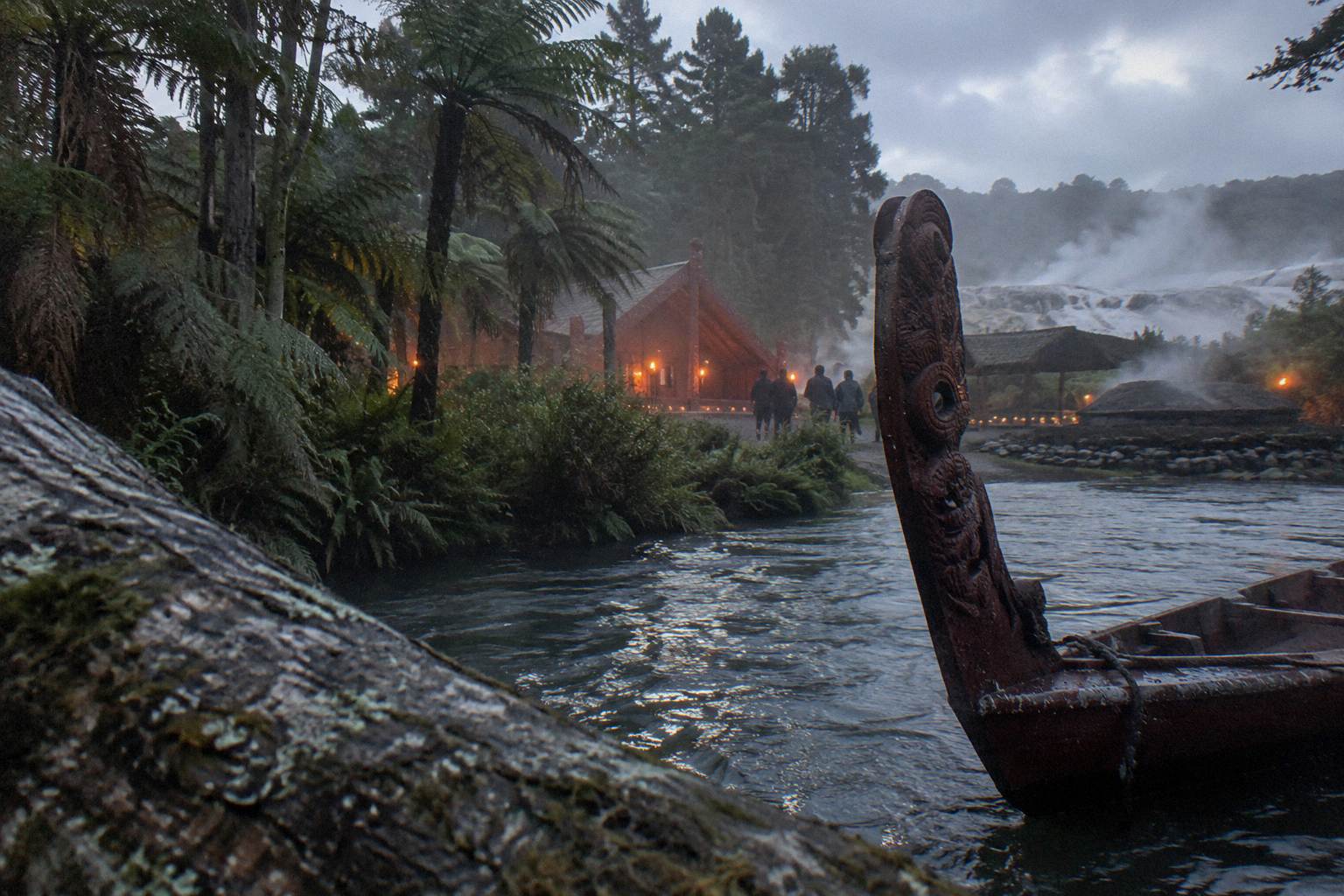
Taking those in the order the operator gives them: the welcoming ceremony opens the night. The hāngī unveiling follows, which is the moment the earth-cooked food is revealed; the operator describes the hāngī as cooked in a hole 1 to 2 m deep for 3 to 4 hours, containing meat, chicken and kūmara. The waka paddle down the Wai-o-Whiro Stream by warriors is listed between the unveiling and the performance, and it is one of the elements that visually separates Mitai's evening from its competitors, none of which lists a waka on a stream as part of the dinner.
| Part of the evening | What the operator says it is |
|---|---|
| Welcoming ceremony | The listed opening of the evening |
| Hāngī unveiling | Food revealed from an earth oven 1 to 2 m deep, cooked 3 to 4 hours |
| Waka on the stream | Warriors paddling a waka down the Wai-o-Whiro Stream |
| Cultural performance | Pōwhiri, Wero, Waiata, Mōteatea, Poi and Haka |
| Dinner | Full buffet hāngī dinner with vegetables, salads and a dessert buffet |
| Question time | A listed part of the evening after the meal |
| Bush walk | To the old fortified village site and Te Puna Tapu o Tūhoe, the sacred spring |
| Glow worms | Listed as part of the evening walk |
The performance items are worth a sentence of their own, because the names carry meaning the operator does not explain on this page. Pōwhiri is a welcome, Wero is a challenge, Waiata are songs, Mōteatea are chants, Poi is the swung-ball performance, and Haka is the well-known posture dance; but the operator does not publish explanations of these items beyond naming them, and the meanings and history of the haka are covered separately on the page about the meaning behind the haka. What is stated is the list itself, and the fact that the operator offers question time after dinner, which is your chance to ask directly.
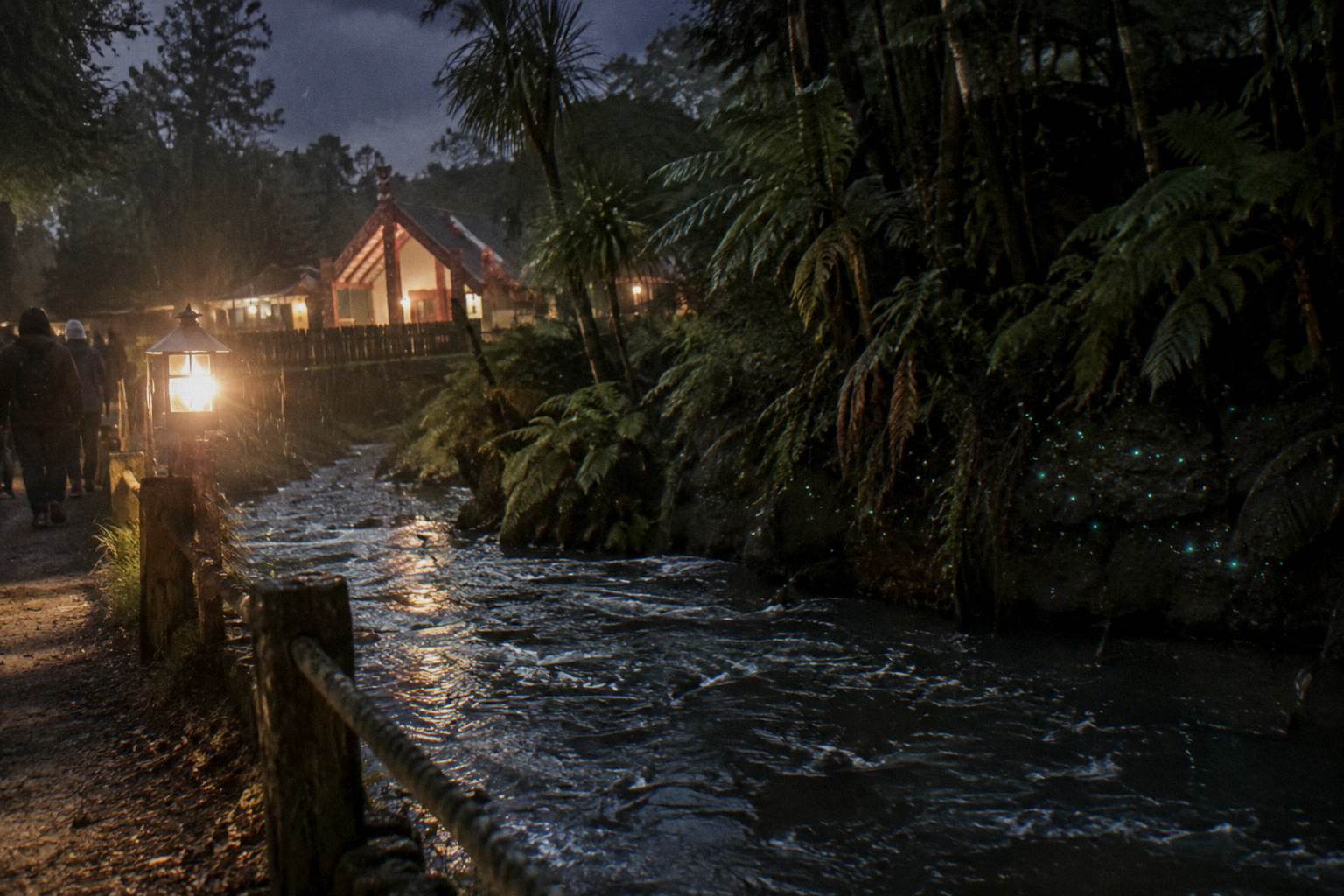
The evening's walk deserves honest framing. The operator says the bush walk goes to the old fortified village site and the sacred spring Te Puna Tapu o Tūhoe, and that glow worms are part of the evening. The operator also notes some wheelchair limits on the forest walk, which matters if anyone in your group uses one. Highchairs are limited, umbrellas are limited, and the bar on site is the only source of alcohol, since outside alcohol is not permitted.
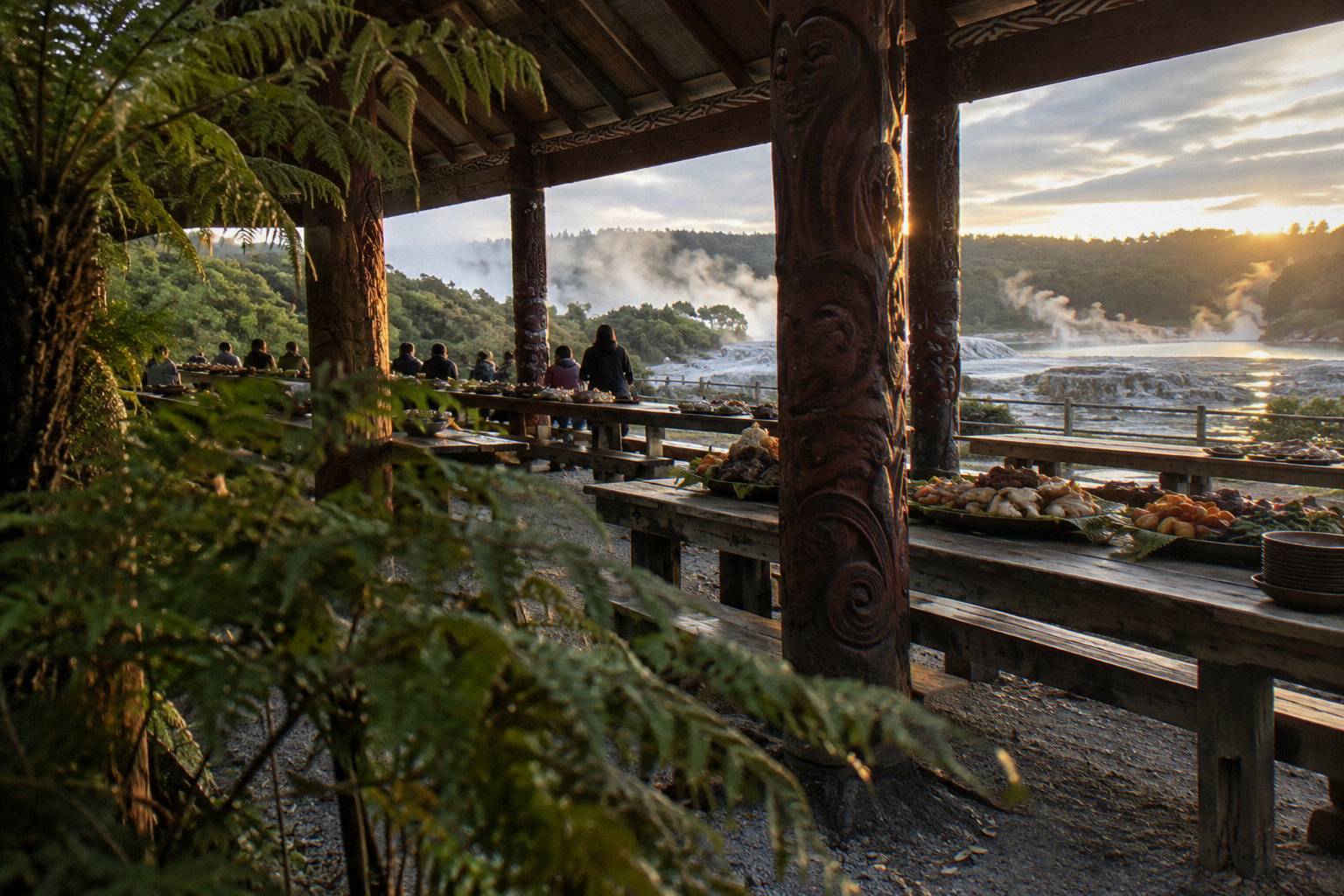
Booking is worth doing early for one stated reason: the complimentary transfers from registered accommodation are limited in number, must be booked, and close at capacity. The dinner start time and the cancellation terms are not on the operator's public pages; both are set in the booking widget, so read them at checkout. The tour itself is bookable through the Mitai dinner evening page, and you can also check availability once you have a date in mind. For the practicalities of booking ahead, the guide to booking a Māori cultural evening in advance has the detail.
What The Hāngī Buffet Actually Serves
The operator says the dinner is a full buffet hāngī: meat, chicken and kūmara cooked in an earth oven, served alongside vegetables, salads and a dessert buffet. The hāngī is the centrepiece, cooked 3 to 4 hours in a pit 1 to 2 m deep, and guests watch the unveiling before eating. The operator states it is unable to cater to all dietary needs, giving vegan as an example, though some requests could be met.
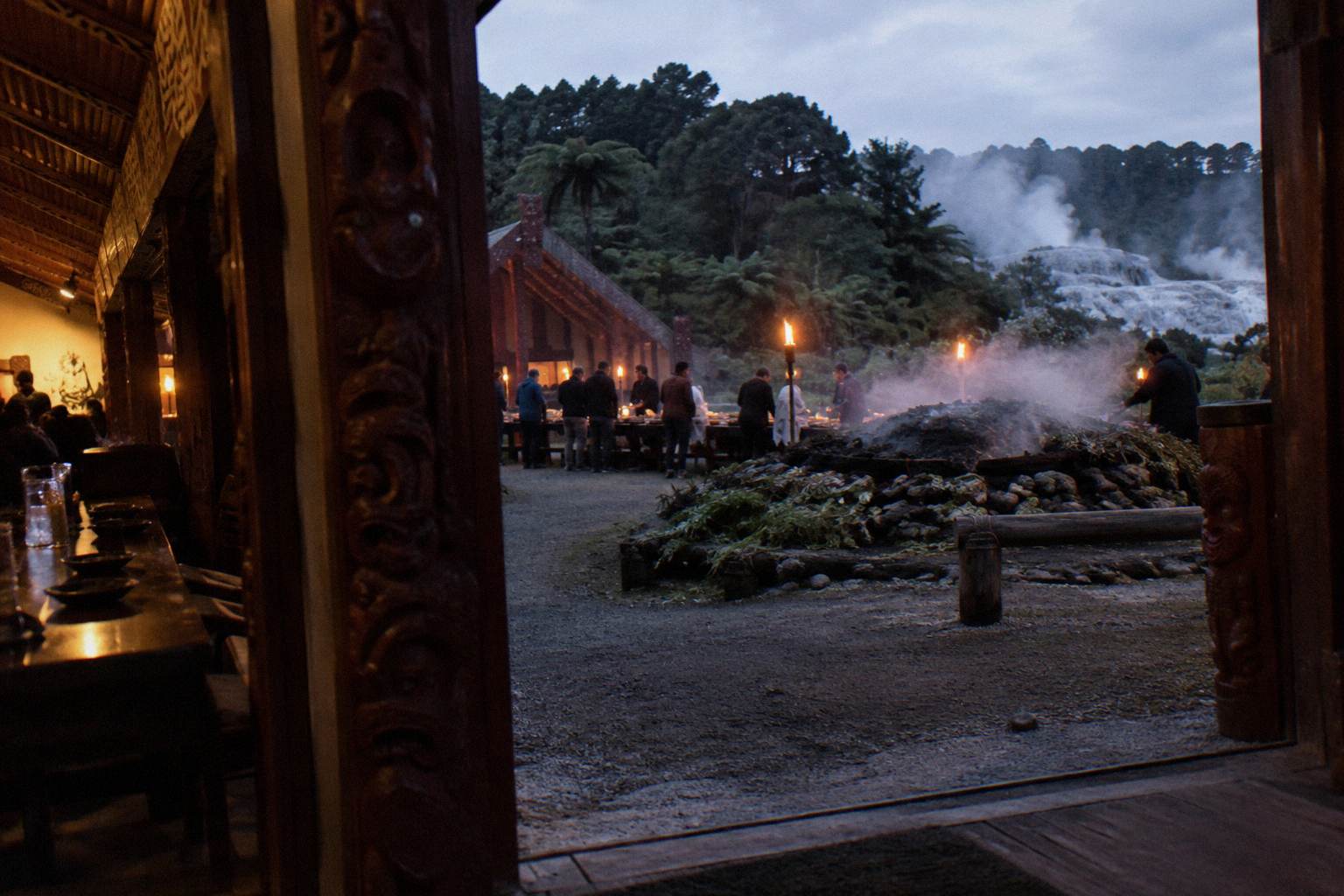
That dietary line deserves emphasis because it is easy to miss. The operator's exact position is that it is "unable to cater to all dietary needs such as vegan", with the qualification that some requests could be met. So if your group includes a vegan guest, do not book on the assumption a full vegan meal exists; contact the operator first at reservation@mitai.co.nz or +64 7 343 9132 and ask what is possible for your date. The broader question of vegetarian and other options across all the Rotorua hāngī dinners is covered in the dietary options guide.
On the food itself, the operator's description is specific about method and reasonably specific about contents. The earth oven is a hole 1 to 2 m deep, the cook time is 3 to 4 hours, and the hāngī contains meat, chicken and kūmara. Beyond the hāngī, the operator's wording lists vegetables, salads and a dessert buffet as part of the full dinner. It is a buffet format, so guests serve themselves, in contrast to the plated three-course feast at Te Pā Tū or the buffet in Te Puia's Pātaka Kai Restaurant and Bar. For how the cooking method works and what it means, the guide to how a hāngī is cooked explains the process, and the operators themselves describe the wider hāngī landscape in the Rotorua hāngī guide.
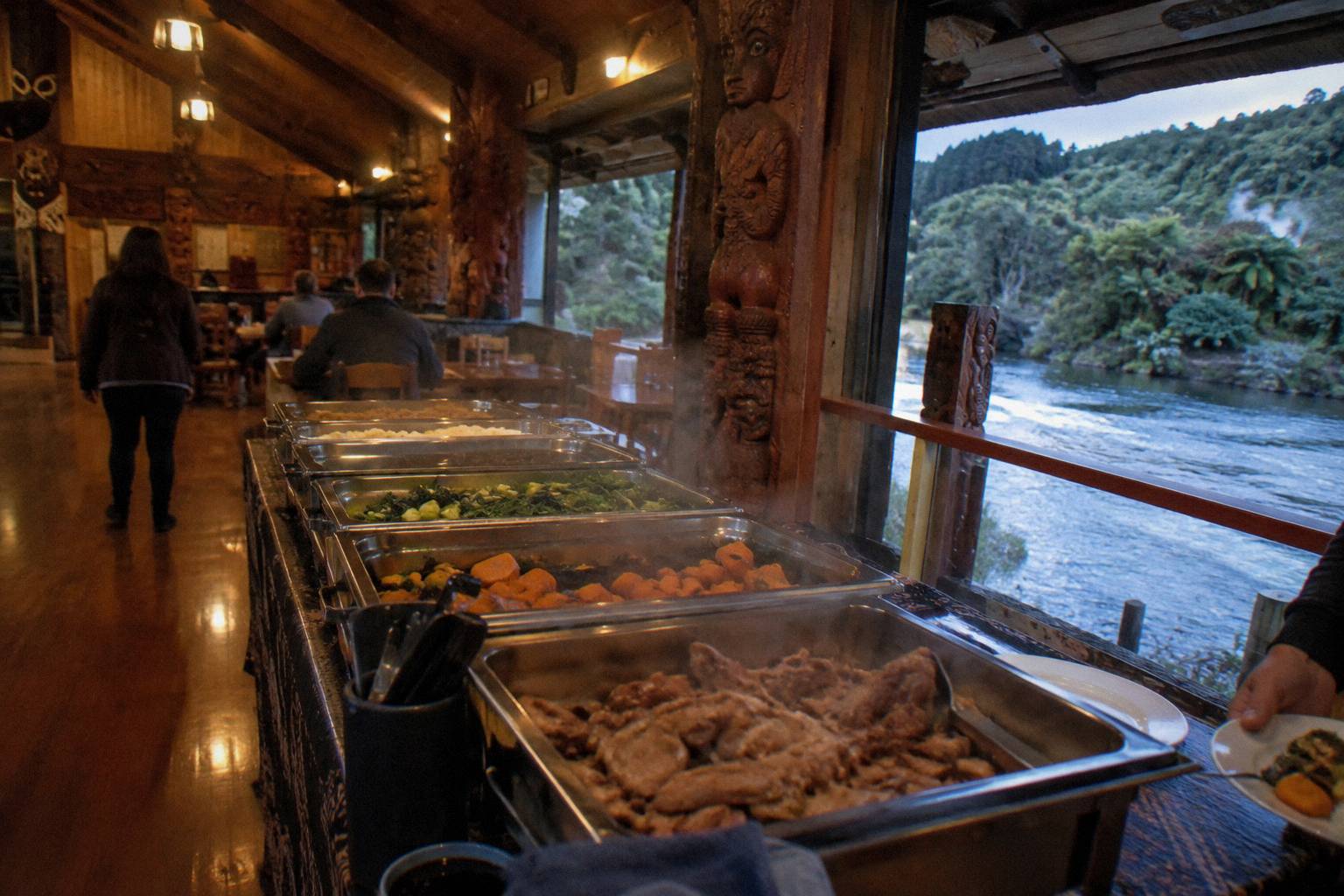
It is worth being clear about what is not stated. The operator does not publish the history of the hāngī or its cultural meaning beyond calling it an earth oven, and this page stays with the operator's description rather than filling that gap. If the history is what interests you, the history of the Rotorua hāngī is the page for it. What is fair to say here is method and menu: an earth oven, a long cook, meat, chicken, kūmara, and a buffet around it.
For families, the pricing structure tells you who eats what. The adult price applies from age 14, the child price covers ages 4 to 13, and infants 3 and under have a price that is not shown, so ask the operator when booking. Highchairs are limited, which matters if you are bringing a toddler.
How Much The Dinner Costs And What Affects The Price
The operator's price for the Authentic Hāngi Dinner Experience is NZD 188.34 for adults (14+) and NZD 115.74 for children aged 4 to 13, for an evening of about three hours. Those figures are the operator's own, carry cents, and can change by date, season and booking route. Two other Mitai products sit nearby in price: a 1.5-hour village experience without dinner and a 2-hour hāngī lunch.
The cents in the prices are not a typo; they are the operator's figure exactly as published, and they are a signal that the number is a converted price that may move. Write them down as a reference point, not a promise. When you compare against the other evenings, keep the basis straight, because each operator prices differently.
| Mitai product | Duration | Operator price (NZD) |
|---|---|---|
| Authentic Hāngi Dinner Experience, adult (14+) | About 3 hours | 188.34 |
| Authentic Hāngi Dinner Experience, child (4 to 13) | About 3 hours | 115.74 |
| Māori Immersive Cultural Village Experience, adult | 1.5 hours | 110.48 |
| Māori Immersive Cultural Village Experience, child | 1.5 hours | 73.65 |
| Hāngī Lunch And Show | 2 hours | 156.77 |
| Polynesian Spa, hāngī and cultural package | Not stated | 222.01 |
The structure of that list is useful. If the hāngī itself is what draws you but the full evening is more than you want, the hāngī lunch exists at NZD 156.77 for a 2-hour format. If the performance interests you more than the meal, the 1.5-hour immersive village experience at NZD 110.48 adult skips dinner entirely. And if you want to pair the evening with a soak, the operator bundles the Polynesian Spa, hāngī and cultural experience at NZD 222.01. Only the four evening tours covered on this site are bookable as cards here; the lunch and spa packages are booked through the operator.
For a worked example: two adults and one child aged 10 at the operator's dinner prices come to NZD 188.34 + NZD 188.34 + NZD 115.74. That is a real, arithmetic-only total from the operator's own figures, but it is not a quote: dates and booking routes can shift the numbers, and the booking page's terms at checkout are the ones that apply. The broader cost landscape across all the Rotorua evenings, including what a night out costs end to end, is laid out in the guide to how much a Māori cultural evening costs.
One more cost-adjacent fact the operator states: the bar on site means drinks are bought there, outside alcohol is not permitted, and no drink prices are published. Budget for that separately.
Getting There, Transfers And What To Wear
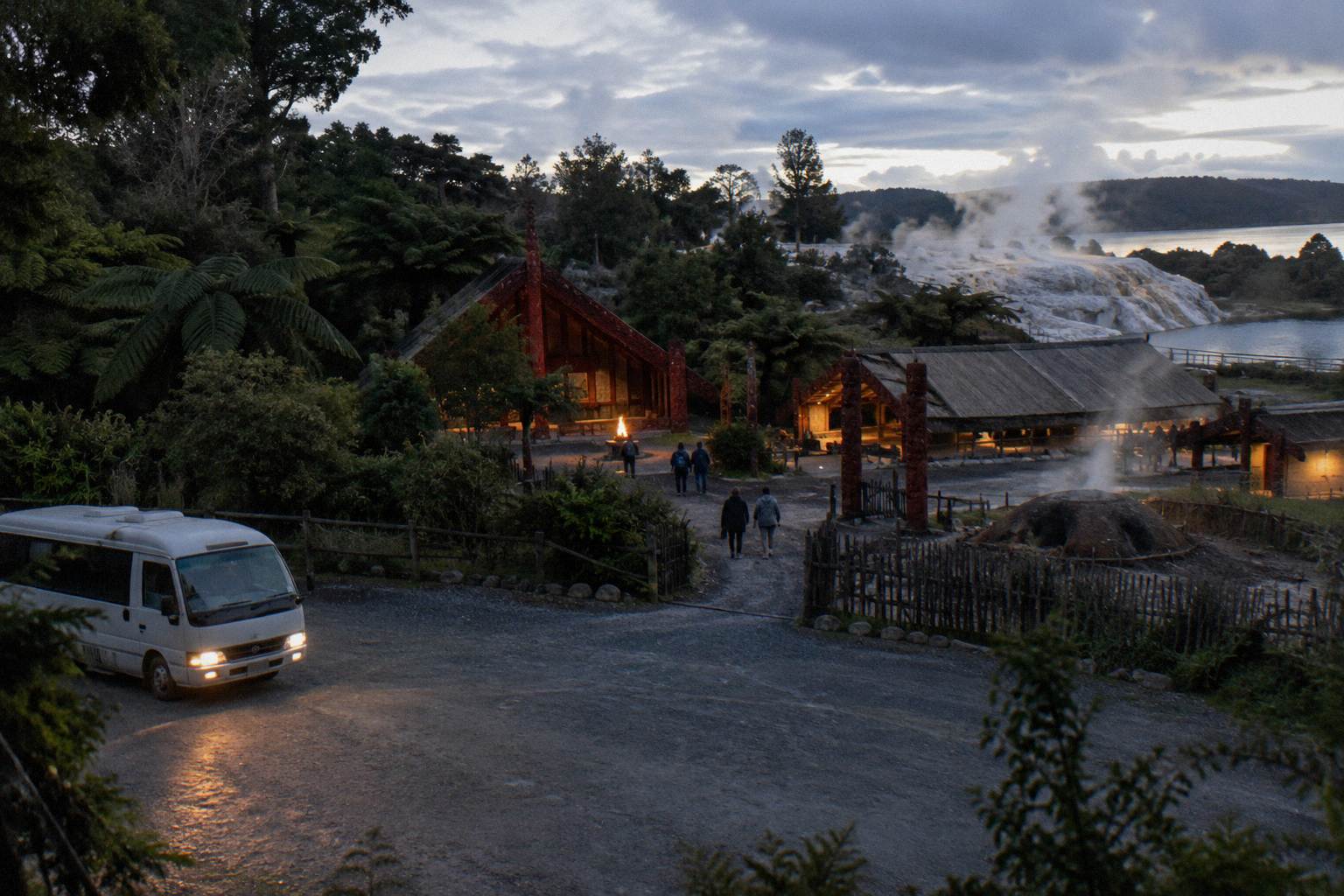
Mitai sits at 196 Fairy Springs Road, Fairy Springs, Rotorua, with free on-site parking. Complimentary transfers from registered accommodation exist, but numbers are limited, they must be booked, and the transfer closes at capacity, so arrange it when you reserve. The operator's dress advice is plain: comfortable clothing and walking shoes, warm layers in winter, a hat in summer, a jacket in rain.
The transfer detail is the one that catches people out. It is not a general Rotorua shuttle: it runs from registered accommodation only, which means your hotel or hostel needs to be on the operator's list, and you need to request the seat in advance. If your accommodation is not registered, the fallback is the free on-site parking at the Fairy Springs Road address, or a taxi to the same address. The operator's contact details for transfer questions are +64 7 343 9132 and reservation@mitai.co.nz. The wider transport picture, including how the other evenings handle pickup, is in the guide to pickup and transport for Rotorua cultural evenings.
Dress is the other practical question, and Mitai is the one operator of the three dinner operators that publishes guidance. The operator says comfortable clothing and walking shoes, dressing for the weather, and comfortable shoes specifically for the bush walk, with warm clothing in winter, a hat in summer and a jacket when it is raining. Umbrellas are limited on site, so a jacket is the better plan than relying on borrowing one. The other operators' dress guidance is not stated; ask them directly. There is a dedicated page on what to wear to Mitai Māori Village with the full breakdown.
For accessibility, the operator notes some wheelchair limits on the forest walk, which is the part of the evening that leaves the dining and performance area. Highchairs are limited. Neither of these is a barrier to booking, but both are worth a phone call ahead if they affect your group.
Arrival time is a genuine unknown worth planning around: the operator does not publish the evening's start time, and the cancellation terms are likewise not on the public pages. Both appear in the booking widget at checkout. Read the terms there before paying, and note the operator's phone number for questions on the day. If timing your evening around other plans, the guide to how long a Māori cultural evening runs compares all the durations.
How Mitai Compares With Te Pā Tū And Te Puia Te Pō
Those differences are the real decision. Mitai is the only one of the three that lists a waka on a stream, a bush walk to a sacred spring and glow worms as parts of the evening. Te Puia's Te Pō, by contrast, is the shortest at about 2.5 hours from 5:30pm, with a 45-minute performance of song and dance in the carved meeting house Te Aronui a Rua, hot chocolate on the geyser terrace, and a hāngī buffet in the Pātaka Kai Restaurant and Bar, at NZD 203 with the child price not stated. Te Pā Tū runs a forest pā evening in two seasonal formats, summer Tū Te Rā and winter Tū Te Ihi, with return coach transfers from central Rotorua included and a three-course feast, at NZD 290/125 adult/child in summer and NZD 280/115 in winter.
| Evening | Operator price, adult (NZD) | Duration | Transfer | Food format |
|---|---|---|---|---|
| Mitai Hāngi Dinner | 188.34 | About 3 hours | Limited, from registered accommodation, book ahead | Full buffet hāngī |
| Te Pā Tū, summer Tū Te Rā | 290 | About 3.5 hours | Return coach from central Rotorua included | Three-course feast plus forest canapés |
| Te Pā Tū, winter Tū Te Ihi | 280 | About 3 hours | Return coach from central Rotorua included | Family-style Matariki fusion feast with in-ground hāngī |
| Te Puia Te Pō | 203 | About 2.5 hours | None stated; free parking | Hāngī buffet in Pātaka Kai Restaurant |
Te Pā Tū's evening deserves a closer look if food is your priority. The summer Tū Te Rā evening includes forest kai horotai canapés, which the operator lists as items such as pāua wonton, kawakawa leaf filled with prawn, hāngī root-vegetable croquette and kūmara crisp with venison, before a three-course seasonal feast in the wharekai. The winter Tū Te Ihi evening serves a Matariki-inspired Māori fusion feast family style with a traditional in-ground hāngī of lamb and vegetables, and its winter page lists vegetarian, pescatarian and gluten free options, noting it cannot guarantee coeliac safety. Te Pā Tū is also the renamed Tamaki Māori Village, a detail worth knowing if you have read older coverage, as the guide to Mitai vs Tamaki vs Te Pā Tū explains.
Te Puia's Te Pō suits a different traveller: someone who wants the evening anchored by the geothermal valley itself. The operator describes the Te Puia night experiences page as the home of both Te Pō and the Te Pō Combo, which adds a 90-minute guided valley tour before dinner from 4pm at NZD 290. Check-in is 15 minutes early or the ticket is forfeited, and cancellation needs 48 hours' notice, 72 for groups of 10 or more, per the operator's FAQ. Neither Mitai nor Te Pā Tū publishes comparable check-in rules on public pages.
A short worked comparison by traveller type, using only the stated facts. A family with children aged 6 and 9: Mitai prices at NZD 115.74 per child with a stated child range of 4 to 13; Te Pā Tū prices children at NZD 125 (summer) or NZD 115 (winter) with the minimum child age not published; Te Puia's child price is not stated, though its booking page says under 4 go free. A solo traveller without a car: Te Pā Tū's included coach from central Rotorua is the simplest; Mitai's transfer needs registered accommodation and pre-booking; Te Puia names the City Ride bus, Uber and taxi. Someone short on time: Te Puia Te Pō at about 2.5 hours is the shortest full dinner evening. Someone who wants the longest evening with the most listed elements: Te Pā Tū's summer format at about 3.5 hours, or the Te Pō Combo at 4 to 4.5 hours if the valley tour appeals.
Common Mistakes When Booking The Mitai Dinner
The avoidable errors are assuming the transfer is automatic, expecting vegan catering, treating the published prices as fixed, skipping the bush walk preparation, and ignoring the checkout terms. The transfer from registered accommodation must be requested and closes at capacity. The operator states plainly it cannot cater to all dietary needs such as vegan. The prices carry cents and can change, the walk needs proper shoes, and the cancellation terms live only in the booking widget.
Each of those deserves a line. First, the transfer: it is complimentary but it is not automatic, and the operator says it closes at capacity, so leaving it to the day is how you end up driving. Second, diet: the operator's own wording is "unable to cater to all dietary needs such as vegan", with some requests possibly met; email before booking, not after. Third, price: NZD 188.34 and NZD 115.74 are the operator's current figures and they can move by date and booking route, so treat them as a planning basis and confirm at checkout.
Fourth, the bush walk. It goes to the old fortified village site and the sacred spring Te Puna Tapu o Tūhoe after dark, and the operator advises comfortable shoes, warm layers in winter and a jacket in rain, with umbrellas limited. Arriving in evening sandals on a wet night is the kind of mistake that is entirely preventable. Fifth, terms: the cancellation policy is set in the booking widget, not on the public pages, and the terms shown at checkout are the ones that govern your money. Read them before paying. Sixth, timing: because no start time is published, confirm it in your booking confirmation rather than assuming an evening-standard time.
The last mistake is comparing evenings on price alone. Mitai's NZD 188.34 sits below Te Pā Tū's NZD 280 to 290, but the products differ in format, transport, food style and length, and the honest comparison is on those axes, not on the headline number alone. For a fuller framing of whether the evening suits you, the piece on whether Mitai Māori Village is worth it works through the value question.
If the Mitai evening fits, these are the three Rotorua cultural dinners side by side:
Common Questions About The Mitai Māori Village Dinner
What Is The Mitai Māori Village Dinner Like?
It is a roughly three-hour hāngī evening at 196 Fairy Springs Road: a welcoming ceremony, the hāngī unveiling from an earth oven, a waka paddle down the Wai-o-Whiro Stream, a cultural performance of Pōwhiri, Wero, Waiata, Mōteatea, Poi and Haka, a full buffet hāngī dinner with vegetables, salads and dessert, question time, then a bush walk to the sacred spring Te Puna Tapu o Tūhoe with glow worms.
How Much Does The Mitai Dinner Cost?
The operator's price is NZD 188.34 for adults aged 14 and over and NZD 115.74 for children aged 4 to 13. Infants 3 and under have a price that is not shown; ask the operator. Prices can change by date, season and booking route.
Is The Mitai Dinner Suitable For Vegans Or Other Dietary Needs?
The operator states it is unable to cater to all dietary needs such as vegan, though some requests could be met. Contact Mitai at reservation@mitai.co.nz or +64 7 343 9132 before booking to check what is possible for your date.
Does Mitai Provide Transport?
Complimentary transfers run from registered accommodation only, with limited numbers; they must be booked and close at capacity. Otherwise there is free on-site parking at 196 Fairy Springs Road, Fairy Springs, Rotorua.
What Time Does The Mitai Dinner Start, And What Is The Cancellation Policy?
The start time and the cancellation terms are not on the operator's public pages; both are set in the booking widget. Confirm the start time in your booking confirmation and read the terms at checkout before paying.
What Should I Wear To The Mitai Dinner?
The operator advises comfortable clothing and walking shoes, dressing for the weather, warm clothing in winter, a hat in summer and a jacket when raining, plus comfortable shoes for the bush walk. Umbrellas are limited on site, so bring your own jacket.