What Is The Meaning Behind The Haka?
What the Rotorua cultural evenings themselves say about the haka, what each performance contains, and how to choose between Te Pā Tū, Mitai and Te Puia on the evening you book.
The haka is the single most searched-for element of a Rotorua cultural evening, and it is also the one where published information is thinnest. None of the three Rotorua operators, Te Pā Tū, Mitai Māori Village and Te Puia, publishes an explanation of what the haka means, where it came from or how it is used across Māori communities. What they do publish is precise: descriptions of their own performances, their own wording about what their evenings explore, and the practical details of the dinners that surround the performances.
No Rotorua evening operator publishes an explanation of the haka's wider meaning. What the operators do say concerns their own evenings: Te Pā Tū describes its summer event as exploring concepts, rituals and stories of ancient Māori warfare and peace through haka, song and drama, while Mitai calls its haka, in its own words, the fiery Haka Māori war dance.
Te Pā Tū's summer page, describing the Tū Te Rā evening, frames the whole night around stories it says are relayed through haka, song and drama. Mitai's page lists its cultural performance item by item, Pōwhiri, Wero, Waiata, Mōteatea, Poi and Haka, and adds question time afterwards, which is a genuinely useful detail for a curious visitor: it is the one evening of the three that explicitly schedules time to ask. Te Puia describes its Te Pō performance simply as 45 minutes of Māori song and dance in the carved meeting house Te Aronui a Rua.
For readers who want a deeper grounding, the operators' own pages are the right next step: Te Pā Tū's summer evening page and Mitai's cultural experience page both carry the full wording quoted here. If your search is part of choosing an evening, the comparison below is the practical half of the answer.
What The Haka Looks Like On Each Rotorua Evening?
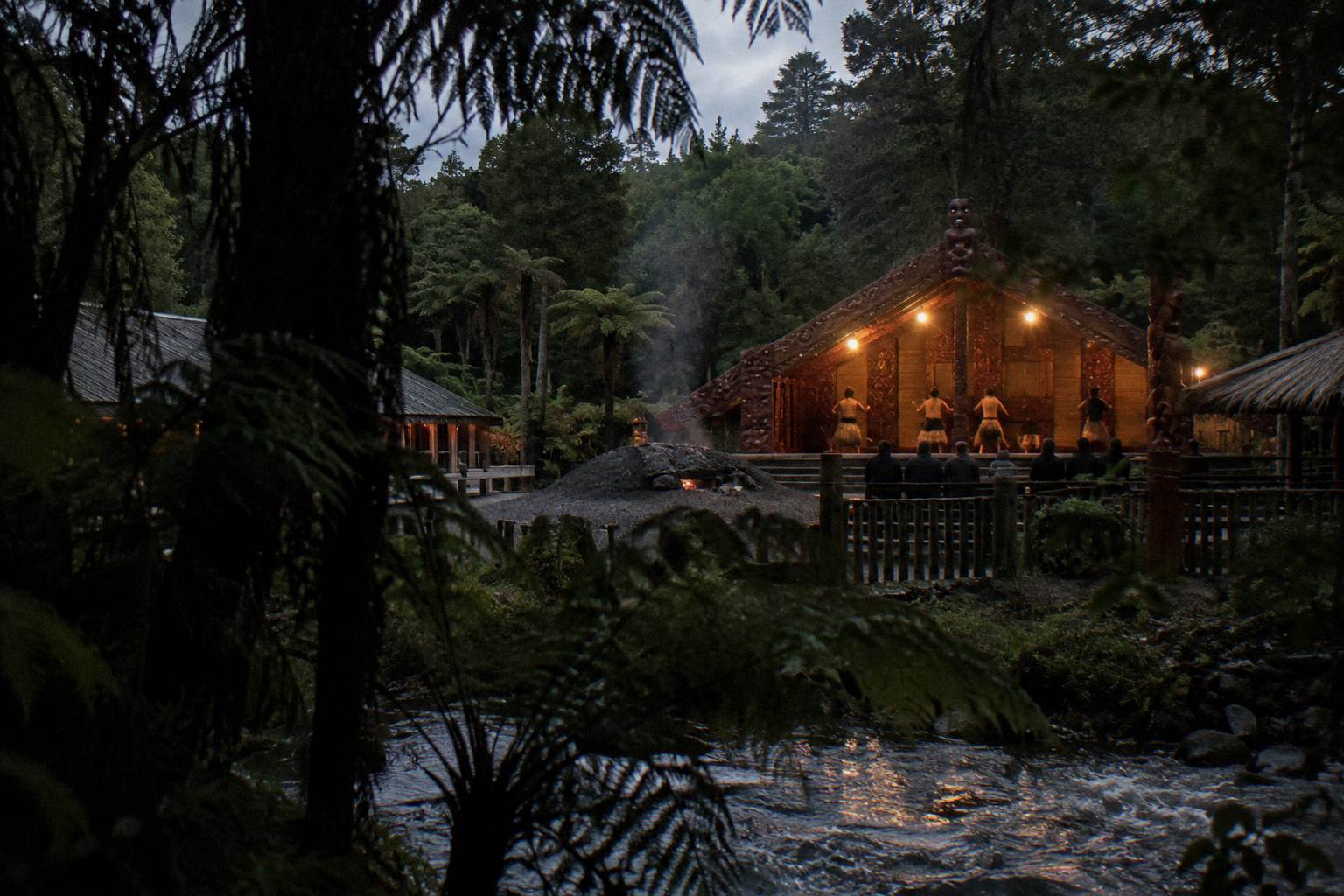
Each operator places the haka differently: Te Puia's Te Pō presents a 45-minute performance of song and dance inside a carved meeting house, Mitai folds its haka into a listed programme that ends with question time, and Te Pā Tū uses a haka pōhiri as the arrival welcome in summer and shares kapahaka across the winter service. None of the operators describes its haka as a standalone show.
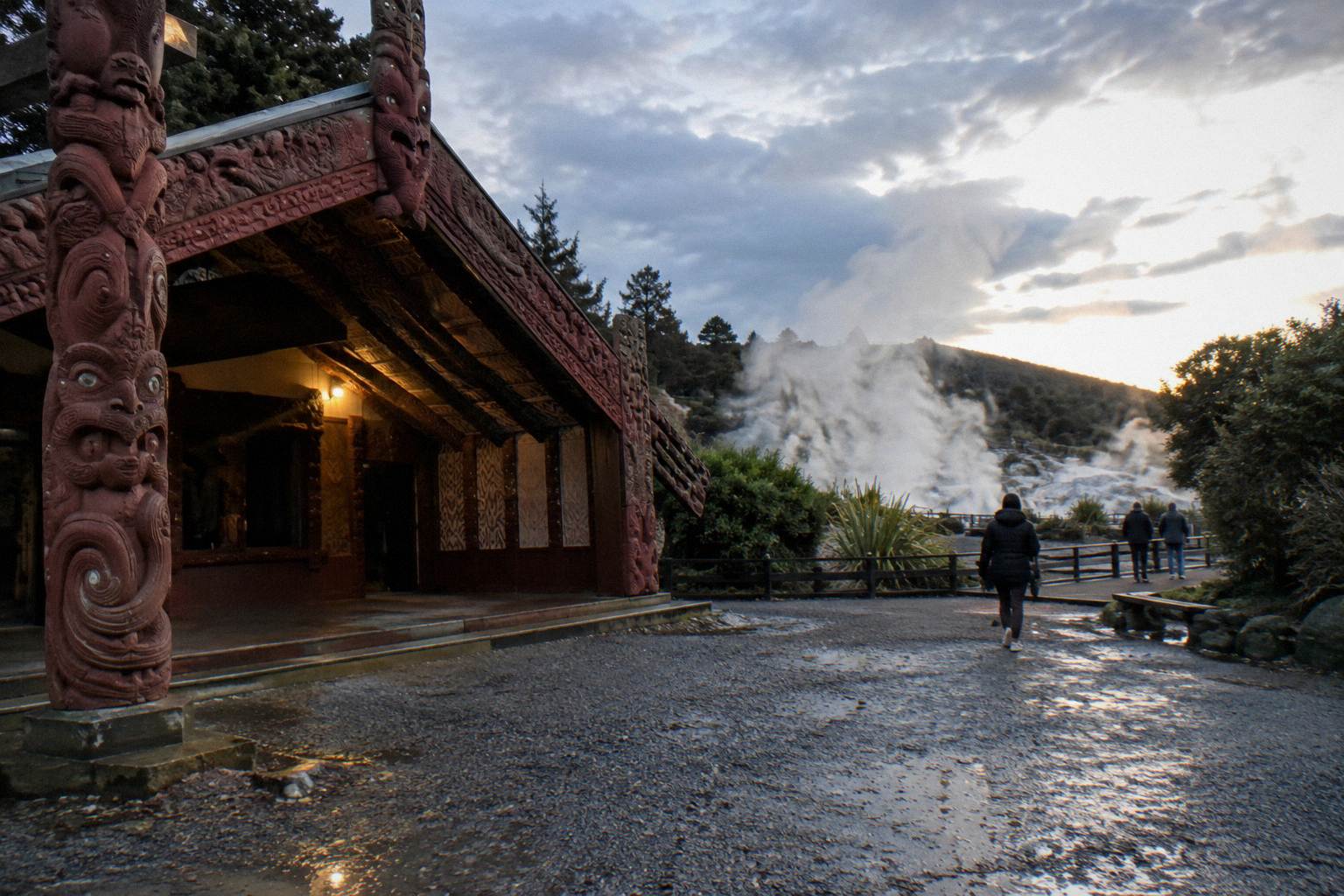
Start with Te Puia, because its description is the most concrete. The Te Pō evening runs from 5:30pm for about 2.5 hours, and its performance is a fixed 45 minutes of Māori cultural song and dance in Te Aronui a Rua, a carved meeting house on the site at 20 Hemo Road. Around it sit hot chocolate on the geyser terrace and a hāngī buffet dinner in the Pātaka Kai Restaurant and Bar. The operator's price is NZD 203; a child price is not stated, so ask the operator before booking for a family. Dinner sittings run at 5:30pm and 7:15pm. The evening is rated 4.7 on its booking page. The full programme is on Te Puia's night experiences page.
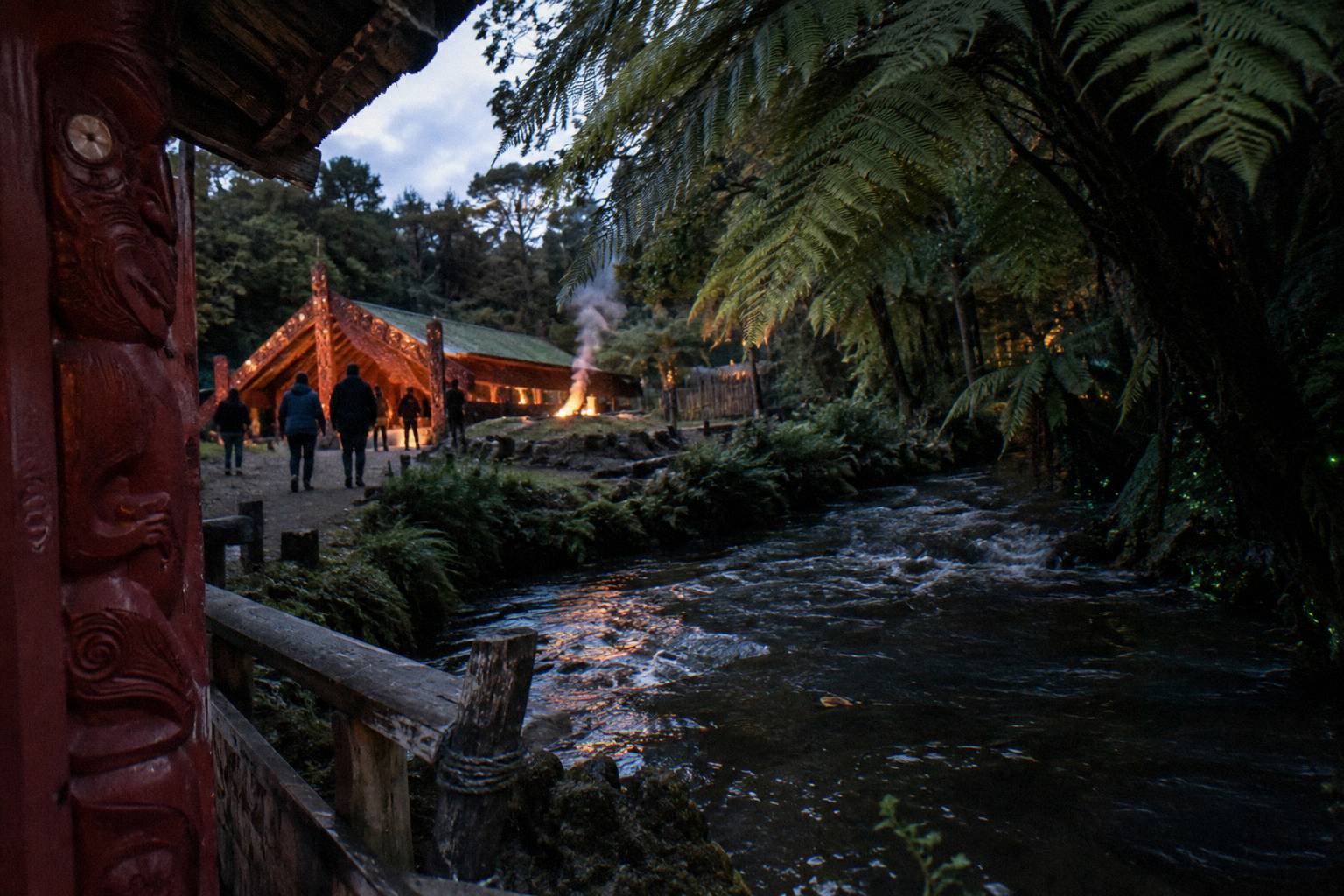
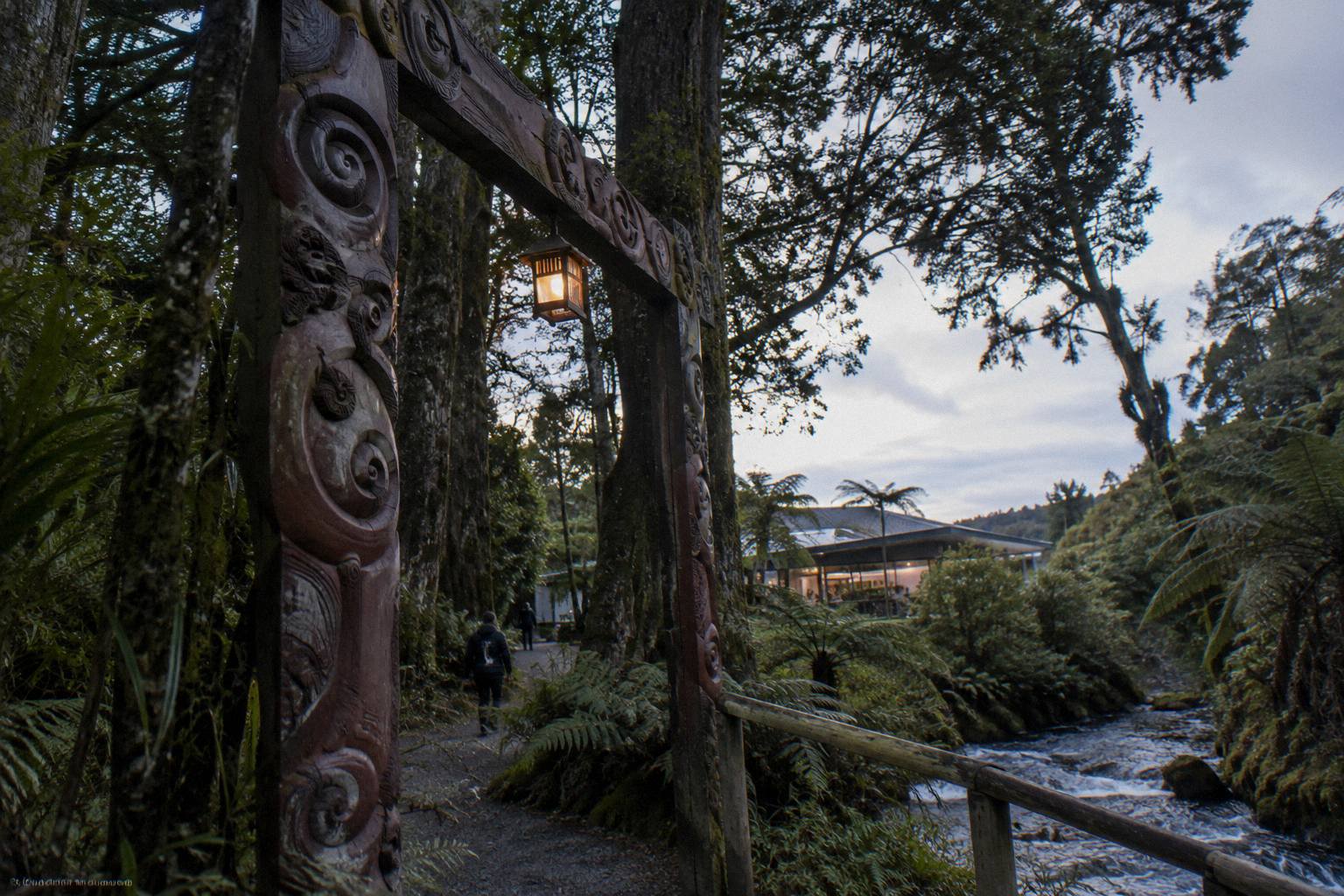
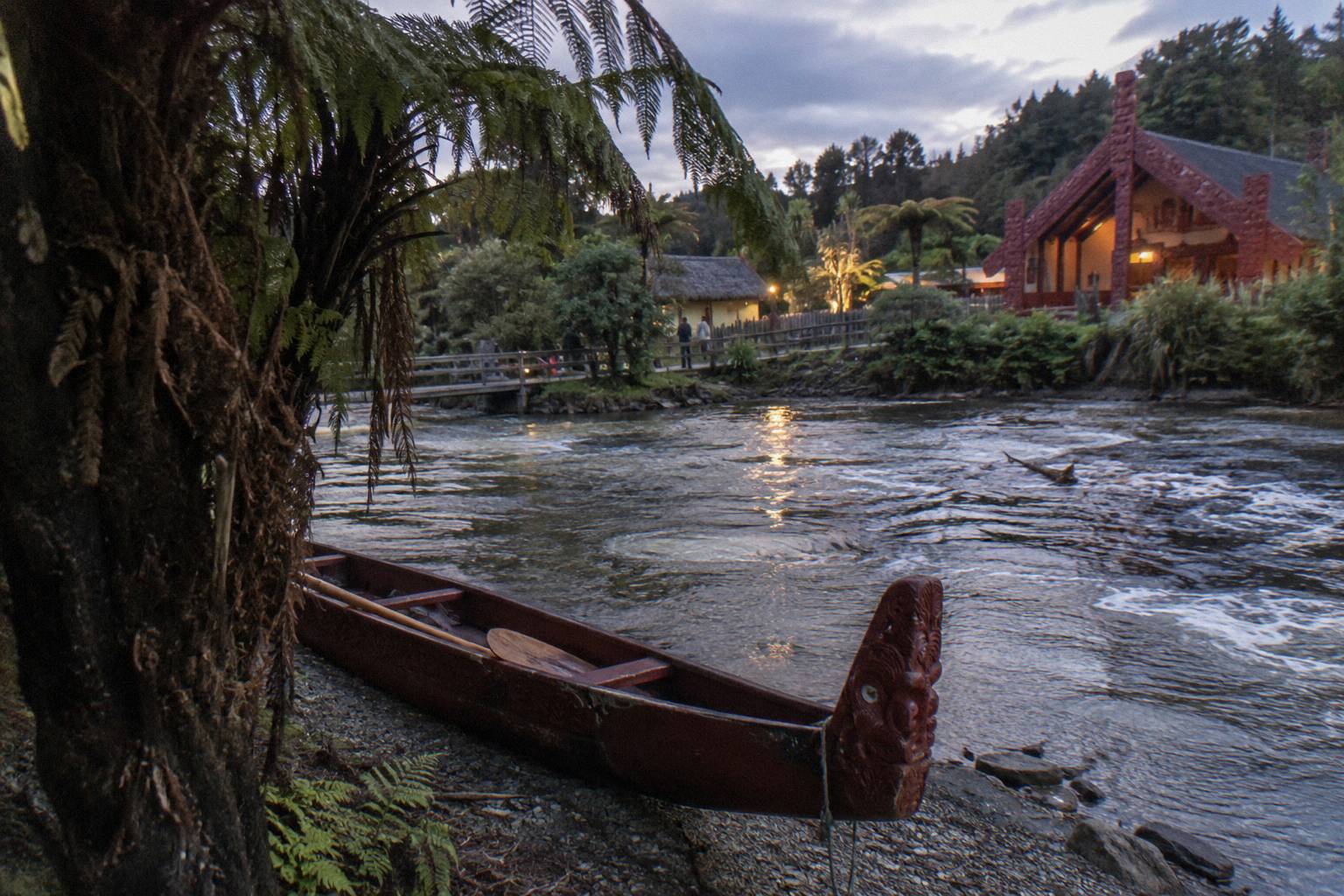
Mitai structures its night as a sequence: a welcoming ceremony, the hāngī unveiling, warriors paddling a waka down the Wai-o-Whiro Stream, the cultural performance, a full buffet hāngī dinner, question time, and an evening bush walk to the old fortified village site and the sacred spring Te Puna Tapu o Tūhoe, with glow worms along the way. The performance itself is the listed set of Pōwhiri, Wero, Waiata, Mōteatea, Poi and Haka. The evening runs about 3 hours, the operator's price is NZD 188.34 for adults aged 14 and over and NZD 115.74 for children aged 4 to 13, and it is rated 4.7 on its booking page. The operator's price can change, so check the booking page for the figure on your date.
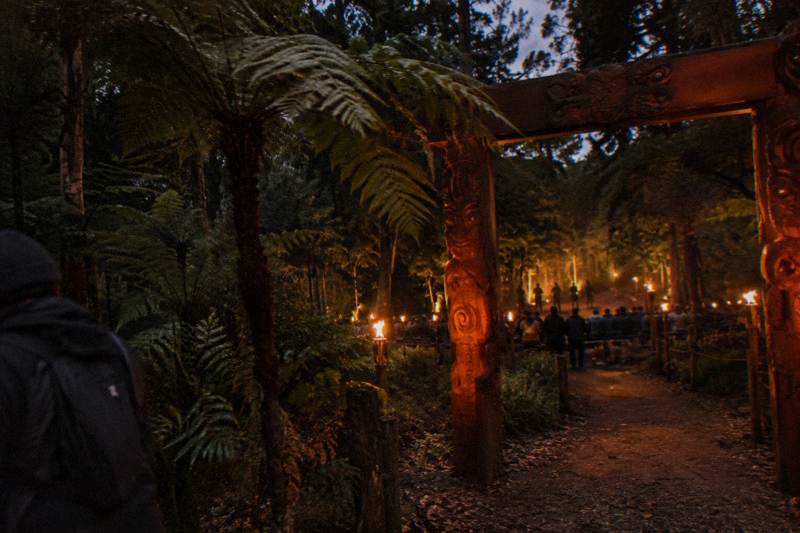
Te Pā Tū is different again, and the difference is seasonal. The summer evening, Tū Te Rā, opens with a haka pōhiri, a cultural welcome, on arrival, then presents kapahaka in the forest amphitheatre Tūāpapa. The winter evening, Tū Te Ihi, opens with an Ahi Tuku fire ceremony instead, and kapahaka is shared across the service rather than staged in one amphitheatre sitting. The operator says the summer evening explores concepts, rituals and stories of ancient Māori warfare and peace. It is rated 4.8 on its booking page.
The table below puts the performance elements side by side, using only what each operator states.
| Evening | Performance, in the operator's words | Where it happens | Extra cultural elements |
|---|---|---|---|
| Te Pā Tū, Tū Te Rā (summer) | Haka pōhiri welcome, then kapahaka | Forest amphitheatre Tūāpapa | Stories relayed through haka, song and drama |
| Te Pā Tū, Tū Te Ihi (winter) | Kapahaka shared across service | Fireside, across the evening | Ahi Tuku fire ceremony, fireside wānanga |
| Mitai Hāngī Dinner | Pōwhiri, Wero, Waiata, Mōteatea, Poi, Haka | Village performance space | Waka on Wai-o-Whiro Stream, question time, bush walk |
| Te Puia Te Pō | 45 minutes of song and dance | Carved meeting house Te Aronui a Rua | Hot chocolate on the geyser terrace |
The Te Pō evening at Te Puia is the one this article features, because it is the shortest and most schedule-friendly way to pair a haka performance with dinner. You can read the full detail on the Te Pō evening, hāngī and haka tour page, and check availability for your date if the 5:30pm start fits your plans.
Which Evening Should You Book To See A Haka?
Book the evening that fits what you want around the haka: Te Puia Te Pō (NZD 203, about 2.5 hours) suits a tight schedule, Mitai (NZD 188.34 adult, about 3 hours) adds a waka, question time and a bush walk, and Te Pā Tū (NZD 280 to 290 adult, 3 to 3.5 hours) runs longest with coach transport, while the Te Puia Te Pō Combo at NZD 290 adds a guided valley tour before dinner.
Price is often the first filter, and the operator prices line up in a surprising order. Te Puia's combo and Te Pā Tū's summer evening both sit at NZD 290 adult, which makes the choice between them about format rather than cost. Mitai's adult price of NZD 188.34 is the lowest of the full dinners, and it is also the only one with a published child price covering a wide band, ages 4 to 13 at NZD 115.74. Te Pā Tū publishes child prices too, NZD 125 in summer and NZD 115 in winter, with no stated minimum child age. Te Puia states no child price for either Te Pō product; the booking page says under 4s are free, but for older children the figure is not stated, so ask the operator. All prices are the operators' own and can change.
Duration is the second filter. The Te Pō evening is about 2.5 hours from 5:30pm, which leaves room for something later in the evening, and Te Puia sells a Mārama Geyser Light Trail at NZD 49 as a separate add-on if you want to extend the night. Mitai runs about 3 hours, and the bush walk to the sacred spring is inside that time, not after it. Te Pā Tū runs 3.5 hours in summer and 3 in winter; note the operator's homepage says four hours, a discrepancy worth knowing about, and the honest summary is about 3 to 3.5 hours. The Te Pō Combo, from 4pm daily, runs about 4 to 4.5 hours and is the longest evening of the four.
Transport is the third. Te Pā Tū includes return coach transfers from central Rotorua in both seasons, which matters if you are staying without a car. Mitai offers complimentary transfers from registered accommodation, but numbers are limited, they must be booked, and the transfer closes at capacity, so it is worth arranging at the moment you book rather than on the day. Te Puia states no hotel transfer for Te Pō; the operator instead names the City Ride bus every 30 minutes until 6PM, Uber and taxi, and there is free parking on site. The site is cashless, so plan for that at the bar.
| Evening | Operator's adult price | Child price | Duration | Transfer |
|---|---|---|---|---|
| Te Pā Tū, Tū Te Rā (summer) | NZD 290 | NZD 125 | 3.5 hours | Coach from central Rotorua included |
| Te Pā Tū, Tū Te Ihi (winter) | NZD 280 | NZD 115 | 3 hours | Coach from central Rotorua included |
| Mitai Hāngī Dinner | NZD 188.34 (14+) | NZD 115.74 (4 to 13) | About 3 hours | Limited, from registered accommodation, book ahead |
| Te Puia Te Pō | NZD 203 | Not stated | About 2.5 hours | None stated; bus, Uber, taxi, free parking |
| Te Puia Te Pō Combo | NZD 290 | Not stated | 4 to 4.5 hours | None stated; bus, Uber, taxi, free parking |
Families should read the child-price column closely. Mitai's band from age 4 and Te Puia's free under 4s each suit a different age mix, and the two not-stated cells at Te Puia are worth one email before you commit. Mitai also notes highchairs are limited, which matters for the youngest diners.
What Does The Rest Of Each Evening Include?
Every one of the four evenings is built around food as much as performance: Te Pā Tū serves a three-course seasonal feast in summer and a Matariki-inspired fusion feast with in-ground hāngī in winter, Mitai serves a full buffet hāngī dinner after the unveiling, and both Te Puia evenings end with a hāngī buffet in the Pātaka Kai Restaurant and Bar. The food is not a side note; it is half the ticket.
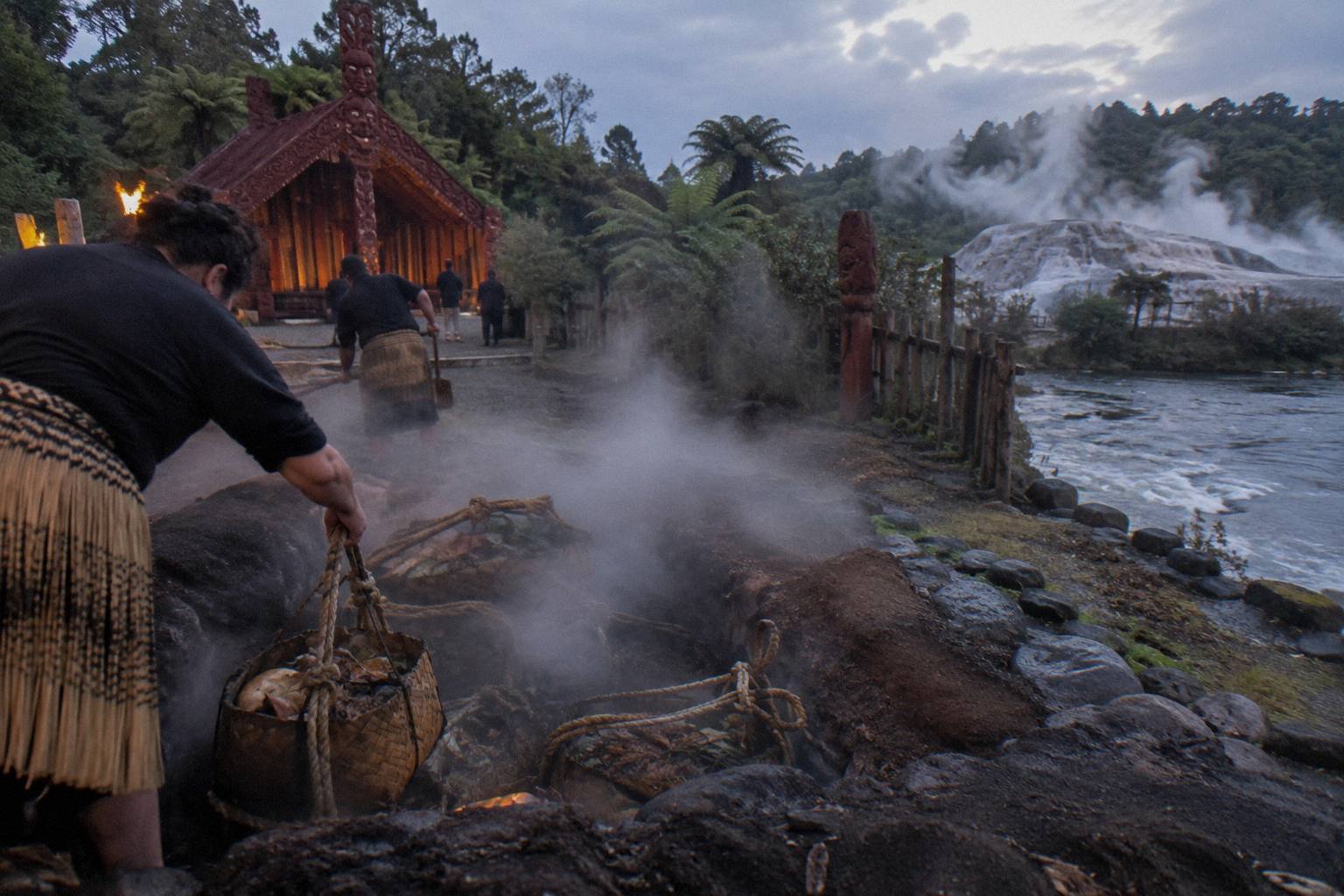
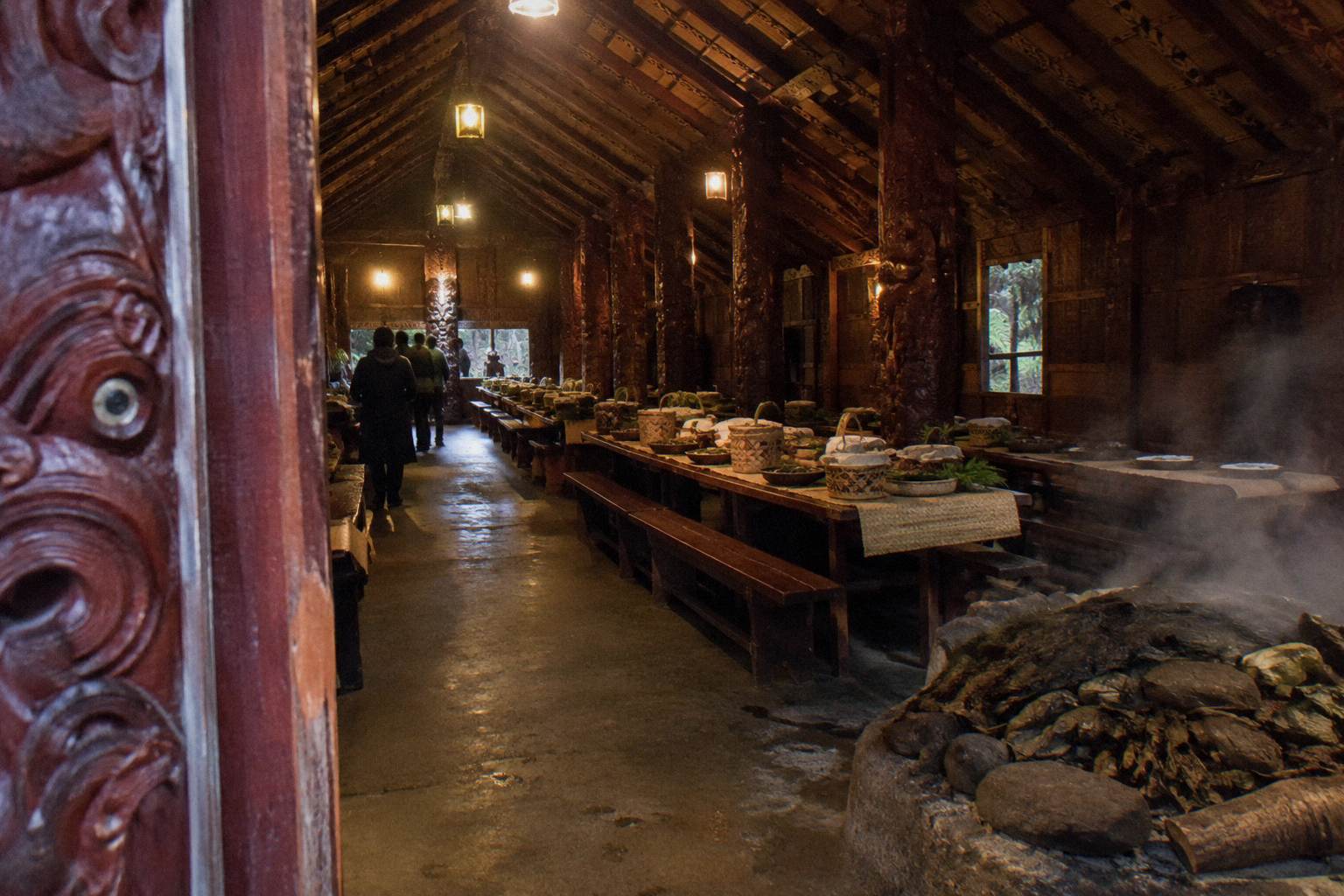
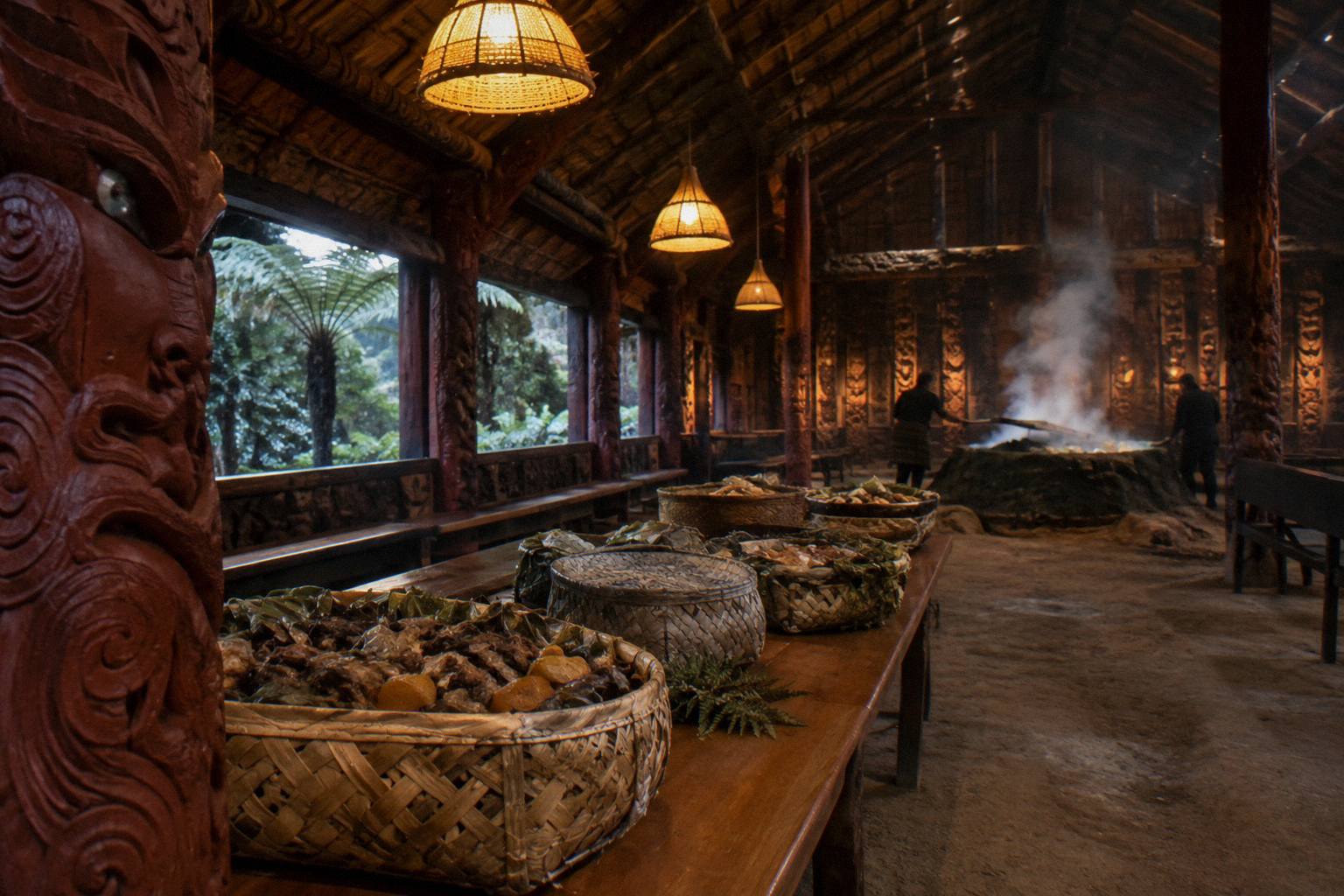
The hāngī itself is worth understanding in the operators' terms, and Mitai is the most specific: its hāngī is cooked in an earth oven hole 1 to 2 m deep for 3 to 4 hours, and includes meat, chicken and kūmara, with the operator's wording also listing vegetables, salads and a dessert buffet. Guests see the hāngī unveiled before eating. Te Pā Tū's summer evening shows the hāngī lifting and a spit roast, then serves a three-course seasonal feast in the wharekai that blends traditional and innovative dishes by Māori chefs, with forest canapés before it; the operator's examples include pāua wonton, kawakawa leaf filled with prawn, hāngī root-vegetable croquette and kūmara crisp with venison. Winter brings a Matariki-inspired Māori fusion feast served family style, with traditional in-ground hāngī of lamb and vegetables, a complimentary aperitif and rongoā tea.
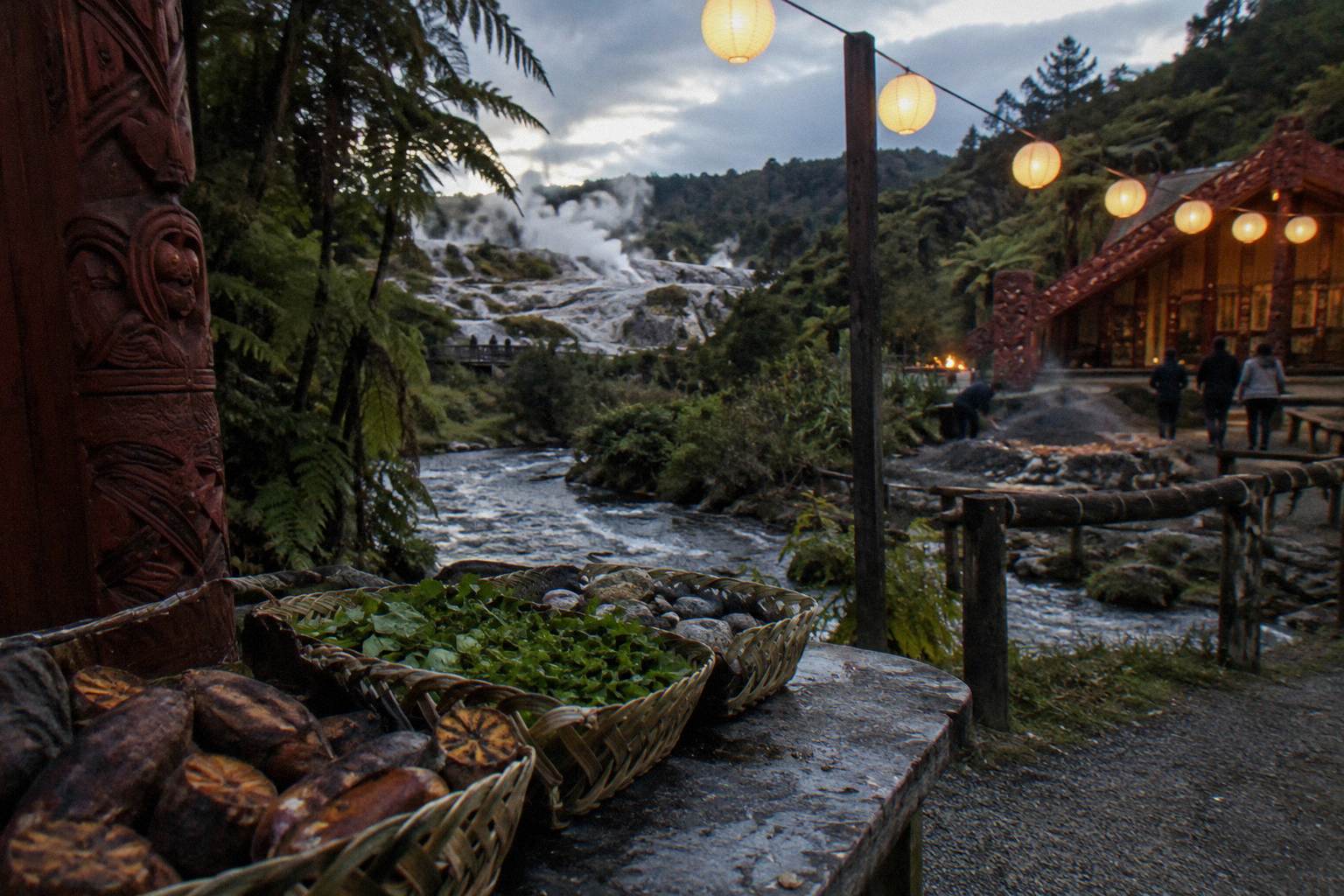
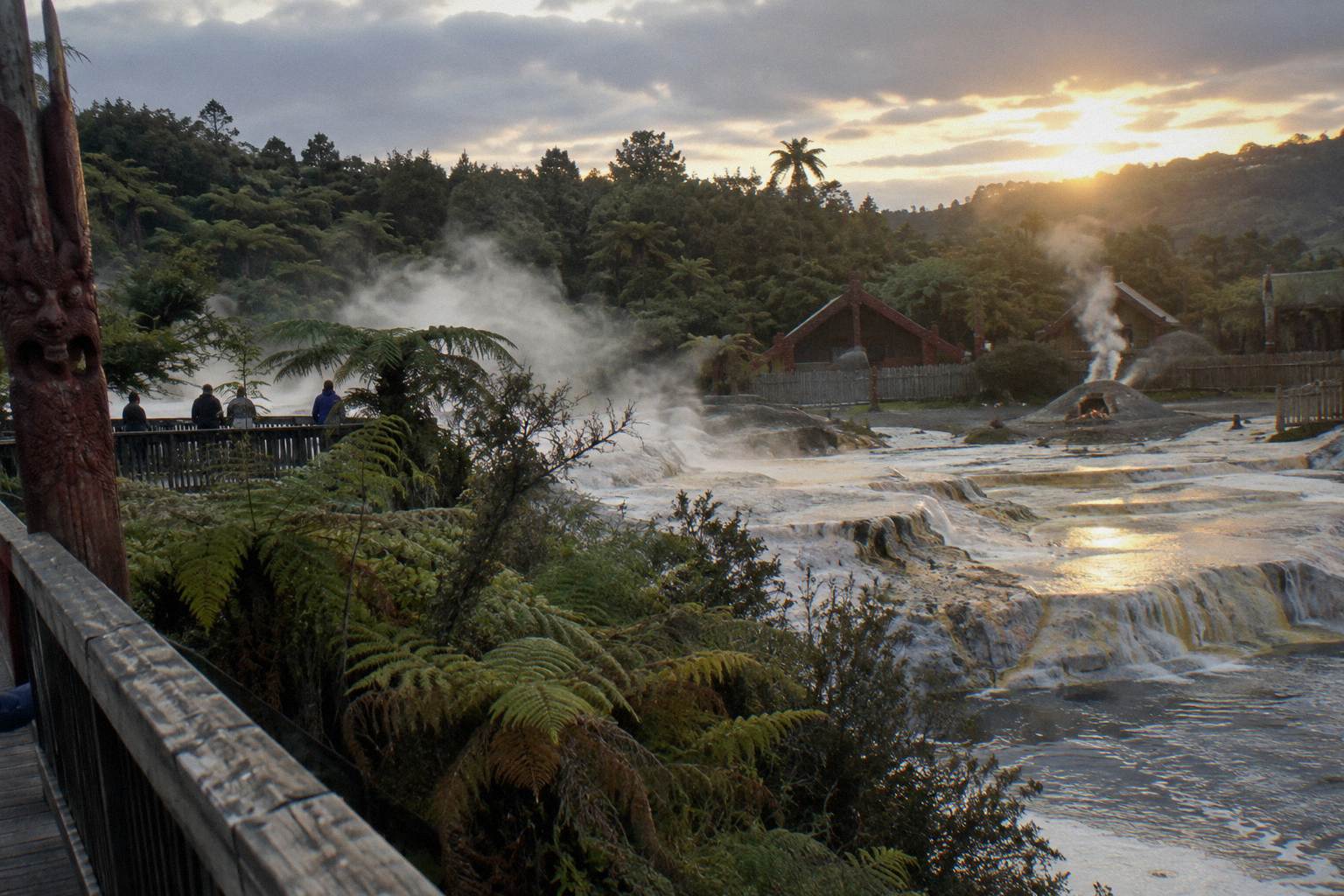
Te Puia's version is a hāngī buffet in the Pātaka Kai Restaurant and Bar with valley views, preceded by hot chocolate on the geyser terrace, an unusual touch that ties the evening to the geothermal valley outside. The Te Pō Combo adds a 90-minute guided tour of that valley before dinner, which is what turns the same evening into a 4 to 4.5 hour night. Te Puia is iwi owned under the NZMACI Vesting Act 2020 and describes itself as kaitiaki, guardian, of the Whakarewarewa Geothermal Valley, hosting the New Zealand Māori Arts and Crafts Institute and a Kiwi Conservation Centre.
Dietary needs differ sharply between operators, and this is where a booking decision can go wrong. Te Pā Tū's winter page lists vegetarian, pescatarian and gluten free options and says it cannot guarantee coeliac safety; vegan options there are not stated. Mitai says plainly it is unable to cater to all dietary needs such as vegan, though some requests could be met. Te Puia's dietary options are not stated. In every case, tell the operator at booking rather than on the night. If dietary needs are central to your planning, the vegetarian and dietary options at a hāngī dinner guide works through the details.
One nearby venue belongs in this conversation only to rule it out. Whakarewarewa The Living Māori Village is daytime only, with guided tours from 9am to 3pm and a 30-minute cultural performance at 12.30pm; it has no evening dinner and no evening concert, and its food is steam-cooked and lunch style. If you see it listed beside the evening experiences, it is a different kind of visit. The Whakarewarewa Living Māori Village guide covers what it does offer.
Common Mistakes When Choosing A Haka Evening
The most common mistakes are treating the four evenings as interchangeable, assuming a shuttle exists, expecting an explanation of the haka's meaning on the night, and ignoring the cancellation windows. Each evening has its own price basis, its own transport rule and its own refund terms, and mixing them up costs money. Booking early matters most for Mitai, whose complimentary transfers close at capacity.
Assuming a shuttle is the classic one. Te Pā Tū includes coach transport from central Rotorua, Mitai's transfer must be booked and has limited numbers, and Te Puia states none at all; arriving at Te Puia expecting pickup means arriving late. Check in there is 15 minutes early or the ticket is forfeited, and the site is cashless.
Expecting a lecture on the haka's meaning is another. The operators present performances and, at Mitai, question time; none publishes a history or explanation of the haka, and the operators' own pages are the right place for their wording. What each evening delivers is what is described above, and it is plenty for most visitors, but it is not a seminar.
Ignoring cancellation terms is the expensive mistake. Te Pā Tū's own terms give a 100% refund if cancelled two days before by 12.00pm, 50% one day before by 12.00pm and nothing on the day, with booking and bank fees excluded. Te Puia requires amendment or cancellation at least 48 hours before, 72 for groups of 10 or more, and is non-refundable inside that window. Mitai's cancellation terms are not public; they are set in its booking widget, so read the terms at checkout. The terms on the booking page you reserve through can differ from the operator's own terms, whichever evening you choose.
Finally, season-blindness at Te Pā Tū. The summer and winter evenings are different programmes, different durations and different prices, NZD 290 adult for 3.5 hours in summer, NZD 280 for 3 hours in winter, so check which season your travel date falls in before comparing it against the others. The best time of year for a Māori hāngī evening guide covers the seasonal detail.
Common Questions About The Haka At A Rotorua Evening
What Is The Meaning Behind The Haka?
None of the Rotorua evening operators publishes an explanation of the haka's meaning, so this page does not offer one. What the operators say is their own: Te Pā Tū describes its summer evening exploring concepts, rituals and stories of ancient Māori warfare and peace through haka, song and drama, and Mitai calls its haka, in its own words, the fiery Haka Māori war dance. For the operators' full wording, read their own pages, and for what each evening contains, see the comparison above.
Which Rotorua Evening Has The Longest Performance?
Te Puia is the only operator stating a fixed performance length, 45 minutes of song and dance in the carved meeting house Te Aronui a Rua. Mitai lists a performance of Pōwhiri, Wero, Waiata, Mōteatea, Poi and Haka without a stated duration, and Te Pā Tū spreads kapahaka across its 3 to 3.5 hour evenings.
Is There A Question Time After The Haka?
Yes, at Mitai. Its listed programme includes question time after the cultural performance, which makes it the evening most suited to a visitor who wants to ask about what they have watched. The other operators do not list question time.
How Much Does An Evening With A Haka Cost In Rotorua?
Operator prices are NZD 188.34 adult for Mitai, NZD 203 for Te Puia Te Pō, NZD 290 for the Te Puia Te Pō Combo, and NZD 290 adult in summer or NZD 280 in winter for Te Pā Tū. Child prices are published for Mitai and Te Pā Tū and not stated for the two Te Puia evenings. All are the operators' prices and can change.
Can Children Attend A Haka Evening?
Yes. Te Pā Tū says children are welcome, with child prices of NZD 125 in summer and NZD 115 in winter. Mitai's child price covers ages 4 to 13 at NZD 115.74, with highchairs limited, and Te Puia's booking page says under 4s are free, though older child prices are not stated there.
Do Any Of These Evenings Explain Māori Culture More Broadly?
Each operator shares what it chooses to on the night. Te Pā Tū speaks of tikanga (protocols) and mātauranga (knowledge) handed through generations, and defines manaakitanga as a firmly held value within iwi Māori centred on strengthening the bonds between host and visitors. Mitai's bush walk visits the old fortified village site and the sacred spring Te Puna Tapu o Tūhoe, and Te Puia's combo includes a 90-minute guided tour of its geothermal valley.