Who Owns Mitai Māori Village?
Mitai Māori Village calls itself a family owned and operated business speaking of its Te Arawa people. Here is what that means, and how the other Rotorua cultural evenings are owned.
Mitai Māori Village is owned and operated by a family, according to the operator's own description of the business, which also speaks of "our Te Arawa people". No individual owner names, shareholding details, or company history dates appear anywhere on the operator's public pages, so the fullest public answer is a family business with a stated Te Arawa connection.
That wording matters more than it might first appear. Rotorua has several cultural evening venues, and they are owned in noticeably different ways: one is owned by a trust, one is iwi owned under an act of parliament, and one is hosted by a hapū that has, in its own words, welcomed visitors for over 300 years. Mitai's answer to the ownership question is the family one. The operator does not publish a founder story, a family name or a date of establishment on its public pages, and none of those details should be invented by anyone else either. What the operator does publish is a description of itself as family owned and operated, alongside its own references to its Te Arawa people.
For a traveller deciding which Rotorua cultural evening to book, ownership is not trivia. It shapes who performs, who cooks, who tells the stories on the night, and where the money goes afterwards. A family owned village and an iwi owned geothermal attraction answer those questions differently, and both models are represented among the dinner evenings available in Rotorua tonight.
If you are weighing the main dinner options side by side, these three evenings are the natural starting point.
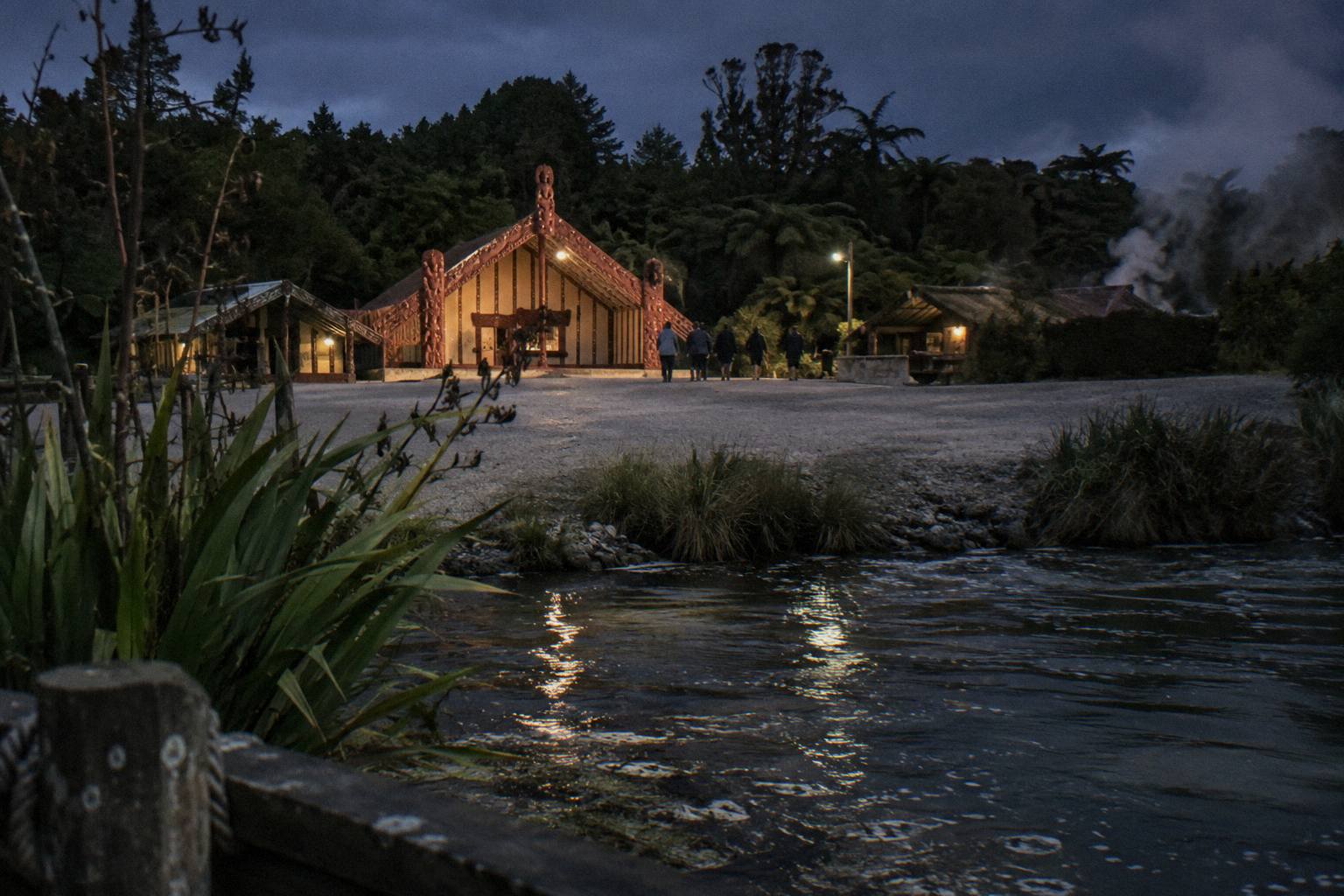
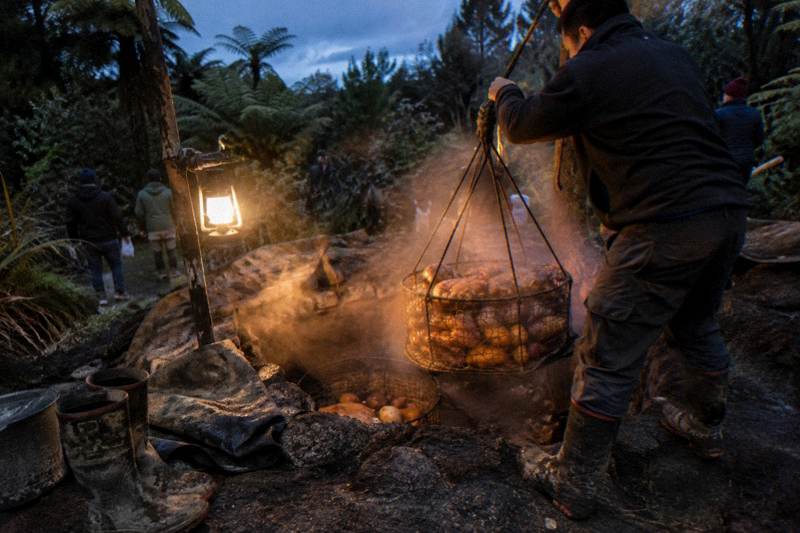
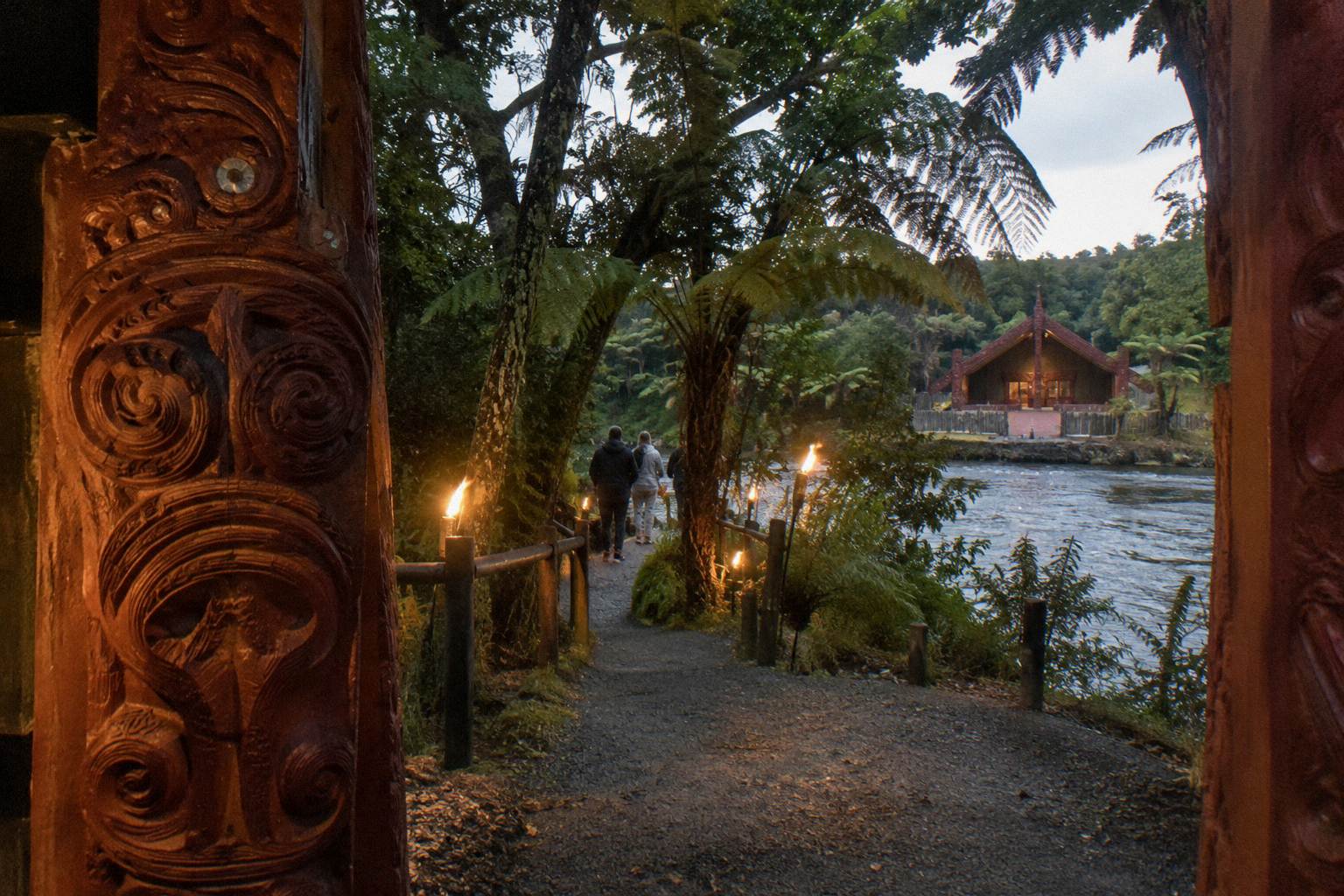
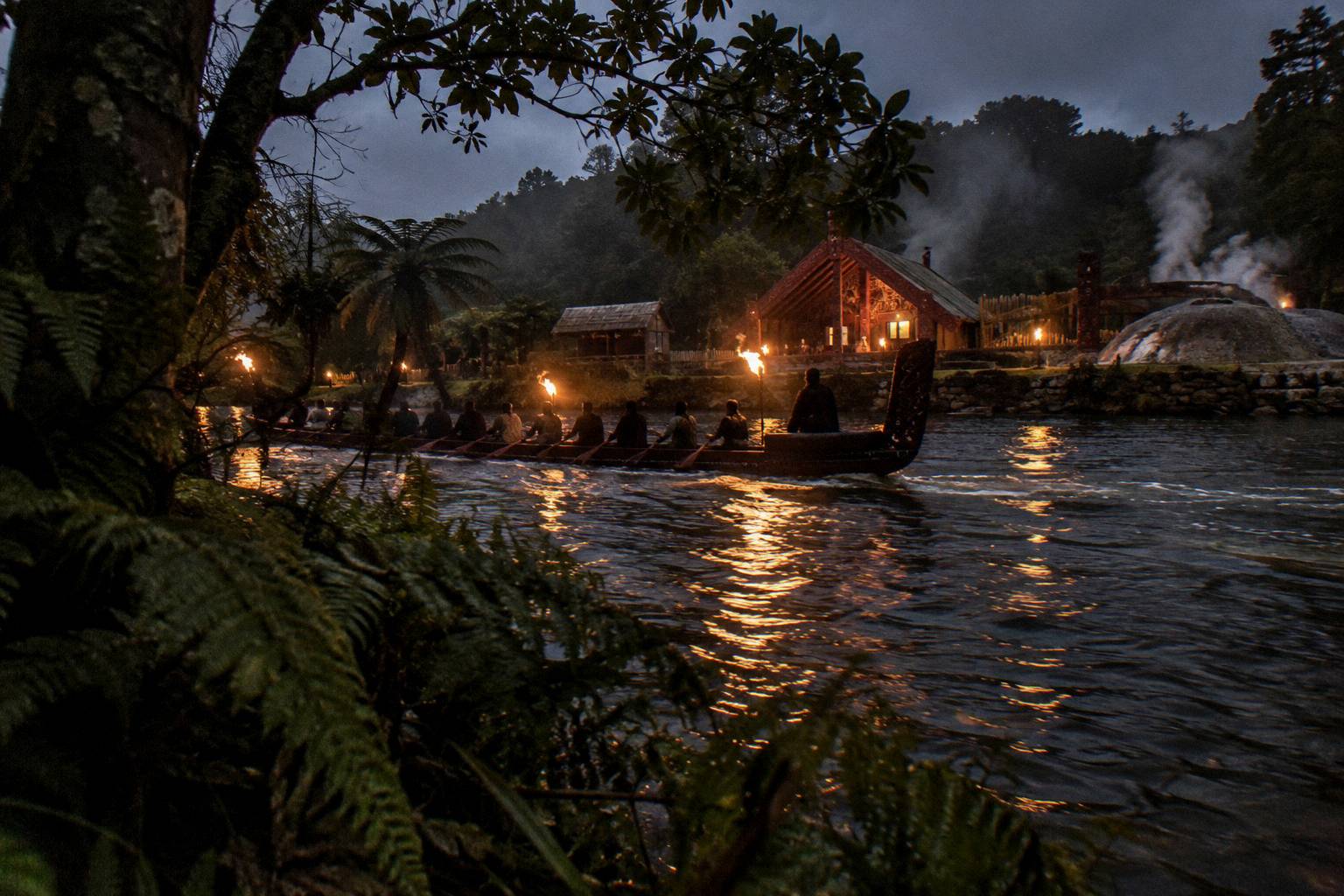
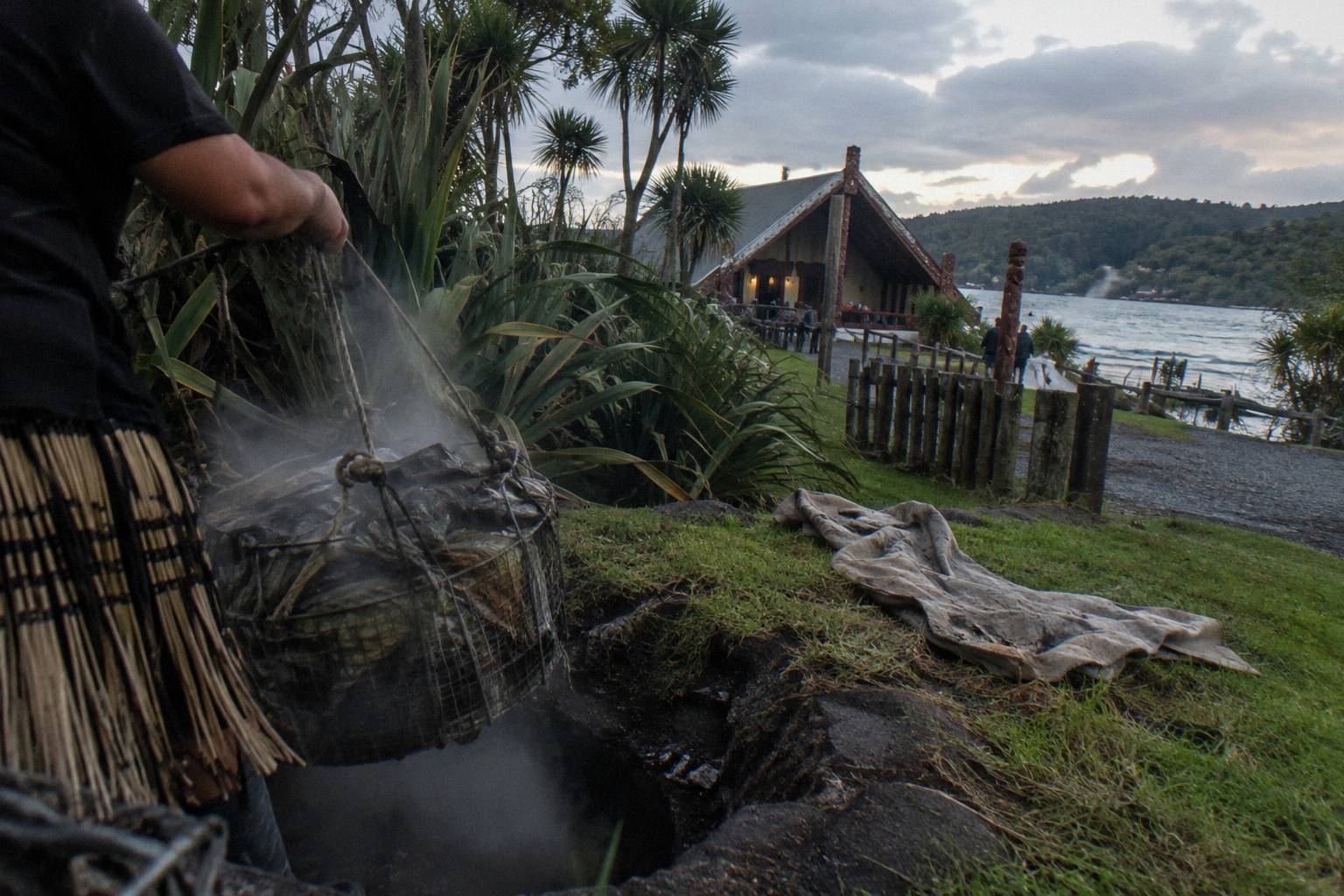
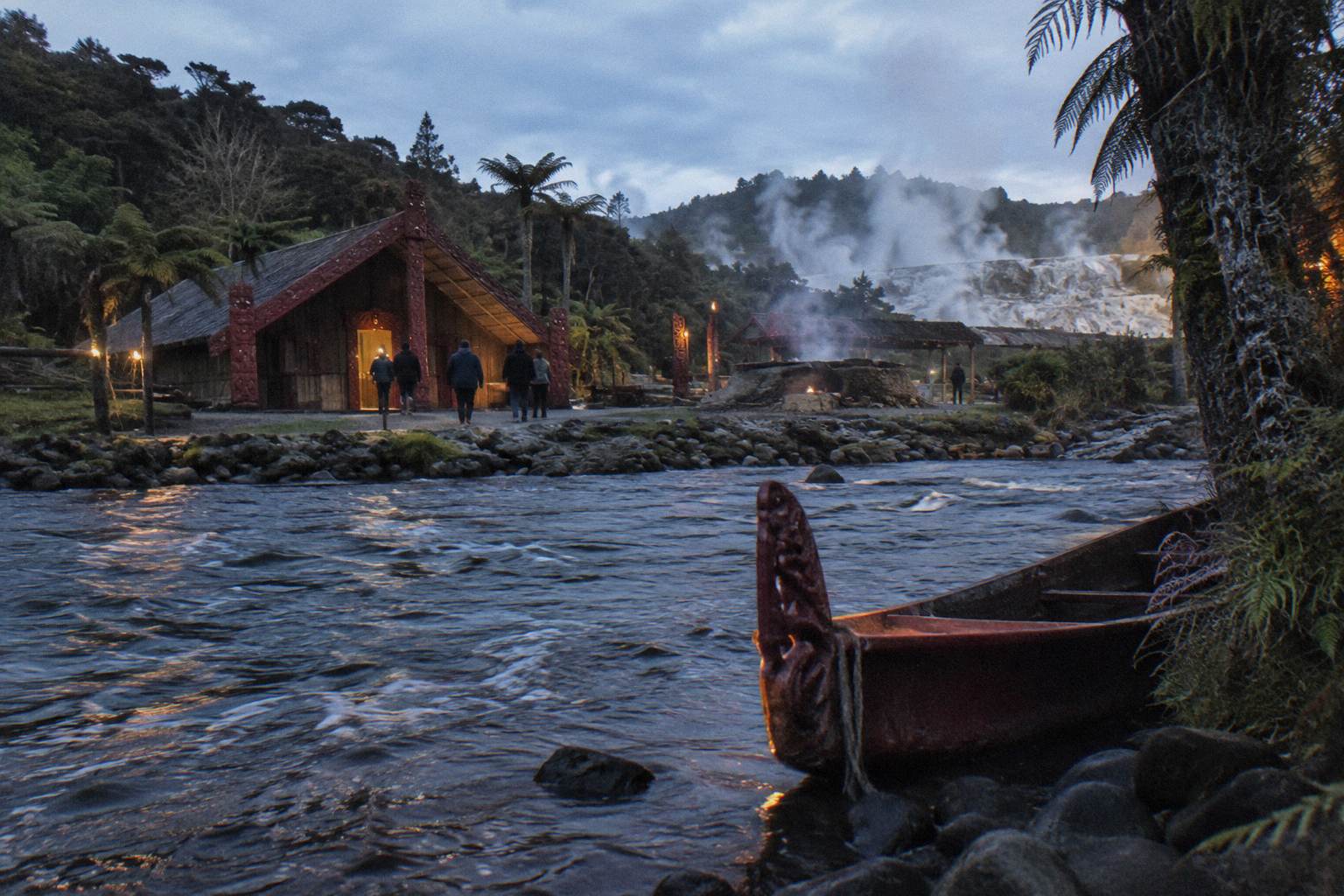
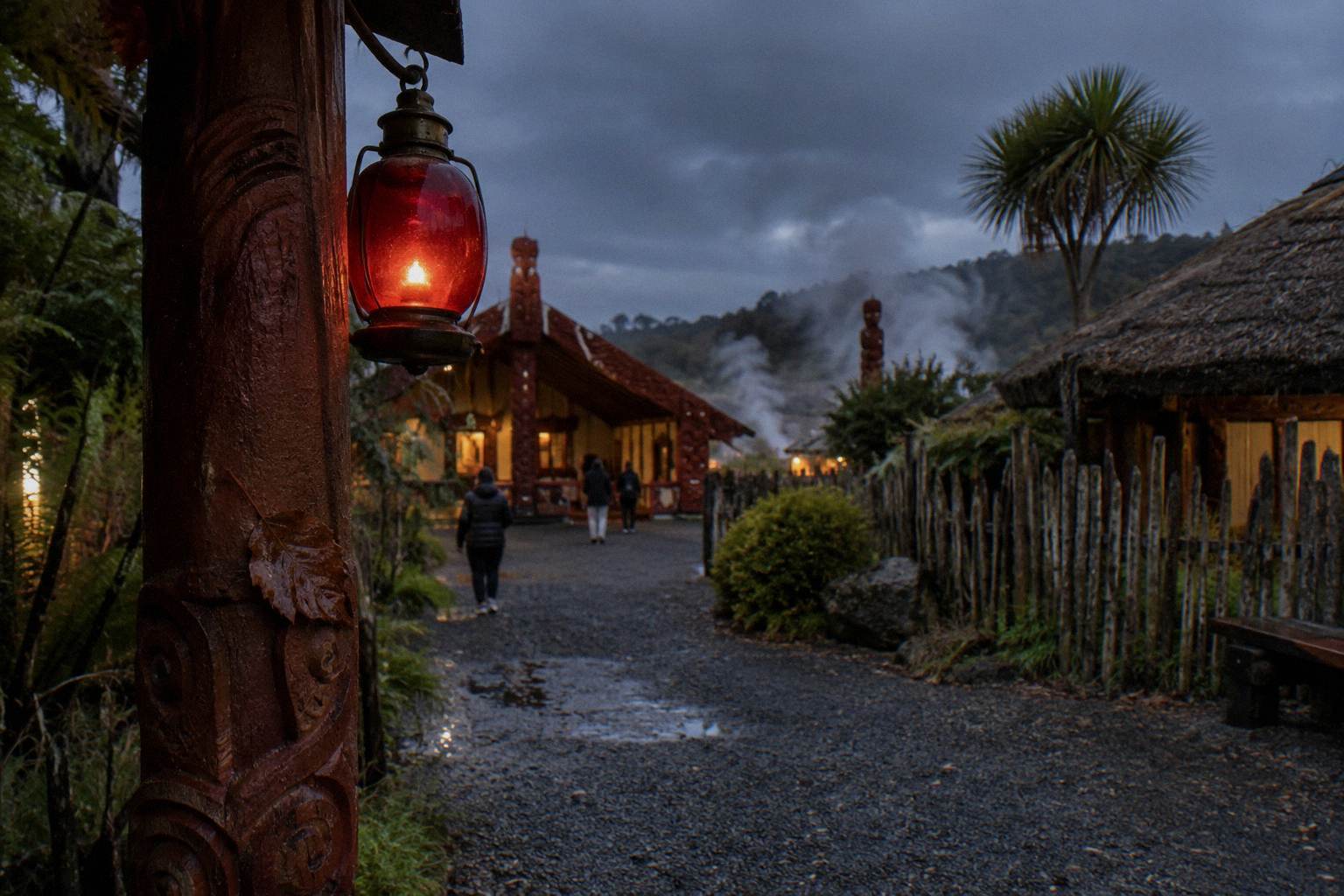
The evening Mitai runs is described fully on the operator's hāngī dinner page. The Authentic Hāngi Dinner Experience runs about 3 hours and includes a welcoming ceremony, the hāngī unveiling, warriors paddling a waka down the Wai-o-Whiro Stream, a cultural performance the operator lists as Pōwhiri, Wero, Waiata, Mōteatea, Poi and Haka, a full buffet hāngī dinner, question time, and an evening bush walk to the old fortified village site and the sacred spring Te Puna Tapu o Tūhoe. Glow worms are part of the walk as the operator describes it. The operator's price is NZD 188.34 for adults aged 14 and over and NZD 115.74 for children aged 4 to 13, prices that can change.
A fuller profile of the venue, its location and its practical details is in the guide to Mitai Māori Village, and the question of whether the Mitai evening is worth it is covered in its own article.
What Does Family Owned Actually Mean Here?
It means the operator presents the business and the cultural content as one and the same thing. Mitai does not publish owner names, a corporate structure or an establishment date. The operator describes itself as a family owned and operated business whose people identify as Te Arawa. The performance, the hāngī and the bush walk are all delivered by that same operation.
Restraint is needed when writing about ownership in Rotorua. It would be easy to invent a founding family, a patriarch, an early establishment date or a story about a grandfather digging the first hāngī pit. None of that is on the operator's pages. The verifiable facts are these: the business describes itself as family owned and operated; it speaks of "our Te Arawa people"; it operates from 196 Fairy Springs Road; it takes reservations by phone on +64 7 343 9132 and by email at reservation@mitai.co.nz. Those are the ownership breadcrumbs the operator leaves, and they are enough to answer the practical questions a booker actually has.
What a family structure tends to mean in practice is stated carefully: the operator says the experience includes question time with the performers, which is the moment where guests can ask directly about the village, its people and its history. That is a better source than any third hand summary. The operator also publishes its own practical rules, which read like the house rules of a family property rather than the policy manual of a corporation: free on-site parking, a bar on site with outside alcohol not permitted, highchairs limited in number, umbrellas limited in number, and some wheelchair limits on the forest walk because of the terrain.
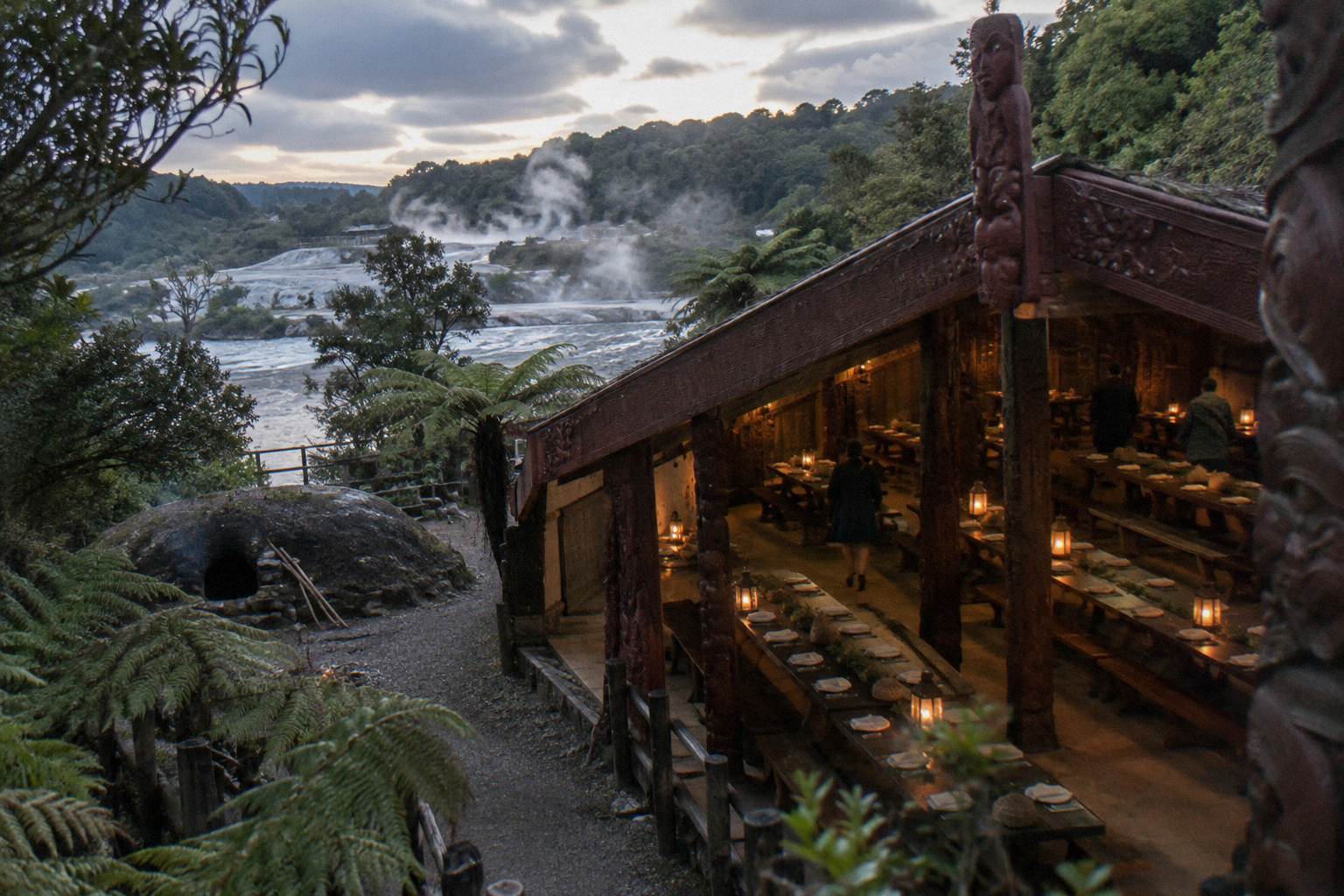
Complimentary transfers exist from registered accommodation, with limited numbers, must be booked ahead, and close at capacity, which is another house rule in the same spirit. If you are staying somewhere the shuttle does not serve, the free on-site parking at the Fairy Springs Road address is the operator's stated alternative.
Wondering which evening fits your night best? The Mitai dinner can be held with free cancellation on the booking page, so checking dates costs nothing.
Dress guidance is published for this venue only among the dinner evenings: comfortable clothing and walking shoes, warm clothing in winter, a hat in summer, a jacket when raining, and photography welcomed in designated areas. The other operators do not state dress guidance; ask them directly.
Who Owns The Other Rotorua Cultural Evenings?
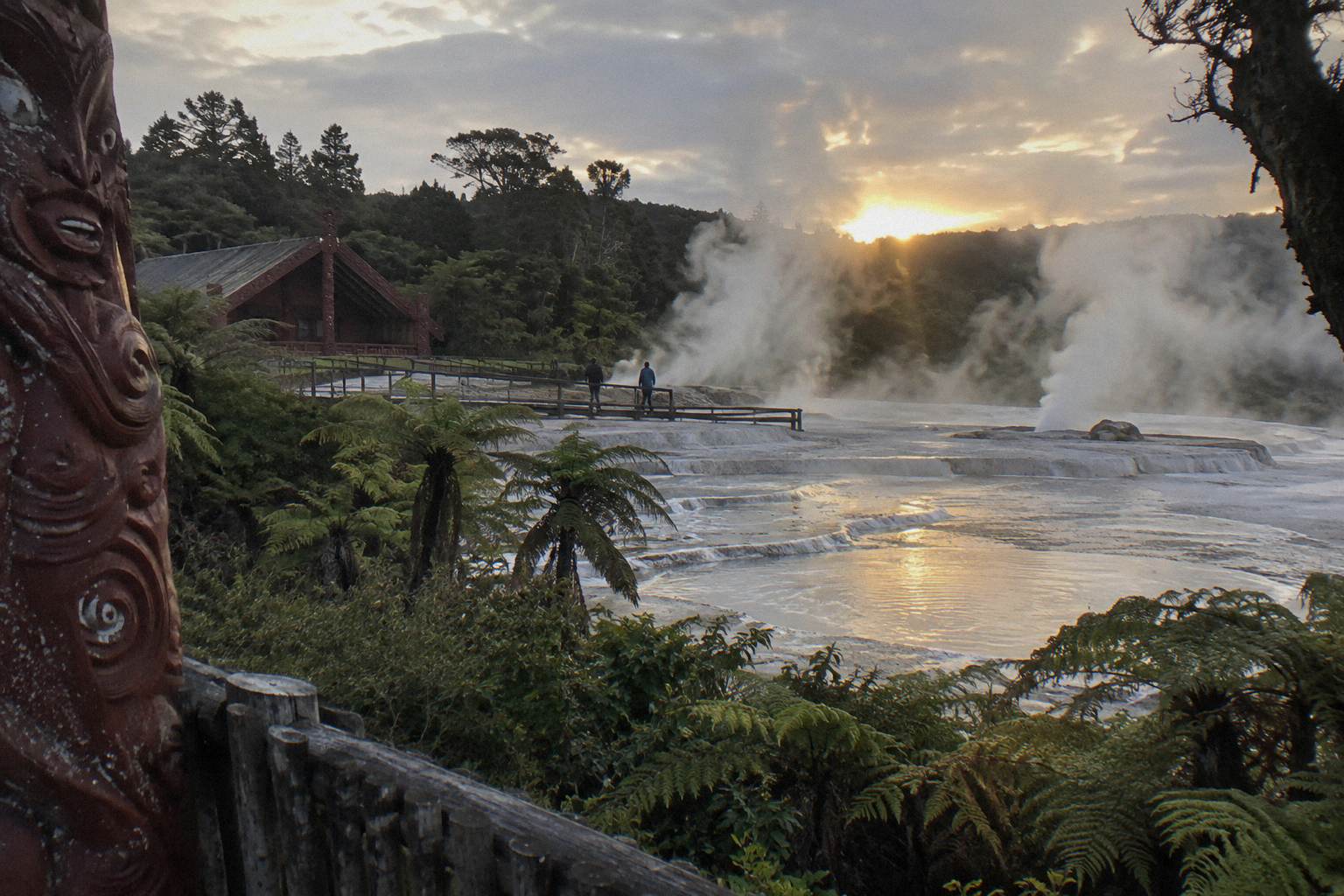
Te Pā Tū is owned and operated by Tauhara North No.2 Trust, trading as Māori Cultural Experience. Te Puia is iwi owned under the NZMACI Vesting Act 2020. Whakarewarewa The Living Māori Village is hosted by Tūhourangi Ngāti Wāhiao, who say their people have hosted visitors there for over 300 years. Mitai stands apart as the family owned model among the evening venues.
The comparison is worth making in full, because the ownership models differ and the differences show up in the evenings themselves. Te Pā Tū runs two seasonal dinner evenings in a forest pā a short coach ride south of central Rotorua: Tū Te Rā, the summer harvest celebration from October to April, and Tū Te Ihi, the winter Matariki celebration from May to September. The trust that owns it lists awards on its own site, including New Zealand Tourism Awards 2023 recognition in Māori Tourism and in Resilience and Innovation, a 2021 travellers' choice award the operator lists, and Qualmark Gold. Its summer evening is rated 4.8 out of 5 on its booking page, and the operator's price is NZD 290 for adults in summer or NZD 280 in winter, with return coach transport from central Rotorua included. Tamaki Māori Village, for the avoidance of doubt, is the former name of this same experience, not a separate venue. The ownership detail comes from the operator's about page.
Te Puia answers the ownership question with legislation. Under the NZMACI Vesting Act 2020 it is iwi owned, and the operator describes itself as kaitiaki, or guardian, of the Whakarewarewa Geothermal Valley. It also hosts the New Zealand Māori Arts and Crafts Institute and a Kiwi Conservation Centre on the same site at 20 Hemo Road. Its Te Pō evening runs about 2.5 hours from 5:30pm, with a 45-minute performance of song and dance in the carved meeting house Te Aronui a Rua, hot chocolate on the geyser terrace, and a hāngī buffet dinner in the Pātaka Kai Restaurant and Bar, at the operator's price of NZD 203. The Te Pō Combo adds a 90-minute guided tour of the geothermal valley before dinner, from 4pm, at the operator's price of NZD 290. Details of hours, sittings and refunds are on Te Puia's FAQ page.
Whakarewarewa The Living Māori Village completes the picture, with an important caveat: it is a daytime venue. Guided tours run hourly from 9am to 3pm and the cultural performance is at 12.30pm daily, per the operator's performance page. There is no evening dinner there, so it never belongs in a dinner comparison. Its ownership story, Tūhourangi Ngāti Wāhiao hosting visitors over three centuries, is the operator's own claim and is attributed to them.
| Venue | Ownership, as stated by the operator | Evening dinner? |
|---|---|---|
| Mitai Māori Village | Family owned and operated; speaks of its Te Arawa people | Yes, hāngī buffet, about 3 hours |
| Te Pā Tū | Owned and operated by Tauhara North No.2 Trust (Māori Cultural Experience) | Yes, two seasonal evenings, 3 to 3.5 hours |
| Te Puia | Iwi owned under the NZMACI Vesting Act 2020 | Yes, Te Pō evening, about 2.5 hours |
| Whakarewarewa | Hosted by Tūhourangi Ngāti Wāhiao | No, daytime village and performance only |
Is Mitai Connected To Te Arawa?
The operator itself makes the connection, speaking of "our Te Arawa people" on its own website, and that is the fullest statement available. Te Arawa is the iwi of the Rotorua region, and Mitai's use of the phrase places its family and its storytelling within that iwi. Beyond the operator's own wording, no genealogy, no hapū details and no historical narrative are published, so anything further would be invention rather than fact.
This is where respect matters as much as accuracy. Cultural evenings in Rotorua are not theme park shows assembled from generic parts; each is run by people speaking from their own identity, and each operator chooses how much of that identity to put on its website. Mitai's choice is to name Te Arawa and to let the evening carry the rest: the pōwhiri and wero elements of its performance, the waka on the Wai-o-Whiro Stream, the bush walk to the sacred spring whose full name the operator gives as Te Puna Tapu o Tūhoe. The meanings behind these practices, the protocol of a pōwhiri and the history of the haka are not explained on the operator's pages, and this article will not fill those gaps with guesses. Question time during the evening is the operator's own designed moment for exactly those conversations.
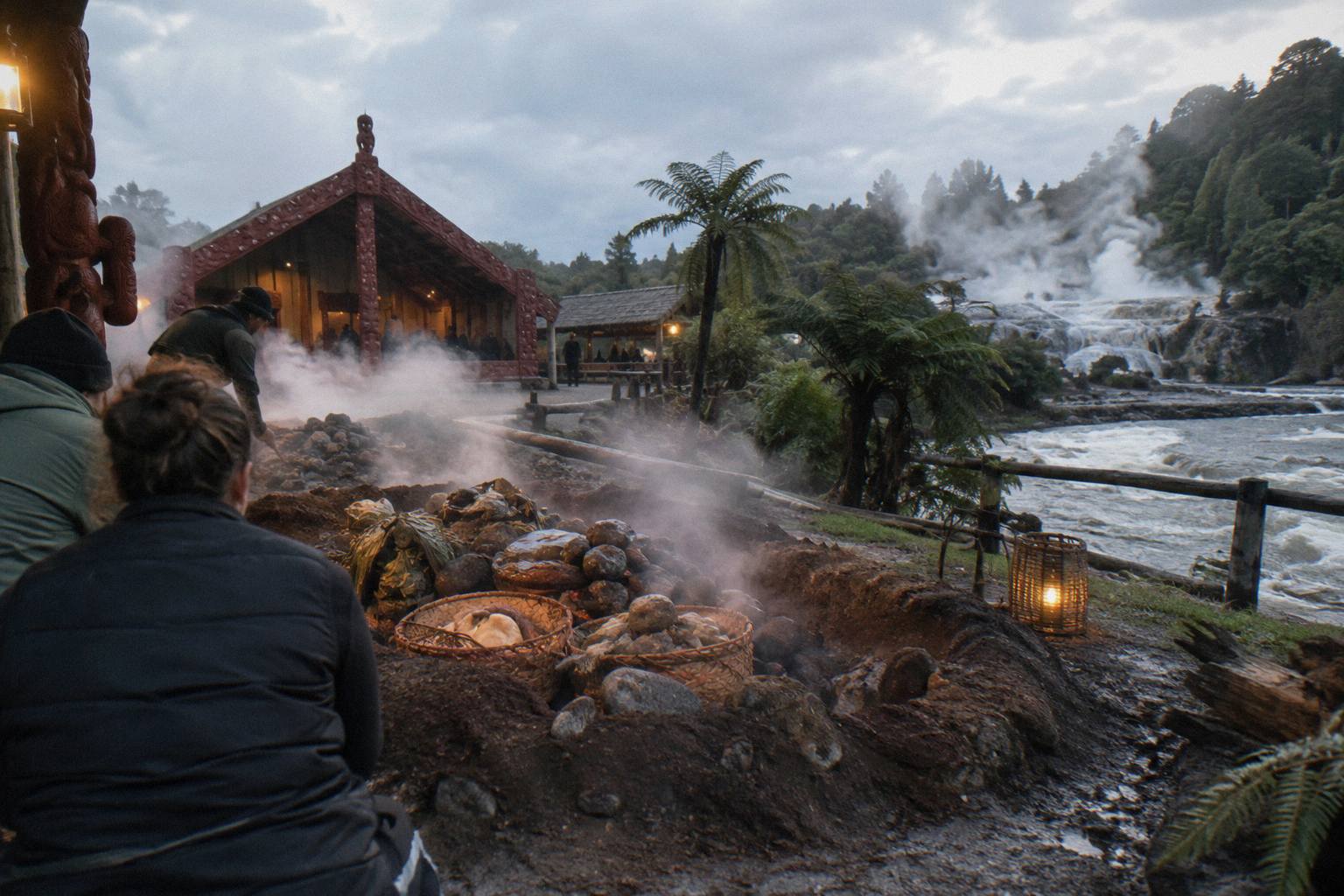
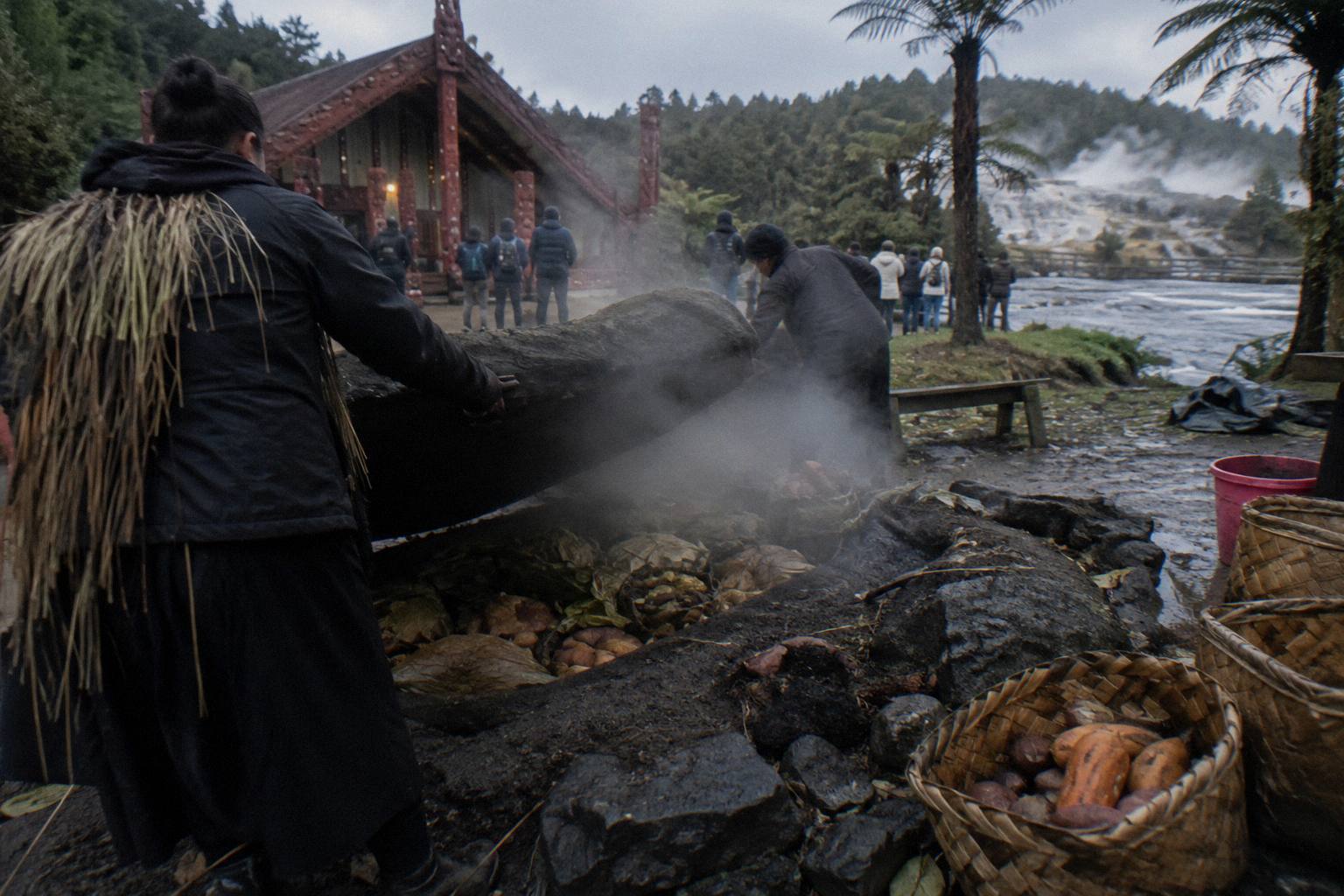
What can be said is practical. Because the operator is also the performer and the cook, the questions you ask on the night reach the people who run the business. The hāngī itself is described plainly by the operator: an earth oven hole 1 to 2 m deep, food cooked for 3 to 4 hours, including meat, chicken and kūmara, with the unveiling shown to guests before the buffet is served. If you want to understand how that cooking method works in detail, see how a hāngī is cooked.
The family framing also explains some of the venue's stated limits. Highchairs are limited. Umbrellas are limited. The bar on site does not permit outside alcohol. Complimentary transfers from registered accommodation are limited and must be booked, closing at capacity. These read as the constraints of a single family operation rather than the flexible policies of a large corporate venue, and planning around them in advance is the practical takeaway.
How Do You Book, And Who Do You Pay?
Book online through the booking widget on the operator's own website, or reserve by phone on +64 7 343 9132 or by email at reservation@mitai.co.nz. You pay the operator directly, at NZD 188.34 for adults aged 14 and over and NZD 115.74 for children aged 4 to 13, though prices can change. The dinner start time and cancellation terms appear only in the booking widget, so check them at checkout.
That last point deserves its own sentence or two, because it is the one genuine gap in Mitai's public information. Where Te Pā Tū publishes a full refund ladder on its terms page and Te Puia states a 48-hour cancellation rule with a group exception, Mitai leaves its terms inside the widget. The practical instruction is simple: when you reach the checkout screen, pause and read the cancellation and amendment conditions displayed there, and screenshot them. If a start time matters to your evening planning, ask for it at the same time; the operator does not publish one.
If you would rather compare across operators before deciding, the comparison of Mitai, Tamaki and Te Pā Tū works through price, format and transport side by side, and Rotorua Cultural Dinner gathers every bookable dinner evening on one page.
The Mitai dinner evening itself is bookable directly: see the Mitai Māori Village Cultural Experience And Dinner Buffet tour page for what is included, or check availability if you have a date in mind.
| Detail | Mitai Māori Village |
|---|---|
| Ownership, operator's words | Family owned and operated; Te Arawa people |
| Address | 196 Fairy Springs Road, Fairy Springs, Rotorua 3015 |
| Phone | +64 7 343 9132 |
| reservation@mitai.co.nz | |
| Booking route | Booking widget on the operator's site |
| Adult price (14+) | NZD 188.34, operator's price |
| Child price (4 to 13) | NZD 115.74, operator's price |
| Duration | About 3 hours |
| Start time | Not stated; ask the operator |
| Cancellation terms | Not stated on public pages; set in the booking widget |
| Transfers | Limited, complimentary, from registered accommodation, must be booked |
What Trips People Up When Asking Who Owns A Rotorua Cultural Evening?
Three things trip people up. First, assuming Tamaki Māori Village and Te Pā Tū are different venues, when Tamaki is simply the former name of the renamed Te Pā Tū experience. Second, expecting every operator to publish the same depth of ownership detail, when only Te Puia's ownership is anchored in legislation and the others describe themselves in their own words. Third, treating Whakarewarewa as an evening option, when it is a daytime village with no dinner at all.
The Tamaki point causes real booking confusion. Search results still surface a legacy "Tamaki Māori Village Interactive Lunch Experience" title, and a lunch variant is not confirmed for the current operator, so never book on the assumption that Te Pā Tū offers a lunch. Its current offer is the two seasonal dinner evenings: Tū Te Rā in summer at NZD 290 adult and NZD 125 child, and Tū Te Ihi in winter at NZD 280 adult and NZD 115 child, both at the operator's prices, both including return coach transport from central Rotorua.
The depth point is subtler. A reader who finds a statute for one venue and only a slogan for another might conclude the second is hiding something. The fairer reading is that each operator states its structure in the register normal for it: a trust name for Te Pā Tū, an act of parliament for Te Puia, a hosting whakapapa claim for Whakarewarewa, and a family description for Mitai. All four are primary statements from the operators' own pages. None is more official than another merely for being longer.
The Whakarewarewa point affects itineraries. Visitors building a dinner evening sometimes list it from memory of daytime visits. Its guided tours run 9am to 3pm hourly and its performance is at 12.30pm, with adult entry to the performance at NZD 37 and child entry at NZD 20 for ages 5 to 15 under prices the operator states for the year from 1 October 2026 to 30 September 2027. It is a strong daytime addition to a Rotorua stay; it is not a dinner venue and should never be booked as one.
One last trap is the assumption that ownership equals price. The four dinner products on this site range from NZD 188.34 to NZD 290 at the operators' prices, and the spread reflects duration, inclusions and season rather than who owns what. A family owned village can outprice a trust owned one on a given night; a legislatively anchored iwi operation can be the shortest evening at NZD 203. Decide on the evening you want, then let ownership inform how you read the storytelling, not what you expect to pay.
Before the closing questions, here again are the three dinner evenings in one view.
Common Questions About Mitai Māori Village Ownership
Who Owns Mitai Māori Village?
Mitai Māori Village describes itself as a family owned and operated business and speaks of its Te Arawa people. No individual owner names are published. The venue is at 196 Fairy Springs Road, Fairy Springs, Rotorua 3015, reachable on +64 7 343 9132 or reservation@mitai.co.nz.
Is Mitai Māori Village Māori Owned?
The operator describes itself as family owned and operated and speaks of "our Te Arawa people", which places its identity with the iwi of the Rotorua region in the operator's own words. No corporate or trust structure is published beyond that description.
Is Mitai The Same As Tamaki Māori Village?
No. Tamaki Māori Village is the former name of Te Pā Tū, a different venue owned and operated by Tauhara North No.2 Trust. Mitai Māori Village is a separate family owned business on Fairy Springs Road.
Who Owns Te Puia, Where The Te Pō Dinner Runs?
Te Puia is iwi owned under the NZMACI Vesting Act 2020 and describes itself as kaitiaki of the Whakarewarewa Geothermal Valley. It also hosts the New Zealand Māori Arts and Crafts Institute on the same site.
Does Anyone Run An Evening Dinner At Whakarewarewa?
No. Whakarewarewa The Living Māori Village is a daytime venue, with guided tours from 9am to 3pm and a cultural performance at 12.30pm. The operator does not offer an evening dinner or concert there.
How Do I Contact The Owners Of Mitai Directly?
By phone on +64 7 343 9132 or by email at reservation@mitai.co.nz. Bookings themselves run through the booking widget on the operator's website, where the start time and cancellation terms for the dinner are also set.