Why Is The Haka Aggressive?
Why the haka looks aggressive, what Rotorua's operators actually say about it, and how the haka fits into each bookable cultural dinner evening.
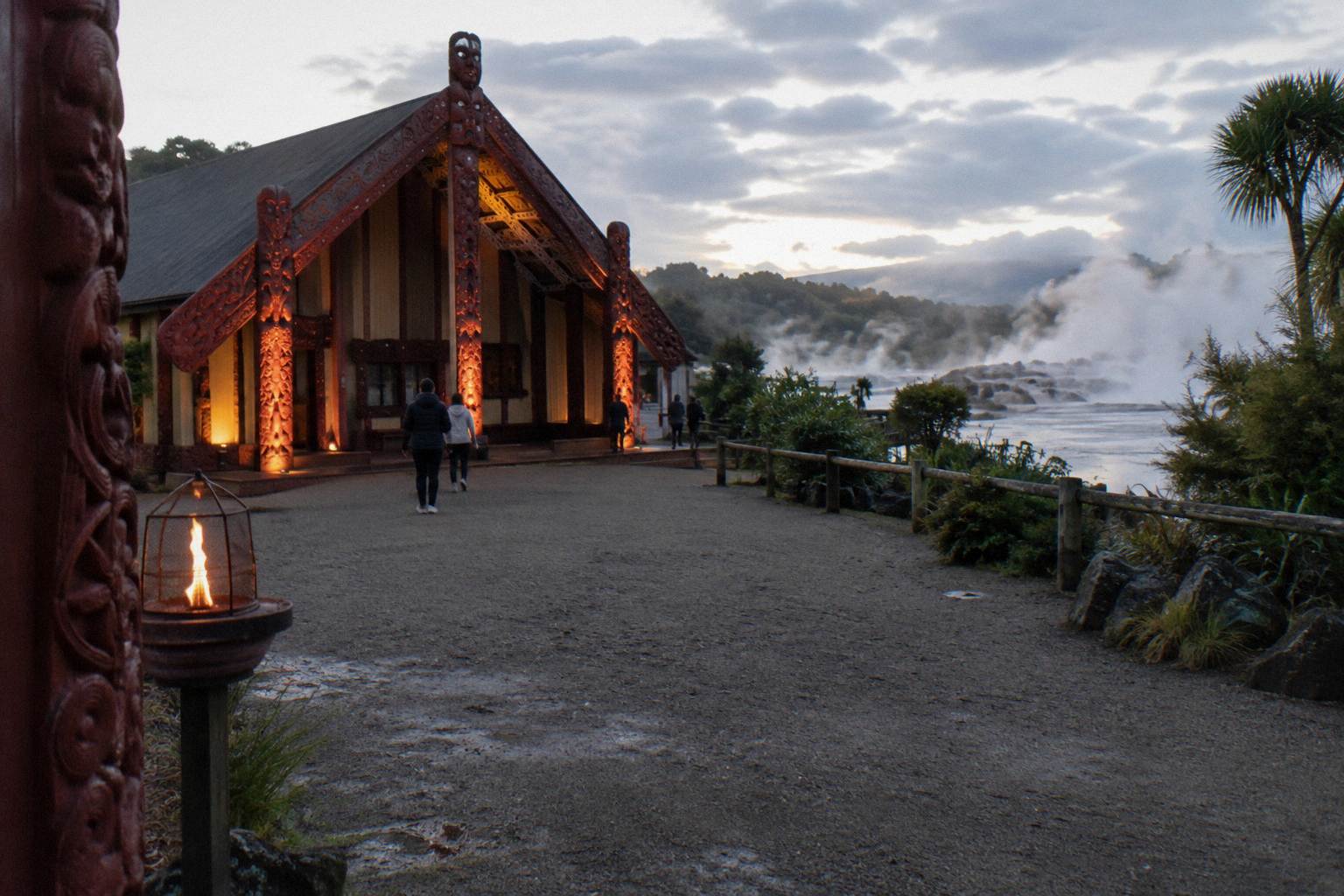
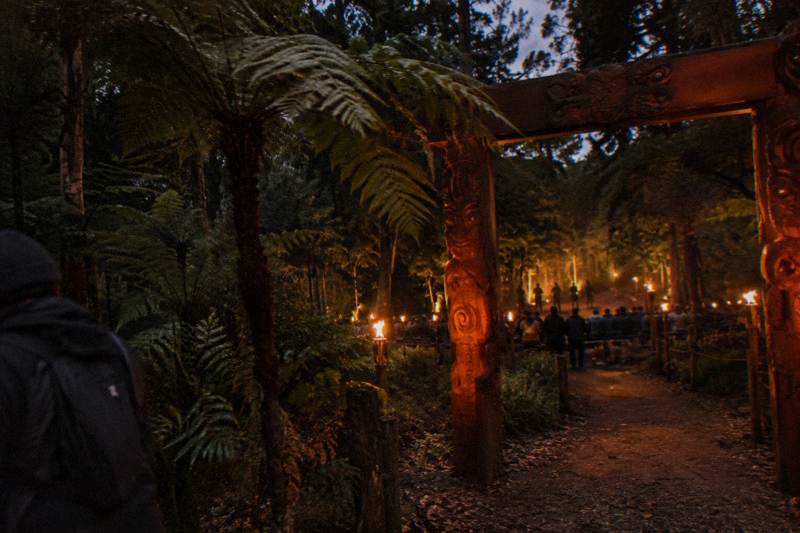
The haka looks aggressive because of its loud delivery, stamping, chest slapping and glaring eyes, and because several of its best-known forms originated as challenges issued between groups. This page does not explain the meaning or history of the haka beyond what the operators themselves publish, because that deeper material sits outside the sourced facts. What the operators say is specific, and it frames the haka as one element inside a welcome, a performance and a shared meal rather than a display aimed at anyone.
The question matters to travellers for a practical reason. Anyone booking a Māori cultural evening in Rotorua will almost certainly sit through a haka at close range, sometimes metres away, and some visitors with children or nerves about audience moments want to know what they are walking into. The honest answer is that the operators themselves describe the haka as part of a structured performance, framed alongside welcomes, songs, poi and question time. Mitai Māori Village, for example, lists its cultural performance as Pōwhiri, Wero, Waiata, Mōteatea, Poi and Haka, a sequence of named items rather than a single confrontational act.
What this page can do is lay out the operators' own wording, show where the haka sits inside each of the four bookable dinner evenings in Rotorua, and help a reader decide which evening suits them. What it cannot do is translate the haka, date it, or generalise about what Māori people intend by it; the operators' own pages are the place for that, and each is linked below on the specific claim it supports.
The haka looks aggressive because of how it is performed: forceful voice, rhythmic stamping, slapping of the chest and thighs, protruding tongue, and widened eyes. It is not presented as hostility toward guests. Mitai describes its haka as "the fiery Haka Māori war dance," while Te Pā Tū frames its summer evening around "concepts, rituals, and stories of ancient Māori warfare and peace."
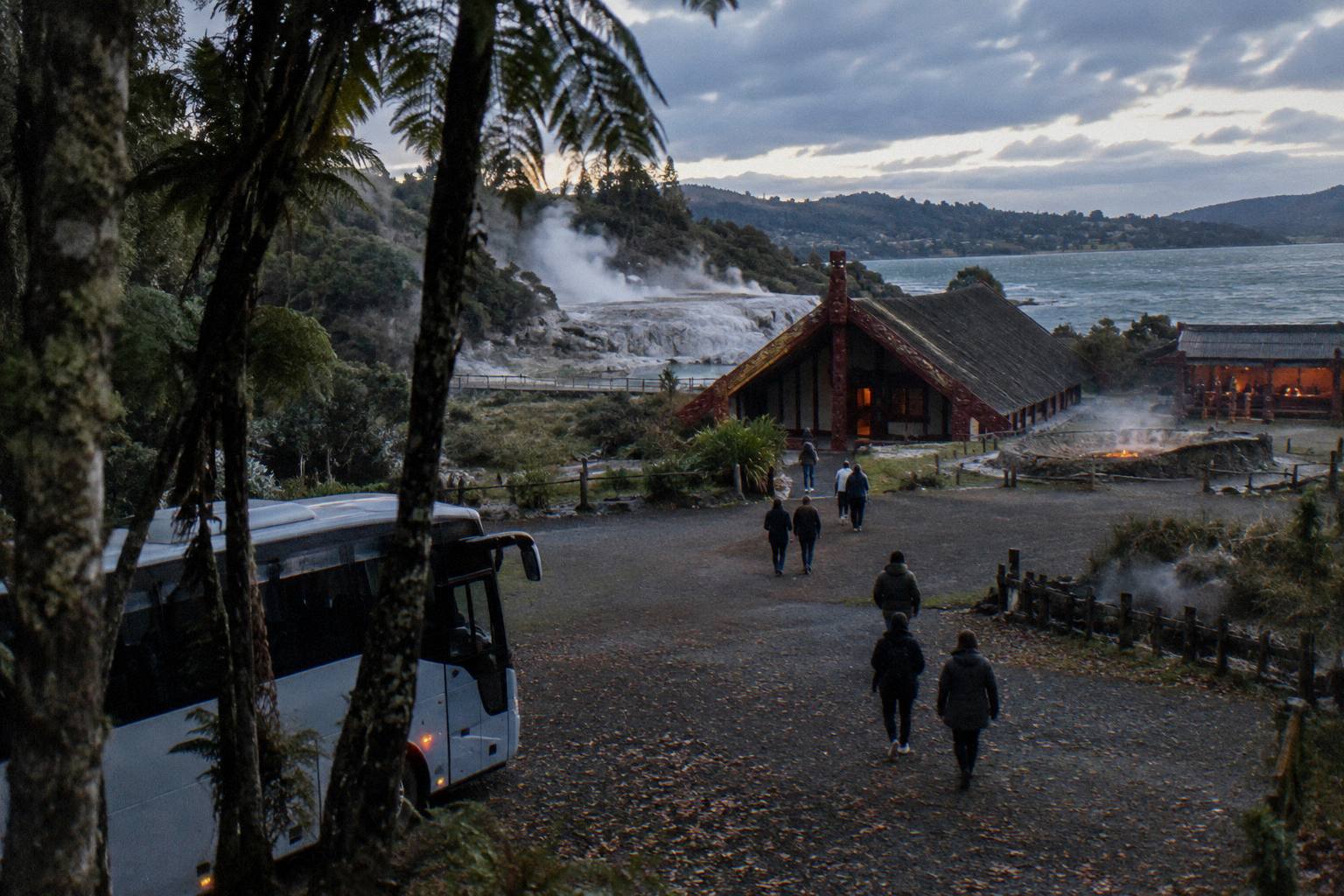
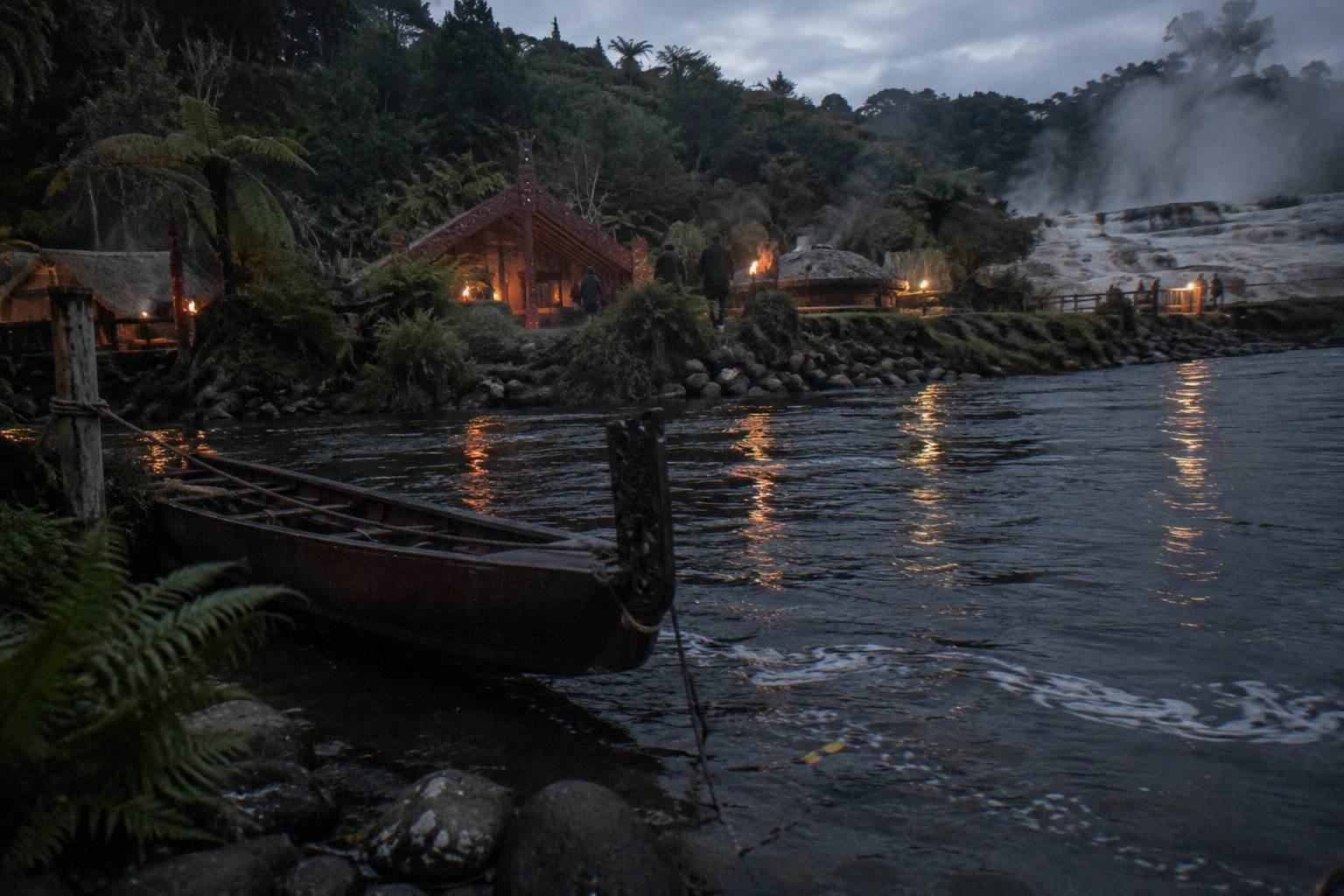
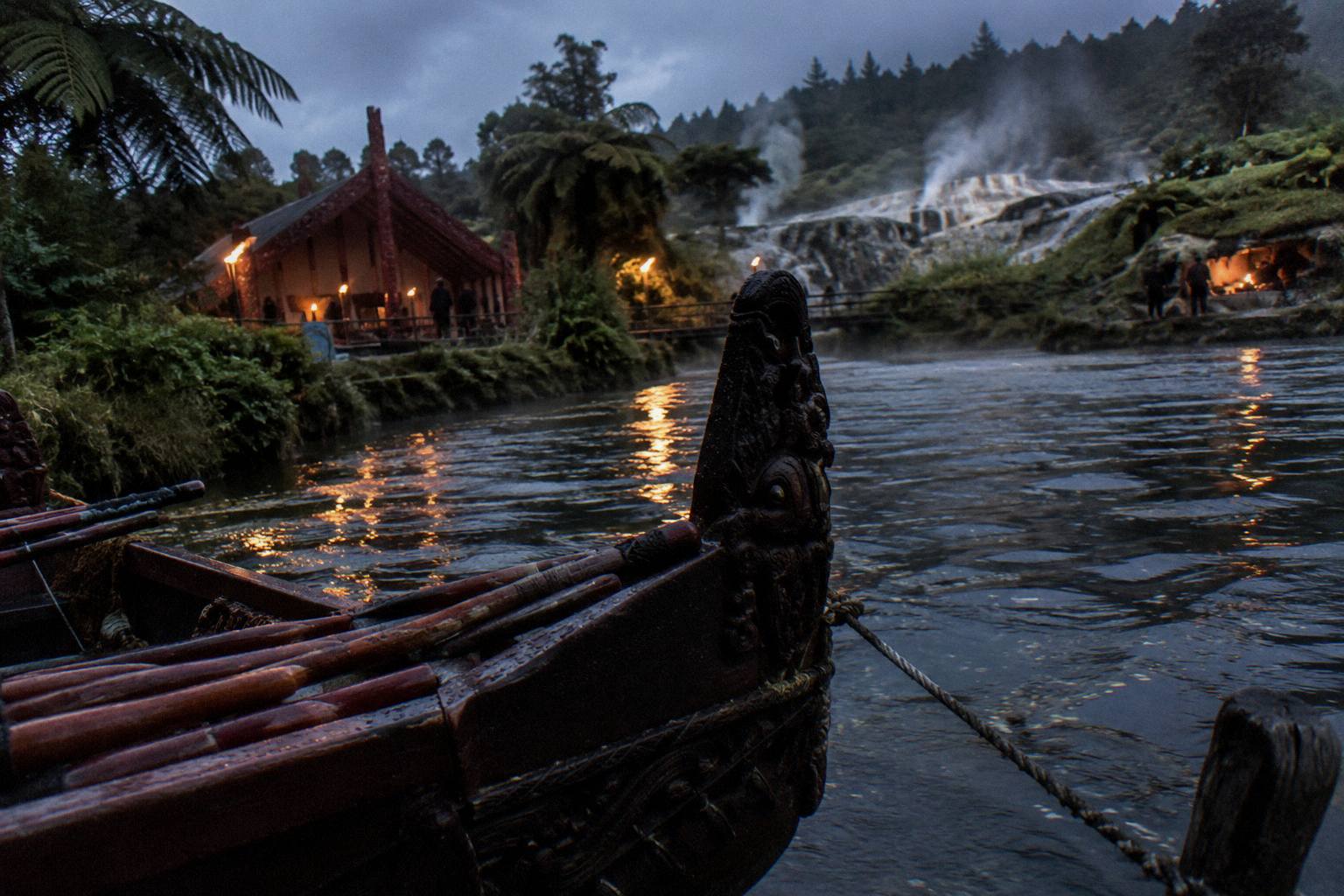
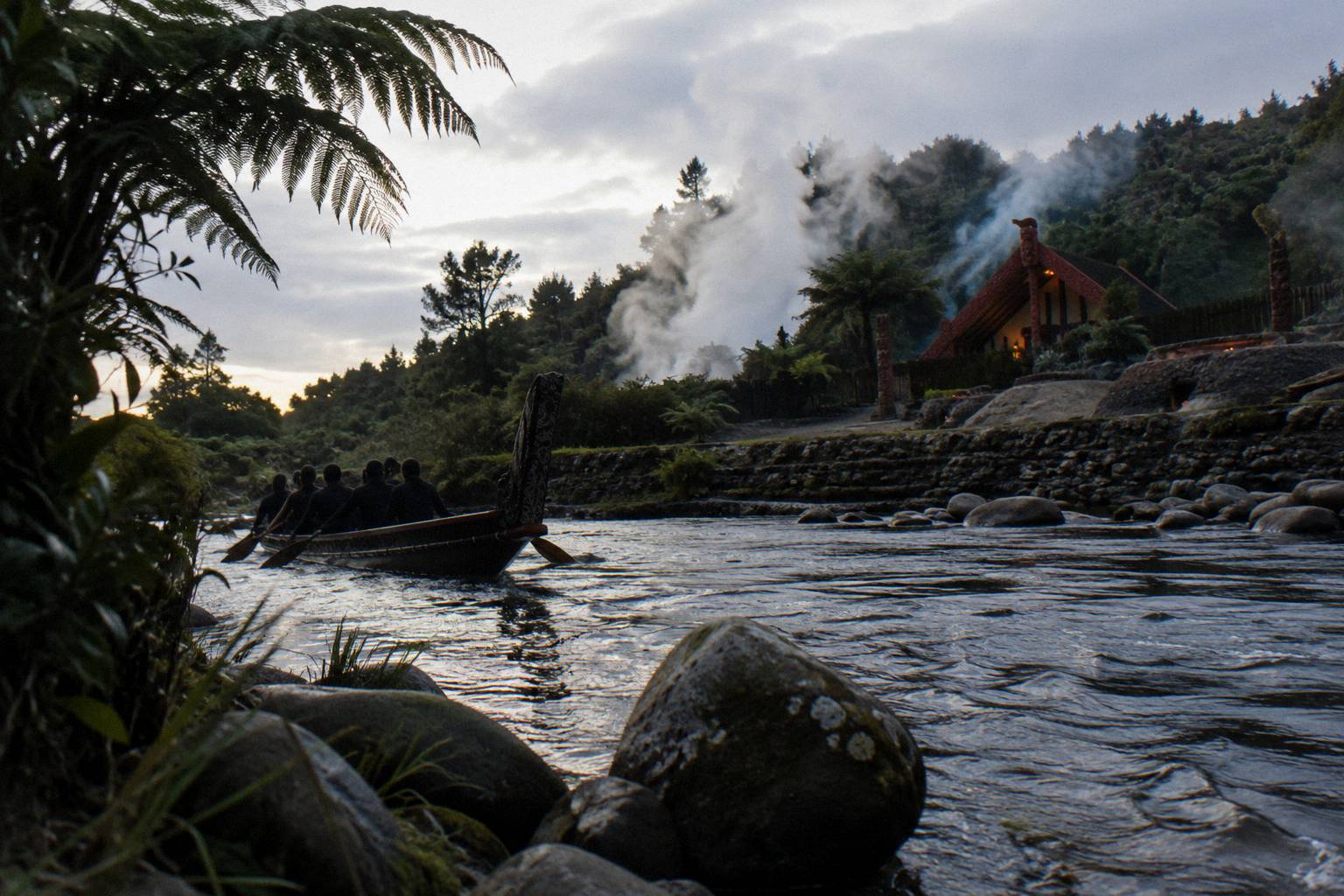
The strongest single source on this question from the Rotorua dinner operators is Mitai's own page, which names the components of its performance and then attaches its own descriptor to the haka. Reading the operator's hāngī dinner page gives the full sequence: a welcoming ceremony, the hāngī unveiling, warriors paddling a waka down the Wai-o-Whiro Stream, the cultural performance, the buffet dinner, question time and an evening bush walk. The haka is one listed item inside that arc, surrounded by song forms and closed by an explicit invitation to ask questions.
That closing detail is worth pausing on. Mitai lists question time as a named part of its roughly three-hour evening, which means the performance is followed by a structured moment where guests can ask about what they have just watched. An evening built around a genuine question session is not structured as a confrontation; it is structured as a performance followed by conversation.
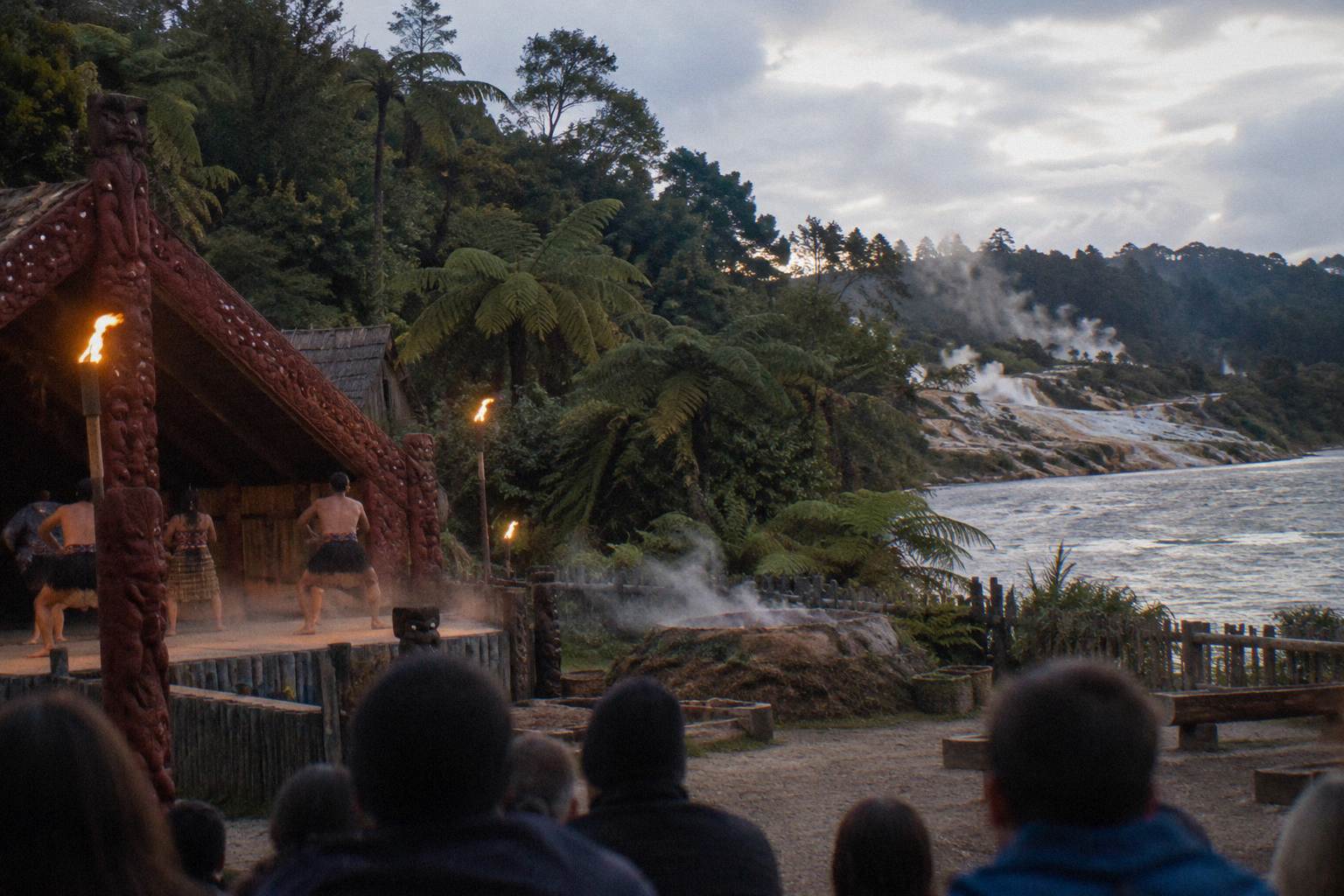
Te Pā Tū's wording points the same direction from a different angle. The operator says its summer evening, Tū Te Rā, explores "concepts, rituals, and stories of ancient Māori warfare and peace", and that stories are relayed through haka, song and drama. The pairing of warfare and peace in the operator's own sentence is the most direct published answer any of the three operators gives to the aggression question, and it is safer to quote it than to paraphrase it. Beyond that sentence, the operator's pages do not publish a history or translation of the haka.
Readers who want the deeper cultural background that sits outside the operators' pages can start with the sibling post on the meaning behind the haka, which works through the same sourcing limits honestly.
What Each Rotorua Evening Actually Publishes About Its Haka
Each of the three operators publishes a different, specific framing. Mitai lists a six-part performance ending in Haka and calls it "the fiery Haka Māori war dance". Te Pā Tū opens with a haka pōhiri, a cultural welcome, in summer and stages kapahaka in a forest amphitheatre. Te Puia's Te Pō evening includes a 45-minute performance of song and dance in a carved meeting house. None of the three describes guests as targets of the haka.
The table below gathers the operators' own descriptions side by side. Every cell is operator-stated; where an operator publishes nothing further, the cell says so.
| Evening | Operator's published description of the performance | Operator's own wording on the haka |
|---|---|---|
| Te Pā Tū, Tū Te Rā (summer, October to April) | Haka pōhiri welcome on arrival; kapahaka in the forest amphitheatre Tūāpapa; stories relayed through haka, song and drama | The evening explores "concepts, rituals, and stories of ancient Māori warfare and peace" |
| Te Pā Tū, Tū Te Ihi (winter, May to September) | Ahi Tuku fire ceremony welcome; kapahaka shared across service | Not stated beyond the winter programme description; ask the operator |
| Mitai Māori Village Authentic Hāngi Dinner Experience | Performance listed as Pōwhiri, Wero, Waiata, Mōteatea, Poi and Haka; question time follows dinner | "The fiery Haka Māori war dance" (operator wording) |
| Te Puia Te Pō evening | 45-minute Māori cultural performance of song and dance in the carved meeting house Te Aronui a Rua | Not stated beyond the performance description; ask the operator |
Te Puia's description is the most restrained of the three: a 45-minute performance of song and dance in Te Aronui a Rua, a carved meeting house, as published on Te Puia's night experiences page. That page pairs the performance with hot chocolate on the geyser terrace and a hāngī buffet dinner in the Pātaka Kai Restaurant and Bar. The haka, for Te Puia, is one element inside a programme the operator frames around performance, geothermal viewing and food.
Te Pā Tū's two seasonal evenings treat the haka differently by season, which is a detail many first-time visitors miss. The summer evening, Tū Te Rā, opens with the haka pōhiri on arrival and then stages kapahaka in the forest amphitheatre Tūāpapa, per the operator's summer harvest page. The winter evening, Tū Te Ihi, opens instead with an Ahi Tuku fire ceremony and weaves kapahaka across the service alongside its winter programme, per the operator's winter celebration page. A visitor who books in January and a visitor who books in July get two genuinely different openings to the evening, from the same operator, at two different prices.
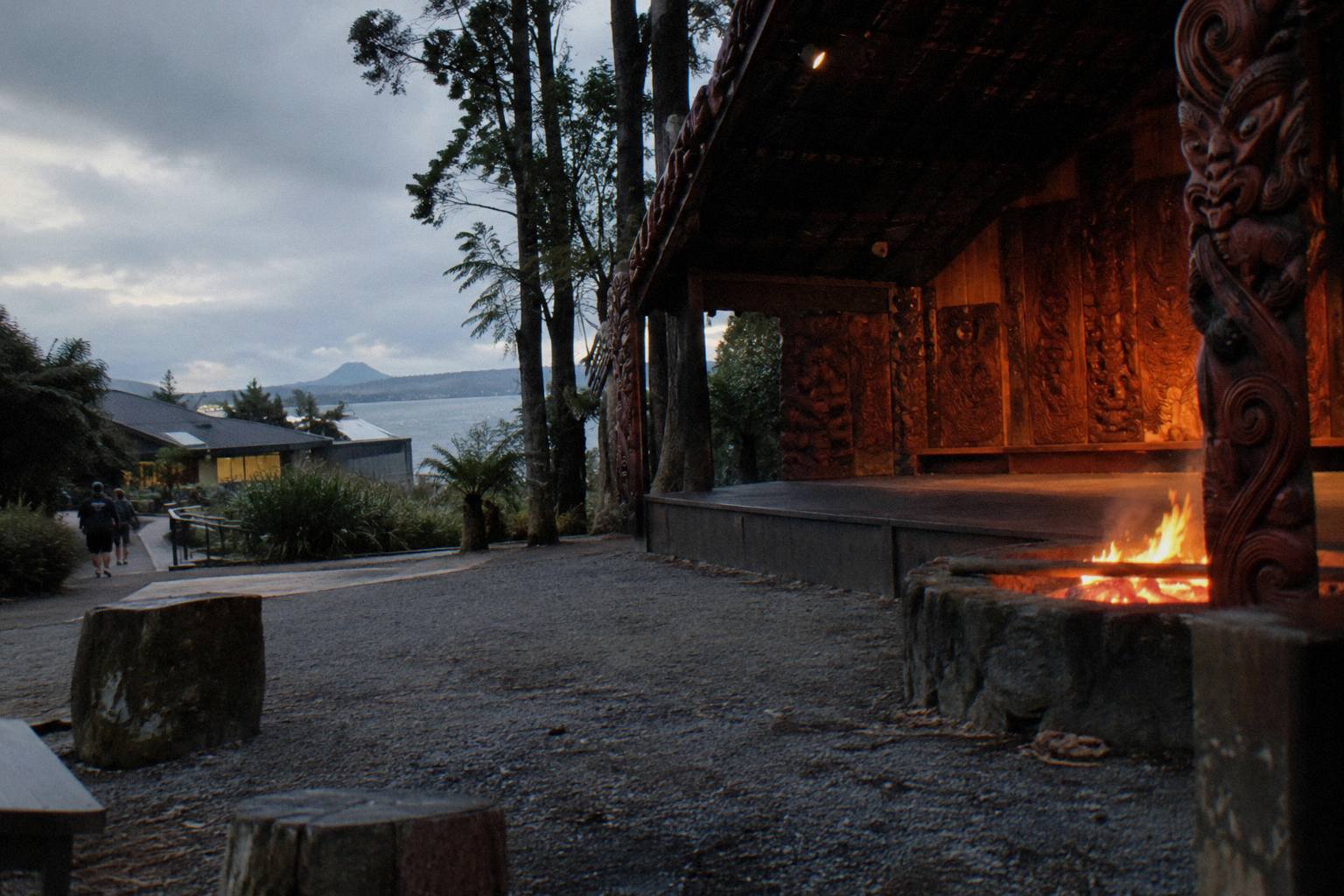
One more piece of operator framing helps answer the aggression question without leaving the sourced facts. Te Pā Tū publishes its own definition of manaakitanga: the operator says it is frequently referred to as hospitality, but is a firmly held value and practice within iwi Māori, centred at a simple level on strengthening the bonds between a host and their visitors through benevolence and hospitality. An operator that frames its entire evening around strengthening bonds between host and visitor is not, in its own published words, staging hostility.
Where The Haka Sits Inside Each Dinner Evening
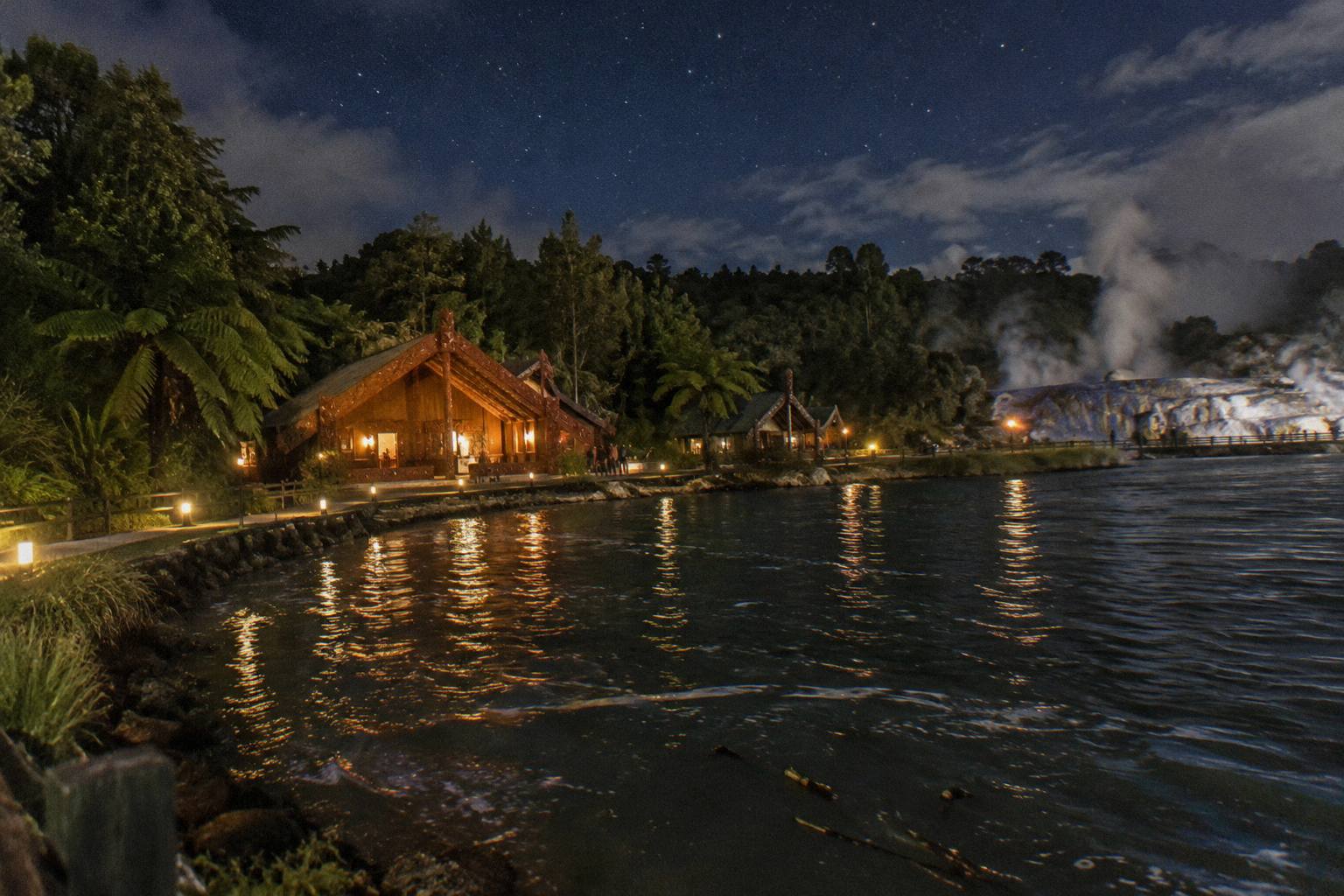
In every bookable evening, the haka or kapahaka sits inside a longer structured programme that includes food. At Mitai the performance follows the hāngī unveiling and precedes the buffet dinner and question time. At Te Pā Tū the welcome opens the evening and the feast closes it. At Te Puia the 45-minute performance is followed by hot chocolate on the geyser terrace and then the hāngī buffet. The haka is never the whole evening.
Understanding the shape of each evening answers most of the anxiety behind the aggression question. Nobody is dropped into a room with a haka and nothing else; each operator publishes a sequence, and the performance is one beat in it. The table below sets out the published sequence of each evening, using only what the operators state.
| Evening | Published sequence (operator-stated) | Food element | Duration |
|---|---|---|---|
| Te Pā Tū, Tū Te Rā | Coach from central Rotorua; haka pōhiri; kapahaka in Tūāpapa; seasonal feast in the wharekai; farewell | Seasonal feast served in the wharekai dining house | About 3.5 hours |
| Te Pā Tū, Tū Te Ihi | Coach from central Rotorua; Ahi Tuku fire ceremony; kapahaka shared across service; farewell | Hāngī feast shared across the service | About 3 hours |
| Mitai Authentic Hāngi Dinner | Welcoming ceremony; hāngī unveiling; waka paddled down the Wai-o-Whiro Stream; cultural performance; buffet dinner; question time; bush walk to the old fortified village site and Te Puna Tapu o Tūhoe; glow worms | Full buffet hāngī dinner | About 3 hours |
| Te Puia Te Pō | Check in 15 minutes early; 45-minute performance in Te Aronui a Rua; hot chocolate on the geyser terrace; hāngī buffet dinner | Hāngī buffet in the Pātaka Kai Restaurant and Bar | About 2.5 hours, from 5:30pm |
The sequence tells a reader where the loud moment lands. At Mitai it arrives mid-evening, after the welcoming ceremony and the hāngī unveiling, and it is followed immediately by dinner and question time. At Te Pā Tū's summer evening the haka pōhiri is the arrival itself, which means the most forceful cultural moment happens in the first minutes, with the feast still to come. At Te Puia the performance is the opening act of a shorter evening, and the geothermal terrace and dinner follow it.
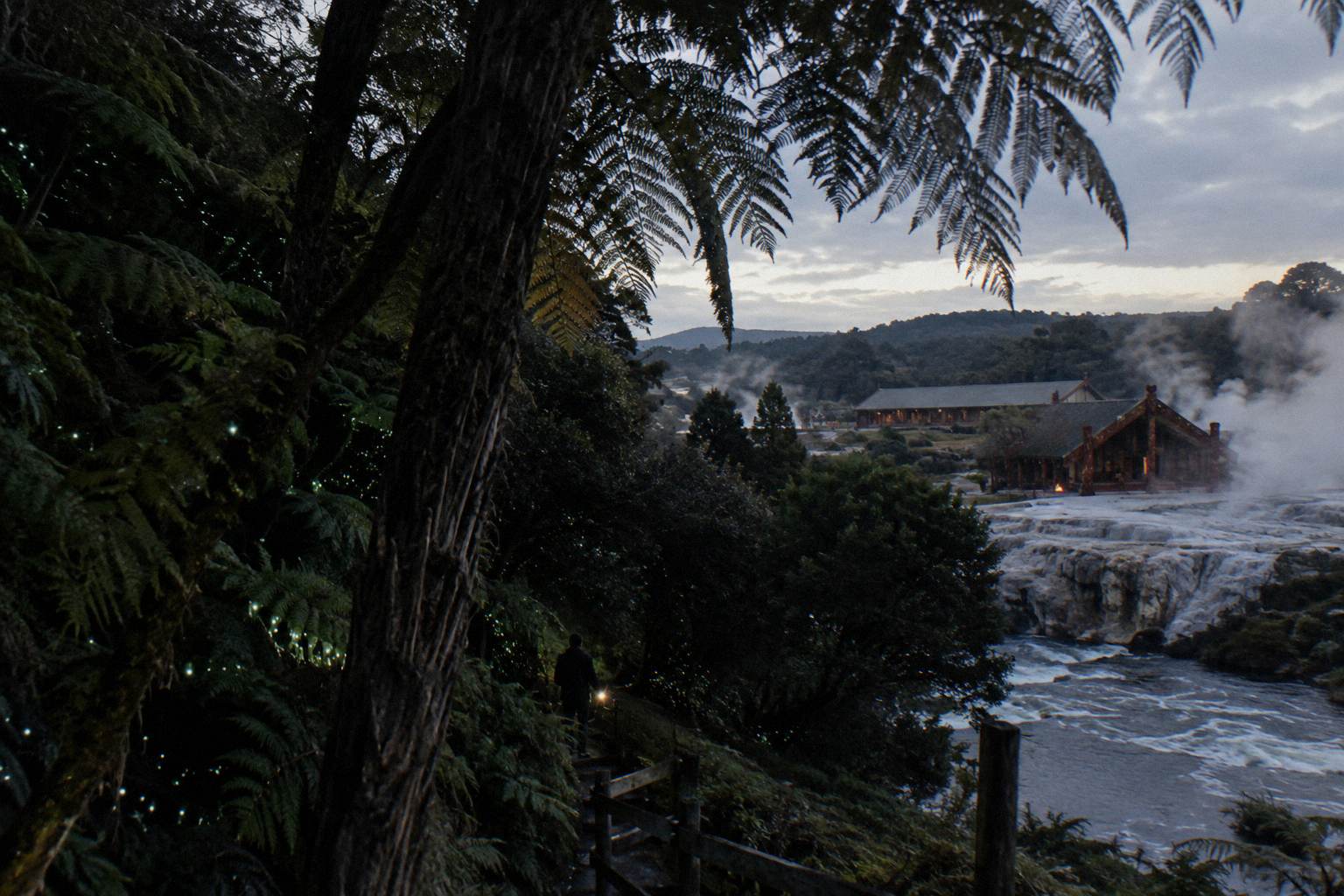
Mitai's hāngī detail is worth reading closely because it shows how much of the evening is built around food rather than performance. The operator says its hāngī is cooked in the ground, and guests watch the unveiling, then eat from a full buffet. The performance and the meal are given equal billing in the operator's own listing, and the evening closes with a bush walk to the old fortified village site, the sacred spring Te Puna Tapu o Tūhoe, and glow worms.
The Te Pō Evening: The Shortest Route From Haka To Hāngī
Te Puia's Te Pō evening packs haka and hāngī into the shortest outing of the four: roughly 2.5 hours from 5:30pm, priced at NZD 203, and rated 4.7 on its booking page. The ticket covers a 45-minute performance of song and dance in the carved meeting house Te Aronui a Rua, hot chocolate on the geyser terrace, and a hāngī buffet dinner, making this the one for a compact performance-plus-dinner combination.
The evening suits a particular kind of visitor, and being clear about who that is helps the decision. Te Pō starts early, at 5:30pm, with dinner sittings at 5:30pm and 7:15pm, which leaves the rest of the night free. It is the shortest of the four evenings, and it carries no stated hotel transfer: the operator instead names the City Ride bus every 30 minutes until 6PM, Uber and taxi, plus free parking on a cashless site at 20 Hemo Road, Whakarewarewa. A visitor staying centrally without a car needs to plan the ride, and how transport to Rotorua's cultural evenings works is worth reading before booking.
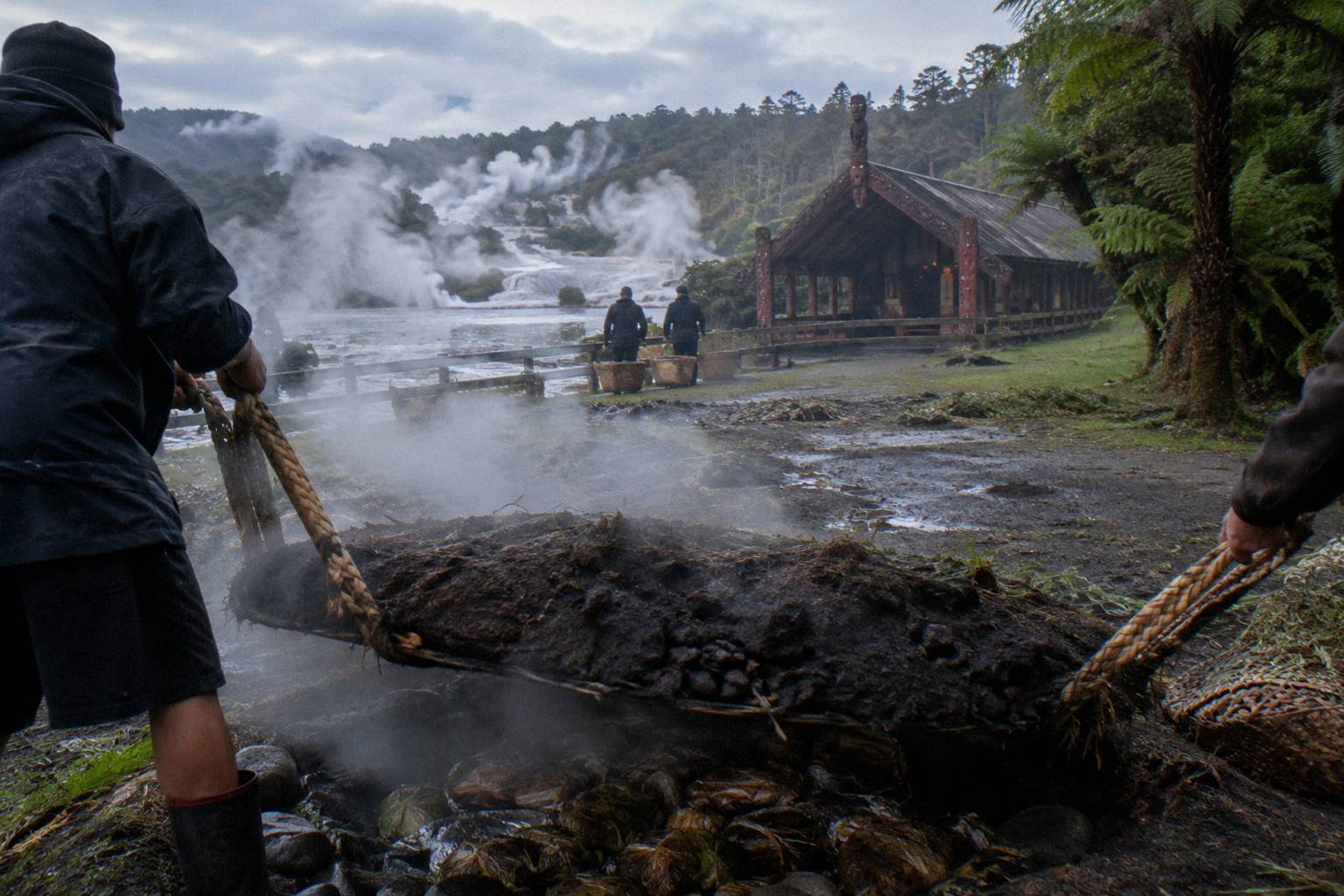
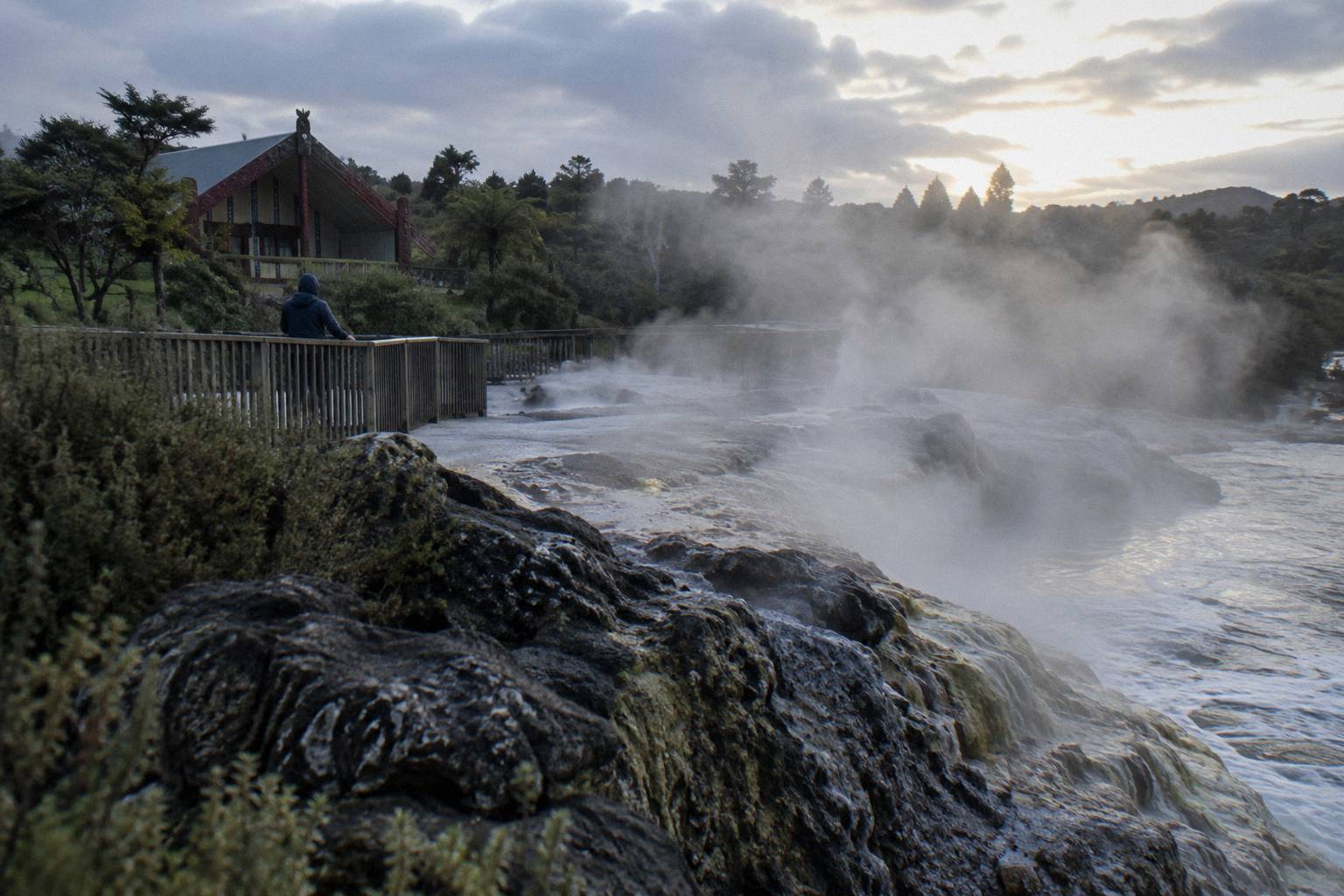
The setting is part of what a reader is buying. Te Puia describes itself as kaitiaki, or guardian, of the Whakarewarewa Geothermal Valley, iwi owned, and home to the New Zealand Māori Arts and Crafts Institute. The Pōhutu Geyser, the operator says, erupts up to 20 times a day and up to 30 m high, and the evening's hot chocolate is served on the geyser terrace. The performance therefore sits inside a working geothermal valley rather than a purpose-built theatre, which is the clearest structural difference between Te Pō and the two village evenings.
There is a longer version of the same evening for readers who want the valley in daylight too. The Te Pō Combo runs from 4pm, about 4 to 4.5 hours, at the operator's price of NZD 290, and pairs a guided tour of the geothermal valley with the same dinner and performance. Once the choice between the two is made, Check availability on the operator's live listing.
How The Four Dinner Evenings Compare On Price And Practicalities
Prices span NZD 188.34 to NZD 290 per adult. Mitai sits at the bottom, charging NZD 188.34 for adults and NZD 115.74 for children. Te Pā Tū costs NZD 290 in summer and NZD 280 in winter, with children at NZD 125 and NZD 115. Te Puia lists Te Pō at NZD 203 and the Te Pō Combo at NZD 290, with no child prices stated.
Price alone does not decide this, because the evenings differ in length, transfer and format. The comparison below uses only operator-stated figures, and every price is the operator's own, subject to change.
| Evening | Adult price (NZD) | Child price (NZD) | Transfer | Rating |
|---|---|---|---|---|
| Te Pā Tū Tū Te Rā (summer) | 290 | 125 | Return coach from central Rotorua included | 4.8 on its booking page |
| Te Pā Tū Tū Te Ihi (winter) | 280 | 115 | Return coach from central Rotorua included | 4.8 on its booking page |
| Mitai Authentic Hāngi Dinner | 188.34 (adult 14+) | 115.74 (ages 4 to 13) | Limited complimentary transfers from registered accommodation, must be booked | 4.7 on its booking page |
| Te Puia Te Pō | 203 | Not stated | None stated; bus, Uber, taxi or free parking | 4.7 on its booking page |
| Te Puia Te Pō Combo | 290 | Not stated | None stated | No rating stated |
The transfer row changes the real cost more than the ticket row does for some travellers. Te Pā Tū is the only evening of the four with return transport from central Rotorua included in the published price, on a coach to a forest pā a short ride south of the city whose exact address the operator does not publish. Mitai's transfers are real but conditional: complimentary from registered accommodation, with limited numbers, must be booked in advance, and the transfer closes at capacity. Te Puia states no transfer at all and expects self-arrival. A family of four comparing headline prices should price the rides to Hemo Road before concluding which evening is cheaper.
Mitai also publishes practical on-site details the other operators do not: free on-site parking, a bar on site with no outside alcohol permitted, limited highchairs, and some wheelchair limits on the forest walk. Its full address, 196 Fairy Springs Road, Fairy Springs, Rotorua 3015, and its phone number, +64 7 343 9132, are on the operator's own pages, which makes it the easiest of the three venues to reach independently. Bookings run through the operator's own booking widget.
Is The Haka Frightening For Children Or First-Time Visitors?
On the published facts, all three dinner operators welcome children, and none describes its haka as directed at guests. Te Pā Tū charges child prices from NZD 115. Mitai's child price covers ages 4 to 13, with the adult price from 14. Te Puia's booking page says under 4s are free. The operators do not publish guidance on how children typically react.
The practical, sourced answer for families is to choose on structure rather than on the haka alone. The three evenings differ in length, and length is the published variable most likely to matter with young children: Mitai and the Te Pā Tū evenings run about 3 to 3.5 hours, while Te Pō runs about 2.5 hours from 5:30pm. Mitai states practical family details the others do not: highchairs are limited, a bar operates on site with no outside alcohol permitted, and some wheelchair limits apply on the forest walk.
Question time at Mitai deserves a second mention here because it serves exactly this worry. A child or an adult unsettled by the force of the performance has a published, structured slot in the evening to ask about it, directly after dinner. That is the operator's own design, listed on its page, and it is the single most reassuring published fact across the three operators for a nervous first-time visitor.
For readers who want to think through the performance itself in more depth before choosing, the guide to the haka performance at a cultural dinner covers the same ground from the booking side, and the question of taking children to a Māori cultural evening is handled in full there too.
What Trips People Up When Booking A Haka Evening
The recurring mistakes are assuming one evening matches another's terms, ignoring the seasonal price split at Te Pā Tū, and skipping the transfer question. Mitai's shuttle must be actively booked and closes at capacity. Te Puia requires check-in 15 minutes early or the ticket is forfeited. Each of these is operator-stated and each is easy to miss at checkout. Read the terms at booking, not after.
The season split catches the most people. Te Pā Tū's summer and winter evenings are different programmes at different prices and different durations: 3.5 hours in summer at NZD 290, 3 hours in winter at NZD 280, with different openings, different food and different published content. A traveller who reads one review of one season and books the other gets a different evening. It is currently November 2026, so the summer evening, Tū Te Rā, is the running season and the winter evening, Tū Te Ihi, is the next one.
The second trap is dietary assumptions. Mitai's dietary options are not published in detail, so tell the operator at booking, in advance, in writing, and do not assume. The same rule holds at all three operators: state every requirement when reserving, and confirm it was received. The fuller picture is in vegetarian and dietary options at a hāngī dinner.
The third trap is treating the four evenings as interchangeable nights with different prices. They are different formats: a forest pā feast reached by coach, a village evening with a waka on a stream and a bush walk to glow worms, a geothermal-valley performance with a geyser terrace and a restaurant, and a combo that adds a daylight tour in front of the same dinner. Choosing on the haka alone, when the haka is one listed item inside each of these, is the least informed way to choose among them, and the operators' own pages, linked throughout this article, describe each in full.
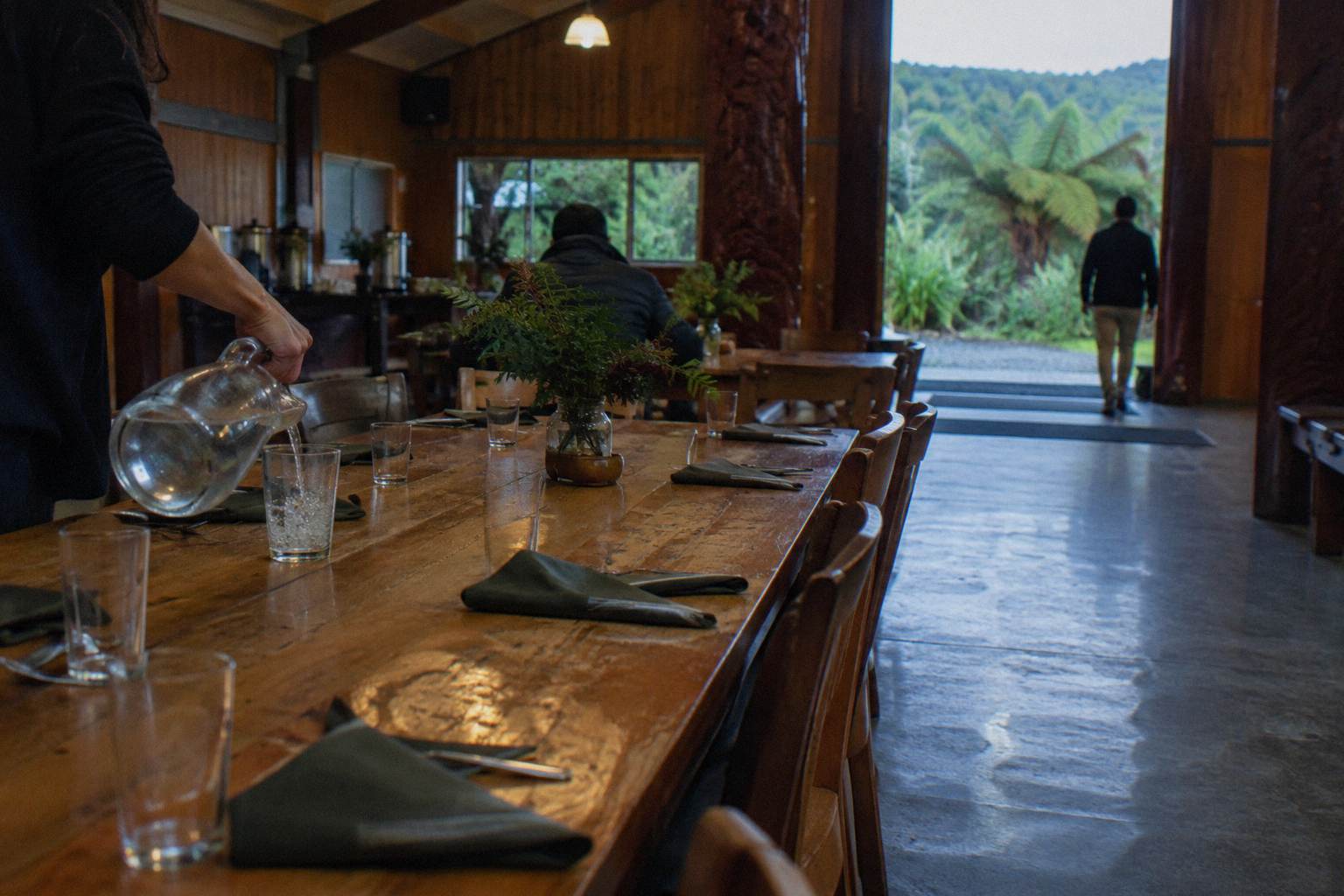
With the formats clear, the practicalities checked and the operators' own words on the record, the choice among the four evenings comes down to which shape of night fits: the coach-ride forest feast, the village evening with the waka and the walk, or the geothermal valley with the shortest runtime. Every figure above is the operator's own published price or programme detail, and each can change, so confirm at checkout.
Common Questions About The Haka At A Rotorua Cultural Evening
Why Is The Haka Aggressive?
The aggressive look comes from forceful voice, stamping, chest slapping and glaring eyes. The Rotorua operators do not frame it as hostility toward guests: Mitai calls it "the fiery Haka Māori war dance" in its own listing, and Te Pā Tū says its summer evening explores "concepts, rituals, and stories of ancient Māori warfare and peace". Beyond the operators' own words, the deeper meaning and history are outside the sourced facts on this page.
Will The Haka Be Aimed At Me As A Guest?
None of the three operators describes its haka as directed at individual guests. Each publishes the haka as one item inside a structured programme: a listed performance element at Mitai, part of a haka pōhiri welcome and kapahaka at Te Pā Tū, and part of a 45-minute performance of song and dance at Te Puia. Mitai also lists question time after dinner for anything guests want to ask.
Which Rotorua Dinner Evening Includes A Haka?
All three operators include haka or kapahaka in their bookable evenings: Mitai's Authentic Hāngi Dinner Experience (about 3 hours, NZD 188.34 adult), Te Pā Tū's seasonal evenings (about 3 to 3.5 hours, NZD 280 to 290 adult depending on season), and Te Puia's Te Pō evening (about 2.5 hours from 5:30pm, NZD 203). The Te Pō Combo adds a guided valley tour before the same dinner and performance at NZD 290.
Is The Haka Suitable For Children?
On the published facts, yes: Te Pā Tū says children are welcome and charges child prices from NZD 115, Mitai's child price covers ages 4 to 13 with limited highchairs, and Te Puia's booking page says under 4s are free. No operator publishes guidance on how children react, so judge by evening length and your own child: Te Pō is the shortest at about 2.5 hours.
Can I Photograph The Haka?
None of the three operators publishes a photography policy for its evening performance, so ask the operator before the performance begins. For Te Pā Tū, contact the operator through its own site; for Mitai, call +64 7 343 9132 or email reservation@mitai.co.nz.