Best Time Of Year For A Māori Hāngī And Concert Evening
The one date-driven decision that changes a Rotorua hāngī evening is the season: Te Pā Tū runs two different programmes, summer and winter, with different menus, durations and prices.
Short answer
Te Pā Tū runs Tū Te Rā from October to April (NZD 290 adult, about 3.5 hours) and Tū Te Ihi from May to September (NZD 280 adult, 3 hours). Mitai and Te Puia's Te Pō evenings run year round with no seasonal programme change, so the season mainly changes what you wear and which Te Pā Tū feast you get.
Timing a Rotorua hāngī evening comes down to one operator's calendar. Te Pā Tū is the only dinner operator in the city that swaps its entire programme twice a year: Tū Te Rā, the Summer Harvest Celebration, runs October to April, and Tū Te Ihi, the Winter Matariki Celebration, runs May to September. The menu, the welcome ceremony, the running time and the price all change with the season. Mitai Māori Village and Te Puia's Te Pō evening run the same format all year, so for those two the season mostly changes what you pack.
When Do The Seasons Change At Rotorua's Cultural Evenings?
At Te Pā Tū, the seasons change twice a year: Tū Te Rā runs through April, Tū Te Ihi begins in May, and the summer format returns in October. Book April 30 for the summer harvest evening; a week later you get the winter Matariki evening, shorter and NZD 10 cheaper per adult. Mitai and Te Puia change nothing seasonally, so their evenings read the same in January and July.
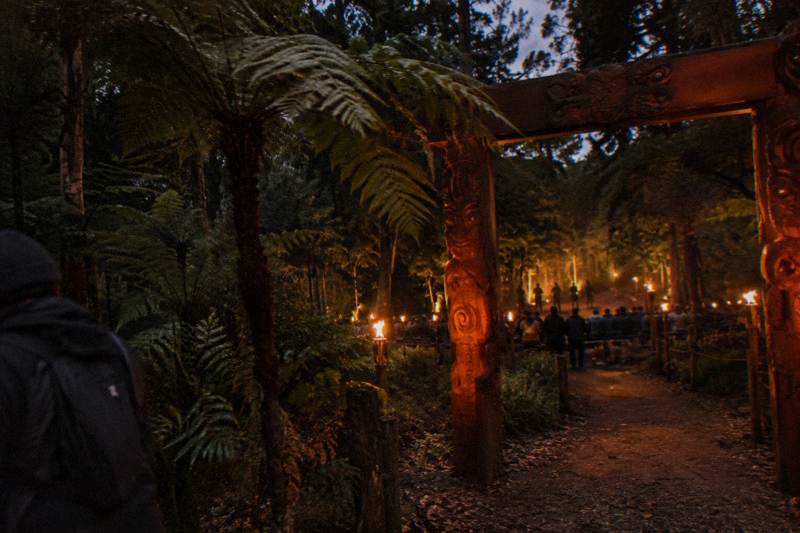
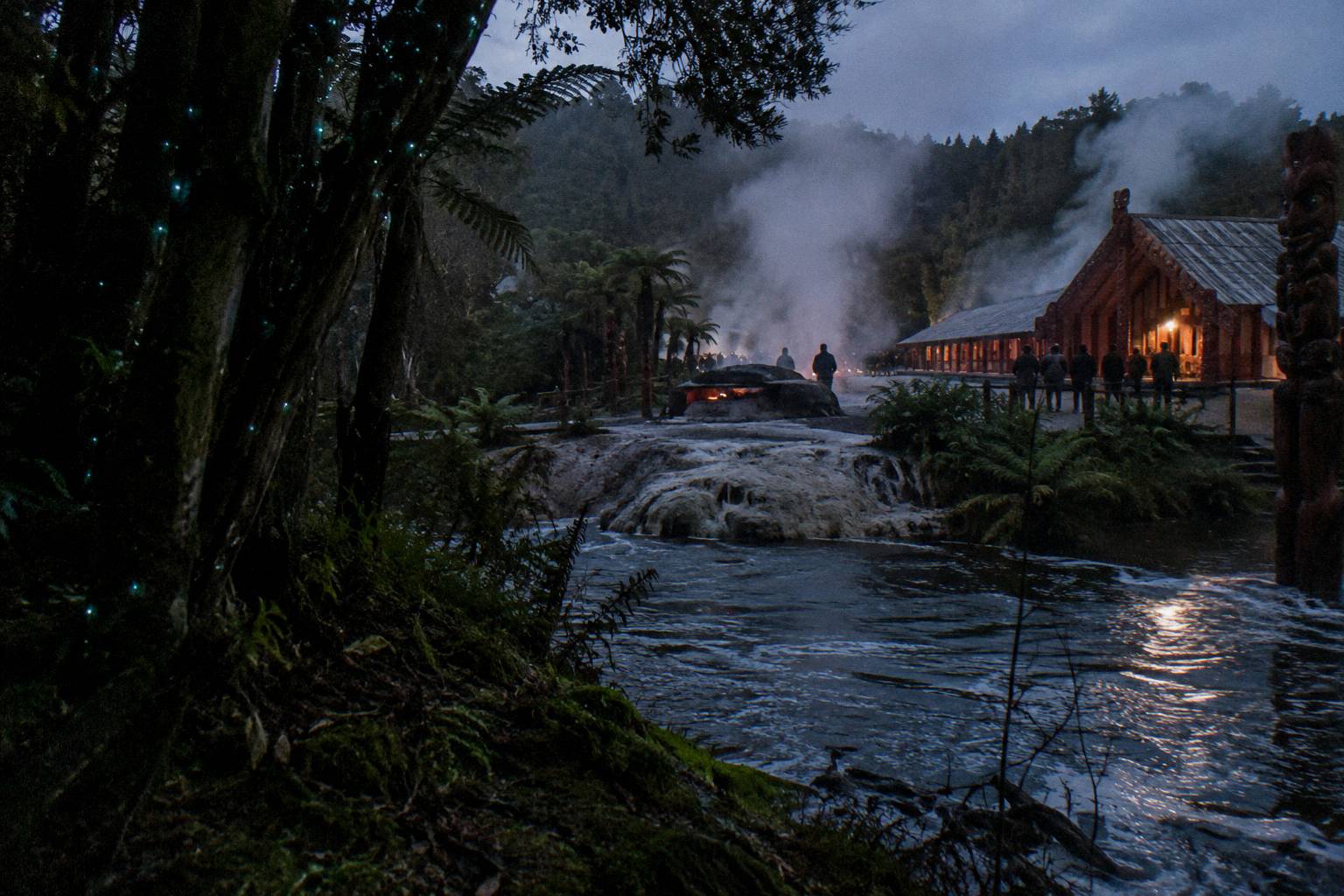
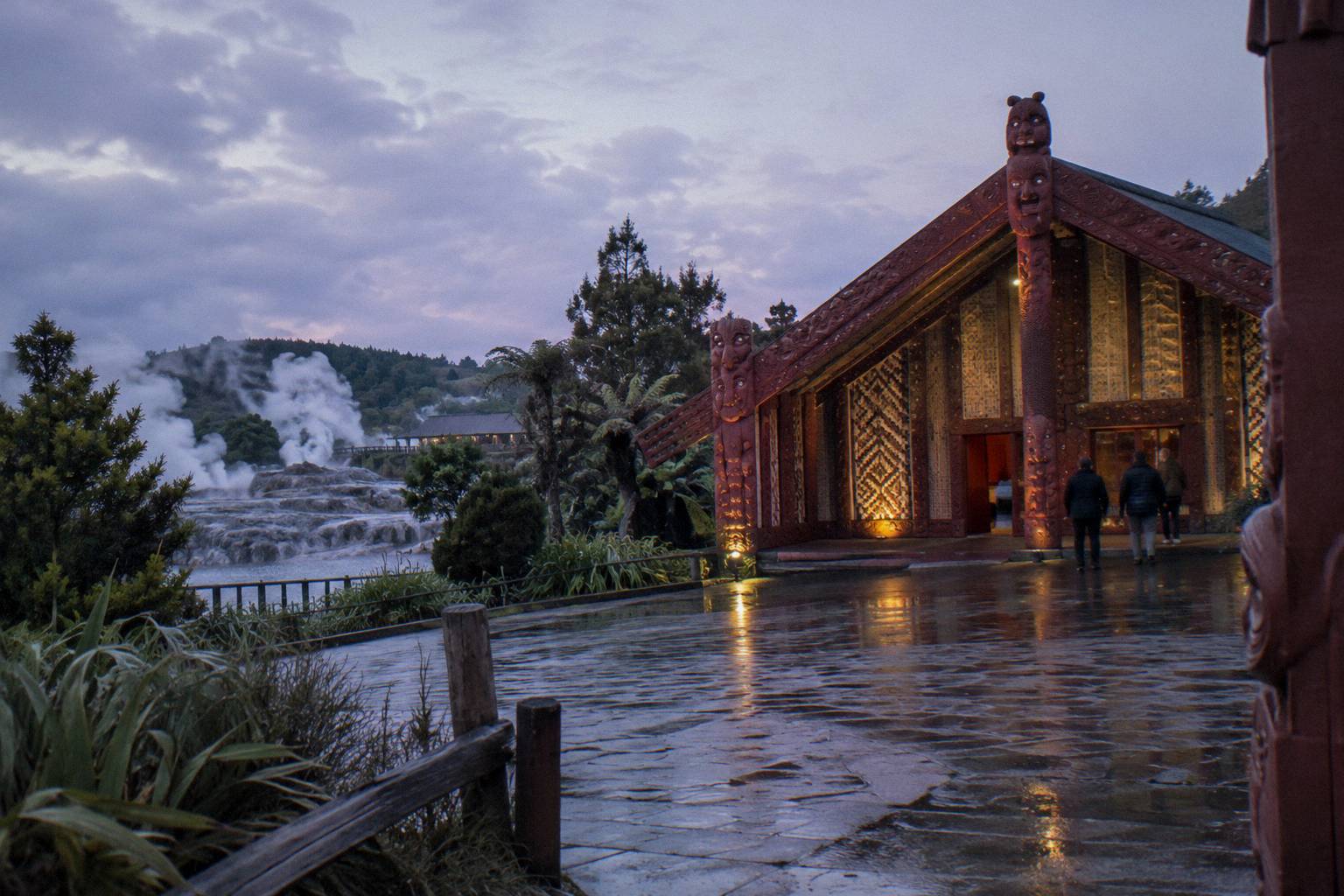
That handover is worth planning around because the two Te Pā Tū evenings are genuinely different products, not a menu tweak. The operator's summer evening page describes an outdoor harvest celebration: a haka pōhiri welcome, kapahaka in the forest amphitheatre Tūāpapa, forest kai horotai canapés, the hāngī lifting and a spit roast to view, then a three-course seasonal feast in the wharekai. The operator's winter evening page describes something else entirely: an Ahi Tuku fire ceremony welcome, a hearty broth and steaming kawakawa tea, fireside wānanga (conversation, history, games, instruments, traditions), and a Matariki-inspired Māori fusion feast served family style with a traditional in-ground hāngī of lamb and vegetables.
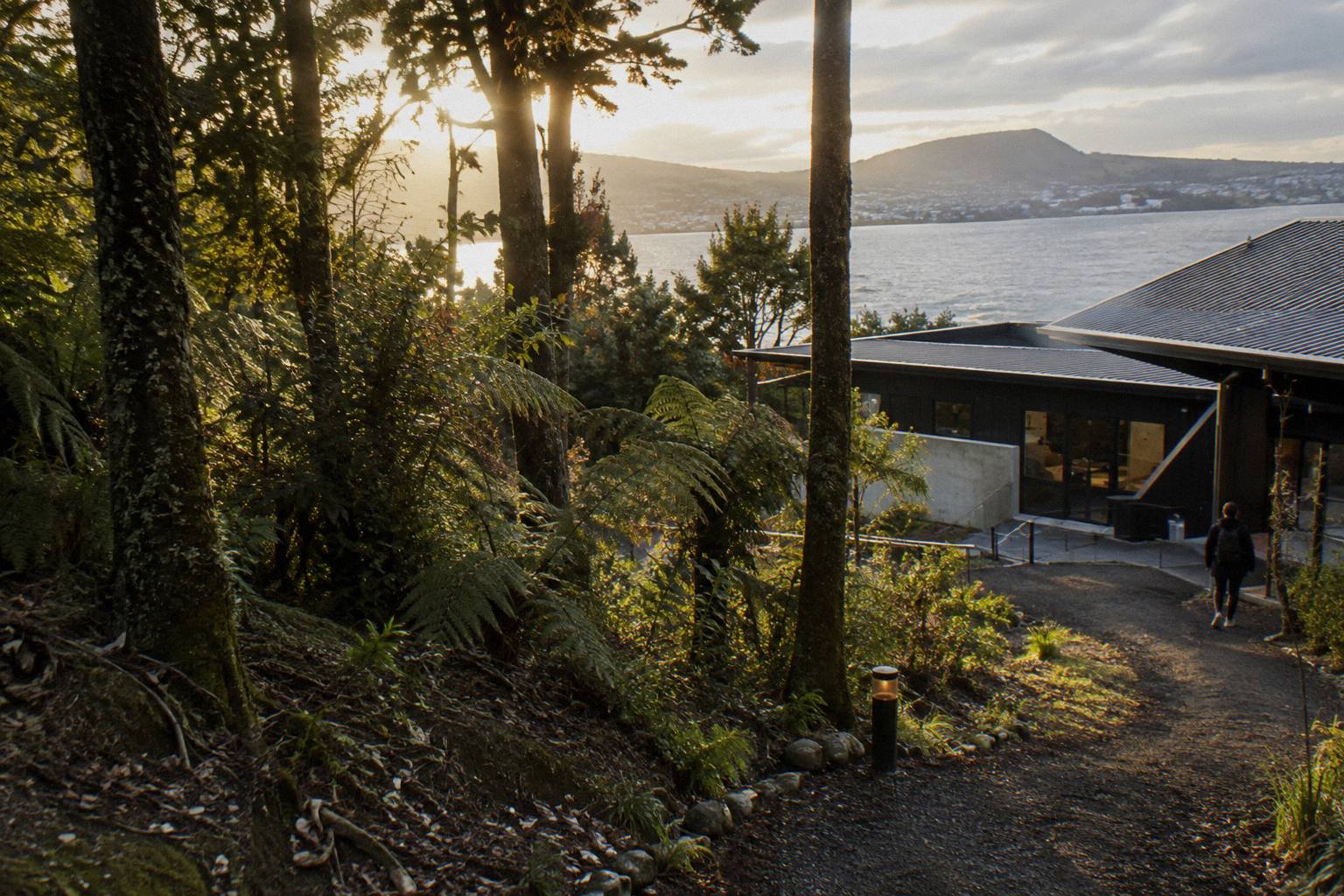
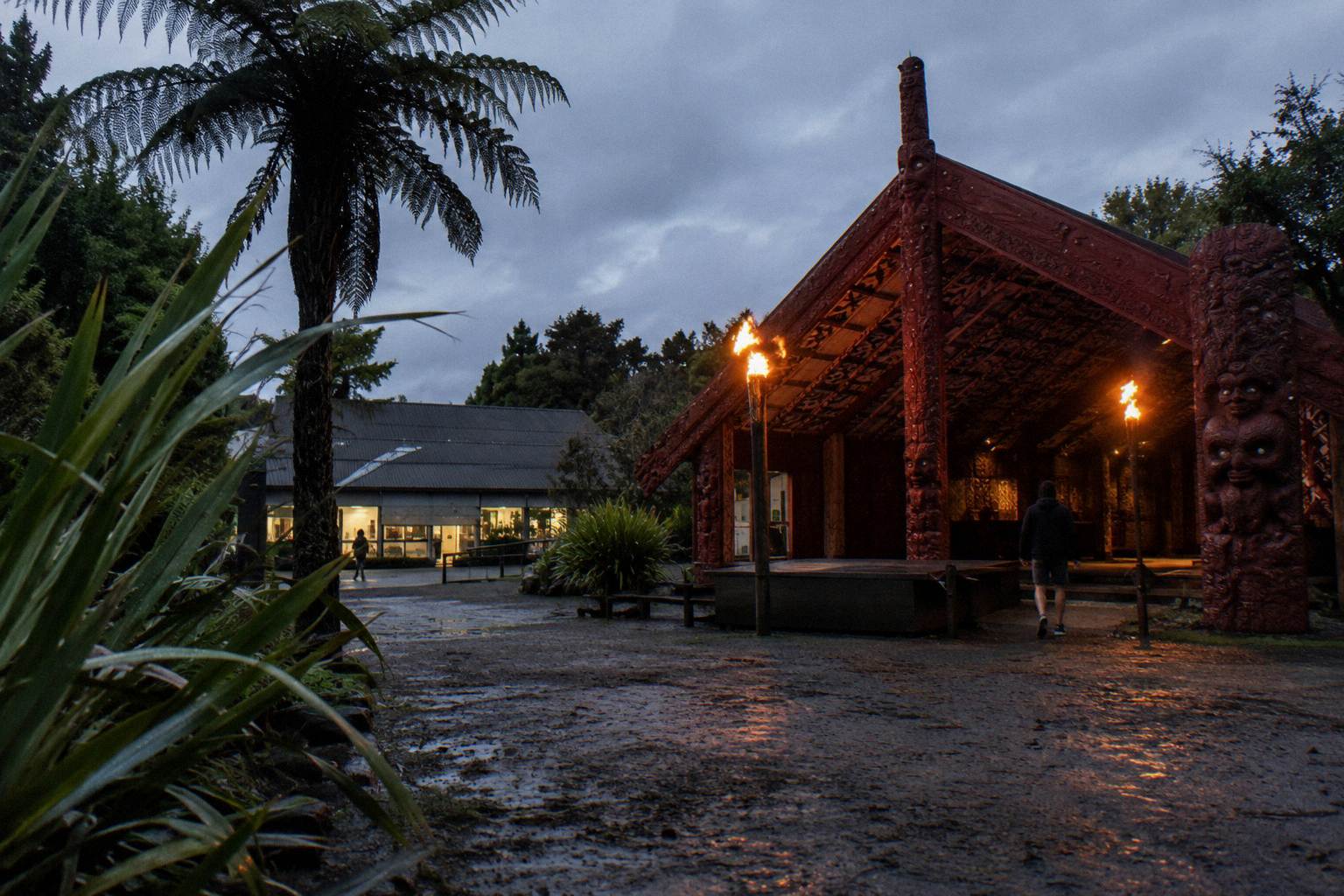
Te Pā Tū is the renamed Tamaki Māori Village experience, owned and operated by Tauhara North No.2 Trust, and it sits in a forest pā a short coach ride south of central Rotorua; the village address is not published. Return coach transport from central Rotorua is included in both seasons, which matters in winter when daylight is short and the operator frames the night around fire. The winter programme is set in 1800s Aotearoa, between the 1840 Treaty of Waitangi and the 1886 Mt Tarawera eruption, in the operator's own framing.
For a fuller picture of the two programmes side by side, the guide to Rotorua Māori village evenings lays out what each operator's evening contains; the seasonal detail lives here.
What Runs In Summer Versus Winter At Te Pā Tū?
Summer (Tū Te Rā, October to April) is the longer, outdoor-centred evening: about 3.5 hours, NZD 290 adult and NZD 125 child, built around the harvest theme with canapés, an amphitheatre performance and a three-course feast. Winter (Tū Te Ihi, May to September) is about 3 hours, NZD 280 adult and NZD 115 child, built around fire: a fire ceremony welcome, broth and kawakawa tea, fireside conversation and a family style Matariki feast.
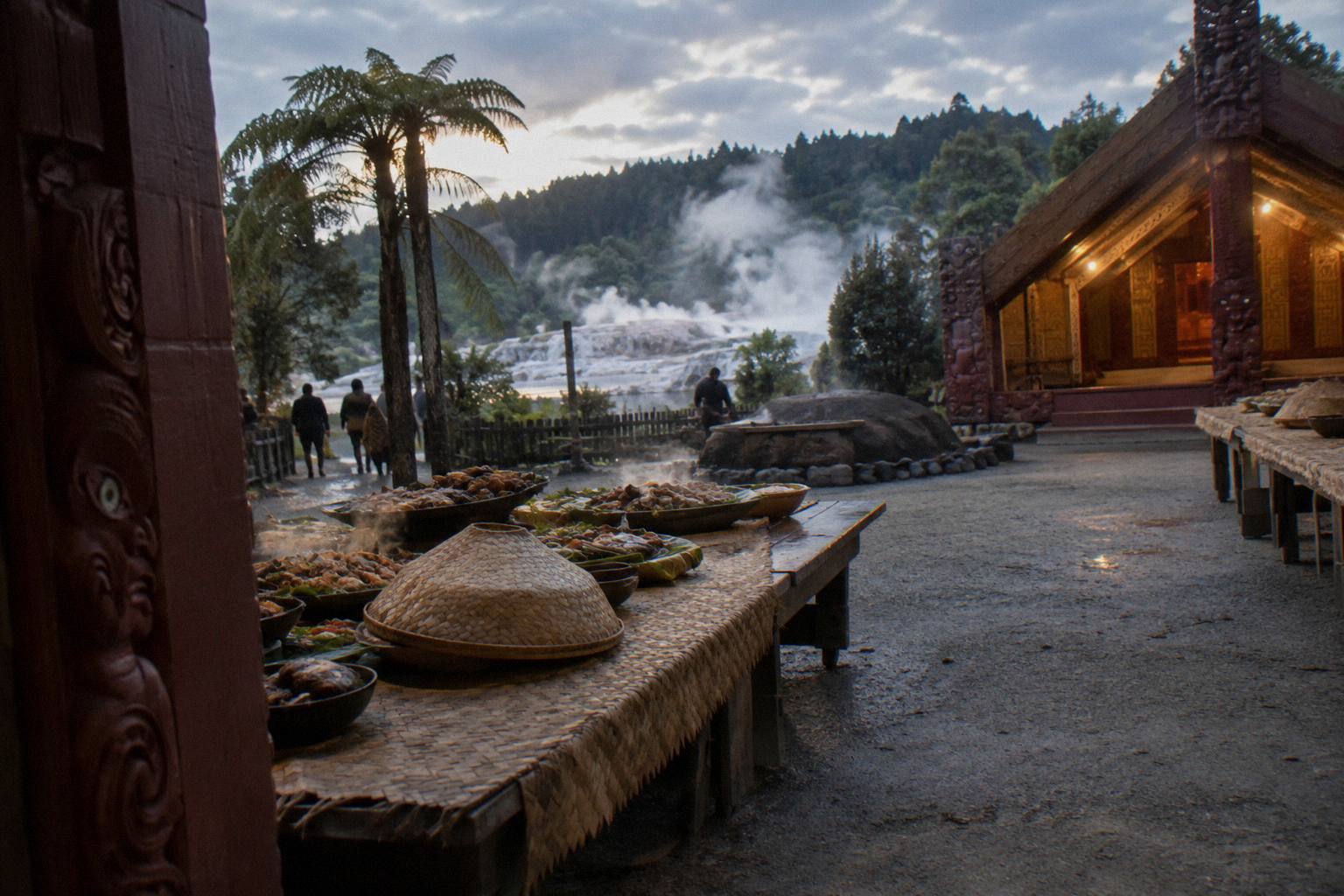
Both evenings include a complimentary aperitif or digestif and rongoā herbal tea, and both end with a farewell, the poroporoaki in winter. The summer night adds torchlight on the walk to the feast. The operator's homepage says "four hours of celebration and feasting", while the product pages say 3.5 hours in summer and 3 in winter, so plan for about three to three and a half hours and check the ticket for the exact night.
| Tū Te Rā (Summer) | Tū Te Ihi (Winter) | |
|---|---|---|
| Months | October to April | May to September |
| Duration | About 3.5 hours | About 3 hours |
| Adult price | NZD 290 | NZD 280 |
| Child price | NZD 125 | NZD 115 |
| Welcome | Haka pōhiri | Ahi Tuku fire ceremony |
| Food theme | Forest canapés, three-course seasonal feast | Broth, kawakawa tea, family style Matariki fusion feast with in-ground hāngī (lamb and vegetables) |
| Included drink | Complimentary digestif and rongoā tea | Complimentary aperitif and rongoā tea |
| Transport | Return coach from central Rotorua | Return coach from central Rotorua |
The table shows the honest shape of the choice: the seasons differ by NZD 10 per adult and NZD 10 per child, and by half an hour, but the experience differs far more than the numbers suggest. A reader deciding between March and June is really deciding between an outdoor harvest evening in a forest amphitheatre and a fireside evening themed around Matariki. Neither is a lesser version of the other; they are different nights.
If the summer harvest programme is the one you want, the booking window is October to April and the Te Pā Tū cultural experience with dinner covers both seasons on one page, with Transport Included, Forest Pā showing live dates for the season you land in.
Which Evening Suits Each Month Of The Year?
October to April belongs to the summer harvest programme at Te Pā Tū and to warmer evenings generally; May to September brings the winter programme there, earlier nightfall for the whole city, and Mitai's advice to bring warm clothing for its bush walk. December to February is peak visitor season in Rotorua, so book further ahead; the shoulder months of October, November, March and April carry the same summer programme with quieter booking windows.
A month-by-month read of the calendar helps when your travel dates are fixed. The table below maps each part of the year to what changes and what does not. The one hard boundary is the Te Pā Tū switch at the start of May and the start of October. Everything else is booking-lead-time guidance and the operators' own dress advice, not programme changes.
| Months | Te Pā Tū programme | What else changes |
|---|---|---|
| October to November | Tū Te Rā, summer harvest | Shoulder season; same programme as high summer |
| December to February | Tū Te Rā, summer harvest | Peak visitor months; Mitai advises a hat in summer; book ahead |
| March to April | Tū Te Rā, summer harvest | Late summer programme; April ends the season |
| May to September | Tū Te Ihi, winter Matariki | Mitai advises warm clothing in winter and a jacket when raining |
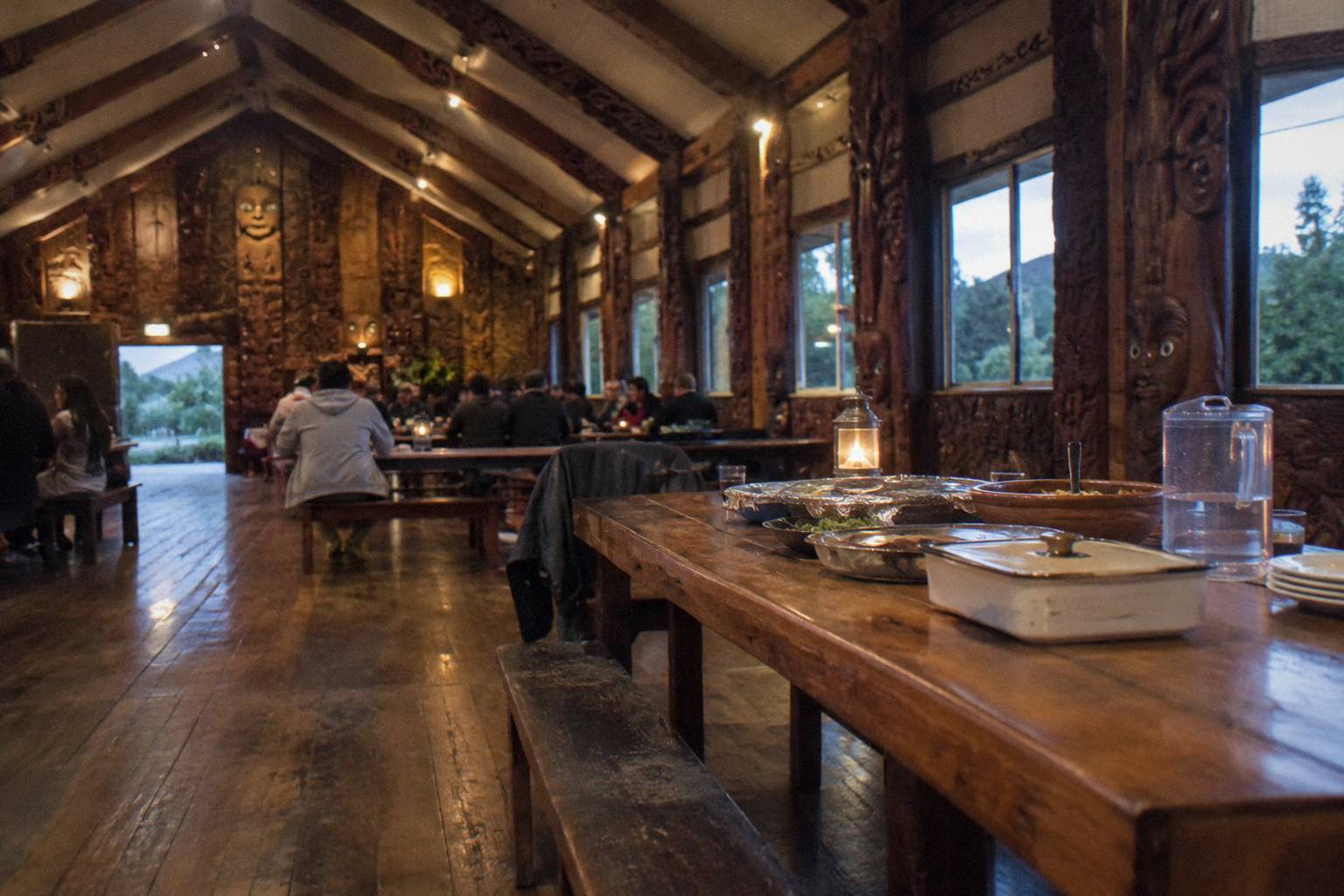
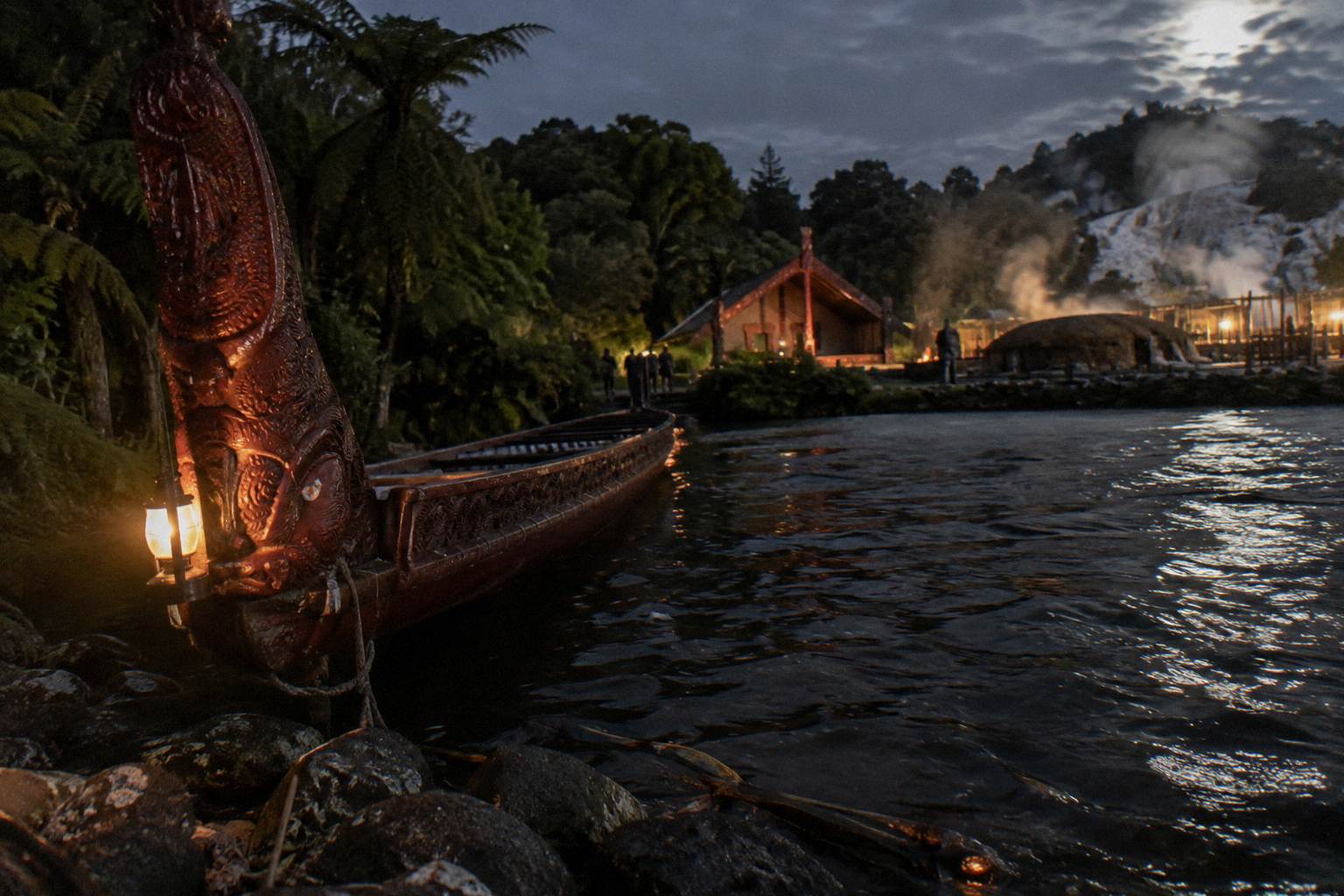
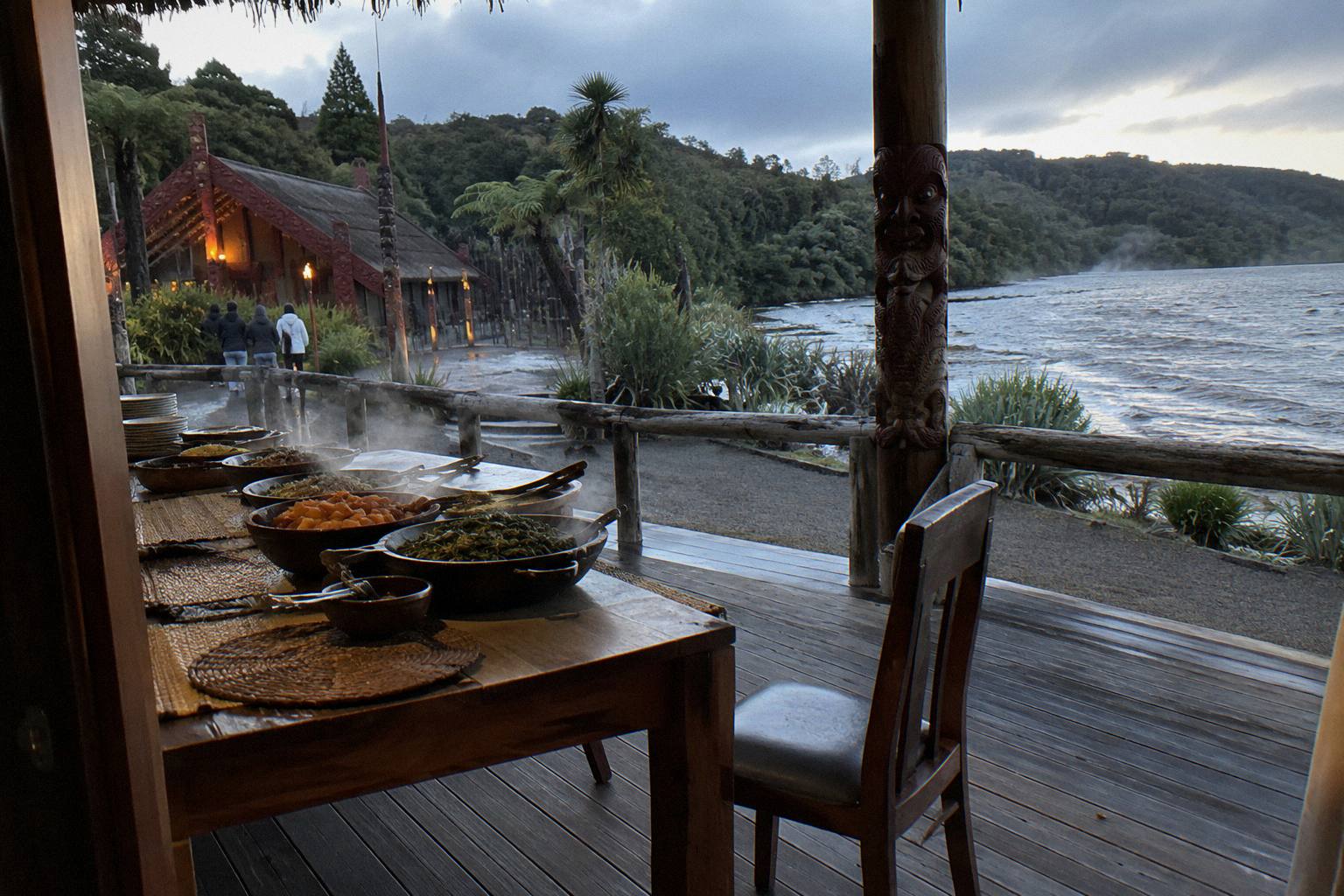
Mitai's year-round evening keeps the same structure in every month: welcoming ceremony, hāngī unveiling, warriors paddling a waka down the Wai-o-Whiro Stream, a cultural performance the operator lists as Pōwhiri, Wero, Waiata, Mōteatea, Poi and Haka, a full buffet hāngī dinner, question time, and an evening bush walk to the old fortified village site and the sacred spring Te Puna Tapu o Tūhoe, with glow worms on the walk. None of that is seasonal, so at Mitai the month you choose changes the temperature on the bush walk and little else, per the operator's hāngī dinner page.
Booking lead time is where the season genuinely bites. Mitai's complimentary transfers from registered accommodation must be booked and close at capacity, which makes an early reservation more valuable in the busy months. Te Puia's Te Pō has two dinner sittings, 5:30pm and 7:15pm, and the operator says to check in 15 minutes early or the ticket is forfeited, so in peak months the later sitting is the one that fills first.
How Does Timing Affect The Price You Pay?
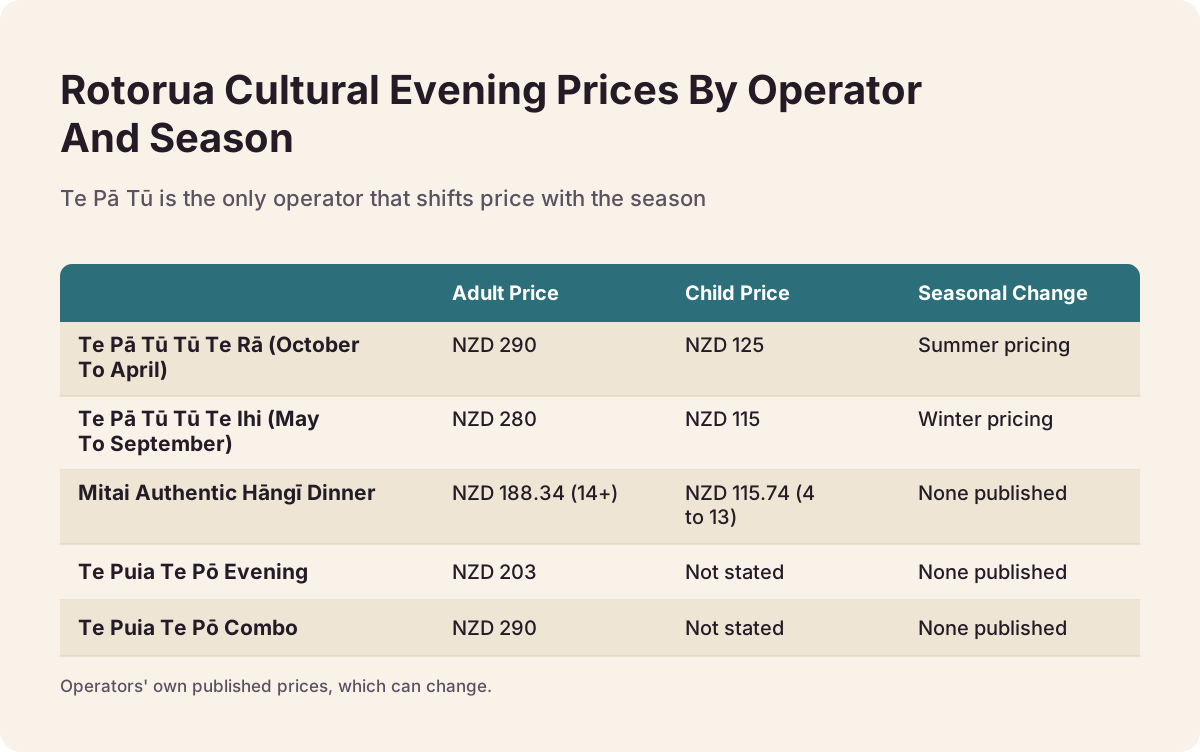
Timing changes little here: only Te Pā Tū shifts with the seasons, charging NZD 290 adult and NZD 125 child in summer versus NZD 280 adult and NZD 115 child in winter, while Mitai's Authentic Hāngī Dinner Experience (NZD 188.34 adult, NZD 115.74 child) plus Te Puia's Te Pō evening (NZD 203) and Te Pō Combo (NZD 290) keep one price year round. All are the operators' own prices and can change.
That NZD 10 seasonal gap at Te Pā Tū is the only published seasonal price movement among the three dinner operators. It is small enough that the programme, not the price, should drive the date: choosing winter to save NZD 10 per adult means choosing the fire ceremony and family style feast over the harvest canapés and amphitheatre night. Choosing summer costs a little more and buys half an hour more evening.
| Evening | Adult price | Child price | Seasonal change |
|---|---|---|---|
| Te Pā Tū Tū Te Rā (October to April) | NZD 290 | NZD 125 | Summer pricing |
| Te Pā Tū Tū Te Ihi (May to September) | NZD 280 | NZD 115 | Winter pricing |
| Mitai Authentic Hāngī Dinner | NZD 188.34 (14+) | NZD 115.74 (4 to 13) | None published |
| Te Puia Te Pō evening | NZD 203 | Not stated | None published |
| Te Puia Te Pō Combo | NZD 290 | Not stated | None published |
Cancellation terms also shape when to commit, and they differ by operator, so never carry one operator's rule to another. Te Pā Tū's own terms give a 100% refund if cancelled two days before by 12.00pm, 50% one day before by 12.00pm, and nothing on the day, with booking and bank fees not refunded. Te Puia allows amends or cancellations by phone or email at least 48 hours before, 72 hours for groups of 10 or more, and is non-refundable inside that window. Mitai's cancellation terms are set in its booking widget rather than published on its pages, so read the terms at checkout. The operator's terms page is the source for Te Pā Tū's rules.
A practical read: if your dates sit near the season boundary in late April or late September, book early enough that a shift of a few days still keeps you in the programme you wanted, and remember the cancellation windows above if the itinerary is still moving. The guide to booking a Māori cultural evening in advance goes deeper on lead times.
Does Weather Or Dress Change With The Season?
Mitai is the only operator that publishes dress guidance: comfortable clothing and walking shoes, warm clothing in winter, a hat in summer, a jacket when raining, and comfortable shoes for the bush walk; umbrellas on site are limited. Te Pā Tū and Te Puia publish no dress guidance, so ask the operator when booking. No operator publishes a dress code or cultural dress rule.
That asymmetry matters for timing. Mitai's evening includes an outdoor bush walk to the sacred spring Te Puna Tapu o Tūhoe in every season, so the operator's advice tracks the weather directly: the same walk is a summer-night stroll in January and a cold, possibly wet path in July. The operator also notes some wheelchair limits on the forest walk and welcomes photography in designated areas.
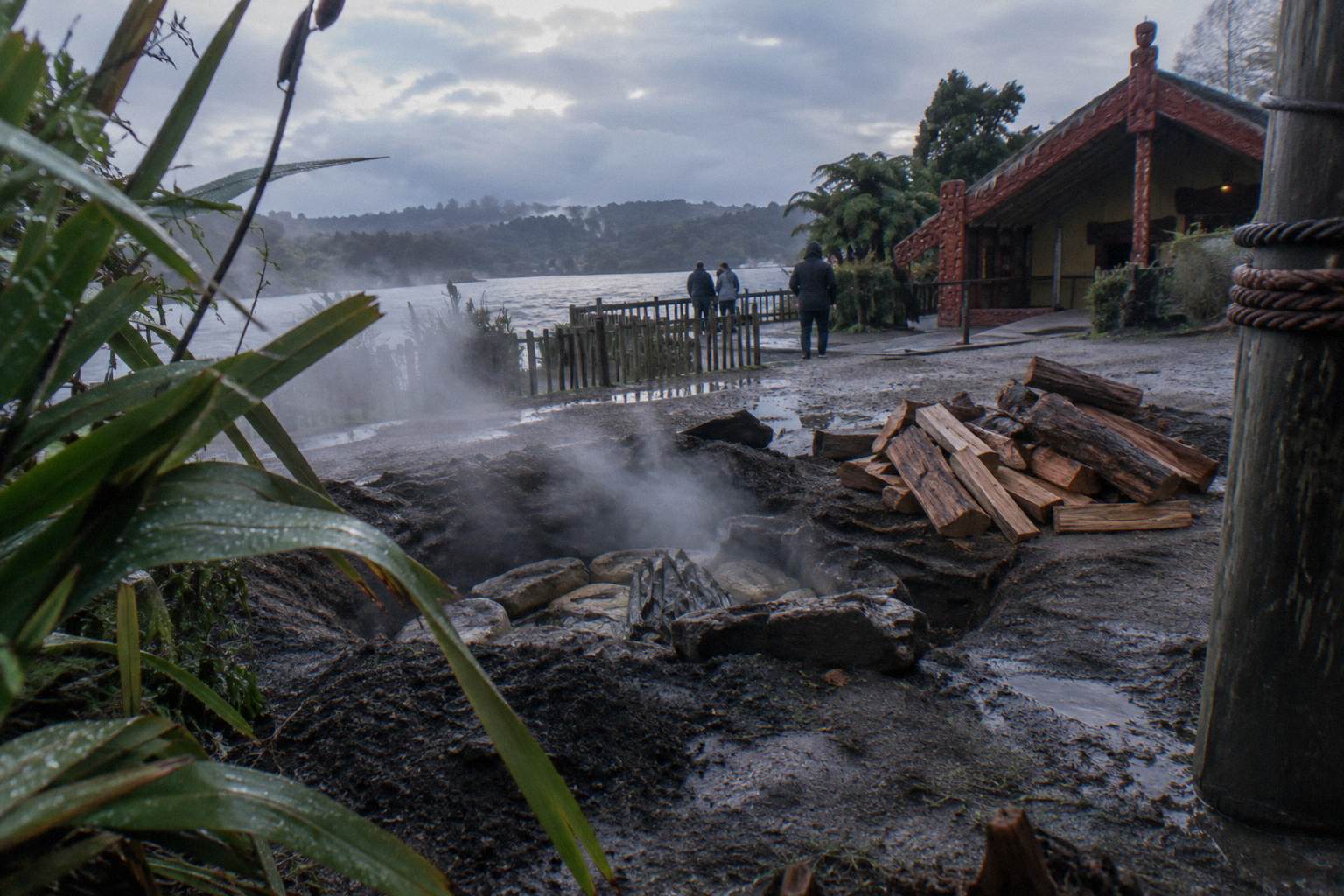
At Te Pā Tū the season changes the setting rather than the dress advice: the summer evening moves through the forest amphitheatre and outdoors to the feast by torchlight, while the winter evening is gathered around fire. Te Puia's Te Pō moves between a carved meeting house, the geyser terrace for hot chocolate, and the Pātaka Kai Restaurant and Bar for the hāngī buffet; the site is cashless. For more on clothing, the guide to what to wear to a Māori cultural evening collects the operators' published advice in one place.
What About Te Puia And Mitai Across The Year?
Te Puia's Te Pō evening runs from 5:30pm year round with sittings at 5:30pm and 7:15pm, about 2.5 hours, NZD 203; the Te Pō Combo runs from 4pm daily, about 4 to 4.5 hours, NZD 290. Neither has a published seasonal programme. Mitai's hāngī dinner runs about 3 hours in every month. For all three, the season changes conditions, not content.
The interesting timing angle at Te Puia is not the calendar but the clock. Because the evening starts from 5:30pm and includes hot chocolate on the geyser terrace, the hour of nightfall changes what the terrace looks like across the year: in summer the early part of the evening sits in daylight, and in winter the whole evening runs in the dark. The operator does not publish a claim about this, so treat it as a consequence of the 5:30pm start, not a promise. What the operator does publish is that Pōhutu Geyser erupts up to 20 times a day and up to 30 m high.
| Evening | Start | Duration | Runs |
|---|---|---|---|
| Te Puia Te Pō | From 5:30pm, sittings 5:30pm and 7:15pm | About 2.5 hours | Year round |
| Te Puia Te Pō Combo | From 4pm daily | About 4 to 4.5 hours | Year round |
| Mitai Authentic Hāngī Dinner | Not stated | About 3 hours | Year round |
| Te Pā Tū summer | Not stated | About 3.5 hours | October to April |
| Te Pā Tū winter | Not stated | About 3 hours | May to September |
Te Puia also sells the Mārama Geyser Light Trail, an evening lighting experience on a 1.5 km walk, about 60 minutes, all weather, children welcome, at NZD 49, or dinner plus Mārama at NZD 146. That pairing is worth knowing when timing a winter visit, because it adds an after-dinner valley walk to a night that already ends early in the dark. Details of the evening itself are in the guide to the Te Puia evening hāngī and concert.
Te Puia's Te Pō evening is rated 4.7 on its booking page. Mitai's dinner is rated 4.7, and Te Pā Tū's cultural experience with dinner is rated 4.8. Ratings are not comparable proof of which night suits which month; they are simply each product's own figure.
How Do Children And Diets Change With The Season?
Te Pā Tū welcomes children at NZD 125 in summer and NZD 115 in winter, with no published minimum age. Mitai's child price covers ages 4 to 13 with the adult price from 14, highchairs limited. Te Puia has under 4s free per the booking page and no stated child price for Te Pō. Dietary options are seasonal in one place only: Te Pā Tū's winter page lists vegetarian, pescatarian and gluten free, and cannot guarantee coeliac safety.
That dietary detail is easy to miss and worth catching early. The winter Te Pā Tū page is the operator's published dietary statement, covering the Matariki feast; vegan options there are not stated, and Mitai says it is unable to cater to all dietary needs such as vegan, though some requests could be met. Te Puia's dietary options are not stated. Whatever the season, tell the operator at booking rather than on the night.
The timing link is straightforward: a winter booking at Te Pā Tū has published vegetarian, pescatarian and gluten free options, and a summer booking should be raised with the operator directly at 0508 826 254 or bookings@maoriculture.co.nz. Mitai can be reached at +64 7 343 9132 or reservation@mitai.co.nz. For families weighing the whole question, the guide to a Māori cultural evening with kids covers ages and practicalities across the operators.
Common Mistakes When Timing A Māori Evening
The most common mistake is assuming every Rotorua cultural dinner changes with the seasons. Only Te Pā Tū does. Travellers also book April or September dates without realising they sit one week from a completely different programme, quote one operator's cancellation window to another, and leave Mitai's limited complimentary transfer unbooked until the shuttle list closes. None of these cost anything to avoid; all of them cost the evening you wanted.
The season boundary deserves the most care. A visit planned for the first week of May gets the winter programme, and a visit in the last week of September still gets winter, because Tū Te Rā returns only in October. If the harvest evening with the forest amphitheatre and canapés is the one you have read about, an itinerary that drifts into May silently swaps it for the fire ceremony night. The reverse applies to travellers chasing the Matariki feast: that programme ends in September.
The second mistake is carrying facts across operators. Te Pā Tū includes return coach transport from central Rotorua; Mitai's transfers are complimentary only from registered accommodation, must be booked and close at capacity; Te Puia states no hotel transfer and instead names the City Ride bus every 30 minutes until 6PM, Uber and taxi, with free parking on site. Assuming the Te Pā Tū coach applies to a Te Puia night leaves you arranging your own way to 20 Hemo Road. The guide to pickup and transport to Rotorua cultural evenings untangles this properly.
The third is ignoring the clock rules that exist independent of season. Te Puia says check in 15 minutes early or the ticket is forfeited, and its 48 hour cancellation window (72 for groups of 10 or more) is shorter than Te Pā Tū's two-day noon rule in practical effect. A fourth is expecting weather-driven guarantees: availability, weather and the operator decide what runs on the night, and no operator publishes a weather promise. If timing really matters to your trip, the fallback is choosing the operator whose cancellation terms give you the most room to move, and Te Puia's FAQ states its rules in full.
Common Questions About The Best Time Of Year For A Hāngī Evening
When Does Te Pā Tū Switch From Summer To Winter?
Tū Te Rā, the Summer Harvest Celebration, runs October to April; Tū Te Ihi, the Winter Matariki Celebration, runs May to September. The summer evening is about 3.5 hours at NZD 290 adult and NZD 125 child; the winter evening is about 3 hours at NZD 280 adult and NZD 115 child.
Do Mitai And Te Puia Change Their Programme By Season?
No seasonal programme change is published for either. Mitai's Authentic Hāngī Dinner runs about 3 hours year round, and Te Puia's Te Pō runs from 5:30pm with sittings at 5:30pm and 7:15pm. What changes is conditions: Mitai advises warm clothing in winter and a hat in summer.
Is The Winter Evening Cheaper Than Summer?
At Te Pā Tū, yes by the operator's prices: NZD 280 adult in winter against NZD 290 in summer, and NZD 115 against NZD 125 per child. Mitai (NZD 188.34 adult) and Te Puia (NZD 203) publish no seasonal price change.
Which Months Are Quietest For Booking?
The operators do not publish crowd or occupancy figures. The summer programme runs from October to April, so October, November, March and April carry the same Te Pā Tū evening as the December to February peak, which typically makes the shoulder months the easier booking window for the same programme.
What Should I Wear In Winter?
Mitai is the only operator with published dress advice: comfortable clothing and walking shoes, warm clothing in winter, a hat in summer, and a jacket when raining, with limited umbrellas on site. Te Pā Tū and Te Puia publish no dress guidance; ask the operator at booking.
Does The Matariki Feast Only Run At Matariki?
No. Te Pā Tū's operator presents Tū Te Ihi as a Matariki-inspired programme running the whole May to September season, not a single festival night. The family style feast with in-ground hāngī of lamb and vegetables is the winter menu throughout.