What To Wear To A Māori Concert And Hāngī Evening In Rotorua
Only one of Rotorua's cultural evening operators publishes dress guidance. Here is what that guidance says, what the other evenings involve outdoors, and how to dress for each season.
Short answer
Mitai Māori Village is the only evening operator that publishes dress guidance: comfortable clothing and walking shoes, warm clothing in winter, a hat in summer and a jacket when it rains. Te Pā Tū and Te Puia do not publish dress guidance, so ask the operator when booking. There are no cultural dress rules stated by any operator.
A question about what to wear usually means one of two things: an evening is booked, or one is about to be. Either way the answer is practical rather than ceremonial. None of Rotorua's evening operators states a dress code, and Mitai Māori Village is the only one that publishes specific clothing advice. The rest of the picture comes from what each evening physically involves, a forest pā reached by coach, a bush walk to a sacred spring, a geothermal terrace at night, and from Rotorua's weather, which can deliver four seasons across a single evening even in summer.
What Should You Wear To A Māori Cultural Evening?
Wear comfortable clothing you can sit, stand and walk in, with walking shoes rather than dress shoes, and layer for the weather: warm layers in winter, a hat in summer and a jacket when rain is possible. That guidance comes from Mitai Māori Village, the only operator that publishes dress advice. Te Pā Tū and Te Puia do not publish dress guidance, so confirm with them at booking. No operator states any cultural dress rule.
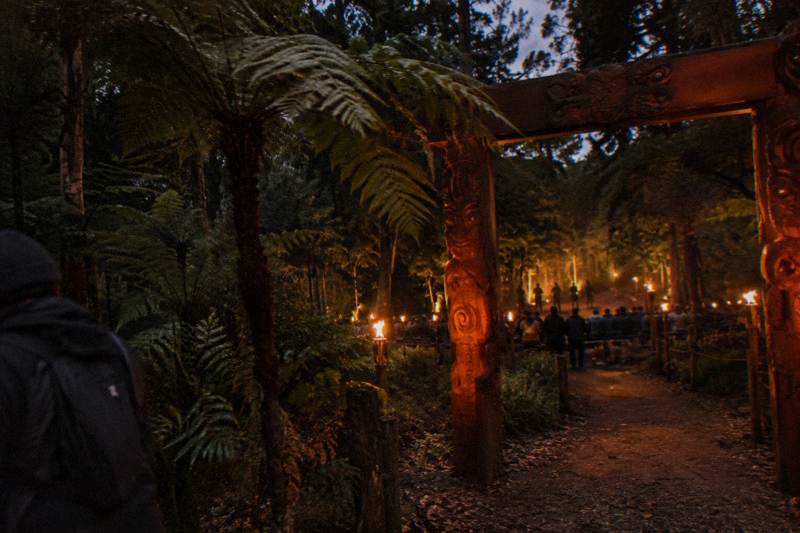
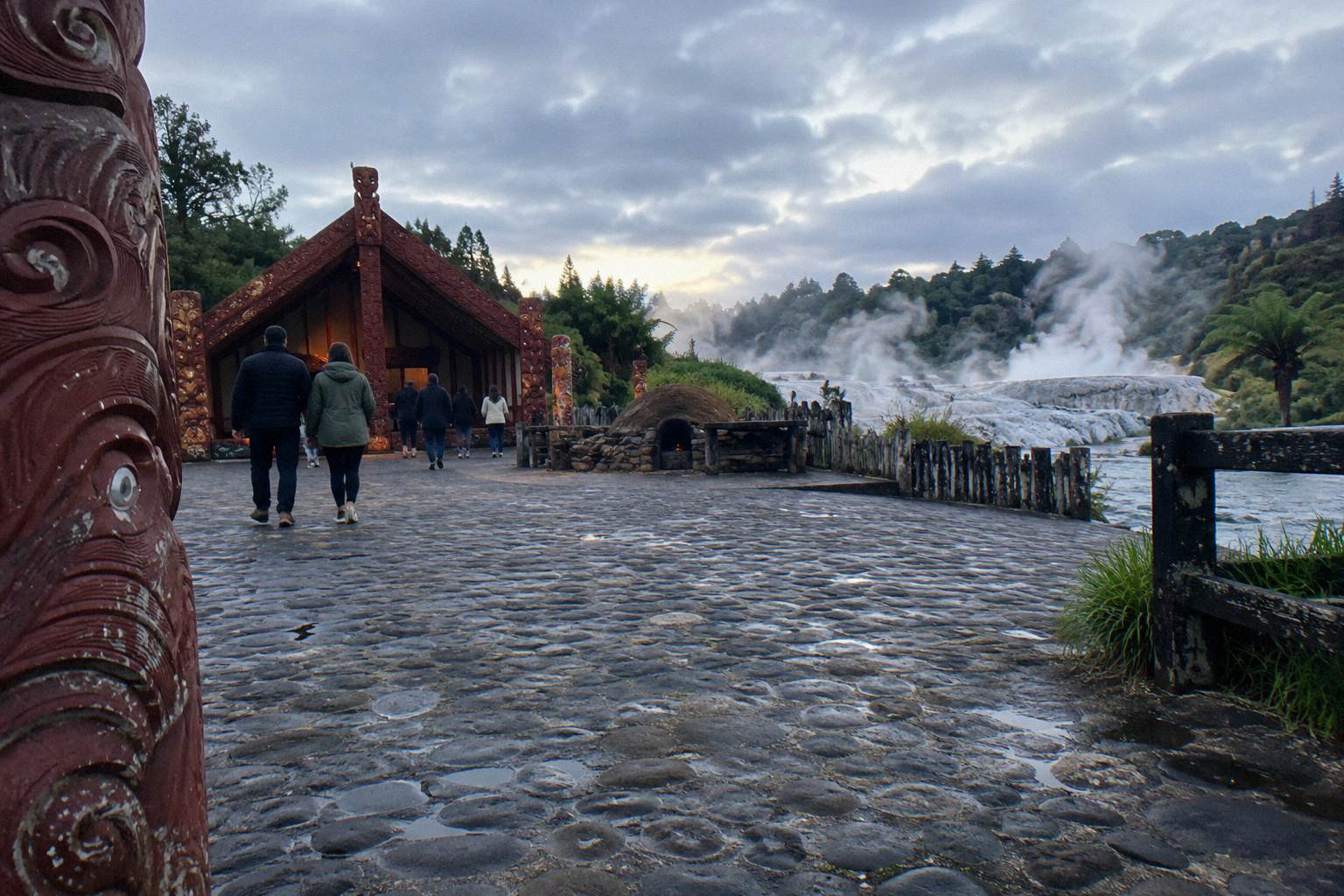
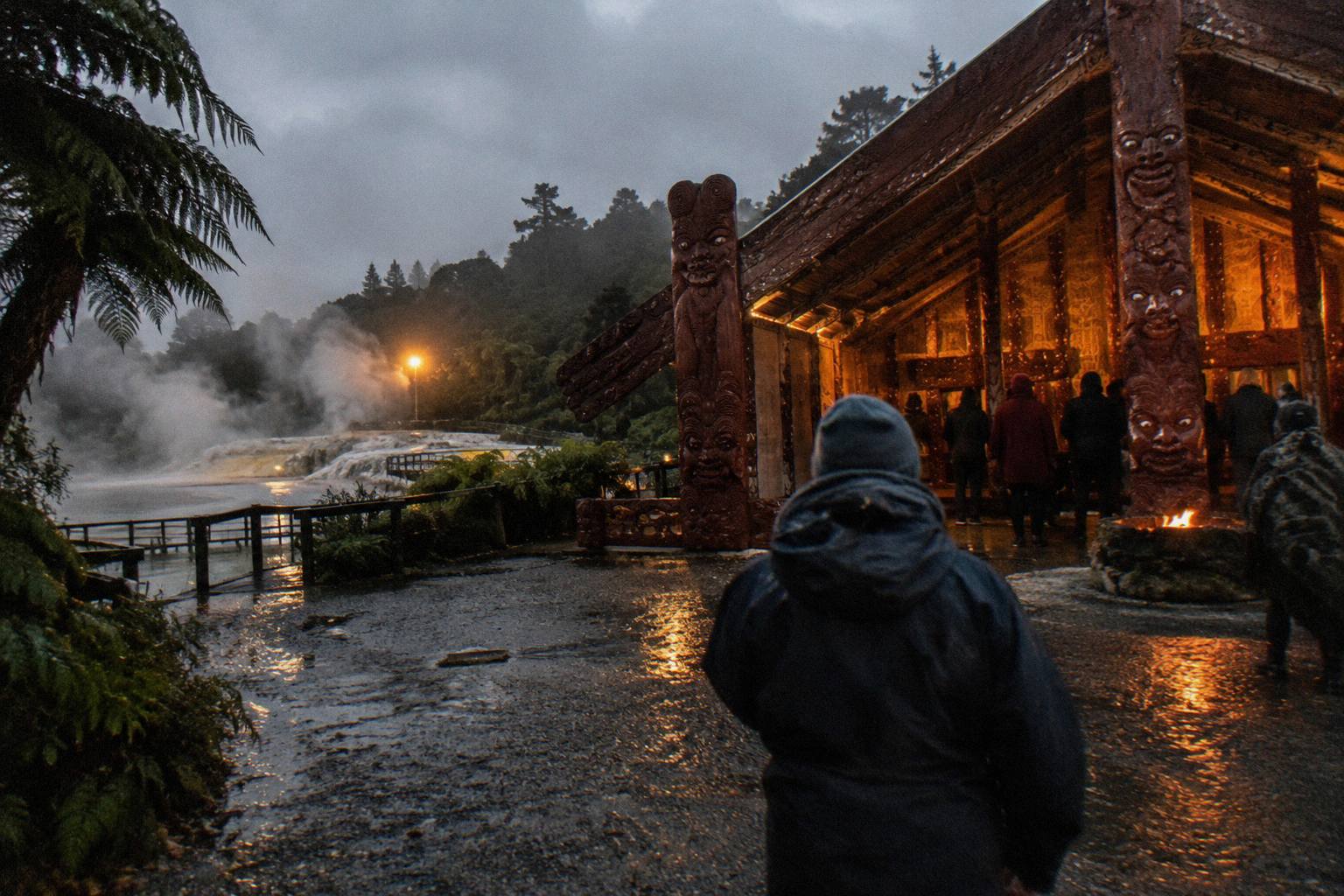
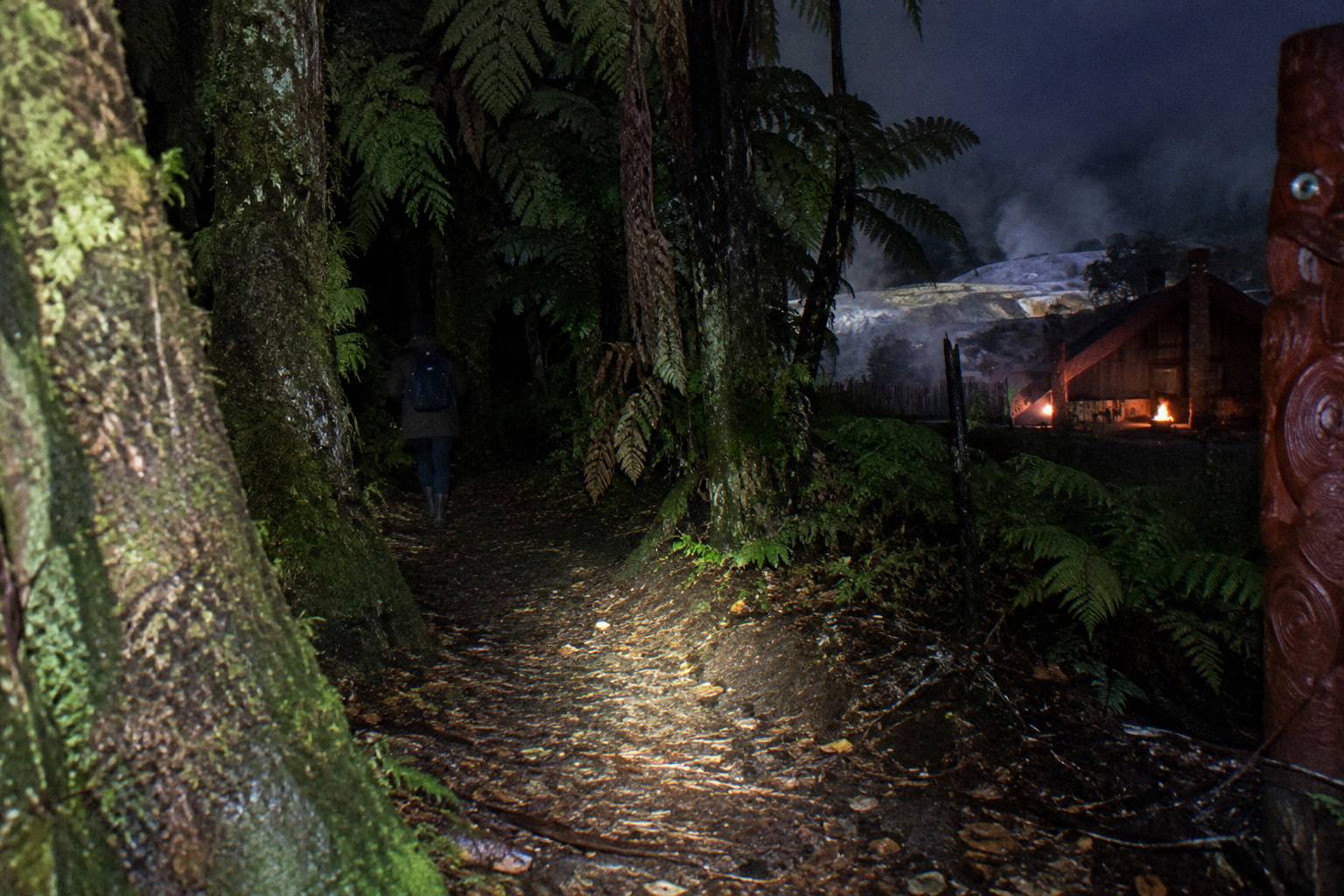
The reason clothing matters more here than at a restaurant dinner is the setting. These evenings are not held in function rooms. Mitai's Authentic Hāngī Dinner Experience includes an evening bush walk to the old fortified village site and the sacred spring Te Puna Tapu o Tūhoe. Te Pā Tū holds its evenings in a forest pā set in tawa forest a short coach ride south of central Rotorua, and the summer programme moves between an outdoor amphitheatre, the hāngī area and the wharekai where the feast is served. Te Puia's Te Pō evening steps out onto the geyser terrace for hot chocolate, with the operator stating on its night experiences page that the performance runs in the carved meeting house Te Aronui a Rua and the hāngī buffet is served in the Pātaka Kai Restaurant and Bar.
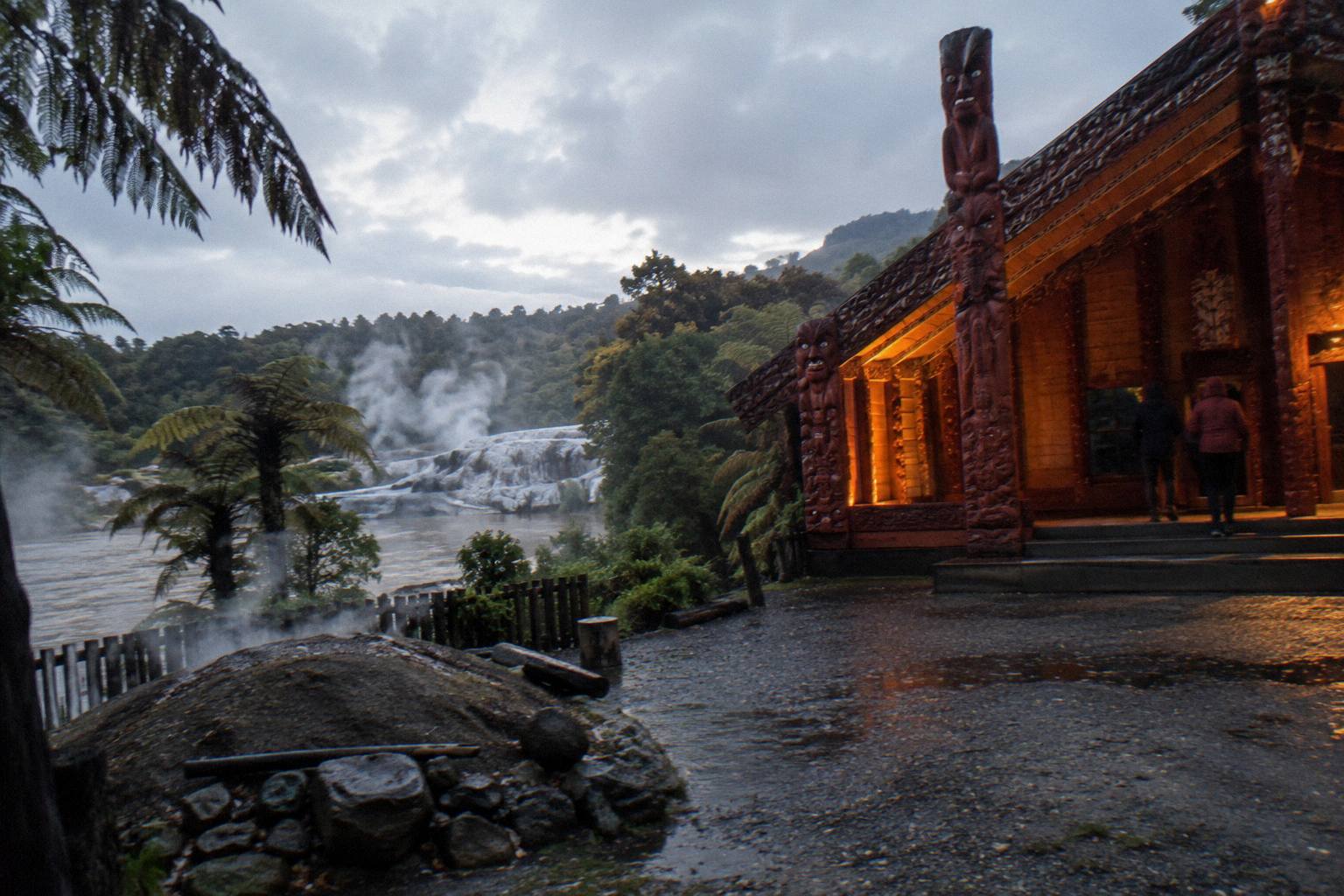
Each of those settings asks something different of your outfit. An indoor performance in a carved meeting house is temperate and sheltered. A geothermal terrace at night, a forest amphitheatre, or a bush walk on an unlit track is not. Add Rotorua's elevation and its changeable weather, and the layering principle applies year round: you can always remove a layer, but you cannot add one you left at the hotel.
The full picture of the site's evening options, including what each contains and what it costs, sits on the Rotorua Cultural Dinner homepage, which is worth a read before you finalise plans.
What Dress Guidance Does Mitai Māori Village Give?
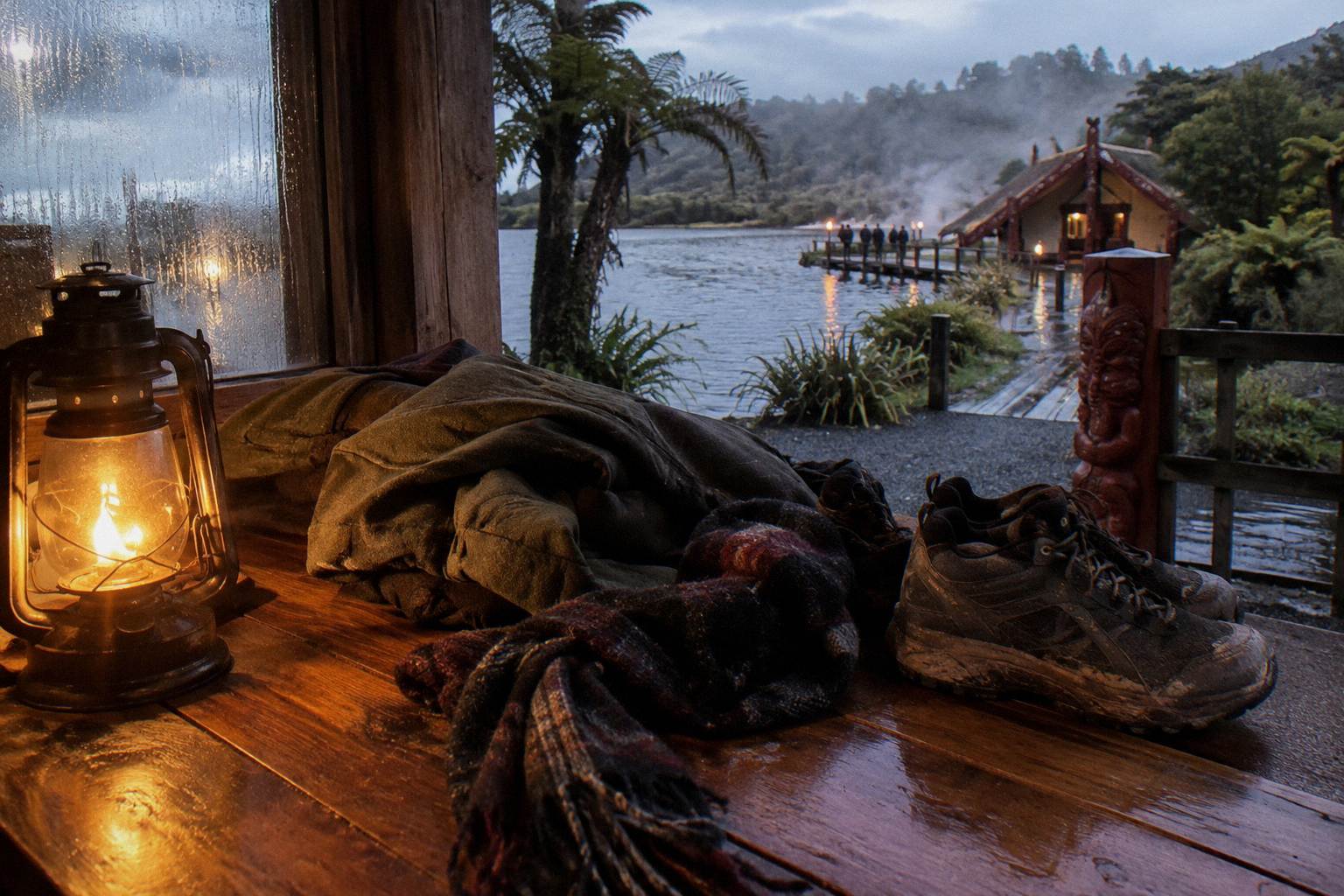
Mitai Māori Village publishes the only operator dress guidance among Rotorua's evening venues: comfortable clothing and walking shoes, dressing for the weather, and comfortable shoes for the bush walk. It adds warm clothing in winter, a hat in summer and a jacket when it is raining. Photography is welcomed in designated areas, and umbrellas are limited on site, so a jacket does work a rain umbrella cannot.
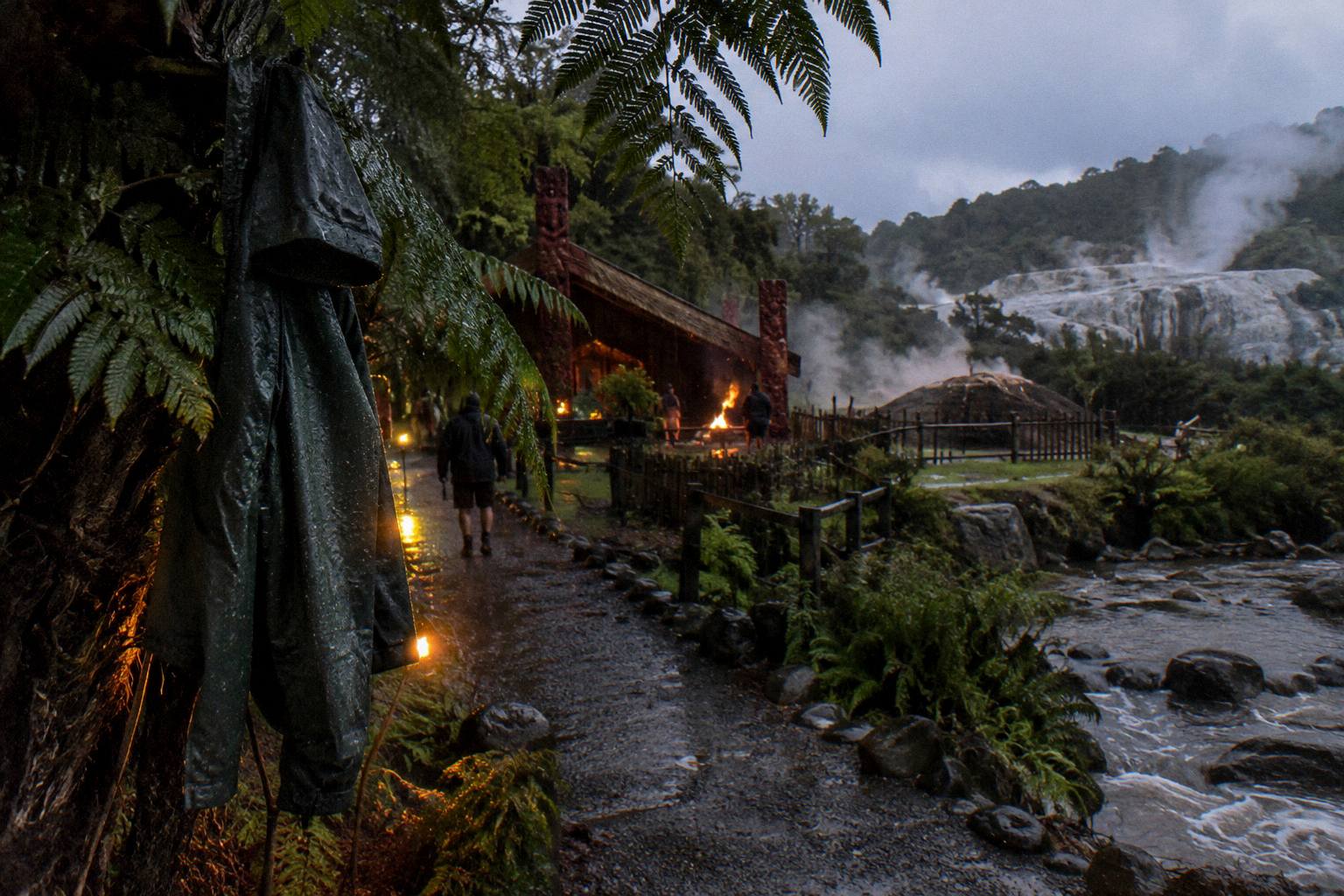
The wording comes from Mitai's own experience page for the Authentic Hāngī Dinner Experience, an evening of about three hours that runs through a welcoming ceremony, the hāngī unveiling, warriors paddling a waka down the Wai-o-Whiro Stream, a cultural performance the operator lists as Pōwhiri, Wero, Waiata, Mōteatea, Poi and Haka, then a full buffet hāngī dinner, question time and the evening bush walk. The operator's price is NZD 188.34 for adults aged 14 and over and NZD 115.74 for children aged 4 to 13, figures the operator states and which can change.
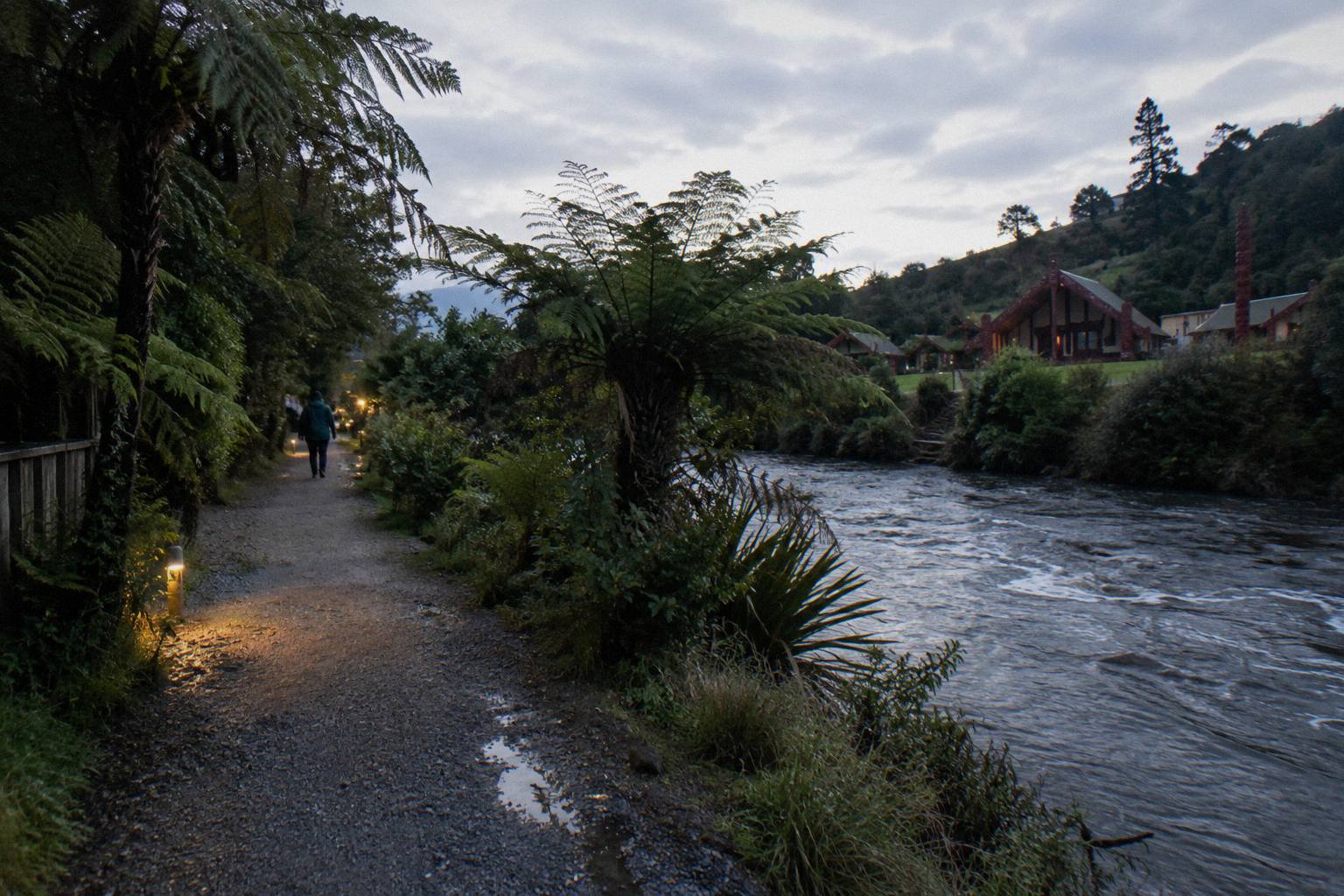
Two practical points follow from Mitai's own practicalities list. First, umbrellas are limited, which in rain makes a waterproof jacket the sensible primary layer rather than something you hope to borrow on site. Second, the bush walk has some wheelchair limits, which tells you the track is natural terrain; closed walking shoes with grip serve it better than sandals or smooth-soled shoes. A deeper treatment of the same venue, including seasonal outfit specifics, is in the site's guide to what to wear to Mitai Māori Village, and the evening's transport options are covered in the guide to pickup and transport to Rotorua cultural evenings, since complimentary transfers from registered accommodation must be booked and close at capacity.
Mitai also notes there is a bar on site and outside alcohol is not permitted, free on-site parking exists at 196 Fairy Springs Road, and highchairs are limited. None of that changes what you wear, but the no-outside-alcohol rule is the kind of detail worth knowing before arrival rather than at the gate.
How Should You Dress For Te Pā Tū's Forest Pā Evenings?
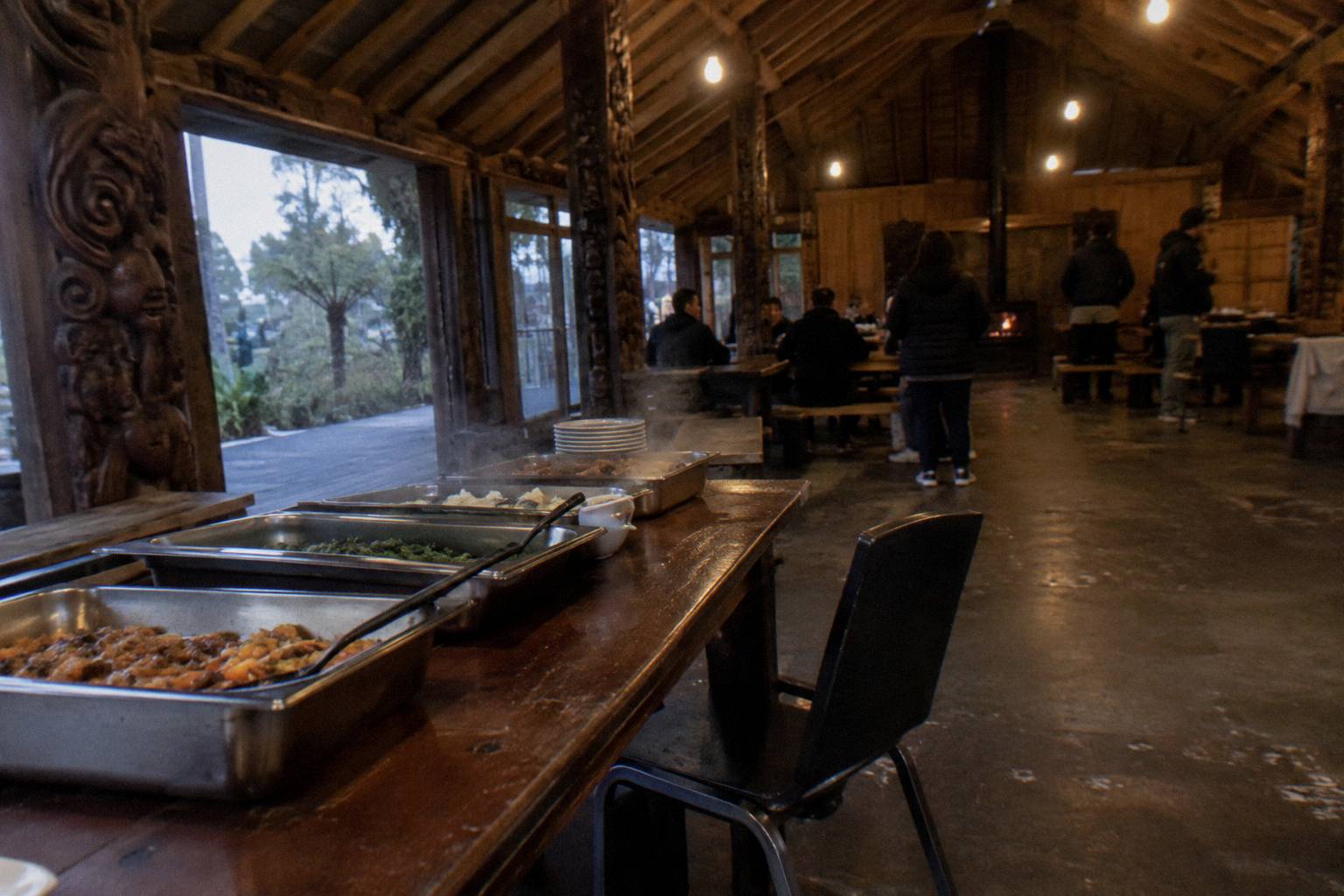
Te Pā Tū does not publish dress guidance, so ask the operator at booking; the practical baseline is what the evening contains. Both seasonal evenings take place in a forest pā in tawa forest, the summer evening runs about 3.5 hours and the winter evening about 3 hours, and both include outdoor elements: a welcome on arrival, kapahaka, and walking between the hāngī area and the wharekai feast.
Te Pā Tū, owned and operated by Tauhara North No.2 Trust, runs two seasonal evenings. The summer evening, Tū Te Rā Summer Harvest Celebration, runs October to April with a haka pōhiri welcome, kapahaka in the forest amphitheatre Tūāpapa, forest kai horotai canapés, viewing the hāngī lifting and spit roast, a three-course seasonal feast in the wharekai, and torchlight on the way to the feast. The operator's summer page lists the operator's price at NZD 290 adult and NZD 125 child. The winter evening, Tū Te Ihi Winter Matariki Celebration, runs May to September with an Ahi Tuku fire ceremony welcome, fireside wānanga, kapahaka and a Matariki-inspired fusion feast served family style, at NZD 280 adult and NZD 115 child, the operator's prices.
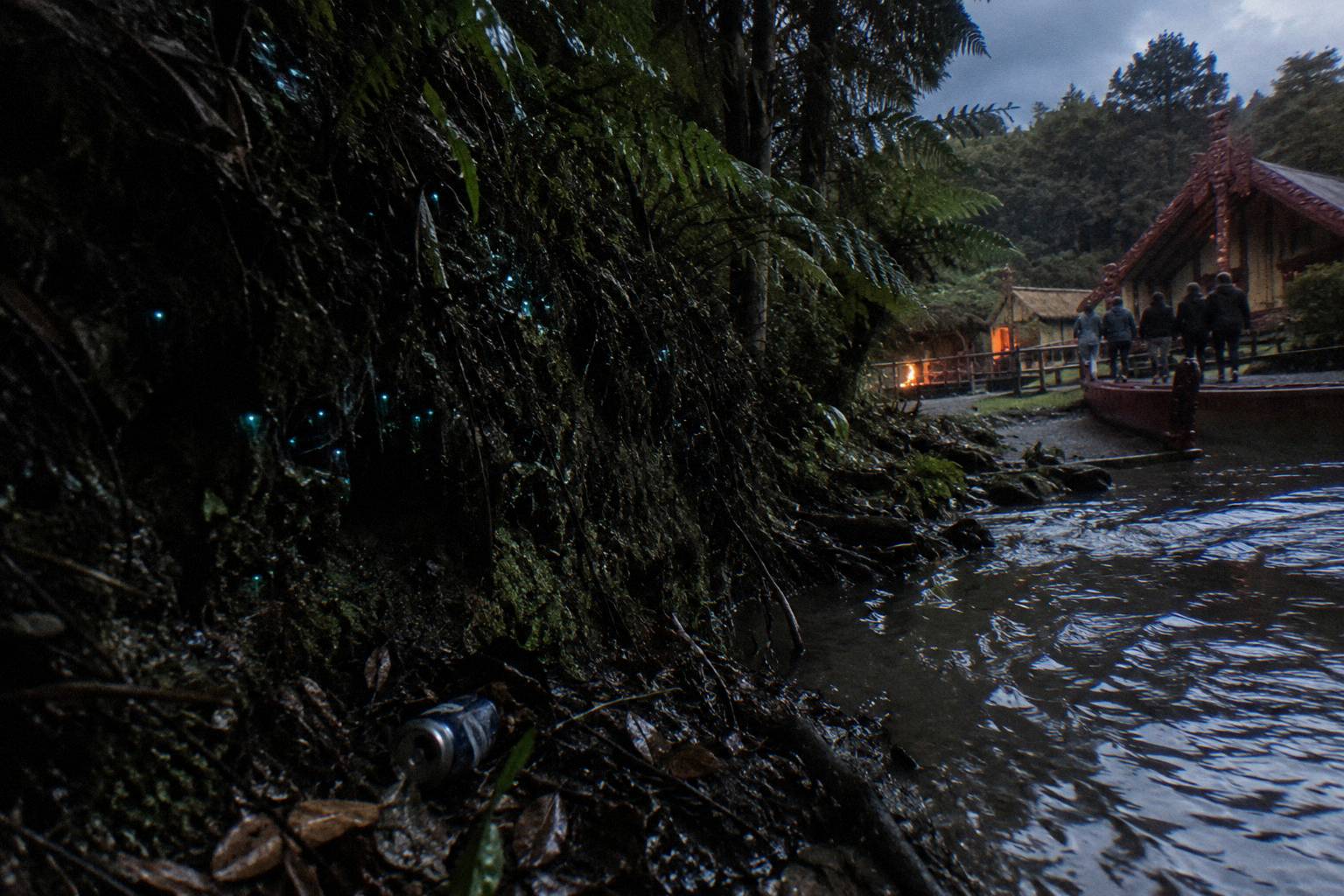
The winter programme answers the clothing question almost by itself: an evening built around fire ceremonies, hearty broth and steaming kawakawa tea is an evening spent at least partly outdoors in a forest in winter. Warm layers, a proper coat and closed shoes are the obvious call. The summer evening needs the same thinking in lighter form, because a forest amphitheatre after sunset cools quickly even following a warm day, and torchlight to the feast means unlit or dimly lit ground underfoot. Return coach transport from central Rotorua is included in both seasons, so you can leave a heavier coat on your hotel bed all day and retrieve it before the coach departs. The operator's summer evening page and its winter counterpart describe the two programmes in full, and the site's overview of the Te Pā Tū evening with dinner sets out what is included. If the evening matches what you are after, Check availability before finalising outfits around a date.
One access note from the operator's winter page: the venue is wheelchair and buggy accessible. That is a fact about the site, not a clothing claim, but it suggests formed paths rather than raw bush track, which in turn means ordinary comfortable shoes are a reasonable floor for footwear. Beyond that, dress specifics at Te Pā Tū are not stated; ask the operator at booking, on 0508 826 254 or bookings@maoriculture.co.nz.
What Does Te Puia's Te Pō Evening Ask Of Your Outfit?
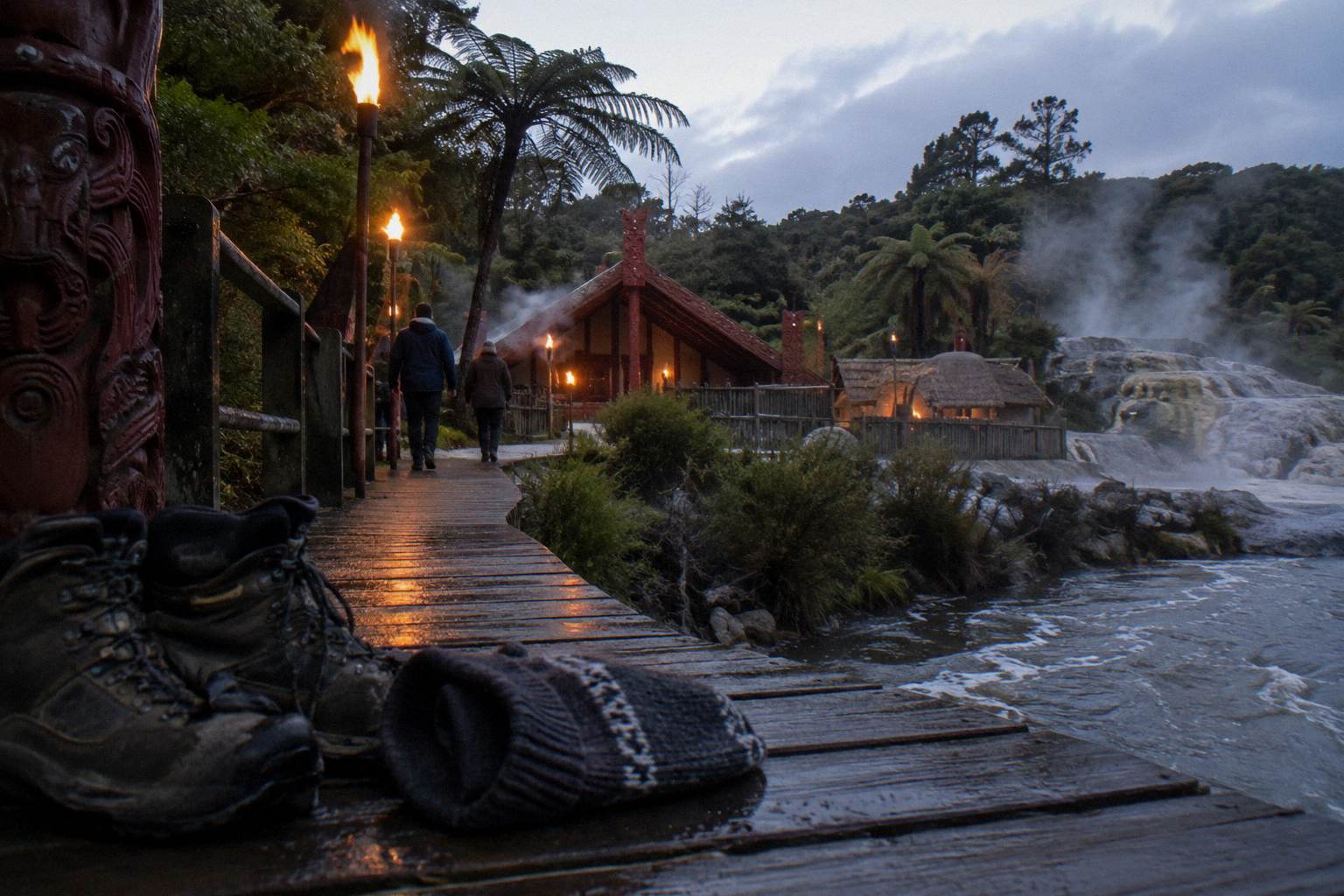
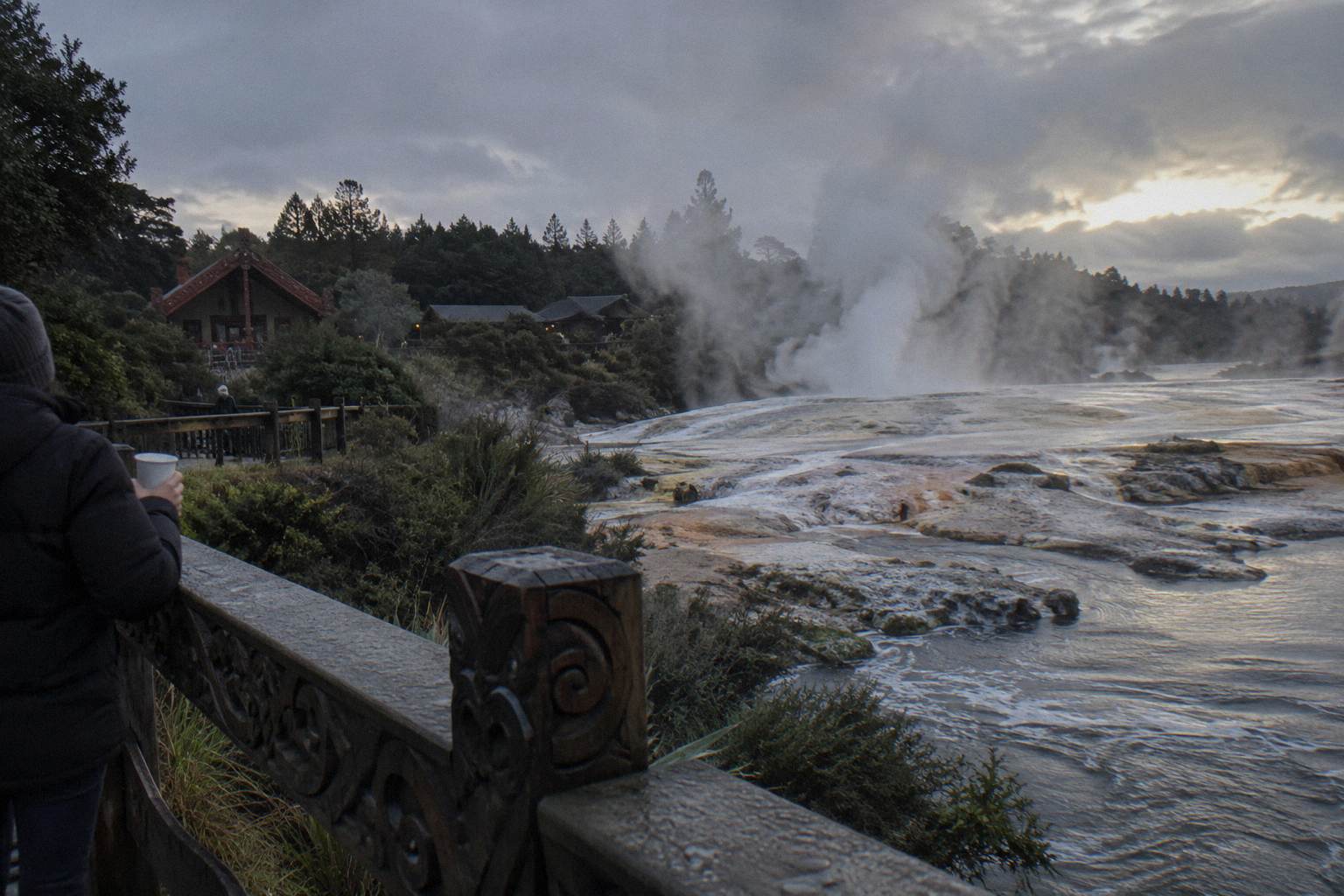
Te Puia's Te Pō evening starts from 5:30pm, runs about 2.5 hours, and combines a 45-minute performance inside the carved meeting house Te Aronui a Rua, hot chocolate on the geyser terrace, and a hāngī buffet dinner in the Pātaka Kai Restaurant and Bar. Dress guidance is not stated; the deciding factor is the terrace stop, so take a warm layer for standing outdoors after sunset near geothermal steam.
The evening's structure is the whole clothing brief. The performance and the dinner are indoors, sheltered and seated. The hot chocolate on the geyser terrace is not, and an evening terrace stop beside steaming ground in Rotorua, which sits at elevation and cools fast after dark, is a place you want a jacket in every season. The operator's price is NZD 203, and dinner sittings run at 5:30pm and 7:15pm. There is no hotel transfer stated for Te Pō; the operator names the City Ride bus every 30 minutes until 6PM, Uber and taxi, and free parking exists on site, which the site covers in more depth in its guide to the Te Puia evening hāngī and concert.
Two house rules from the operator shape the evening more than clothing does: the site is cashless, and you must check in 15 minutes early or the ticket is forfeited. Neither belongs in a wardrobe, but both belong in your planning, and arriving early is easiest in shoes you can walk a car park and forecourt in without thinking about. The wider site, which the operator describes as kaitiaki of the Whakarewarewa Geothermal Valley, hosts the New Zealand Māori Arts and Crafts Institute and a Kiwi Conservation Centre by day; those daytime facts do not change the evening dress question, and Te Puia's dietary options are likewise not stated, so raise any food needs at booking rather than on the night.
The Te Pō Combo, from 4pm daily, adds a 90-minute guided valley tour before the dinner and performance and runs about 4 to 4.5 hours at NZD 290, the operator's price, with the operator calling it its most popular night experience. The tour comes first and covers geothermal ground, so the combo asks more of your footwear than the dinner alone: the walking shoes that were optional at 5:30pm become the sensible choice at 4pm. That is the operator's programme structure speaking, not a stated dress rule, and the distinction matters when you pack.
What Should You Pack For Each Season?
Pack warm layers, a waterproof jacket and closed walking shoes for winter evenings, and a light layer, a hat and the same shoes for summer evenings, following Mitai's published seasonal guidance and extending it by sense to the forest and terrace settings of the other venues. Summer evenings still cool after dark in Rotorua, so a layer you can remove beats arriving with nothing to add. The table below maps the seasons to what the operators state about each evening.
| Season | Te Pā Tū evening | Mitai dress guidance (operator) | Sensible base layering |
|---|---|---|---|
| Summer (October to April) | Tū Te Rā, about 3.5 hours, forest amphitheatre and torchlight to the feast | A hat in summer; comfortable clothing and walking shoes | Light warm layer plus a jacket for after sunset |
| Winter (May to September) | Tū Te Ihi, about 3 hours, Ahi Tuku fire ceremony welcome outdoors | Warm clothing in winter; jacket when raining | Full warm layers, coat, closed shoes |
| Rain, any season | Torchlit and outdoor elements continue; umbrellas limited at Mitai | A jacket when raining; umbrellas limited | Waterproof jacket as the outer layer |
Te Pā Tū's seasons also answer the "which evening suits my wardrobe and my calendar" question in reverse, because the two programmes differ in length as well as content: about 3.5 hours in summer against about 3 hours in winter, while the operator's homepage speaks more loosely of four hours of celebration and feasting. Booking windows and season timing are covered fully in the guide to the best time of year for a Māori hāngī evening, so the point here is only the clothing consequence: the longer summer evening spends more of its runtime outdoors in daylight fading to dark, while the shorter winter evening concentrates its outdoor moments around fire, which is warm to stand near and cold to walk away from.
Do Children And Accessibility Change What You Wear?
Children need the same footwear logic as adults: Mitai's bush walk and Te Pā Tū's torchlit paths both reward closed shoes, Mitai notes highchairs are limited, and its child price covers ages 4 to 13 while Te Puia's booking page says under 4s are free. For accessibility, Te Pā Tū's winter page states the venue is wheelchair and buggy accessible, and Mitai notes some wheelchair limits on its forest walk, so confirm mobility details with the operator.
The child-related facts that touch clothing are mostly about comfort over a long evening. Te Pā Tū welcomes children at NZD 125 in summer and NZD 115 in winter, with no minimum child age published. Mitai's dinner price applies from age 14, and its practicalities list mentions limited highchairs and limited umbrellas, both worth knowing if you are dressing small people for rain. Practical tips for families are gathered in the guide to a Māori cultural evening with kids, including what each operator states about ages and pricing.
| Practicality | Mitai (operator) | Te Pā Tū (operator) | Te Puia (operator) |
|---|---|---|---|
| Footwear-relevant terrain | Evening bush walk to the old fortified village site | Forest pā, torchlight to the feast | Geyser terrace stop after dark |
| Umbrellas | Limited | Not stated; ask the operator | Not stated; ask the operator |
| Wheelchair access | Some limits on the forest walk | Wheelchair and buggy accessible (winter page) | Free parking, cashless site stated |
| Child pricing | NZD 115.74, ages 4 to 13 | NZD 125 summer, NZD 115 winter | Under 4 free per the booking page |
The pattern across that table is that Mitai publishes the most practical detail, Te Pā Tū publishes the seasons and the access statement, and Te Puia publishes timing and house rules. Where a cell is not stated, the answer is a quick question to the operator at booking rather than a guess. Mitai can be reached on +64 7 343 9132 or reservation@mitai.co.nz.
A final reference table pulls the evening fundamentals together, because duration and transport decide how long your outfit has to work and whether you can retrieve a coat before departure.
| Evening | Duration (operator) | Adult price (operator, NZD) | Transport (operator) |
|---|---|---|---|
| Te Pā Tū Tū Te Rā (summer) | About 3.5 hours | 290 | Return coach from central Rotorua included |
| Te Pā Tū Tū Te Ihi (winter) | About 3 hours | 280 | Return coach from central Rotorua included |
| Mitai Authentic Hāngī Dinner | About 3 hours | 188.34 | Limited complimentary transfers from registered accommodation, must be booked |
| Te Puia Te Pō | About 2.5 hours | 203 | None stated; City Ride bus, Uber or taxi named |
Common Mistakes When Choosing Your Outfit
The recurring mistakes are dressing for a restaurant rather than a village, trusting a single warm layer for a forest or terrace after dark, wearing shoes that cannot handle an unlit track, assuming umbrellas will be available, and treating no published dress code as permission to skip the weather check. Every one of them is avoidable with Mitai's stated guidance plus a look at the forecast.
The first mistake deserves unpacking because it drives the others. People hear "dinner and concert" and picture an indoor venue with a cloakroom. The reality across all three evenings is at least one outdoor movement after dark: Mitai's bush walk, Te Pā Tū's torchlight to the wharekai, Te Puia's geyser terrace. None of the operators states a dress code, and that absence is sometimes misread as "anything goes", when it actually means the operator is leaving a weather-dependent judgement to you.
The second mistake is seasonal overconfidence. Rotorua summers are warm by day, but a summer evening in a forest amphitheatre or on a terrace drops fast, which is exactly why Mitai's guidance pairs a summer hat with the same comfortable-shoes advice it gives for winter. The third is footwear: the bush walk and torchlit paths are the two moments where sandals or new leather soles announce themselves. The fourth is rain planning that depends on borrowed umbrellas, which Mitai states are limited. The fifth is forgetting that evenings end late enough that a cold walk back to a car or bus stop follows the farewell, so the jacket earns its place on the way out as well as during. And the last is the cancellation trap, which is a wardrobe-adjacent mistake: Te Pā Tū's own terms allow a 100% refund only if cancelled two days before by 12.00pm, and Te Puia requires amendment or cancellation at least 48 hours before. Outfit indecision on the day cannot be fixed by a late free rebooking.
Does Photography Or Weather Gear Need Special Attention?
Mitai states photography is welcomed in designated areas and umbrellas are limited; the other operators state no photography rules, so ask on arrival where photos are appropriate. Weather gear should centre on a waterproof jacket rather than an umbrella, and in winter on layers you can shed indoors at the performance and dinner and put back on for the outdoor moments either side.
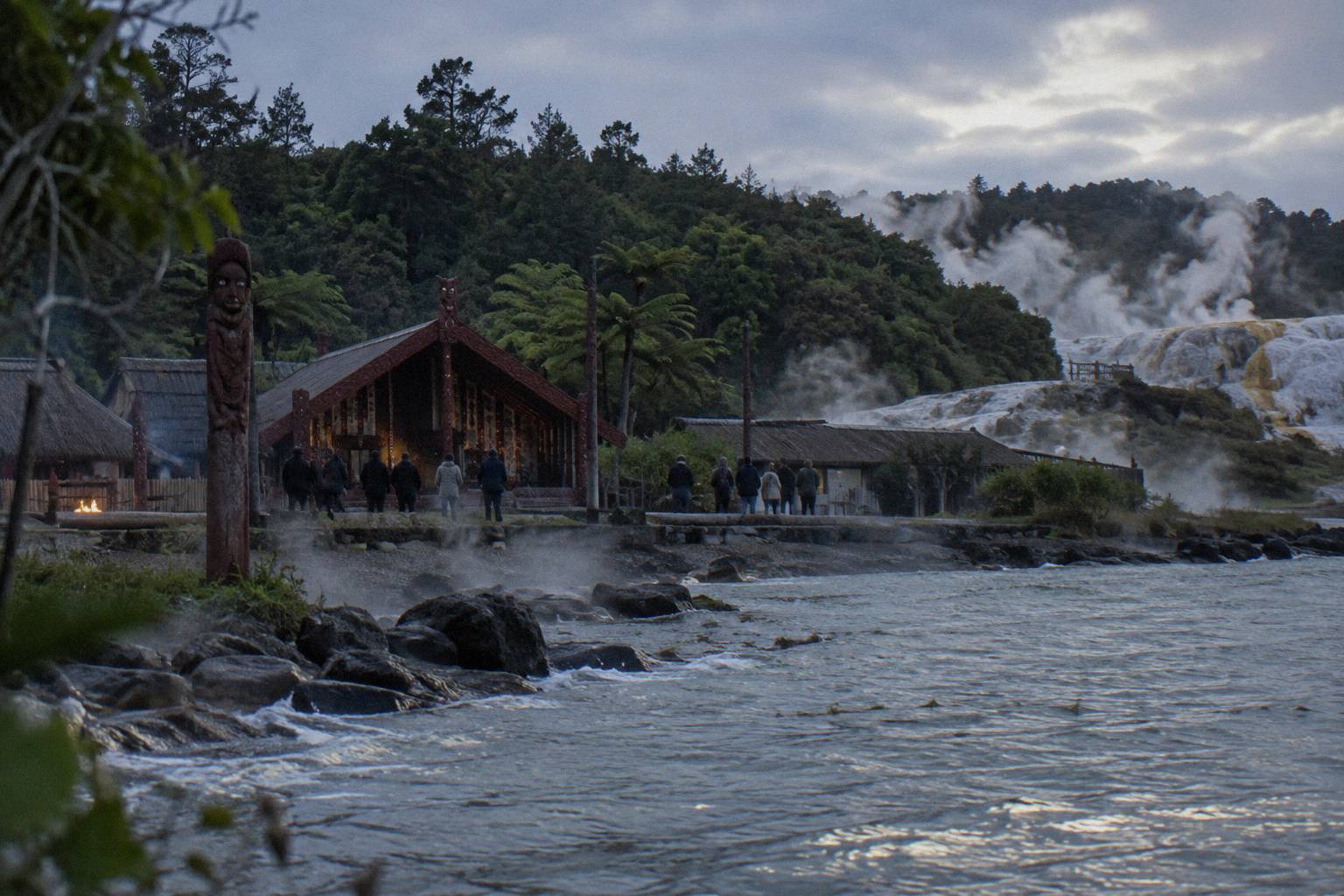
The photography point is worth one honest sentence rather than a rulebook: because no evening operator beyond Mitai publishes photography guidance, the respectful default is to follow the host's lead on the night. That is not a cultural protocol stated in any operator material, it is simply the practical reading of a gap, and the operators' own pages, such as Te Puia's FAQ, are the place to check current practicalities before you travel.
Weather gear interacts with each venue's structure differently. At Mitai the jacket carries you through the bush walk and back. At Te Pā Tū it carries you through the welcome and the torchlit walk, with the wharekai feast as the warm interval. At Te Puia the performance and dinner are the warm intervals and the terrace is the exposed one. In every case the jacket does double duty as rain protection and warmth, which is why it outranks the umbrella in the packing order at every venue on this page.
With outfits settled, the evening itself is the thing. These three dinners cover the range Rotorua offers: the forest pā feast, the village hāngī and bush walk, and the geothermal terrace night, at the operators' prices of NZD 290 or NZD 280 at Te Pā Tū by season, NZD 188.34 at Mitai, and NZD 203 at Te Puia.
Common Questions About What To Wear To A Māori Cultural Evening
Is There A Dress Code At A Māori Cultural Evening?
No operator states a dress code. Mitai publishes comfort guidance, comfortable clothing and walking shoes, warm clothing in winter, a hat in summer and a jacket in rain, and the other evening operators publish nothing on dress. Comfortable, weather-ready clothing is the practical standard.
What Shoes Should I Wear To Mitai Māori Village?
Mitai's own guidance is comfortable walking shoes, with comfortable shoes for the bush walk specifically. The walk goes to the old fortified village site and the sacred spring Te Puna Tapu o Tūhoe, and the operator notes some wheelchair limits on it, so closed shoes with grip are the sensible choice.
What Should I Wear To Te Pā Tū?
Te Pā Tū does not publish dress guidance, so ask the operator at booking. Both seasonal evenings include outdoor elements in a forest pā: torchlight to the feast in summer and an Ahi Tuku fire ceremony welcome in winter, so warm layers and closed shoes serve both seasons.
Will I Be Outside After Dark At These Evenings?
Yes, at all three. Mitai includes an evening bush walk, Te Pā Tū moves between the amphitheatre, the hāngī area and the wharekai, and Te Puia's Te Pō includes hot chocolate on the geyser terrace. A warm layer you can remove indoors covers all three.
Can I Bring An Umbrella?
Mitai states umbrellas are limited on site, which makes a waterproof jacket the better plan there. The other operators do not state an umbrella policy; a jacket remains the safest outer layer at every venue.
Is Photography Allowed?
Mitai states photography is welcomed in designated areas. The other operators state no photography rules, so follow the host's direction on the night and ask staff where photography is appropriate.