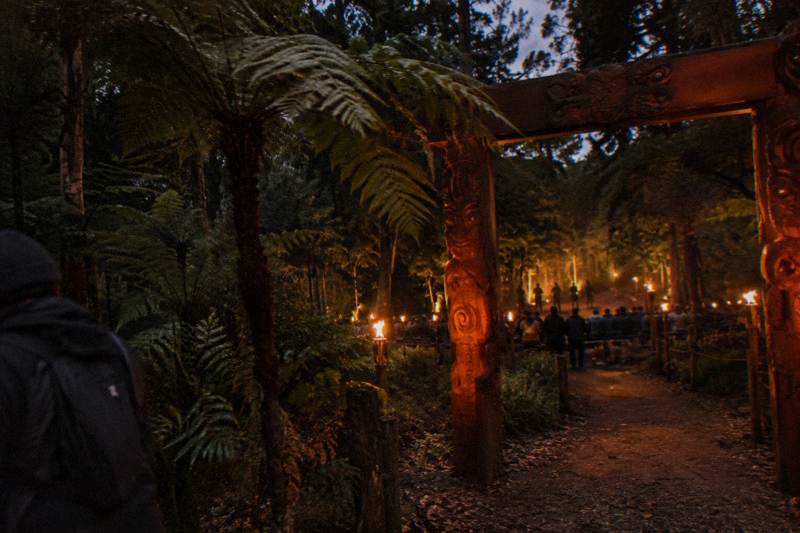
Kapa Haka At A Rotorua Concert Evening: Songs, Poi And Haka
Kapa haka is the performance heart of every Māori cultural dinner evening in Rotorua. Here is exactly what each of the three operators says its evening contains, what it costs, and how the concert evenings differ.
Short answer
Kapa haka appears at all three Rotorua dinner evenings. Te Puia's Te Pō runs a 45-minute performance of song and dance in a carved meeting house, Te Pā Tū performs kapahaka in its forest amphitheatre Tūāpapa in summer and across service in winter, and Mitai lists Pōwhiri, Wero, Waiata, Mōteatea, Poi and Haka. Prices run from NZD 188.34 to NZD 290 per adult.
Kapa haka is the performed art of song, action and rhythm that sits at the centre of every Māori cultural dinner evening in Rotorua. The word describes group performance, and the three operators that run evening dinners in the city each present it differently: one inside a carved meeting house, one in a forest amphitheatre, and one as part of a full village evening beside a stream. This page sets out what each operator says its evening actually contains, so a reader weighing the options can compare like with like rather than rely on brochures.
Everything below comes from the operators' own pages. Where an operator does not publish something, a start time, a child price, a cancellation policy, that is stated plainly once, and the rest of the page stays with what is verifiable. The cultural content is reported as the operators describe it, in their own framing, because that is the honest way to write about living performance traditions.
What Kapa Haka Looks Like At A Rotorua Evening
At a Rotorua dinner evening, kapa haka means a performed programme of song and dance that the operators themselves describe as the cultural core of the night. Te Puia's Te Pō includes a 45-minute performance in a carved meeting house, Te Pā Tū performs kapahaka in its forest amphitheatre in summer and across service in winter, and Mitai lists six named performance elements from Pōwhiri through to Haka. Each is a dinner evening, not a standalone concert.
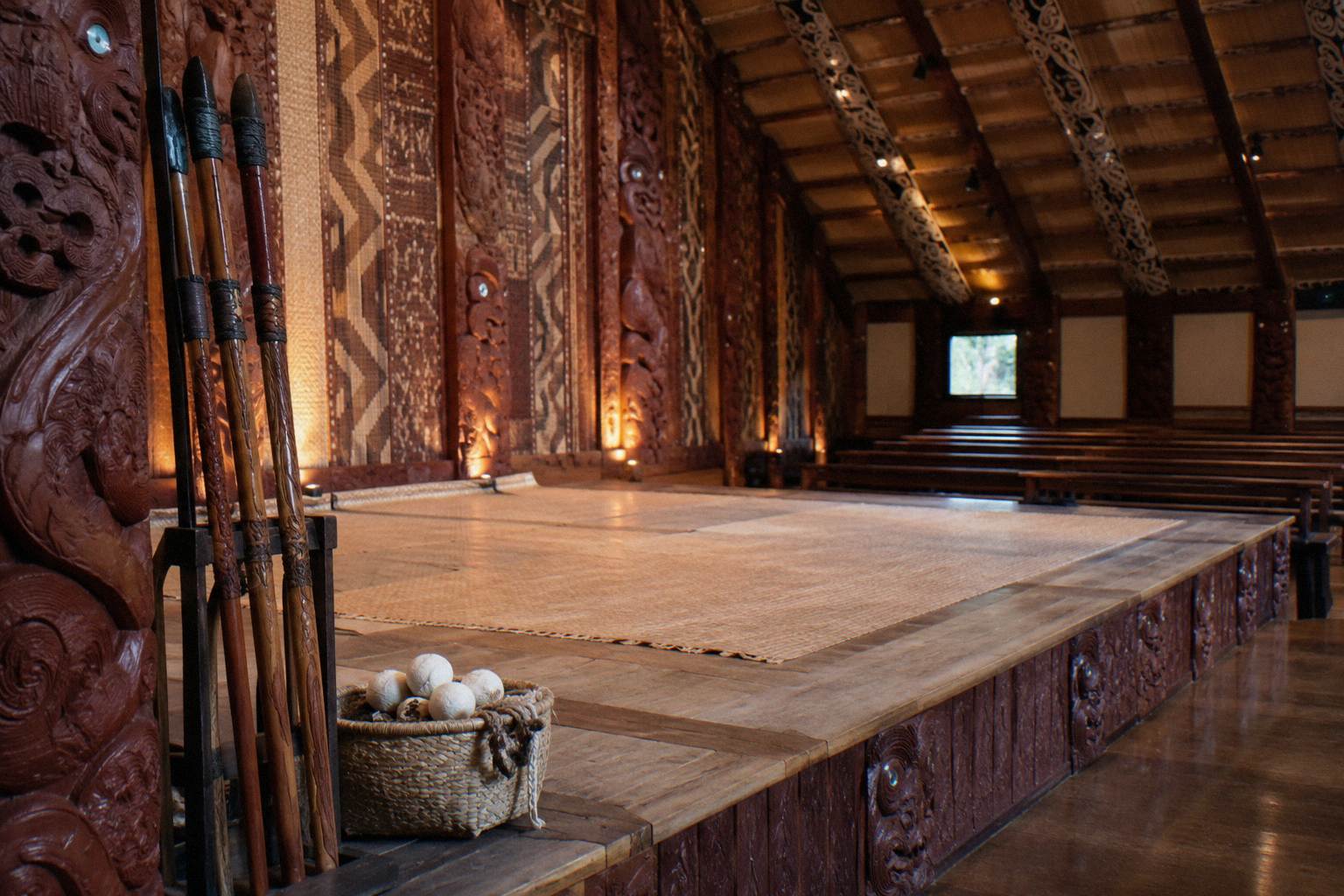
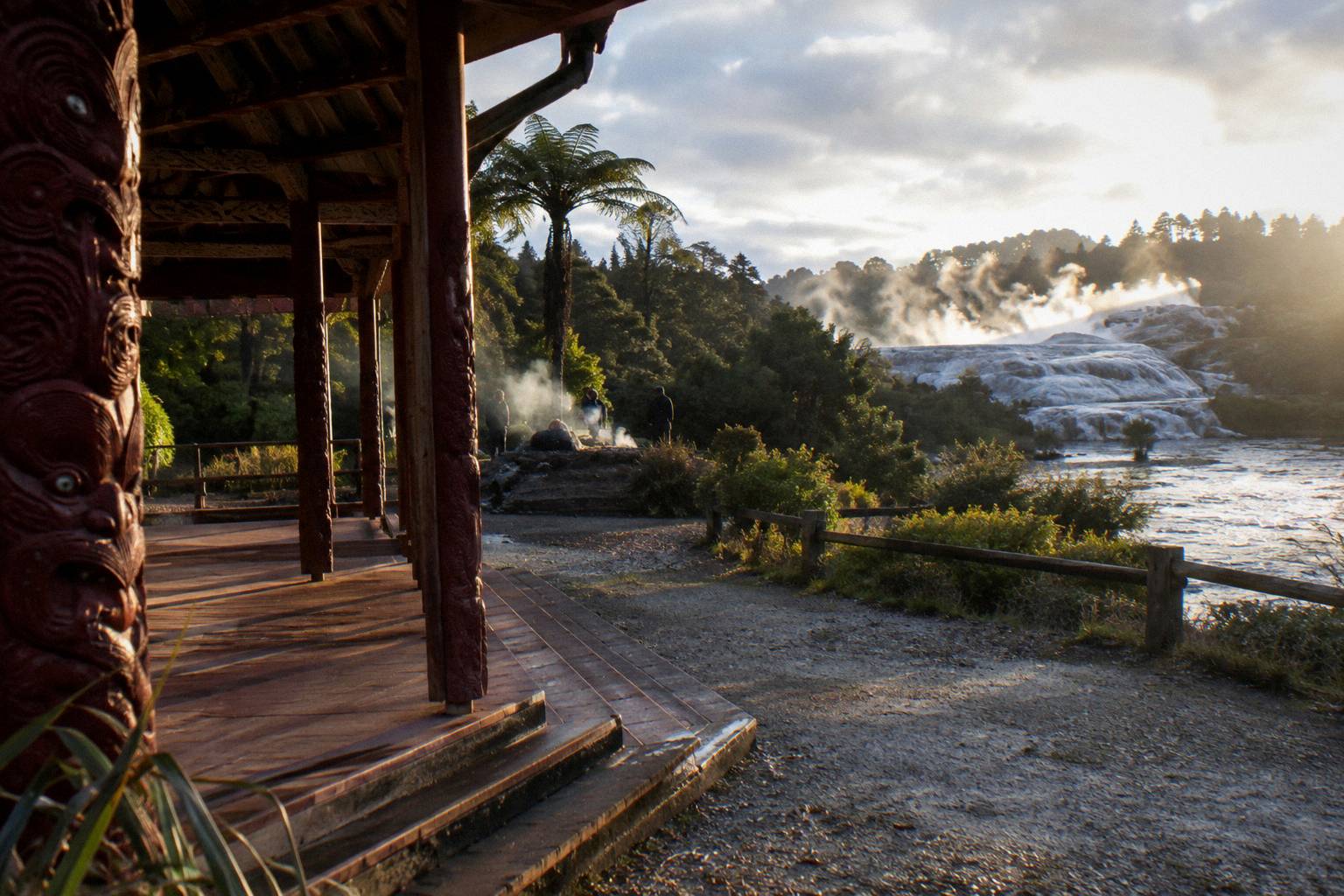
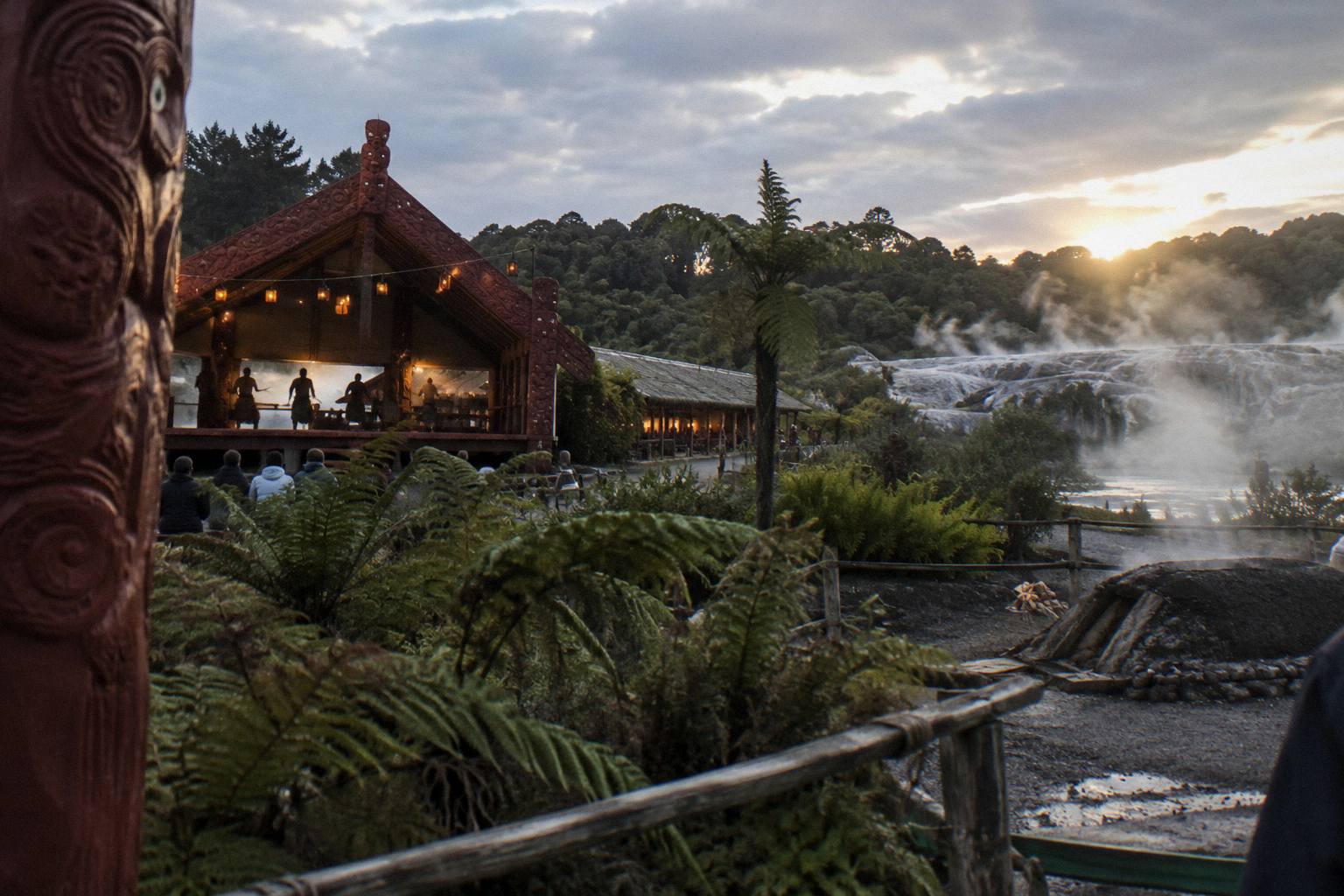
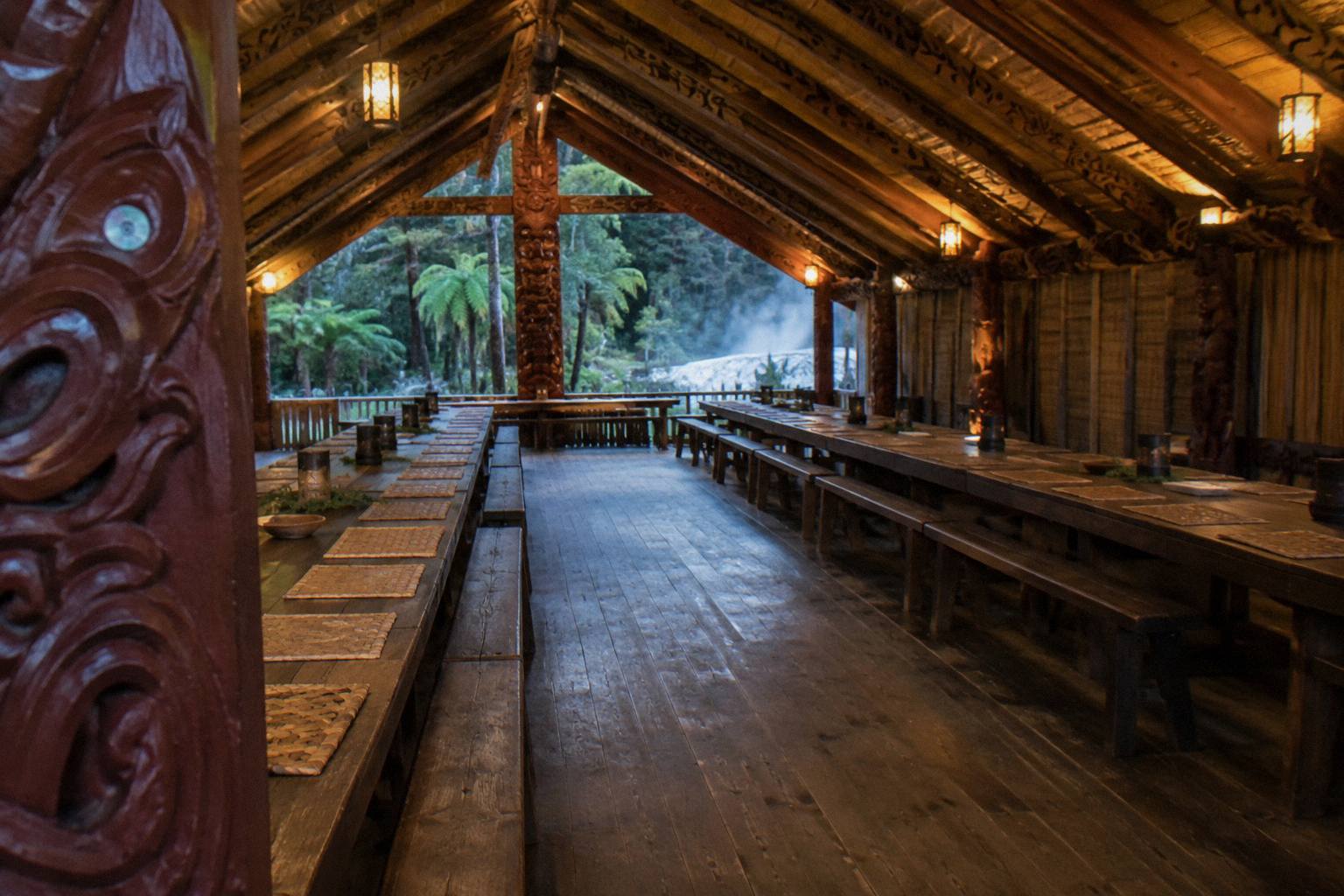
The important thing to understand before booking is that kapa haka is not one fixed show copied between venues. Each operator publishes its own programme, and the differences matter more than the similarities. Te Puia's evening, described on the operator's night experiences page, centres on a 45-minute performance of song and dance in the carved meeting house Te Aronui a Rua, with hot chocolate on the geyser terrace and a hāngī buffet dinner in the Pātaka Kai Restaurant and Bar.
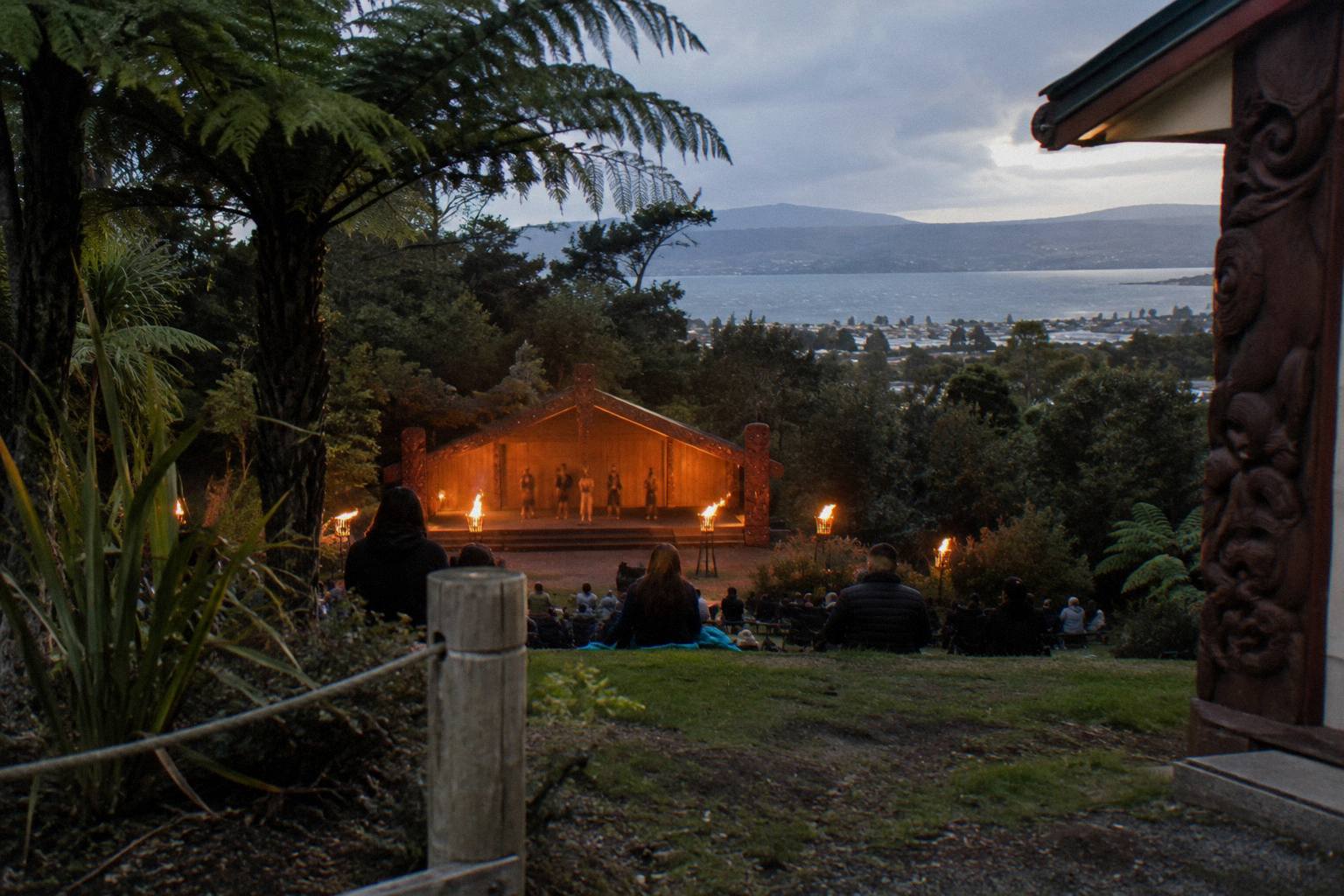
Te Pā Tū's structure depends on the season. In summer, the Tū Te Rā evening, the operator says kapahaka is performed in the forest amphitheatre Tūāpapa, and stories are relayed through haka, song and drama. In winter, Tū Te Ihi, the operator lists fireside wānanga (conversation, history, games, instruments, traditions) alongside kapahaka. Mitai's listing names its performance elements directly: Pōwhiri, Wero, Waiata, Mōteatea, Poi and Haka, and adds question time after dinner.
A reader who wants a deeper look at the haka specifically can read the site's page on haka performance at a cultural dinner, which covers the same operator-stated ground for that single element. For the wider question of which evenings suit families, Māori cultural evenings with kids carries the child prices and age facts.
Where Each Evening Performs Its Kapa Haka
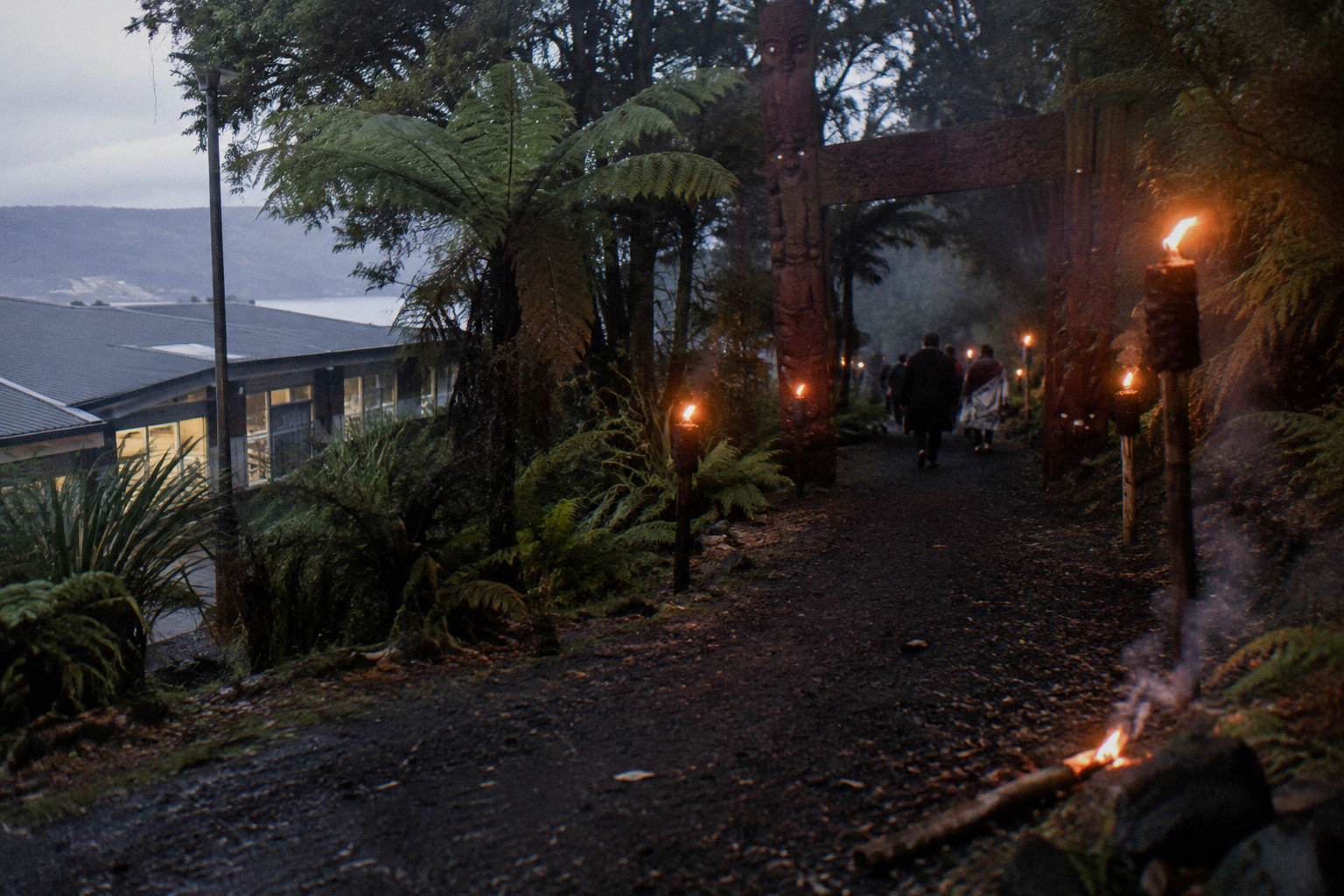
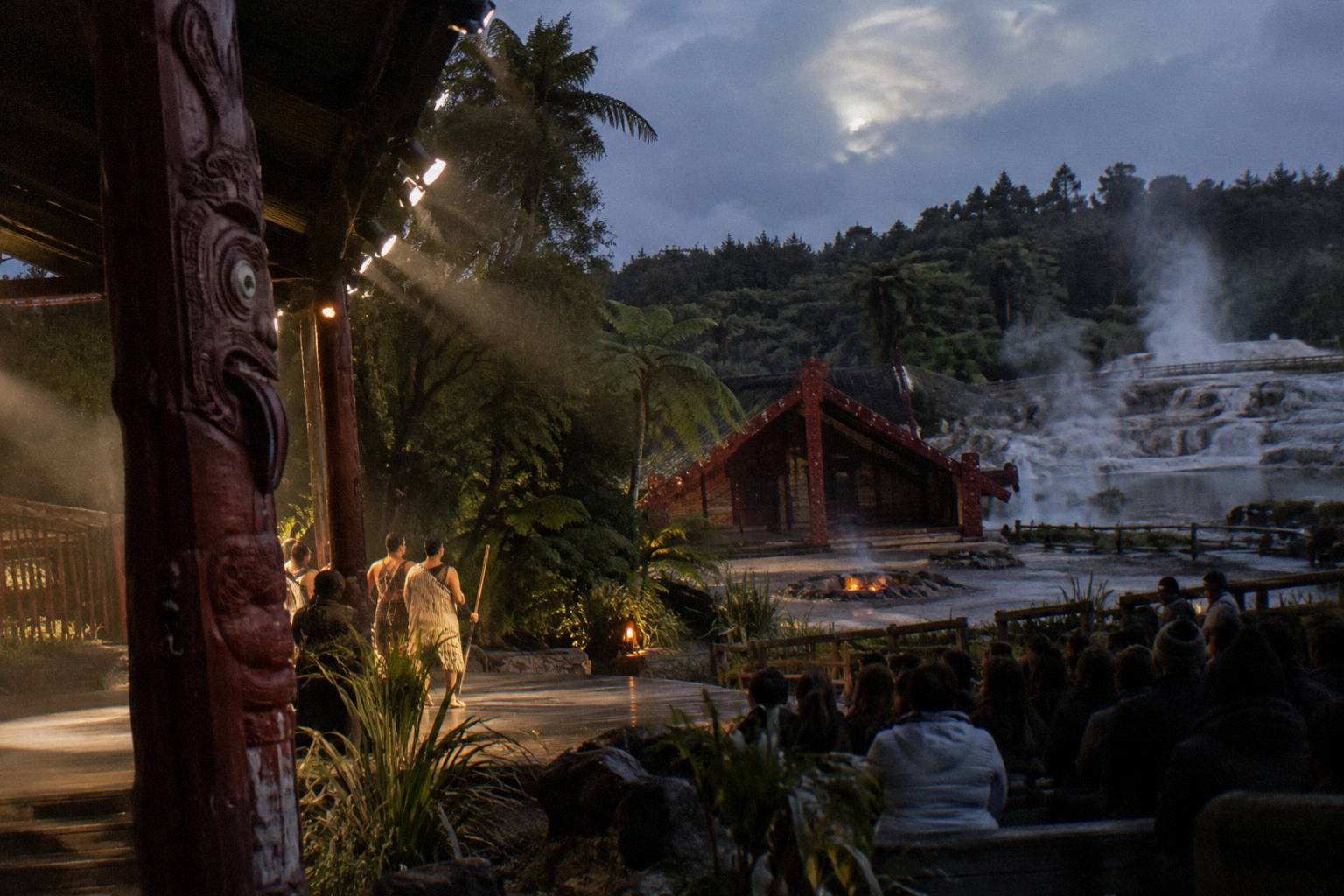
The three dinner evenings perform in three genuinely different settings: Te Puia inside the carved meeting house Te Aronui a Rua, Te Pā Tū in a forest pā reached by coach from central Rotorua, and Mitai at its village at 196 Fairy Springs Road beside the Wai-o-Whiro Stream. No two share a venue, and the setting shapes the whole night, from arrival to the moment the performance begins.
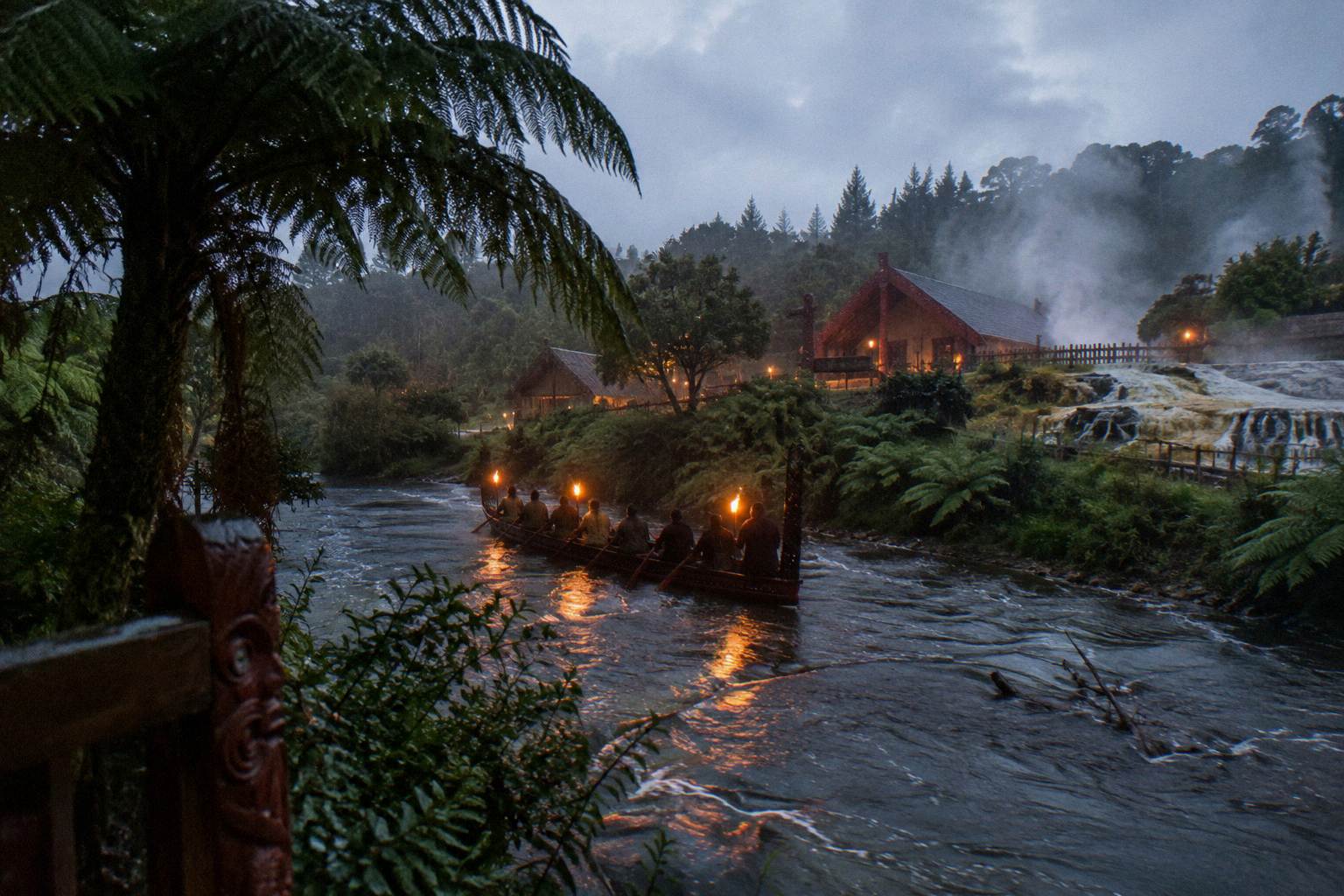
The setting question is not cosmetic. Te Pā Tū's village is a forest pā set in tawa forest a short coach ride south of central Rotorua, and the operator does not publish a street address for it, so guests arrive by the included coach rather than self-driving. Mitai publishes a street address and free on-site parking, which suits self-drivers. Te Puia sits at 20 Hemo Road in Whakarewarewa with free parking and a cashless site, and the operator names the City Ride bus, Uber and taxi as arrival options rather than a hotel transfer.
| Evening | Venue (per the operator) | Performance setting | Arrival |
|---|---|---|---|
| Te Pā Tū (Tū Te Rā / Tū Te Ihi) | Forest pā in tawa forest south of central Rotorua; address not published | Forest amphitheatre Tūāpapa (summer); kapahaka shared across service (winter) | Return coach from central Rotorua included |
| Mitai Māori Village | 196 Fairy Springs Road, Fairy Springs, Rotorua 3015 | Cultural performance listed as Pōwhiri, Wero, Waiata, Mōteatea, Poi and Haka | Free on-site parking; limited complimentary transfers from registered accommodation, must be booked |
| Te Puia Te Pō | 20 Hemo Road, Whakarewarewa | 45-minute performance in the carved meeting house Te Aronui a Rua | Self-arrival; free parking; bus, Uber or taxi per the operator |
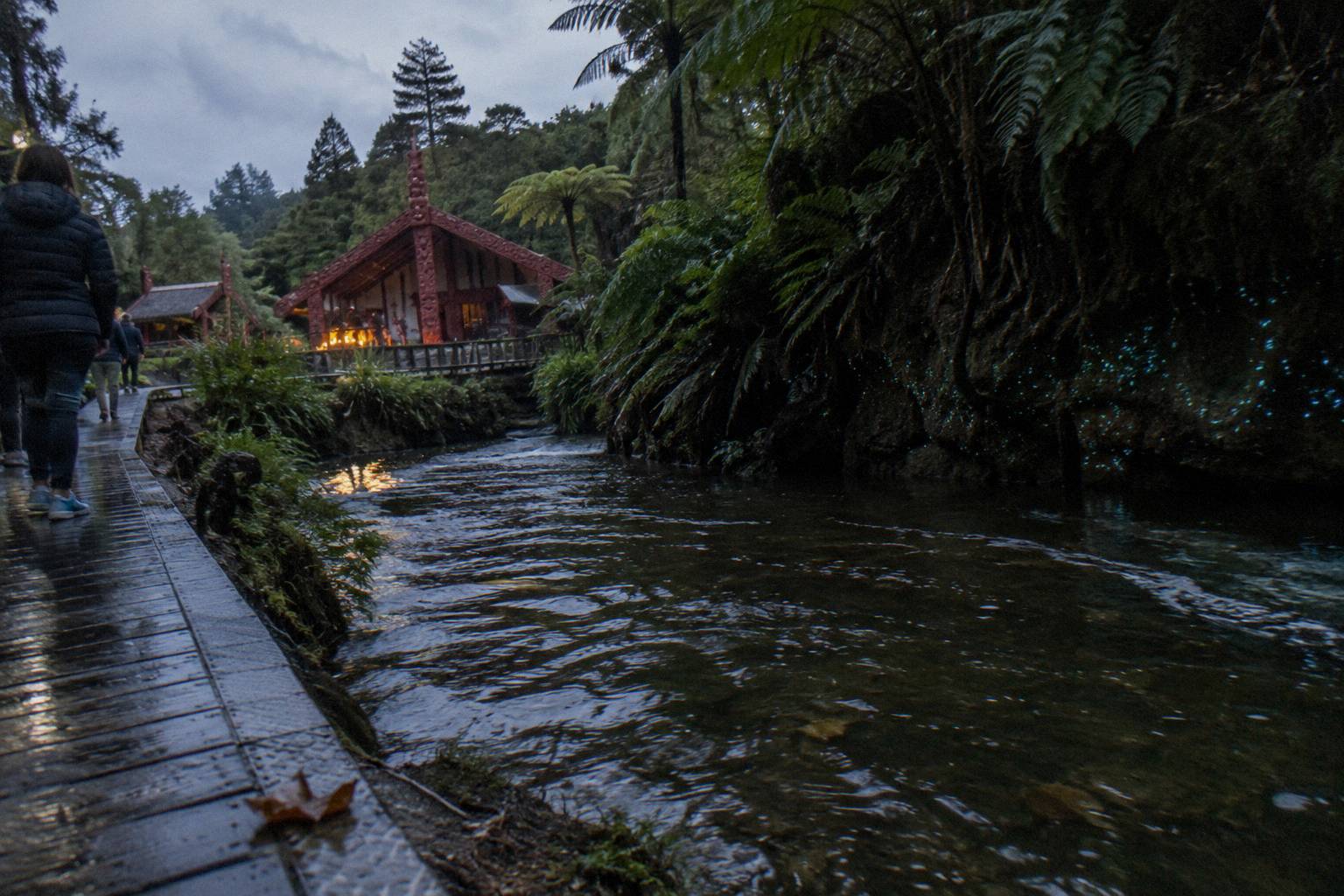
The depth of the evening also differs. Mitai's listing includes warriors paddling a waka down the Wai-o-Whiro Stream and an evening bush walk to the old fortified village site and the sacred spring Te Puna Tapu o Tūhoe, with glow worms, so the performance is one part of a moving village experience. Te Puia's evening is the most compact at about 2.5 hours, which suits visitors who want the performance and dinner without a longer night out.
For a reader comparing the three end to end, the site's overview of Rotorua Māori village evenings carries the fuller comparison, and the card band below shows the three bookable evenings side by side.
Te Puia Te Pō: The 45-Minute Concert In A Carved Meeting House
Te Puia's Te Pō evening centers on a 45-minute Māori cultural performance of song and dance in the carved meeting house Te Aronui a Rua. The roughly 2.5-hour experience runs from 5:30pm, with dinner sittings at 5:30pm and 7:15pm, and also includes hot chocolate on the geyser terrace and a hāngī buffet dinner; tickets are NZD 203, under 4s are free, and a child price is not stated.
The performance venue is what distinguishes this evening. A carved meeting house, Te Aronui a Rua, is the setting the operator names for the 45 minutes of song and dance, and the evening then moves to the geyser terrace and the restaurant. Because the whole night runs about 2.5 hours, it is the option that fits an evening with an early start the next morning, or a day already full of Rotorua activities.
Te Puia is iwi owned under the NZMACI Vesting Act 2020 and describes itself as kaitiaki, guardian, of the Whakarewarewa Geothermal Valley. It also hosts the New Zealand Māori Arts and Crafts Institute and a Kiwi Conservation Centre, though the evening programme does not include those daytime attractions. The practical rules the operator publishes matter here: check in 15 minutes early or the ticket is forfeited, the site is cashless, and cancelling or amending needs at least 48 hours' notice (72 hours for groups of 10 or more) for a refund.
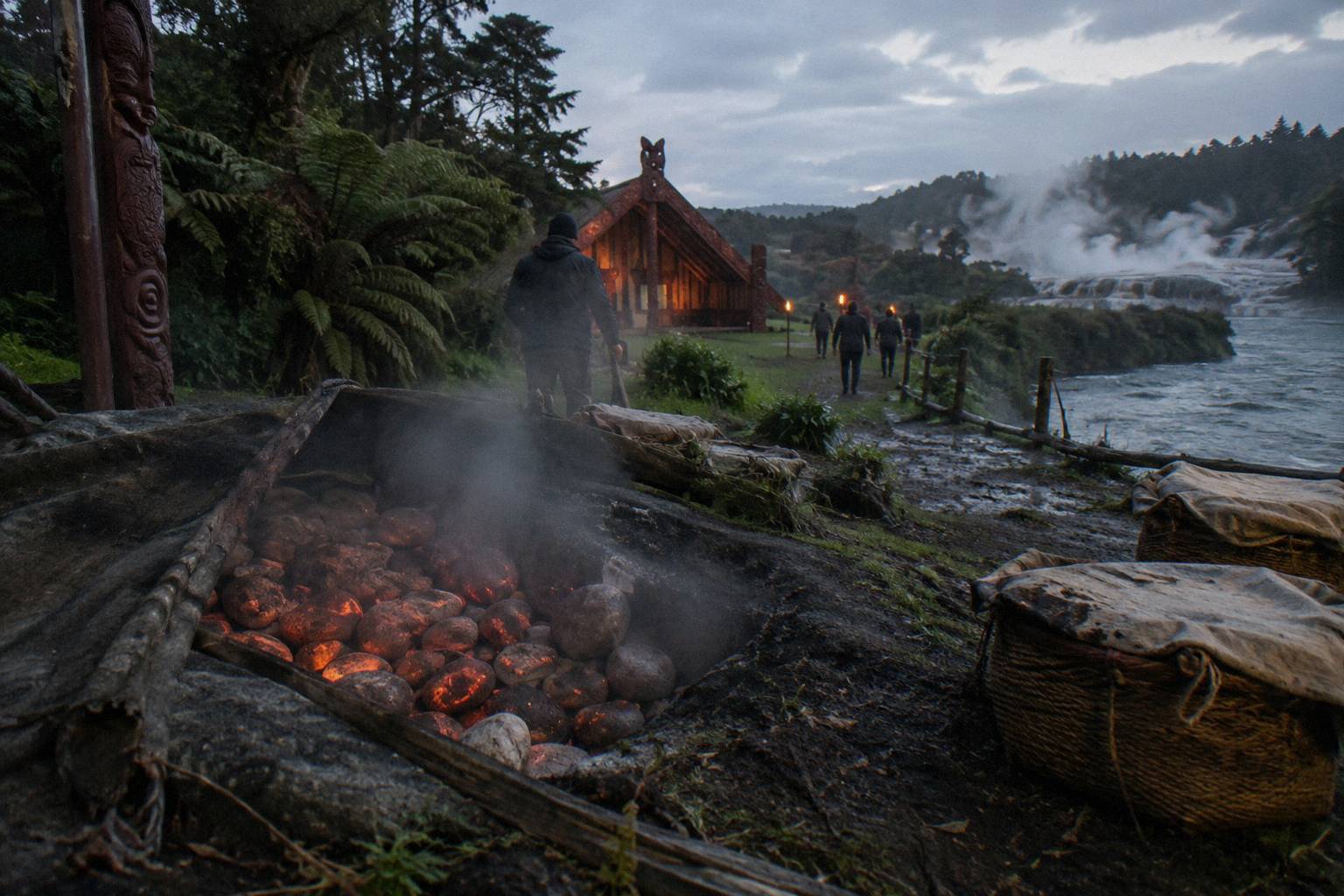
The Te Pō evening is the tour page for Te Puia's evening hāngī and concert on this site; its booking page shows a rating of 4.7 out of 5. For readers ready to look at dates, Check availability at the operator's booking page.
A second Te Puia option extends the same evening. The Te Pō Combo, from 4pm daily, adds a 90-minute guided tour of the geothermal valley before the dinner and performance, running about 4 to 4.5 hours at an operator price of NZD 290. The operator calls it, in its own words, "our most popular night experience". No rating is stated for the combo and no child price is stated; ask the operator.
Te Pā Tū: Kapa Haka In The Forest Amphitheatre Tūāpapa
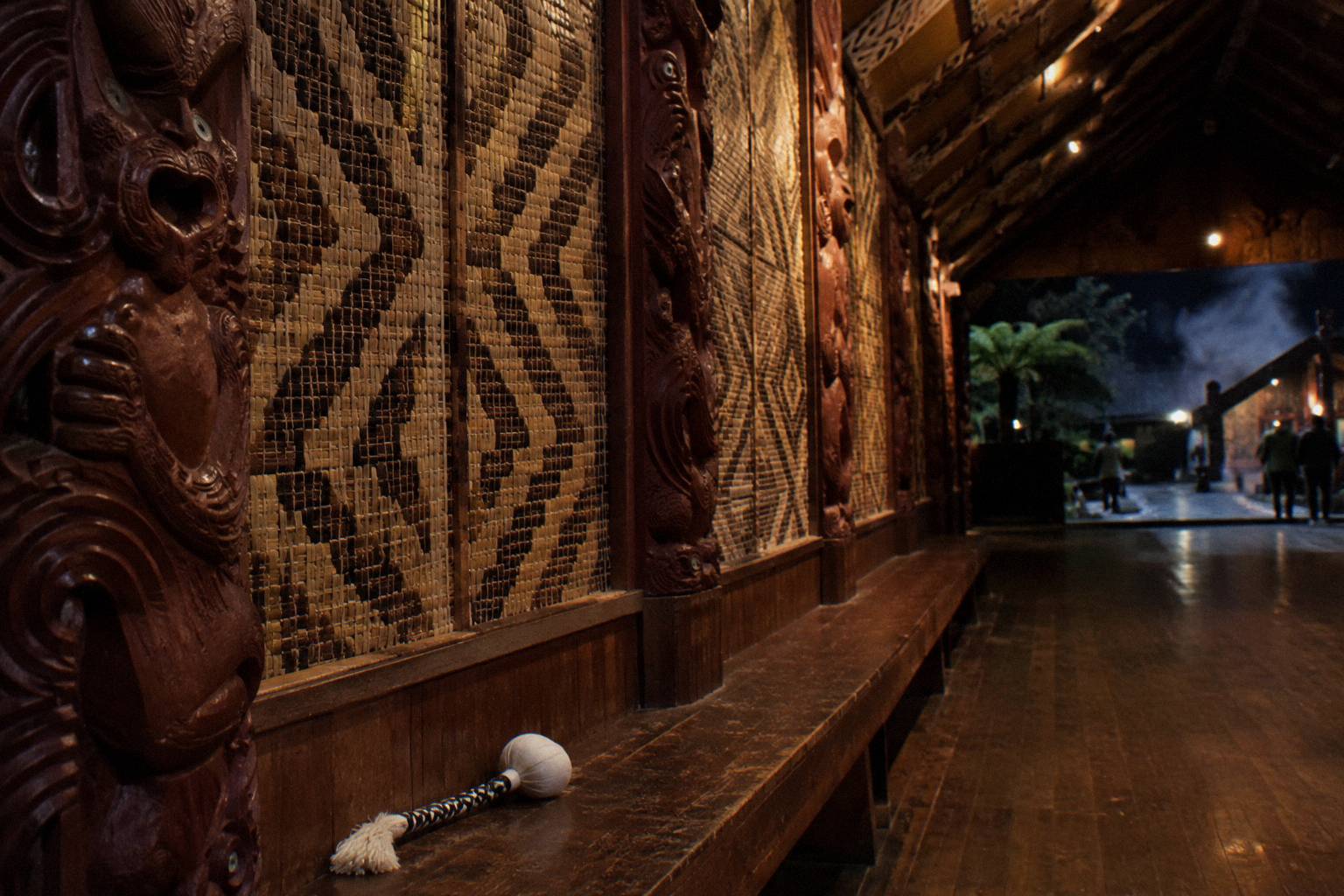
Te Pā Tū is the most immersive and the priciest of the three evenings, an operator price of NZD 290 per adult in summer (Tū Te Rā) and NZD 280 in winter (Tū Te Ihi), running about 3 to 3.5 hours depending on season. Kapahaka is performed in the forest amphitheatre Tūāpapa in summer and shared across service in winter, and return coach transport from central Rotorua is included.
Te Pā Tū runs two seasonal evenings, and the kapahaka sits differently in each. The summer evening, Tū Te Rā (October to April, 3.5 hours), opens with a haka pōhiri, a cultural welcome, on arrival, then kapahaka in the amphitheatre, forest canapés the operator calls kai horotai, the hāngī lifting and spit roast viewing, a three-course seasonal feast in the wharekai, and a complimentary digestif and rongoā herbal tea. The operator frames the summer night as celebrating the harvest and exploring, in its words, "concepts, rituals, and stories of ancient Māori warfare and peace". The summer detail is on the operator's summer evening page.
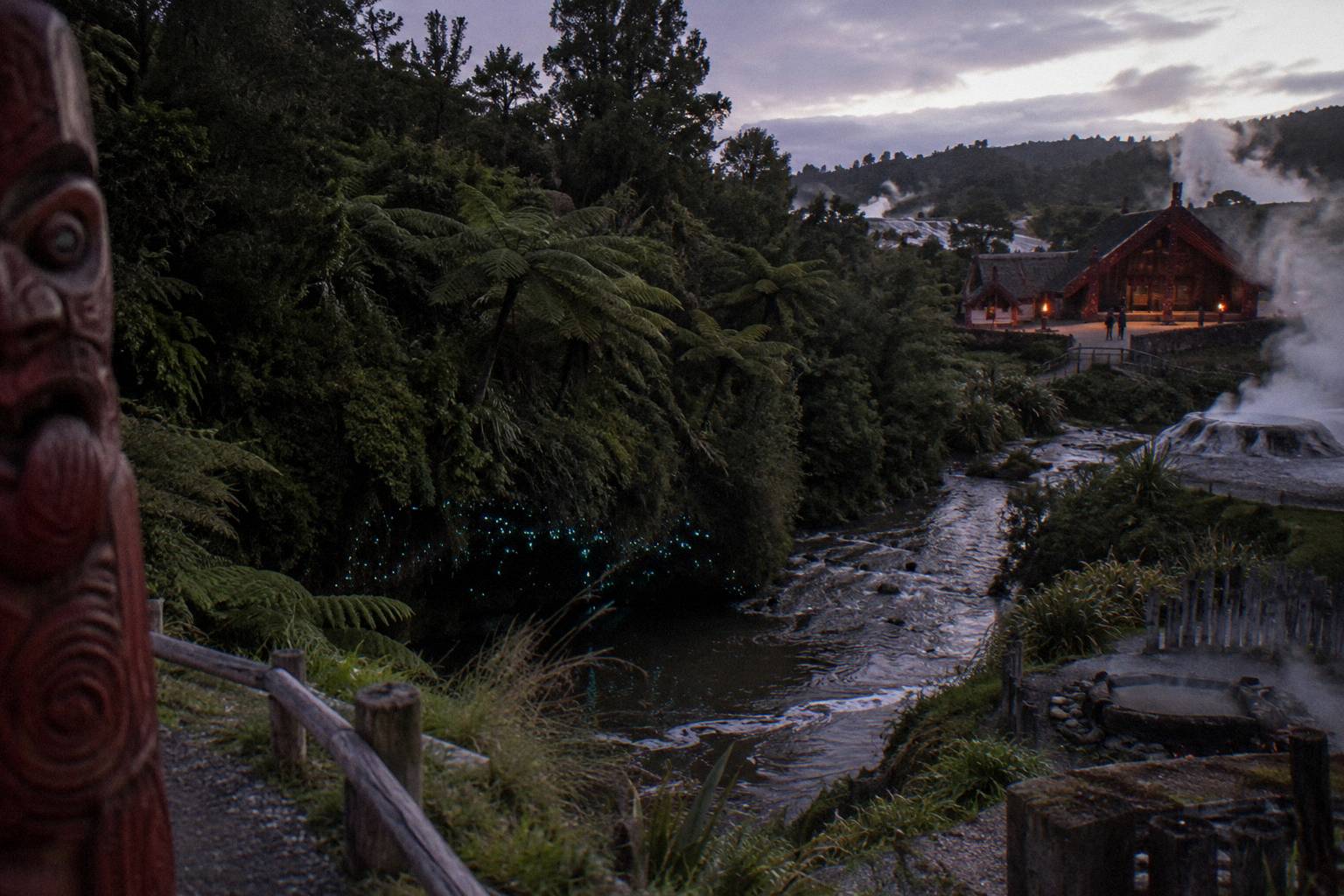
The winter evening, Tū Te Ihi (May to September, 3 hours), replaces the amphitheatre structure with an Ahi Tuku fire ceremony welcome, fireside wānanga described as conversation, history, games, instruments and traditions, kapahaka shared across service, and a Matariki-inspired Māori fusion feast served family style with traditional in-ground hāngī, lamb and vegetables. The operator sets Tū Te Ihi in 1800s Aotearoa, between the 1840 Treaty of Waitangi and the 1886 Mt Tarawera eruption, which is the operator's own framing.
Te Pā Tū is owned and operated by Tauhara North No.2 Trust, and it is the renamed Tamaki Māori Village experience, a point worth knowing because older reviews and search results still use the Tamaki name. The operator lists New Zealand Tourism Awards 2023 recognition and Qualmark Gold, and its booking page shows a rating of 4.8 out of 5. Its cancellation terms are its own: a 100% refund if cancelled two days before by 12.00pm, 50% one day before by 12.00pm, and none on the day, with booking and bank fees excluded.
The evening start time is not published, so plan the day around the coach rather than a clock time, and ask the operator when booking. For readers deciding between the legacy name and the current one, the site's page on Mitai vs Tamaki vs Te Pā Tū works through that comparison directly.
Mitai: Pōwhiri, Poi And The Named Performance List
Mitai Māori Village names its full performance list openly: Pōwhiri, Wero, Waiata, Mōteatea, Poi and Haka, followed by question time after dinner. The Authentic Hāngi Dinner Experience runs about 3 hours, priced at NZD 188.34 for adults 14 and over and NZD 115.74 for children 4 to 13, with a 4.7 out of 5 rating on its booking page, plus a waka paddle and bush walk.
The Mitai programme, on the operator's hāngi dinner page, is the only one of the three that names each performance element, which makes it the easiest to compare against what a reader imagines kapa haka to be. The operator calls its haka, in its own words, "the fiery Haka Māori war dance". Beyond the performance, the listing includes a welcoming ceremony, the hāngī unveiling, warriors paddling a waka down the Wai-o-Whiro Stream, a full buffet hāngī dinner, and the evening bush walk to the old fortified village site and the sacred spring Te Puna Tapu o Tūhoe, with glow worms along the way.
Mitai describes itself as a family owned and operated business and speaks of "our Te Arawa people". Practical facts from its pages: free on-site parking at 196 Fairy Springs Road, a bar on site with no outside alcohol permitted, highchairs in limited numbers, some wheelchair limits on the forest walk, and umbrellas in limited supply. Complimentary transfers from registered accommodation exist but with limited numbers, must be booked, and close at capacity, so anyone relying on the transfer should book it early.
Two gaps to know about. The dinner start time is not on the public pages; it is set in the booking widget, so ask when reserving. And the operator says it is unable to cater to all dietary needs such as vegan, though some requests could be met, so state dietary needs at booking.
Dress guidance from the operator is the only published clothing advice among the three evenings: comfortable clothing and walking shoes, warm clothing in winter, a hat in summer, a jacket when raining, and photography is welcomed in designated areas. The site's page on what to wear to a Māori cultural evening fills out that planning step.
How Long Each Kapa Haka Evening Runs
Most kapa haka evenings run between roughly two and a half and four and a half hours: Te Puia's Te Pō lasts about 2.5 hours, Mitai about 3 hours, Te Pā Tū 3 to 3.5 hours depending on season, and the Te Pō Combo 4 to 4.5 hours. Te Puia alone publishes exact start times, 5:30pm for Te Pō and 4pm for the combo.
The duration differences are large enough to change an itinerary. A 2.5-hour evening starting at 5:30pm still leaves a reasonably early night, while a 4 to 4.5-hour combo from 4pm runs well into the evening, and Te Pā Tū's coach component adds door-to-door time beyond the stated event length. Families with young children often find the shorter evenings easier, and the child age bands differ: Mitai's child price covers 4 to 13 with adults from 14, Te Pā Tū's child price is NZD 125 summer and NZD 115 winter with no stated minimum age, and Te Puia has under 4s free per the booking page with no older child price stated.
| Evening | Duration (operator) | Start time | Child basis |
|---|---|---|---|
| Te Puia Te Pō | About 2.5 hours | From 5:30pm | Under 4 free; older child price not stated |
| Te Puia Te Pō Combo | About 4 to 4.5 hours | From 4pm daily | Not stated |
| Te Pā Tū Tū Te Rā (summer) | 3.5 hours | Not stated | Child NZD 125; minimum age not stated |
| Te Pā Tū Tū Te Ihi (winter) | 3 hours | Not stated | Child NZD 115; minimum age not stated |
| Mitai Authentic Hāngi Dinner | About 3 hours | Not stated | Child 4 to 13 NZD 115.74; adult from 14 |
One honest wrinkle: Te Pā Tū's own homepage says "four hours of celebration and feasting" while its product pages say 3.5 hours for summer and 3 for winter. The per-season figures are the more specific ones, so treat "about 3 to 3.5 hours" as the working number and expect the longer end in summer.
What A Kapa Haka Evening With Dinner Costs
Adult kapa haka dinner tickets cost NZD 188.34 at Mitai, NZD 203 at Te Puia's Te Pō, NZD 290 at Te Pā Tū in summer (NZD 280 in winter), and NZD 290 for the Te Puia Te Pō Combo, while child tickets run NZD 115.74 at Mitai (ages 4 to 13) and NZD 125 at Te Pā Tū in summer (NZD 115 in winter); these are operator-set prices that can change, so check the terms at checkout.
What the price buys differs more than the numbers suggest. Mitai's price covers the village evening, the performance list, the buffet hāngī dinner and the bush walk, with transfers a limited extra that must be booked. Te Puia's NZD 203 covers the 45-minute performance, hot chocolate on the geyser terrace and the hāngī buffet, but no transfer; the operator names the City Ride bus every 30 minutes until 6PM, Uber and taxi as the ways to arrive. Te Pā Tū's price includes the return coach from central Rotorua, a three-course feast in summer or a family-style fusion feast in winter, and the welcome ceremony, which explains part of the gap to Mitai.
| Evening | Adult (operator price) | Child (operator price) | Dinner style | Transfer |
|---|---|---|---|---|
| Te Puia Te Pō | NZD 203 | Not stated | Hāngī buffet, Pātaka Kai Restaurant and Bar | None stated; bus, Uber, taxi |
| Te Puia Te Pō Combo | NZD 290 | Not stated | Same dinner plus 90-minute valley tour | None stated |
| Te Pā Tū Tū Te Rā | NZD 290 | NZD 125 | Three-course seasonal feast, wharekai | Coach from central Rotorua included |
| Te Pā Tū Tū Te Ihi | NZD 280 | NZD 115 | Matariki-inspired fusion feast, family style | Coach from central Rotorua included |
| Mitai Hāngi Dinner | NZD 188.34 (14+) | NZD 115.74 (4 to 13) | Full buffet hāngī dinner | Limited, from registered accommodation, must be booked |
There are cheaper ways to taste the same cultures without the dinner evening. Whakarewarewa The Living Māori Village runs a daytime cultural performance at 12.30pm, adult NZD 37 and child NZD 5 to 15 NZD 20, with no evening dinner, so it is a daytime alternative rather than a competitor to these nights. Mitai also sells a 1.5-hour Immersive Cultural Village Experience without dinner at NZD 110.48 adult, and a 2-hour hāngī lunch and show at NZD 156.77. Only the four dinner tours are bookable cards on this site; the site's page on how much a Māori cultural evening costs breaks the full budget picture down.
Transport, Start Times And Getting To The Concert
Transport splits the three evenings cleanly: Te Pā Tū includes a return coach from central Rotorua, Mitai offers limited complimentary transfers from registered accommodation that must be booked in advance, and Te Puia states no hotel transfer at all, pointing instead to its free parking, the City Ride bus, Uber and taxi. Only Te Puia publishes start times. Anyone without a car should weigh the transfer question before booking.
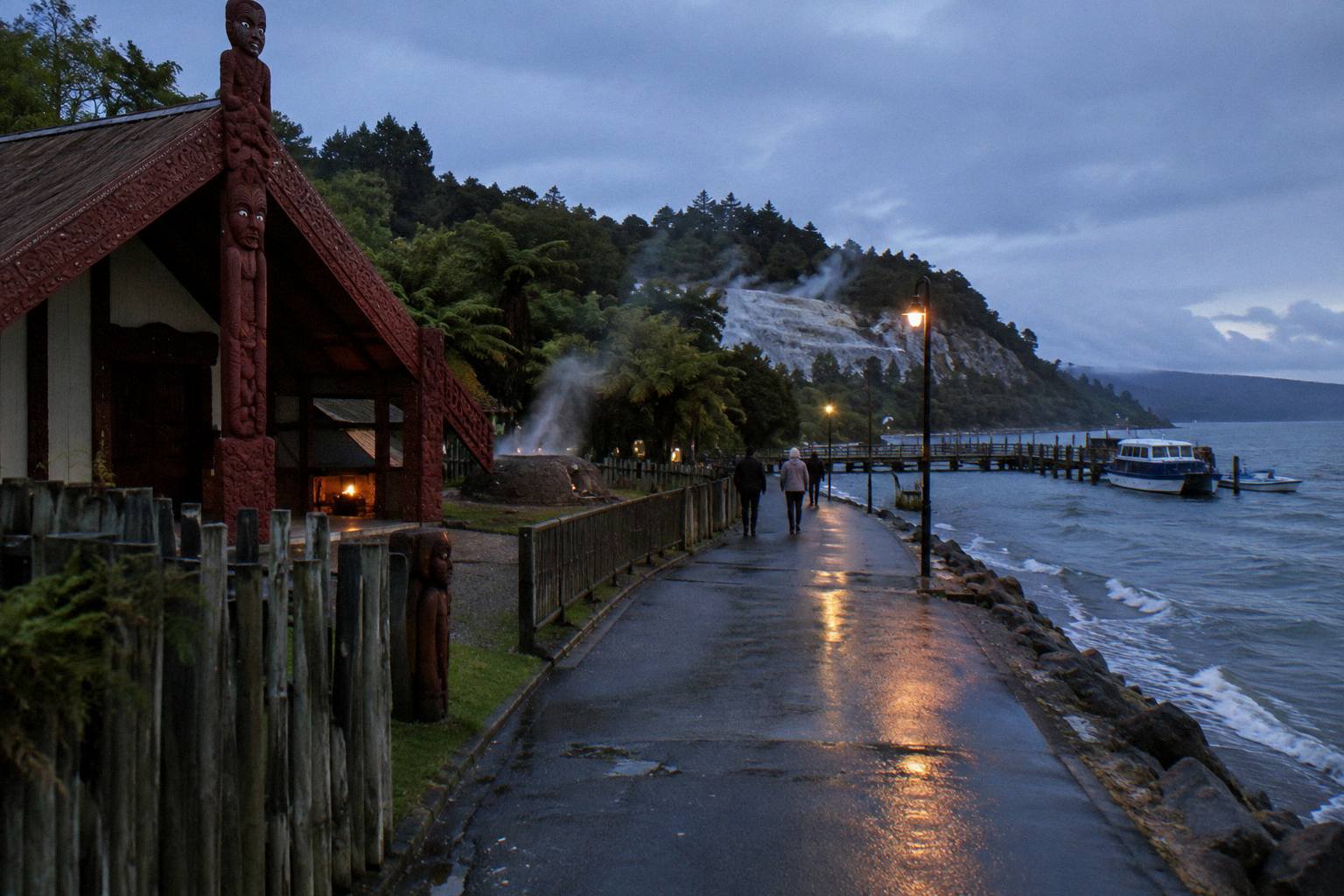
For Te Puia, the arrival detail is practical: the site is cashless, parking is free, and the operator requires check-in 15 minutes before the start or the ticket is forfeited. The 5:30pm start for Te Pō, and the 4pm start for the combo, are the only fixed evening clock times among all the operators, which makes Te Puia the easiest to plan around on paper. The City Ride bus runs every 30 minutes until 6PM, which the operator names as an option for the first sitting.
For Te Pā Tū, the coach is part of the experience. The village address is deliberately not published; the operator describes a forest pā a short coach ride south of central Rotorua, and the included return transport means nobody needs to find it themselves. The 1220 Hinemaru Street address that appears on the operator's terms page is a business office, not the village.
For Mitai, the address is public, 196 Fairy Springs Road, with free on-site parking, so self-driving is straightforward. The complimentary transfer exists only from registered accommodation, numbers are limited, it must be booked, and it closes at capacity, so it cannot be assumed. The site's page on pickup and transport to cultural evenings covers this in more depth.
Dietary Needs, Weather And Other Practical Questions
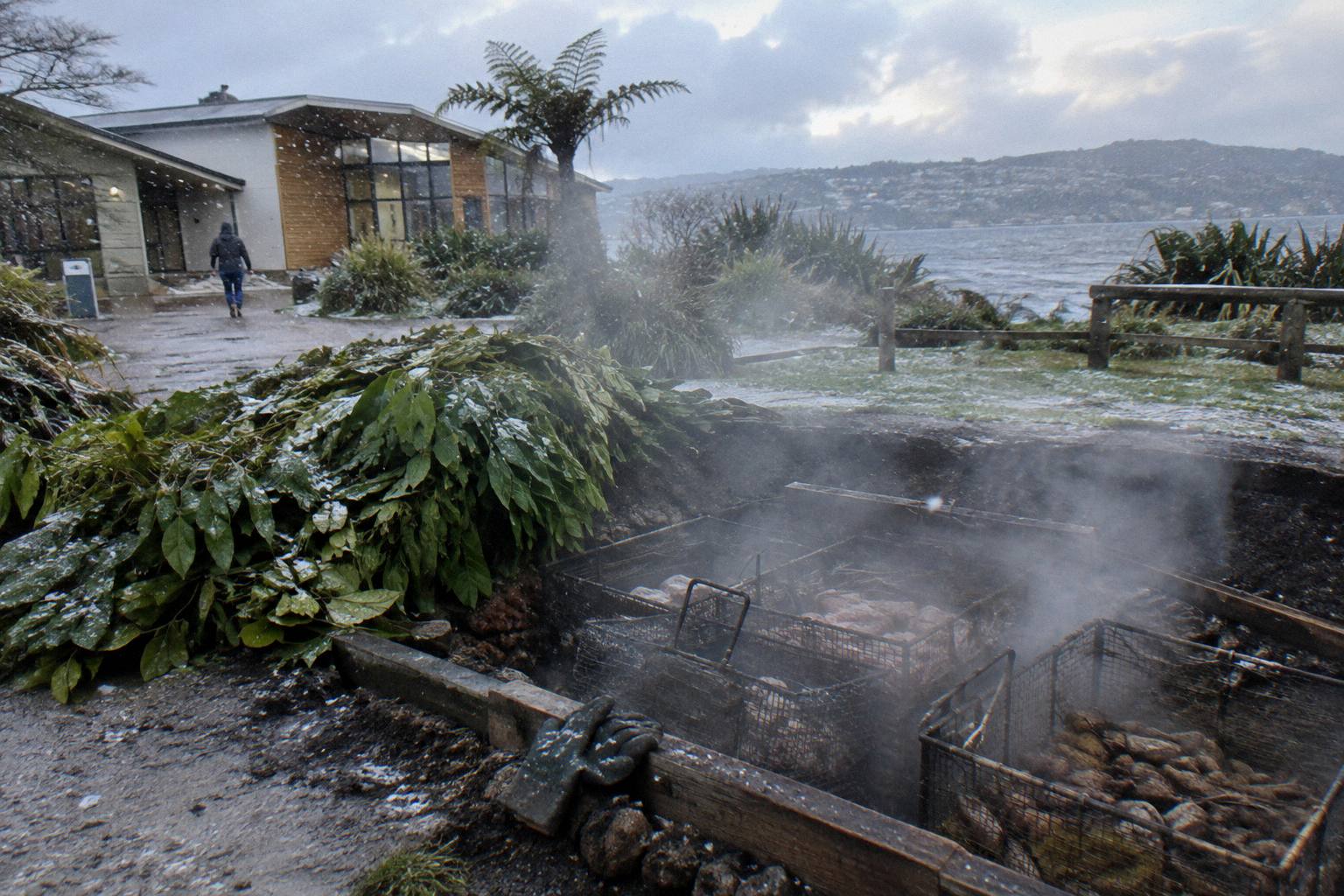
Dietary information appears unevenly: Te Pā Tū's winter page lists vegetarian, pescatarian and gluten free options but cannot guarantee coeliac safety, Mitai cannot meet every need such as vegan though some requests could be met, and Te Puia publishes nothing; Mitai is the only venue with dress guidance, Te Pā Tū's winter page confirms wheelchair and buggy access, and Mitai flags some wheelchair limits on its forest walk.
The pattern to notice is that each operator publishes practical detail about a different thing. Mitai is the operator to read for clothing and weather: comfortable clothing and walking shoes, warm layers in winter, a hat in summer, a jacket when raining, limited umbrellas, and photography welcomed in designated areas. Te Pā Tū is the operator to read for dietary breadth, with a licensed bar offering Māori wine pairing and non-alcoholic pairings alongside the food options. Te Puia is the operator to read for timing rules, with the 15-minute early check-in and the 48-hour cancellation window both stated on Te Puia's FAQ page.
Dress guidance at Te Pā Tū and Te Puia is not stated; ask the operator when booking. Photography rules beyond Mitai's designated-areas note are not stated at the other two, so ask rather than assume. On dietary, the working rule for all three is the same: tell the operator at booking, because options stated on a seasonal page may not cover every night's menu.
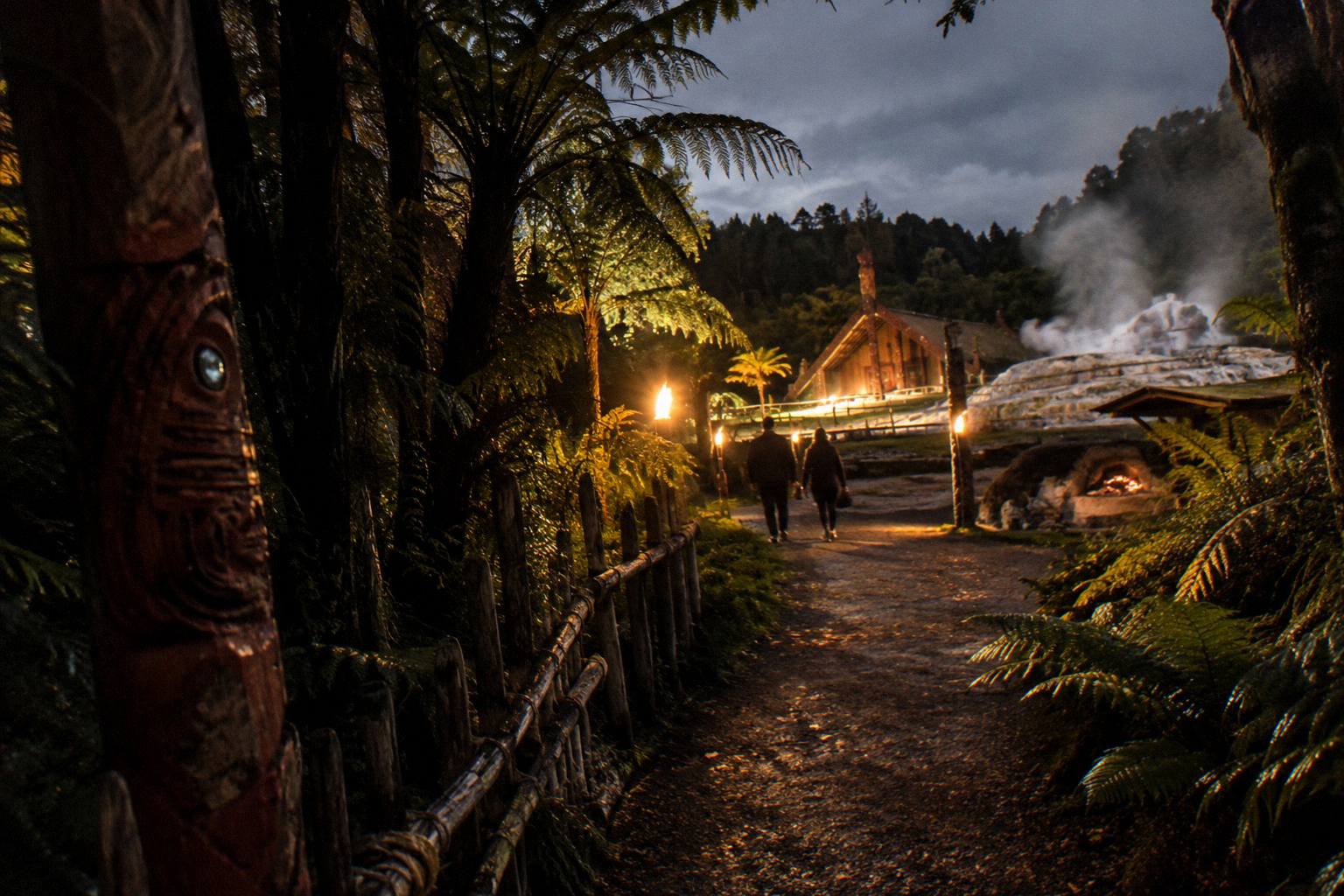
For the food itself, the site's page on what food is served at a Rotorua hāngī covers the menus the operators publish, and vegetarian and dietary options at a hāngī dinner takes the dietary question further.
Common Mistakes When Booking A Kapa Haka Evening
The mistakes that cost money or the night itself are narrow and avoidable: booking Te Puia and arriving late forfeits the ticket, missing Mitai's transfer booking can leave a guest without a ride if the shuttle is at capacity, assuming a vegan meal at Mitai when the operator says it cannot cater to vegan, and expecting a published start time at Te Pā Tū when none exists. Each mistake comes from assuming one operator's rule applies to all three.
The first mistake is treating the three evenings as interchangeable. They are not: a 45-minute concert in a meeting house, an amphitheatre performance in a forest pā reached by coach, and a village evening with a waka paddle and bush walk are three different nights. Booking the shortest one when the longest was wanted, or the reverse, is usually a reading problem rather than a money problem, and the duration table above is the guard against it.
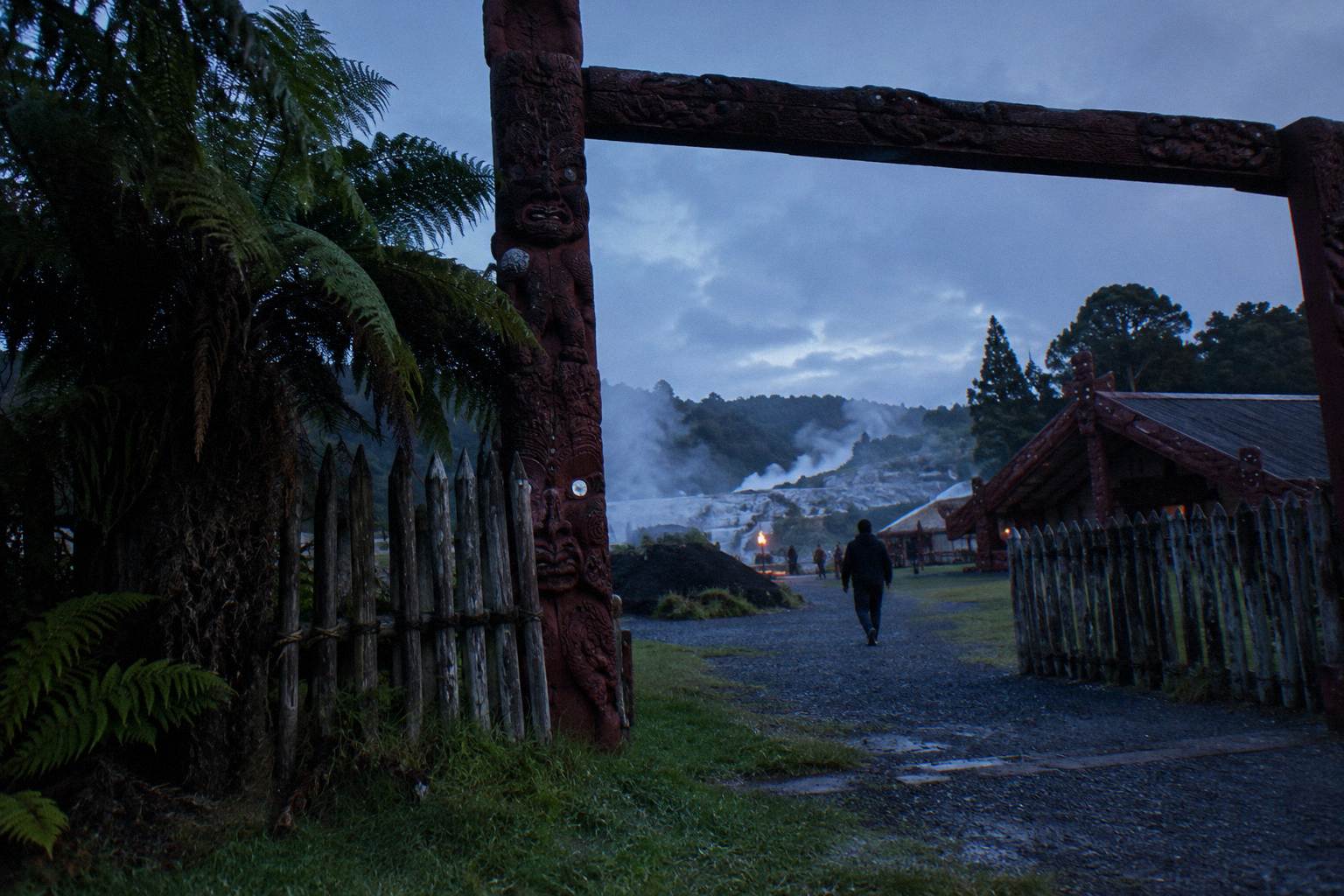
The second is timing. Te Puia forfeits tickets for late check-in and holds a firm 48-hour cancellation line, 72 hours for groups of 10 or more. Te Pā Tū's refunds step down by the day, full two days out by 12.00pm, half one day out, nothing on the day. Mitai's cancellation terms are not public; they are set in the booking widget, so read the terms at checkout rather than assuming either of the other operators' rules applies.
The third is transport. A visitor staying outside central Rotorua, or at accommodation not on Mitai's registered list, may find no transfer at all at Mitai or a long walk from a bus stop at Te Puia. Booking the included Te Pā Tū coach evening solves the transport question entirely, but it is also the higher price. Weigh that trade deliberately, using the price table above, and check Rotorua Cultural Dinner planning pages for the season of travel, because Te Pā Tū's programme and price both change with it.
Choosing The Right Evening For You
Pick Te Pō for the shortest, most clock-predictable night with the meeting house performance, the Te Pō Combo to add a 90-minute geothermal valley tour at NZD 290, Te Pā Tū for the full forest pā evening with coach included at NZD 280 to NZD 290 by season, or Mitai for the lowest adult price at NZD 188.34; all four centre on dinner and kapa haka.
A worked example makes the logic concrete. A couple with a rental car and one free evening wants performance and dinner without a late night. Te Puia's Te Pō at NZD 203 each, from 5:30pm and about 2.5 hours, fits, with free parking on site. The same couple with no car staying in central Rotorua might prefer Te Pā Tū, since the coach is included and the price difference against Te Puia is small once a taxi to Hemo Road is counted.
A family with children aged 6 and 9 has published child prices at two of the three: Mitai at NZD 115.74 per child and Te Pā Tū at NZD 125 per child in summer, alongside the adult prices of NZD 188.34 and NZD 290 respectively. The operators' prices can change, so multiply them out against the dates in mind rather than against a figure quoted here. A visitor who wants the valley, the geysers and the concert in one afternoon and evening books the Te Pō Combo and accepts the longest night at about 4 to 4.5 hours.
| If you want... | Best fit | Why |
|---|---|---|
| The shortest evening | Te Puia Te Pō | About 2.5 hours, from 5:30pm |
| Geothermal valley plus concert | Te Puia Te Pō Combo | 90-minute tour then dinner and performance, NZD 290 |
| Transport included, deepest immersion | Te Pā Tū | Coach from central Rotorua, forest pā setting, seasonal feasts |
| Lowest adult price, named performance list | Mitai | NZD 188.34 adult, six listed performance elements |
| A daytime taster before an evening | Whakarewarewa performance | 12.30pm, NZD 37 adult, no dinner |
Common Questions About Kapa Haka Concert Evenings
What Is Kapa Haka At A Rotorua Dinner Evening?
Kapa haka is group performance of song, action and rhythm, and at Rotorua's dinner evenings each operator presents it its own way: Te Puia's Te Pō with a 45-minute performance of song and dance in the carved meeting house Te Aronui a Rua, Te Pā Tū with kapahaka in the forest amphitheatre Tūāpapa in summer and shared across service in winter, and Mitai with a listed performance of Pōwhiri, Wero, Waiata, Mōteatea, Poi and Haka.
Which Rotorua Evening Has The Longest Kapa Haka Performance?
Te Puia is the only operator that states a length: its Te Pō performance runs 45 minutes. Te Pā Tū and Mitai do not state a performance length, only full evening durations of about 3 to 3.5 hours and about 3 hours respectively, so compare evenings rather than performance minutes.
How Much Does A Kapa Haka Dinner Evening Cost?
Operator adult prices are NZD 188.34 at Mitai, NZD 203 at Te Puia's Te Pō, NZD 290 for the Te Pō Combo, and NZD 290 summer or NZD 280 winter at Te Pā Tū. Child prices are published by Mitai (NZD 115.74, ages 4 to 13) and Te Pā Tū (NZD 125 summer, NZD 115 winter). Prices are the operators' own and can change.
Do All Three Evenings Include Dinner?
Yes. All three bookable evening tours include a meal: a hāngī buffet at Te Puia's Pātaka Kai Restaurant and Bar, a three-course seasonal feast in summer or a family-style Matariki-inspired fusion feast in winter at Te Pā Tū, and a full buffet hāngī dinner at Mitai. Whakarewarewa's cultural performance is daytime only and includes no dinner.
Is Transport Included To The Concert Evenings?
Te Pā Tū includes a return coach from central Rotorua. Mitai offers limited complimentary transfers from registered accommodation that must be booked and close at capacity. Te Puia states no hotel transfer; it names free parking, the City Ride bus every 30 minutes until 6PM, Uber and taxi.
What Time Do The Evenings Start?
Te Puia publishes its times: Te Pō from 5:30pm with dinner sittings at 5:30pm and 7:15pm, and the Te Pō Combo from 4pm daily. Te Pā Tū and Mitai do not publish evening start times, so ask the operator when booking: Te Pā Tū on 0508 826 254 or bookings@maoriculture.co.nz, Mitai on +64 7 343 9132 or reservation@mitai.co.nz.