Marae Etiquette For Guests At A Māori Cultural Evening
Marae etiquette is a real and important body of tikanga, but Rotorua's cultural dinners are hosted at a forest pā, a village and a geothermal valley rather than a marae. Here is what the operators themselves publish about welcomes, hospitality and guest behaviour, so you arrive informed rather than anxious.
Short answer
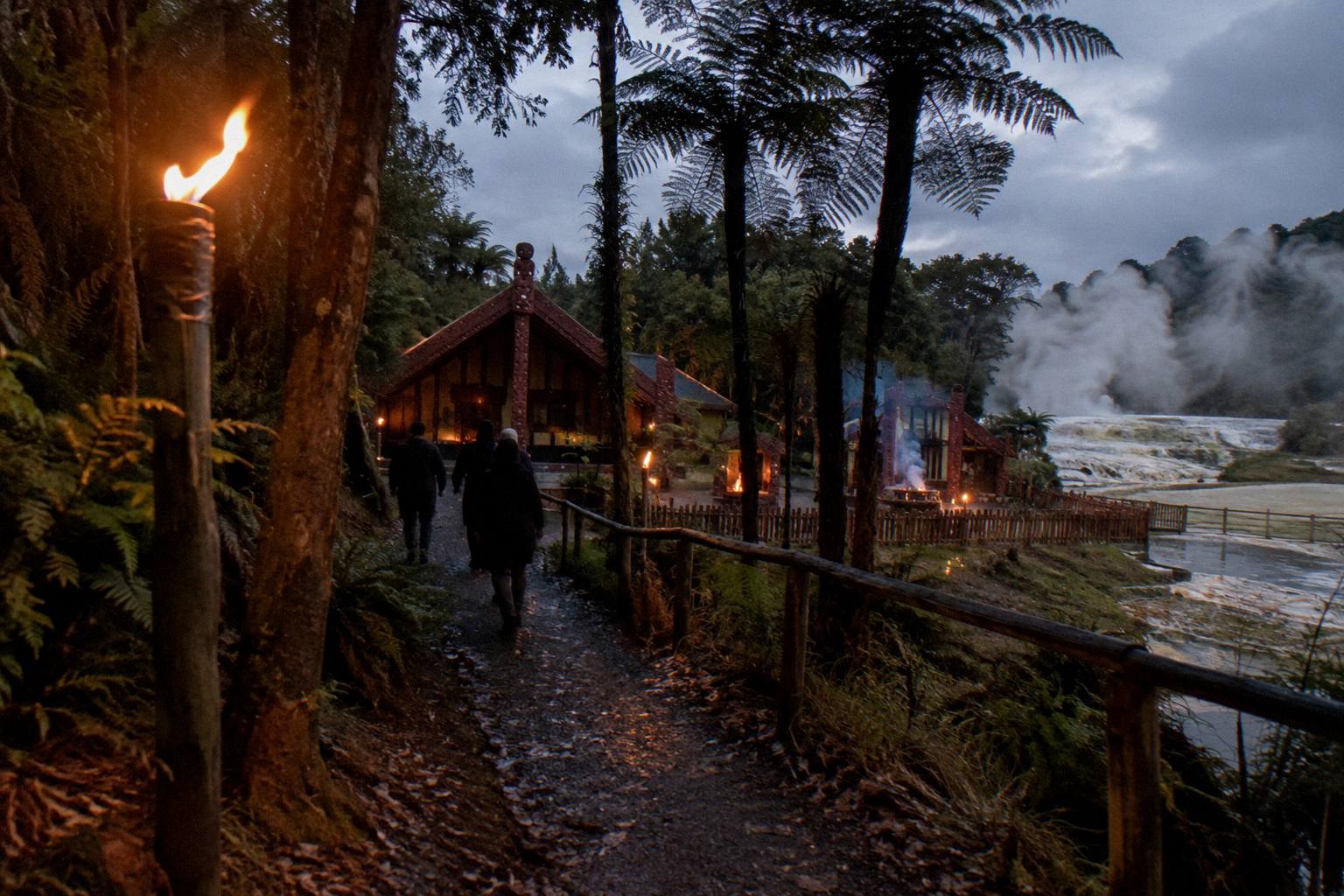
The three dinner evenings covered here are hosted at Te Pā Tū's forest pā, Mitai Māori Village and Te Puia. Each opens with a formal welcome, a haka pōhiri or fire ceremony at Te Pā Tū, a pōwhiri-style welcome at Mitai, and a 45-minute performance in a carved meeting house at Te Puia. The operators publish no formal marae etiquette rules, so the useful preparation is knowing what each evening contains and asking the operator about anything specific.
What A Marae Is, And Why None Of These Evenings Are Held On One
A marae is a customary Māori meeting ground, a courtyard and complex of buildings belonging to a particular iwi or hapū, governed by its own tikanga. None of these three dinners is held on one; instead, Te Pā Tū stages its evenings at a forest pā a short coach ride south of central Rotorua, Mitai Māori Village at its own village site at 196 Fairy Springs Road, and Te Puia in its geothermal valley at 20 Hemo Road.
That distinction matters because marae etiquette is a genuine and detailed body of protocol, but it belongs to each marae and its people. The operators covered here do not publish marae etiquette rules, and none of them asks guests to follow formal marae protocols. What they do publish is a description of each evening's welcome, performance and hospitality, and that is what a first-time guest can actually prepare from.
So the honest scope of this guide is narrow and useful at the same time: it sets out what each operator says its evening contains, the words you will hear on the night, such as pōwhiri, tikanga and manaakitanga, as each operator uses them, and the practical etiquette points the operators do state, like Mitai's photography and clothing guidance. For anything beyond that, the right move is to ask the operator directly before you go.
Te Pā Tū gives two contact routes, 0508 826 254 and bookings@maoriculture.co.nz. Mitai takes questions on +64 7 343 9132 or reservation@mitai.co.nz. Te Puia answers common questions on its own FAQ page. A short question about protocol, seating or accessibility asked in advance beats an anxious guess on the night.
What Each Evening's Welcome Actually Looks Like
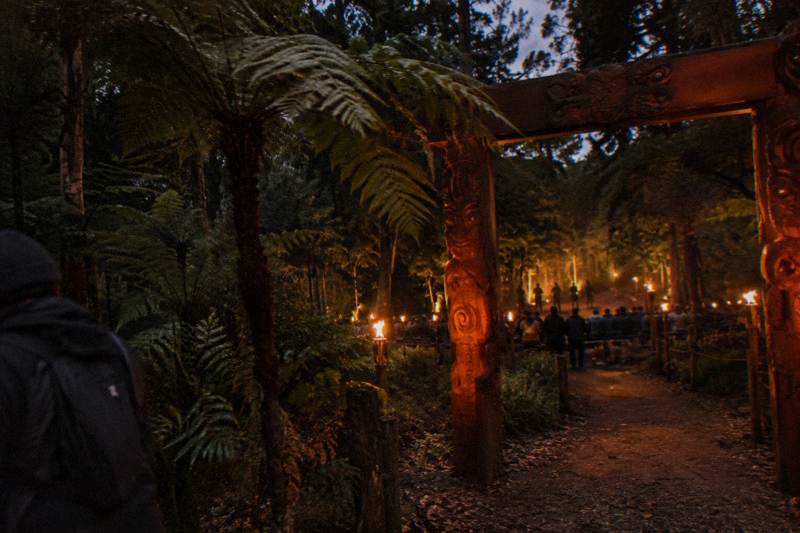
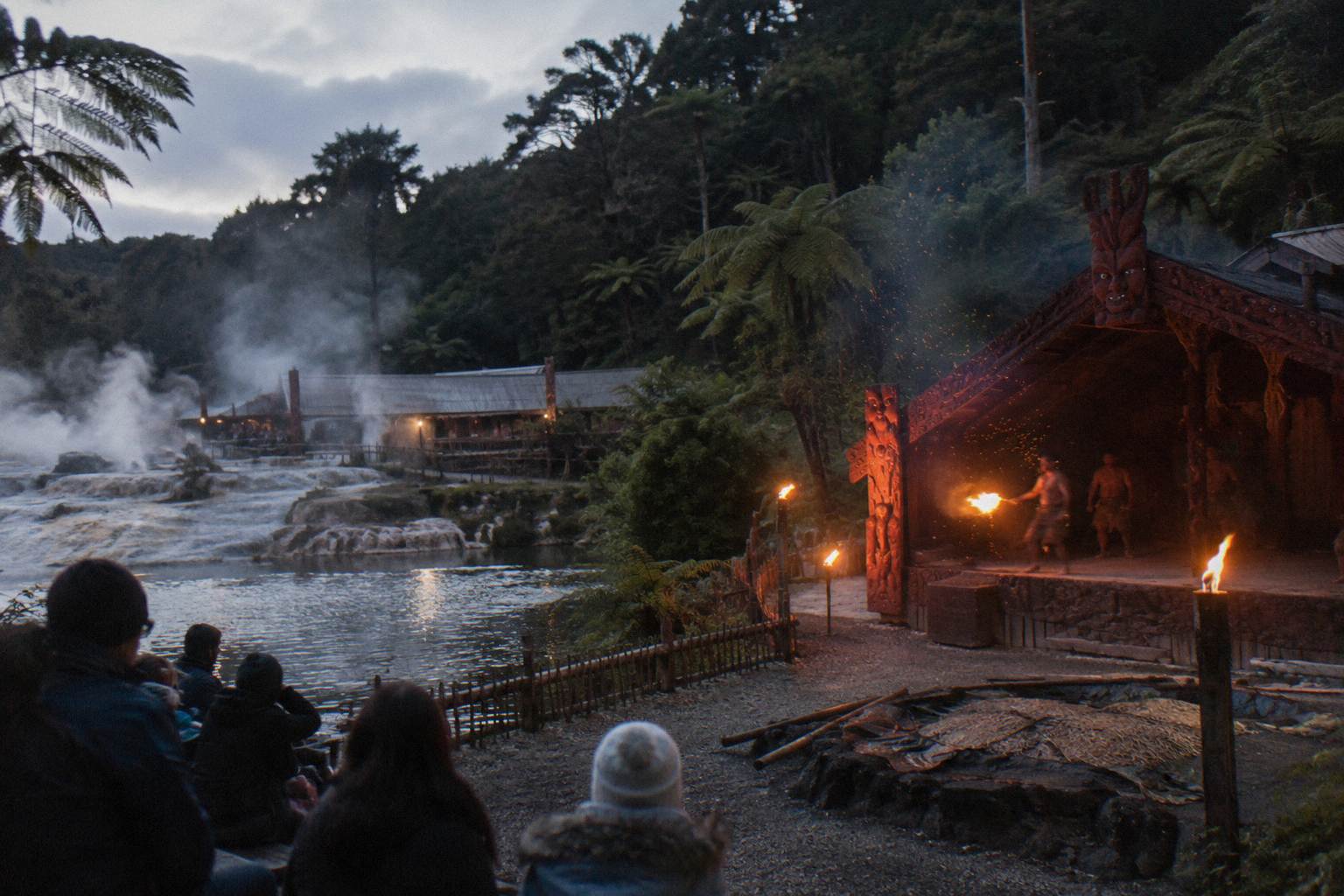
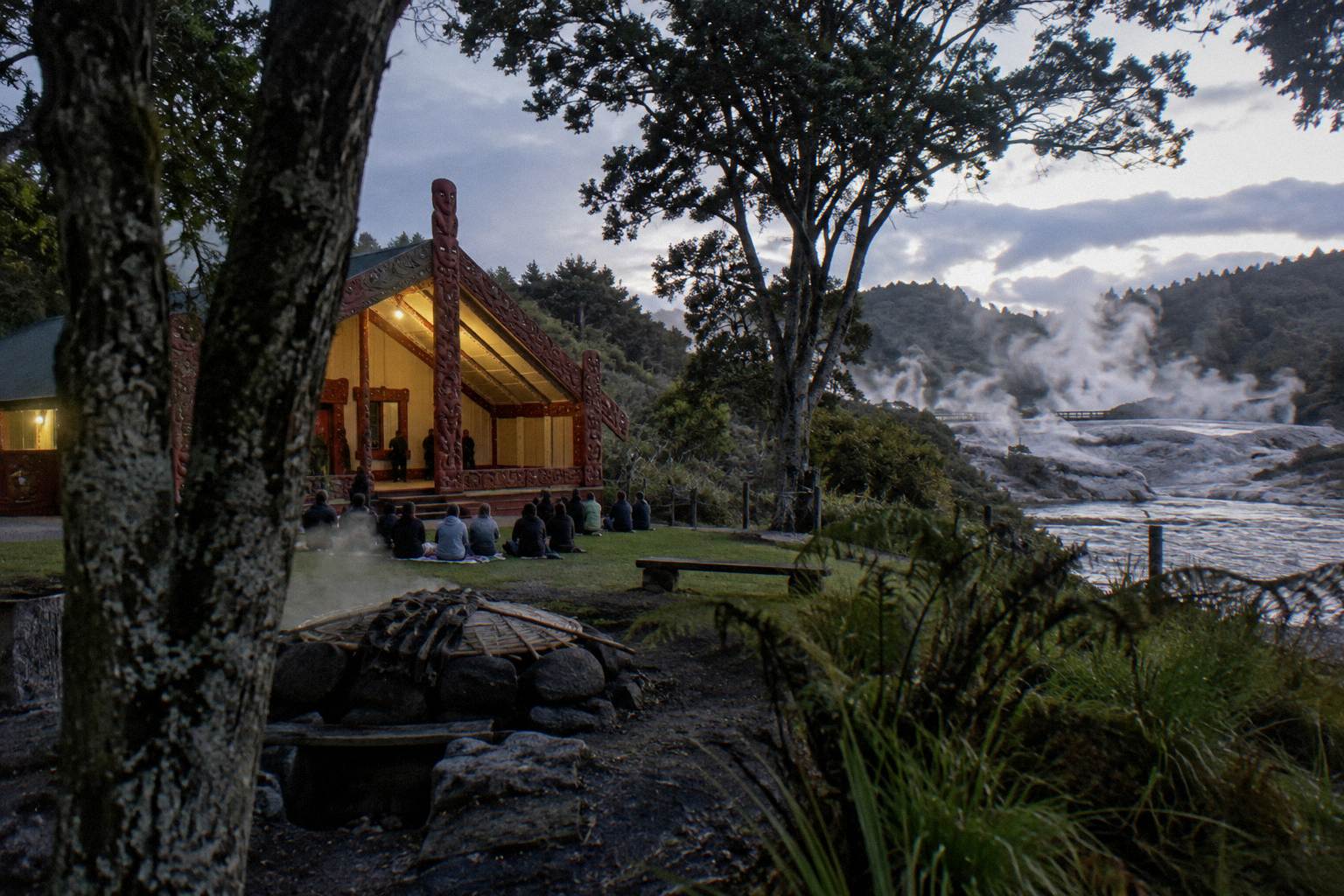
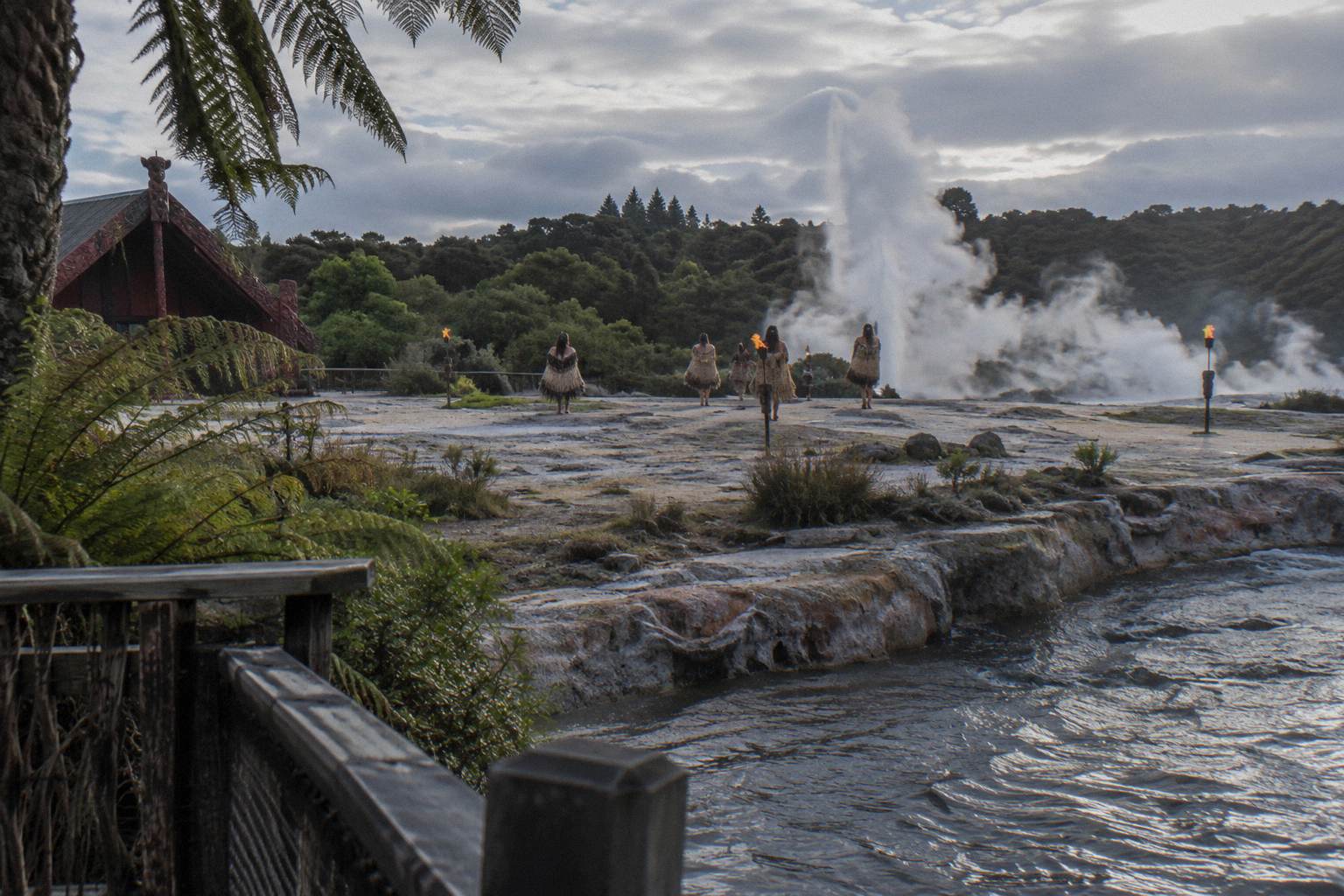
All three evenings open with a formal welcome rather than a casual check-in: Te Pā Tū greets arrivals with a haka pōhiri welcome in summer or an Ahi Tuku fire ceremony in winter, Mitai pairs its welcoming ceremony with performances of Pōwhiri, Wero, Waiata, Mōteatea, Poi and Haka, and Te Puia's Te Pō evening features a 45-minute Māori cultural performance of song and dance inside the carved meeting house Te Aronui a Rua.
The welcomes differ in form, and knowing which you will meet removes most of the uncertainty. At Te Pā Tū, the summer evening Tū Te Rā runs about 3.5 hours from October to April and the winter evening Tū Te Ihi runs about 3 hours from May to September. The operator says the summer evening explores concepts, rituals and stories of ancient Māori warfare and peace, with stories relayed through haka, song and drama, and kapahaka performed in the forest amphitheatre Tūāpapa. The winter evening replaces the amphitheatre focus with fireside wānanga, which the operator describes as conversation, history, games, instruments and traditions, shared across service. Details of both seasonal formats are on the operator's summer evening page and its winter counterpart.
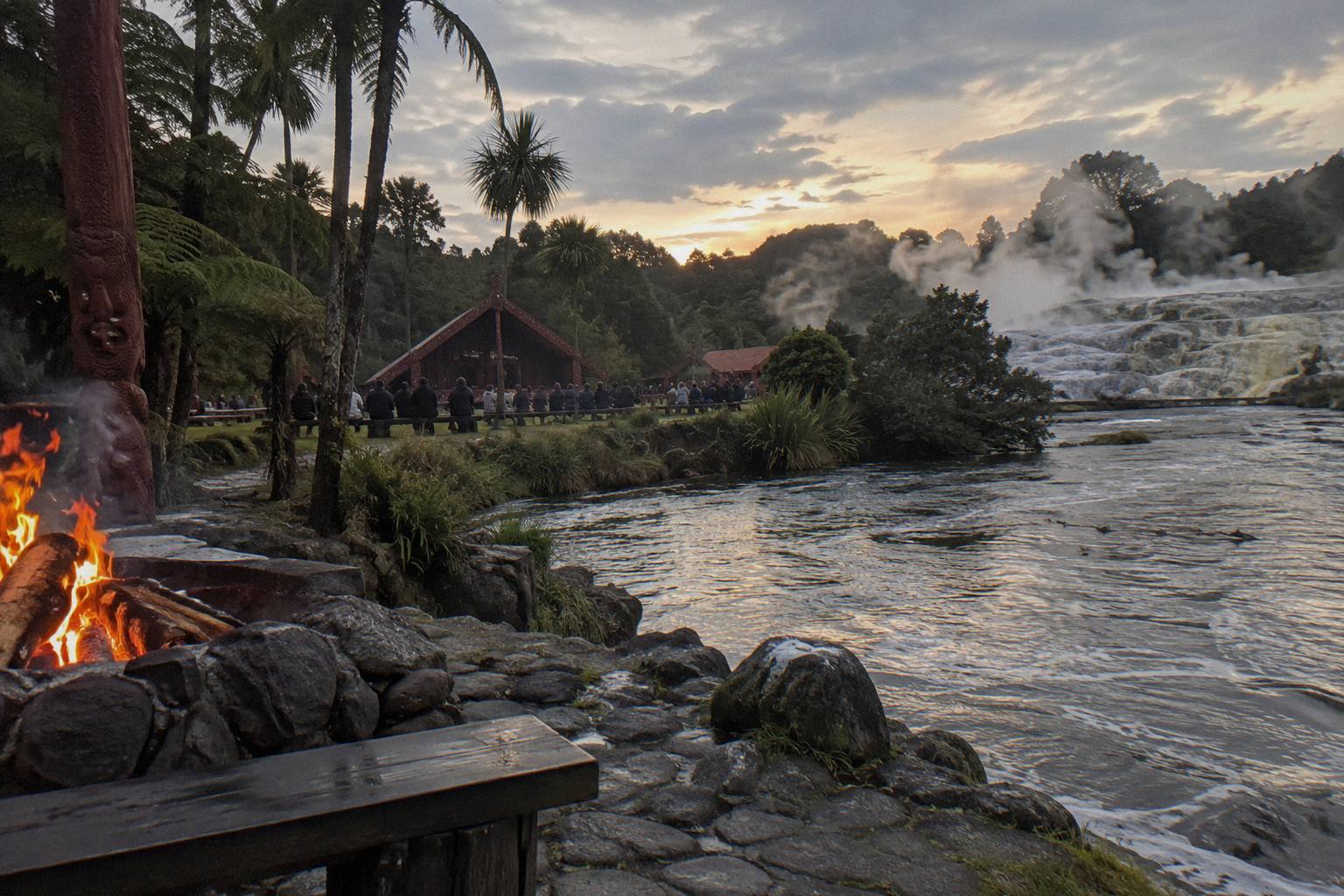
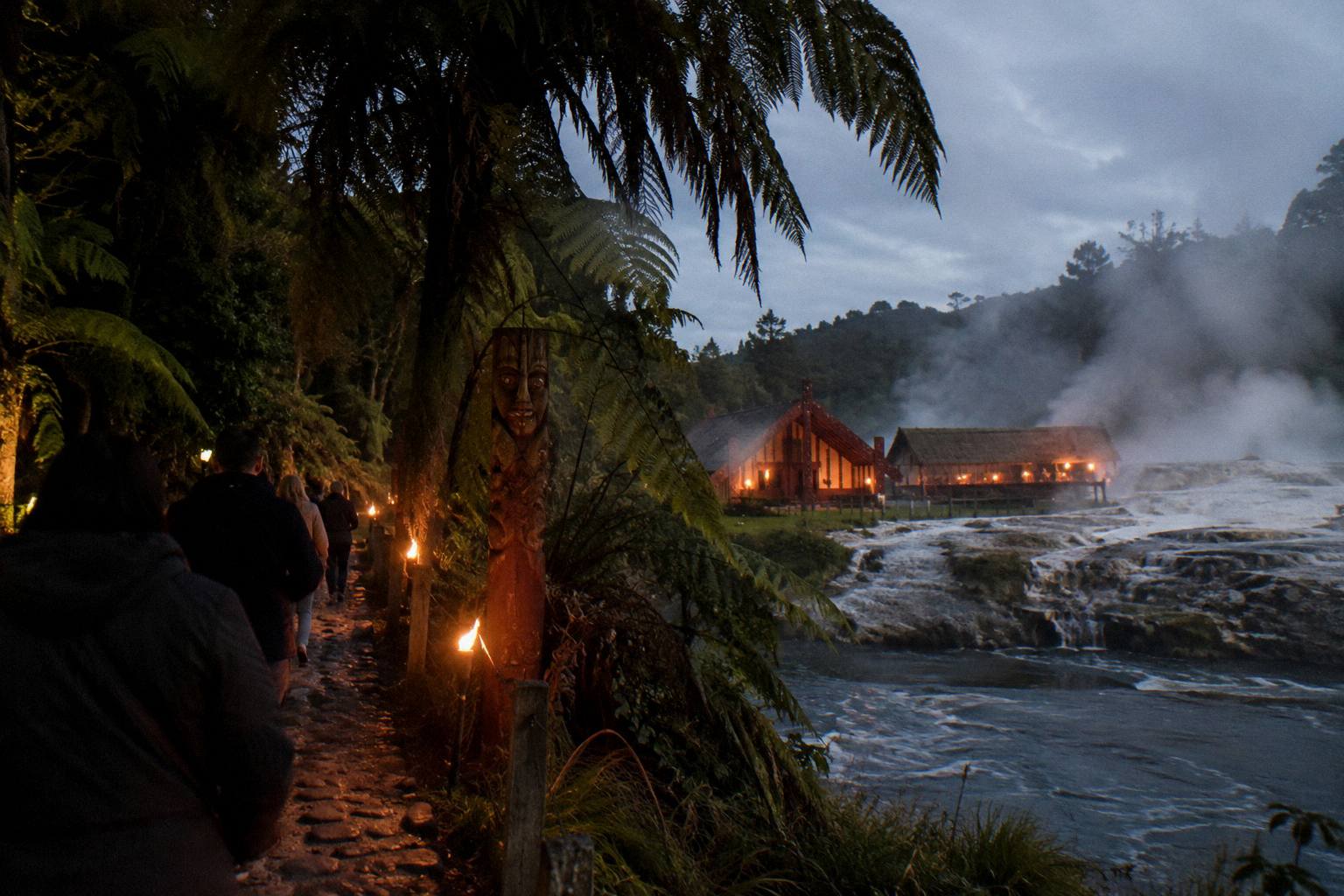
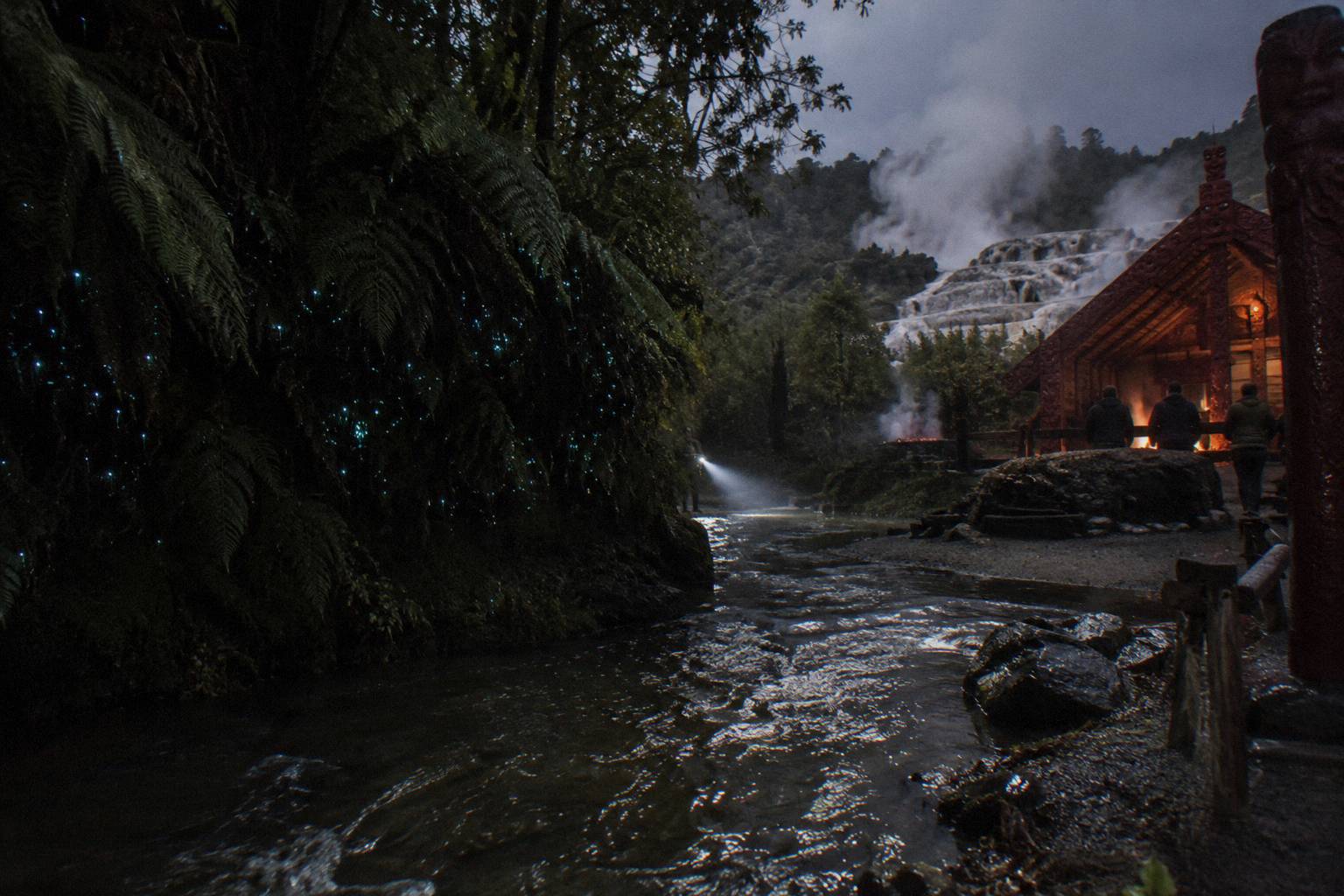
Mitai's welcome is the longest single sequence of the three. The operator's evening listing includes the welcoming ceremony, the hāngī unveiling, warriors paddling a waka down the Wai-o-Whiro Stream, the cultural performance, a full buffet hāngī dinner, question time, and an evening bush walk to the old fortified village site and the sacred spring Te Puna Tapu o Tūhoe, with glow worms along the way. The whole evening runs about 3 hours.
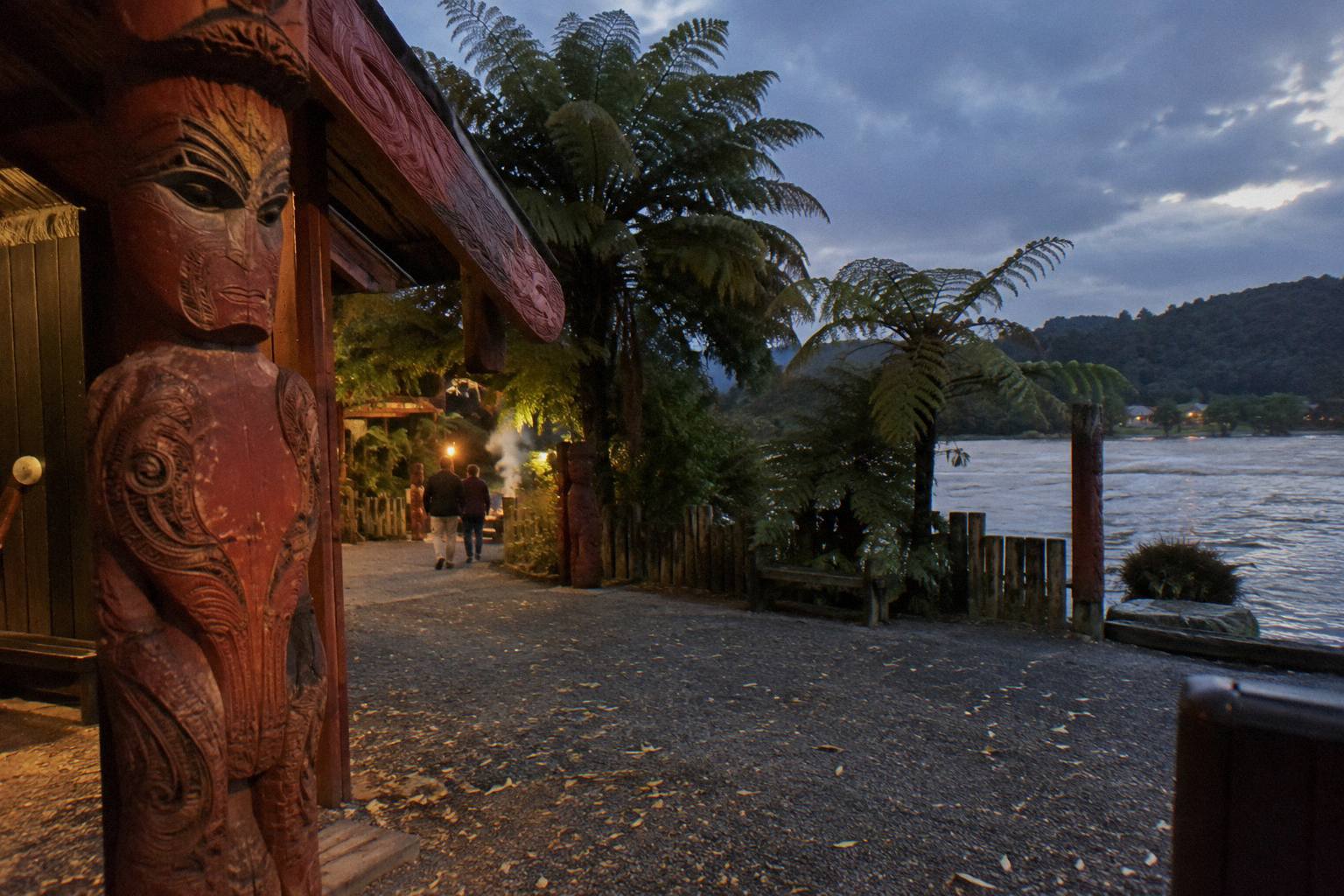
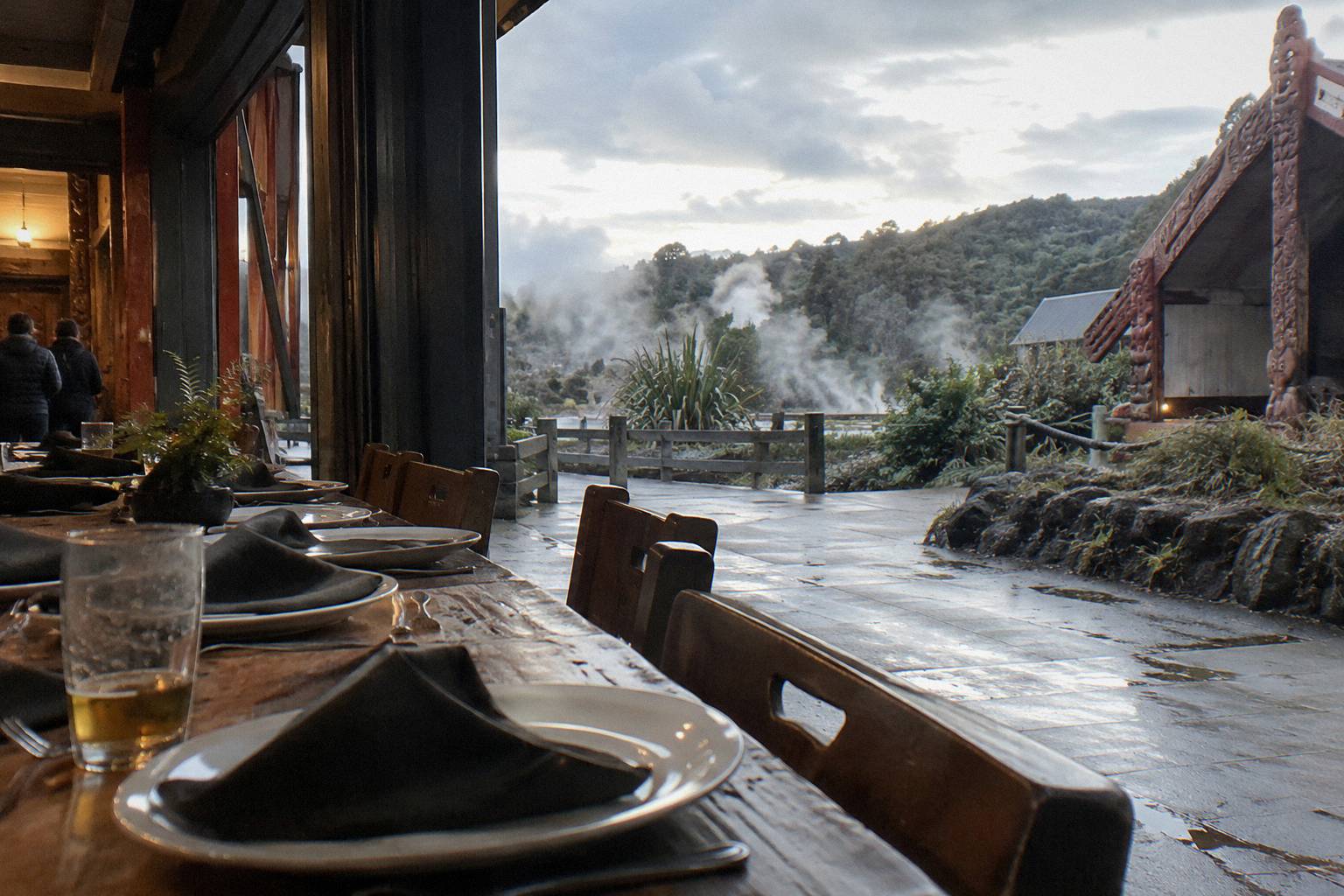
Te Puia's welcome structure is different again: the Te Pō evening runs about 2.5 hours from 5:30pm, with dinner sittings at 5:30pm and 7:15pm, and centres on the performance in the carved meeting house, hot chocolate on the geyser terrace, and a hāngī buffet dinner in the Pātaka Kai Restaurant and Bar. If you want the geothermal valley in daylight as well, the Te Pō Combo starts at 4pm with a 90-minute guided tour before dinner and runs about 4 to 4.5 hours in total.
| Evening | Welcome or opening | Performance setting | Duration |
|---|---|---|---|
| Te Pā Tū Tū Te Rā (October to April) | Haka pōhiri on arrival | Forest amphitheatre Tūāpapa | About 3.5 hours |
| Te Pā Tū Tū Te Ihi (May to September) | Ahi Tuku fire ceremony | Fireside wānanga and kapahaka across service | About 3 hours |
| Mitai Authentic Hāngī Dinner | Welcoming ceremony | Listed performance of Pōwhiri, Wero, Waiata, Mōteatea, Poi and Haka | About 3 hours |
| Te Puia Te Pō | Arrival and dinner sitting | 45-minute performance in carved meeting house Te Aronui a Rua | About 2.5 hours from 5:30pm |
Manaakitanga, Tikanga And The Words You Will Hear
Manaakitanga, as Te Pā Tū defines it, is frequently referred to as hospitality, but is a firmly held value and practice within iwi Māori, centred at a simple level on strengthening the bonds between a host and their visitors through benevolence and hospitality. Tikanga means protocols, and the operator also speaks of kaitiakitanga, care of the natural environment, and mātauranga, knowledge handed through generations.
These are the operator's own words, on its about page, and they are worth knowing before you arrive because the evenings are built around them. Te Pā Tū also speaks of pā as places where people meet, celebrate and strengthen their understanding of who they are, which is what its forest pā is presented as. None of this asks anything of you as a guest beyond ordinary courtesy, but understanding the framing changes how the welcome reads on the night.
Mitai frames its hosting in family terms. The operator says it is a family owned and operated business and speaks of its Te Arawa people, and its evening includes question time, a deliberate space for guests to ask rather than guess. Te Puia describes itself as kaitiaki, guardian, of the Whakarewarewa Geothermal Valley, is iwi owned under the NZMACI Vesting Act 2020, and hosts the New Zealand Māori Arts and Crafts Institute alongside a Kiwi Conservation Centre.
| Term | Who uses it | What that operator says it means |
|---|---|---|
| Manaakitanga | Te Pā Tū | A firmly held value and practice within iwi Māori, centred on strengthening the bonds between host and visitors through benevolence and hospitality |
| Tikanga | Te Pā Tū | Protocols |
| Kaitiakitanga | Te Pā Tū | Care of the natural environment |
| Mātauranga | Te Pā Tū | Knowledge handed through generations |
| Pā | Te Pā Tū | Places where people meet, celebrate and strengthen their understanding of who they are |
| Kaitiaki | Te Puia | Guardian, used of the Whakarewarewa Geothermal Valley |
What the research does not contain is any published etiquette for guests during a welcome: no chief selection, no protocol for who may speak or sit where, no rules the operators ask you to follow. Those protocols exist on marae, but the operators here do not publish them. The practical conclusion for an evening guest is simple: arrive on time, follow the host's lead, and treat the performance and the meal as the hosted occasions the operators describe. If a specific question matters to you, Te Pā Tū, Mitai and Te Puia each answer enquiries directly, and booking a Māori cultural evening in advance is the moment to ask it.
How To Behave During The Welcome And The Performance
The operators publish no code of conduct for guests, so the honest answer is that ordinary respectful audience behaviour is what applies. Mitai is the only one that publishes guest-facing rules at all: photography is welcomed in designated areas, outside alcohol is not permitted, and the bar on site is the place to buy drinks. Beyond that, follow the hosts' cues, stay with the flow of the evening, and use question time where it is offered.
A welcome ceremony is a hosted moment, not a spectator sport and not a photo shoot. Mitai's line about designated areas is the most concrete guidance any of the three operators gives, and it is a sensible default everywhere: photograph freely where photography is clearly fine, and hold back during the formal parts of a welcome unless invited. Photography rules at Te Pā Tū and Te Puia are not stated, so ask the operator if photos matter to you. Other pages covering the same trip are gathered on Rotorua Cultural Dinner.
The performances deserve the same attention any formal performance does. Mitai calls its haka, in the operator's own wording, the fiery Haka Māori war dance, and lists Pōwhiri, Wero, Waiata, Mōteatea, Poi and Haka as the elements of its performance. Te Puia's 45-minute performance of song and dance takes place in the carved meeting house Te Aronui a Rua. Te Pā Tū's kapahaka fills the forest amphitheatre Tūāpapa in summer and moves among the fireside service in winter. None of the operators asks guests to participate in protocol, and none publishes audience-participation rules: what you should do if invited into something on the night is follow the host's instructions, which is the whole point of a hosted evening.
Question time at Mitai is the operator's designated space for exactly the curiosity guests arrive with, and using it is better etiquette than whispered speculation. The evening bush walk that follows dinner, to the old fortified village site and the sacred spring Te Puna Tapu o Tūhoe, is a guided moment: staying with the group and the guide is both practical and courteous. Mitai notes some wheelchair limits on the forest walk, so raise mobility needs when booking. For more on the settings, the guide to Māori village evenings in Rotorua covers the venues, and what a pōwhiri welcome involves looks at the ceremony Mitai lists in its performance.
Dress, Arrival And The Practical Etiquette Points The Operators State
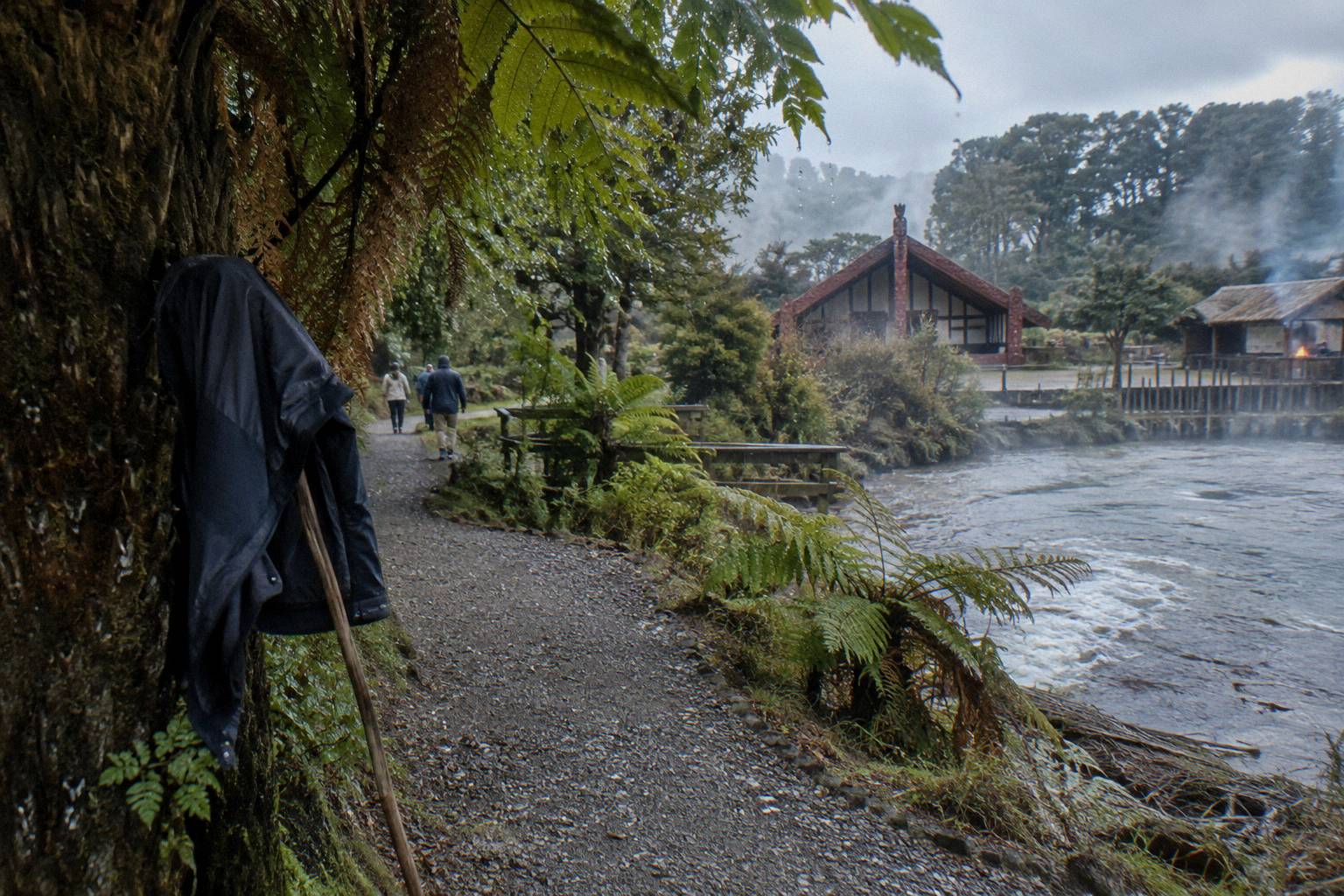
Mitai is again the only operator that publishes dress guidance: comfortable clothing and walking shoes, dressing for the weather, warm clothing in winter, a hat in summer, a jacket when raining, and comfortable shoes for the bush walk. Dress guidance at Te Pā Tū and Te Puia is not stated. On arrival, Te Puia asks guests to check in 15 minutes early or the ticket is forfeited, which is the strictest stated rule of the three.
The bush walk at Mitai explains its clothing advice: an evening walk through forest to a sacred spring, with glow worms, calls for real shoes and a layer. Mitai also notes umbrellas are limited on site, so a jacket is the better wet-weather plan. That is the full extent of published dress guidance among the three, and a sensible baseline everywhere is shoes you can walk in and a warm layer for a Rotorua evening.
| Practical point | Te Pā Tū | Mitai | Te Puia |
|---|---|---|---|
| Dress guidance | Not stated; ask the operator | Comfortable clothing and walking shoes, dress for the weather, warm layer in winter, hat in summer, jacket in rain | Not stated; ask the operator |
| Arrival rule | Not stated | Not stated | Check in 15 minutes early or ticket forfeited |
| Photography | Not stated | Welcomed in designated areas | Not stated |
| Alcohol | Licensed bar, wine and non-alcoholic pairings | Bar on site, outside alcohol not permitted | Cashless site |
| Accessibility | Wheelchair and buggy accessible, per the winter page | Some wheelchair limits on the forest walk | Free parking |
| Getting there | Return coach from central Rotorua included | Free on-site parking; limited complimentary transfers from registered accommodation, must be booked | No transfer stated; operator names City Ride bus, Uber and taxi; free parking |
Getting there is part of the etiquette of arriving calmly. Te Pā Tū includes return coach transport from central Rotorua in both seasons, so the operator manages your arrival for you. Mitai's complimentary transfers run from registered accommodation, have limited numbers, must be booked, and close at capacity, so if you want that transfer, request it when reserving rather than on the day. Te Puia states no hotel transfer for Te Pō and instead names the City Ride bus every 30 minutes until 6PM, Uber and taxi, with free parking on site. The fuller picture is in pickup and transport to Rotorua cultural evenings.
What Trips People Up When Preparing For A Cultural Evening
The most common slip is assuming these dinners are marae visits and worrying about protocols that do not apply to them. The second is assuming rules travel between operators: they do not, and each evening's transfer, cancellation and dress facts belong to that operator alone. The third is leaving dietary and access questions until arrival, when every operator here asks to be told at booking.
Cancellation terms are a good example of how much the operators differ. Te Pā Tū's own terms give a 100% refund if cancelled two days before by 12.00pm, 50% one day before by 12.00pm, and nothing on the day, with booking and bank fees not refunded; if Te Pā Tū cancels, a full refund applies when no rebooking is made. Te Puia allows amendment or cancellation by phone or email at least 48 hours before, 72 hours for groups of 10 or more, with the ticket non-refundable inside that window, on top of the 15-minute check-in rule. Mitai's cancellation terms are set in its booking widget rather than published, so read the terms at checkout before paying. Terms on the booking page you reserve through may differ from the operator's own terms.
Dietary needs follow the same pattern. Te Pā Tū's winter page lists vegetarian, pescatarian and gluten free options and says it cannot guarantee coeliac safety; vegan options at Te Pā Tū are not stated. Mitai says it is unable to cater to all dietary needs such as vegan, though some requests could be met. Te Puia's dietary options are not stated. In every case the move is the same: tell the operator at booking, and follow up by email if the answer matters to you. The detail is in vegetarian and dietary options at a hāngī dinner.
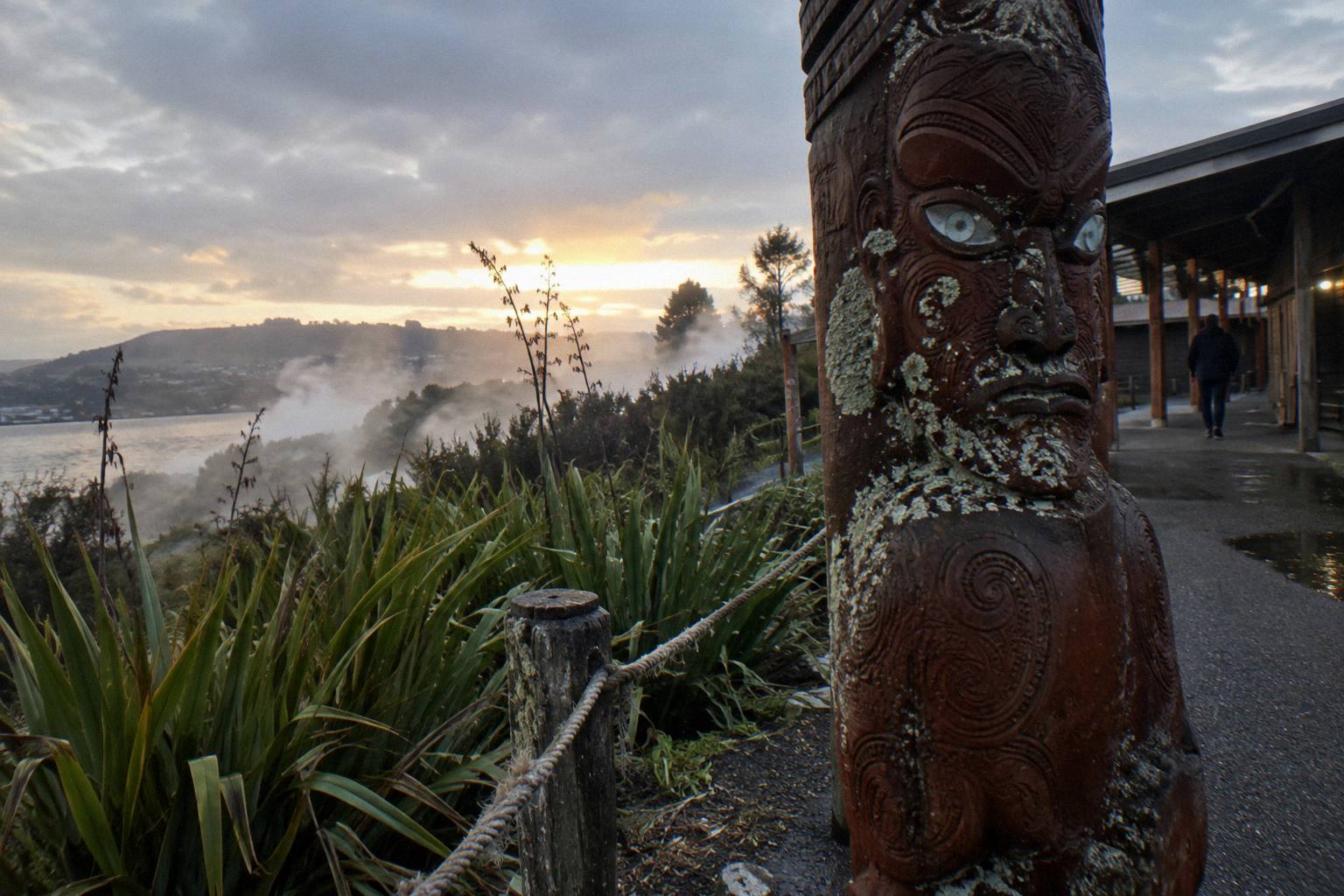
Another quiet trap is the naming one. Te Pā Tū is the renamed Tamaki Māori Village experience, so older advice and reviews under the Tamaki name describe the same operator, not a second venue. And Whakarewarewa The Living Māori Village, which hosts daytime tours and a 12.30pm performance, has no evening dinner at all, so it is not part of this comparison. Neither point changes your etiquette on the night, but both prevent booking confusion.
Which Evening Suits Which Kind Of Guest
Te Pā Tū suits guests wanting the most complete hosted welcome, pairing a seasonal haka pōhiri or fire ceremony with a structured feast and included coach transport; Mitai suits those wanting the longest single cultural sequence and time to ask questions across its roughly 3-hour evening; Te Puia's Te Pō, from 5:30pm and about 2.5 hours, fits guests wanting a shorter evening, while the Te Pō Combo from 4pm adds the daytime valley tour.
Price is part of that choice, always as the operator's own NZD figure. Te Pā Tū's operator price is NZD 290 adult and NZD 125 child for the summer Tū Te Rā evening, and NZD 280 adult and NZD 115 child for the winter Tū Te Ihi evening. Mitai's operator price is NZD 188.34 for adults 14 and over and NZD 115.74 for children 4 to 13, written exactly as the operator states it, and those figures can change. Te Puia's Te Pō is NZD 203 and the Te Pō Combo is NZD 290, with child prices not stated for either. The fuller cost picture is in how much a Māori cultural evening costs.
| Evening | Operator price (NZD) | Duration | Transfer | Children |
|---|---|---|---|---|
| Te Pā Tū Tū Te Rā | Adult 290, child 125 | About 3.5 hours | Return coach from central Rotorua included | Children welcome; minimum age not stated |
| Te Pā Tū Tū Te Ihi | Adult 280, child 115 | About 3 hours | Return coach from central Rotorua included | Children welcome; minimum age not stated |
| Mitai Authentic Hāngī Dinner | Adult (14+) 188.34, child (4 to 13) 115.74 | About 3 hours | Limited complimentary transfers from registered accommodation, must be booked | Child price 4 to 13; highchairs limited |
| Te Puia Te Pō | Adult 203, child not stated | About 2.5 hours from 5:30pm | None stated | Under 4 free, per the booking page |
| Te Puia Te Pō Combo | Adult 290, child not stated | About 4 to 4.5 hours from 4pm | None stated | Not stated |
Ratings exist for three of the four evenings, each as a single figure with no count: Te Pā Tū's evening is rated 4.8 out of 5 on its booking page, Mitai's 4.7 and Te Puia's Te Pō 4.7. The Te Pō Combo has no rating stated. A rating on its own says little about etiquette or fit, so weight the format, duration and transport facts more heavily than the number. A reader weighing Mitai specifically may find whether Mitai Māori Village is worth it useful, and Mitai's own hāngī dinner experience page is the primary source for its evening.
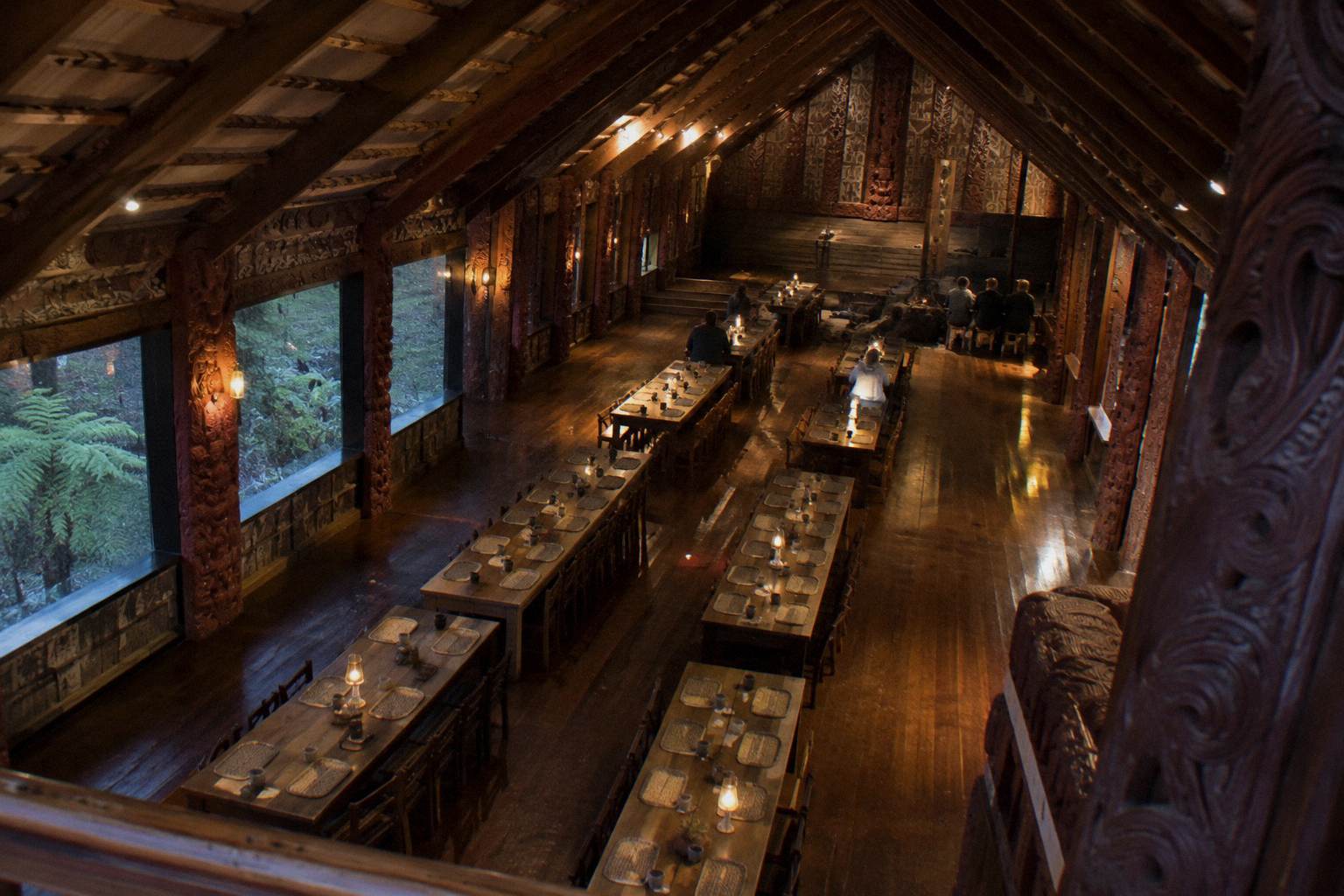
Te Pā Tū's evening, Te Pā Tū Cultural Experience With Dinner, suits the guest who wants the welcome to be the centrepiece, with the operator's seasonal framing, the included coach and the forest pā setting. Mitai's evening suits the guest who wants a full sequence from welcome to bush walk and glow worms in one ticket. Te Puia's Te Pō suits the guest who wants a defined start time, a shorter evening and the geothermal valley at night, with the combo adding daylight if four and a half hours is not too long. Whichever you lean toward, Check availability once your date is firm, because seasonal formats and nights of operation are the operator's to set. Season timing matters too, and the best time of year for a hāngī evening breaks down the choice between Tū Te Rā and Tū Te Ihi.
Common Questions About Marae Etiquette For Evening Guests
Is A Māori Cultural Dinner In Rotorua Held On A Marae?
No. The evenings covered here are hosted at Te Pā Tū's forest pā south of central Rotorua, Mitai Māori Village at 196 Fairy Springs Road, and Te Puia at 20 Hemo Road. None of the three operators describes its venue as a marae, and none publishes marae etiquette rules for guests.
Do I Need To Know Any Protocols Before Attending?
The operators publish no guest protocols to learn in advance. Te Pā Tū opens with a haka pōhiri in summer or an Ahi Tuku fire ceremony in winter, Mitai opens with a welcoming ceremony, and Te Puia's evening centres on a 45-minute performance in a carved meeting house. Follow the hosts' lead on the night and ask the operator beforehand if something specific concerns you.
Can I Take Photos During The Welcome And Performance?
Mitai is the only operator that states a rule: photography is welcomed in designated areas. Photography rules at Te Pā Tū and Te Puia are not stated, so ask the operator when booking if photos matter to you.
What Should I Wear To A Cultural Evening?
Mitai advises comfortable clothing and walking shoes, dressing for the weather, warm clothing in winter, a hat in summer, a jacket in rain, and comfortable shoes for the bush walk, and notes umbrellas are limited. Dress guidance at Te Pā Tū and Te Puia is not stated; shoes you can walk in and a warm layer are a sensible baseline everywhere.
What Does Manaakitanga Mean?
Te Pā Tū defines it in its own words: manaakitanga is frequently referred to as hospitality, but it is a firmly held value and practice within iwi Māori, centred at a simple level on strengthening the bonds between a host and their visitors through benevolence and hospitality.
Is Tamaki Māori Village A Different Place From Te Pā Tū?
No. Tamaki Māori Village is the former name of the experience now called Te Pā Tū. Older reviews and articles under the Tamaki name describe the same operator's evenings at the same forest pā.