The Powhiri Welcome At A Māori Cultural Evening: What Guests Do
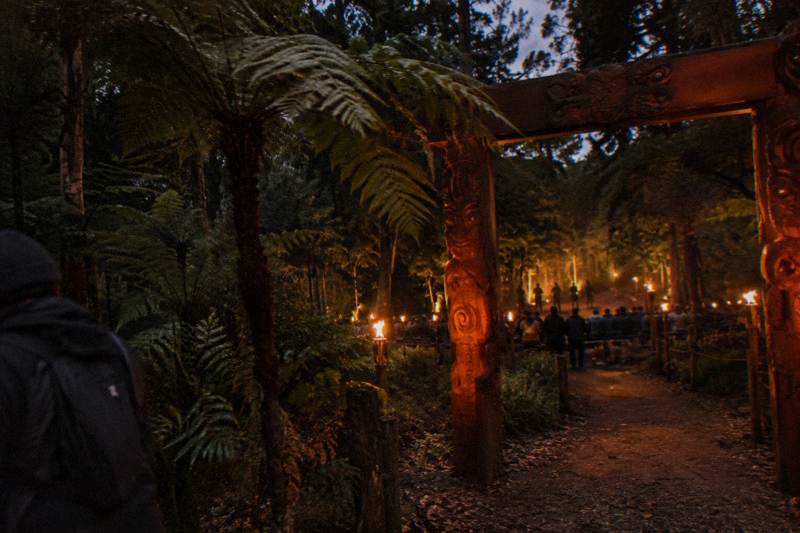
The pōwhiri welcome sets the tone of every Rotorua cultural evening, and each of the three dinner operators opens its night differently: a haka pōhiri in a tawa forest, a welcoming ceremony beside a stream, or a performance in a carved meeting house.
Short answer
Te Pā Tū opens with a haka pōhiri in summer or an Ahi Tuku fire ceremony in winter, Mitai Māori Village begins with a welcoming ceremony before a performance listed as Pōwhiri, Wero, Waiata, Mōteatea, Poi and Haka, and Te Puia's Te Pō evening features a 45-minute performance of song and dance in a carved meeting house. Operator prices run from NZD 188.34 at Mitai to NZD 290 at Te Pā Tū in summer.
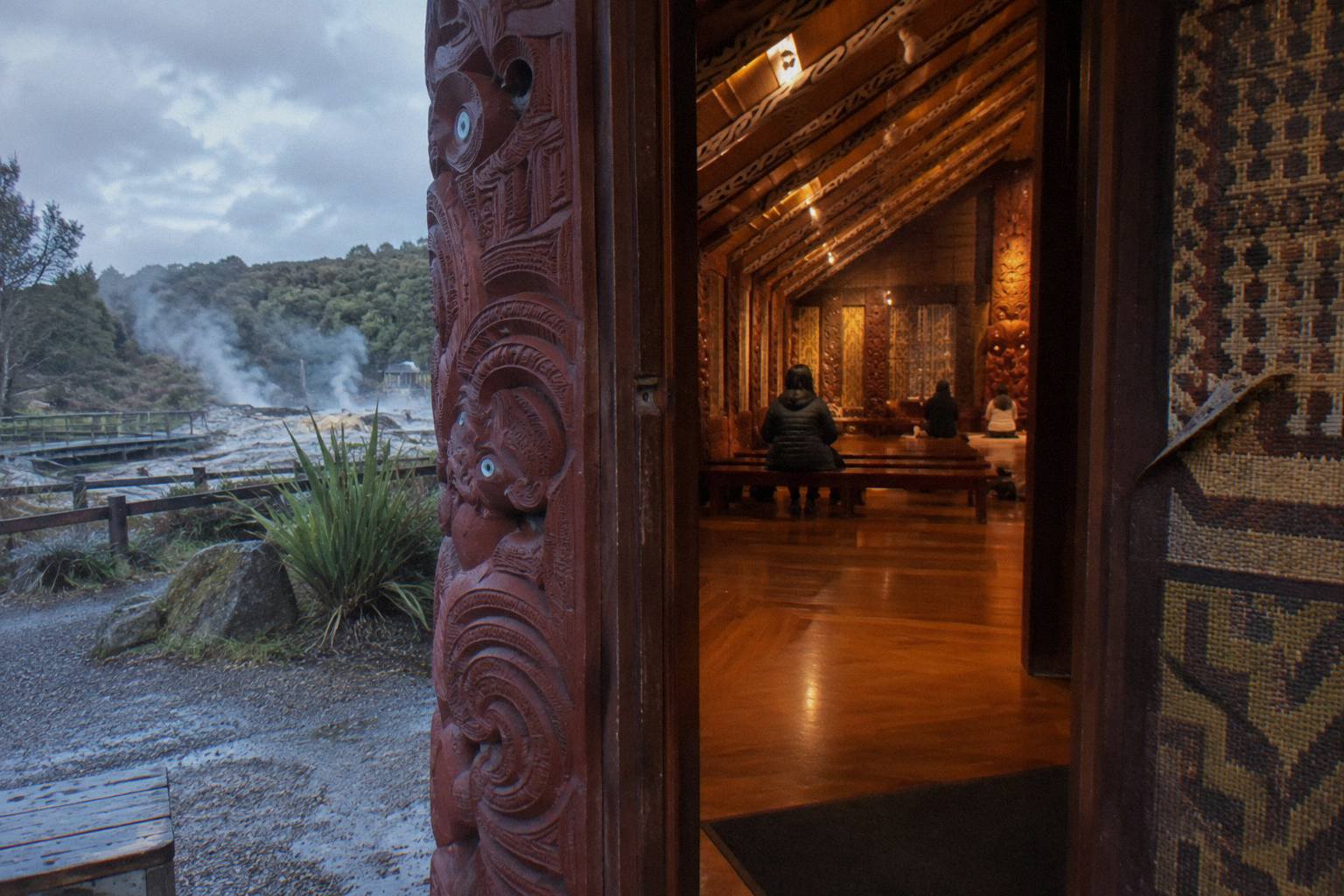
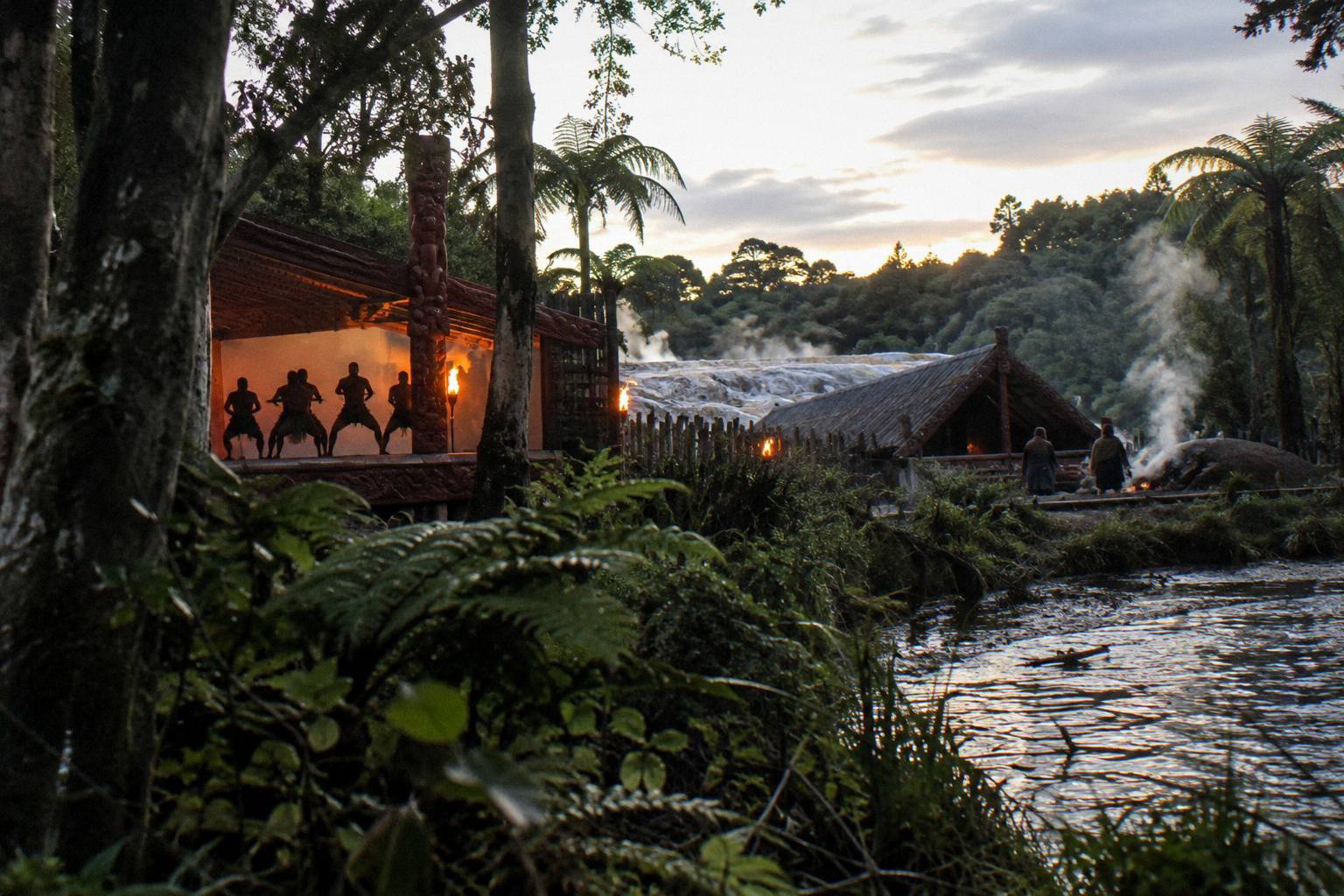
The pōwhiri welcome is the moment a cultural evening begins, and in Rotorua it arrives in three quite different forms. Te Pā Tū opens its summer evening with a haka pōhiri, a cultural welcome the operator performs on arrival at its forest pā, and switches to an Ahi Tūkū fire ceremony in winter. Mitai Māori Village starts its Authentic Hāngi Dinner Experience with a welcoming ceremony, then lists its performance as Pōwhiri, Wero, Waiata, Mōteatea, Poi and Haka. Te Puia's Te Pō evening centres on a 45-minute performance of song and dance in the carved meeting house Te Aronui a Rua.
This page sticks to what the operators themselves publish about their welcomes. The deeper protocol of a pōwhiri, its history and its meanings are not on the operators' pages, so they are not explained here; what follows is the decision-useful material: how each evening opens, what each welcome leads into, and the practical facts around arrival, transport and timing that shape those first minutes.
What Is A Pōwhiri Welcome At A Cultural Evening?
A pōwhiri welcome is the formal ceremony that opens a Māori cultural evening, the moment hosts receive and greet visitors before the performance and shared meal that follow. Operators in Rotorua stage it differently: Te Pā Tū opens its summer evening with a haka pōhiri and its winter evening with an Ahi Tuku fire ceremony, Mitai lists pōwhiri first in its cultural performance, and Te Puia instead describes a 45-minute performance of song and dance.
Beyond those lines, the operators publish little about the pōwhiri itself, and this page does not add to what they say. There is no operator description of the protocol's steps, of who does what during a welcome, or of the history behind it. Readers who want the cultural background will find the operators' own words on their sites, and the practical detail worth learning before booking is what each evening actually contains, how long it runs and how you get there.
What can be compared honestly is the shape of each evening. All three dinners pair the welcome or performance with a hāngī-based meal, and all three run roughly two and a half to three and a half hours, though the figures belong to specific products and never cross over. The kapa haka concert evening guide covers the performance side of these nights in more depth, and the haka performance at a cultural dinner guide looks at the haka elements specifically.
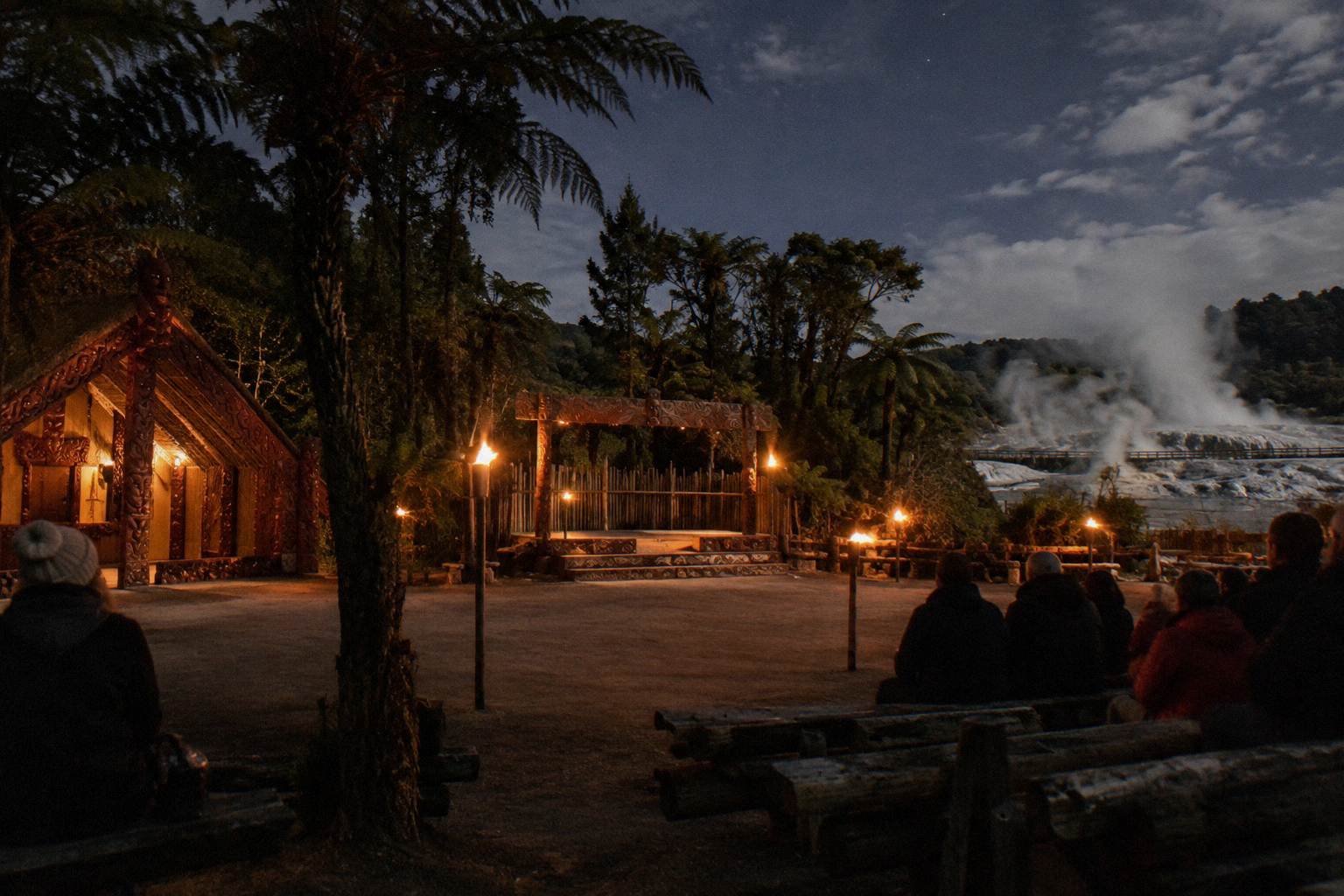
A useful distinction when reading any cultural evening description is between the welcome and the show. At Te Pā Tū the two are woven together: the haka pōhiri or fire ceremony opens the night, and kapahaka follows in the forest amphitheatre Tūāpapa in summer or across service in winter. At Mitai the welcoming ceremony comes first, the performance follows as its own listed segment, and the evening continues with the hāngī unveiling, the buffet dinner, question time and a bush walk. At Te Puia the performance is the cultural heart of a shorter evening that also includes hot chocolate on the geyser terrace and a hāngī buffet in the Pātaka Kai Restaurant and Bar.
| Evening | Operator's word for the opening | What follows, per the operator |
|---|---|---|
| Te Pā Tū, Tū Te Rā (summer) | Haka pōhiri, a cultural welcome on arrival | Kapahaka in the forest amphitheatre Tūāpapa, forest kai horotai, hāngī lifting, three-course feast |
| Te Pā Tū, Tū Te Ihi (winter) | Ahi Tuku fire ceremony welcome | Kai horotai, broth and kawakawa tea, fireside wānanga, kapahaka, Matariki-inspired feast |
| Mitai Authentic Hāngi Dinner | Welcoming ceremony; Pōwhiri heads the performance list | Wero, Waiata, Mōteatea, Poi and Haka, hāngī unveiling, buffet dinner, question time, bush walk |
| Te Puia Te Pō | Performance of song and dance in a carved meeting house | Hot chocolate on the geyser terrace, hāngī buffet dinner in Pātaka Kai Restaurant and Bar |
How Does Each Rotorua Evening Open?
Te Pā Tū opens with a haka pōhiri performed on arrival in summer and an Ahi Tuku fire ceremony in winter; the operator says stories are then relayed through haka, song and drama. Mitai opens with a welcoming ceremony and then performs its listed programme of Pōwhiri, Wero, Waiata, Mōteatea, Poi and Haka, with question time afterwards. Te Puia's 5:30pm evening features a 45-minute performance of song and dance in a carved meeting house.
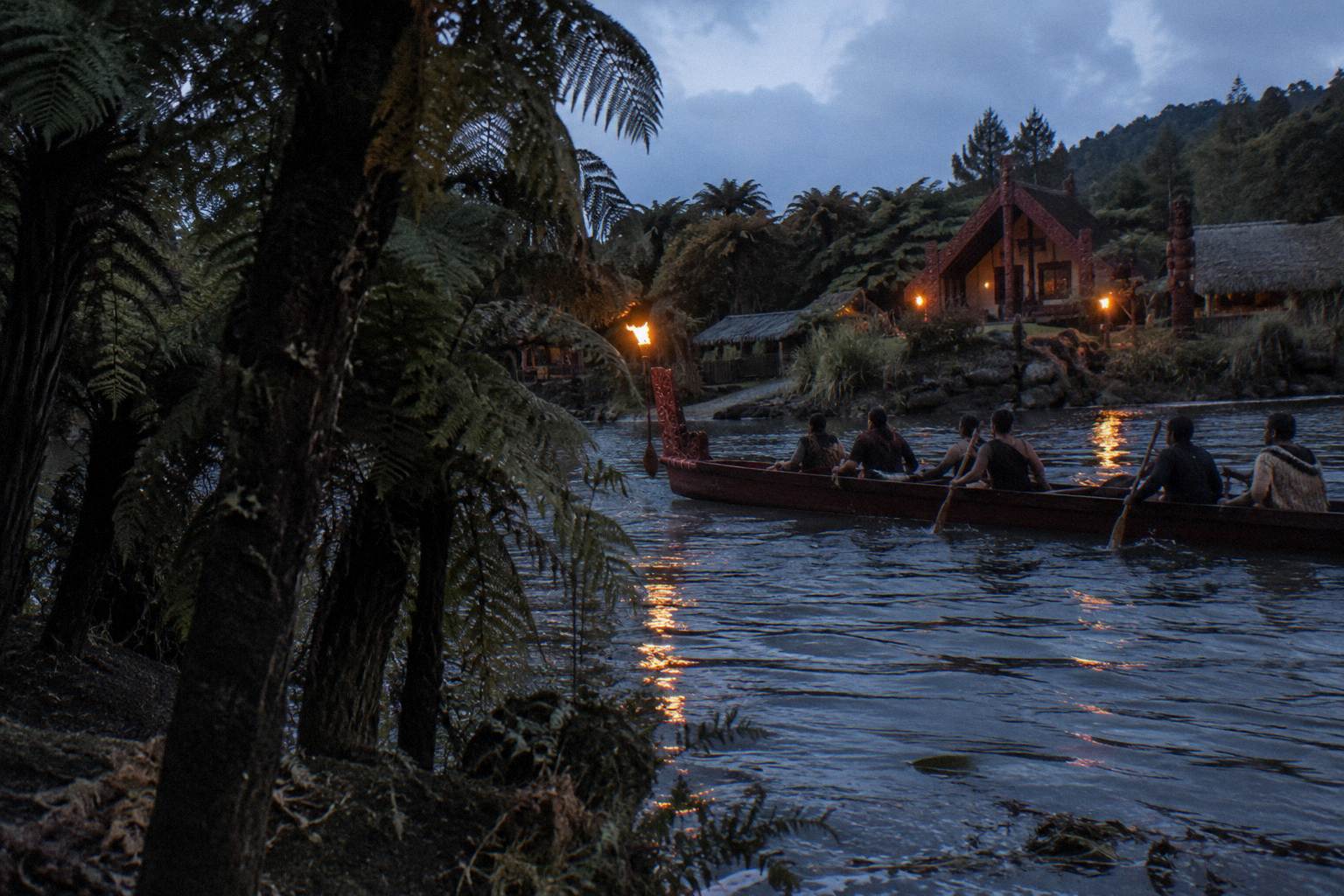
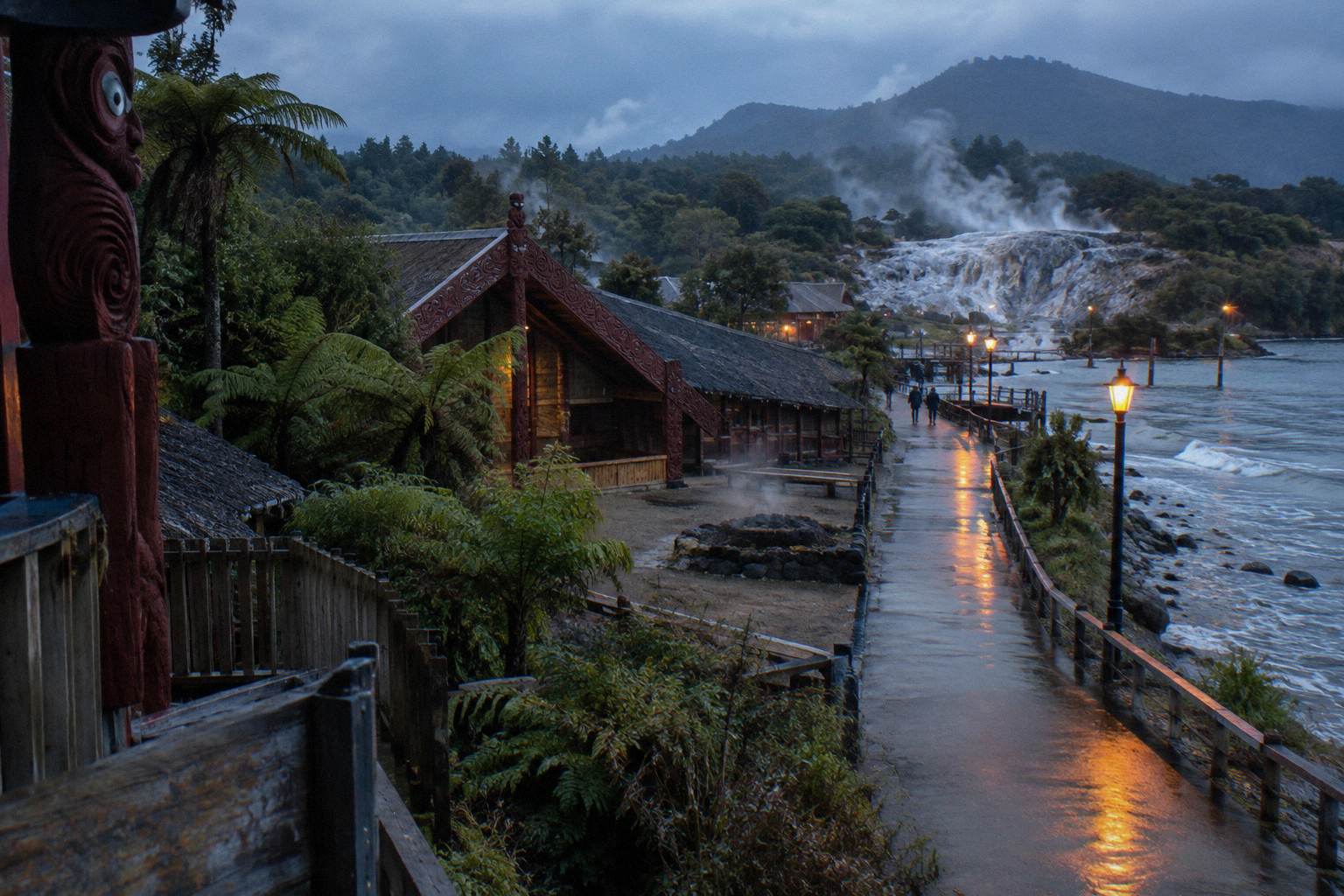
The three openings share a purpose, receiving guests before the meal, but they sit in very different settings. Te Pā Tū's village is a forest pā in tawa forest a short coach ride south of central Rotorua, and the operator's summer page describes the haka pōhiri happening right at arrival, with torchlight later guiding guests to the feast. Mitai's evening takes place at 196 Fairy Springs Road, where the operator's programme includes warriors paddling a waka down the Wai-o-Whiro Stream as part of the night. Te Puia's Te Pō runs inside the geothermal valley at 20 Hemo Road, Whakarewarewa, with the performance indoors in the carved meeting house.
Those settings matter for planning because they change what the first minutes feel like in practical terms. At Te Pā Tū, return transport from central Rotorua is included, so arrival happens as a group by coach. At Mitai, complimentary transfers from registered accommodation exist in limited numbers and must be booked, and they close at capacity; otherwise there is free on-site parking. At Te Puia no hotel transfer is stated for Te Pō, and the operator instead names the City Ride bus every 30 minutes until 6PM, Uber and taxi, plus free parking on a cashless site.
Length also differs, and each figure belongs to its own product. Te Pā Tū runs about 3.5 hours in summer and 3 hours in winter, which the operator's own summer evening page and winter page state separately. Mitai's dinner experience is about 3 hours. Te Puia's Te Pō is about 2.5 hours from 5:30pm, with dinner sittings at 5:30pm and 7:15pm.
If the welcome itself is the reason you are choosing, the evening that names it most directly is Mitai's, whose performance list is published element by element. If the setting of the welcome matters most, Te Pā Tū's forest pā and Te Puia's geothermal valley are the two distinct backdrops. These three dinners are the ones compared throughout this site:
Each card above goes to the operator's live booking page through this site, with prices as the operators state them and no booking-platform figures.
What Happens At The Te Pā Tū Welcome, Summer And Winter?
Te Pā Tū's welcome changes with the season: Tū Te Rā, October to April, opens with a haka pōhiri on arrival and runs 3.5 hours; Tū Te Ihi, May to September, opens with an Ahi Tuku fire ceremony and runs 3 hours. Summer admission is NZD 290 adult and NZD 125 child; winter is NZD 280 and NZD 115. Both evenings include return coach transport and a hāngī-based feast.
The summer evening, Tū Te Rā, is described by the operator as a harvest celebration. After the haka pōhiri, kapahaka is performed in the forest amphitheatre Tūāpapa, guests are served forest kai horotai, summer canapés the operator lists by example: pāua wonton, kawakawa leaf filled with prawn, hāngī root-vegetable croquette and a kūmara crisp with venison. Guests view the hāngī lifting and the spit roast, then eat a three-course seasonal feast in the wharekai, with a complimentary digestif of the chef's choice and rongoā herbal tea, and torchlight on the way to the feast. The operator says the evening explores concepts, rituals and stories of ancient Māori warfare and peace.
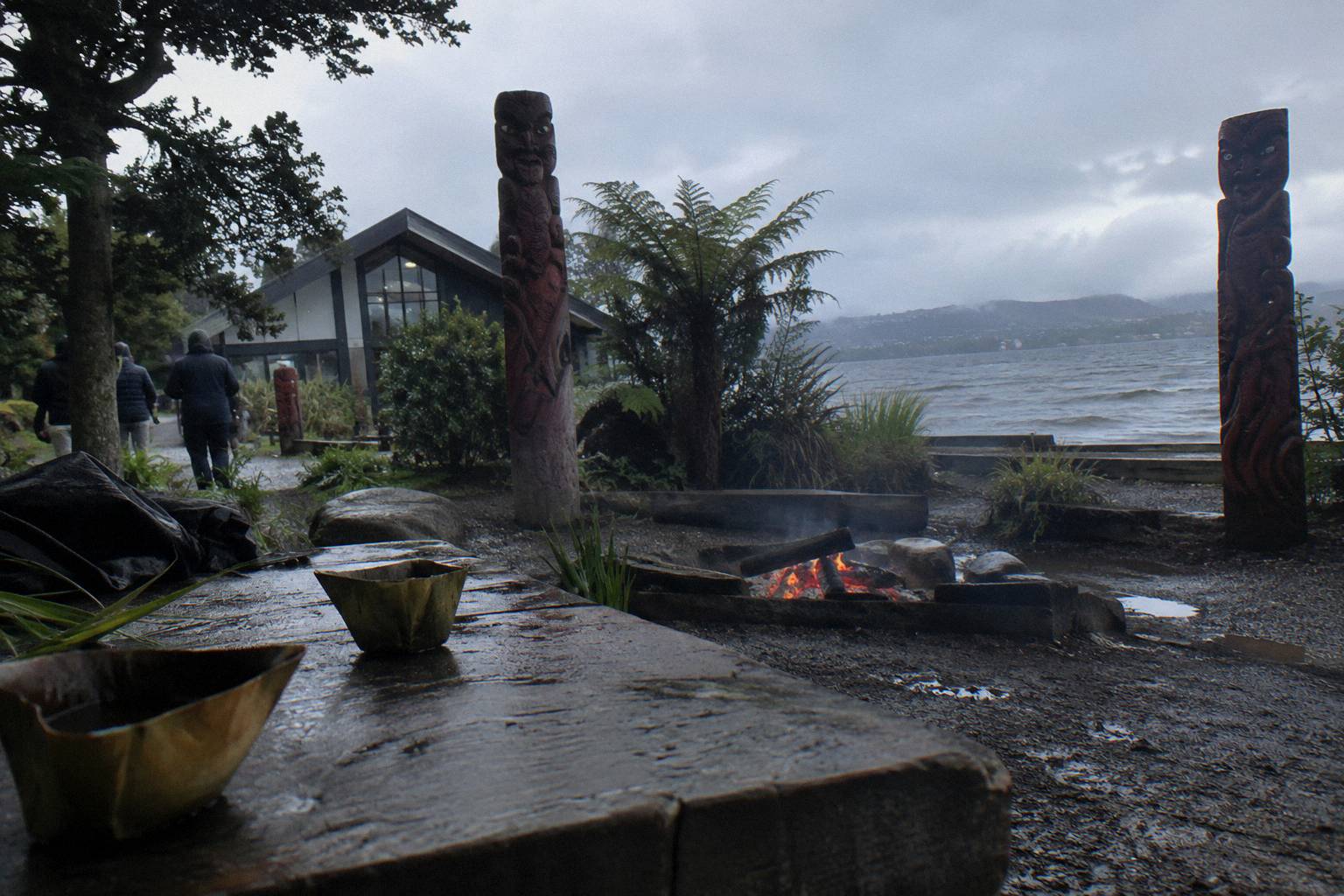
The winter evening, Tū Te Ihi, reframes the whole night around Matariki. The welcome is the Ahi Tuku fire ceremony, and the evening continues with kai horotai, a hearty broth and steaming kawakawa tea, then fireside wānanga, which the operator describes as conversation, history, games, instruments and traditions, kapahaka, and a Matariki-inspired Māori fusion feast served family style with a traditional in-ground hāngī of lamb and vegetables. The operator sets this evening in 1800s Aotearoa, between the 1840 Treaty of Waitangi and the 1886 Mt Tarawera eruption, which is the operator's own framing. A complimentary aperitif and rongoā tea are included, and the night closes with a poroporoaki farewell. The operator's winter evening page carries the full description.
| Tū Te Rā (summer, October to April) | Tū Te Ihi (winter, May to September) | |
|---|---|---|
| Welcome | Haka pōhiri, a cultural welcome on arrival | Ahi Tuku fire ceremony welcome |
| Duration | 3.5 hours | 3 hours |
| Adult price | NZD 290 | NZD 280 |
| Child price | NZD 125 | NZD 115 |
| Performance setting | Forest amphitheatre Tūāpapa | Shared across service, with fireside wānanga |
| Meal | Forest kai horotai, then a three-course seasonal feast in the wharekai | Kai horotai, broth, family-style Matariki-inspired feast with in-ground hāngī |
| Drinks included | Complimentary digestif and rongoā herbal tea | Complimentary aperitif and rongoā tea |
| Transport | Return coach from central Rotorua included | Return coach from central Rotorua included |
One timing note trips people up: the evening start time is not published. A combo page on the operator's site mentions a 5.00pm show for a Taupō combination product, and that line belongs to that product only; it is not the dinner evening's start time. Booking confirmation is the place the actual time appears. Questions can go to the operator directly on 0508 826 254 or bookings@maoriculture.co.nz.
The welcome at the centre of this article belongs to the Te Pā Tū cultural experience with dinner, this site's featured evening, and the seasonal pages it links to are the operator's own. Dietary options the winter page lists are vegetarian, pescatarian and gluten free, with the operator noting it cannot guarantee coeliac safety; the page also notes a licensed bar with Māori wine pairing and non-alcoholic pairings. Children are welcome, and the winter page says the site is wheelchair and buggy accessible. If this is the evening that fits, tickets and current availability are on the operator's live page: Check availability
What Does The Mitai Welcoming Ceremony Include?
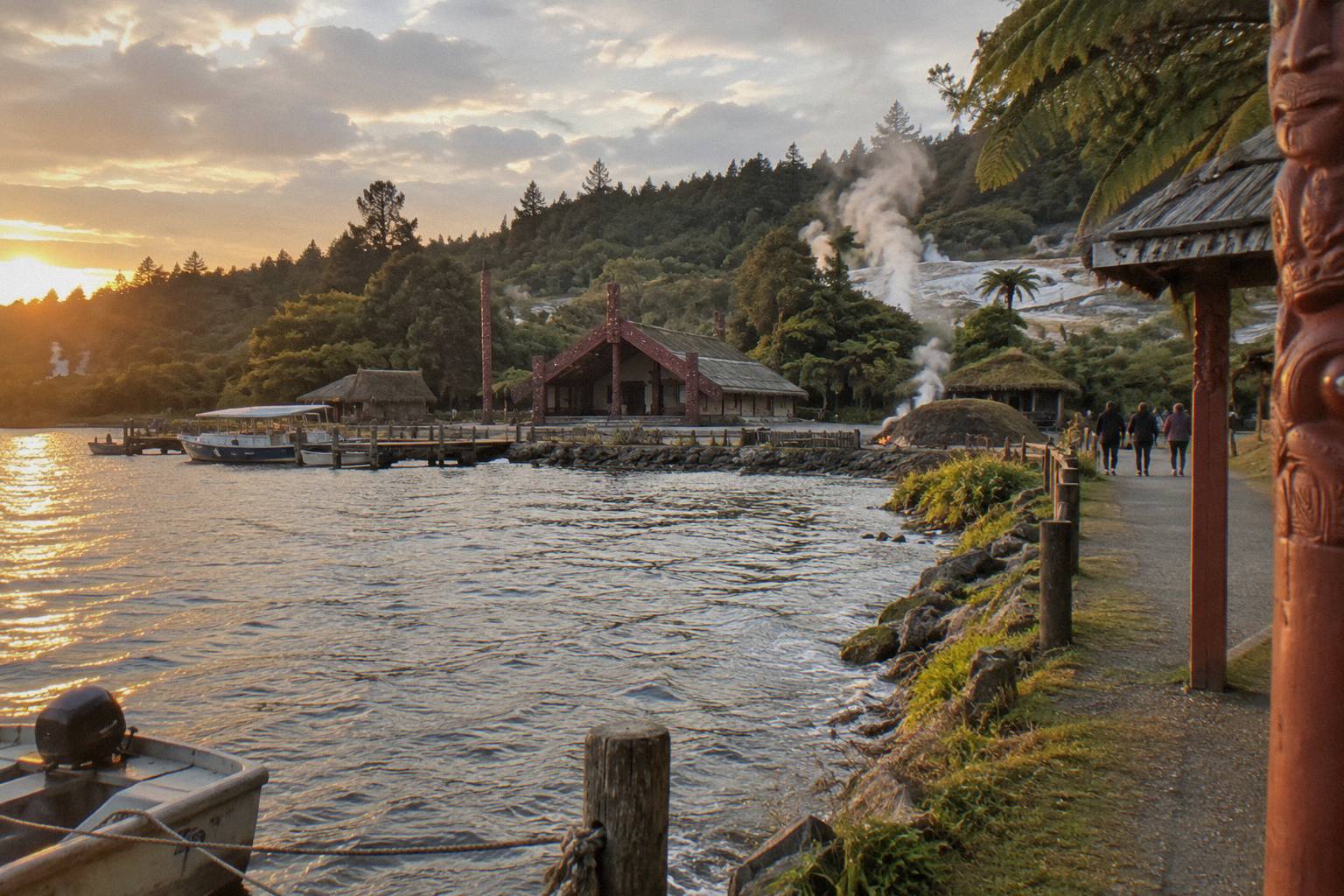
Mitai's Authentic Hāngi Dinner Experience, about 3 hours, opens with a welcoming ceremony and then performs a programme the operator lists as Pōwhiri, Wero, Waiata, Mōteatea, Poi and Haka, followed by the hāngī unveiling, a buffet dinner, question time and a bush walk to the sacred spring Te Puna Tapu o Tūhoe. Adult admission, from age 14, is NZD 188.34 and child, ages 4 to 13, is NZD 115.74.
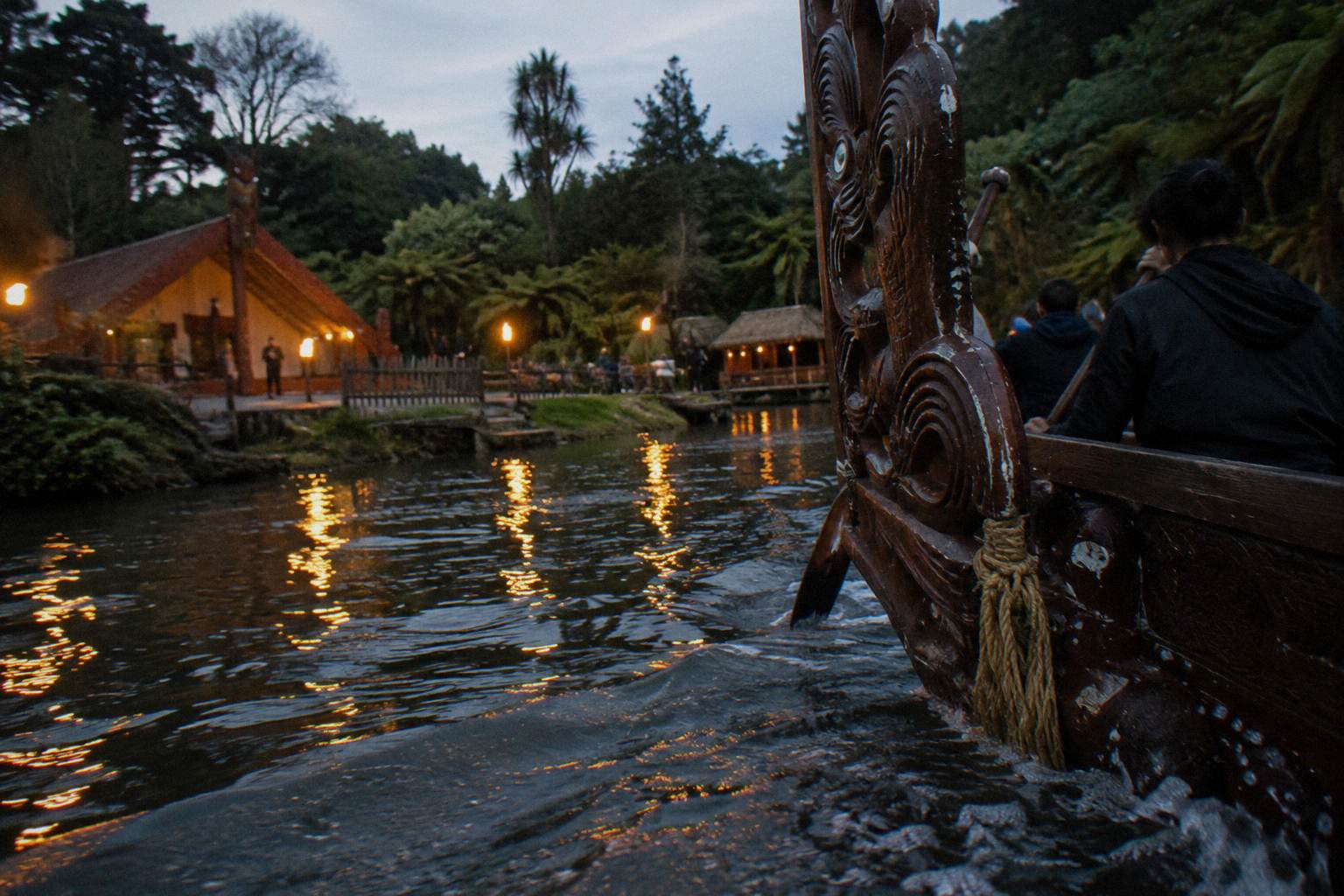
Mitai is the only one of the three operators that names each element of its performance in a published list, which makes its evening the easiest to preview in advance. The welcome is followed by the hāngī unveiling, where guests see the earth oven opened; the operator says its hāngī is cooked in a hole 1 to 2 m deep for 3 to 4 hours and includes meat, chicken and kūmara. The performance list then runs from Pōwhiri through Wero, Waiata, Mōteatea and Poi to the Haka, which the operator calls the fiery Haka Māori war dance, its own wording. Question time follows dinner, and the night ends with a bush walk to the old fortified village site, the sacred spring Te Puna Tapu o Tūhoe, and glow worms.
The operator describes itself as a family owned and operated business and speaks of its Te Arawa people, and the whole evening sits on one site at 196 Fairy Springs Road with free on-site parking, a bar where outside alcohol is not permitted, limited highchairs and limited umbrellas. Dress guidance is the most specific of the three: comfortable clothing and walking shoes, warm clothing in winter, a hat in summer and a jacket when raining, with photography welcomed in designated areas. Some wheelchair limits apply on the forest walk.
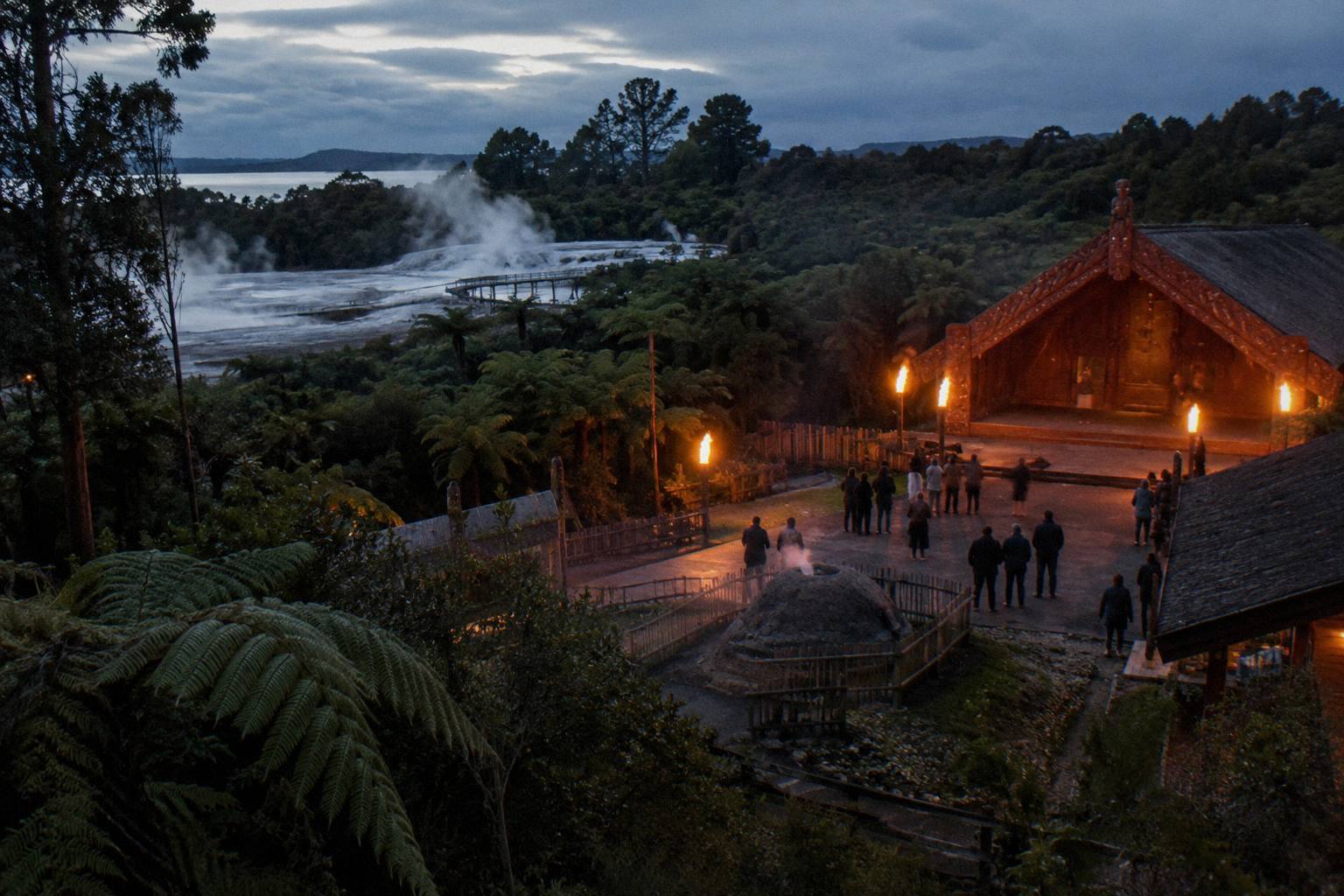
Two practical gaps are worth naming once each. The dinner start time is not on the operator's public pages; it is set in the booking widget, so the confirmation email is the reliable source. The cancellation terms are likewise set in the booking widget rather than published, and the operator can be asked directly on +64 7 343 9132 or reservation@mitai.co.nz. The operator's own hāngi dinner experience page carries the full programme and the dietary note: Mitai says it is unable to cater to all dietary needs such as vegan, though some requests could be met, so any requirement should be raised at booking.
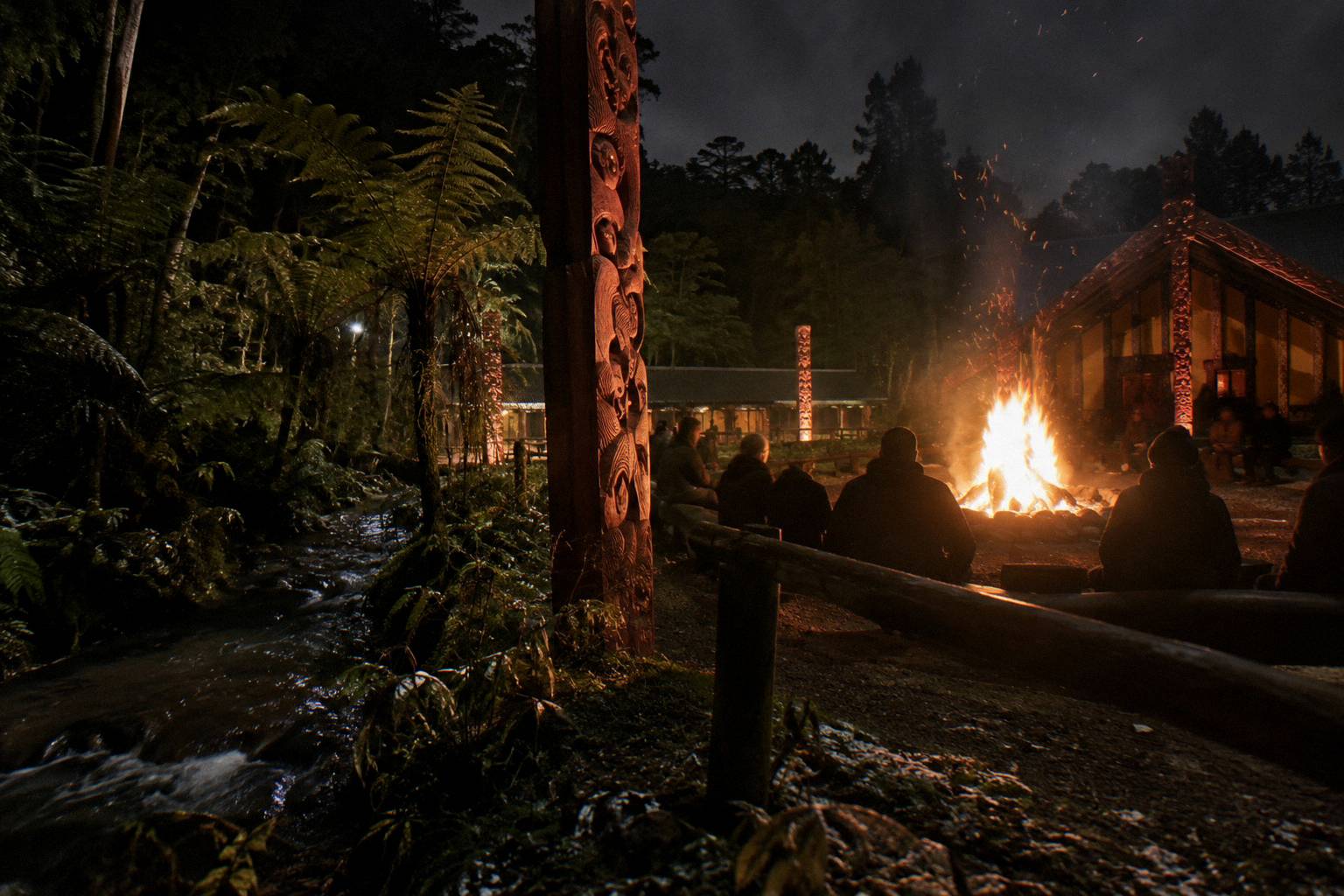
Mitai also runs shorter and cheaper variants that skip dinner: a 1.5-hour Māori Immersive Cultural Village Experience at NZD 110.48 adult and NZD 73.65 child, a 2-hour hāngī lunch and show at NZD 156.77, and a Polynesian Spa, hāngī and cultural package at NZD 222.01. For readers whose main interest is the dinner evening with the full welcome and performance, the card below is the product described above:
What Is The Te Puia Welcome Performance Like?
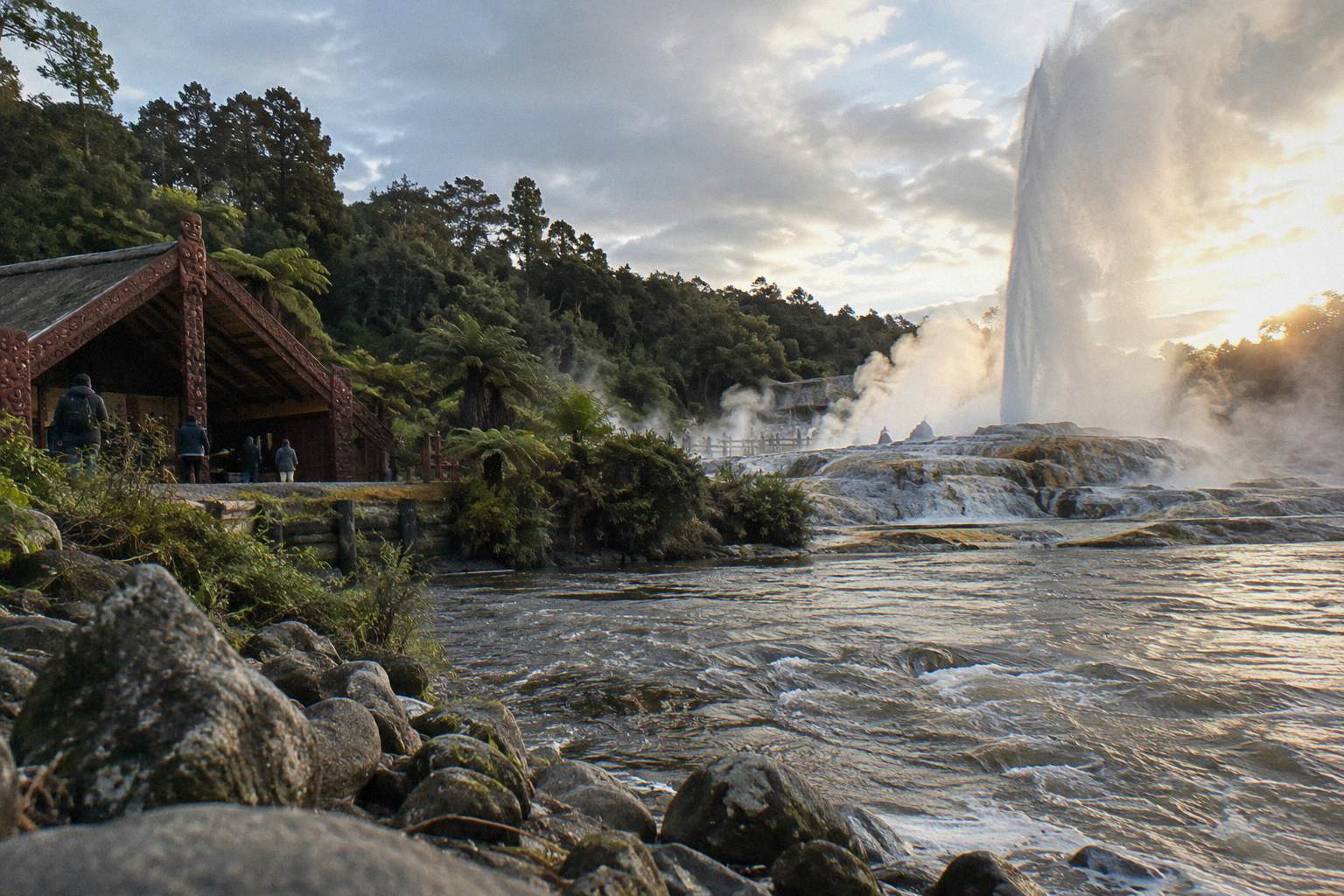
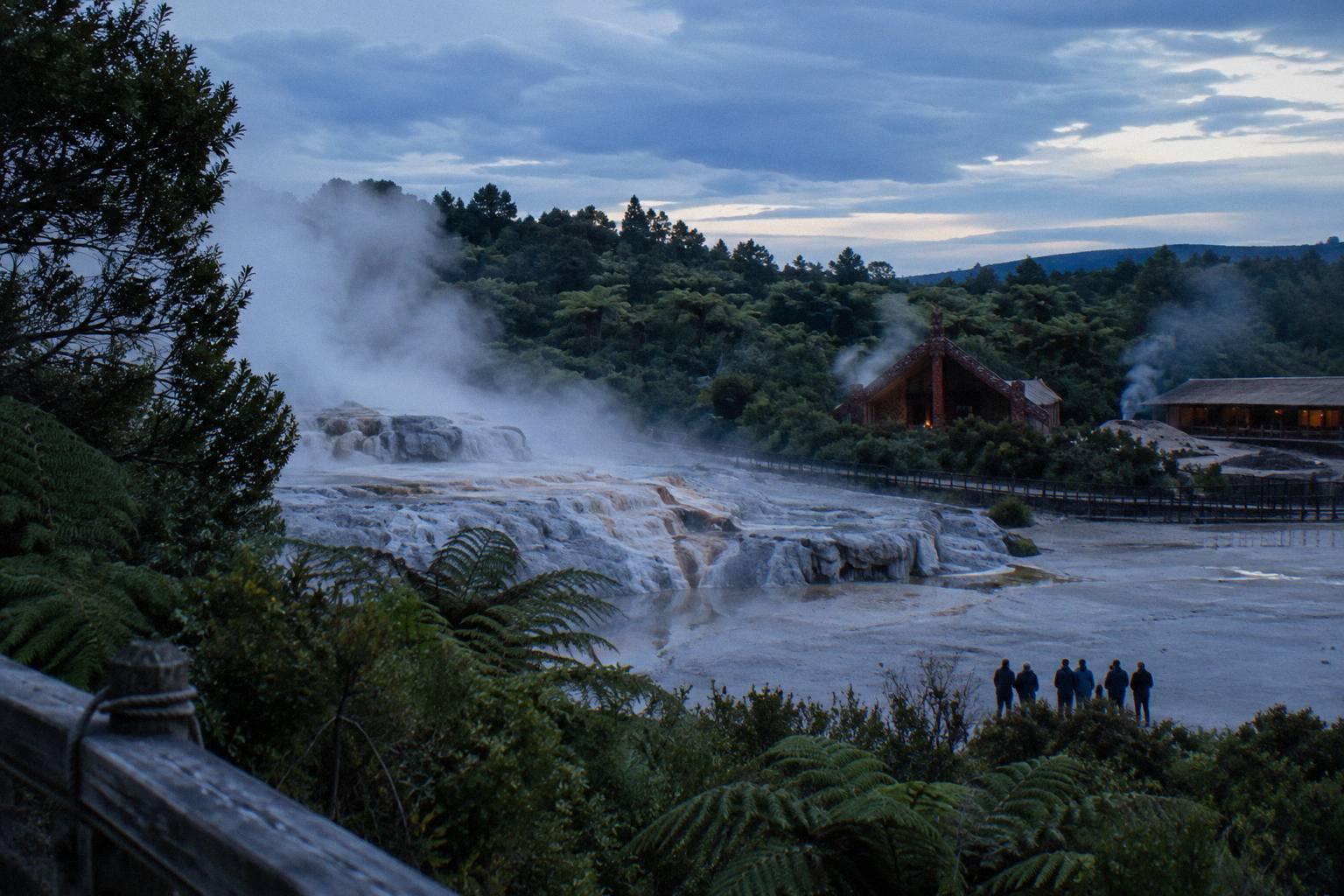
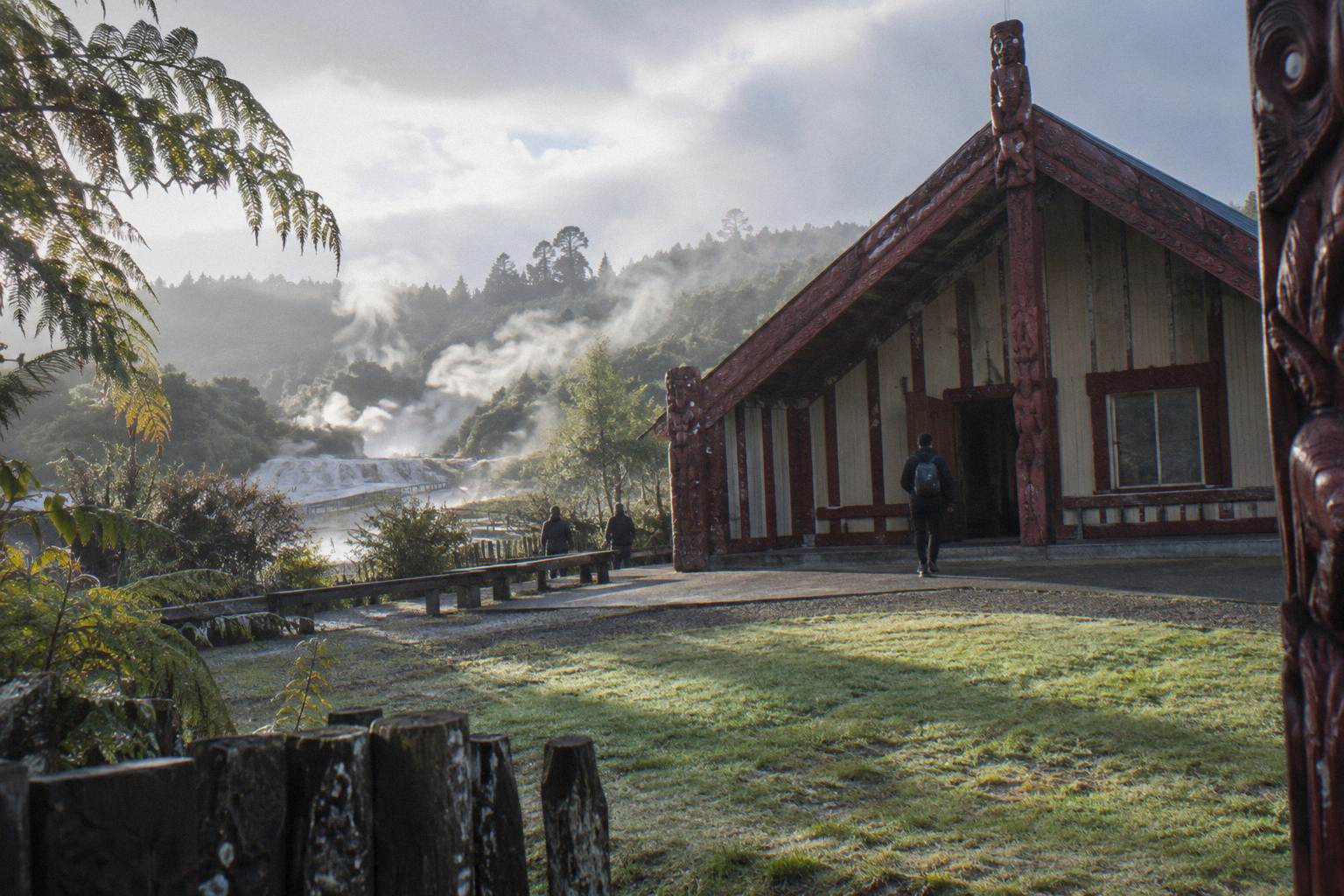
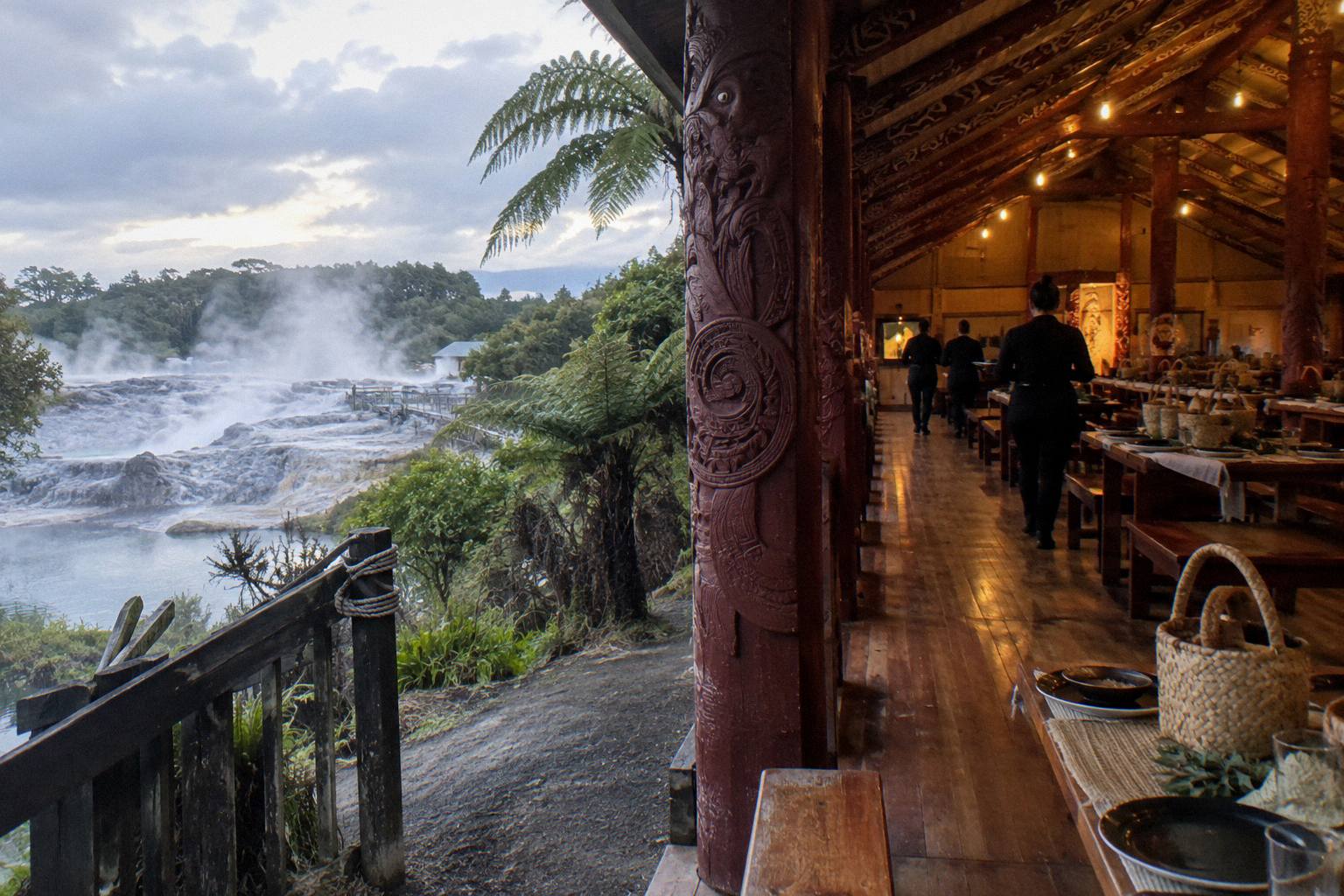
Te Puia does not frame its opening as a pōwhiri; the published description is a performance of song and dance inside Te Aronui a Rua, a carved meeting house on the site. What makes the evening distinct is the geothermal valley around it: the operator describes itself as kaitiaki, guardian, of the Whakarewarewa Geothermal Valley, hosts the New Zealand Māori Arts and Crafts Institute and a Kiwi Conservation Centre, and states that Pōhutu Geyser erupts up to 20 times a day to heights of up to 30 m. Hot chocolate on the geyser terrace is served between the performance and dinner, per the operator's night experiences page.
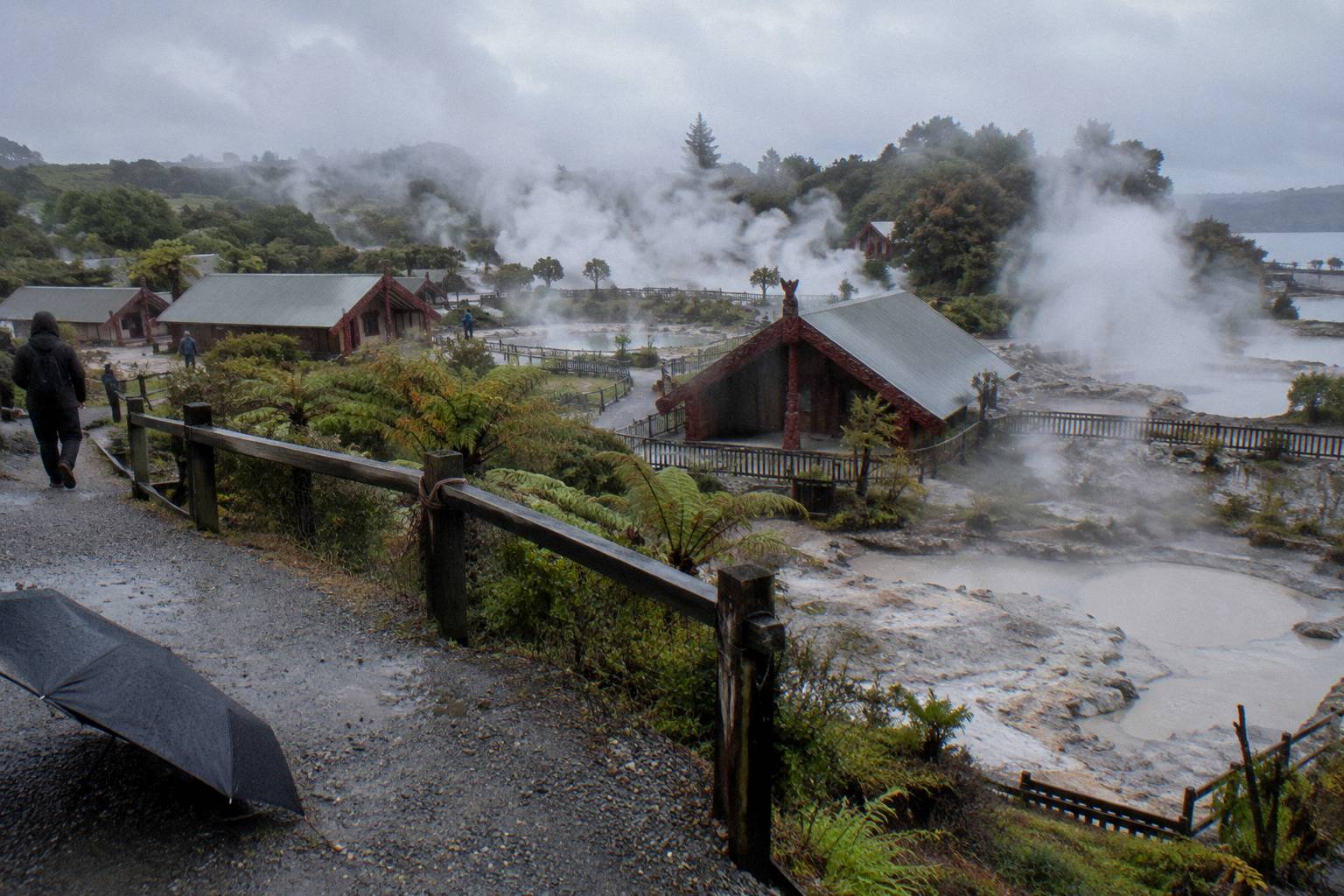
Two dinner sittings run at 5:30pm and 7:15pm, and the operator asks guests to check in 15 minutes early or the ticket is forfeited, a rule worth building into the drive. The site is cashless, and under 4s are free per the booking page; a child price for the evening is not stated, so families should ask Te Puia directly through its own site. Dietary options for Te Pō are not stated either; the same advice applies, tell the operator at booking.
Cancellation here is clear and strict: amend or cancel by phone or email at least 48 hours before, 72 hours for groups of 10 or more, for a refund; inside that window the ticket is non-refundable.
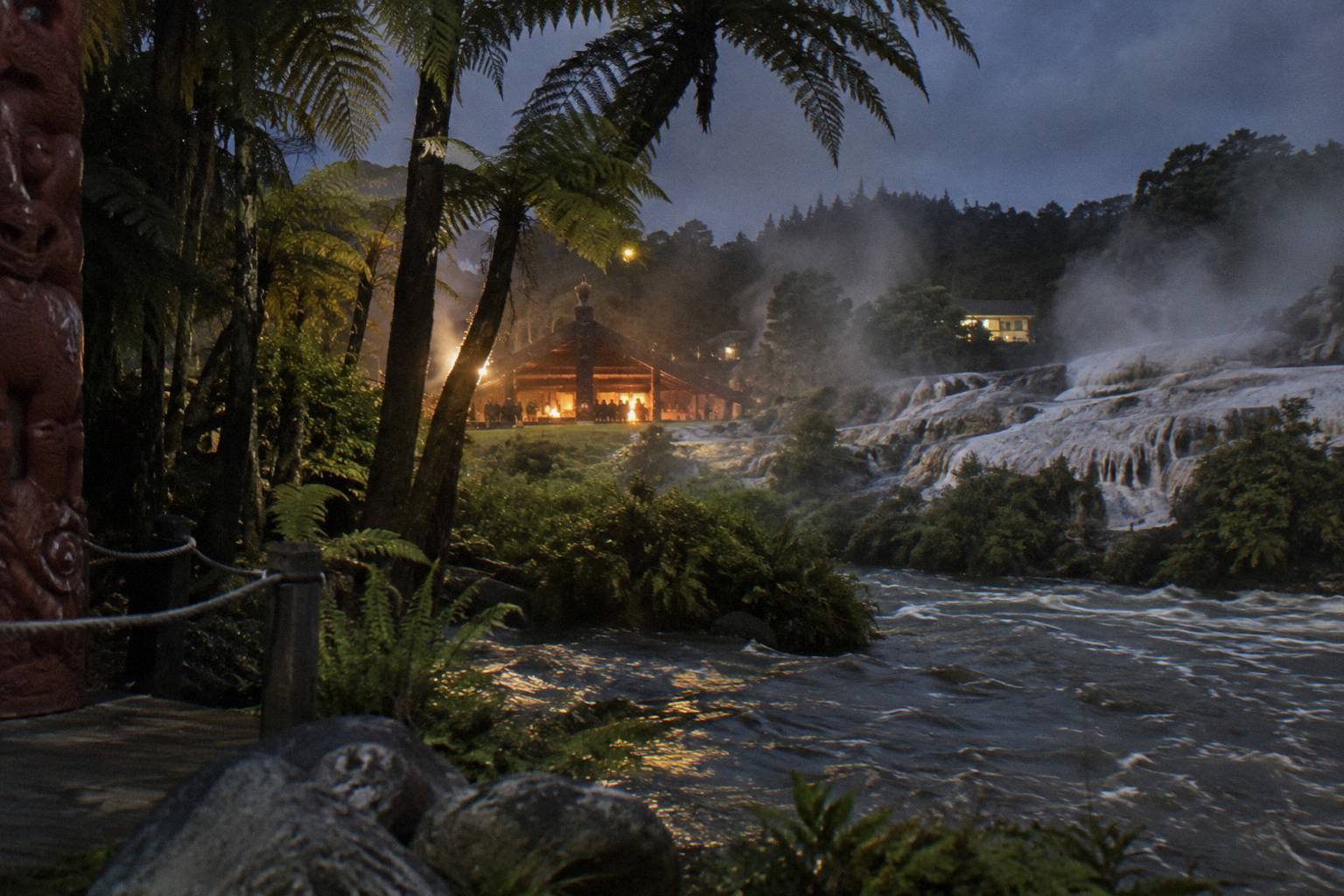
For visitors who want the valley in daylight as well as the evening, the Te Pō Combo starts from 4pm daily with a 90-minute guided tour before the dinner and performance, runs about 4 to 4.5 hours in total and is NZD 290, the operator's price, with a child price not stated. The operator calls it its most popular night experience, which is the operator's own label. Dinner plus the Mārama Geyser Light Trail, an all-weather 1.5 km lighting walk at NZD 49 on its own, is NZD 146 combined. The evening on its own:
What Do The Operators Say About Manaakitanga And Hosting?
Te Pā Tū defines manaakitanga on its own about page as a firmly held value and practice within iwi Māori, centred at a simple level on strengthening the bonds between a host and their visitors through benevolence and hospitality, even though it is frequently referred to as simply hospitality. The same operator speaks of kaitiakitanga, care of the natural environment, tikanga, protocols, and mātauranga, knowledge handed through generations.
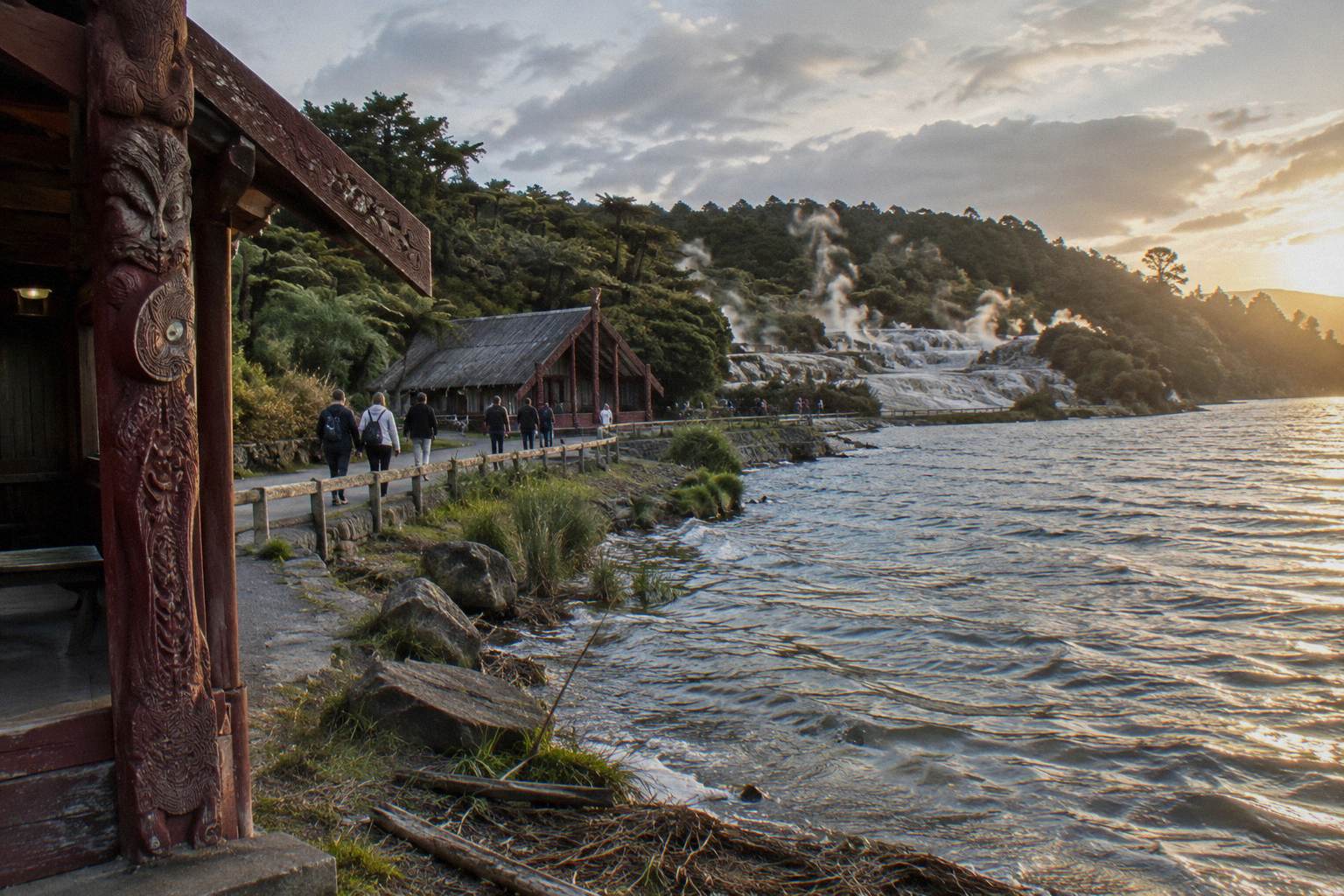
These are the operators' own words, and they are the fullest published statement of the values behind these evenings. Te Pā Tū is owned and operated by Tauhara North No.2 Trust as a Māori Cultural Experience, per the operator's about page, and the trust's ownership is part of what the evening presents. The operator also describes pā as places where people meet, celebrate and strengthen their understanding of who they are. Mitai describes itself as family owned and operated and speaks of its Te Arawa people. Te Puia is iwi owned under the NZMACI Vesting Act 2020.
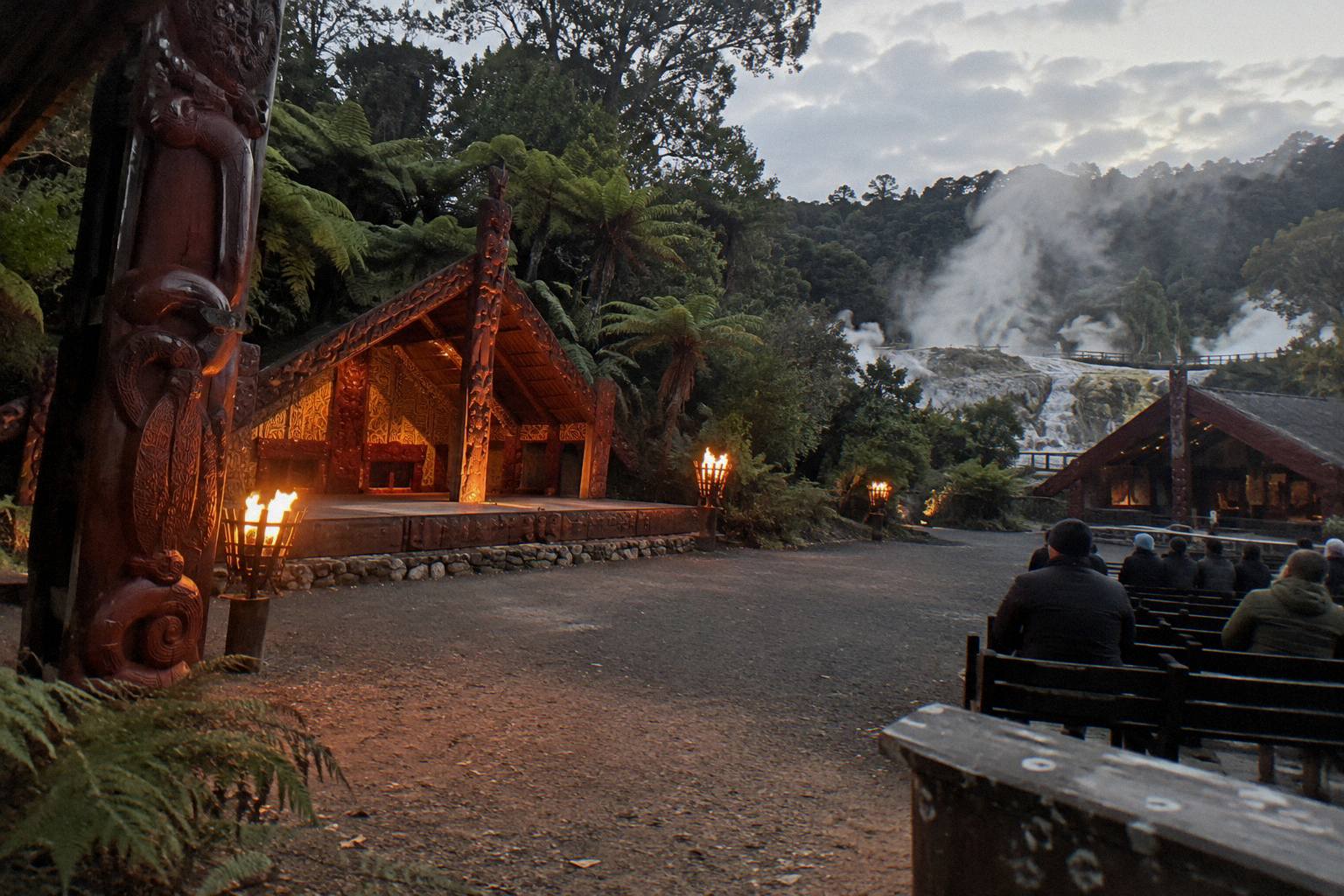
No operator publishes a list of Māori values beyond these lines, and generalisations about what Māori people think or do have no place on a planning page. What readers can hold onto is concrete: each operator names the values it says guide its hosting, and each evening is built by an owner-operator with a stated connection to the land and valley it works on. Readers preparing for the social side of the evening may also find the marae etiquette for evening guests guide useful, and the wider question of which village in Rotorua offers an evening meal is answered separately.
The word pā itself is worth one pause, because two of these evenings use it. Te Pā Tū's village is a forest pā in tawa forest, and the operator describes pā as meeting places. Mitai's bush walk visits an old fortified village site. Both are the operators' descriptions of their own places.
Arrival, Transport And The First Minutes Of The Evening
Arrival logistics differ sharply between the three evenings: Te Pā Tū includes return coach transport from central Rotorua, so guests arrive together; Mitai offers limited complimentary transfers from registered accommodation that must be booked, plus free on-site parking at 196 Fairy Springs Road; Te Puia states no hotel transfer and points to the City Ride bus, Uber, taxi and free parking, with check-in 15 minutes early or the ticket is forfeited.
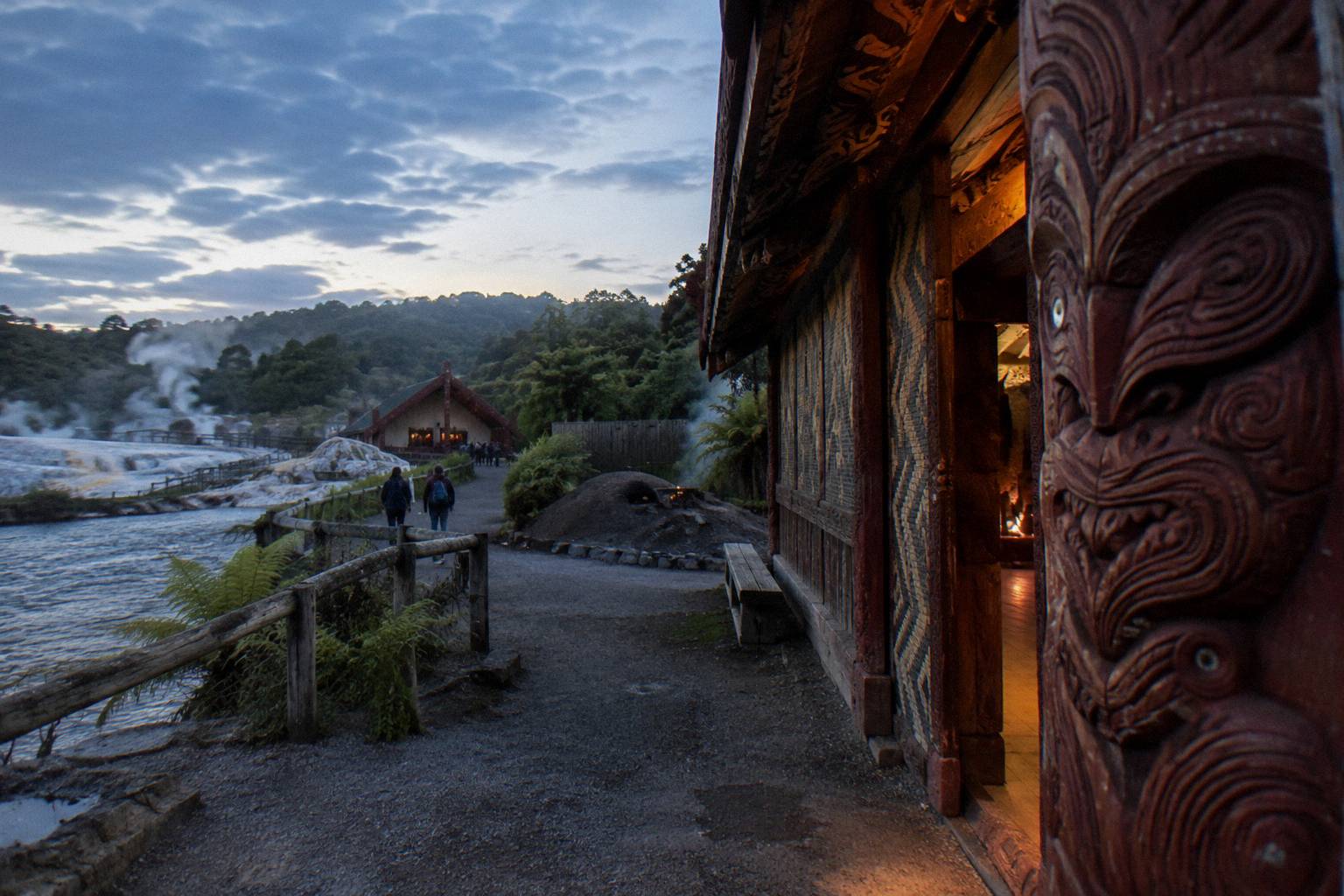
The welcome sets the tone, but the logistics set the stress level. The evening whose arrival is simplest is Te Pā Tū's, because the coach is part of the product on both seasonal evenings and nobody has to find a forest pā whose address the operator deliberately does not publish; the pick-up point in central Rotorua is on the booking confirmation. Mitai sits at the other end of the self-arrival spectrum for anyone not in registered accommodation, though the on-site car park is free and the whole programme happens at one address. Te Puia is between the two: the address is public, parking is free, and the bus, Uber and taxi options are named by the operator.
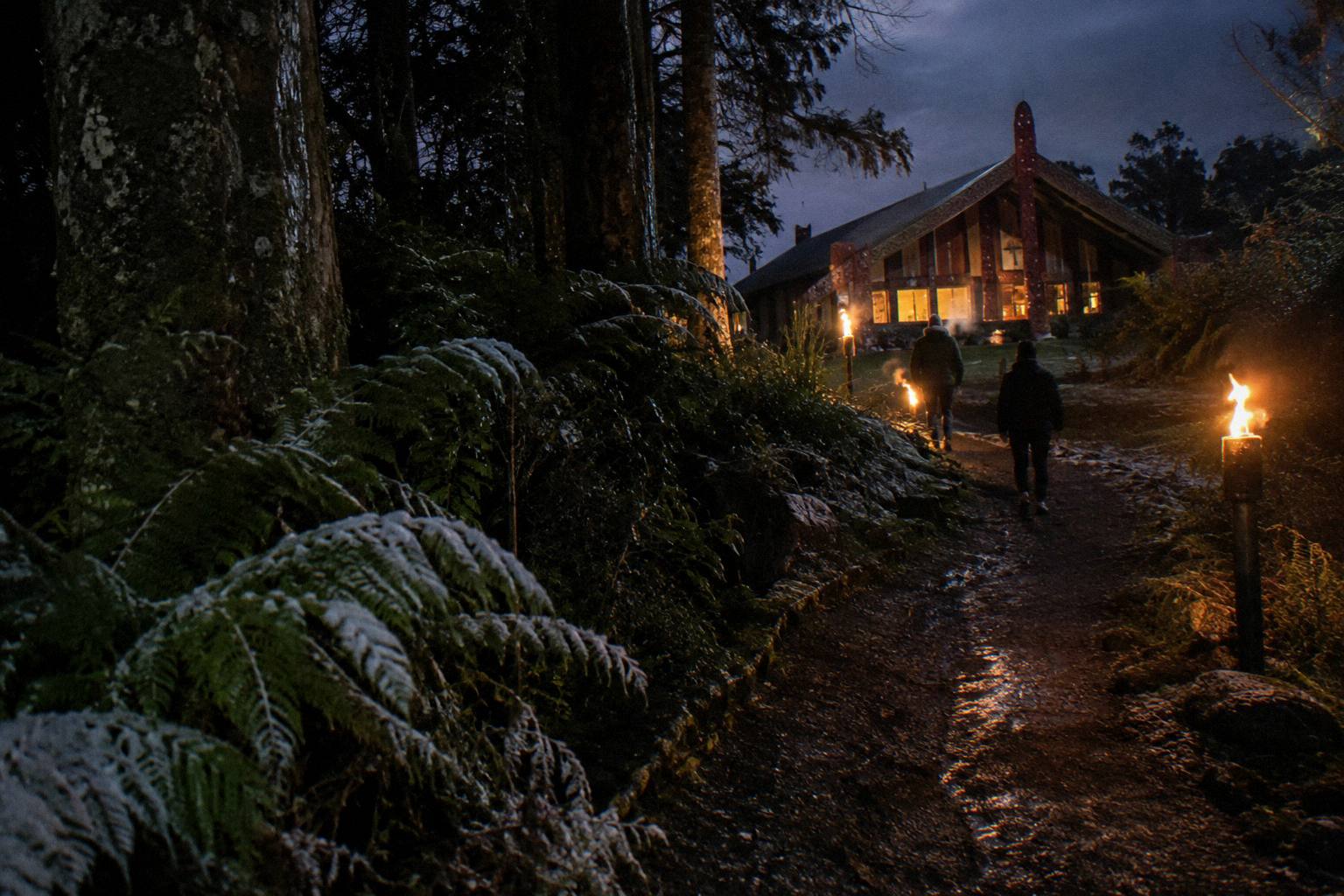
Timing rules deserve the same attention as transport. Te Puia's 15-minute early check-in is enforced, per the operator's FAQ, and the two dinner sittings at 5:30pm and 7:15pm mean the evening's shape depends on which sitting is booked. Te Pā Tū's start time is not published, so the confirmed booking time is the only reliable figure, and the coach pick-up precedes it. Mitai's start time is likewise set in the booking widget rather than on the public pages. Anyone connecting these evenings to a wider Rotorua plan can read the pickup and transport to Rotorua cultural evenings guide.
| Evening | Transport stated by the operator | Address published? | Arrival rule stated |
|---|---|---|---|
| Te Pā Tū (both seasons) | Return coach from central Rotorua included | No; a forest pā a short coach ride south of central Rotorua | Not stated; coach pick-up time on confirmation |
| Mitai Hāngi Dinner | Limited complimentary transfers from registered accommodation, must be booked; free on-site parking | Yes, 196 Fairy Springs Road, Fairy Springs | Not stated; start time set in the booking widget |
| Te Puia Te Pō | None stated; City Ride bus every 30 minutes until 6PM, Uber, taxi; free parking | Yes, 20 Hemo Road, Whakarewarewa | Check in 15 minutes early or the ticket is forfeited; cashless site |
One more planning fact belongs here rather than scattered later: cancellation windows. Te Pā Tū's own terms give a 100% refund if cancelled two days before by 12.00pm, 50% one day before by 12.00pm and nothing on the day, with booking and bank fees excluded, and a full refund if the operator cancels and no rebooking suits. Te Puia requires 48 hours, 72 for groups of 10 or more. Mitai's terms sit inside its booking widget, so they should be read at checkout; the same caution applies to whichever booking route is used for any of these evenings, since the terms at checkout are the ones that govern the booking.
Common Mistakes When Preparing For A Pōwhiri Welcome
The mistakes that cost money and comfort are assuming a start time never published, arriving at Te Puia less than 15 minutes early, expecting a transfer not part of the product, and booking a dietary need the operator cannot meet. Te Pā Tū and Mitai publish no evening start time, Te Puia forfeits tickets for late check-in, and Mitai states it cannot cater to all dietary needs such as vegan, so each is avoidable with one question at booking.
The first mistake is inventing a timetable. The 5.00pm line on one Te Pā Tū combo page belongs to a Taupō combination product, not the dinner evening, and using it as a start time risks a missed coach. The fix is simple: book, read the confirmation, and if anything is unclear call Te Pā Tū on 0508 826 254 or Mitai on +64 7 343 9132 before the day.
The second is treating the seasons as interchangeable at Te Pā Tū. The summer and winter evenings differ in welcome, duration, price and menu, and a visitor who reads the summer page in June will arrive expecting a haka pōhiri and 3.5 hours and instead meet a fire ceremony and a 3-hour night at a NZD 10 lower adult price. Checking which season the travel dates fall in, October to April or May to September, settles it.
The third is underestimating self-arrival at Te Puia. The operator names its transport options plainly, and the 15-minute check-in rule is stated without softening. The fourth is dietary: Te Pā Tū's winter page lists vegetarian, pescatarian and gluten free options and says it cannot guarantee coeliac safety; vegan options at Te Pā Tū are not stated. Mitai says it is unable to cater to all dietary needs such as vegan, though some requests could be met. Te Puia's dietary options are not stated. In every case the request belongs in the booking, not in a conversation at the door.
The fifth mistake is confusing venues. Tamaki Māori Village is the former name of Te Pā Tū, so a search can surface both names for one product, and Whakarewarewa The Living Māori Village, a daytime venue with tours from 9am to 3pm and a 12.30pm performance, has no evening dinner at all. Readers weighing the two Rotorua formats side by side can start with the Mitai versus Tamaki versus Te Pā Tū comparison.
For anyone still choosing between the longer immersive evenings and the shorter geothermal night, the combo version of the Te Puia evening adds a 90-minute daytime guided valley tour before the dinner and performance:
Choosing The Evening Whose Welcome Fits Your Night
Choose Te Pā Tū for the longest, most staged welcome, a haka pōhiri or fire ceremony with coach transport included, at NZD 290 adult in summer and NZD 280 in winter; choose Mitai for the published element-by-element performance list, the waka on the Wai-o-Whiro Stream and the lowest adult admission at NZD 188.34; choose Te Puia's Te Pō for the shortest evening, about 2.5 hours, with the geothermal valley at NZD 203.
There is no wrong order to weigh these in, but a worked example shows how the facts decide it. A couple staying central without a car and travelling in January: Te Pā Tū's included coach removes every arrival question, the summer haka pōhiri and 3.5-hour programme fill the evening, and NZD 290 each is the operator's summer price. A family with children aged 6 and 9 in the same month: Mitai's child price of NZD 115.74 for ages 4 to 13 and its explicit welcome-and-performance list make the night easy to preview, and the bush walk and glow worms close it; highchairs are limited, worth mentioning when booking. A traveller with an early morning ahead who still wants the cultural evening: Te Puia's 2.5-hour format from 5:30pm, with a 7:15pm dinner sitting also available, fits a shorter night, and the under 4 free rule and free parking suit young families driving themselves.
Season shifts the Te Pā Tū answer by itself. A July visitor gets the Ahi Tuku fire ceremony, the fireside wānanga and the Matariki-inspired family-style feast at NZD 280 adult and NZD 115 child, in 3 hours rather than 3.5. An April or October visitor sits on the season boundary and should confirm which evening is running on the chosen date, since October to April is summer and May to September is winter on the operator's calendar.
Whatever the choice, the booking page is where the three things this page cannot supply all appear together: the confirmed start time, the checkout terms that govern the booking, and current availability. Rotorua Cultural Dinner keeps this comparison honest, with operator prices only, the operators' own descriptions of their welcomes, and the gaps named plainly where nothing is published. The three dinner evenings compared throughout this page:
Each card above links straight to live availability for that evening's operator page.
Common Questions About The Pōwhiri Welcome
What Is A Pōwhiri Welcome At A Cultural Evening?
A pōwhiri welcome is the formal opening of a Māori cultural evening, when the hosts receive visitors before the performance and meal. The operators describe their own versions: Te Pā Tū performs a haka pōhiri on arrival in summer and an Ahi Tuku fire ceremony in winter, and Mitai lists Pōwhiri as the first element of its performance programme. The deeper protocol is not published by the operators, so the descriptions above are their own words.
What Is A Pōwhiri Welcome At A Cultural Evening: What Do Guests Do?
The operators do not publish any guest duties or steps for the welcome, so there is no protocol to rehearse in advance. What is published is practical: arrive at the confirmed time, use the included coach at Te Pā Tū, book the limited transfer at Mitai if eligible, and check in 15 minutes early at Te Puia. Question time at Mitai is the operator's own designated space for asking about the culture.
Which Rotorua Dinner Evening Opens With A Pōwhiri?
Mitai names Pōwhiri directly as the first item in its listed performance of Pōwhiri, Wero, Waiata, Mōteatea, Poi and Haka. Te Pā Tū opens with a haka pōhiri, a cultural welcome on arrival, in summer, and with an Ahi Tuku fire ceremony in winter. Te Puia's Te Pō evening describes a 45-minute performance of song and dance in the carved meeting house Te Aronui a Rua.
Does The Welcome Change With The Season?
At Te Pā Tū, yes. The summer evening Tū Te Rā, October to April, opens with a haka pōhiri and runs 3.5 hours at NZD 290 adult and NZD 125 child. The winter evening Tū Te Ihi, May to September, opens with an Ahi Tuku fire ceremony and runs 3 hours at NZD 280 adult and NZD 115 child. Mitai and Te Puia do not describe seasonal variations.
How Should You Dress For The Welcome?
Only Mitai publishes dress guidance: comfortable clothing and walking shoes, warm clothing in winter, a hat in summer and a jacket when raining, with photography welcomed in designated areas. Te Pā Tū and Te Puia state no dress guidance; ask the operator when booking.
Is There A Pōwhiri At Whakarewarewa Living Māori Village?
No evening welcome of any kind: Whakarewarewa The Living Māori Village is a daytime venue with guided tours from 9am to 3pm and a 30-minute cultural performance at 12.30pm, and it has no evening dinner or concert.