What Food Is Served At A Rotorua Hāngī?
The exact hāngī and dinner food each Rotorua cultural evening serves, per the operators' own pages: Mitai's buffet, Te Pā Tū's seasonal feasts and Te Puia's Pātaka Kai buffet.
The hāngī is the heart of nearly every Māori cultural evening in Rotorua, but the meal around it is not the same everywhere. One venue serves a full buffet from a traditional earth oven, another builds a seasonal three-course feast in a forest dining house, and a third plates a buffet in a restaurant overlooking a geothermal valley. The differences are real, and the operators describe them in detail on their own pages. This article pulls together exactly what each evening says it serves, food by food, so the choice can be made on the plate as much as on the performance.
For the story of the method itself, the separate guide on how a hāngī is cooked goes deeper. What follows here is the food: what is cooked, how it is served, and what each of the three dinner evenings in Rotorua puts in front of its guests.
A Rotorua hāngī dinner features meat, chicken and kūmara slow-cooked in an earth oven, served buffet-style with vegetables, salads and dessert at Mitai; Te Pā Tū offers seasonal hāngī feasts with lamb and vegetables in winter and a three-course blend of hāngī and Māori-fusion dishes in summer; and Te Puia serves a hāngī buffet at its Pātaka Kai Restaurant and Bar.
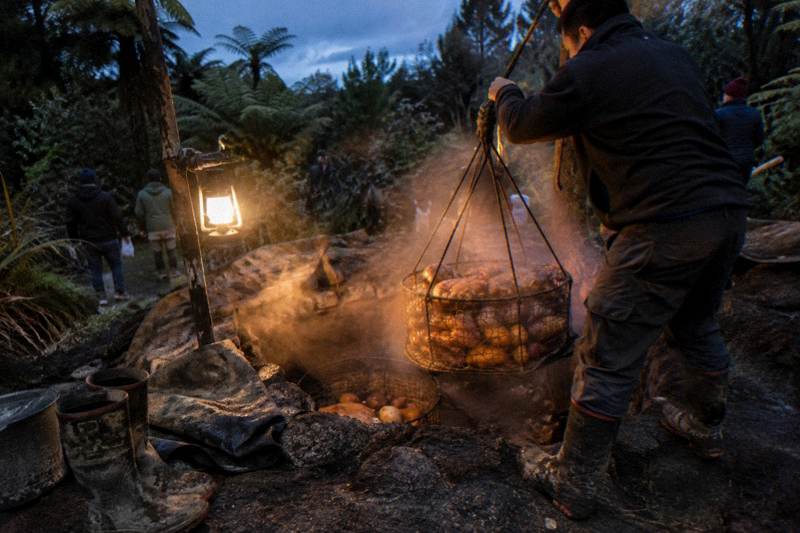
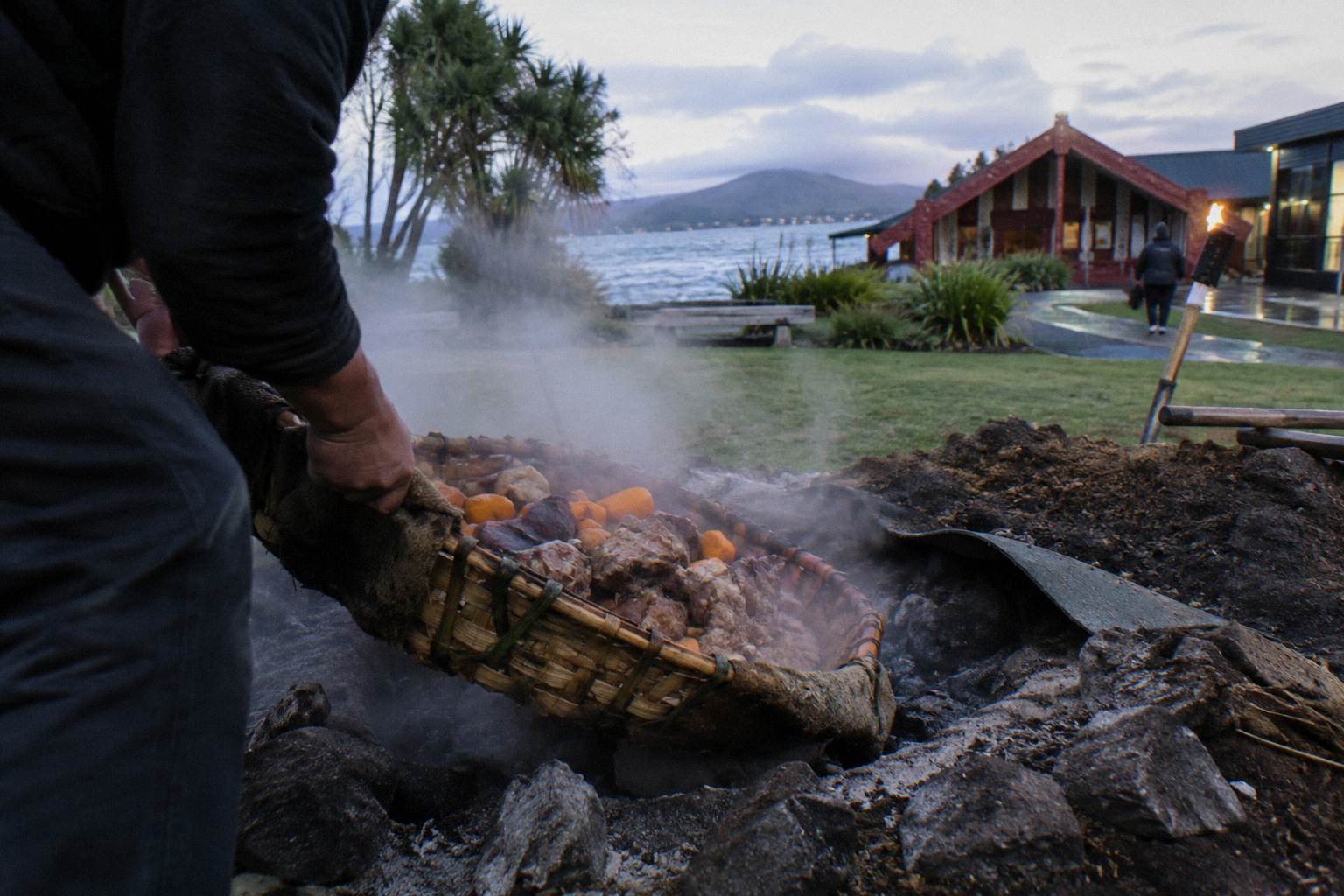
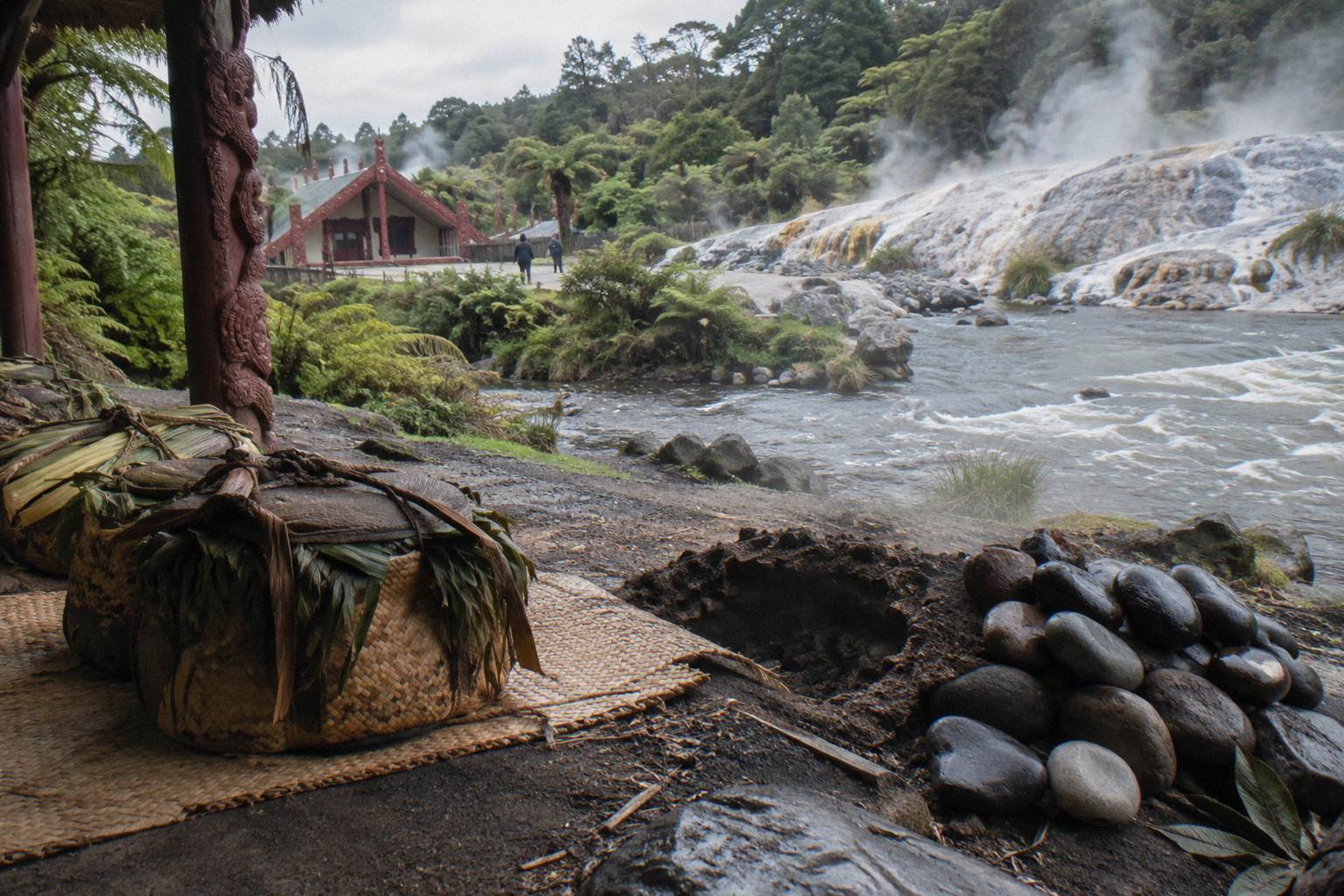
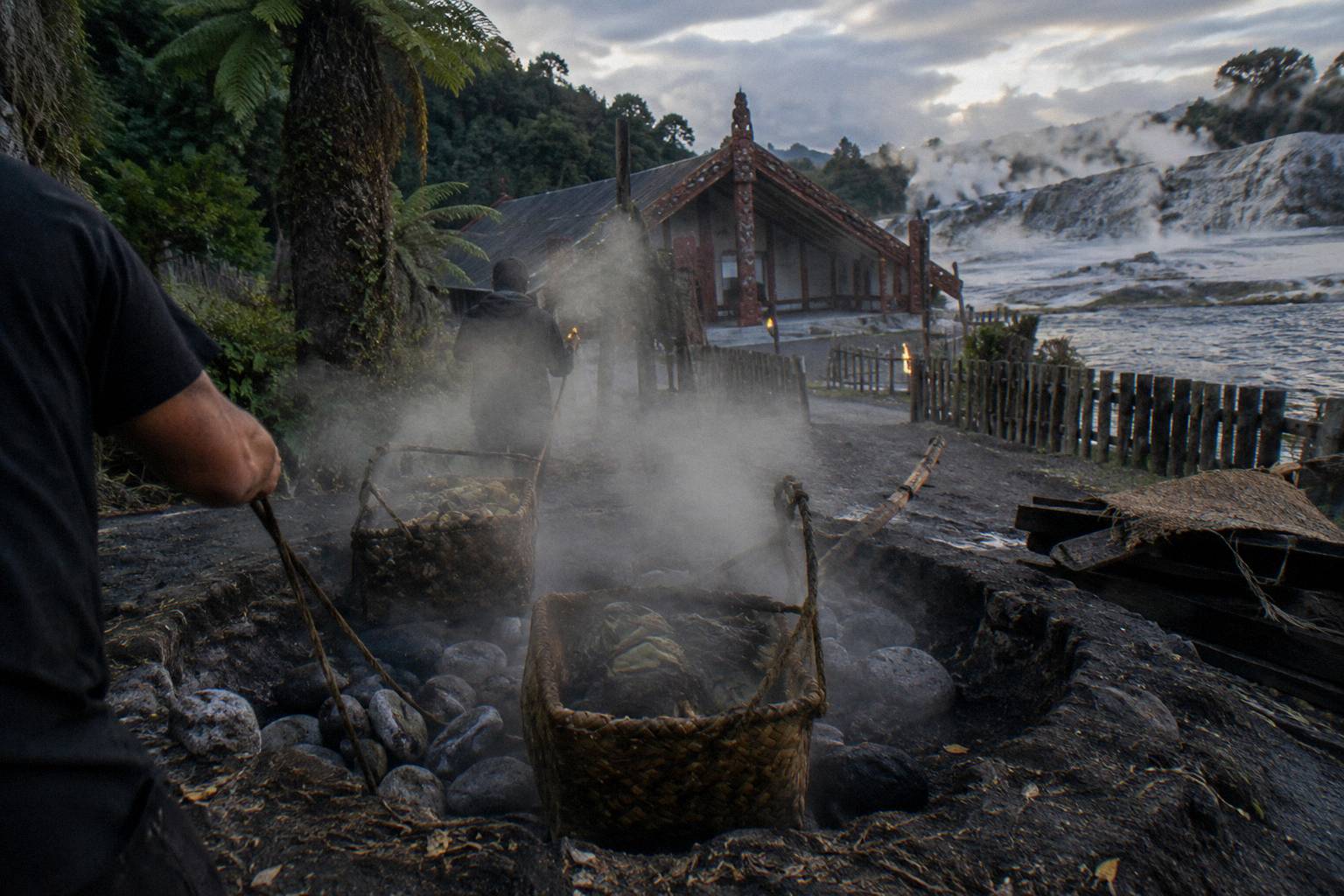
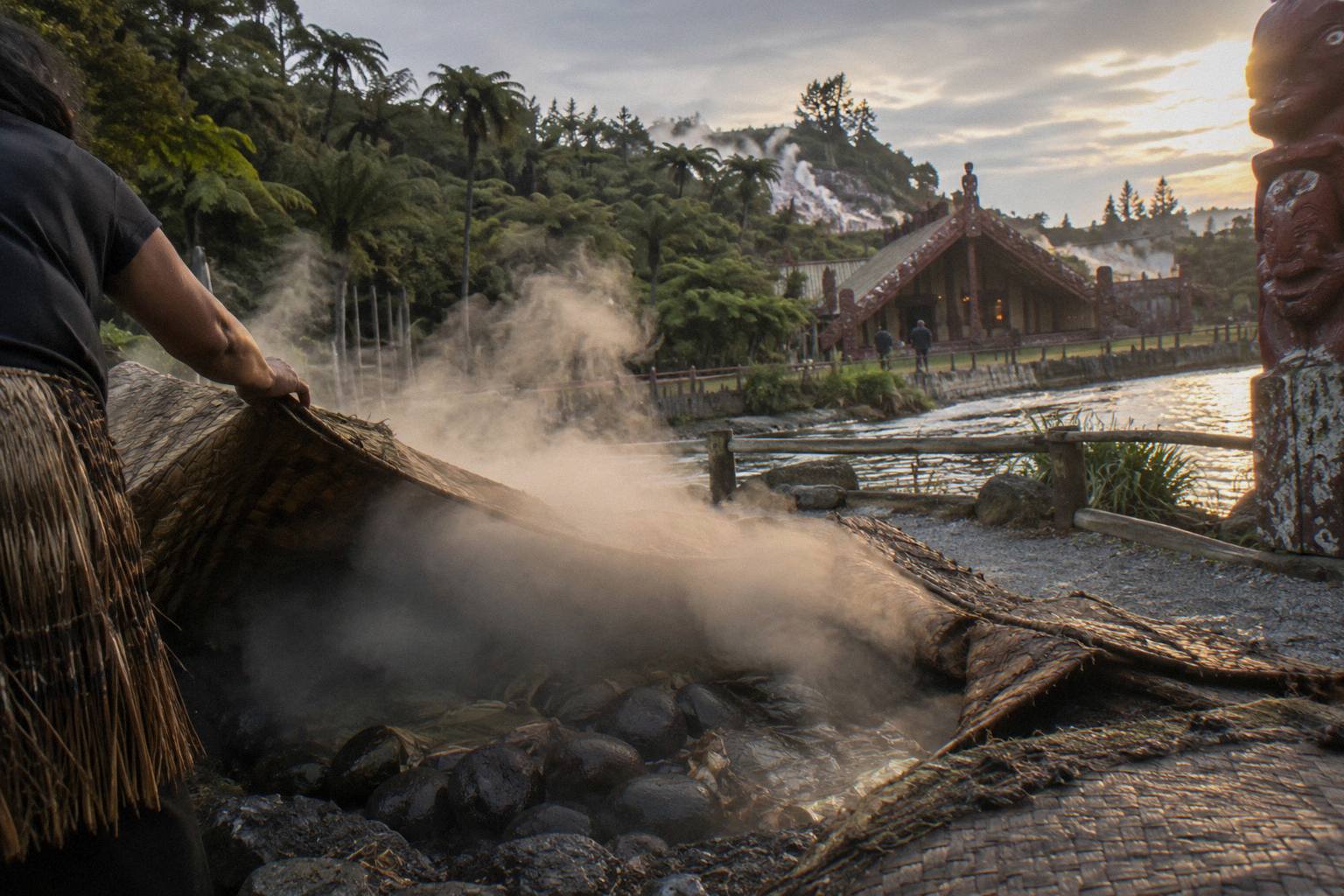
The common thread is the cooking method. A hāngī, as the operators describe it, is food cooked in the ground: Mitai's page is the most specific, describing an earth oven hole 1 to 2 m deep in which the food cooks for 3 to 4 hours before the unveiling that guests witness. That unveiling, the moment the baskets come up steaming from the pit, is part of the evening at Mitai, and Te Pā Tū's summer page similarly lists viewing the hāngī lifting and the spit roast as part of the experience. So the food and the spectacle arrive together.
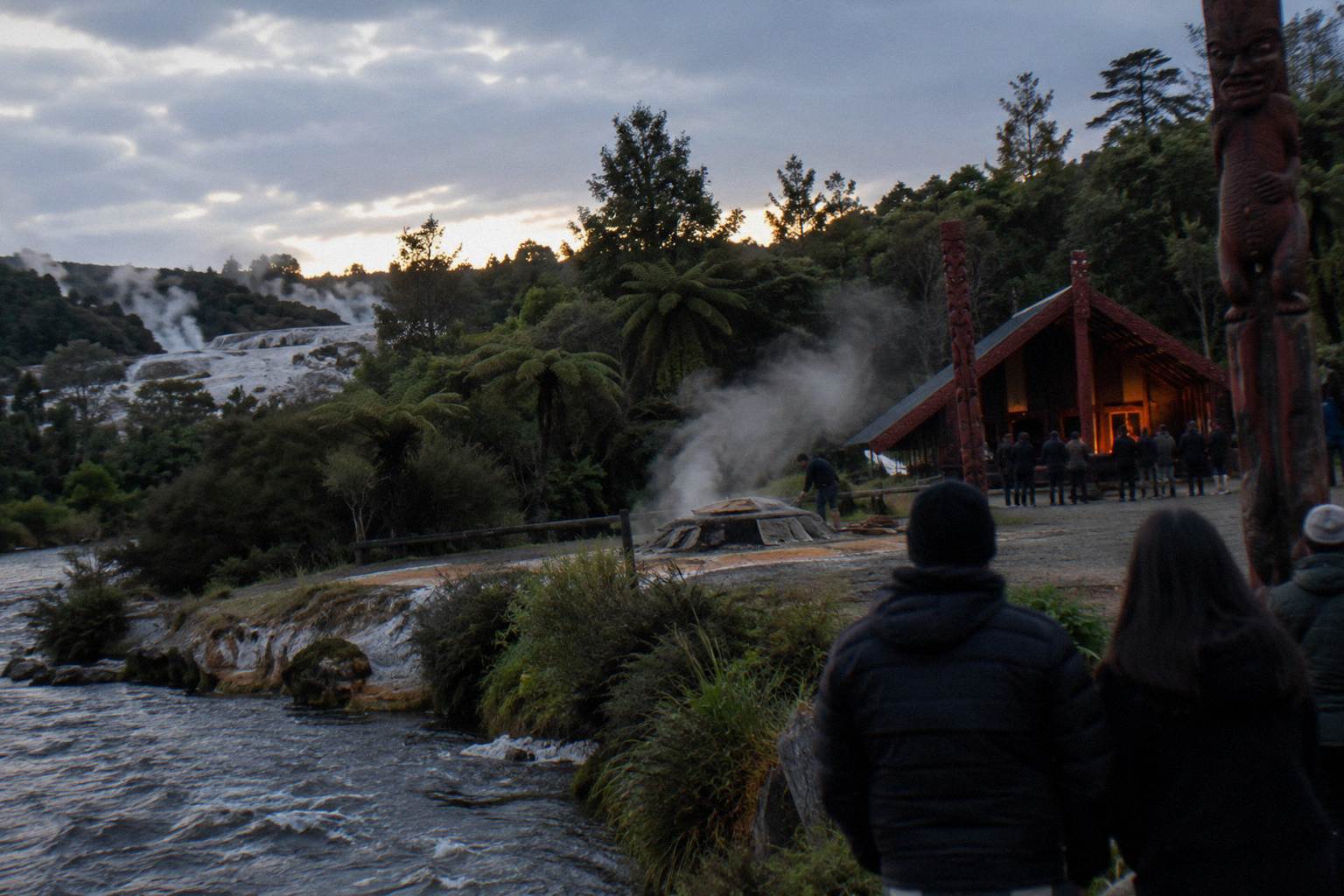
What differs is everything around the hāngī itself. Mitai frames its meal as a full buffet: the operator's wording lists the hāngī of meat, chicken and kūmara, plus vegetables, salads and a dessert buffet. Te Pā Tū goes the other direction, toward a composed meal: forest canapés first, then a three-course feast in the wharekai, the dining house, in summer, and a Matariki-inspired fusion feast served family style in winter. Te Puia serves its hāngī buffet in a restaurant with views across the geothermal valley. Three venues, three shapes of the same idea.
For a reader weighing which evening to book, the food is a genuinely useful filter. The two biggest questions are usually how traditional the meal is and how much of the evening is structured around it, and the three operators answer those differently. The sections below take each dinner in turn, using only what the operators themselves publish, then close with dietary needs, children's plates and the practical details that decide the booking.
What Mitai Māori Village Serves At Its Hāngī Dinner?
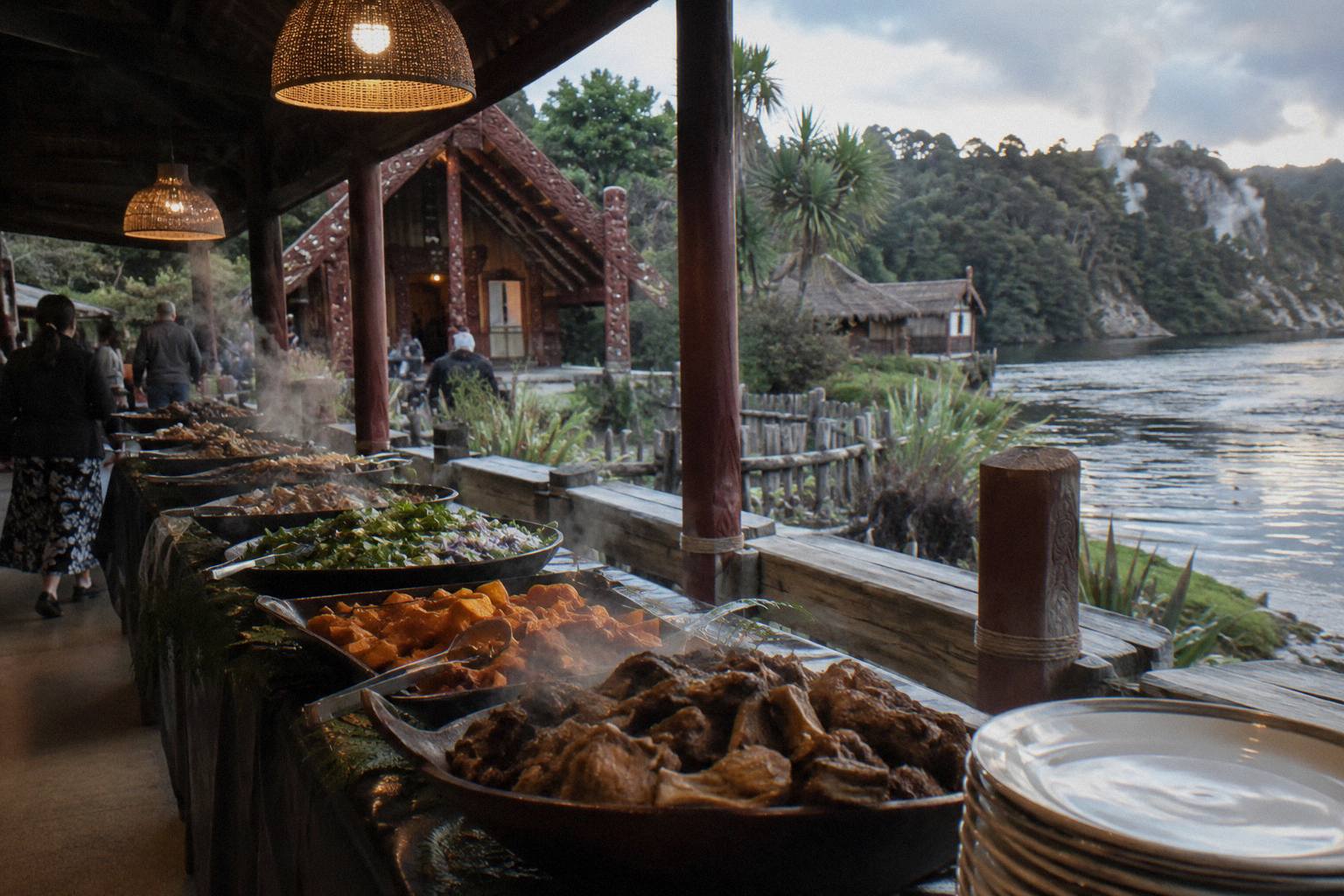
This is the most traditional-shaped meal of the three. Mitai's own page describes the mechanics plainly: the hāngī is cooked in an earth oven pit 1 to 2 m deep, and it spends 3 to 4 hours in the ground before dinner. The contents the operator lists are meat, chicken and kūmara. Guests see the hāngī unveiled, which means the meal is not just served but shown, the baskets lifted steaming from the pit in the early part of the evening.
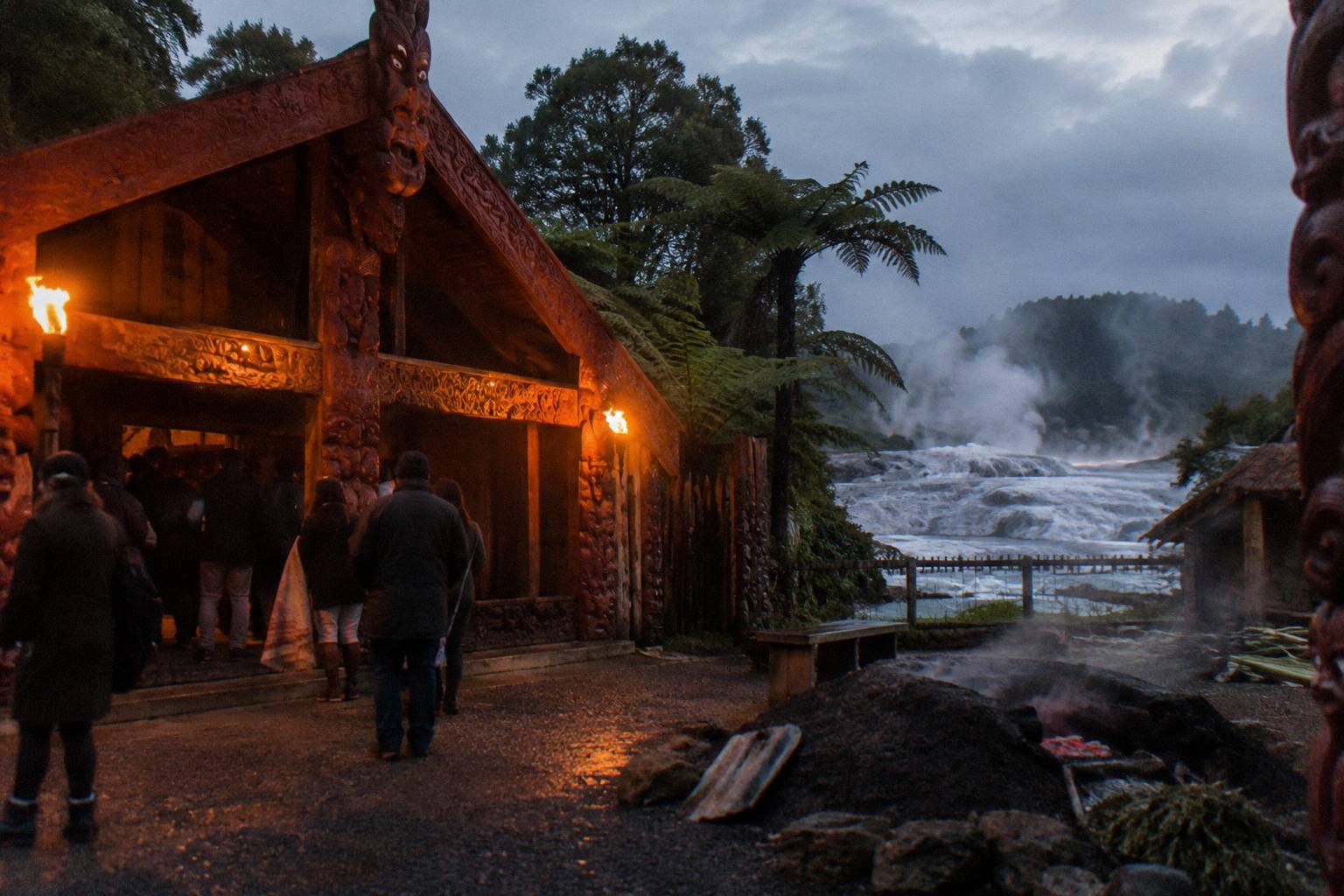
Around the hāngī itself, the operator's description builds out a full buffet: vegetables, salads and a dessert buffet sit alongside the earth-oven meat. That buffet structure matters for families and cautious eaters, because a buffet lets a guest take the familiar salad and kūmara and skip anything unfamiliar, while the hāngī centrepiece stays the point of the meal. The evening around the food runs about 3 hours in total and includes the welcoming ceremony, warriors paddling a waka down the Wai-o-Whiro Stream, the cultural performance, question time, and an evening bush walk to the old fortified village site and the sacred spring Te Puna Tapu o Tūhoe, with glow worms along the way.
The operator's price for the Authentic Hāngi Dinner Experience is NZD 188.34 for adults, defined as age 14 and up, and NZD 115.74 for children 4 to 13, with the price for infants 3 and under not shown. Those cents are the operator's own figure, and the price can change, so treat them as the current stated price rather than a permanent one. Mitai also runs a bar on site, with outside alcohol not permitted, which is worth knowing before arrival.
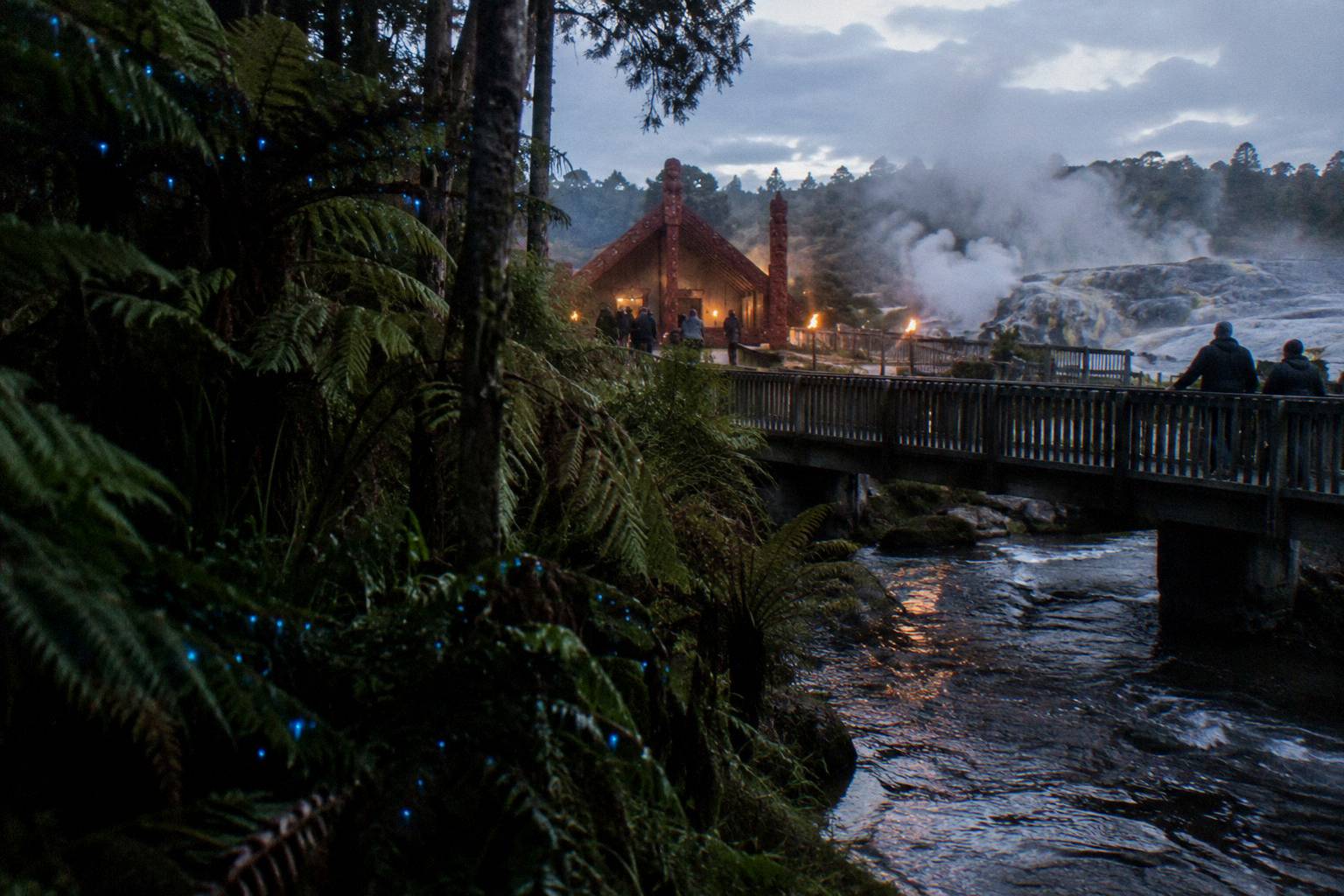
The full picture of the venue, its family ownership and its Te Arawa stories is in the Mitai Māori Village guide, and the dinner itself is described evening-by-evening in what the Mitai dinner is like. Anyone weighing the venue against its two rivals can also read whether Mitai Māori Village is worth it.
Dietary needs deserve a straight answer here, because Mitai gives one: the operator says it is unable to cater to all dietary needs, naming vegan specifically, though some requests could be met. Anyone with a dietary requirement should tell the operator at booking, by phone on +64 7 343 9132 or by email to reservation@mitai.co.nz, rather than assuming on the night.
For a sense of the whole evening in one place, the tour page for the Mitai Māori Village dinner and buffet sets out the inclusions and the operator's price, and availability for specific dates can be confirmed in a moment: Check availability.
What Te Pā Tū Serves At Its Seasonal Feasts?
Te Pā Tū is the most kitchen-driven of the three dinners, and its menus change with the seasons. The operator's summer page lists the kai horotai, the forest canapé course, with named examples: pāua wonton, kawakawa leaf filled with prawn, hāngī root-vegetable croquette, and kūmara crisp with venison. Those are not generic nibbles; they are dishes that put hāngī cooking into small-form plates, and they set the tone for the three-course feast that follows in the wharekai, the dining house, which the operator describes as blending traditional and innovative dishes by a celebrated Māori chef. The evening also includes viewing the hāngī lifting and the spit roast, a complimentary digestif of the chef's choice, and rongoā herbal tea.
| Evening | Season | Food the operator lists |
|---|---|---|
| Tū Te Rā, summer harvest | October to April | Forest kai horotai canapés; hāngī lifting and spit roast viewing; three-course seasonal feast in the wharekai; complimentary digestif and rongoā tea |
| Tū Te Ihi, winter Matariki | May to September | Ahi Tuku fire ceremony welcome; kai horotai, hearty broth and steaming kawakawa tea; fireside wānanga; Matariki-inspired fusion feast, family style, with in-ground hāngī of lamb and vegetables; complimentary aperitif and rongoā tea |
The winter menu is a different meal, not the summer menu repeated. Tū Te Ihi opens with an Ahi Tuku fire ceremony, moves through kai horotai, a hearty boil-up broth and steaming kawakawa tea, and builds to the Matariki-inspired fusion feast served family style, with the traditional in-ground hāngī of lamb and vegetables at its centre, followed by a complimentary aperitif and rongoā tea and a poroporoaki farewell. The operator frames the whole winter evening in 1800s Aotearoa, between the 1840 Treaty of Waitangi and the 1886 Mt Tarawera eruption, and the food follows that framing. Details of both evenings are on the operator's summer harvest page and the operator's winter Matariki page.
Prices follow the season too. The operator's summer price is NZD 290 adult and NZD 125 child; the winter price is NZD 280 adult and NZD 115 child. The evening runs about 3.5 hours in summer and 3 hours in winter, with return coach transport from central Rotorua included in both. The village itself is a forest pā in tawa forest a short coach ride south of central Rotorua, and its address is deliberately not published. Readers who remember the name Tamaki Māori Village should know Te Pā Tū is that experience renamed, as the Tamaki Māori Village guide explains.
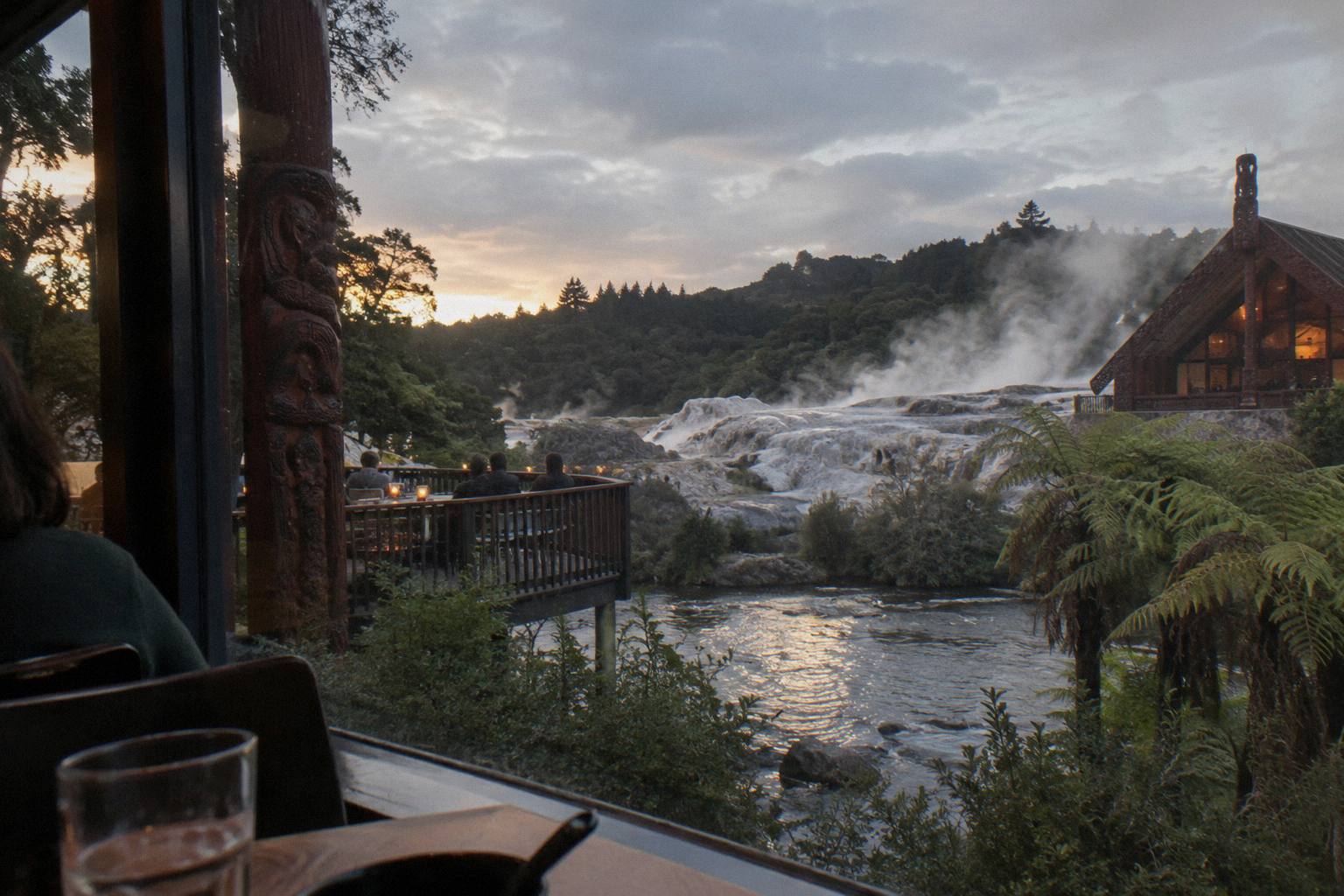
Dietary options at Te Pā Tū are the most clearly stated of the three: the winter page lists vegetarian, pescatarian and gluten free options, and says the kitchen cannot guarantee coeliac safety. Vegan options are not stated, so a vegan guest should ask before booking, on 0508 826 254 or at bookings@maoriculture.co.nz. There is a licensed bar with Māori wine pairing and non-alcoholic pairings.
What Te Puia Serves At Its Te Pō Dinner?
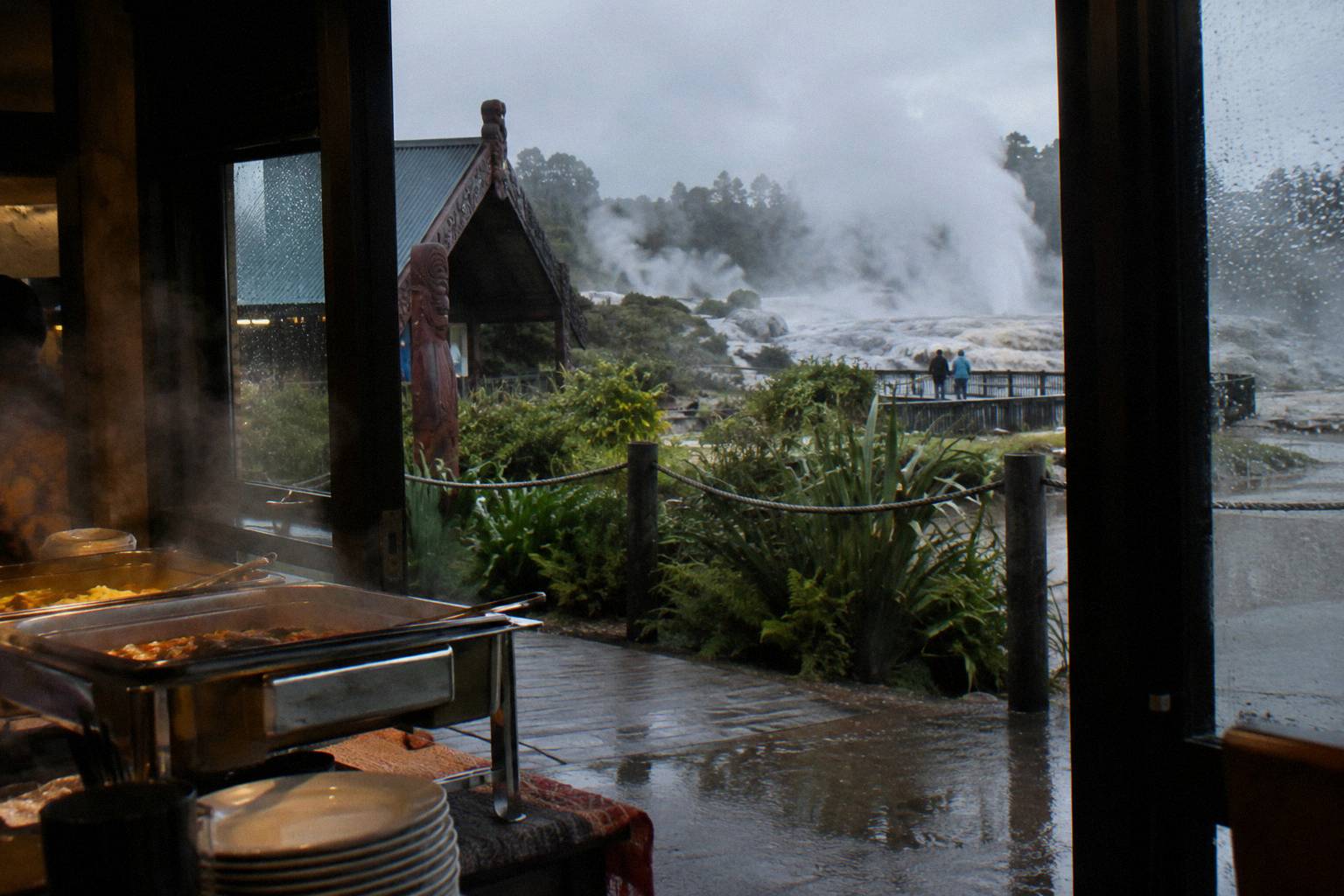
Te Puia serves a hāngī buffet dinner in the Pātaka Kai Restaurant and Bar, with views across the geothermal valley, as part of its Te Pō evening. The operator's page lists the buffet as the food component of a 2.5-hour programme that also includes a 45-minute cultural performance of song and dance in the carved meeting house Te Aronui a Rua and hot chocolate on the geyser terrace.
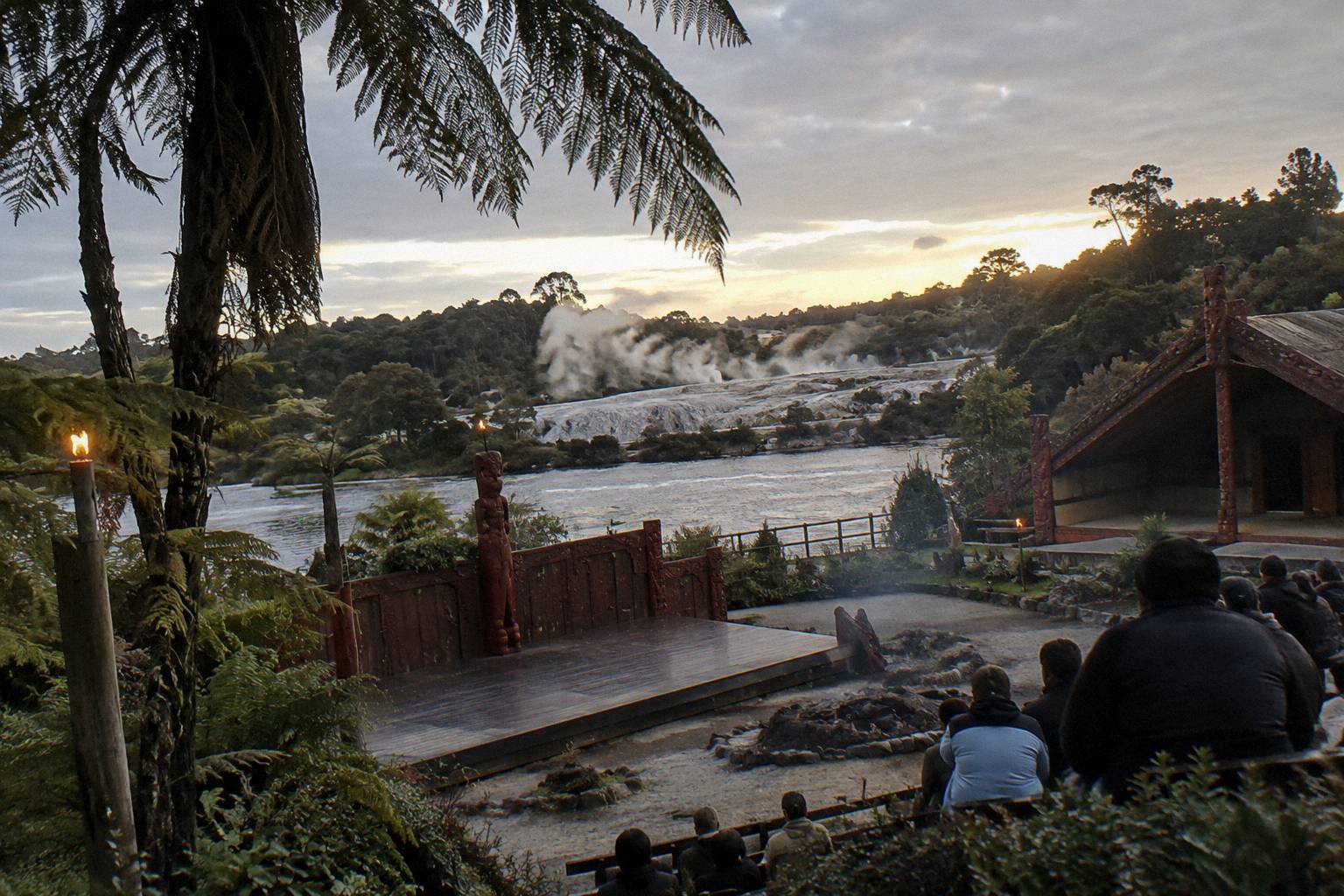
The Te Pō evening is the shortest of the three and the only one that serves its hāngī in a restaurant. The Pātaka Kai Restaurant and Bar is the venue's own dining room, and the operator's description pairs the buffet with valley views, which no other dinner in Rotorua can offer: the restaurant looks out over the Whakarewarewa Geothermal Valley, where Pōhutu Geyser erupts up to 20 times a day to heights the operator puts at up to 30 m. The evening runs from 5:30pm, with dinner sittings at 5:30pm and 7:15pm, and the operator's price is NZD 203, with a child price not stated.
The shape of the evening is a clean three parts. First the 45-minute performance of song and dance in the carved meeting house Te Aronui a Rua; then the hāngī buffet at Pātaka Kai; then hot chocolate on the geyser terrace as the valley darkens. The operator's own night experiences page sets this out in full on the operator's night experiences page. There is no hotel transfer stated; the operator names the City Ride bus, which runs every 30 minutes until 6PM, plus Uber and taxi, and there is free parking on site. The site is cashless.
For guests who want more food-adjacent experience, the Te Pō Combo adds a 90-minute guided tour of the geothermal valley before the dinner and performance, running about 4 to 4.5 hours from 4pm, at an operator price of NZD 290. The operator calls the Combo "our most popular night experience", which is the operator's own label. Dietary options at Te Puia are not stated, so again: tell the operator at booking.
Which Dinner Matches Which Eater?
Mitai is the choice for the traditional buffet: hāngī meat, chicken and kūmara with salads and dessert, taken at the guest's own pace. Te Pā Tū suits a diner who wants a composed, seasonal, chef-built meal with hāngī at its base, and its menus change twice a year. Te Puia fits the guest who wants the shortest evening with a geothermal view, a buffet in a restaurant rather than a village setting.
These three meals sit at different points on a line from pit to plate. Mitai's dinner keeps the earth oven as the whole story: one hāngī, one buffet, everything else on the table in support. Te Pā Tū treats the hāngī as one ingredient in a wider menu, the canapés and the fusion courses doing as much work as the pit itself. Te Puia serves its hāngī buffet in the most conventional restaurant setting of the three, and trades village atmosphere for the steam of the valley outside the window.
| Dinner | Style of meal | Signature items the operator lists | Operator price |
|---|---|---|---|
| Mitai Māori Village | Full buffet hāngī | Meat, chicken and kūmara from the earth oven; vegetables, salads, dessert buffet | NZD 188.34 adult, NZD 115.74 child 4 to 13 |
| Te Pā Tū, Tū Te Rā summer | Canapés plus three-course feast | Pāua wonton, kawakawa leaf with prawn, hāngī root-vegetable croquette, kūmara crisp with venison; seasonal feast | NZD 290 adult, NZD 125 child |
| Te Pā Tū, Tū Te Ihi winter | Family-style fusion feast | In-ground hāngī of lamb and vegetables; hearty broth; kawakawa tea | NZD 280 adult, NZD 115 child |
| Te Puia Te Pō | Hāngī buffet in a restaurant | Hāngī buffet at Pātaka Kai with valley views; hot chocolate on the geyser terrace | NZD 203, child price not stated |
Price comparisons only work per basis, so note that Mitai's adult price starts at age 14, that Te Puia's child price is not stated, and that Te Pā Tū's two evenings carry two different prices. All figures are the operators' own and can change. A fuller breakdown of what each evening costs end to end, including children, is in the guide on how much a Māori cultural evening costs.
Families should also weigh the shape of the meal, not just the price. A buffet is forgiving with children; a three-course feast is an event but a longer one. The guide on a Māori cultural evening with kids works through those trade-offs.
Can Dietary Needs Be Met At A Hāngī Dinner?
Partly, and differently at each venue. Te Pā Tū's winter page lists vegetarian, pescatarian and gluten free options but says it cannot guarantee coeliac safety, and vegan options there are not stated. Mitai says it is unable to cater to all dietary needs, naming vegan, though some requests could be met. Te Puia's dietary options are not stated at all. In every case the operator should be told at booking, not on the night.
This is the section where honesty saves a dinner. The only dietary commitments in writing are Te Pā Tū's winter-page list of vegetarian, pescatarian and gluten free options, with its explicit caveat on coeliac safety, and Mitai's plain statement that it cannot cater to all needs, with vegan named. Nobody publishes a vegan guarantee. A vegan or coeliac guest should contact the operator before booking, and the contacts are easy: Te Pā Tū on 0508 826 254 or bookings@maoriculture.co.nz, Mitai on +64 7 343 9132 or reservation@mitai.co.nz, and Te Puia through its own site.
The reason deserves a plain statement rather than a shrug. A hāngī cooks as one basket in one pit; the operator decides what goes in, and separate baskets or separate kitchens are not something any of the three operators promises. That is the mechanics of the method as much as a policy choice, and it is why the operators speak in terms of options and attempts rather than guarantees. The fuller picture of vegetarian and other options across the venues is in the guide on vegetarian and dietary options at a hāngī dinner.
Does Whakarewarewa Serve A Hāngī Dinner?
The distinction matters because Whakarewarewa's name often appears alongside the three dinner venues in search results, and its steamed corn and lunch plates sometimes get described loosely as hāngī. The operator's own pages place it firmly in the day: a 30-minute cultural performance at 12.30pm, guided tours through the afternoon, and steam-cooked food at lunch. The operator, Tūhourangi Ngāti Wāhiao, says its people have hosted visitors there for over 300 years, which is the operator's claim and worth the visit by daylight. Anyone wanting the evening meal should be looking at the three dinners above, and the guide on which Māori village in Rotorua offers an evening meal settles the question venue by venue.
What Trips People Up When Choosing A Hāngī Dinner?
Three things trip people up: assuming every evening serves the same meal, when the three menus differ sharply; expecting a dietary option nobody offers, especially vegan; and booking a seasonal evening without realising the menu and the price change with it. Checking the season, the dietary statement and the dinner format before booking prevents all three.
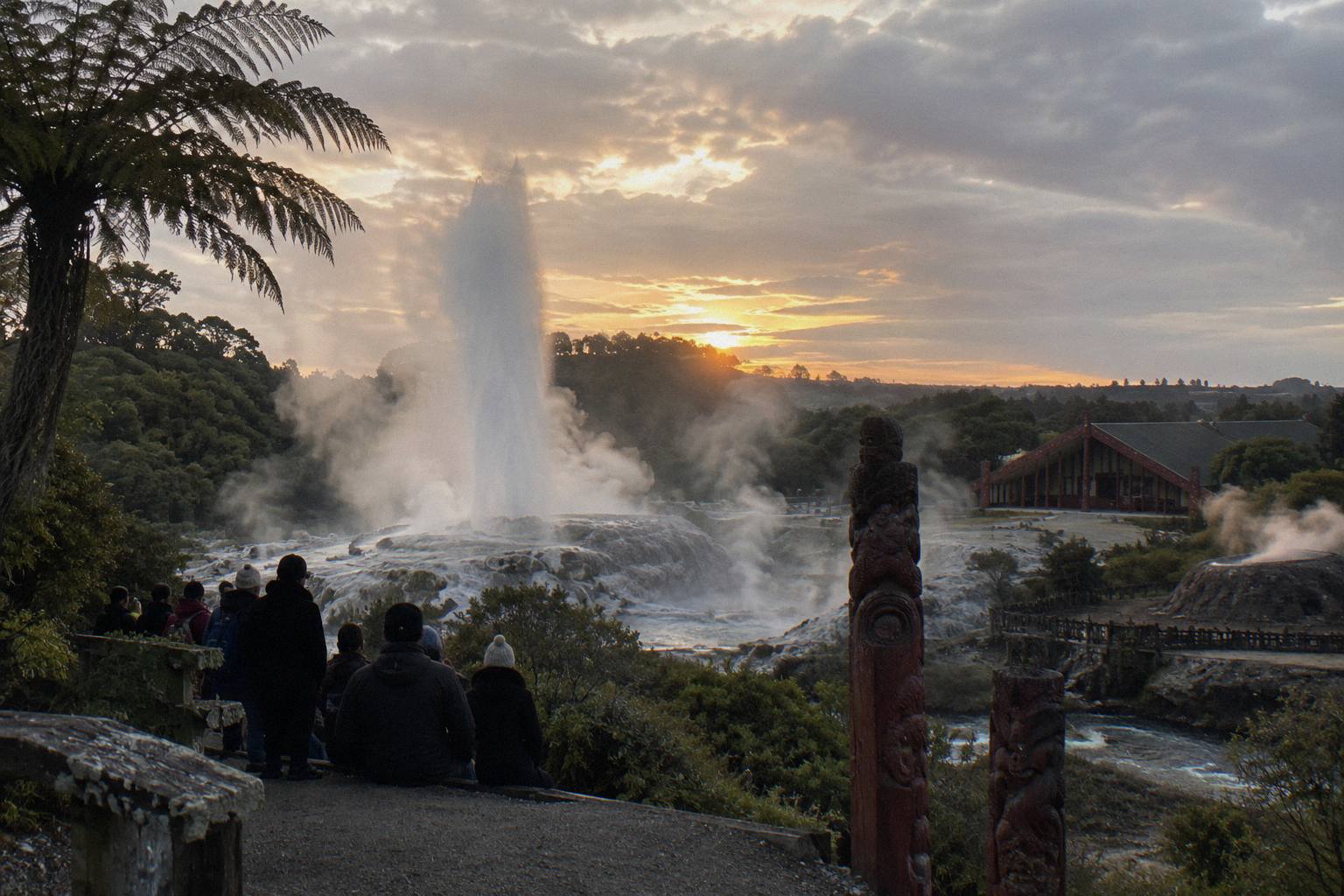
The season point is the quiet one. Te Pā Tū runs two named evenings, Tū Te Rā from October to April and Tū Te Ihi from May to September, and they differ in menu, duration and price. A guest who reads about the summer canapés and kūmara crisp with venison, then books a June date, will be served the winter feast instead: the lamb and vegetable hāngī, the broth, the family-style service. Both meals are real Te Pā Tū dinners, but they are not the same dinner, and the operator's price moves NZD 10 between them for adults.
The second trap is transfer logistics read too quickly. Te Pā Tū includes return coach transport from central Rotorua. Mitai offers complimentary transfers from registered accommodation only, in limited numbers, and they must be booked before the transfer closes at capacity. Te Puia states no hotel transfer at all and points guests to the City Ride bus, Uber or taxi. Three different transport realities sit behind three similar-looking dinner pages, and the guide on pickup and transport to Rotorua cultural evenings lays them side by side.
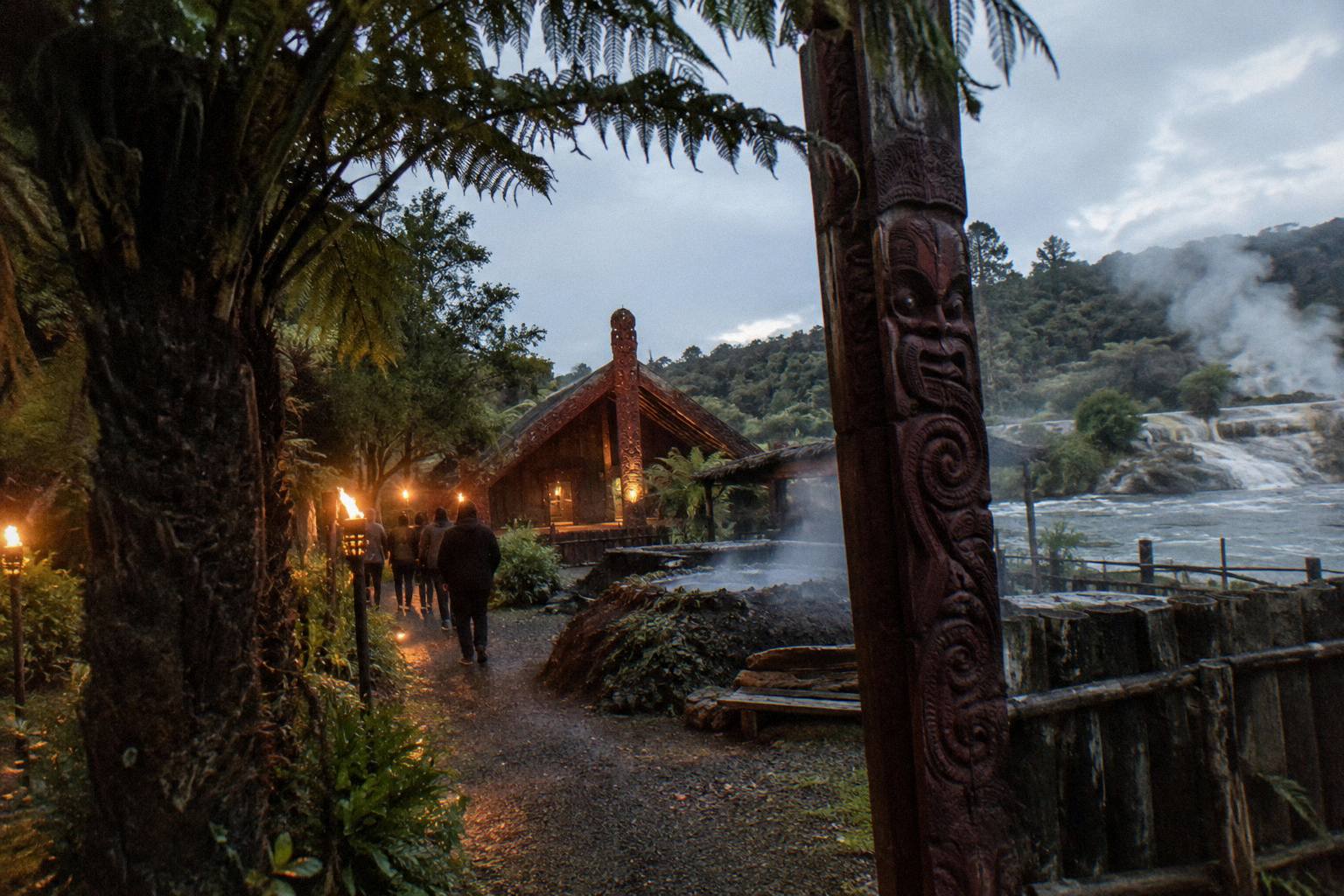
The third is timing. Te Puia's Te Pō starts from 5:30pm with two dinner sittings; Mitai's and Te Pā Tū's evening start times are not published, so a guest with a fixed schedule should ask the operator directly rather than assume. And a small practical note that belongs with food: Mitai's bar is on site and outside alcohol is not permitted, so a guest planning to bring a bottle should plan differently.
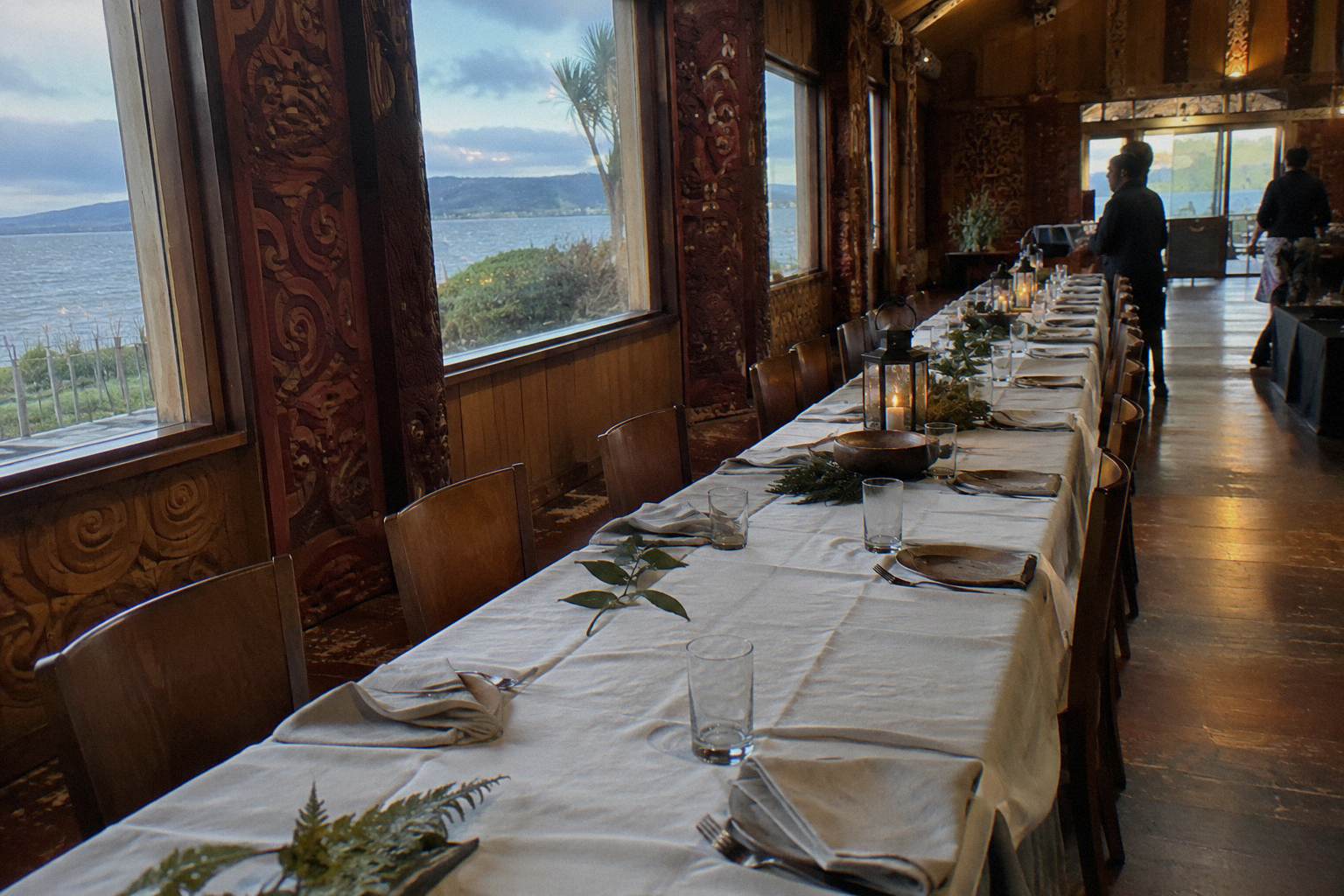
Choosing between these evenings comes down to what the meal should feel like, and the honest answer is that all three serve real hāngī food with different frames around it. More on fitting the whole evening, transport and all, into one decision sits on Rotorua Cultural Dinner. Whichever way the choice goes, booking ahead matters: these evenings run on set nights, the operators' prices are the surest guide, and the booking page for each confirms dates and availability in minutes.
Common Questions About Hāngī Food In Rotorua
What Food Is Served At A Rotorua Hāngī?
The core is meat and root vegetables cooked in an earth oven: Mitai lists meat, chicken and kūmara cooked in a pit 1 to 2 m deep for 3 to 4 hours. Around that core, Mitai adds vegetables, salads and a dessert buffet; Te Pā Tū serves canapés and a three-course feast in summer and a family-style lamb and vegetable hāngī feast in winter; Te Puia serves a hāngī buffet in its Pātaka Kai Restaurant and Bar.
Is A Hāngī Dinner A Buffet Or A Set Menu?
It depends on the venue. Mitai and Te Puia both serve buffets. Te Pā Tū serves a set seasonal menu: canapés and a three-course feast in summer, and a family-style fusion feast in winter.
Are Vegetarian Options Available At A Hāngī Dinner?
Te Pā Tū's winter page lists vegetarian, pescatarian and gluten free options, with a stated caveat that the kitchen cannot guarantee coeliac safety. Mitai says it is unable to cater to all dietary needs, though some requests could be met, and Te Puia's dietary options are not stated. Tell the operator at booking in every case.
What Is The Difference Between The Summer And Winter Menus At Te Pā Tū?
The summer evening, Tū Te Rā, serves forest canapés such as pāua wonton and kūmara crisp with venison, then a three-course seasonal feast in the wharekai. The winter evening, Tū Te Ihi, serves a hearty broth and kawakawa tea, then a Matariki-inspired fusion feast, family style, with a traditional in-ground hāngī of lamb and vegetables. The operator's prices also differ: NZD 290 adult in summer, NZD 280 in winter.
Can Children Eat The Same Food At These Dinners?
Yes, the food is served to everyone. Mitai's child price covers ages 4 to 13 with the adult price from 14, and highchairs are limited. Te Pā Tū welcomes children at NZD 125 in summer and NZD 115 in winter. Te Puia's child price is not stated, and under 4s are free per the booking page.
Does Whakarewarewa Serve Hāngī In The Evening?
No. Whakarewarewa The Living Māori Village is a daytime venue with tours from 9am to 3pm and a 12.30pm cultural performance. Its food is steam-cooked and lunch style; there is no evening dinner there.