Why Is Hāngī Important To Māori In Rotorua?
What Te Pā Tū, Mitai Māori Village and Te Puia each say about their hāngī, how each dinner works, and how to choose the right Rotorua cultural evening.
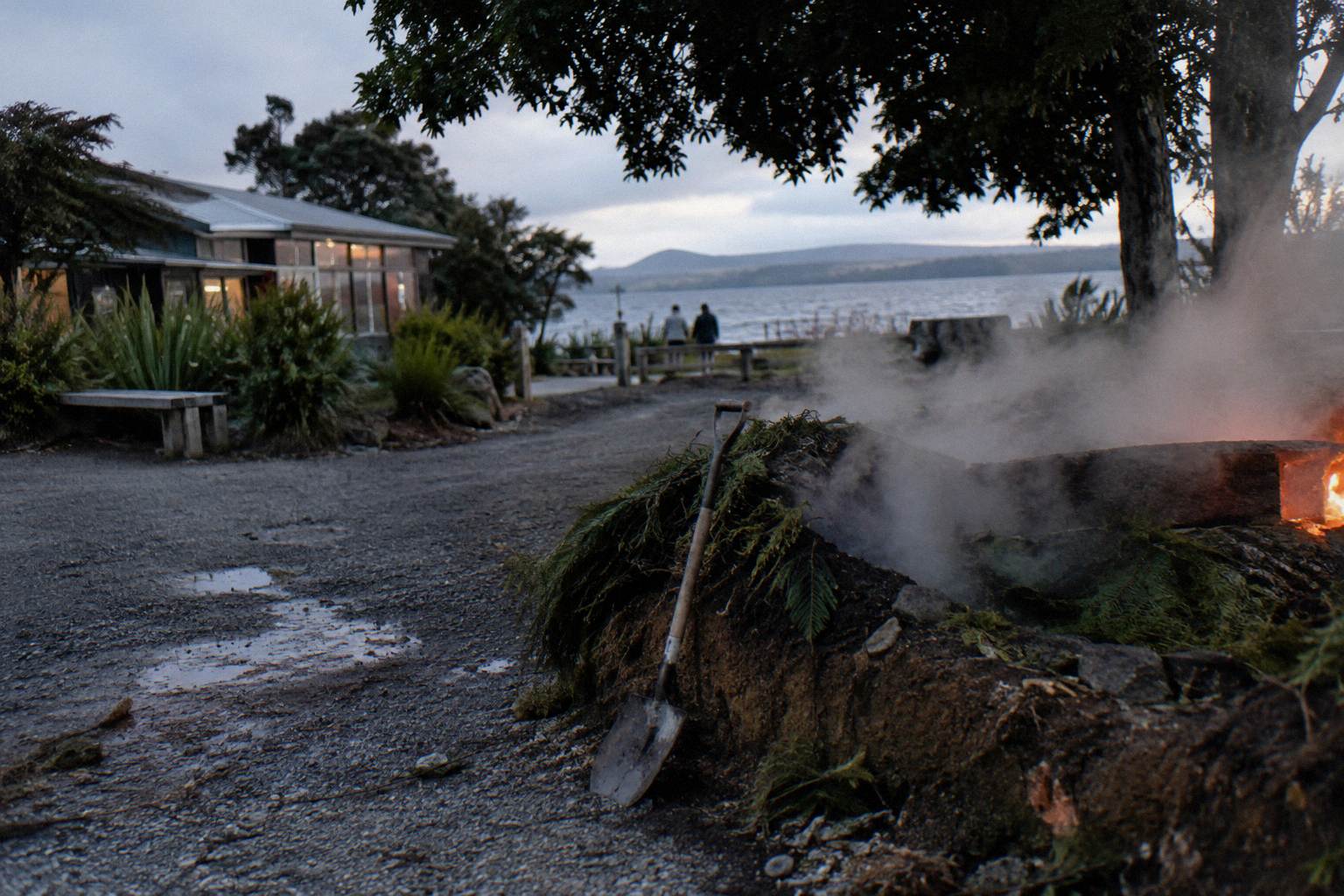
The hāngī, an earth oven, is the shared centrepiece of the Māori cultural evenings you can book in Rotorua. Te Pā Tū builds its summer and winter feasts around one, Mitai Māori Village uncovers one in front of guests before a buffet dinner, and Te Puia serves a hāngī buffet alongside its evening performance. Each operator publishes its own account of its hāngī, so the evenings can be weighed on their stated content.
Why Is Hāngī Important To Māori?
The operators themselves publish no explanation of the hāngī's cultural importance. What the sources do show is that every Rotorua operator treats the hāngī as the heart of its evening, cooking food in the ground for hours and turning the uncovering into an event, while Te Pā Tū frames its entire feast around manaakitanga and kaitiakitanga.
What can be stated firmly comes from the operators' own pages. Te Pā Tū, owned and operated by Tauhara North No.2 Trust, describes manaakitanga in its own words: frequently referred to as hospitality, but a firmly held value and practice within iwi Māori, centred at a simple level on strengthening the bonds between a host and their visitors through benevolence and hospitality. The same operator speaks of kaitiakitanga, care of the natural environment, of tikanga, protocols, and of mātauranga, knowledge handed through generations. It also describes pā as places where people meet, celebrate and strengthen their understanding of who they are.
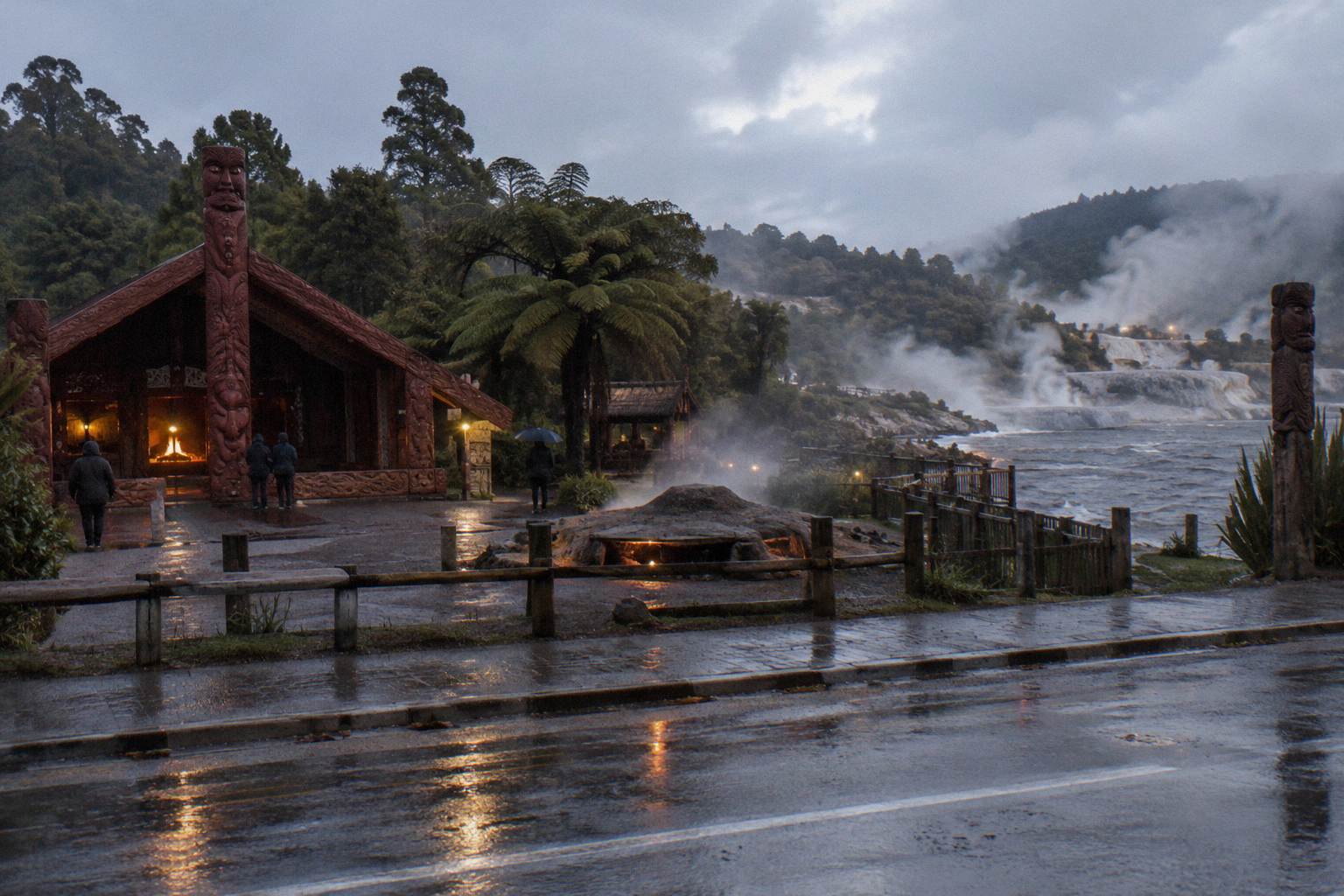
Beyond that, the operators do not publish the history of the hāngī, an explanation of how stones or steam work, or a statement of what the word means beyond earth oven. Those topics sit outside what any of the source pages state, and no operator publishes a claim about what Māori people think or feel. If the deeper background matters to you, the best source on the night is the operators' own hosts: Mitai's evening includes question time, and Te Pā Tū's winter evening is built around fireside wānanga, conversation covering history, games, instruments and traditions.
What the operators do say is rich enough to plan around. Each of the three dinners makes the hāngī visible rather than hiding it in a kitchen: Mitai uncovers the earth oven in front of guests, Te Pā Tū has you view the hāngī lifting, and Te Puia serves its buffet in the Pātaka Kai Restaurant and Bar with valley views. The food, the welcome and the performance are designed as one evening, which is why nearly every visitor weighing a Rotorua cultural dinner ends up comparing these three.
If you are already at the booking stage, these are the three evenings this site covers:
What Each Operator Says About Its Hāngī
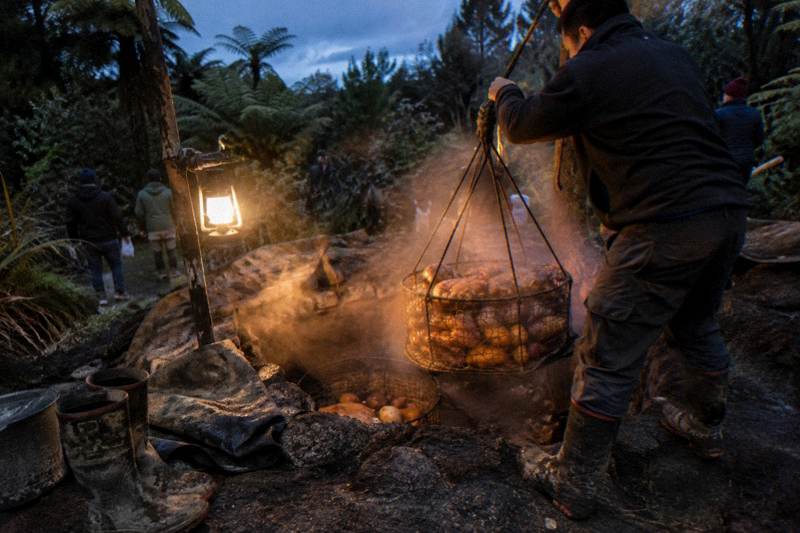
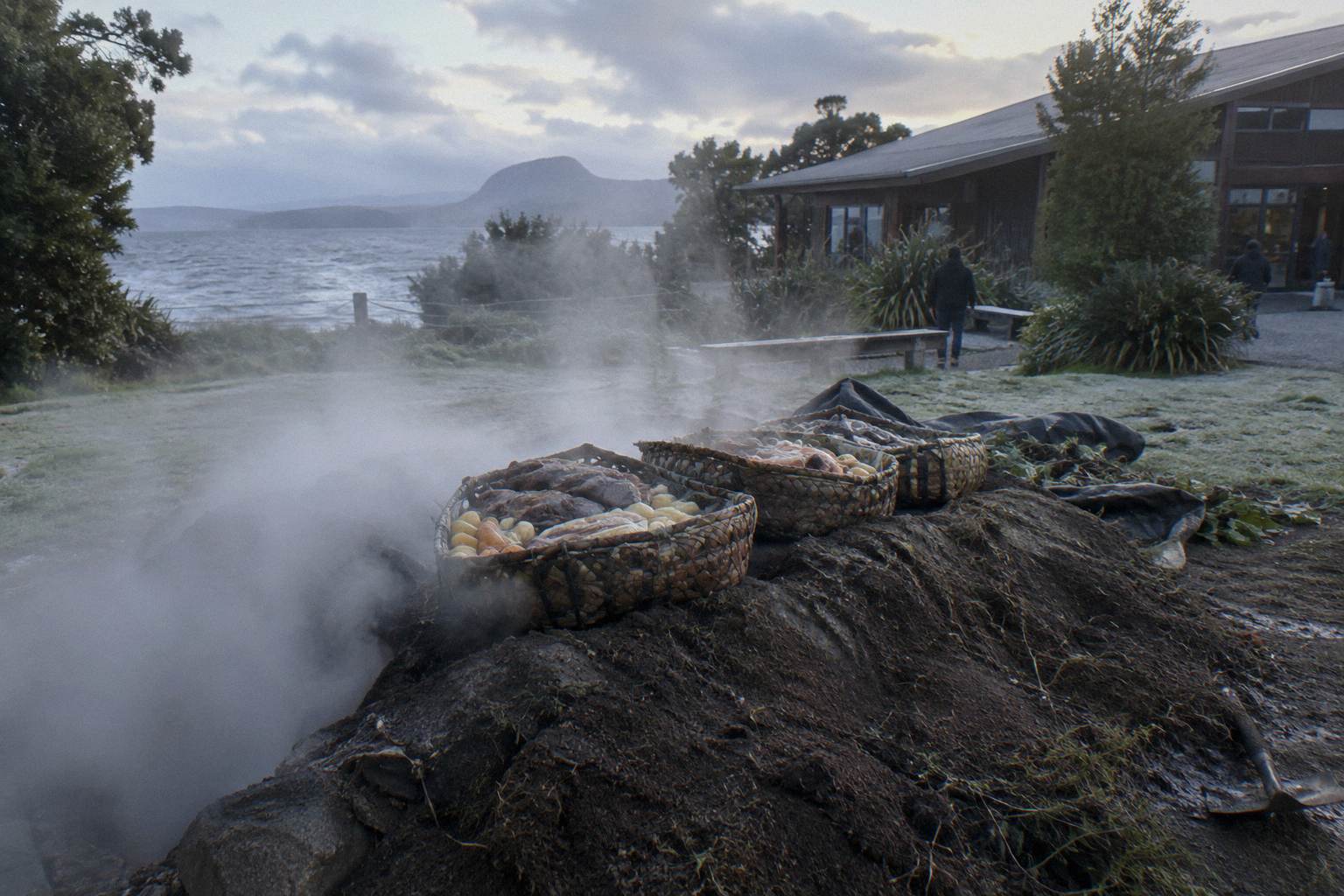
Mitai cooks meat, chicken and kūmara in an earth oven 1 to 2 m deep for 3 to 4 hours, then unveils it in front of guests before a full buffet. Te Pā Tū presents the hāngī as one course in a larger seasonal feast, with three courses in summer and a family style Matariki fusion feast in winter, while Te Puia serves a hāngī buffet in a restaurant with geothermal valley views.
The differences matter more than the similarities when you are choosing. Mitai's approach keeps the traditional method front and centre: the operator describes an earth oven dug 1 to 2 m deep, food cooked for 3 to 4 hours, and an unveiling that guests watch before eating. The buffet that follows includes the hāngī food itself alongside vegetables, salads and a dessert buffet, in the operator's own wording. It is the most literal version of the three: you see the pit, you see the lift, you eat the result.
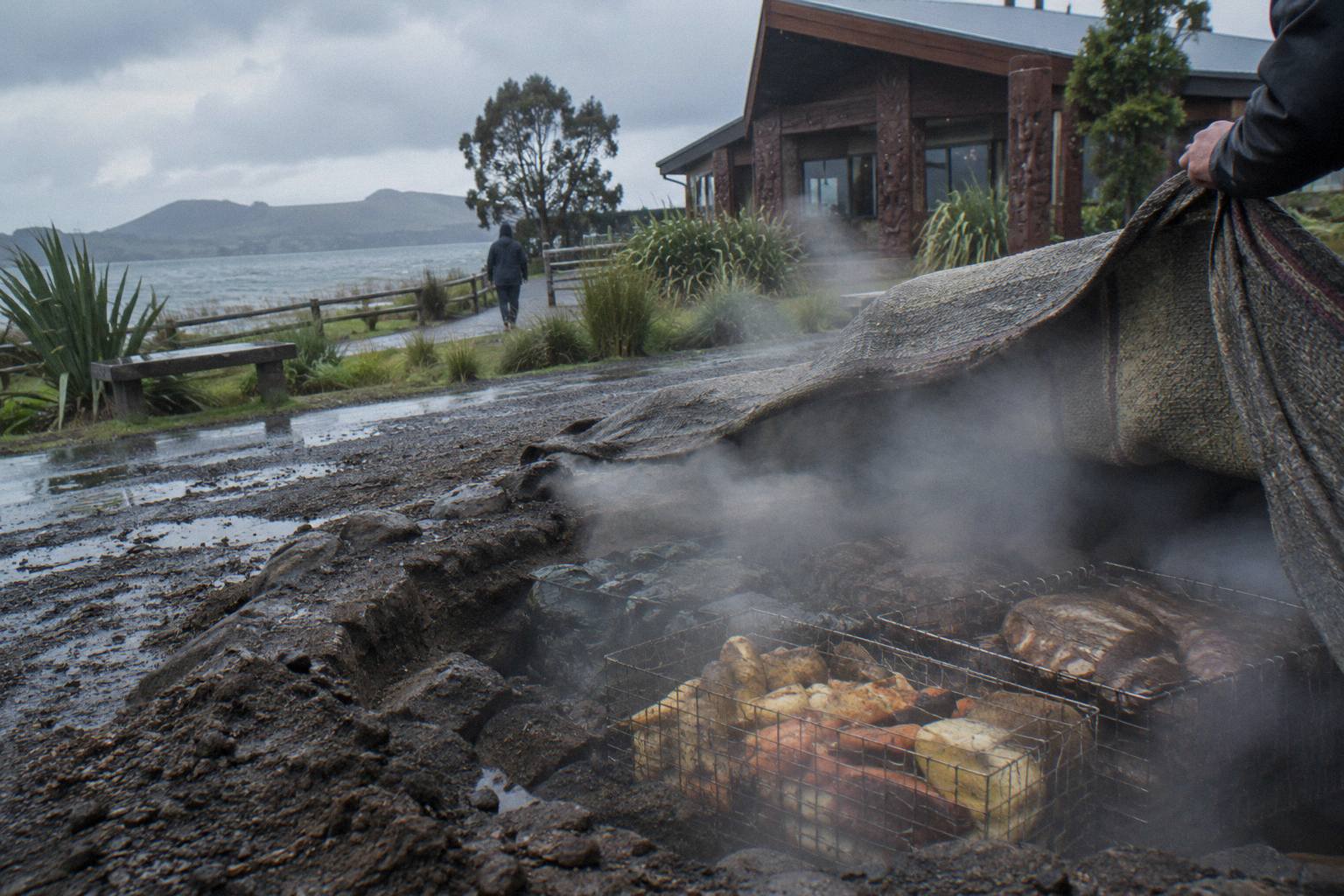
Te Pā Tū takes a different route. Its summer evening page lists forest kai horotai canapés, examples including pāua wonton, kawakawa leaf filled with prawn, hāngī root-vegetable croquette and kūmara crisp with venison, then a view of the hāngī lifting and spit roast, then a three-course seasonal feast in the wharekai that the operator says blends traditional and innovative dishes by Māori chefs. The hāngī here is an element of a composed menu rather than the whole meal.
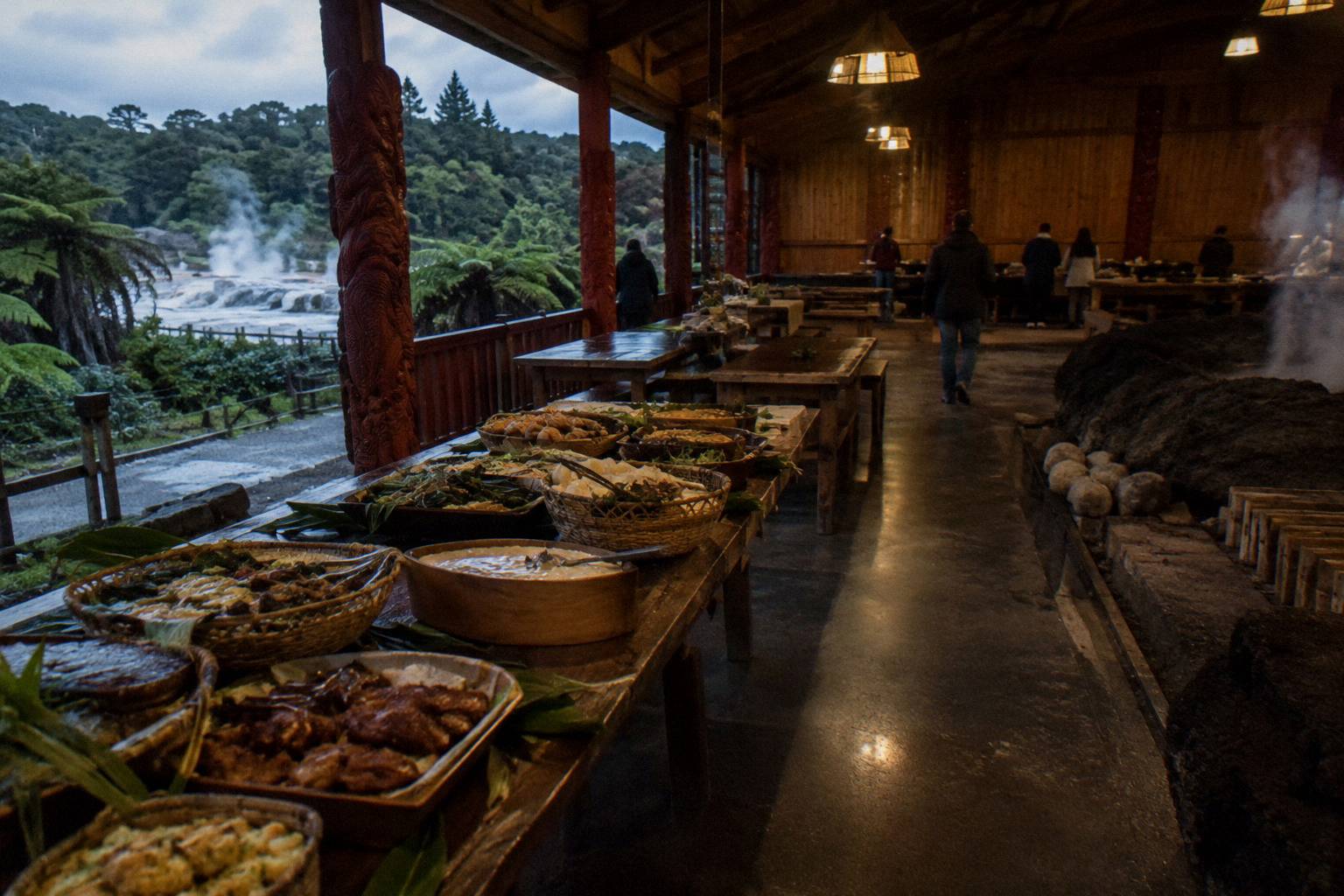
Te Puia's version is the most restaurant-like. The operator's night experiences page describes a hāngī buffet dinner in the Pātaka Kai Restaurant and Bar with valley views, following a 45-minute performance of song and dance in the carved meeting house Te Aronui a Rua and hot chocolate on the geyser terrace. Whakarewarewa The Living Māori Village also cooks with steam, but it is a daytime village with no dinner, so it does not belong in an evening comparison.
| Evening | How the operator describes the hāngī | Style of meal |
|---|---|---|
| Mitai Authentic Hāngi Dinner | Earth oven 1 to 2 m deep, cooked 3 to 4 hours, unveiled in front of guests | Full buffet with hāngī food, vegetables, salads, dessert buffet |
| Te Pā Tū summer, Tū Te Rā | View the hāngī lifting and spit roast; hāngī appears in canapés and the feast | Three-course seasonal feast in the wharekai |
| Te Pā Tū winter, Tū Te Ihi | Traditional in-ground hāngī with lamb and vegetables | Matariki-inspired fusion feast served family style |
| Te Puia Te Pō | Hāngī buffet dinner | Buffet in Pātaka Kai Restaurant and Bar with valley views |
Reading the table, the practical split is simple. Choose Mitai for the most traditional, literal hāngī experience; choose Te Pā Tū for a hāngī woven into a broader seasonal menu; choose Te Puia if you want a geothermal valley and a restaurant setting around the meal.
How Mitai Runs Its Hāngī Evening
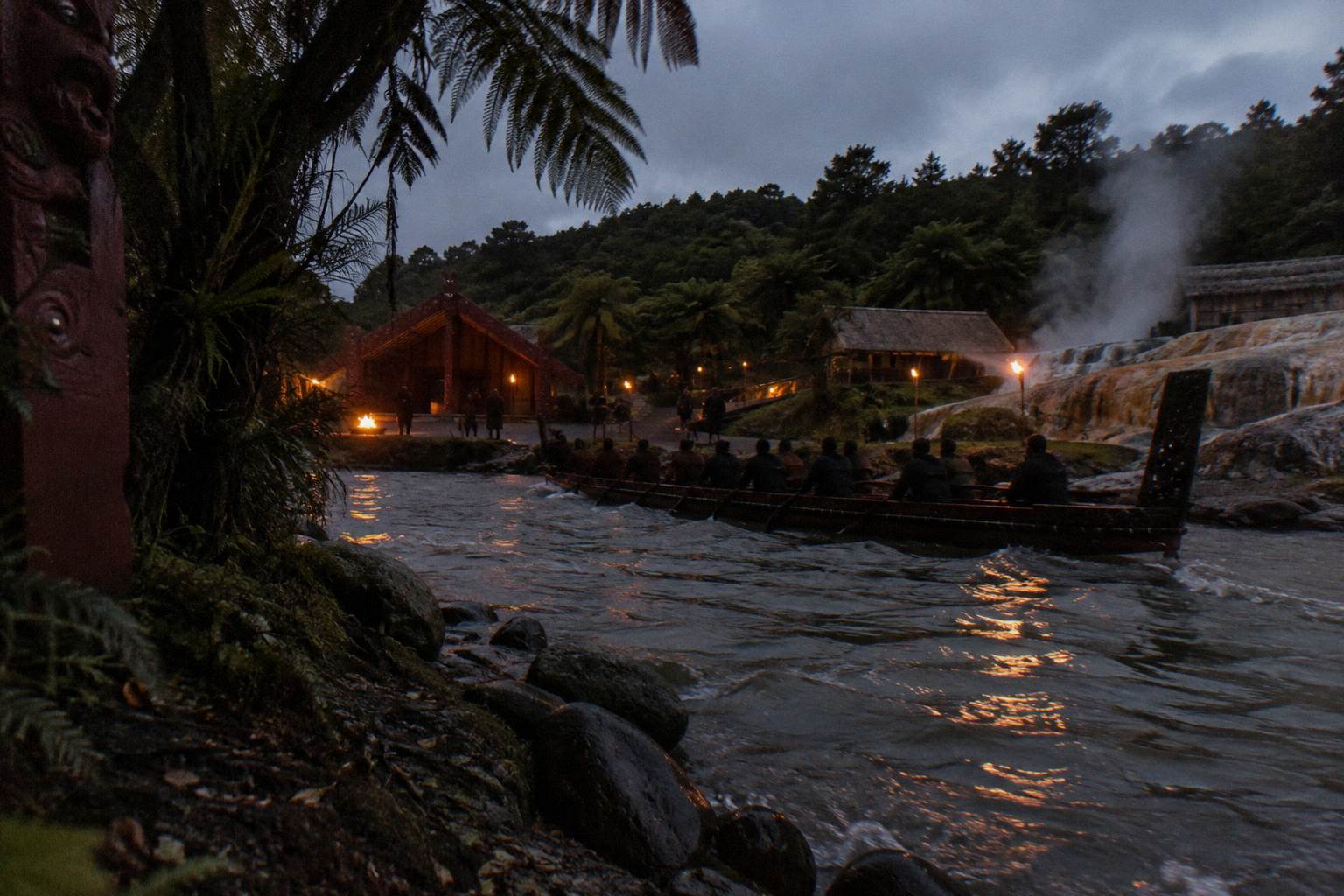
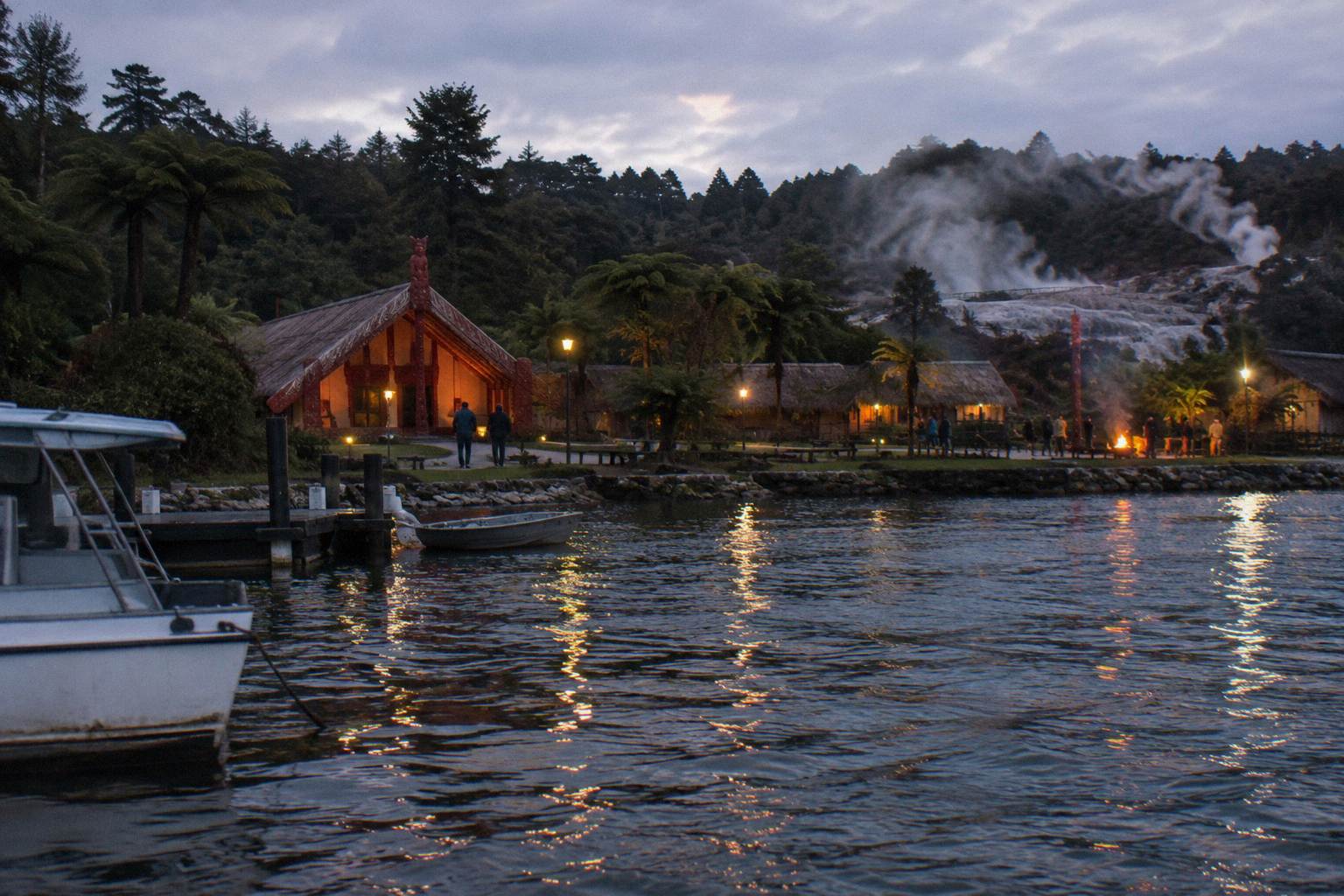
Mitai runs its Authentic Hāngi Dinner Experience, about three hours long, as a fixed sequence: a welcoming ceremony, the hāngī unveiling, warriors paddling a waka down the Wai-o-Whiro Stream, a cultural performance, the buffet dinner, question time, then an evening bush walk to the old fortified village site, the sacred spring Te Puna Tapu o Tūhoe, and the glow worms. Adults pay NZD 188.34, and children aged 4 to 13 pay NZD 115.74.
The operator's experience page lists the performance as Pōwhiri, Wero, Waiata, Mōteatea, Poi and Haka, and calls its haka, in the operator's own wording, the fiery Haka Māori war dance. The same page labels the dinner the operator's most popular option, which is Mitai's label rather than an independent ranking. The hāngī itself is the traditional method described above: meat, chicken and kūmara from an earth oven, served across a buffet.
The pricing carries cents, NZD 188.34 for adults from age 14, because the operator states it that way; prices can change, so treat every figure here as the operator's price at the time of writing rather than a permanent number. Infants 3 and under have a price that is not shown, so ask the operator. Dietary needs have a real limit: Mitai says it is unable to cater to all dietary needs such as vegan, though some requests could be met, so raise any requirement at booking.
Practicalities are well covered on Mitai's own page. Complimentary transfers from registered accommodation exist in limited numbers and must be booked, and the transfer closes at capacity. There is free on-site parking at 196 Fairy Springs Road, a bar on site with outside alcohol not permitted, limited highchairs, limited umbrellas, and some wheelchair limits on the forest walk. The evening start time and the cancellation terms are not on the public pages; both are set in the booking widget, so read the terms at checkout. For dress, Mitai says comfortable clothing and walking shoes, warm clothing in winter, a hat in summer and a jacket when raining.
If the traditional earth oven is what you came for, this is the evening that puts it closest to the centre, and the tour page has the full details: Mitai's hāngī dinner evening.
What Te Pā Tū Serves At Its Two Seasonal Feasts
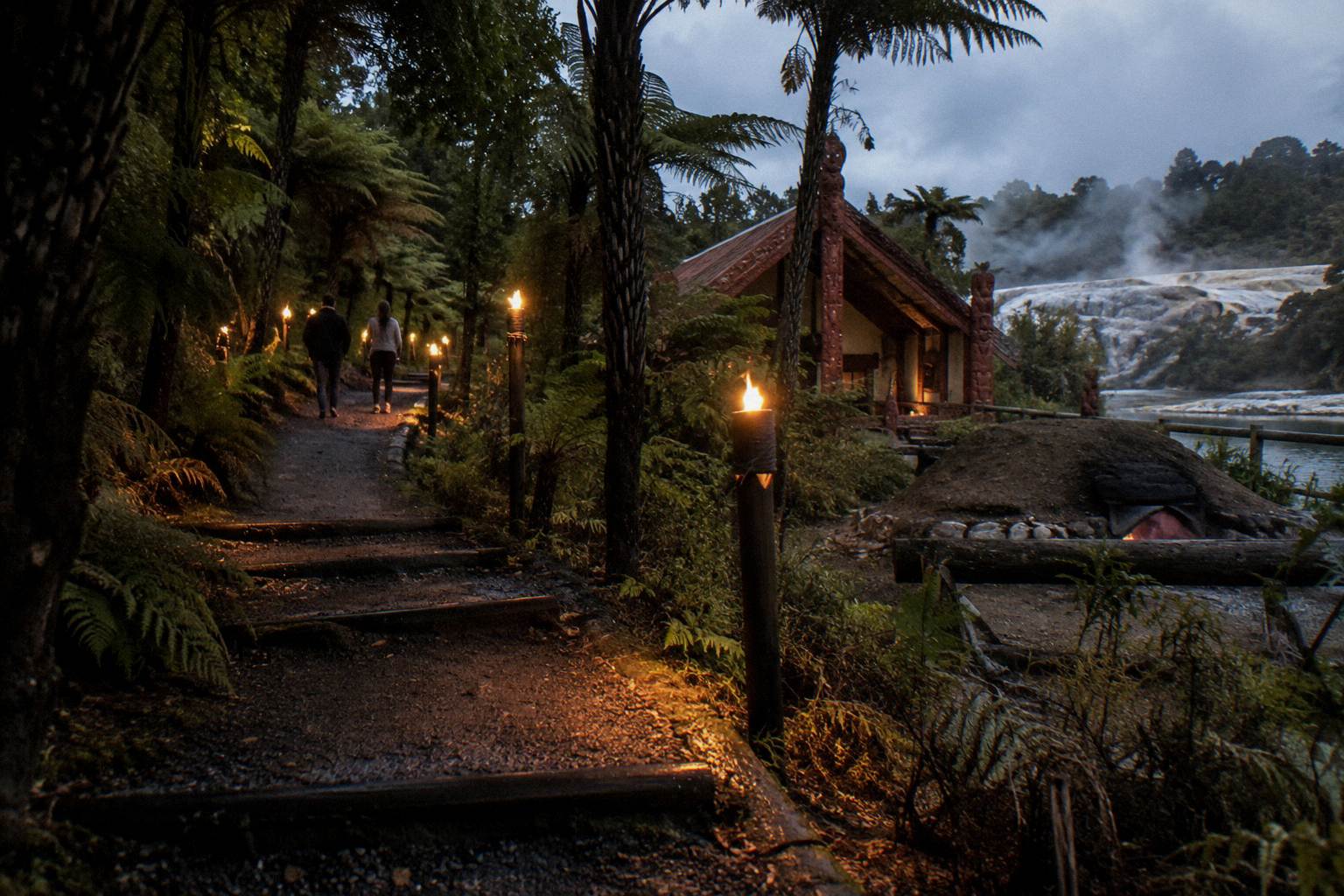
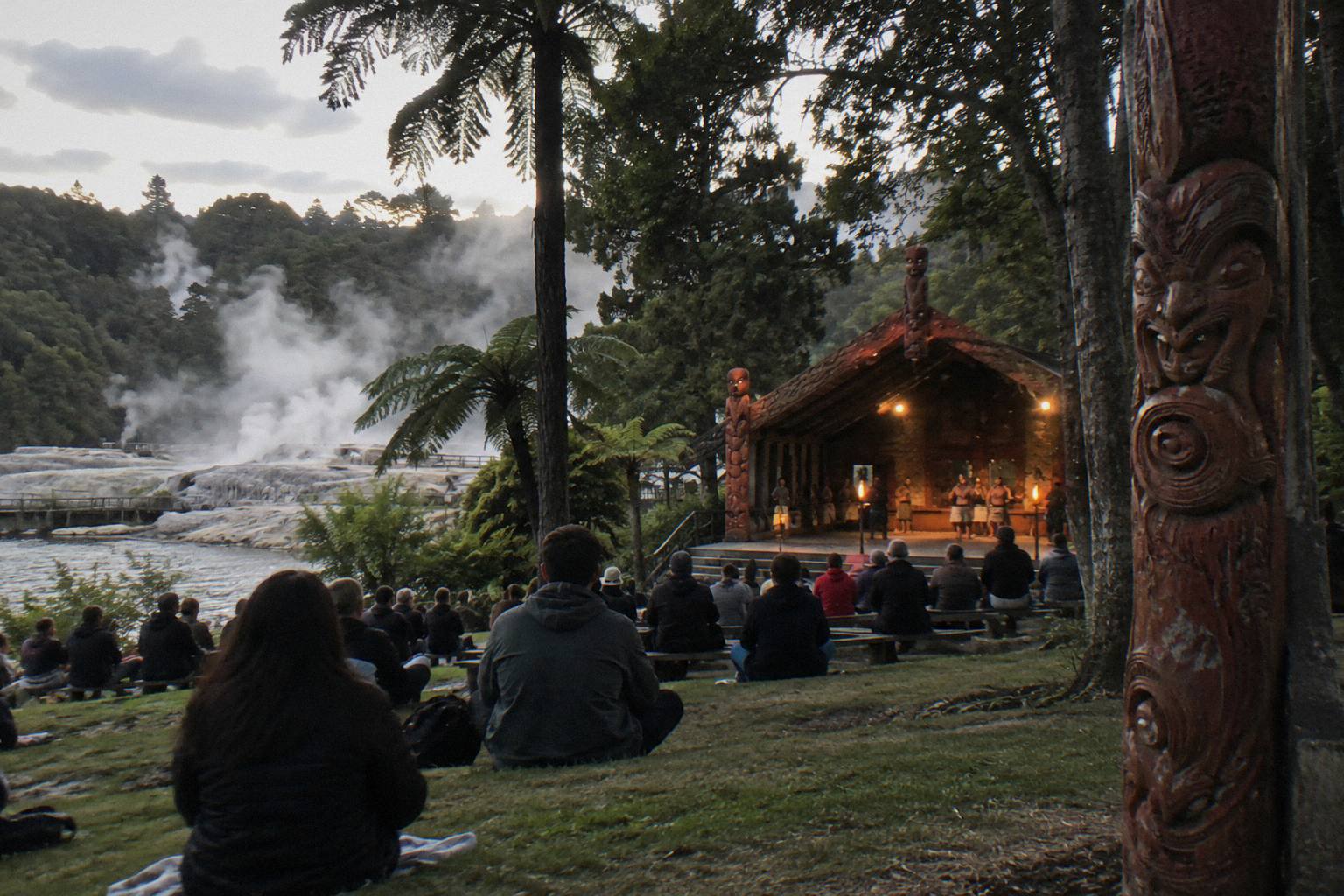
Te Pā Tū serves hāngī feasts at both of its seasonal evenings: Tū Te Rā, the Summer Harvest Celebration running October to April, pairs forest canapés and a hāngī lifting with a three-course feast over 3.5 hours (NZD 290 adult, NZD 125 child), while the winter Tū Te Ihi, from May to September, runs 3 hours at NZD 280 and NZD 115.
The summer evening's food, per the operator, moves from kai horotai canapés in the forest, with examples like pāua wonton and kūmara crisp with venison, to the hāngī lifting and spit roast viewing, then the three-course seasonal feast in the wharekai, finished with a complimentary digestif of the chef's choice and rongoā herbal tea. The operator says stories are relayed through haka, song and drama, exploring concepts, rituals and stories of ancient Māori warfare and peace. Transport is a real differentiator: return coach transfers from central Rotorua are included in both seasons.
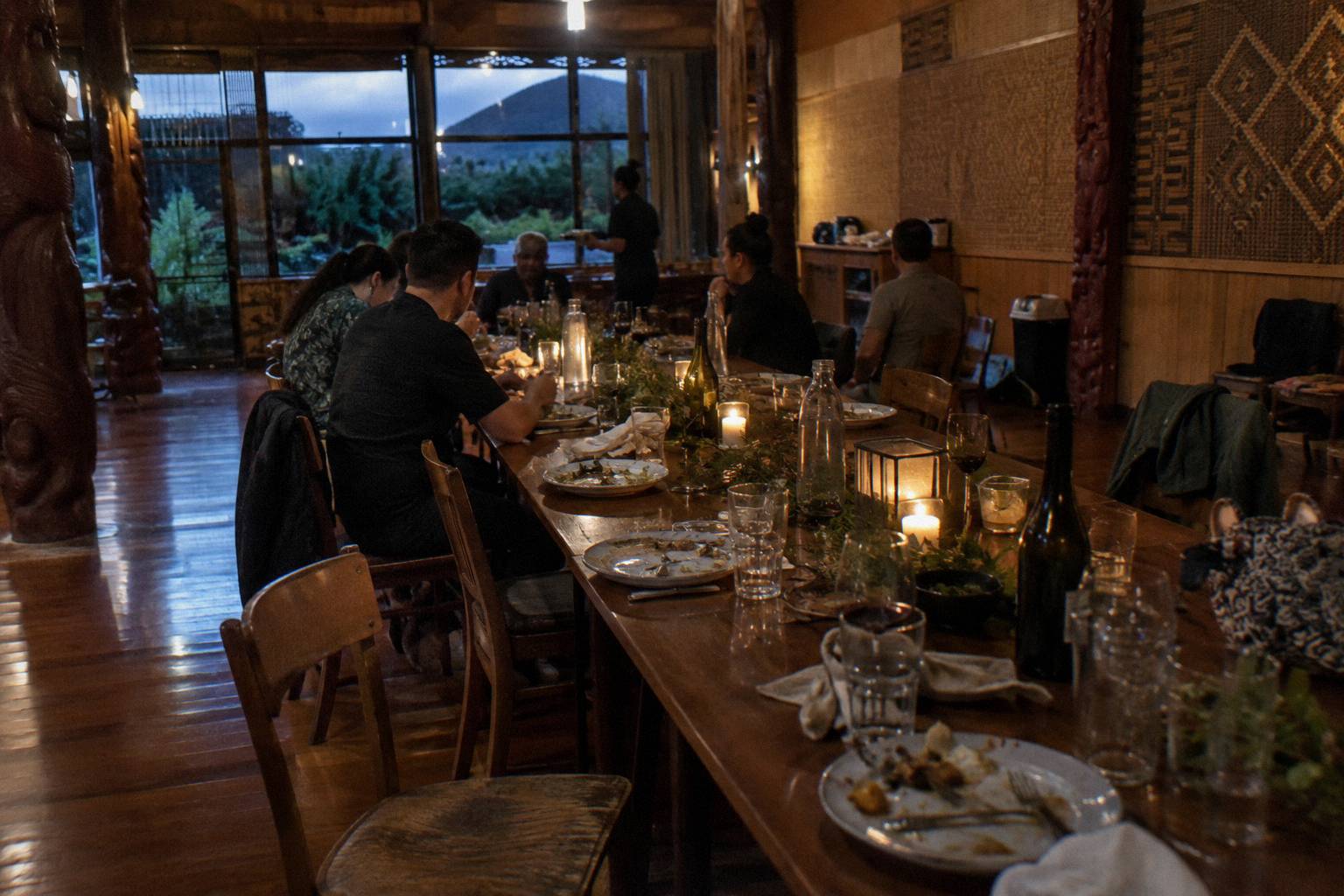
The operator's winter evening page describes a different structure: an Ahi Tuku fire ceremony welcome, kai horotai, a hearty broth and steaming kawakawa tea, fireside wānanga covering conversation, history, games, instruments and traditions, kapahaka shared across service, and a Matariki-inspired Māori fusion feast served family style with a traditional in-ground hāngī of lamb and vegetables, closing with a poroporoaki farewell. The operator sets the winter evening in 1800s Aotearoa, between the 1840 Treaty of Waitangi and the 1886 Mt Tarawera eruption.
Two details are worth flagging honestly. The evening start time is not published, so never plan around an assumed hour; the village address is not published either, because the forest pā sits in tawa forest a short coach ride south of central Rotorua and the included coach is how you get there. On duration, the operator's homepage says four hours of celebration and feasting while the product pages say 3.5 hours summer and 3 hours winter, so about 3 to 3.5 hours is the safe planning figure. Te Pā Tū is the renamed Tamaki Māori Village experience, worth knowing if you are comparing older reviews.
Dietary options are stated for winter: vegetarian, pescatarian and gluten free, with the operator saying it cannot guarantee coeliac safety, plus a licensed bar with Māori wine pairing and non-alcoholic pairings. Vegan options are not stated; ask the operator at booking. Children are welcome, with child prices as above and no published minimum age. Cancellation terms are the operator's own: a 100% refund if cancelled two days before by 12.00pm, 50% one day before by 12.00pm, none on the day.
The full seasonal detail, including the summer menu, is on Te Pā Tū's cultural evening page, and check availability if a date is already in mind.
Where Te Puia Fits The Hāngī In
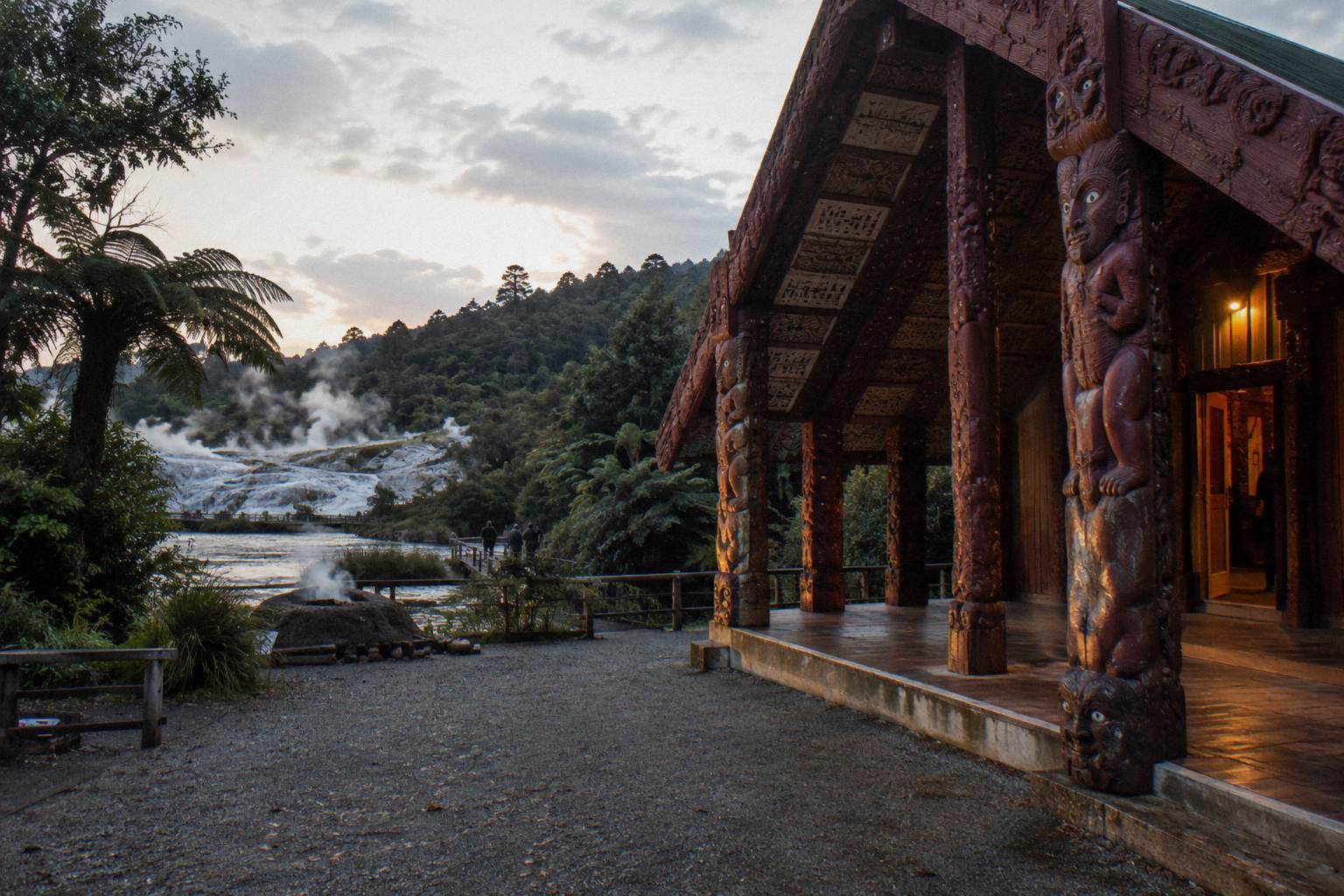
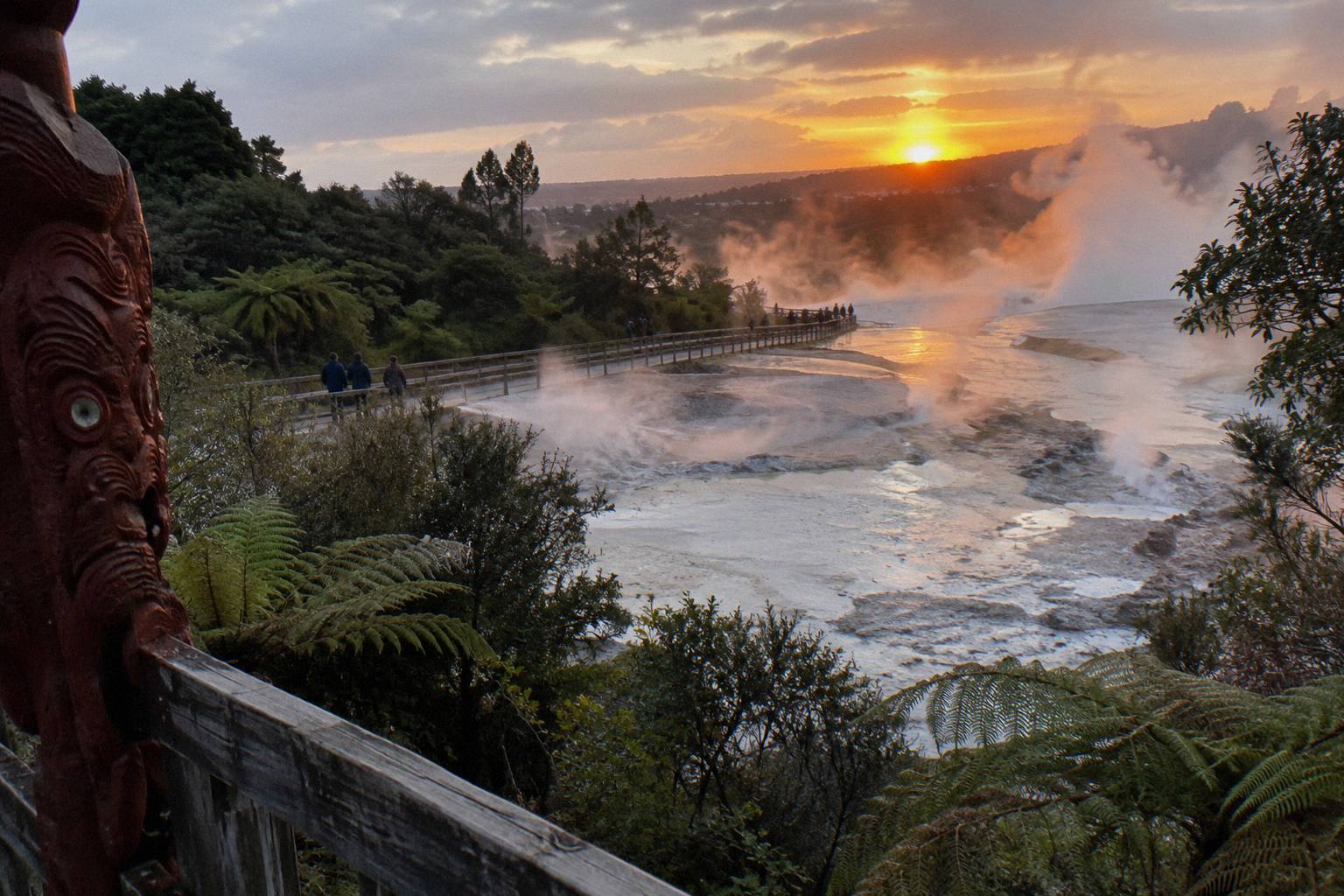
Te Puia's Te Pō evening runs about 2.5 hours from 5:30pm, with dinner sittings at 5:30pm and 7:15pm, at the operator's price of NZD 203. It pairs a 45-minute performance of song and dance in the carved meeting house Te Aronui a Rua with hot chocolate on the geyser terrace and a hāngī buffet dinner in the Pātaka Kai Restaurant and Bar, which has valley views.
Te Puia is iwi owned under the NZMACI Vesting Act 2020 and describes itself as kaitiaki, guardian, of the Whakarewarewa Geothermal Valley; it also hosts the New Zealand Māori Arts and Crafts Institute and a Kiwi Conservation Centre. The evening is the shortest of the three, which makes it the easiest to slot alongside other plans, and it is the only one with a published start time and published sittings, which helps with scheduling the rest of a day in Rotorua. More of these guides are collected on Rotorua Cultural Dinner.
There is no stated hotel transfer, so plan your own arrival at 20 Hemo Road: the operator names the City Ride bus every 30 minutes until 6PM, Uber, taxi, and free parking. The site is cashless. Check in 15 minutes early or the ticket is forfeited, and the cancellation rule is 48 hours for a refund, 72 hours for groups of 10 or more, with tickets inside that window non-refundable. Under 4s are free per the booking page; a child price is not stated. Dietary options are not stated, so tell the operator at booking.
A longer version exists: the Te Puia Te Pō Combo, from 4pm daily, about 4 to 4.5 hours, adds a 90-minute guided tour of the geothermal valley before the dinner and performance, at the operator's price of NZD 290. The operator calls it its most popular night experience, its own label. No rating is stated for the combo. The Te Pō evening itself is rated 4.7 out of 5 on its booking page.
Prices, Ages And Transfers Compared
Across the three dinner evenings, the operator prices span NZD 188.34 to NZD 290 for an adult. Mitai is the lowest at NZD 188.34 adult and NZD 115.74 child, Te Puia Te Pō is NZD 203 with no stated child price, and Te Pā Tū is NZD 290 adult in summer, NZD 280 in winter, with children at NZD 125 and NZD 115. Only Te Pā Tū includes transport from central Rotorua as standard.
| Evening | Adult price, operator's | Child price | Duration | Transfer |
|---|---|---|---|---|
| Mitai Authentic Hāngi Dinner | NZD 188.34 (14+) | NZD 115.74 (4 to 13) | About 3 hours | Limited, from registered accommodation, must be booked |
| Te Puia Te Pō | NZD 203 | Not stated | About 2.5 hours, from 5:30pm | None stated; bus, Uber, taxi, free parking |
| Te Pā Tū Tū Te Rā, summer | NZD 290 | NZD 125 | 3.5 hours | Coach from central Rotorua included |
| Te Pā Tū Tū Te Ihi, winter | NZD 280 | NZD 115 | 3 hours | Coach from central Rotorua included |
Prices change by date, season and booking route, so treat each figure as the operator's stated price and confirm at checkout rather than assuming it. Note that the child basis differs: Mitai's child price covers 4 to 13 with the adult price from 14, Te Pā Tū publishes child prices without a stated minimum age, and Te Puia states under 4s free with no older child price given.
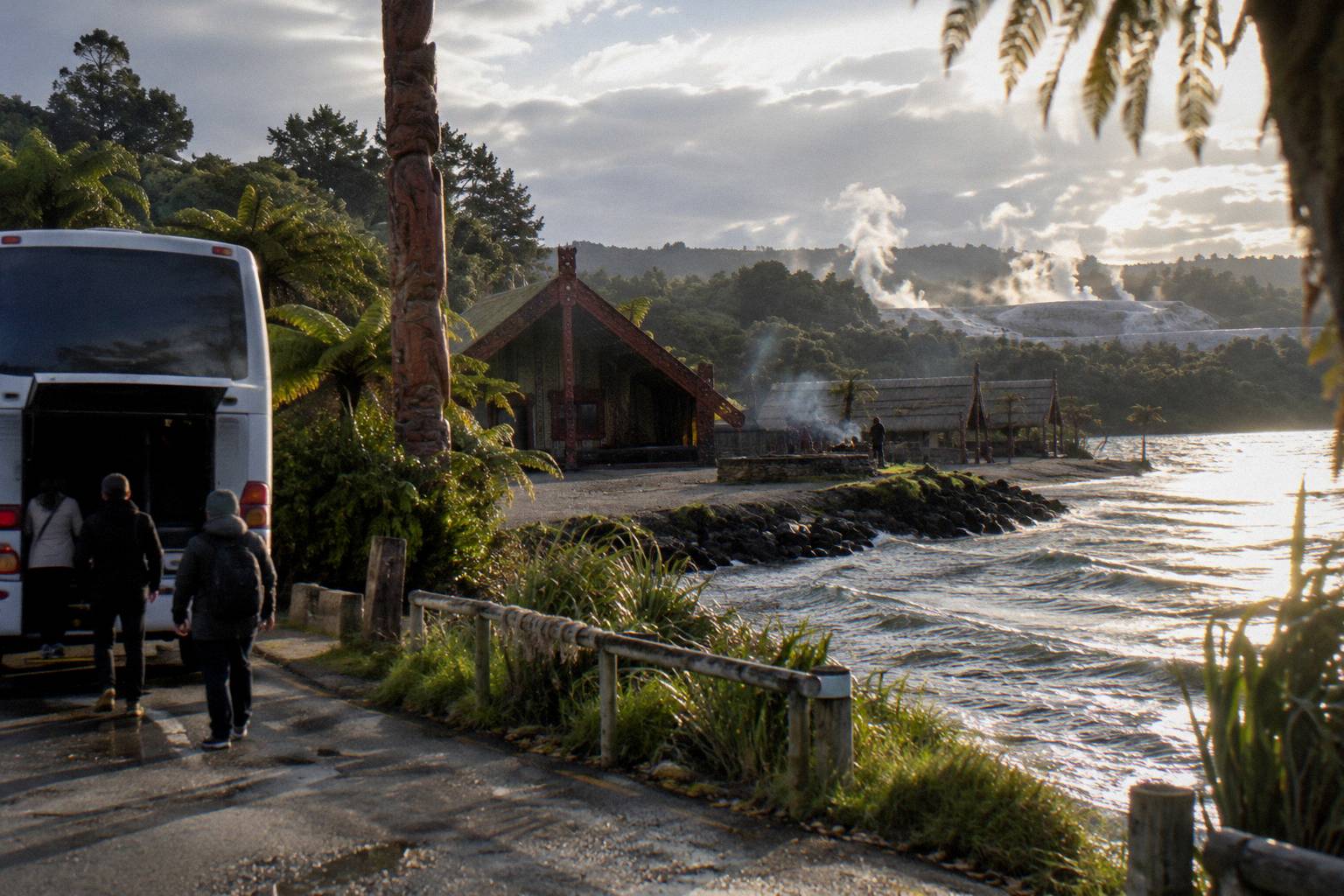
The transfer row decides more bookings than people expect. If you are staying outside central Rotorua or have no car, Te Pā Tū's included coach is the simplest logistics. Mitai's shuttle works only from registered accommodation, in limited numbers that close at capacity, so book it when you book the dinner. Te Puia requires self-arrival, which is straightforward with free parking but needs a driver or a bus that stops running at 6PM.
Matching The Hāngī Evening To Your Trip
A useful shortcut: pick Mitai for the traditional earth oven and the bush walk, pick Te Pā Tū for a full produced feast with transport included, and pick Te Puia for a shorter evening beside a geothermal valley. Families with school-age children have clear prices at both Mitai and Te Pā Tū; anyone with dietary needs should check before booking, because the stated options differ sharply between operators.
Consider a worked example. A couple visiting in January, staying centrally without a car, wants one cultural evening and a late start the next morning. Te Pā Tū's summer evening fits: the coach is included, the 3.5-hour format is the longest and most complete, and the three-course feast plus canapés is the most food. The adult price of NZD 290 each is the highest of the three, and the pair pays it for the full package rather than for transport on top.
Now a family with two children aged 8 and 11, visiting in July. Te Pā Tū's winter evening costs NZD 280 per adult and NZD 115 per child at the operator's prices, includes the coach, and the fireside wānanga format suits a colder night. Mitai is the alternative at NZD 188.34 and NZD 115.74, with the shuttle a question of whether their accommodation is registered. Both welcome children; Te Pā Tū's minimum child age is not published, so confirm with the operator, 0508 826 254 or bookings@maoriculture.co.nz.
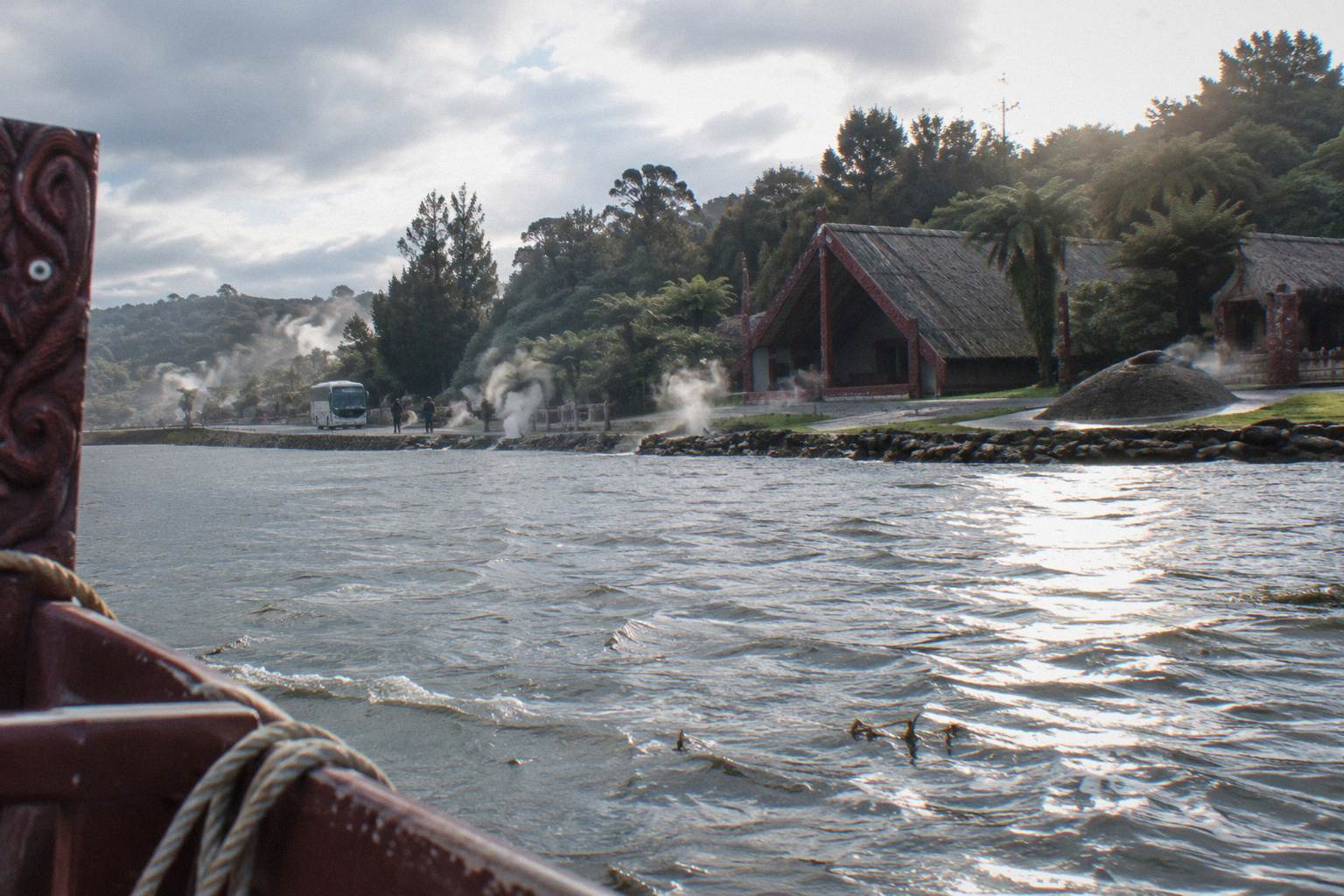
A traveller with one free evening and a packed daytime schedule might take Te Puia instead: 2.5 hours from a published 5:30pm start, NZD 203, no transfer to arrange beyond a drive or short bus ride, and the valley's Pōhutu Geyser, which the operator says erupts up to 20 times a day and up to 30 m high, as the backdrop. The trade-offs are the unstated child price and unstated dietary options.
Dietary needs deserve their own check whatever you choose. Te Pā Tū's winter page lists vegetarian, pescatarian and gluten free with no coeliac guarantee; Mitai states it cannot cater to all dietary needs such as vegan; Te Puia's options are not stated. None of that is a reason to skip the evening, but all of it is a reason to state your needs at booking rather than on the night. For more on the meal itself, see what food is served at a Rotorua hāngī, and for the cooking method, how a hāngī is cooked in the ground.
What Trips People Up When Booking A Hāngī Evening
The recurring mistakes are assuming a start time that was never published, expecting a shuttle that was never guaranteed, and reading one operator's rules as if they applied to all three. Te Pā Tū and Mitai publish no evening start time, Mitai's transfer must be booked and closes at capacity, and every cancellation policy here belongs to a single operator. Booking early and reading the terms at checkout avoids nearly all of it.
Start times catch the most people. Only Te Puia publishes one, 5:30pm, with sittings at 5:30pm and 7:15pm and a 15-minute early check-in that forfeits the ticket if missed. If a Mitai or Te Pā Tū itinerary you see elsewhere names an hour, treat it as unconfirmed and ask the operator: Mitai on +64 7 343 9132 or reservation@mitai.co.nz, Te Pā Tū on 0508 826 254. The same caution applies to the Te Pā Tū village address, which is not published; the meeting point is the coach from central Rotorua.
Cancellation terms never transfer between operators. Te Pā Tū refunds in full only two days out by 12.00pm, half one day out, nothing on the day, and excludes booking and bank fees. Te Puia needs 48 hours, 72 for groups of 10 or more, and check-in timing is strict. Mitai's terms are not public and are set in its booking widget, so the page you reserve on may carry different terms from the operator's own; read them before paying.
Dietary assumptions cause disappointment on the night. Vegan is the clearest gap: Mitai says it cannot cater to all dietary needs such as vegan, and Te Pā Tū's stated options are vegetarian, pescatarian and gluten free, with vegan not stated. Te Puia's dietary options are not stated at all. The fix is the same for all three: state the requirement at booking and confirm it was received. The cultural evening is also a live event, and the operator decides what runs on the night, so weather and availability always have the final word. A good next step if you are weighing the whole field is which Māori village in Rotorua offers an evening meal.
Before the practical questions, these are the three evenings again, side by side for a final check:
Common Questions About Hāngī In Rotorua
Why Is Hāngī Important To Māori?
The operators themselves do not publish an explanation of the hāngī's cultural importance, and no invented significance belongs on this page. What they do state is that the hāngī anchors each evening: Te Pā Tū speaks of manaakitanga, a value centred on strengthening the bonds between host and visitors, and each operator makes the hāngī part of the event rather than a hidden kitchen process.
Which Rotorua Evening Has The Most Traditional Hāngī?
Mitai's Authentic Hāngi Dinner is the most literal version: food cooked in an earth oven 1 to 2 m deep for 3 to 4 hours, uncovered in front of guests, then served across a full buffet with meat, chicken and kūmara. The operator's adult price is NZD 188.34 and the evening runs about 3 hours.
Do All Three Dinners Serve A Hāngī?
Yes, in three different styles. Mitai serves the hāngī as a buffet centrepiece, Te Pā Tū weaves the in-ground hāngī into a three-course summer feast and a family style winter Matariki feast, and Te Puia serves a hāngī buffet in its Pātaka Kai Restaurant and Bar with valley views.
Can Vegetarians And Gluten Free Guests Eat At These Dinners?
Te Pā Tū's winter page lists vegetarian, pescatarian and gluten free options and says it cannot guarantee coeliac safety. Mitai says it is unable to cater to all dietary needs such as vegan, though some requests could be met. Te Puia's dietary options are not stated. In every case, tell the operator at booking.
Is Transport Included To The Hāngī Dinners?
Te Pā Tū includes return coach transport from central Rotorua in both seasons. Mitai offers complimentary transfers from registered accommodation in limited numbers that must be booked and close at capacity. Te Puia states no transfer; it names the City Ride bus, Uber, taxi and free parking instead.
How Much Do The Hāngī Evenings Cost?
At the operators' prices: Mitai NZD 188.34 adult and NZD 115.74 child, Te Puia Te Pō NZD 203 with the child price not stated, and Te Pā Tū NZD 290 adult and NZD 125 child in summer, NZD 280 and NZD 115 in winter. Prices can change, so confirm on the booking page.