Vegetarian, Vegan And Gluten-Free Options At A Hāngī Dinner
A hāngī dinner centres on meat and root vegetables cooked in an earth oven, which raises an obvious question for vegetarians, vegans and gluten-free guests: what is actually on the plate? Here is what each Rotorua operator states about dietary options, and what to ask before booking.
Short answer
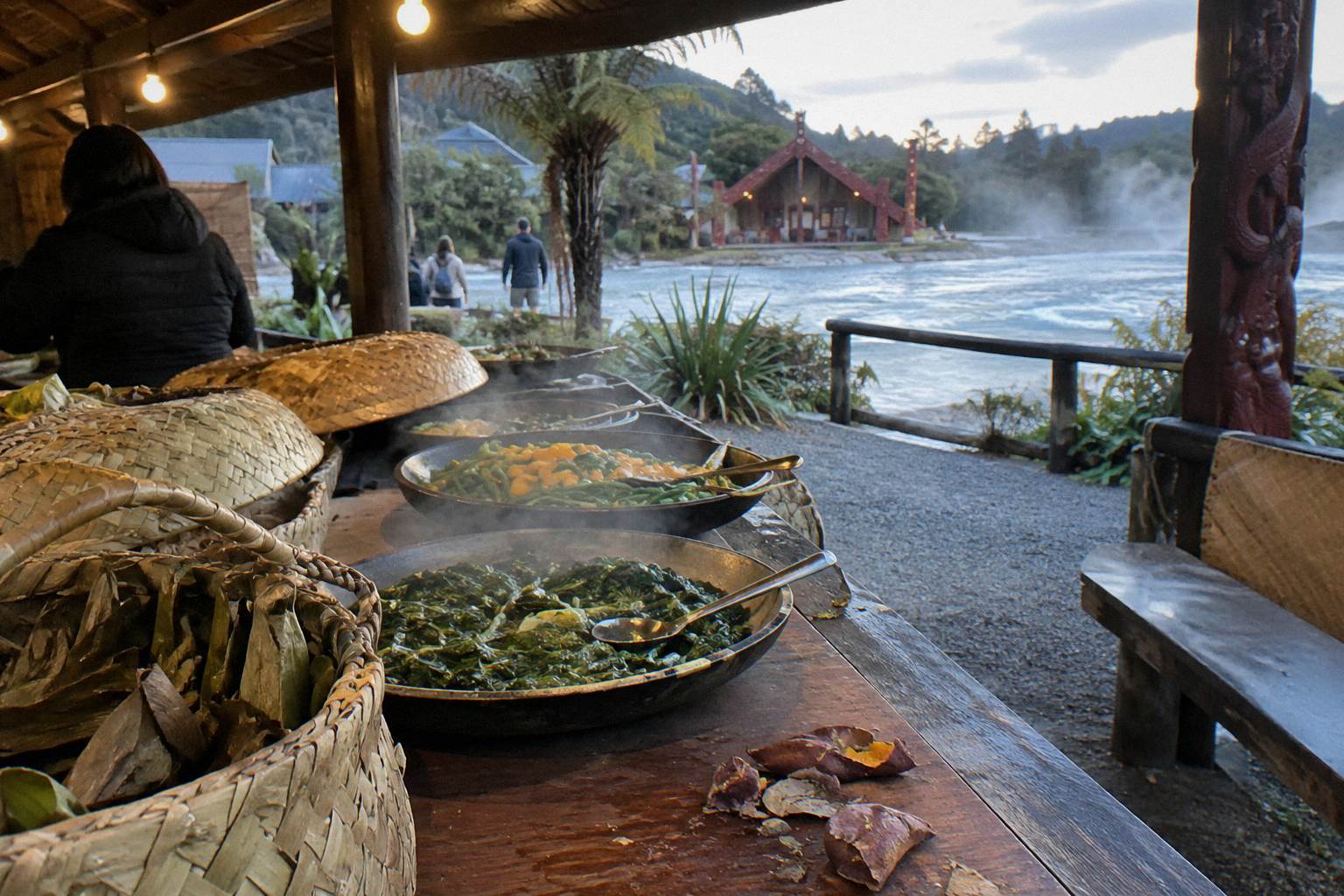
Te Pā Tū lists vegetarian, pescatarian and gluten free options on its winter evening page, but says it cannot guarantee coeliac safety. Mitai states it is unable to cater to all dietary needs such as vegan, though some requests could be met. Te Puia does not state dietary options. In every case, tell the operator your needs at booking.
A hāngī is, at its simplest, an earth oven: food cooked in the ground by heat and steam over several hours. That method shapes the menu. Mitai describes its hāngī as cooked in an earth oven hole 1 to 2 m deep for 3 to 4 hours, and the operator lists meat, chicken and kūmara among the contents. A dinner built around that basket is not automatically a hard place for a vegetarian or a gluten-free guest to eat, but the options differ sharply between Rotorua's three evening operators, and only one of them publishes a dietary list on its own page.
This guide walks through what each operator actually says. Where an operator states nothing, that is stated here once, plainly, with the advice to ask directly. The contacts for doing that are gathered in a table further down, because the single most reliable way to eat well at a cultural dinner with a dietary need is to raise it before you book, not on the night. The operator can only prepare for a request it knows about.
What Can Vegetarians Actually Eat At A Hāngī Dinner?
Vegetarians have the clearest path at Te Pā Tū, whose winter page lists vegetarian among its dietary options, and the widest spread of sides at Mitai, whose buffet includes vegetables, salads and a dessert buffet alongside the hāngī meats. Te Puia serves a hāngī buffet in its Pātaka Kai Restaurant and Bar but does not say which dishes suit vegetarians, and since none of the three publishes a dish-by-dish menu, ask at booking.
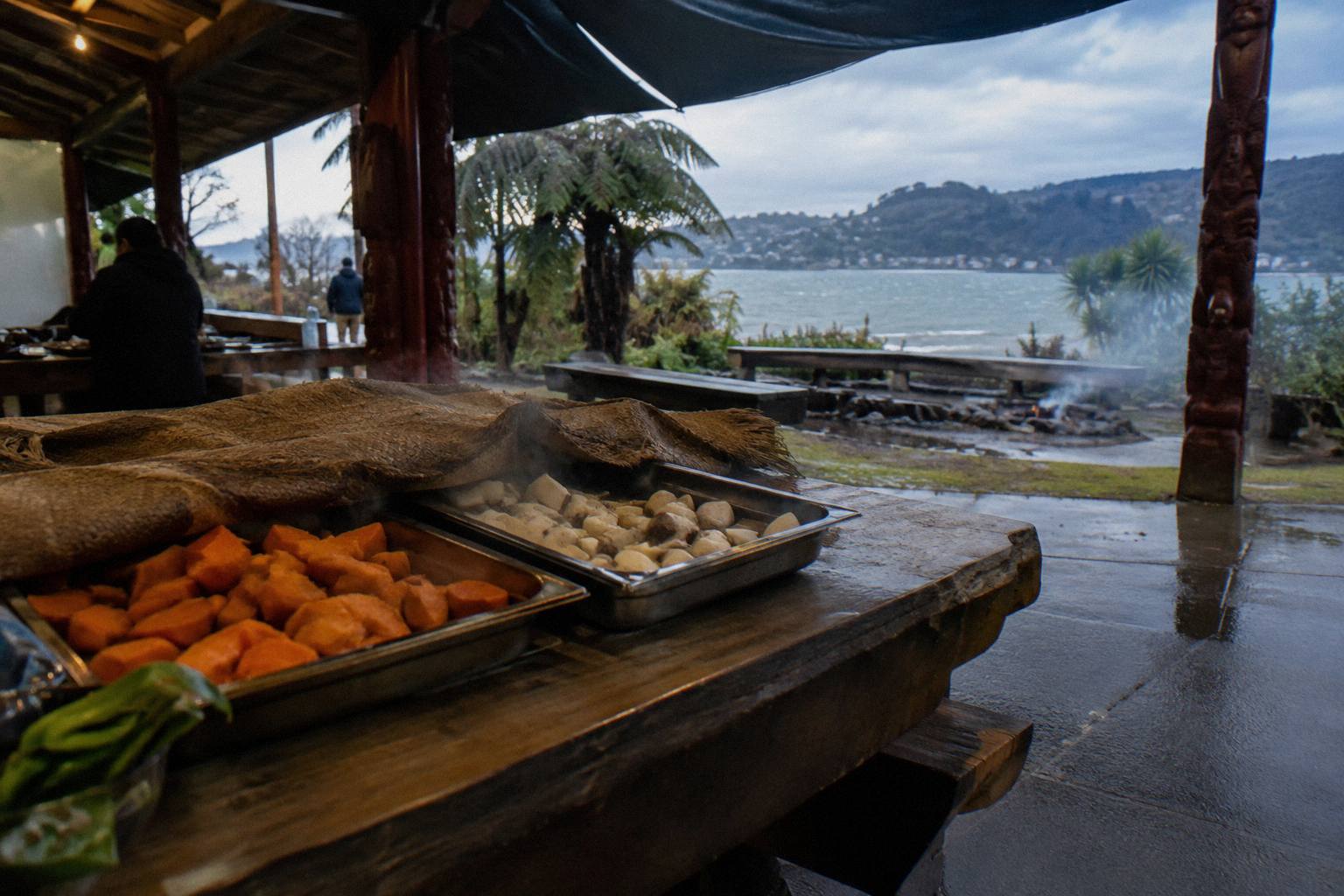
Start with the method, because it explains why the answer varies. A hāngī basket is assembled before cooking, and what goes into the ground is what comes out of it. Mitai's operator page describes its hāngī contents as meat, chicken and kūmara, cooked for 3 to 4 hours. A vegetarian guest at that dinner is not eating from the hāngī basket itself, but from the buffet around it: the operator's description lists vegetables, salads and a dessert buffet as part of the full buffet hāngī dinner.
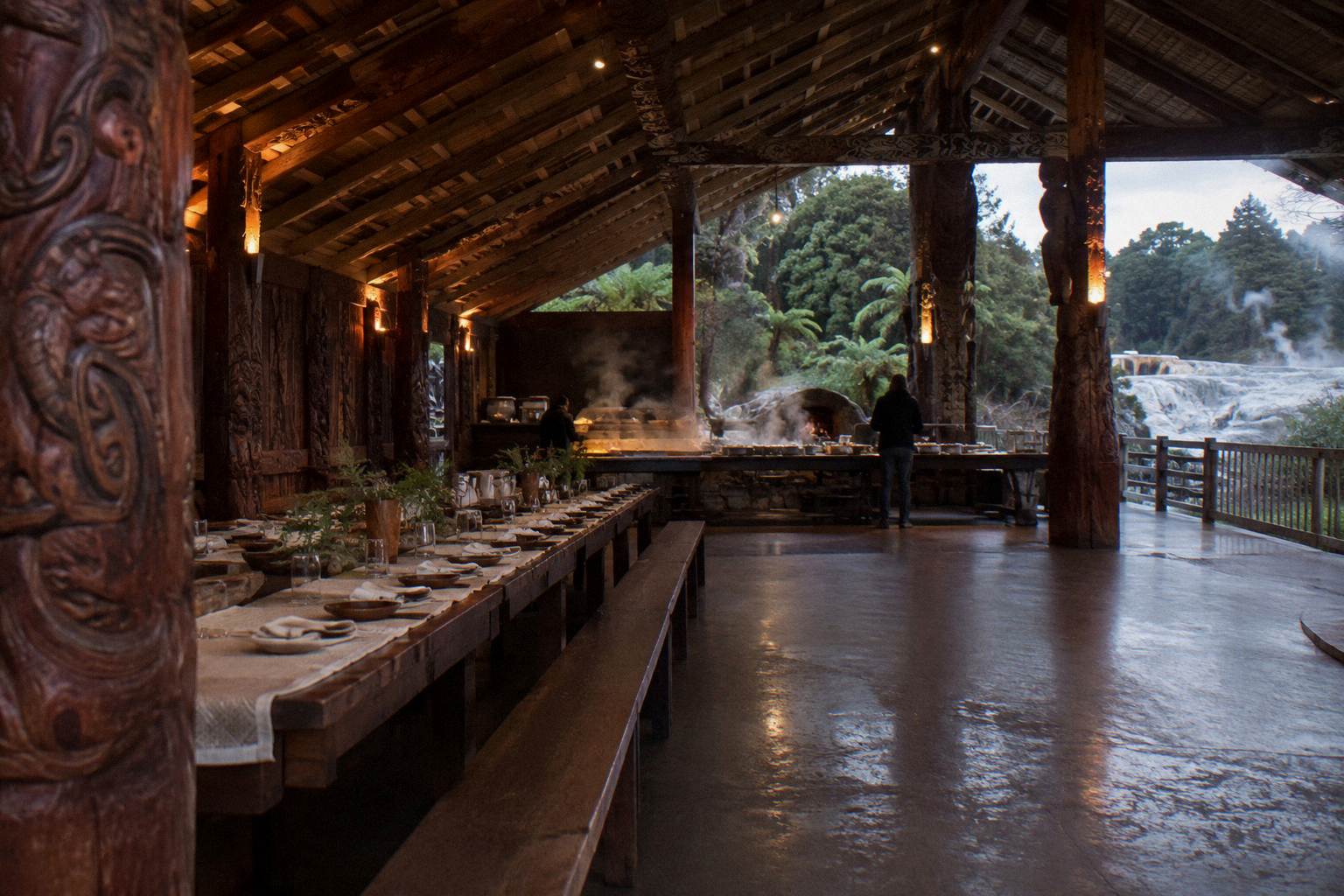
Te Pā Tū structures the meal differently across its two seasonal evenings. On the summer evening, Tū Te Rā (October to April), the operator lists forest kai horotai canapés, with examples such as hāngī root-vegetable croquette, then a three-course seasonal feast in the wharekai that the operator says blends traditional and innovative dishes by Māori chefs. A root-vegetable croquette is listed as a canapé example, which signals vegetable cookery sits inside the menu rather than beside it. On the winter evening, Tū Te Ihi (May to September), the operator lists a Matariki-inspired Māori fusion feast served family style with a traditional in-ground hāngī of lamb and vegetables.
The practical takeaway is that "vegetarian" is the dietary need best served across the board, but the depth of the vegetarian offering is not published anywhere in dish-level detail. A guest who eats fish has a stated home at Te Pā Tū, whose winter page lists pescatarian options. A guest who eats neither meat nor fish should treat the buffet descriptions as promising but unconfirmed, and ask. For the deeper background on the cooking method itself, see how a hāngī is cooked, and for the wider food picture, what food is served at a Rotorua hāngī.
Which Rotorua Evening Dinners Cater To Dietary Needs?
Across the three evening operators, only Te Pā Tū publishes a dietary list: vegetarian, pescatarian and gluten free, with an explicit statement that it cannot guarantee coeliac safety. Mitai states it is unable to cater to all dietary needs such as vegan, though it says some requests could be met. Te Puia states no dietary options at all. That is the whole published picture, and it is the basis on which a dietary guest should choose an evening.
The table below puts the three bookable dinner evenings side by side on the facts that matter to a dietary guest: what the operator states about diets, what the dinner contains, and the operator's adult price. Prices are the operators' own NZD prices and can change.
| Evening | Operator's stated dietary options | Food the operator lists | Adult price (NZD) |
|---|---|---|---|
| Te Pā Tū Cultural Experience With Dinner | Vegetarian, pescatarian, gluten free; cannot guarantee coeliac safety | Summer: kai horotai canapés, three-course feast. Winter: family style fusion feast, in-ground hāngī of lamb and vegetables | 290 summer Tū Te Rā, 280 winter Tū Te Ihi |
| Mitai Māori Village Cultural Experience And Dinner Buffet | Unable to cater to all dietary needs such as vegan; some requests could be met | Full buffet hāngī dinner with meat, chicken, kūmara, vegetables, salads, dessert buffet | 188.34 |
| Te Puia Te Pō Evening | Not stated | Hāngī buffet dinner in Pātaka Kai Restaurant and Bar | 203 |
Two things follow from that table. First, Te Pā Tū is the only evening where a dietary guest books against a written commitment; the operator's winter evening page carries the dietary line and also lists a licensed bar with Māori wine pairing and non-alcoholic pairings. Second, "not stated" is not the same as "not possible". Mitai's wording, that some requests could be met, is an invitation to ask rather than a refusal. The dietary question at Te Puia is simply open, and the operator's own FAQ page is the natural place to start.
If you are weighing the evenings against each other more broadly, the comparison page on Mitai versus Tamaki versus Te Pā Tū covers format and price, and the question of which Māori village in Rotorua offers an evening meal settles which venues are even in this conversation. Spoiler for the daytime option: Whakarewarewa The Living Māori Village serves steam-cooked food at lunch and has no evening dinner, so it never enters a dinner-dietary decision.
Between those two poles sit the guests with the hardest brief: allergy-driven diets, where a trace matters. For those diners the published statements need careful reading, and the next two sections do that reading, for vegans first and then for gluten-free and coeliac guests.
Can Vegans Eat At These Cultural Dinners?
No Rotorua evening operator states a vegan option. Mitai says outright it is unable to cater to all dietary needs such as vegan, though it adds that some requests could be met. Te Pā Tū lists vegetarian, pescatarian and gluten free but does not state vegan. Te Puia states nothing either way. A vegan guest therefore books on the strength of a direct conversation with the operator, not on any published promise, and should have that conversation before paying.
The Mitai statement deserves a close read because it is the only one that names vegan at all. The operator's page says it is unable to cater to all dietary needs such as vegan, though some requests could be met. Read plainly, that is a limitation, not a menu: the operator is telling dietary guests not to assume, while leaving the door open for individual requests. A vegan guest who books Mitai without asking is gambling on the buffet's salads and vegetables being sufficient and free of animal products, which the operator does not state anywhere.
Te Pā Tū's position is different in kind. Its winter page lists three dietary options, vegetarian, pescatarian and gluten free, and stops there. The absence of vegan from a list that is otherwise specific is meaningful: an operator that publishes a dietary list and omits a category is signalling that the category is not a standing option. The three-course and family-style formats also matter for a vegan: a plated feast with a set menu has less natural slack than a buffet, because the kitchen plans courses in advance for the whole table.
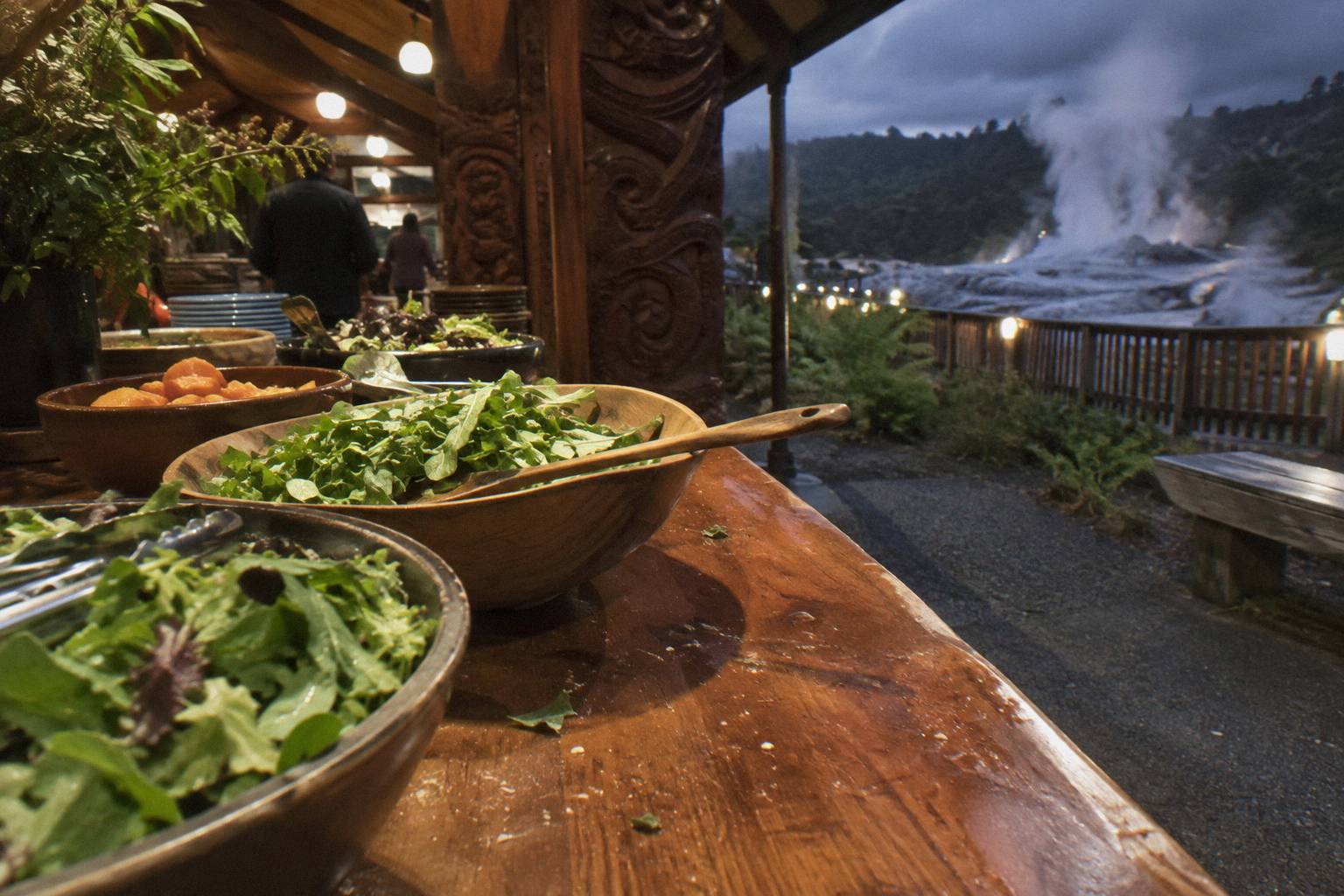
What a vegan can reasonably expect at any of the three evenings is the plant material that already sits inside the hāngī tradition: kūmara and other root vegetables appear in every operator's food description. Mitai's hāngī basket includes kūmara; Te Pā Tū's summer canapé examples include a hāngī root-vegetable croquette; the winter feast lists vegetables alongside lamb. Whether those elements can be served vegan-complete, without butter, stock or cross-contact, is exactly the question the operators have not answered in public.
So the vegan playbook is short. Contact the operator before booking, state the diet plainly, and ask what the kitchen can do on your date. If the answer is thin at one venue, the buffer is real: three evenings run in Rotorua, and a diet that fails at one may be met at another. For context on how each evening is structured around the meal, what the Mitai Māori Village dinner is like walks through that operator's full sequence.
Mitai's dinner is the budget anchor of the three at the operator's price of NZD 188.34 for an adult (14+) and NZD 115.74 for a child aged 4 to 13, with infants 3 and under priced separately on the booking page. Those figures carry cents because the operator's price does; treat them as changeable and confirm at checkout.
Is A Hāngī Dinner Safe For Gluten-Free And Coeliac Guests?
Te Pā Tū lists gluten free among its dietary options and, in the same breath, says it cannot guarantee coeliac safety. That pairing is the key fact for gluten-free guests: the operator caters to the gluten-free preference but does not promise a coeliac-grade kitchen. Mitai and Te Puia state nothing about gluten. A coeliac guest should treat every option here as a question of cross-contact, and ask each operator directly before booking.
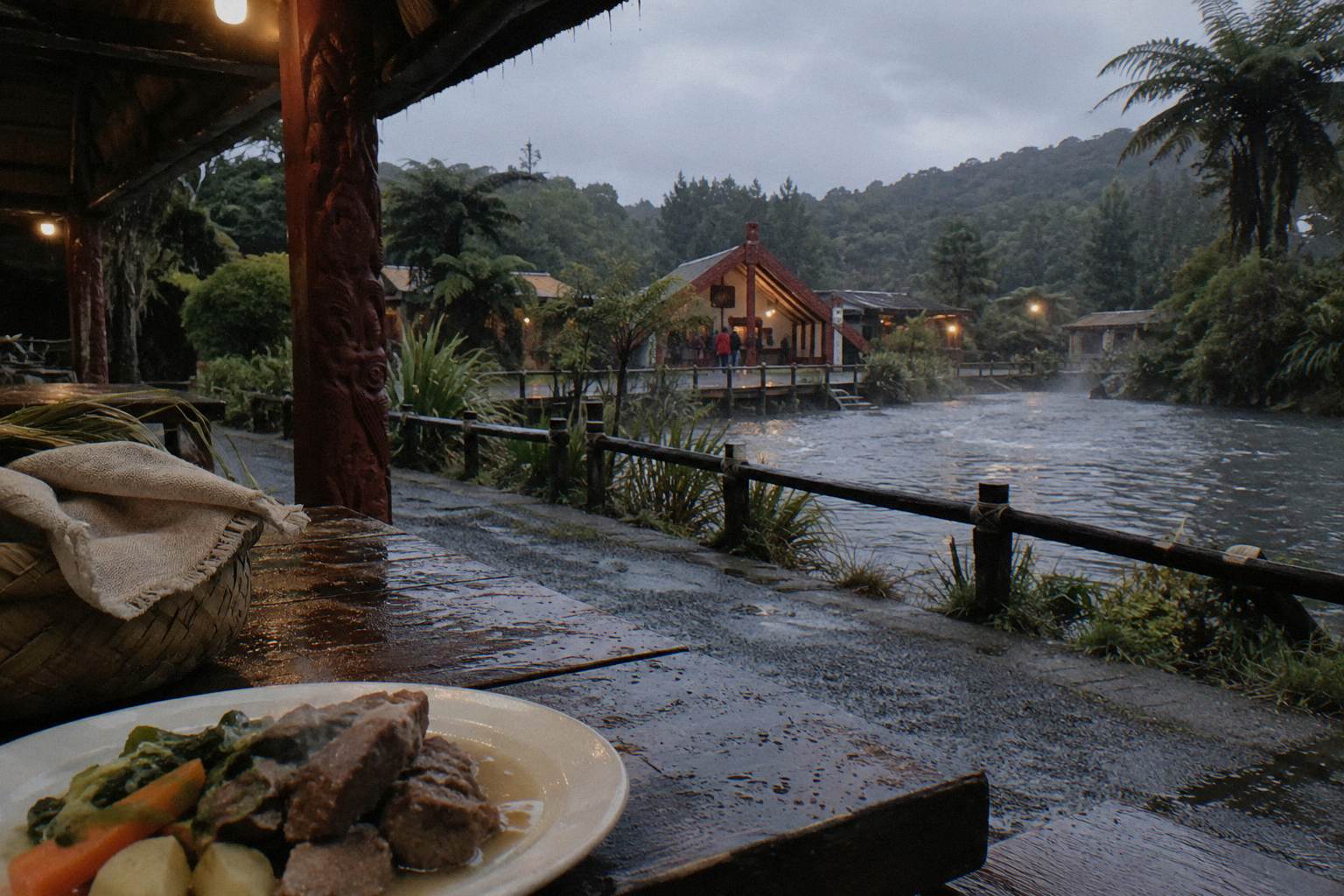
The distinction between "gluten free options" and "coeliac safe" is doing real work in Te Pā Tū's wording. A menu can offer dishes that contain no gluten ingredients and still be prepared in a kitchen where bread, batter or stock containing gluten is present. By stating it cannot guarantee coeliac safety, the operator is being explicit that it does not run a guaranteed gluten-free environment. Guests who avoid gluten by preference have a stated option; guests for whom trace gluten is a medical issue have a warning, and should act on it.
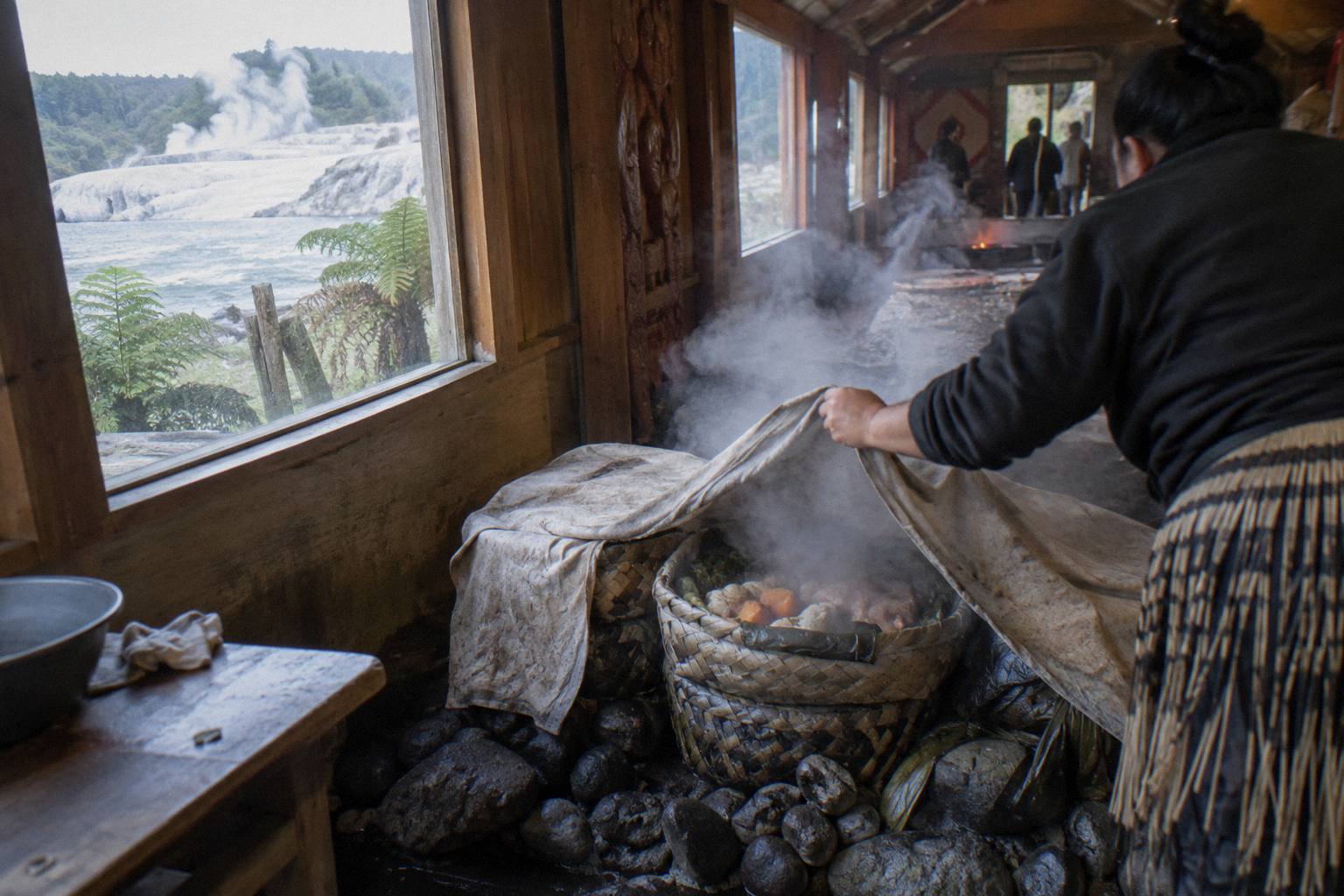
The hāngī method itself cuts both ways for gluten-free dining. Food cooked in an earth oven, in baskets, without flour-based coatings, has no inherent gluten. Te Pā Tū's winter hāngī is described as lamb and vegetables; Mitai's basket is meat, chicken and kūmara. The gluten risk arrives in the rest of the meal: stuffings, sauces, desserts and fried items can each carry it, and none of the operators publishes an ingredient list. Buffet service adds shared serving utensils to the picture at Mitai and Te Puia.
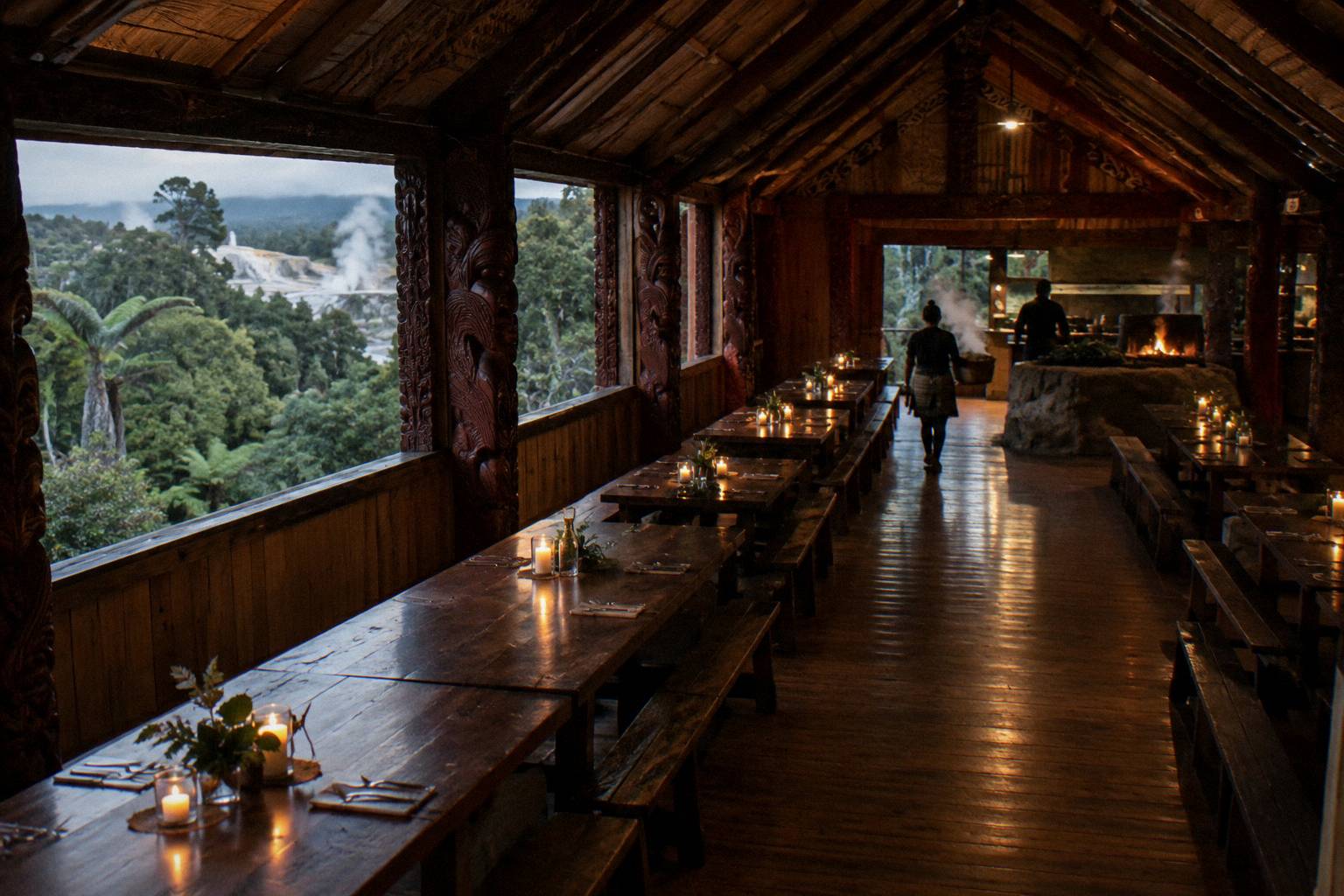
No medical claim is made here, and none should be inferred. What the facts support is narrow: one operator offers gluten-free dishes without a coeliac guarantee, and two operators are silent. The decision rule for a gluten-free or coeliac guest is therefore to name the requirement at booking, in the words you would use with a restaurant, and to judge the answer you get rather than the brochure. Contact details for doing exactly that sit in a table further down this page.
Te Pā Tū's two seasonal evenings both carry the dietary statement, and both include return coach transport from central Rotorua, which removes the self-drive question for a guest whose evening is already complicated. The summer evening, Tū Te Rā, runs about 3.5 hours at the operator's price of NZD 290 adult and NZD 125 child; the winter evening, Tū Te Ihi, runs about 3 hours at NZD 280 adult and NZD 115 child. The full picture of those two menus is in what hāngī Te Pā Tū serves, and the seasonal timing is unpacked in the best time of year for a Māori hāngī evening. November sits inside the summer season, Tū Te Rā, which runs October to April.
The evening itself is bookable through its tour page on Rotorua Cultural Dinner, with dates and dietary requests handled at booking.
One dietary angle sits outside all three dinners: daytime eating. Whakarewarewa The Living Māori Village steam-cooks food at lunch, with a cultural performance at 12.30pm, and no evening meal at all. A gluten-free or vegetarian traveller building a whole Rotorua day can use that daytime option, whose adult performance price is NZD 37 and child price NZD 20 for ages 5 to 15, but it is not a dinner and belongs in a lunch plan, not an evening one.
What Do The Dinners Cost For Guests With Dietary Needs?
Dietary guests pay the same published prices as everyone else: no operator states a discount or a surcharge for a dietary menu. The price spread runs from NZD 188.34 at Mitai to a seasonal NZD 290 or NZD 280 at Te Pā Tū, with Te Puia's Te Pō evening at NZD 203 and its longer combo at NZD 290. Duration varies too, from about 2.5 hours to about 4.5 hours.
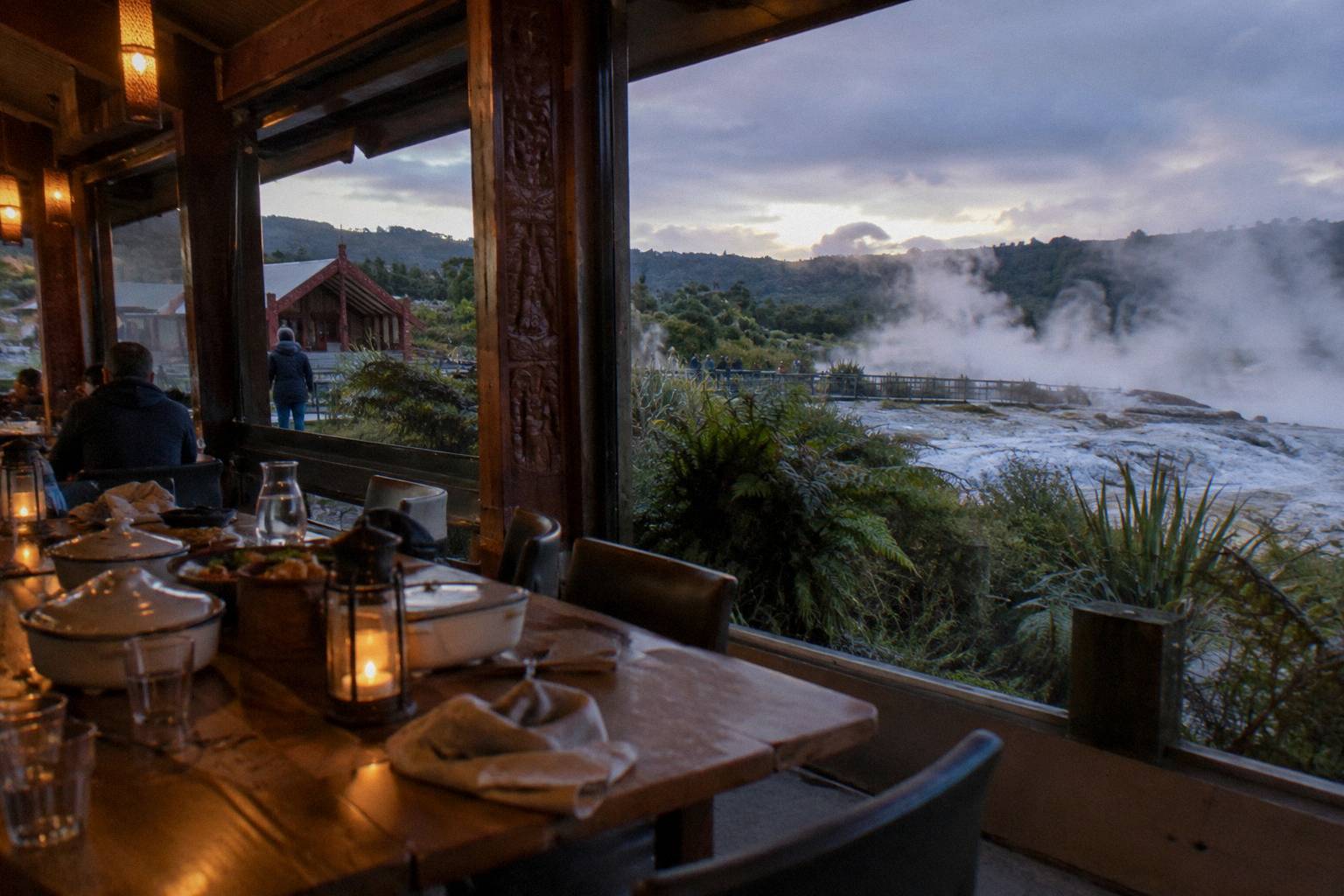
The money question for a dietary guest is not the sticker price but value under constraint: if a third of a buffet is off limits to you, the per-usable-plate cost rises even though the ticket price does not. That argues for matching the format to your diet. A buffet, Mitai's format, gives a dietary guest visible choices on the night. A plated three-course feast, Te Pā Tū's summer format, concentrates the kitchen's attention on your stated request. Neither is objectively better; they reward different kinds of dietary confidence.
| Evening | Duration, operator-stated | Transfer, operator-stated | Dietary handling at booking |
|---|---|---|---|
| Te Pā Tū Cultural Experience With Dinner | About 3.5 h summer, 3 h winter | Return coach from central Rotorua included | Written dietary list; request at booking |
| Mitai Māori Village Cultural Experience And Dinner Buffet | About 3 h | Limited complimentary transfers from registered accommodation, must be booked | Ask directly; operator says some requests could be met |
| Te Puia Te Pō Evening | About 2.5 h from 5:30pm | None stated; operator names bus, Uber and taxi | Ask directly; no dietary statement |
| Te Puia Te Pō Combo | About 4 to 4.5 h from 4pm | None stated | Ask directly; no dietary statement |
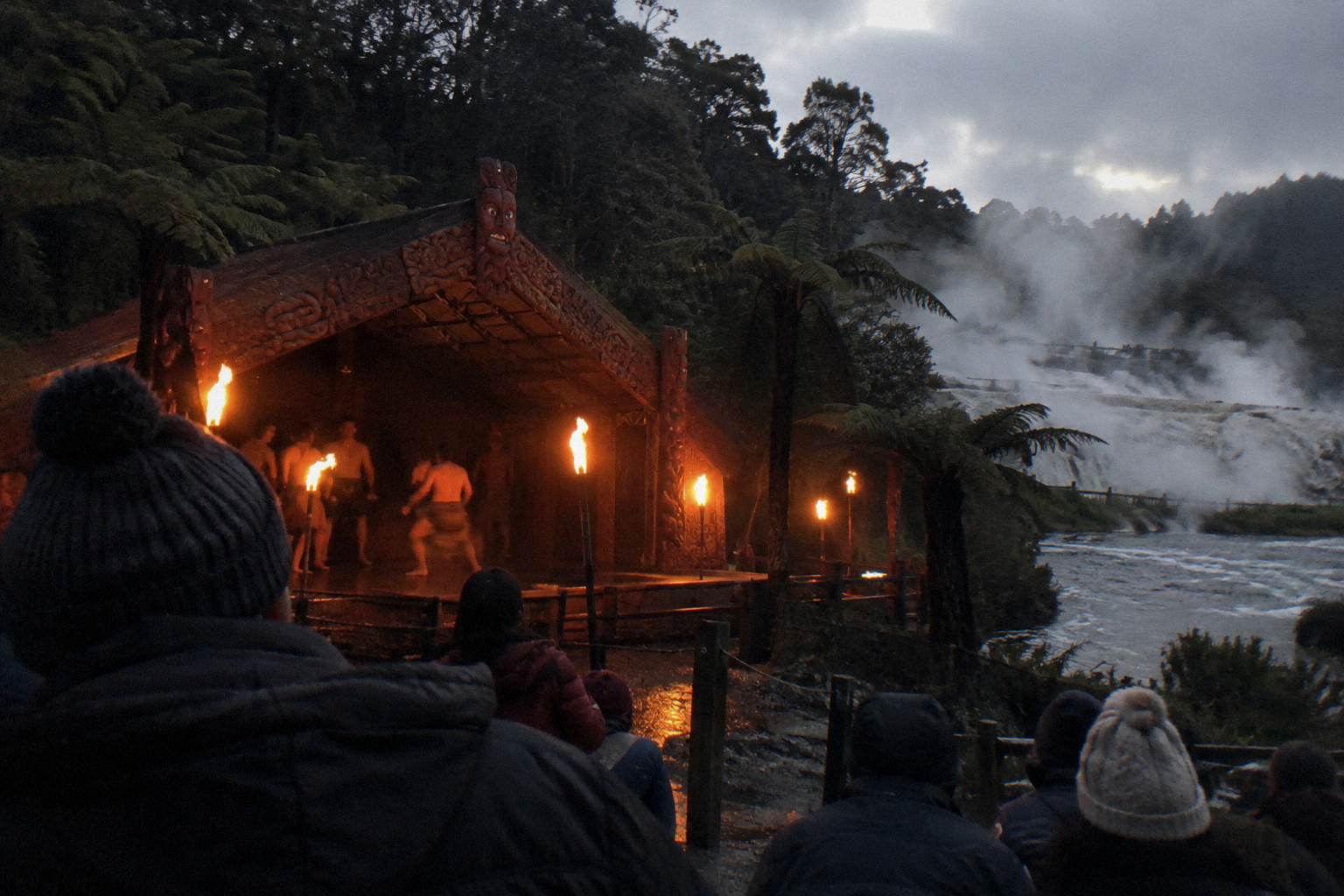
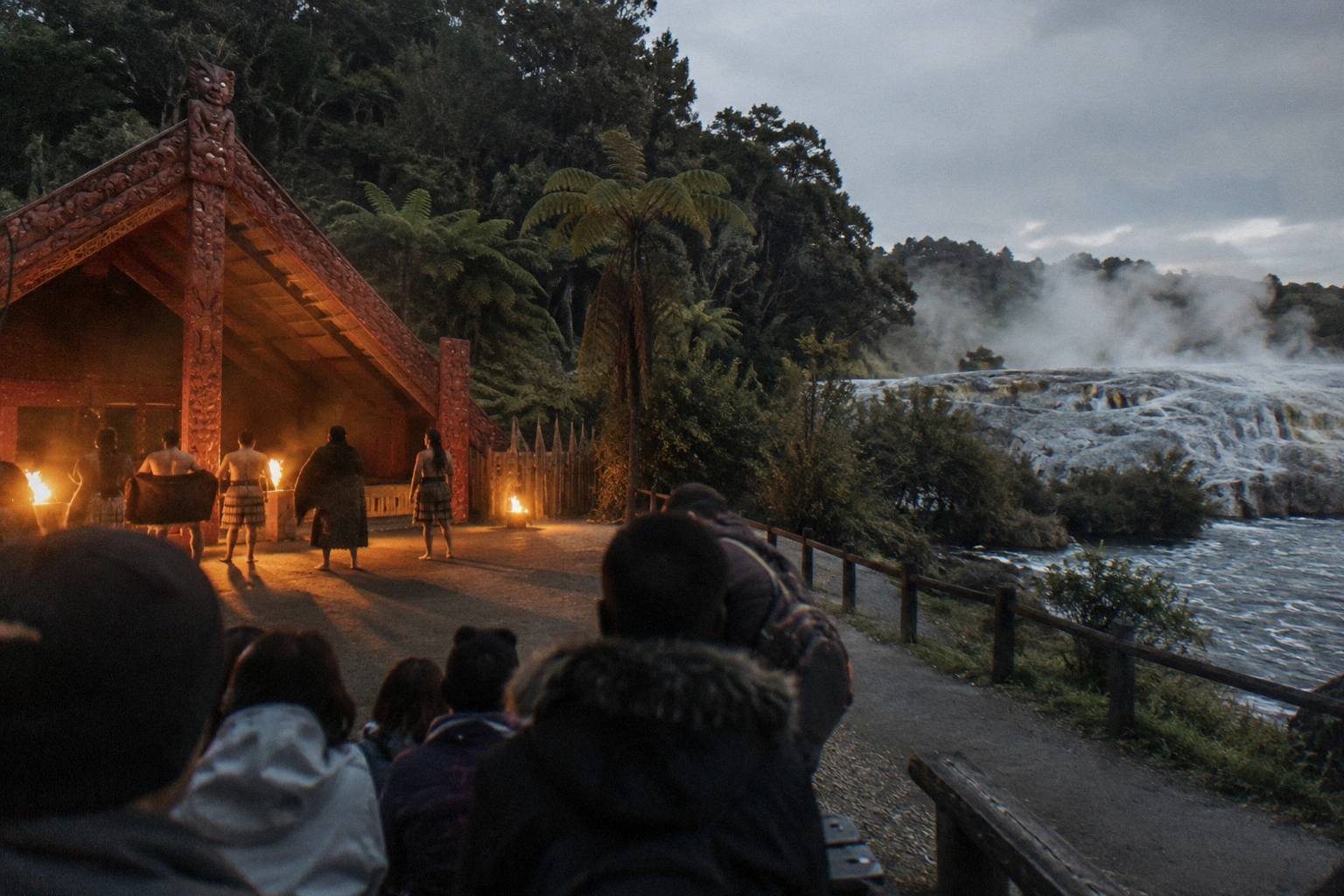
Te Puia's two evening products deserve a dietary guest's attention for a different reason: they are the shortest commitment. The Te Pō evening runs about 2.5 hours from 5:30pm, with dinner sittings at 5:30pm and 7:15pm, a 45-minute performance of song and dance in the carved meeting house Te Aronui a Rua, hot chocolate on the geyser terrace and a hāngī buffet in the Pātaka Kai Restaurant and Bar. The Combo adds a 90-minute guided tour of the geothermal valley beforehand, from 4pm, and costs NZD 290, the operator's price. Child prices for both Te Puia evenings are not stated; ask the operator.
A dietary guest weighing Te Puia should also weigh the practicalities that come with it: check in 15 minutes early or the ticket is forfeited, the site is cashless, and cancelling or amending needs at least 48 hours' notice, 72 for groups of 10 or more, per the operator's terms. That cancellation window interacts with dietary planning: if you ask about a menu and the answer comes back unusable, you want to be outside your own cancellation window when you find out. Ask first, book second.
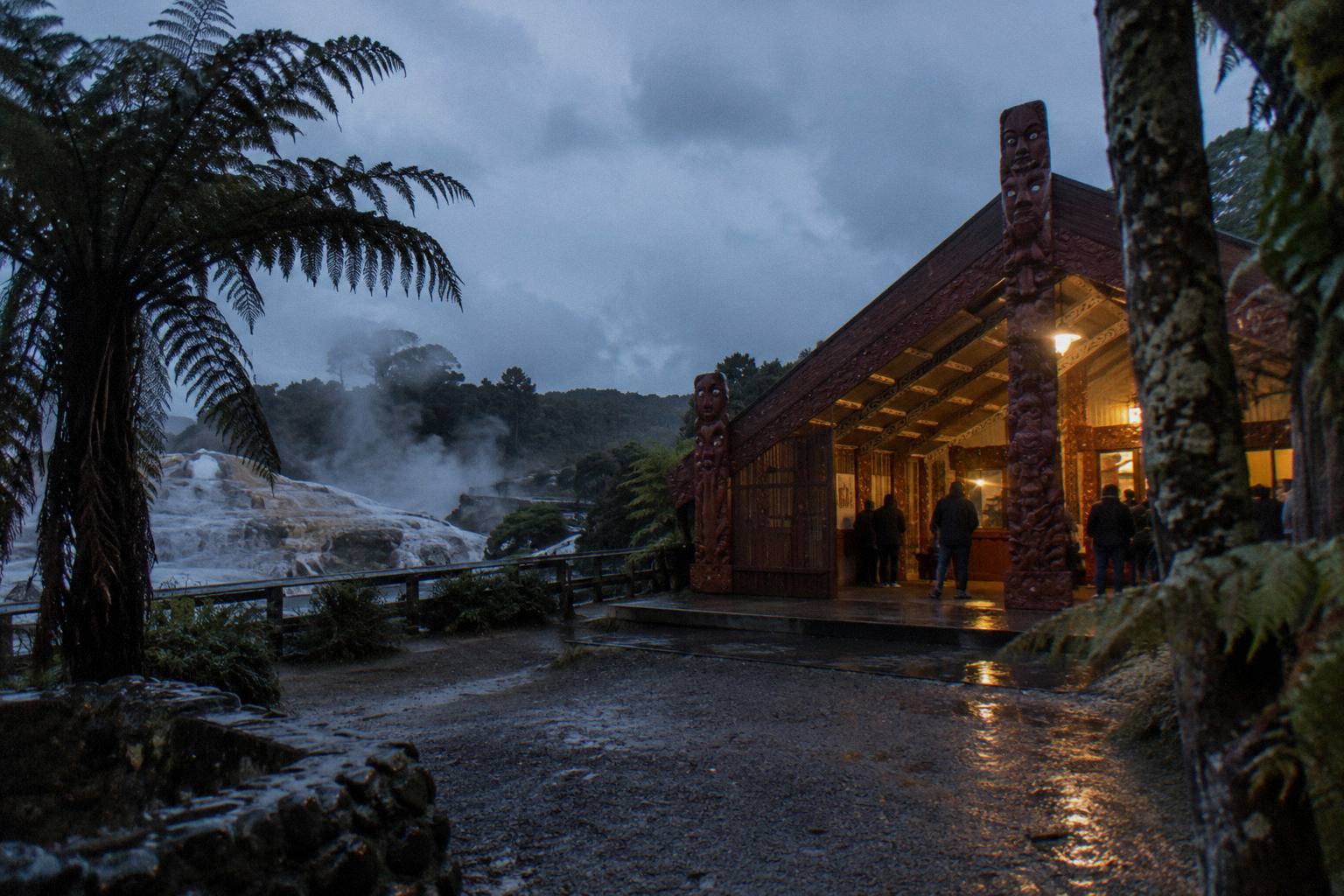
The Combo suits a traveller who wants the geothermal valley and the dinner in one ticket and is happy to arrive from 4pm. Its food is the same Te Pō dinner and performance after the tour, so the dietary conversation is identical; the extra hour and a half is valley, not menu.
How Do You Tell The Operator About Your Dietary Needs?
State the diet in plain words at the moment of booking, not on arrival, and keep a written record of the reply. Every operator here takes bookings with a notes field or a direct contact, and each publishes a contact route: email or phone for all three. A dietary request the kitchen learns about at 6pm cannot be shopped for, prepped or plated around; the same request made days ahead can.
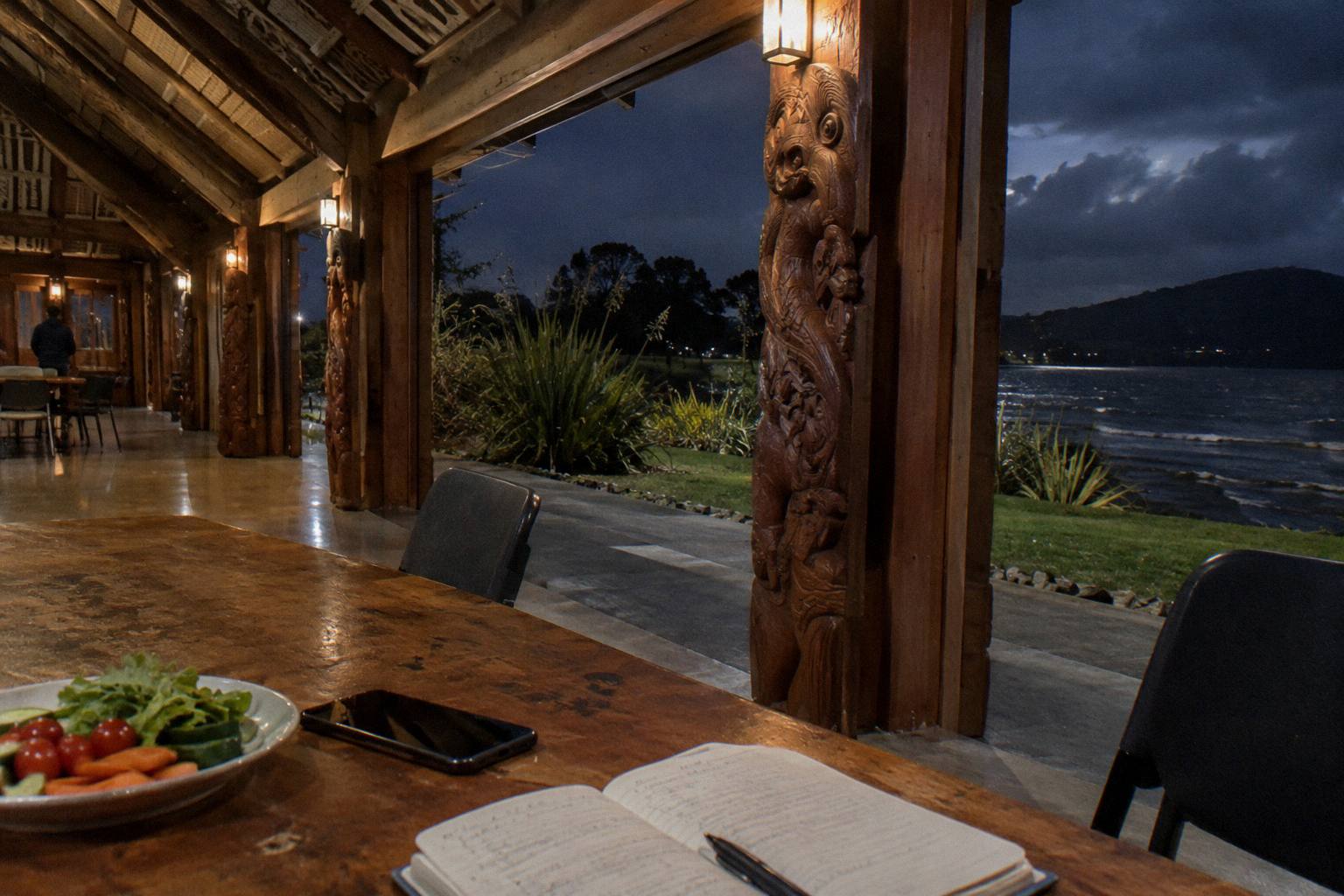
The contacts, all operator-published, are straightforward. Use them, and name the diet the way you would name it to a doctor rather than the way you would describe it to a friend: "coeliac, trace gluten is a problem" tells a kitchen more than "gluten free-ish".
| Operator | Contact for dietary requests | Evening |
|---|---|---|
| Te Pā Tū | bookings@maoriculture.co.nz or 0508 826 254 | Tū Te Rā (October to April) and Tū Te Ihi (May to September) |
| Mitai Māori Village | reservation@mitai.co.nz or +64 7 343 9132 | Authentic Hāngi Dinner Experience, about 3 h |
| Te Puia | Via the operator's own site | Te Pō from 5:30pm; Te Pō Combo from 4pm |
Timing the ask matters as much as making it. Te Pā Tū's own terms allow a full refund only when a cancellation lands two days before the evening by 12.00pm, and half a refund one day before, with nothing refunded on the day. A dietary guest who asks about the menu on the morning of the dinner has already lost the refund exit. Mitai's cancellation terms are set in its booking widget rather than published, so read them at checkout; Te Puia's 48-hour rule is published. In all three cases the safe sequence is the same: ask, receive an answer you can eat, then pay.
One more practical note for families: child pricing interacts with diet too. Mitai's child price of NZD 115.74 covers ages 4 to 13 with the adult price from 14, and Te Puia's booking page has under 4s free. A fussy or allergic child is a dietary conversation of its own; the Māori cultural evening with kids guide covers the family angle in full.
Common Mistakes When Booking A Hāngī Dinner With Dietary Needs
The mistakes are consistent: assuming a buffet equals a vegan meal, reading "gluten free" as "coeliac safe", and raising the diet on the night. Each of the three operators states something different about diets, and each statement has a catch. Getting the dietary question asked before payment, in writing, avoids almost every version of this going wrong.
First mistake: treating Mitai's buffet as a default vegan win. The operator says the opposite in print, that it is unable to cater to all dietary needs such as vegan. The salads-and-vegetables line in the buffet description describes the spread, not a dietary guarantee.
Second mistake: reading Te Pā Tū's "gluten free" line as a medical promise. The operator pairs it with an explicit statement that coeliac safety cannot be guaranteed. Preference-level gluten-free diners have a stated option; coeliac diners have a stated caveat, and need their own answer from the kitchen.
Third mistake: assuming Te Puia's silence means no. Not stated is not the same as not available. It means the answer lives with the operator, and the operator runs a restaurant and bar on site that serves a nightly buffet; the question is worth a two-line email.
Fourth mistake: asking at the door. Every operator here plans food in advance, and Mitai's hāngī sits in the ground for 3 to 4 hours before service. A request the kitchen hears at the table cannot reshape a basket that went into the earth that afternoon.
Fifth mistake: ignoring the cancellation clock while the dietary conversation is open. Te Pā Tū's refund steps down to 50% one day out and zero on the day; Te Puia is non-refundable inside 48 hours. Ask early enough that a bad answer still leaves you a refund, and check whether the terms shown at checkout differ from the operator's own terms, which can happen.
The dinner evening most often chosen by guests planning around food is Te Pā Tū's cultural experience with dinner, bookable via the Te Pā Tū evening with dinner tour page, or check current dates and dietary handling directly: Check availability.
Common Questions About Dietary Options At A Hāngī Dinner
Is A Hāngī Dinner Vegetarian-Friendly?
Partly. The hāngī basket itself typically holds meat, chicken and kūmara. Te Pā Tū lists vegetarian options on its winter page and its summer menu includes plant-based dishes such as a hāngī root-vegetable croquette among the canapés. Mitai's buffet lists vegetables, salads and a dessert buffet. Ask the operator at booking.
Can Vegans Eat At A Rotorua Cultural Dinner?
No operator states a vegan option. Mitai says it is unable to cater to all dietary needs such as vegan, though some requests could be met. Te Pā Tū lists vegetarian, pescatarian and gluten free but not vegan. Contact the operator before booking to ask what is possible on your date.
Is A Hāngī Dinner Safe For Coeliacs?
Te Pā Tū offers gluten free options but states it cannot guarantee coeliac safety, meaning cross-contact cannot be ruled out. Mitai and Te Puia state nothing about gluten. A coeliac guest should describe the medical requirement to the operator directly and decide based on the answer.
Does Te Puia Cater To Dietary Requirements?
Te Puia does not state dietary options for its Te Pō evening or Te Pō Combo. The dinner is a hāngī buffet in the Pātaka Kai Restaurant and Bar. Ask the operator via its own site before booking.
When Should I Tell The Operator About My Diet?
At booking, before you pay. Te Pā Tū's refund drops to 50% one day before the evening and zero on the day, and Te Puia is non-refundable inside 48 hours, so settle dietary questions while a refund is still possible.
Do Dietary Guests Pay A Different Price?
No operator states a dietary surcharge or discount. The operator prices are NZD 188.34 at Mitai for an adult, NZD 203 for Te Puia's Te Pō evening, and NZD 290 summer or NZD 280 winter at Te Pā Tū, all per adult. Prices can change; confirm at booking.