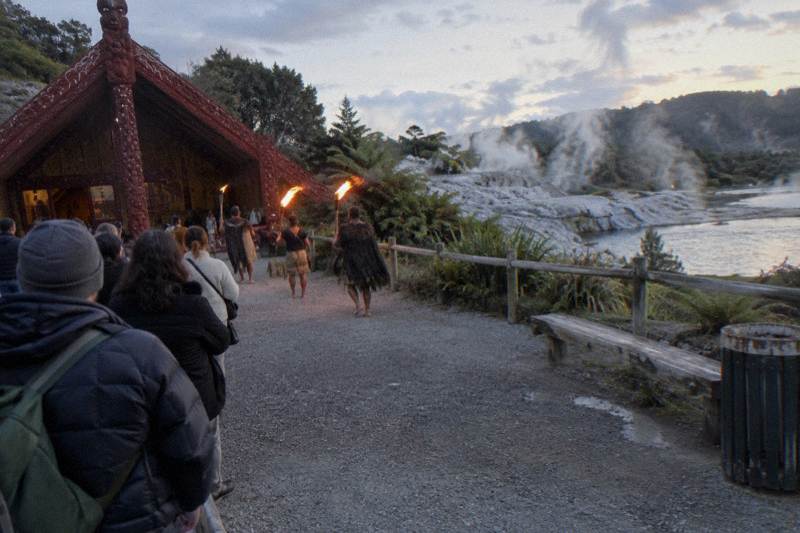
Whakarewarewa Living Māori Village: Hāngī Lunch And Evening Experiences
Whakarewarewa The Living Māori Village is a daytime village on Tryon Street with hourly guided tours and a 12.30pm cultural performance, and it has no evening dinner. Here is what it does offer, what it costs, and where Rotorua's evening hāngī dinners actually happen.
Short answer
Whakarewarewa The Living Māori Village runs guided tours from 9am to 3pm hourly and a 12.30pm cultural performance lasting 30 minutes. Adult entry to the performance is NZD 37, child NZD 20, family NZD 102.60, infant free. There is no evening dinner or concert. Evening hāngī dinners are at Te Pā Tū, Mitai Māori Village and Te Puia.
What Whakarewarewa Village Offers During The Day
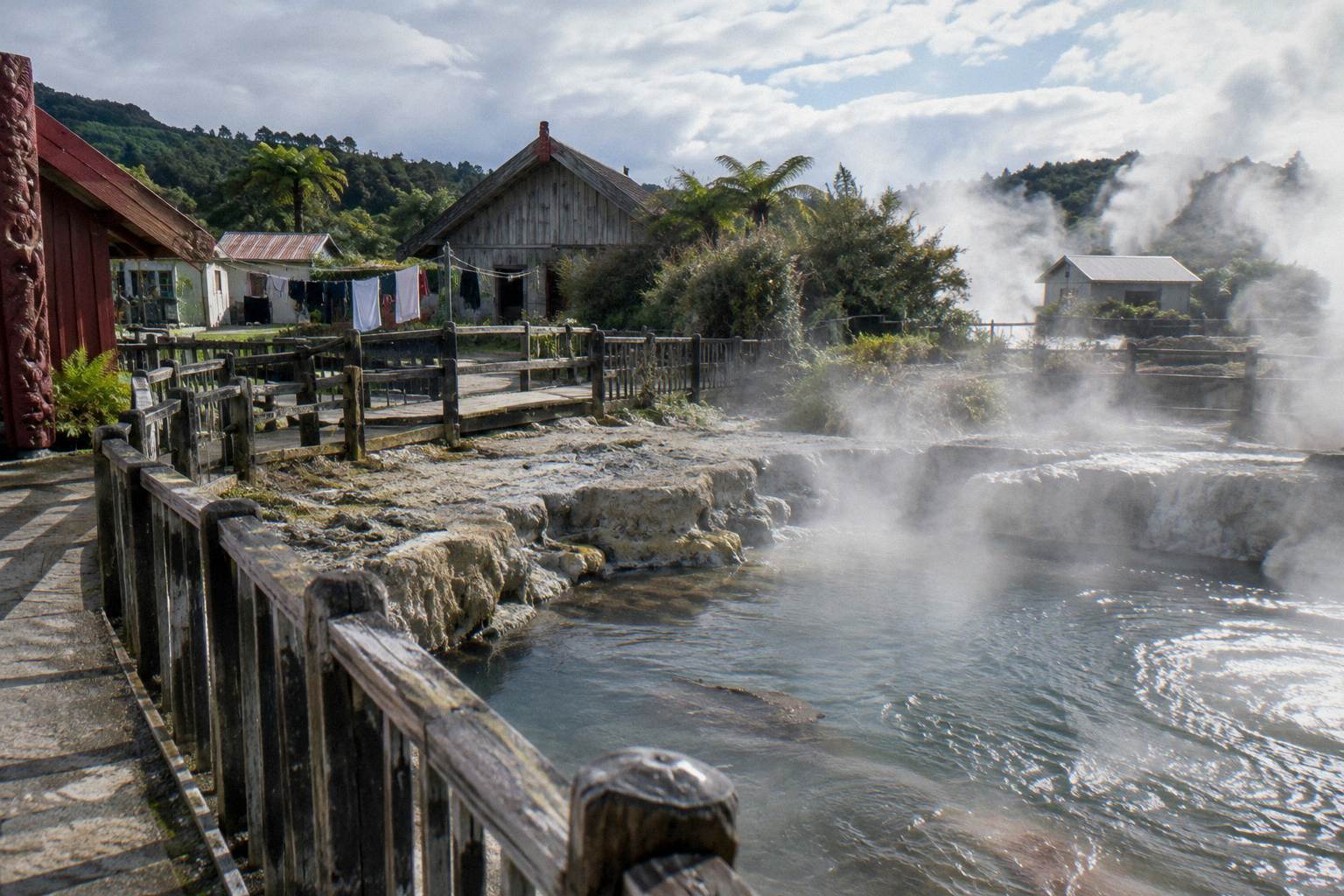
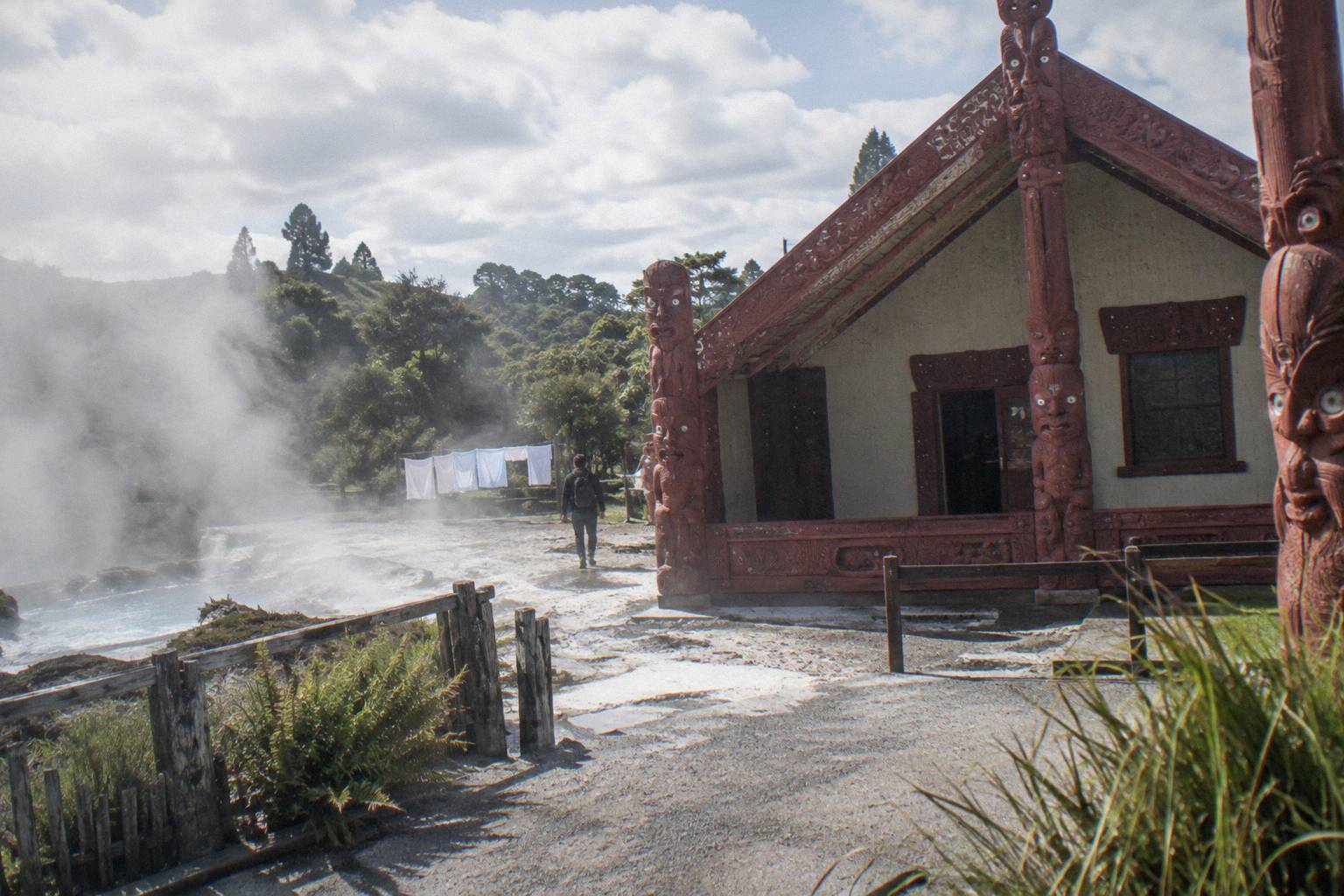
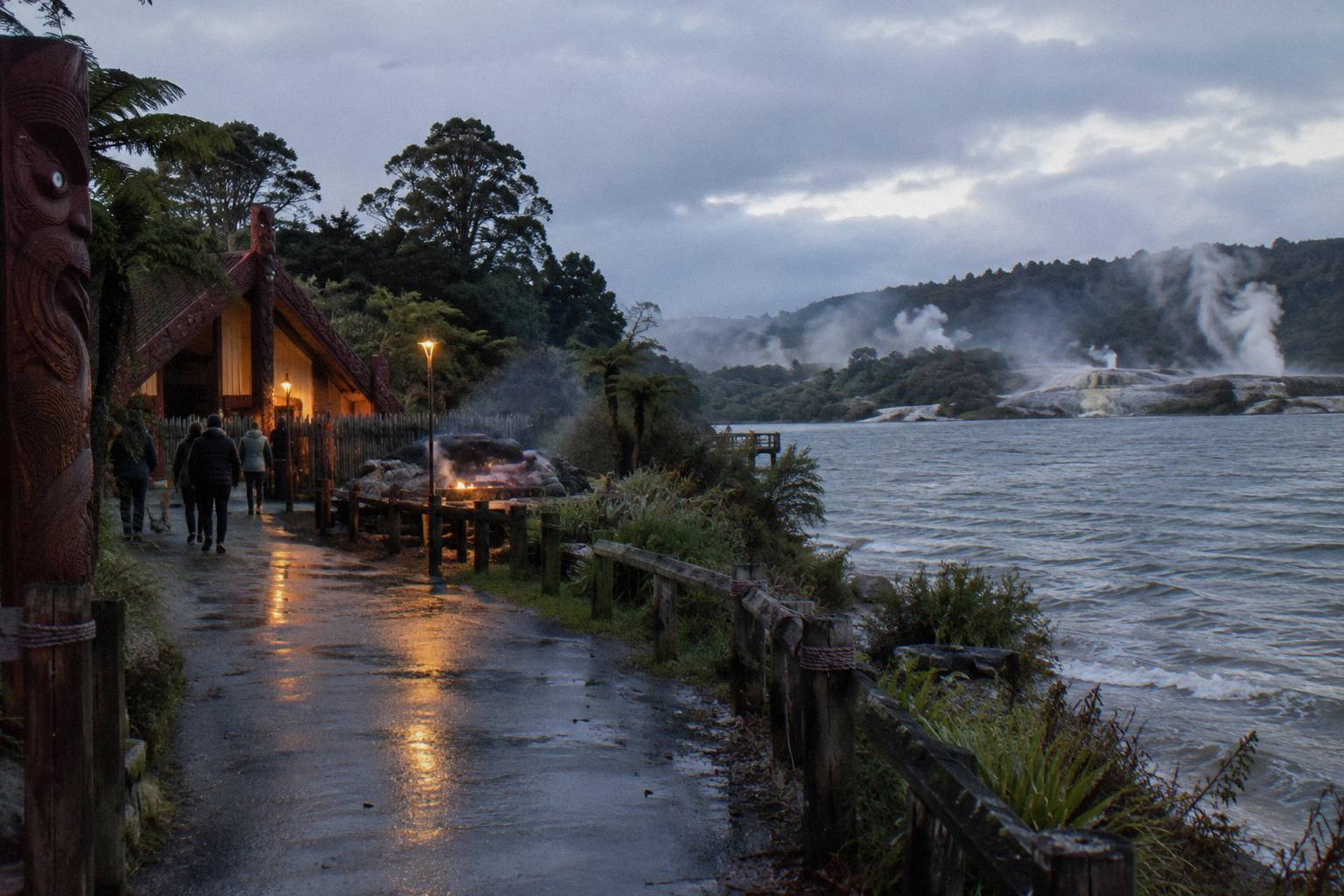
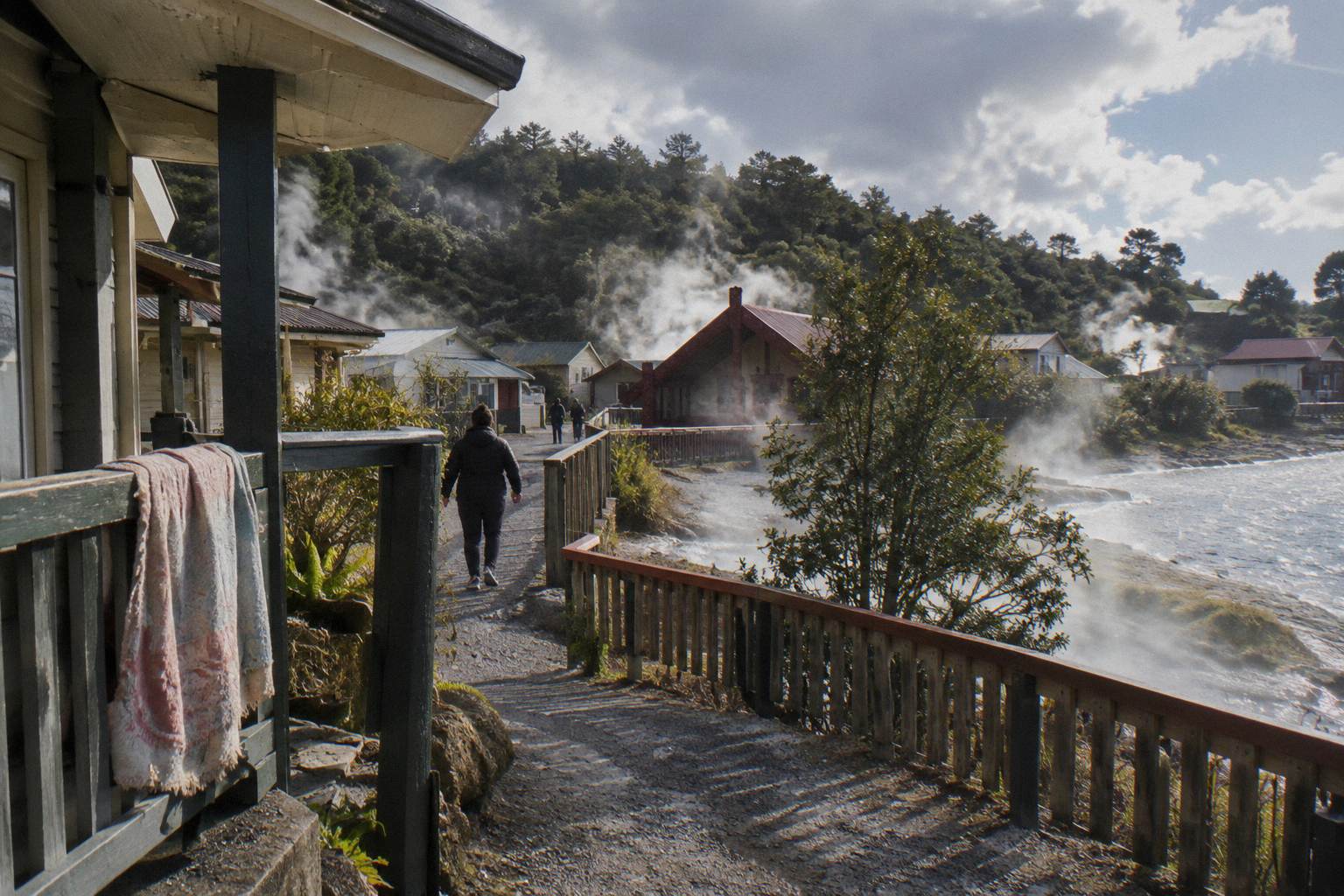
Whakarewarewa The Living Māori Village, at 17 Tryon Street in Rotorua, is a daytime attraction: guided tours run hourly from 9am to 3pm, and a 30-minute cultural performance is held at 12.30pm daily. The operator, whakarewarewa.com, says Tūhourangi Ngāti Wāhiao have hosted visitors there for over 300 years. There is no evening programme, no evening concert and no dinner service of any kind.
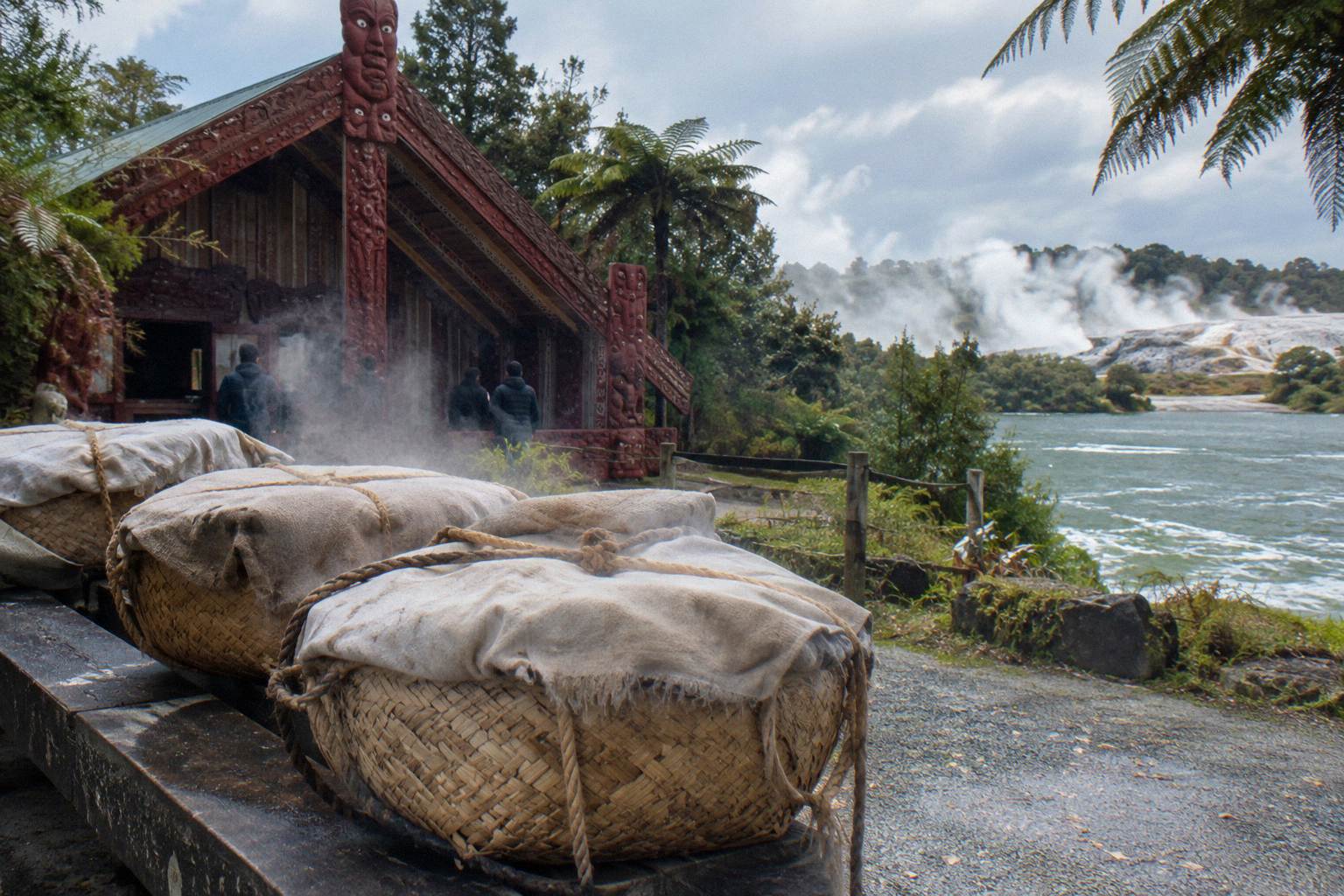
That last sentence surprises a lot of people researching Rotorua evenings, and it is the single most useful fact on this page. Whakarewarewa is a living village, meaning people live in it, and the visitor offer is built around daylight hours. You walk through on a guided tour, you watch the 12.30pm performance, and you can eat steam-cooked food at lunch, in the village's own style. The operator describes its hāngī approach as steam-cooking, lunch style, which is a different method from the in-ground earth-oven hāngī the evening operators describe.
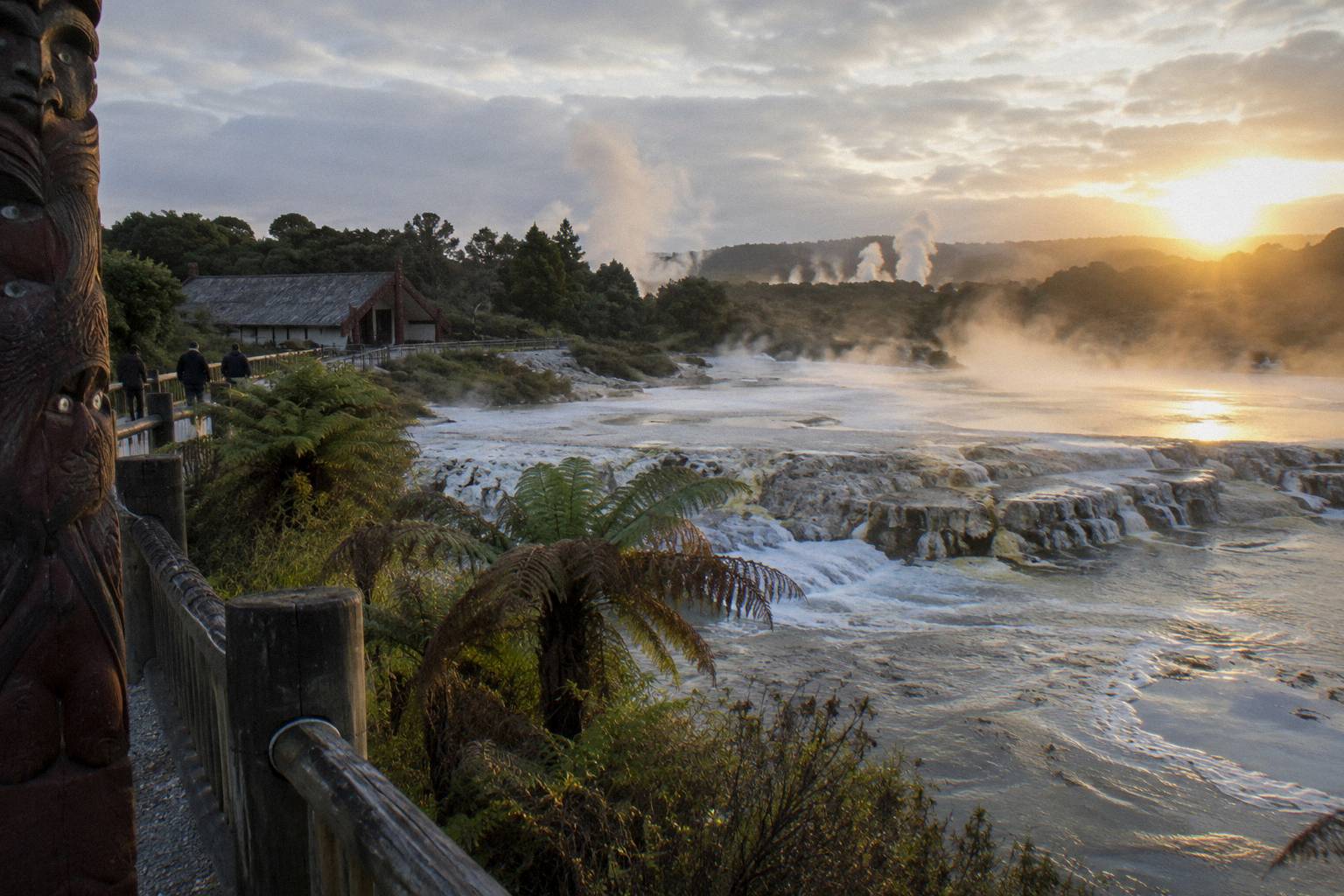
The village sits in the Whakarewarewa geothermal area, the same valley that Te Puia occupies on the other side at 20 Hemo Road. The two are separate operators with separate tickets. If your evening plan is a cultural dinner, neither Whakarewarewa ticket covers that; the evening dinners are at Te Pā Tū, Mitai Māori Village and Te Puia, and this page shows exactly where each one fits.
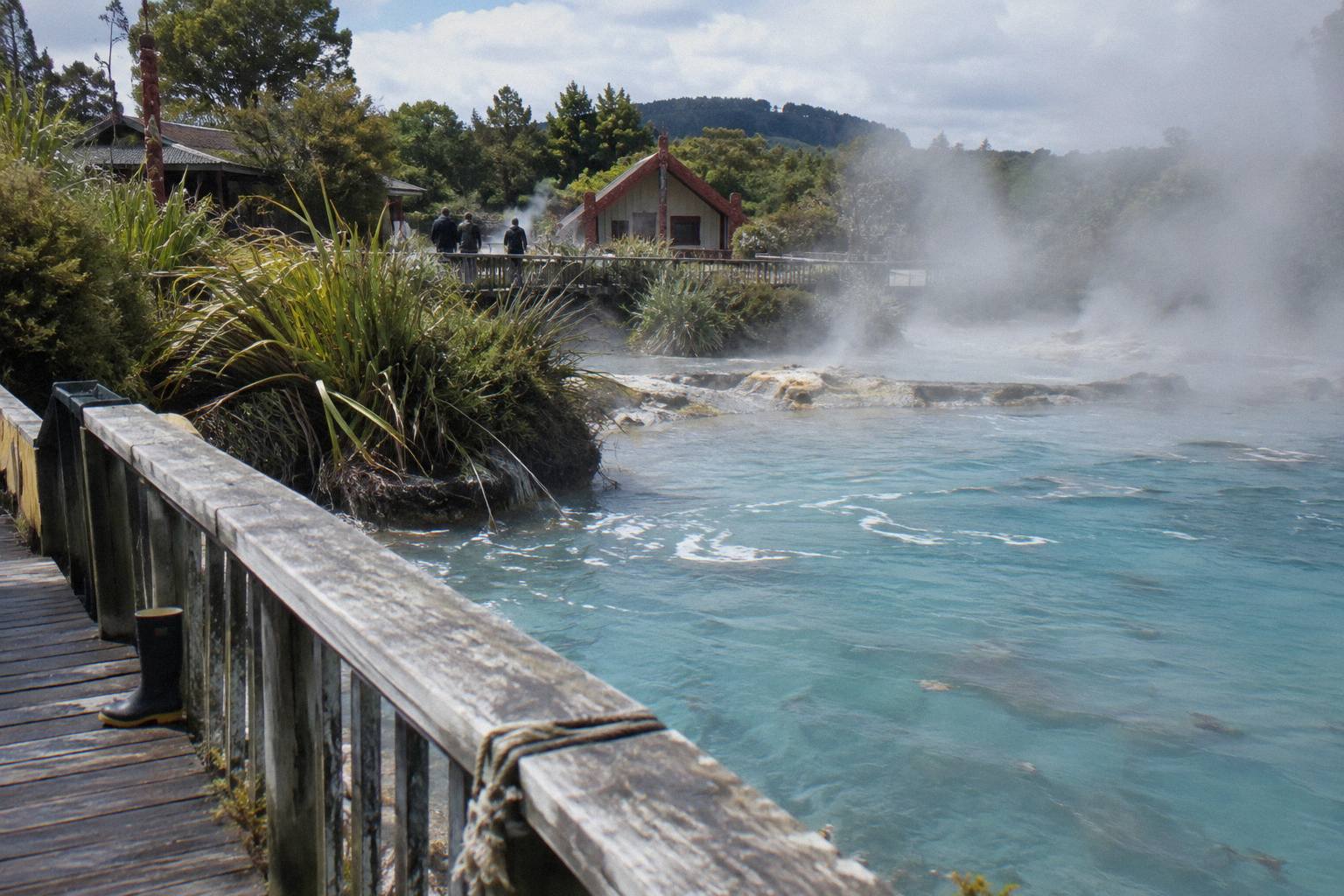
The performance itself is listed on the operator's cultural performance page, which carries the times and prices below. Photography rules there are not stated; ask the operator on arrival. What the performance contains beyond its 30-minute length is also not detailed on the page, so treat the timing and price as the firm facts and ask the village directly about the programme content.
Whakarewarewa Tickets, Times And Prices
Adult performance entry is NZD 37, a child ticket for ages 5 to 15 is NZD 20, a family ticket is NZD 102.60 and infants are free, prices the operator lists as valid from 1 October 2026 to 30 September 2027. Guided tours run hourly from 9am to 3pm, and the cultural performance starts at 12.30pm daily and lasts 30 minutes. The operator's prices can change, so treat these as the current published figures.
The pricing structure is simple because the offer is simple. There is one performance time, one daily schedule, and one price set that covers a full year. For a family, the NZD 102.60 family ticket is the number to compare against two adults plus children bought separately, since the operator prices the family ticket below the sum of its parts for most combinations. The operator does not publish group or concession rates on the performance page; those would need a direct enquiry.
| Ticket | Price (NZD) | Notes |
|---|---|---|
| Adult | 37 | Performance entry |
| Child (5 to 15) | 20 | Performance entry |
| Family | 102.60 | Operator's family rate |
| Infant | Free | Under the child age band |
Compared with the evening dinners, this is a different budget tier entirely. Te Pā Tū's seasonal evenings cost NZD 290 adult in summer (Tū Te Rā) and NZD 280 in winter (Tū Te Ihi). Mitai's Authentic Hāngi Dinner Experience is NZD 188.34 for adults aged 14 and over. Te Puia's Te Pō evening is NZD 203. A Whakarewarewa daytime visit plus an evening dinner at one of those three is a realistic full day in Rotorua, and the combined-cost maths is worked through further down this page.
If your plan is exactly that, a day at the village followed by an evening dinner, these are the three evening products that pair with it.
Why There Is No Evening Dinner At Whakarewarewa
The operator publishes no evening programme at all: tours finish at 3pm, the performance is at 12.30pm, and the village's food offer is steam-cooked and lunch style. Any product sold as a Whakarewarewa evening dinner or evening concert is not the village's own offer. The evening hāngī dinners in Rotorua belong to three other operators: Te Pā Tū, Mitai Māori Village and Te Puia.
This matters because search results and reseller pages sometimes blur the village into the evening-dinner category. The honest position is straightforward: Whakarewarewa is a daytime living village, its hāngī tradition there is steam-cooking at lunch, and it does not sell an evening meal. The village is also not one of the bookable evening tours covered on this site, which is why it has no tour card here.
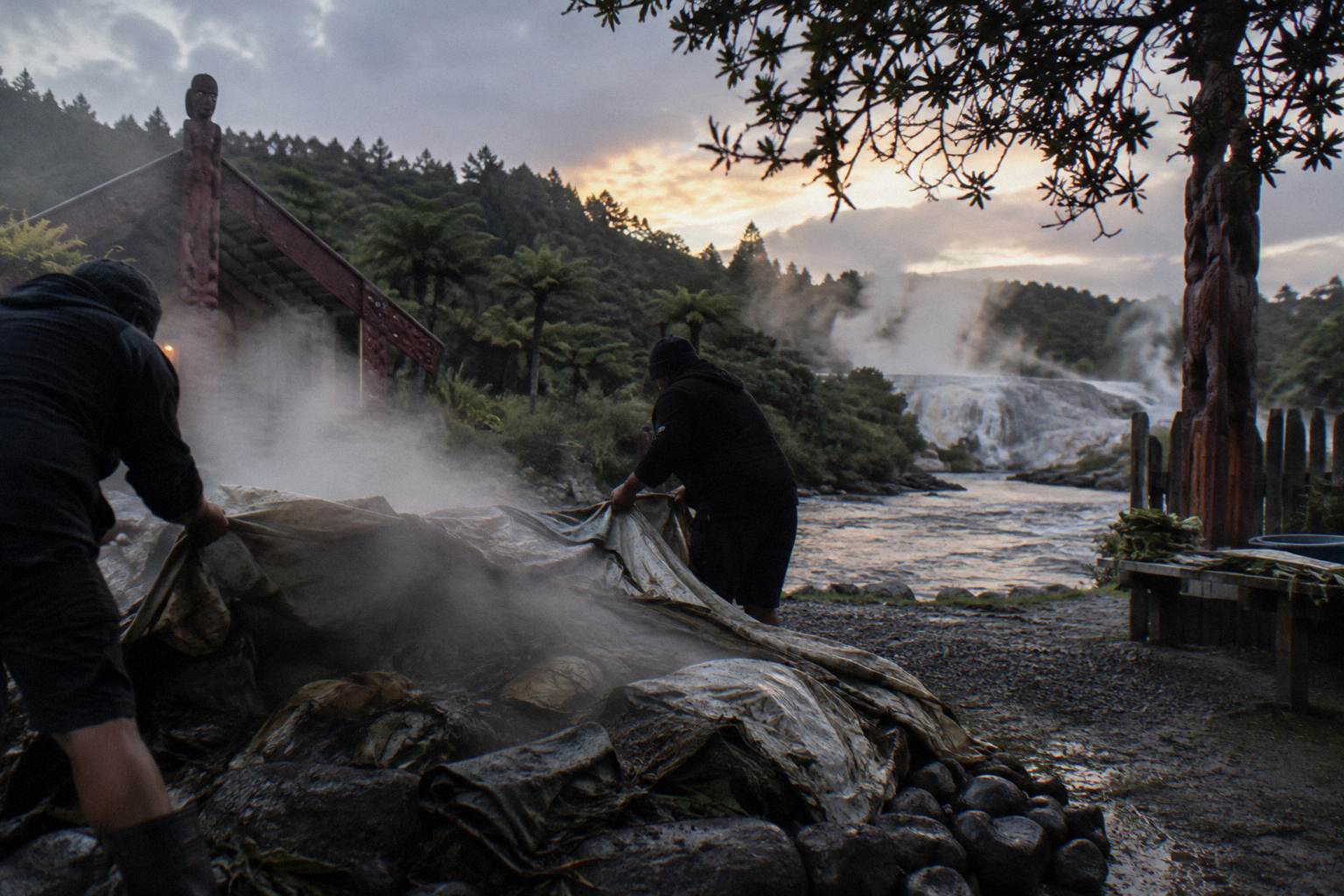
The distinction between its lunch hāngī and the evening earth-oven hāngī is worth understanding before you book anything. Mitai describes its hāngī as cooked in an earth-oven hole 1 to 2 m deep for 3 to 4 hours, with meat, chicken and kūmara. Te Pā Tū's winter feast includes a traditional in-ground hāngī with lamb and vegetables. Whakarewarewa's own food tradition, as the operator describes it, is steam-cooking, using the valley's geothermal heat, served at lunch. Same word, different method, different meal. If you want the full picture of the cooking methods, the guide to how a hāngī is cooked breaks it down.
For a reader whose heart was set on an evening at Whakarewarewa, the nearest thing in the same valley is Te Puia's Te Pō evening, a short distance away on Hemo Road. It runs from 5:30pm, with dinner sittings at 5:30pm and 7:15pm, a 45-minute cultural performance of song and dance in the carved meeting house Te Aronui a Rua, and a hāngī buffet dinner in the Pātaka Kai Restaurant and Bar. It costs NZD 203 per the operator's price, takes about 2.5 hours, and you arrive yourself: the operator names the City Ride bus, Uber and taxi, and free parking is available on a cashless site. Details and availability are on the Te Pō evening page, with 2.5-Hour Hāngī Evening at the operator's live listing.
Where The Evening Hāngī Dinners Actually Are
Three operators run Rotorua's cultural dinners: Te Pā Tū, a forest pā a short coach ride south of central Rotorua with two seasonal evenings; Mitai Māori Village at 196 Fairy Springs Road with its Authentic Hāngi Dinner Experience; and Te Puia on Hemo Road with the Te Pō evening and the Te Pō Combo. Prices run from NZD 188.34 to NZD 290 adult, all the operators' own figures.
Te Pā Tū is the renamed Tamaki Māori Village experience, owned and operated by Tauhara North No.2 Trust. Its summer evening, Tū Te Rā, runs October to April and lasts about 3.5 hours; its winter evening, Tū Te Ihi, runs May to September and lasts about 3 hours. The operator's homepage says "four hours of celebration and feasting", while the product pages say 3.5 and 3, so plan for roughly three to three and a half hours. Return coach transport from central Rotorua is included, the evening start time is not published, and the village address is not published either: it is a forest pā in tawa forest, and you reach it on the operator's coach. Prices are NZD 290 adult and NZD 125 child in summer, NZD 280 and NZD 115 in winter. The seasonal detail is on the operator's summer evening page and its winter counterpart.
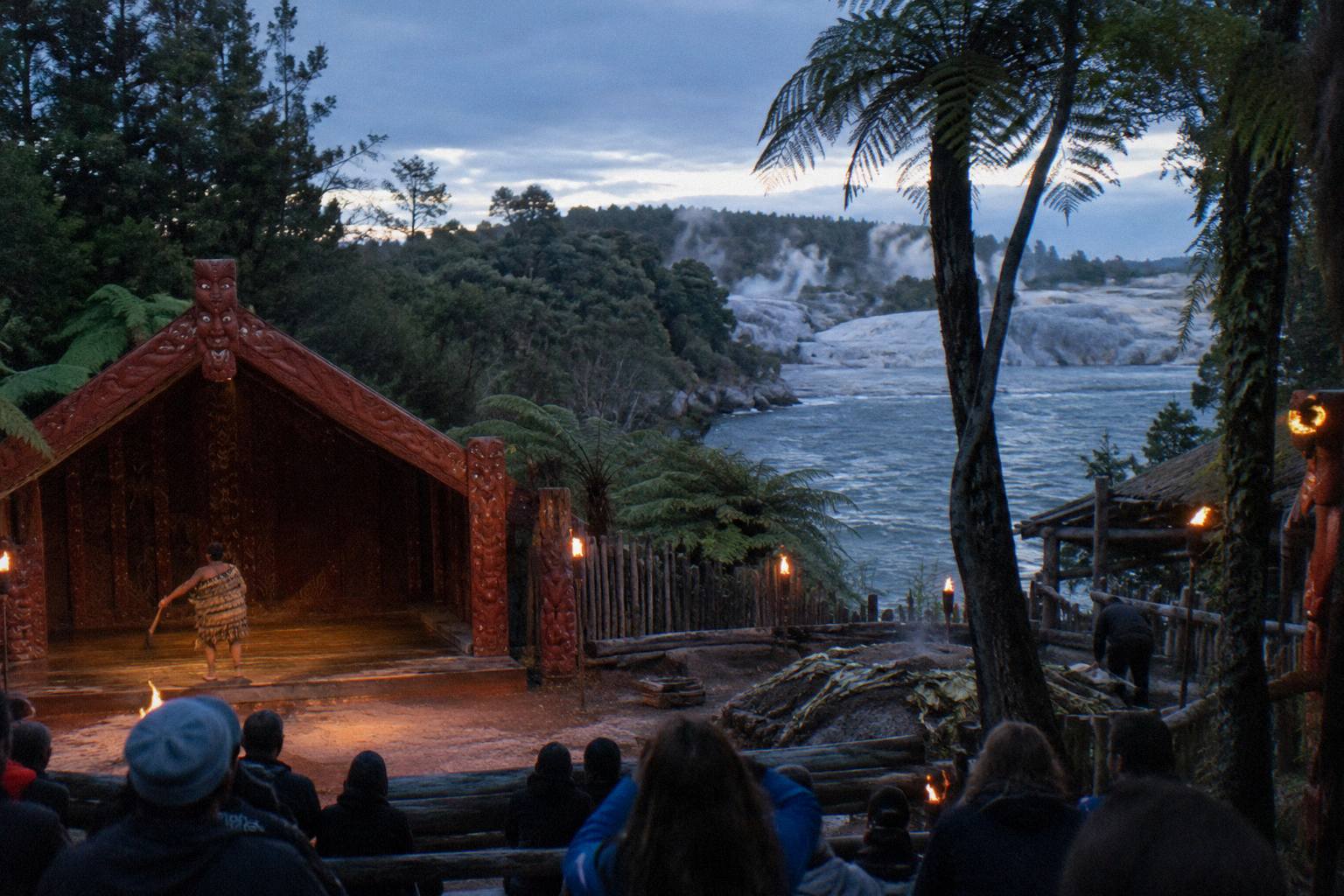
Mitai Māori Village, which describes itself as family owned and operated and speaks of its Te Arawa people, runs an evening of about 3 hours at NZD 188.34 for adults aged 14 and over and NZD 115.74 for children aged 4 to 13. The operator's programme lists a welcoming ceremony, the hāngī unveiling, warriors paddling a waka down the Wai-o-Whiro Stream, a cultural performance the operator lists as Pōwhiri, Wero, Waiata, Mōteatea, Poi and Haka, a full buffet hāngī dinner, question time, and an evening bush walk to the old fortified village site and the sacred spring Te Puna Tapu o Tūhoe, with glow worms. Those cents in the price are the operator's own figures; the price can change. The full programme is on Mitai's hāngī dinner page.
Te Puia covers both the shortest and the longest evening options. The Te Pō evening is NZD 203 and about 2.5 hours from 5:30pm. The Te Pō Combo starts at 4pm daily, adds a 90-minute guided tour of the geothermal valley before dinner and the performance, runs about 4 to 4.5 hours, and costs NZD 290; the operator calls it "our most popular night experience", which is the operator's own wording, not a rating claim. No rating is stated for the Combo. Child prices for both Te Puia evenings are not stated; ask the operator.
| Evening | Operator price (NZD, adult) | Duration | Transfer |
|---|---|---|---|
| Te Pā Tū Tū Te Rā (summer) | 290 (child 125) | About 3.5 hours | Coach from central Rotorua included |
| Te Pā Tū Tū Te Ihi (winter) | 280 (child 115) | About 3 hours | Coach from central Rotorua included |
| Mitai Hāngī Dinner | 188.34 (child 115.74) | About 3 hours | Limited, from registered accommodation, must be booked |
| Te Puia Te Pō | 203 (child not stated) | About 2.5 hours | None stated; self-arrival |
| Te Puia Te Pō Combo | 290 (child not stated) | About 4 to 4.5 hours | None stated; self-arrival |
Notice how differently the three handle getting there. Te Pā Tū simply includes the coach, which removes the driving question entirely. Mitai offers complimentary transfers from registered accommodation but with limited numbers that must be booked, and the transfer closes at capacity, so it needs action at booking time. Te Puia names no transfer at all and expects self-arrival. That difference alone decides the evening for travellers without a car, and it is covered in more depth in the guide to pickup and transport to Rotorua cultural evenings.
For a fuller sense of the village-evening category as a whole, including which villages actually serve an evening meal, the guide to Rotorua Māori village evenings sets out the field.
Comparing A Whakarewarewa Day With An Evening Dinner
A Whakarewarewa daytime visit and an evening dinner are complements, not substitutes. The village day costs NZD 37 adult for the performance and finishes by mid afternoon; the evening dinners cost NZD 188.34 to NZD 290 adult and start at or after 4pm at the earliest. Doing both in one day is feasible, and the two Te Puia products can even combine into a single booking at the same address.
The clearest way to see it is side by side. The table below puts the daytime village offer against the three evening operators on the factors that actually drive the decision: what you get, when it runs, what it costs and how you get there. Every figure is the operator's own.
| Experience | Time of day | Adult price (NZD) | Food | Getting there |
|---|---|---|---|---|
| Whakarewarewa village | Day, tours 9am to 3pm, performance 12.30pm | 37 | Steam-cooked, lunch style | 17 Tryon Street, self-arrival |
| Te Pā Tū seasonal evening | Evening, start not stated | 280 to 290 by season | Three-course feast (summer) or hāngī fusion feast (winter) | Coach included from central Rotorua |
| Mitai Hāngī Dinner | Evening, start not stated | 188.34 | Full buffet hāngī dinner | Limited transfer, must be booked |
| Te Puia Te Pō | From 5:30pm | 203 | Hāngī buffet at Pātaka Kai | Self-arrival, 20 Hemo Road |
Two pairings stand out from the numbers. The first is the geographic one: Whakarewarewa and Te Puia sit in the same valley, so a 12.30pm performance, a mid-afternoon gap, and a 5:30pm Te Pō sitting make a single-location day with almost no driving. The second is the budget one: a family doing the village performance and then Mitai's dinner spends NZD 37 plus NZD 188.34 per adult, while the same family substituting Te Pā Tū moves the evening leg to NZD 290 per adult in summer. Neither is the wrong call; they buy different evenings, as the sections above set out.
For travellers weighing the evening choice on value rather than price alone, duration is the quiet variable. Te Puia's Te Pō delivers its evening in about 2.5 hours, Mitai in about 3, Te Pā Tū in about 3 to 3.5 depending on season, and the Te Pō Combo stretches to about 4 to 4.5 because the valley tour comes first. Per hour of programmed evening, the gaps narrow considerably, which is worth knowing before judging any of them on the headline price alone.
Planning The Day Around The 12.30pm Performance
The performance is the anchor of a Whakarewarewa day: it starts at 12.30pm and lasts 30 minutes, so a morning guided tour, the performance, and a late lunch of steam-cooked food is the natural sequence the schedule allows. Tours run hourly from 9am to 3pm, and the last tour leaves at the end of that window, which means the site winds down through mid afternoon.
Working backwards from the timings, the practical plan almost writes itself. A 9am or 10am tour gives you the village walk while the morning is cool and the steam is at its most visible. The 12.30pm performance sits right at lunchtime, and the village's steam-cooked food is a lunch offer, so the two line up. From roughly 2pm you are choosing between a final tour slot and heading on, and by mid afternoon the day is done. The operator does not publish a recommended total visit duration; ask at the gate how tours and performance entry combine on one ticket.
If you are pairing the day with an evening dinner, the calendar decides how easy the evening leg is. With Te Pā Tū, the included coach from central Rotorua means you simply need to be at the pickup point; the start time is not published, so confirm it when booking. With Mitai, the limited accommodation transfer must be booked ahead and closes at capacity, so the transfer request goes in at the same time as the ticket. With Te Puia, you drive or bus to Hemo Road yourself, and the operator asks guests to check in 15 minutes early or the ticket is forfeited; the same 15-minute rule applies to the Te Pō Combo from its 4pm start.
Dietary needs change the evening picture more than the daytime one. Te Pā Tū's winter page lists vegetarian, pescatarian and gluten free options and says it cannot guarantee coeliac safety; vegan options there are not stated. Mitai says it is unable to cater to all dietary needs such as vegan, though some requests could be met. Te Puia's dietary options are not stated. In every case the move is the same: tell the operator at booking, not on the night. The dietary question is covered in full in the guide to vegetarian and dietary options at a hāngī dinner.
Cancellation And Booking Terms For Each Option
The three evening operators' terms are genuinely different, and the differences bite on the same kind of late change. At Te Pā Tū, a cancellation two days before by 12.00pm gets 100% back, one day before by 12.00pm gets 50%, and on the day gets nothing; booking and bank fees are not refunded, and if Te Pā Tū itself cancels, a full refund applies when no rebooking is made. The full text is on Te Pā Tū's terms page. At Te Puia, the line is 48 hours before, 72 hours for groups of 10 or more, with the ticket non-refundable inside that window and the 15-minute check-in rule in force; the details are in Te Puia's FAQ. Mitai's terms sit inside its booking widget rather than on a public page, so read them at checkout.
One caution applies across all of them: the terms on the booking page you actually reserve through may differ from the operator's own terms. The consistent advice is to read the terms at checkout before paying, whatever route you book by, and to screenshot or note them with your confirmation.
| Operator | Refund window | Inside the window | Notes |
|---|---|---|---|
| Te Pā Tū | 100% if two days before by 12.00pm | 50% one day before, 0% on the day | Fees not refunded; operator cancellation fully refunded if no rebooking |
| Te Puia | 48 hours or more (72 for 10+) | Non-refundable | Check in 15 minutes early or ticket forfeited |
| Mitai | Not public, set in the booking widget | Read at checkout | Contact reservation@mitai.co.nz |
For families, the age bands also differ and are worth pinning at booking. Whakarewarewa's child price covers 5 to 15, with infants free. Mitai's child price covers 4 to 13, with the adult price from 14 and infants 3 and under at a price not shown. Te Pā Tū's child prices are NZD 125 summer and NZD 115 winter, with the minimum child age not published. Te Puia states no child price for its evenings, though its booking page says under 4 are free. None of these bands transfer between operators, so a 14-year-old is an adult at Mitai and a child at two others.
What Trips People Up When Planning A Whakarewarewa Visit
The four recurring mistakes are expecting an evening dinner at a daytime-only village, confusing Whakarewarewa with the neighbouring Te Puia, assuming the limited Mitai transfer is automatic, and misreading child age bands that differ between operators. Each one is avoidable with a single check at booking time: confirm the programme time, the address, the transfer and the ages before paying.
The evening-dinner assumption is the most common, and it usually comes from reseller copy that groups every cultural attraction into one category. The operator publishes tours from 9am to 3pm and a 12.30pm performance, and nothing later. If a page is selling you a Whakarewarewa evening dinner, that page is describing something the village itself does not offer, and the evening you are picturing exists at Te Pā Tū, Mitai or Te Puia instead.
The address confusion is subtler. Whakarewarewa The Living Māori Village is at 17 Tryon Street; Te Puia is at 20 Hemo Road, in the same geothermal valley but under different ownership, iwi owned under the NZMACI Vesting Act 2020, and with a different offer, including the only evening dinner in the valley. Booking one and driving to the other wastes the careful timing that a 12.30pm performance or a 5:30pm sitting demands.
The transfer mistake costs money in taxis. Mitai's complimentary transfer is real but limited, runs only from registered accommodation, must be booked, and closes at capacity; leaving it to the night is how you end up driving. Te Pā Tū's coach needs no such action, and Te Puia expects self-arrival with free parking on a cashless site, so bring a card, not cash, for anything extra.
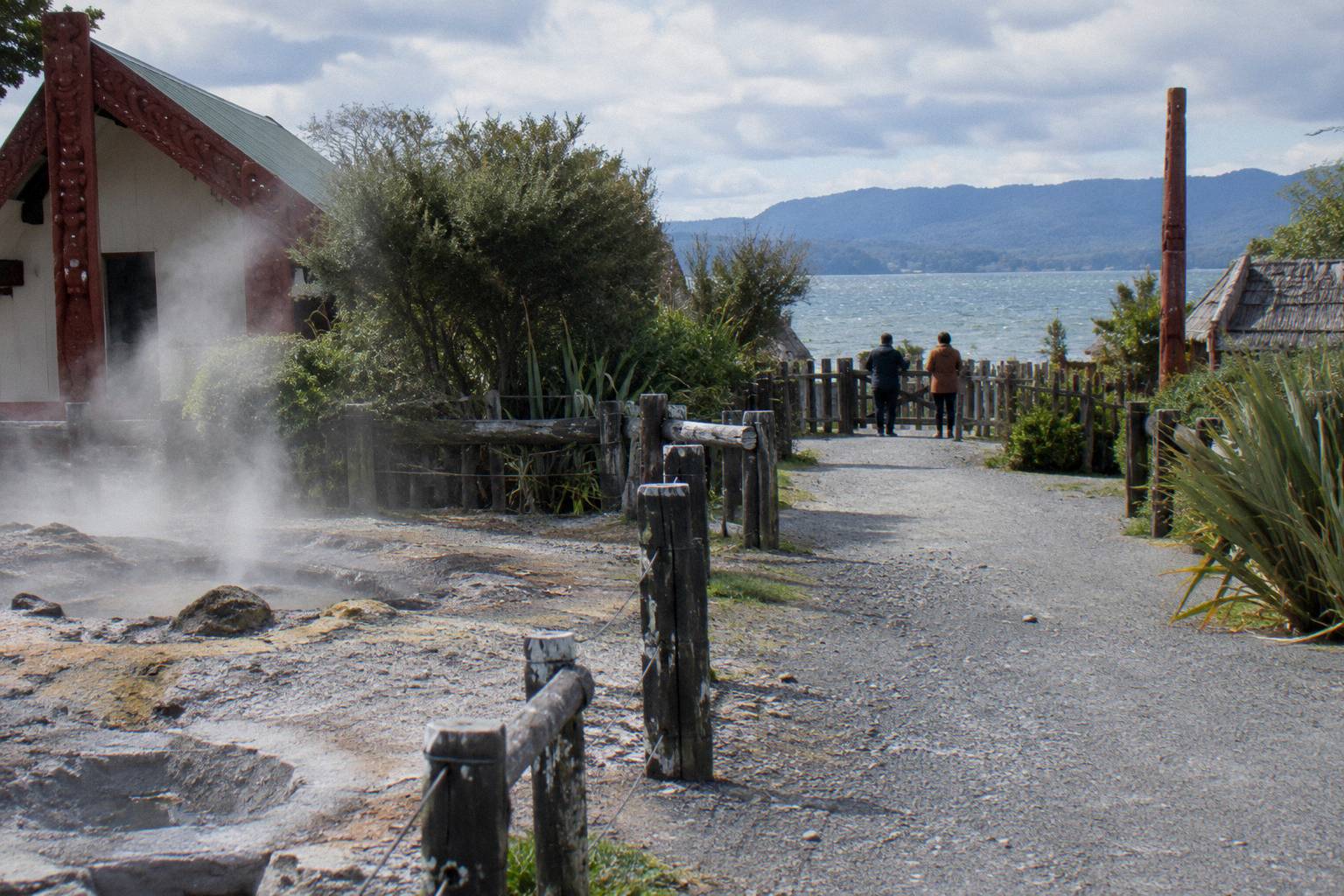
Finally, dress and weather. Only Mitai publishes dress guidance: comfortable clothing and walking shoes, warm clothing in winter, a hat in summer, a jacket when raining, with photography welcomed in designated areas and umbrellas limited. Whakarewarewa, Te Pā Tū and Te Puia state no dress guidance; ask the operator. The evening operators run in all weather, and Mitai's forest walk is part of its programme, so shoes that handle a bush track are the safe call for any evening that leaves a dining room.
A Worked Day: Village By Day, Hāngī By Night
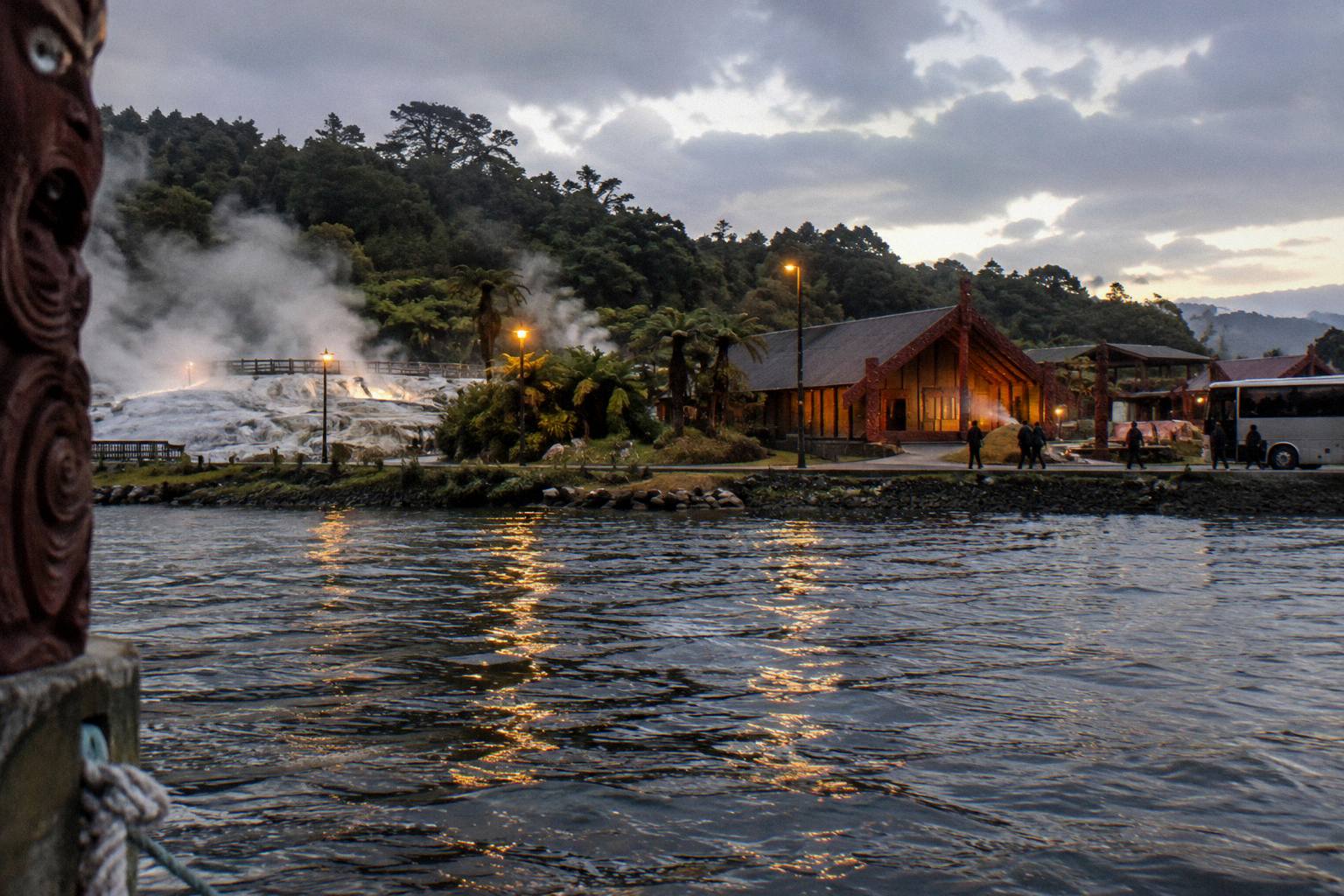
Here is one full day built only from the published figures: the 10am Whakarewarewa tour, the 12.30pm performance and a steam-cooked lunch, then Te Puia's 5:30pm Te Pō sitting with the 45-minute performance and hāngī buffet, all within the same valley. The adult cost is NZD 37 plus NZD 203, and the day ends roughly two and a half hours after the sitting begins.
The logic of this particular day is locational. Tryon Street and Hemo Road sit opposite each other across the valley, so there is no meaningful drive at any point. The mid-afternoon gap between the village closing and the 5:30pm sitting is long enough to rest, short enough that you never need a second activity. Te Puia asks for check-in 15 minutes early, so a 5:15pm arrival is the firm commitment, and the site is cashless with free parking for anyone driving.
A family version changes the maths. Two adults and two children aged 6 and 9 at Whakarewarewa cost NZD 37 each for the adults and NZD 20 each for the children for the performance, or the family ticket at NZD 102.60 if it covers the combination; confirm the family ticket's coverage with the operator. The evening leg at Te Puia has no stated child price, so the family question there must go to the operator directly. The same family at Mitai would pay NZD 188.34 and NZD 115.74 twice, and at Te Pā Tū in summer NZD 290 and NZD 125 twice, which is why the daytime-plus-evening combination is worth pricing as a whole rather than one piece at a time.
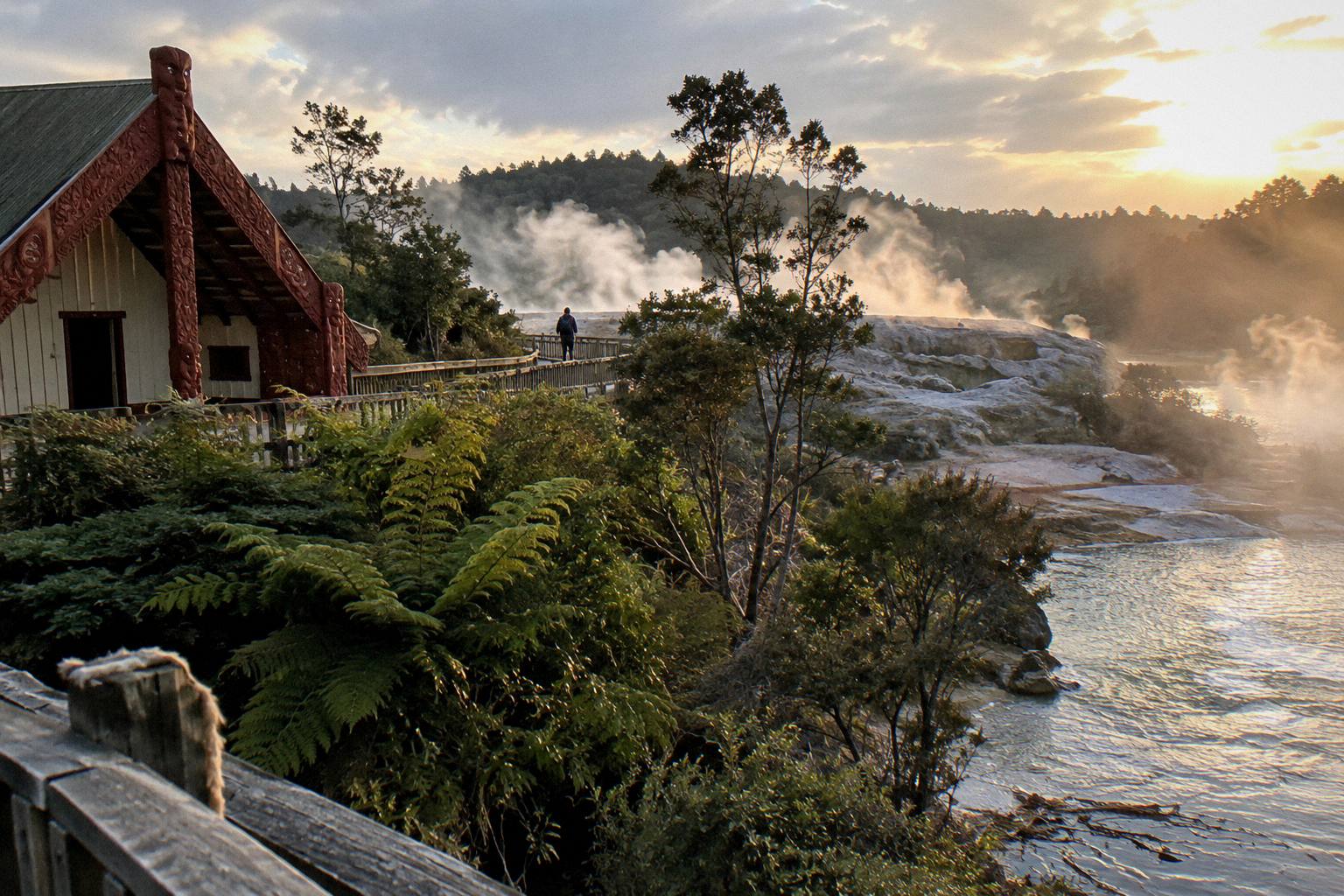
The alternative day swaps the evening operator and keeps everything else. With Te Pā Tū, the pickup from central Rotorua means the day can end back at your accommodation with no late driving, and the seasonal programme, Tū Te Rā in the October to April months or Tū Te Ihi from May to September, decides whether the evening runs about 3.5 or about 3 hours. With Mitai, the bush walk to Te Puna Tapu o Tūhoe and the glow worms come after dinner, so the evening runs about 3 hours and comfortable shoes matter, exactly as the operator's dress guidance says. Whichever evening you choose, book the transfer or the transport question first: it is the one element that cannot be fixed on the night.
Whakarewarewa earns its place in that conversation by being the honest contrast: a living village you visit in daylight, and a reminder that not every cultural experience in this valley happens after dark.
Common Questions About Whakarewarewa Village
Does Whakarewarewa Living Māori Village Have An Evening Dinner?
No. The village is daytime only, with guided tours from 9am to 3pm hourly and a 12.30pm cultural performance lasting 30 minutes. Its food offer is steam-cooked and lunch style. Evening hāngī dinners in Rotorua are at Te Pā Tū, Mitai Māori Village and Te Puia.
How Much Are Whakarewarewa Village Tickets?
The operator's prices are NZD 37 adult, NZD 20 for children aged 5 to 15, NZD 102.60 for a family and free for infants, valid from 1 October 2026 to 30 September 2027. The operator's prices can change; check the current figures on its performance page.
What Time Is The Cultural Performance At Whakarewarewa?
The performance starts at 12.30pm daily and lasts 30 minutes. Guided tours run hourly from 9am to 3pm, so a morning tour followed by the performance and a steam-cooked lunch is the sequence the schedule naturally allows.
Is Whakarewarewa The Same As Te Puia?
No. Whakarewarewa The Living Māori Village is at 17 Tryon Street; Te Puia is at 20 Hemo Road, in the same geothermal valley but separately owned and operated. Te Puia runs the evening Te Pō dinner and performance; the living village closes mid afternoon.
Can You Combine Whakarewarewa With An Evening Hāngī Dinner?
Yes, easily. The village finishes by mid afternoon and the evening dinners start from 4pm at the earliest. The simplest pairing is Te Puia's Te Pō across the valley, from 5:30pm at NZD 203, with sittings at 5:30pm and 7:15pm.
Which Evening Dinner Is Closest To Whakarewarewa Village?
Te Puia, at 20 Hemo Road in the same valley. Te Pā Tū collects guests from central Rotorua by coach, and Mitai is at 196 Fairy Springs Road with a limited transfer from registered accommodation that must be booked.